A narrow one-third minority of Wyoming state House representatives voted Monday to block the state’s new proposed method of funding public K-12 schools.
But the state Senate has its own version, which could still rescue the proposal.
The funding “recalibration” bill would, if rescued, add more than $50 million to the state’s K-12 spending model.
It would also limit how public school districts can spend the money the state sends to them by isolating educator wages into their own block grant so districts couldn’t borrow from that bracket to fund other categories, like administration or equipment.
It would require district employees to use the state’s insurance pool rather than letting districts contract their own employee insurance contracts.
And it would change a major metric in which funding is rooted from the gradual, rolling three-year average of student attendance figures to the more drastic metric of the most recent year’s attendance figure.
Under the most recent draft of the bill, however, a district couldn’t sustain greater than a 5% drop from one year to the next.
High Threshold
The House’s recalibration bill failed to make the two-thirds threshold required for introduction of non-budget bills during the even-numbered budget-planning years.
That was a narrow vote: 41 in favor of introducing it, 21 against.
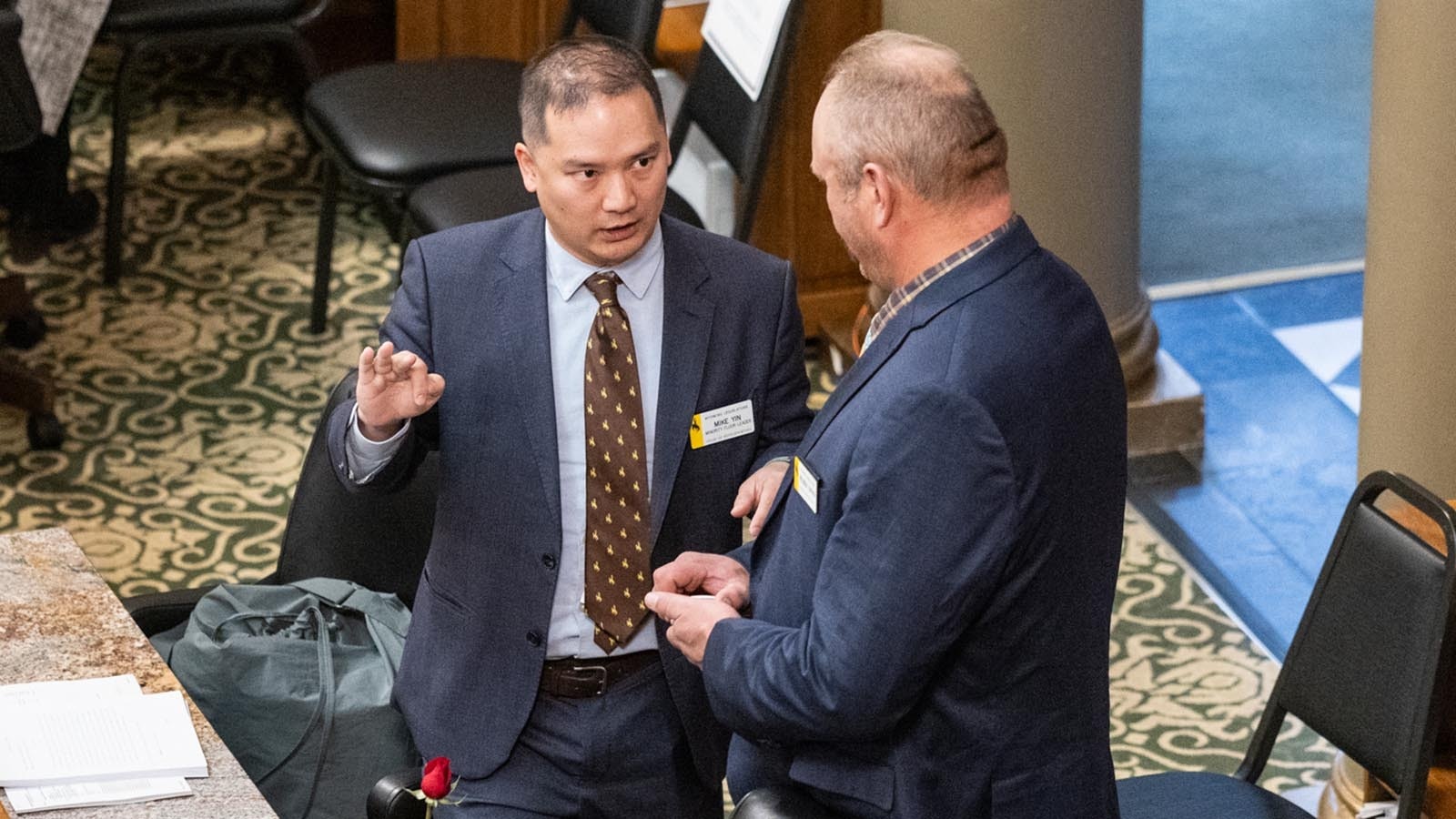
For Rep. Mike Yin, D-Jackson, his no vote reflected what he called a lack of trust by educators in lawmakers’ intentions and direction.
“There was just a lack of trust among school boards and educators that we’d do something about all the issues,” said Yin in an interview with Cowboy State Daily just outside the House chamber.
Along with the silo on teacher pay and insurance issues, Yin referenced a proposed increase in class sizes.
Though Sen. Wendy Schuler, R-Evanston, proposed a compromise, the compromise figure “was still significant,” he said.
Yin noted that as a member of the Select Committee on School Finance Recalibration, he had voted to send the bill to the Legislature.
But since then he’s heard from too many spooked educators to continue his support for it, he said.
Yin referenced a guest column by committee co-Chair Rep. Scott Heiner, R-Green River, as spooking educators further.
Heiner did not immediately respond to a text message request for comment.
He wrote in his column, however, that the recalibration bill would have bumped teacher pay to an average of $70,560 per year, constituting an average 11.3% increase.
"Targeted cuts to the state’s budget were made in areas other than K-12 education to ensure that the spending increases approved by the recalibration Committee could be made responsibly," he wrote.
The 21-representative kill squad in the House was bipartisan.
Rep. Lloyd Larsen, R-Lander, told Cowboy State Daily he met with seven of the Fremont County school district superintendents, who identified “flaws in the bill they were not able to get resolved that would negatively impact their respective districts.”
He couldn’t get those concerns resolved sufficiently to vote for the bill, he said.
Clair McFarland can be reached at clair@cowboystatedaily.com.