The recent arctic blast that slammed Texas and extended into northern Mexico has slowed the spread of one of livestock's most threatening pests, the New World screwworm (NWS), potentially reducing the risk of it moving toward the U.S. border.
While that’s good news, it doesn’t mean the strict monitoring of the devastating fly will let up anytime soon along the U.S.-Mexico border. And, state agriculture experts say, the movement of NWS is something the Wyoming livestock industry should be watching.
The Wyoming Department of Agriculture is continuing to monitor the spread of NWS, said spokesman Derek Grant. Anything that slows the pest down is a good thing, he said.
“The cold sure helps,” said Dennis Sun, publisher of Wyoming Livestock Roundup who has written multiple columns about the pest.
What is NWS?
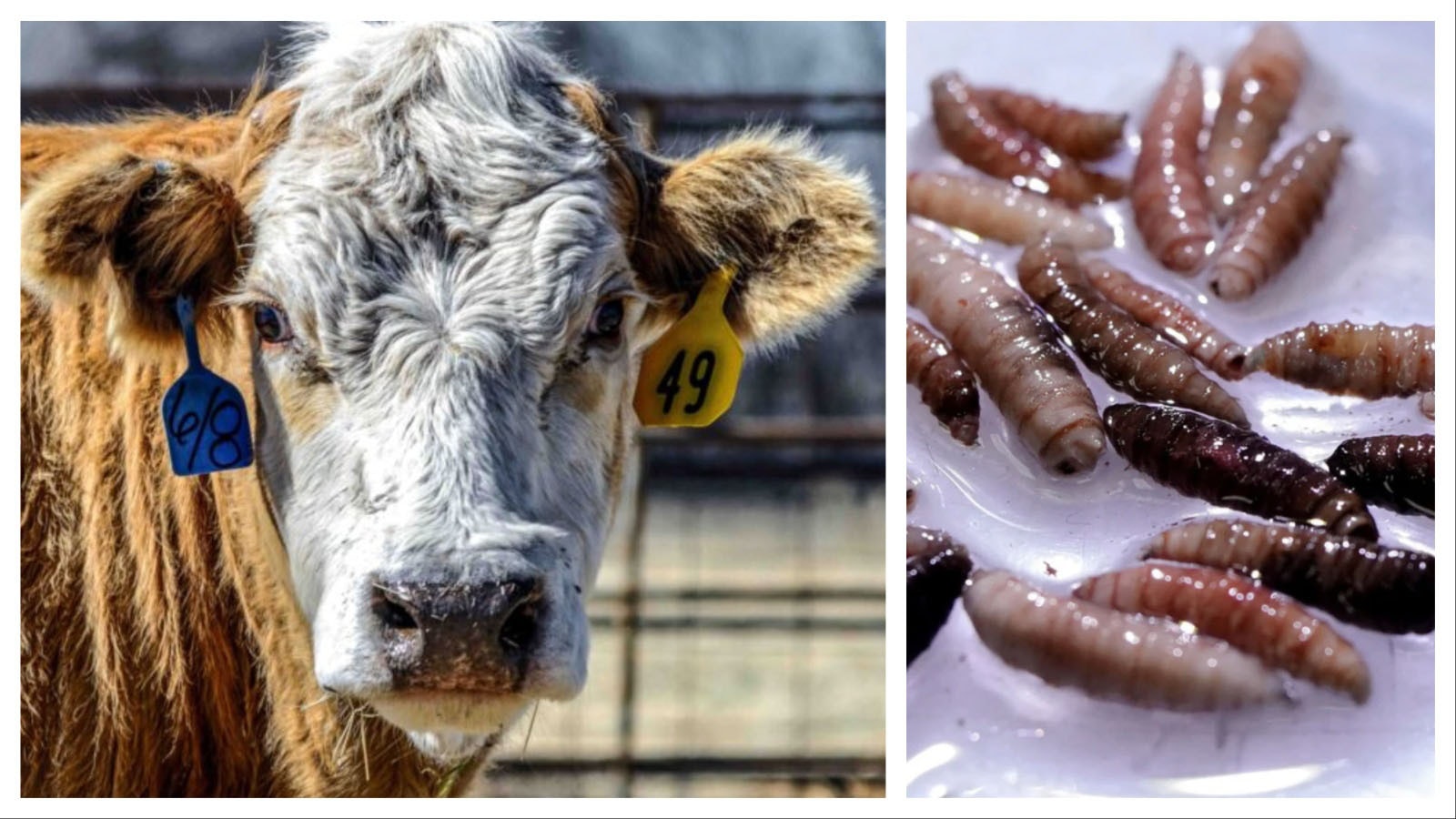
New World screwworm is a highly destructive fly, similar in size to a common housefly, that lays its eggs in open wounds. Larva feed on the flesh of its host – livestock, wildlife, pets and humans – causing the open wounds to grow.
The name screwworm refers to the maggots' feeding behavior as they burrow, or screw, into a wound, feeding as they go like a screw being driven into wood. The maggots cause extensive damage by tearing at the hosts’ tissue with sharp mouth hooks.
NWS thrives in South America, and in recent years it has made its way north, through Central America and Mexico. The fly was eradicated from the United States in 1966.
However, in September 2025, an NWS case was confirmed 70 miles south of the Texas border, in Nuevo León, Mexico, near a major trade route to Laredo, Texas. U.S. Agriculture Secretary Brooke Rollins promptly closed the U.S.-Mexico border to all livestock.
“This has really hurt the beef industry for both countries, but it had to happen,” Sun wrote in an October 2025 Cowboy State Daily column.
The threat of its return to the U.S. is something agriculture experts are constantly watching, especially as the pest inches closer to the U.S.-Mexico border.
Slowing the Bad and the Good
The cold weather around the U.S.-Mexico border would have delayed the hatching of the NWS larva, said Wyoming State Veterinarian Dr. Hallie Hasel.
It also could kill the sterile flies meant to stop the spread of NWS, said Sun.
One of the strongest defenses against the spread of NWS is the production of sterile flies. Sterile male screwworm flies that mate with fertile female screwworm flies cause the population of screwworm flies to decrease until it eventually dies out.
The U.S. Department of Agriculture is pumping $750 million into a domestic sterile production facility at Moore Air Force Base near Edinburg, Texas. The facility, built with the help of the Army Corps of Engineers, is expected to open later this year and will produce some 300 million sterile flies per week.
Freezing temperatures would have slowed the life cycle of both the bad flies and the good flies. Yet, Sun said, “you can always make more sterile flies.”
NWS: Broader Implications
Right now, the Wyoming cattle industry should be aware of what’s going on with NWS, Grant said, but there is no reason to be acutely worried.
“We’re doing the same thing we’ve been doing, which is keeping an eye on it,” Grant told Cowboy State Daily. “It’s obviously on our radar but not a huge concern for Wyoming producers.”
NWS survives in areas where low temperatures regularly stay above freezing.
Sterile flies are proven to eliminate NWS from the environment, Hasel said. But sterile flies won’t eradicate pests that are already in an animal.
That’s why a multi-pronged approach is necessary to completely destroy the fly. The FDA lists multiple approved or conditionally treatments for NWS in animals.
“How do you prevent it when it’s in the environment and how do you prevent it when it’s in the animal?” Hasel said, noting the distinction of eradication approaches.
If NWS made its way to the U.S. one of the biggest problems is that it would shut down a lot of movement of cattle, according to Sun. The pest has already put financial hardship on feedlots in Texas and Arizona that rely on Mexican cattle, he said.
“We don’t have the threat that the border states do, but it’s affected the industry as a whole,” Sun said.
That’s why “it is absolutely something WY ranchers should pay attention to,” said Hasel. Producers should be cognizant of cattle movement across the U.S., she said, and they should be aware of NWS treatment protocols.
“Wyoming does have a basic response plan should it (an NWS presence) occur in our state,” said Hasel.
Cold Weather: Good News?
Experts agree that the recent cold weather in the southern U.S. is good news when it comes to NWS. But how good?
The climate would have to stay cold and relatively dry for an extended period to delay the hatching of the larvae, Dr. Hasel said. Those conditions existed in late January – but the region has warmed up since.
“They’re still finding NWS 200 miles from the (U.S.-Mexico) border,” Sun said. “As long as they keep picking them up that close to the border, I don’t think the border is going to open anytime soon.”
Nightmares
Judy McCullough was just a child when the flesh-eating new world screwworm harried her grandfather's cattle ranch in Oshoto, Wyoming, more than 70 years ago. But she hasn’t forgotten the havoc it wrought.
She recalls barn walls splattered with blood and the pungent smell of a chemical tar that was nearly impossible to escape.
“The blood would just spray out and decorate the walls of the barn,” McCullough said, explaining how ranchers resorted to castrating and dehorning calves late in the year during the winter hiatus of the screwworm fly.
“When you dehorn a little calf, there’s very little blood at all. But when it's an 800-pound yearling, it’s a big bloody deal, let me tell you,” she said.
Tar mixed with chemicals like DDT was applied to cattle sores to prevent flies from depositing eggs, and it was costly in unforeseen ways.
“Little boys would run around with tar buckets and sticks and put tar on the brands and cuts and where you dehorn,” she said. “That tar ruined everybody's clothes.
“You’d put it on the calf, but then it gets on the wrestlers, and then it gets on the rope, and then it gets on the roper and his horse and his saddle it gets on the guy branding them. We just had to throw our clothes away every time.”
She thought she’d seen the last of it in 1966 when screwworm was eradicated in the United States. But she worries it's beginning to look as though the parasite may visit her ranch again.
Kate Meadows can be reached at kate@cowboystatedaily.com.