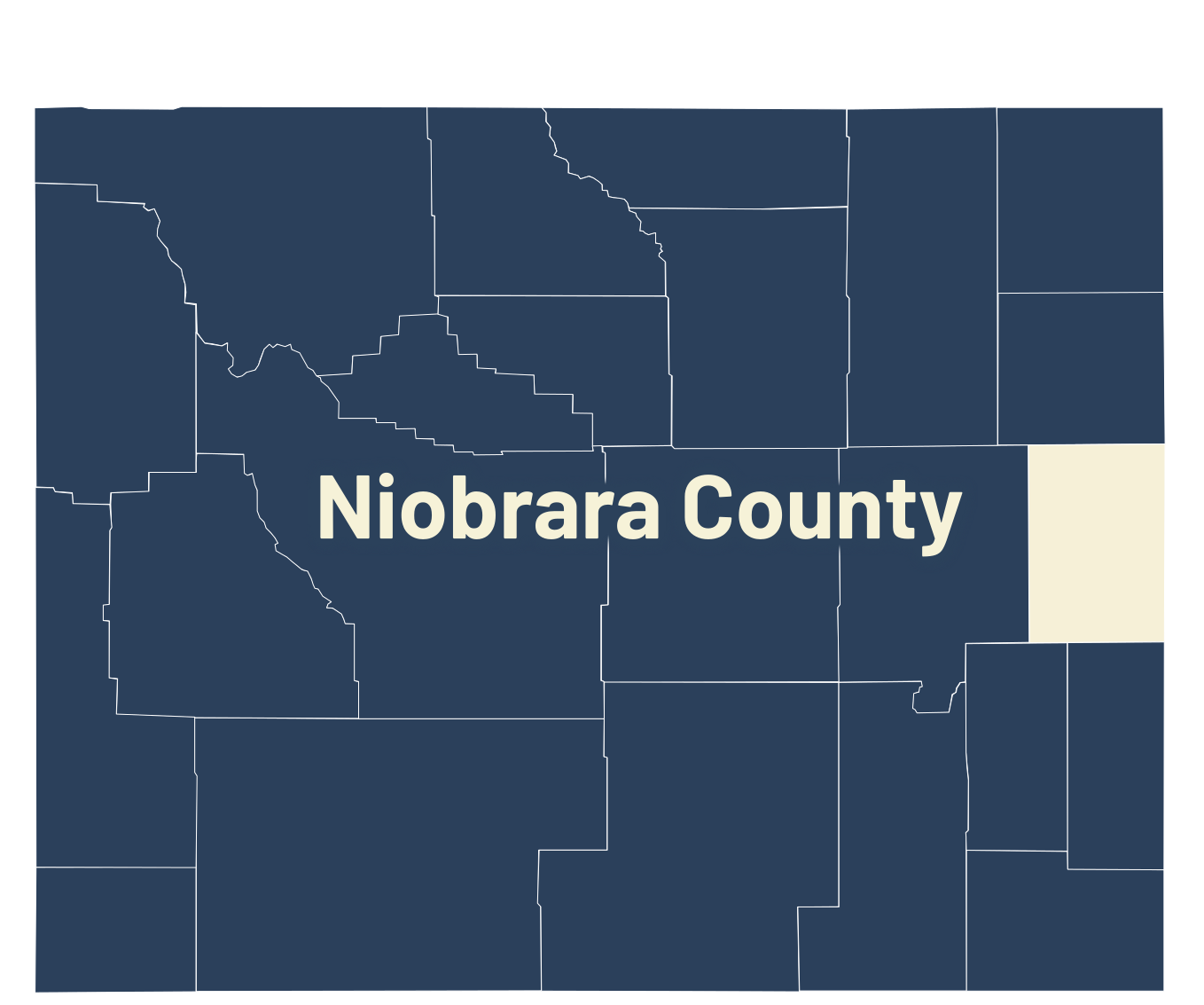
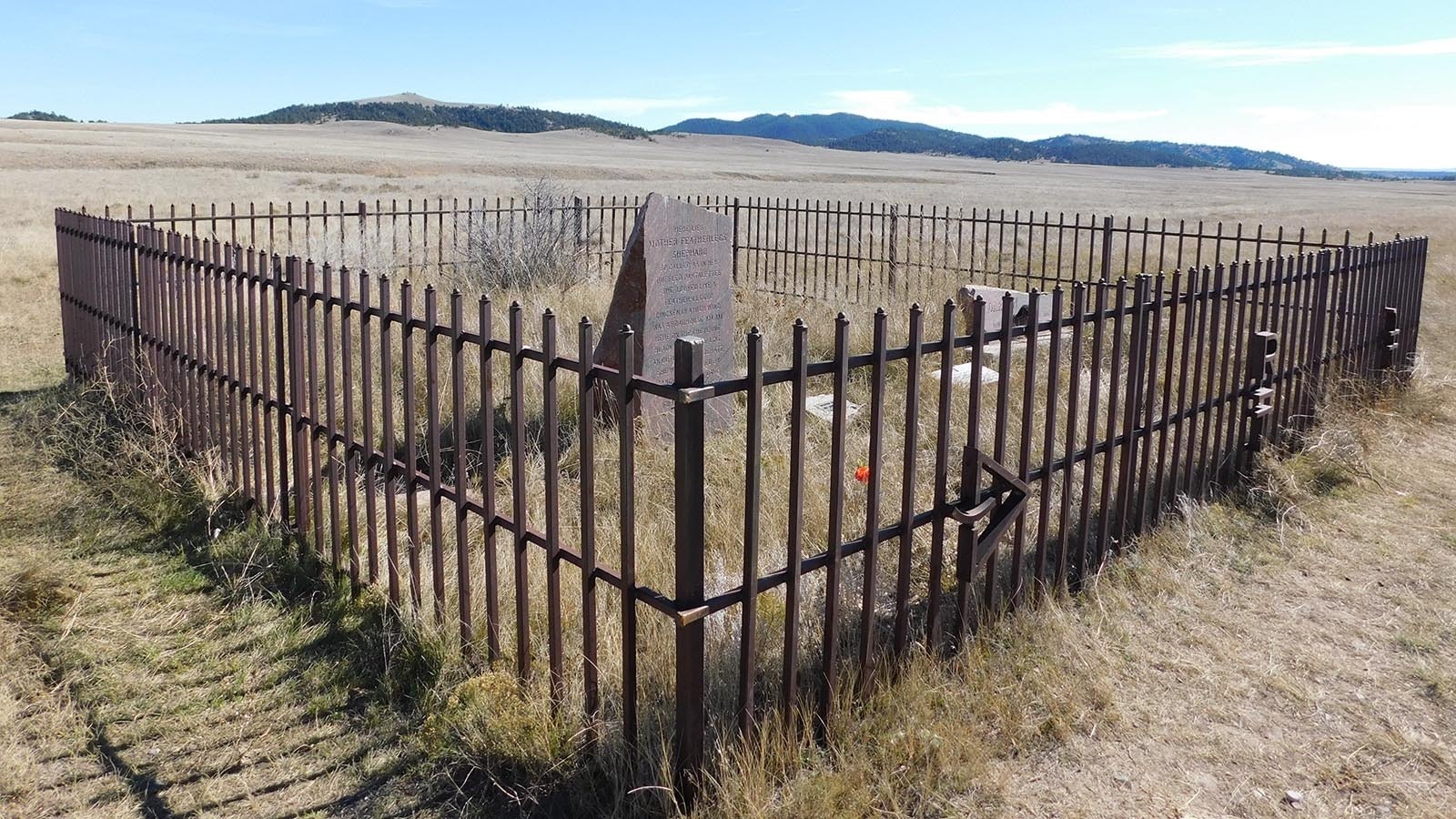
On the remote plains of Wyoming in Niobrara County, a 3,200-pound red granite monument marks the grave of Mother Featherlegs, a rare stone tribute to a Wild West prostitute.
Mother Featherlegs as she was better known in her lifetime — was a notorious character that operated a small stage stop and saloon along the Deadwood-Cheyenne Stage Route.
To the east of her grave are the Rawhide Buttes and to the west are the Dead Man Buttes. Her dug out and base of operations were in a large valley in the middle of cattle and sheep country. Steep hills and deep draws made it an easy place to get lost in — or hide buried treasure.
“You can ride deep into a canyon and go for quite a ways undetected,” local rancher Taylor Barnette said. “She picked a good spot to live, that’s for sure.”
Barnette’s family has run cattle on Mother Featherlegs' property since the 1970s near Lusk and has spent a lifetime looking for her hidden stashes of loot without success.
Rumor said that she would hold onto stolen loot from the stages until they could be sold for cash. It was said by the old-timers in the region that she kept the loot hidden around her homestead as she operated her saloon and house of ill repute.
“People say that she had a map and she dug holes,” Barnette said. “Only she knew where the loot was.”
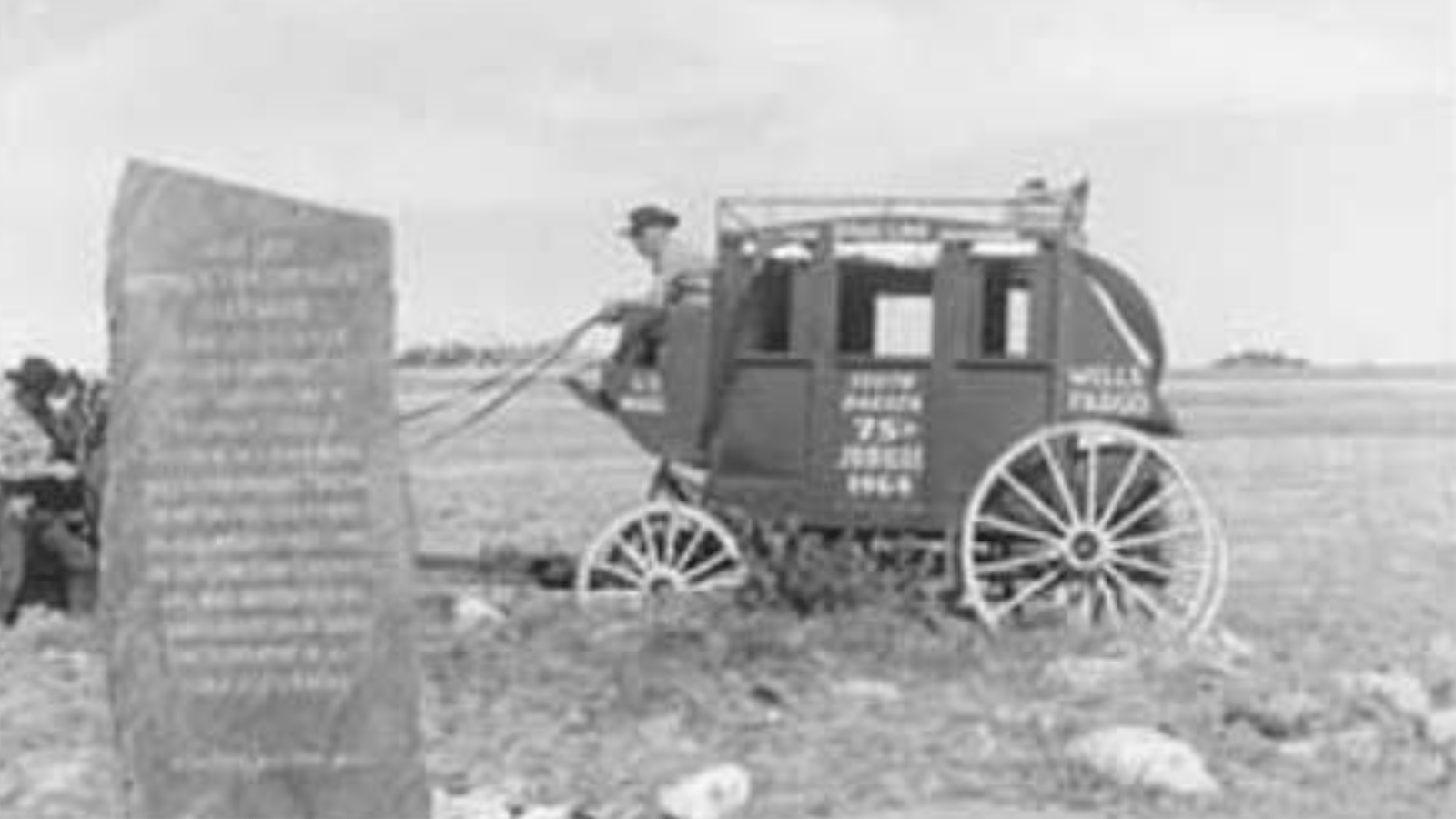
In 1964, a monument was erected over the unmarked grave of Mother Featherlegs. Russell Thorp, a former stagecoach driver, identified the grave and was present when it was unveiled using a replica of the pantaloons she was known to have worn. (Courtesy Wyoming State Archives) 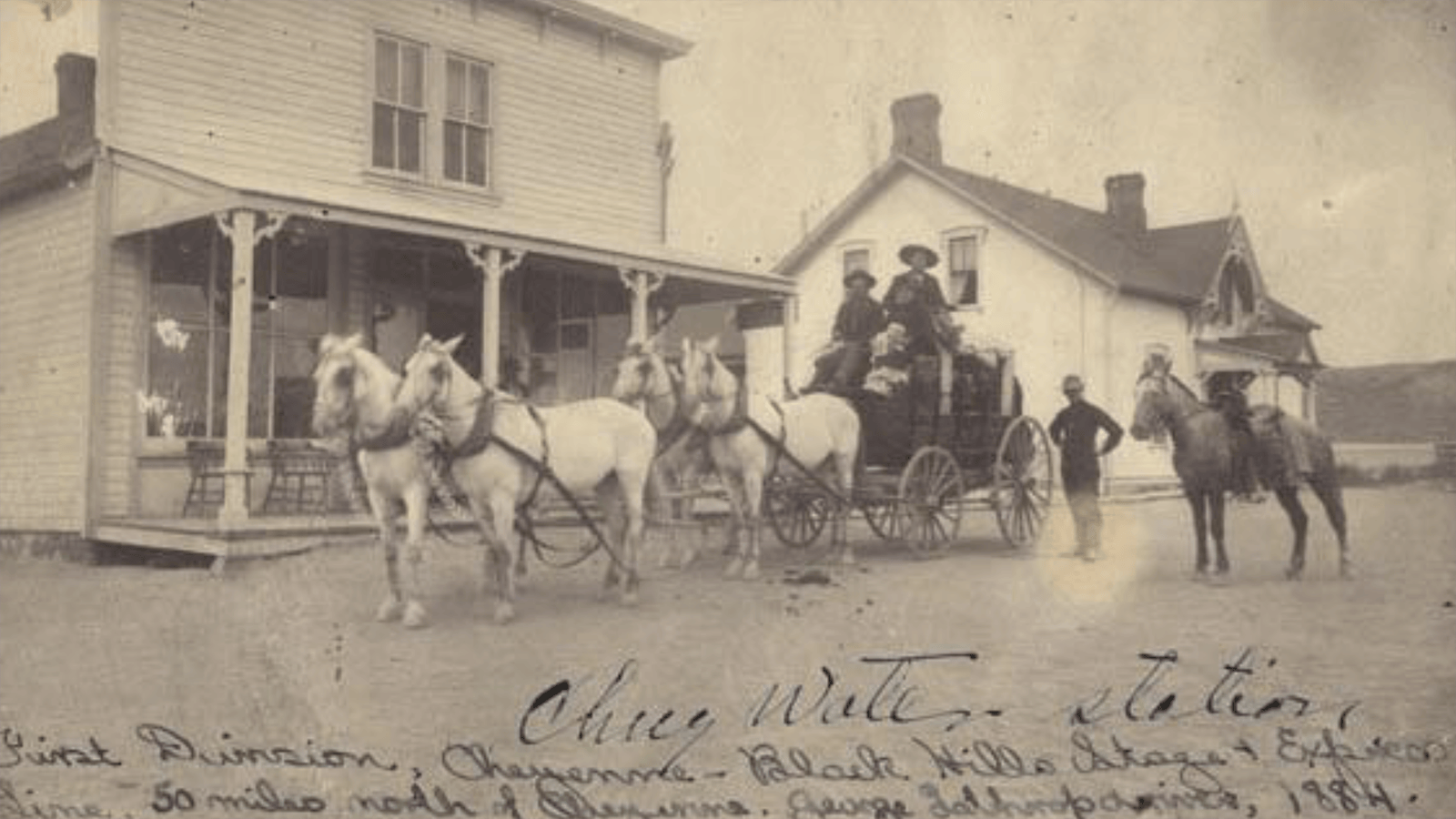
George Lathrop was a stage driver along the Cheyenne and Deadwood and shared many stories of the characters along the route with his protege, Russell Thorp. One of these characters would have been Mother Featherlegs who ran a roadhouse and was murdered in 1879. (Courtesy Wyoming State Archives) 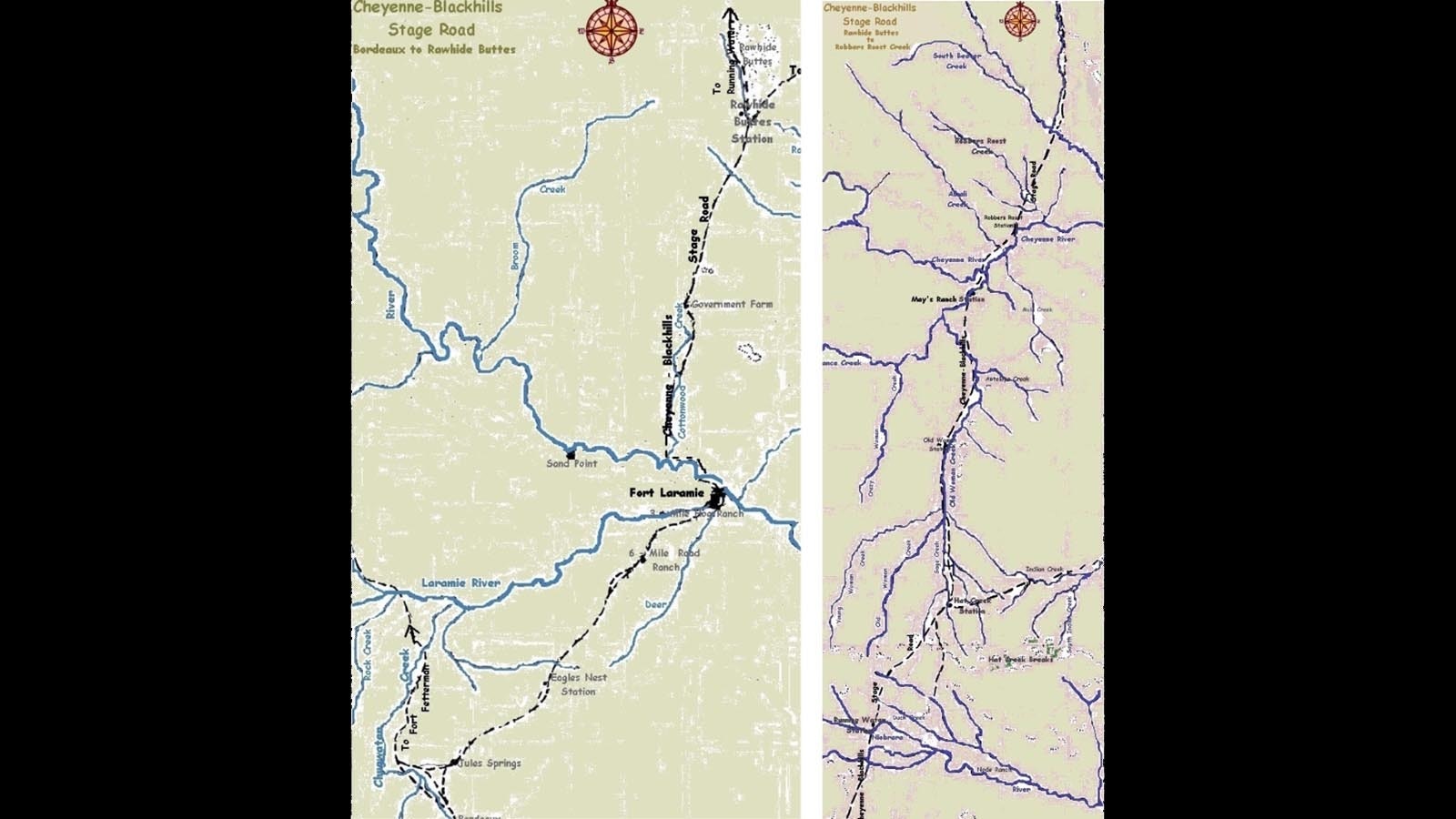
The Deadwood Cheyenne Stagecoach route included stops about every 12 miles to rest the horses. Mother Featherlegs ran the roadhouse in Raw Hide Buttes before her murder in 1879. (Courtesy Wyoming Trails and Tales website) 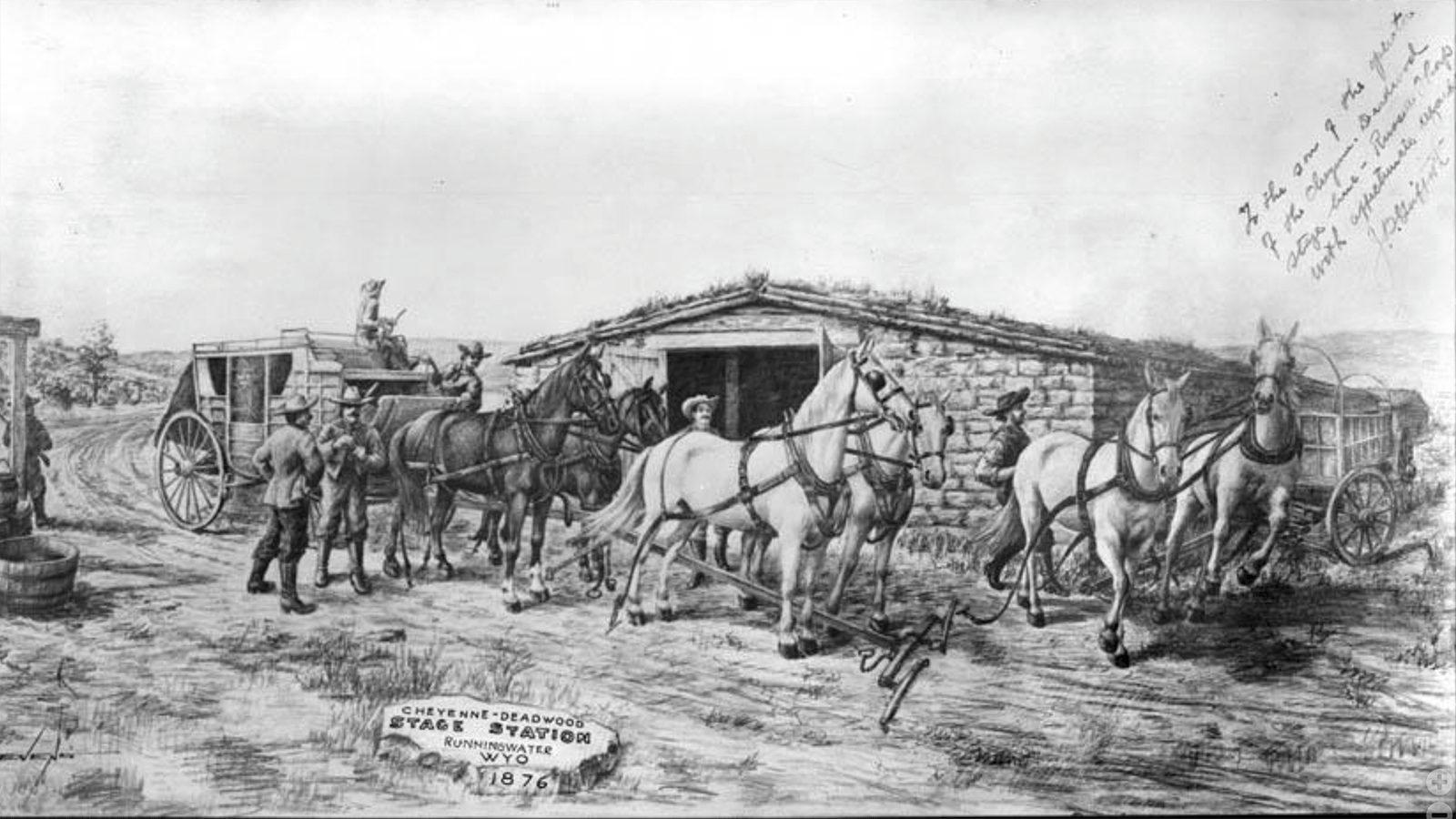
George Lathrop was a stage driver along the Cheyenne and Deadwood and shared many stories of the characters along the route with his protege, Russell Thorp. One of these characters would have been Mother Featherlegs who ran a roadhouse and was murdered in 1879. (Courtesy Wyoming State Archives)
The Madam’s Legacy
According to the 1961 Lusk Herald, Mother Featherlegs' story was preserved by Russell Thorp Jr. whose family owned the local stage line.
Thorp was born in 1877 and grew up listening to the drivers and station attendants tell of the days of the road agents and outlaws.
“Old Mother Featherlegs lived in a half-dugout that had a stone fireplace and afforded a hangout for various outlaws along the Cheyenne-Black Hills trail,” Thorp said.
He explained that the cowboys called her “Old Mother Featherlegs” because she wore red, ruffled pantalettes tied about her ankles, which fluttered in the breeze when she rode horseback.
Thorp said that one of her visitors said, “Them drawers looked exactly like a feather-legged chicken in a high wind.”
In 1936, J. B. Griffith, the editor of the Lusk Herald wrote about the infamous madam who he said could be spotted miles away by the cowboys and range hands.
“They could see the red pantalettes glinting in the sunlight, reminding them of all the feathers on an Indian’s warbonnet,” Griffith said.
It was believed that Mother Featherlegs was the go-between for road agents and other desperadoes, Griffith said. He reiterated the belief that she had in her possession stolen jewelry and money from the hold-ups on the Black Hill’s stagecoaches.
The Busy Stage Stop
The Deadwood-Cheyenne stage line was a busy route, and stations were established about every 12 miles that were either “swing” or “home” stations. As the stage driver neared the station, they would blow a small brass bugle or trumpet to alert the station staff of the impending arrival.
The “Home Stations” provided passengers with meager meals and overnight lodging, even if that was only a dirt floor. At the “swing” stations, such as Mother Featherlegs' place of entertainment, the coach would stop for about 10 minutes to change the team and allow passengers to stretch their legs before the coach was on its way again.
According to Barnette, the stage that ran near Mother Featherlegs' dugout was used to haul gold out of Deadwood and into Cheyenne so they could put it on trains.
“There was a lot of traffic that went through that area,” Barnette said. “A lot of supplies had to go up into that area and that was where Mother Featherlegs had an outpost.”
Thorp said that Mother Featherlegs came to the Rawhide country in 1876 and opened a place of entertainment for travelers in the dugout.
“A couple of tin-horn gamblers and rot gut whiskey were part of the outfit,” Thorp said. “No one knew, at that time, where she came from.”
Mother Featherlegs did a flourishing business at her little resort for the next three years. About a year after she opened her establishment on Demmon Hill, "Dangerous Dick” Davis, who got his name because of his evil look, came to live at her place according to Thorp. Most of the time he was seen loafing around her shack and the two seemed to be well acquainted.
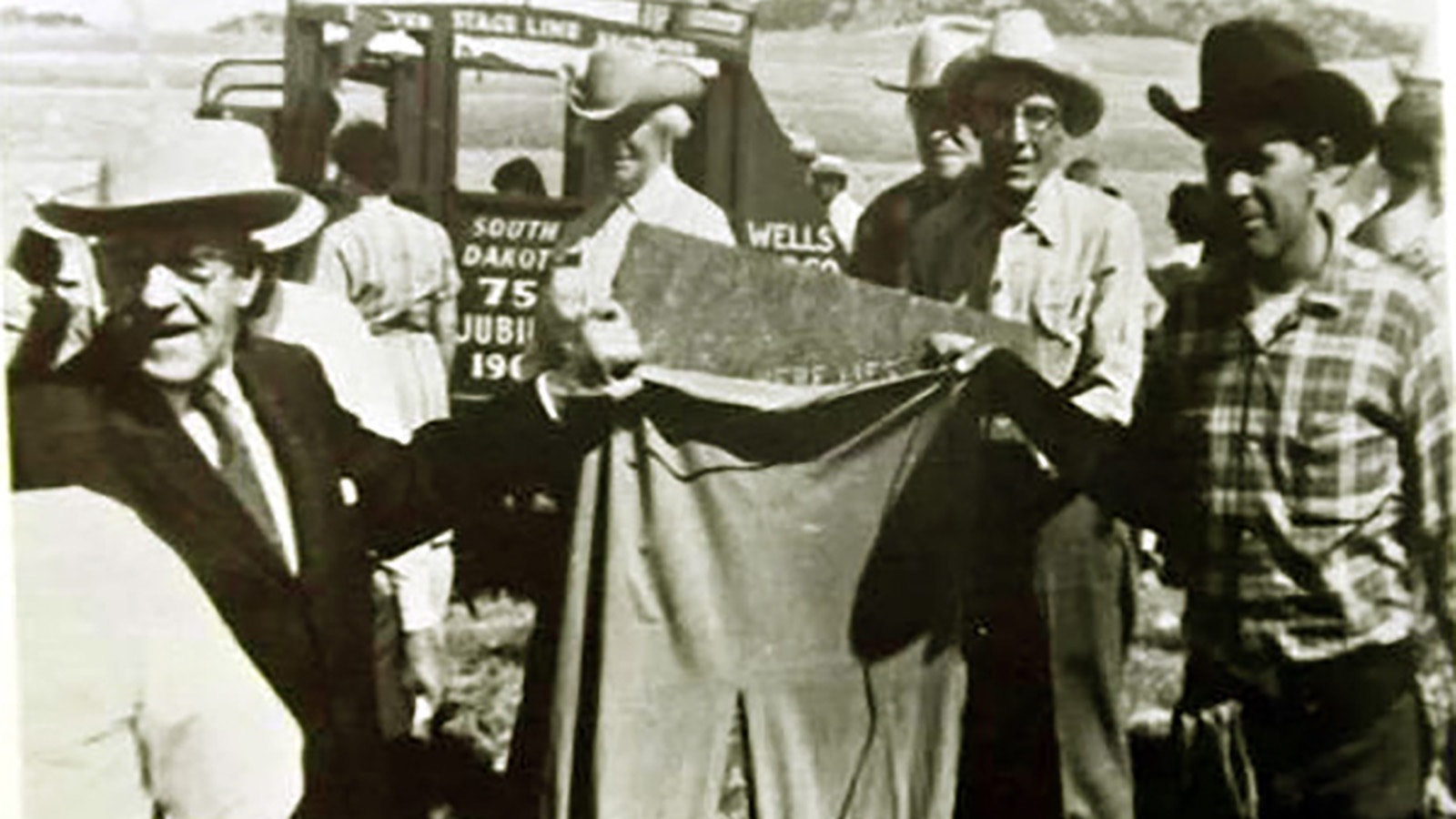
In 1964, a monument was erected over the unmarked grave of Mother Featherlegs. Russell Thorp, a former stagecoach driver, identified the grave and was present when it was unveiled using a replica of the pantaloons she was known to have worn. (Courtesy Wyoming State Archives) 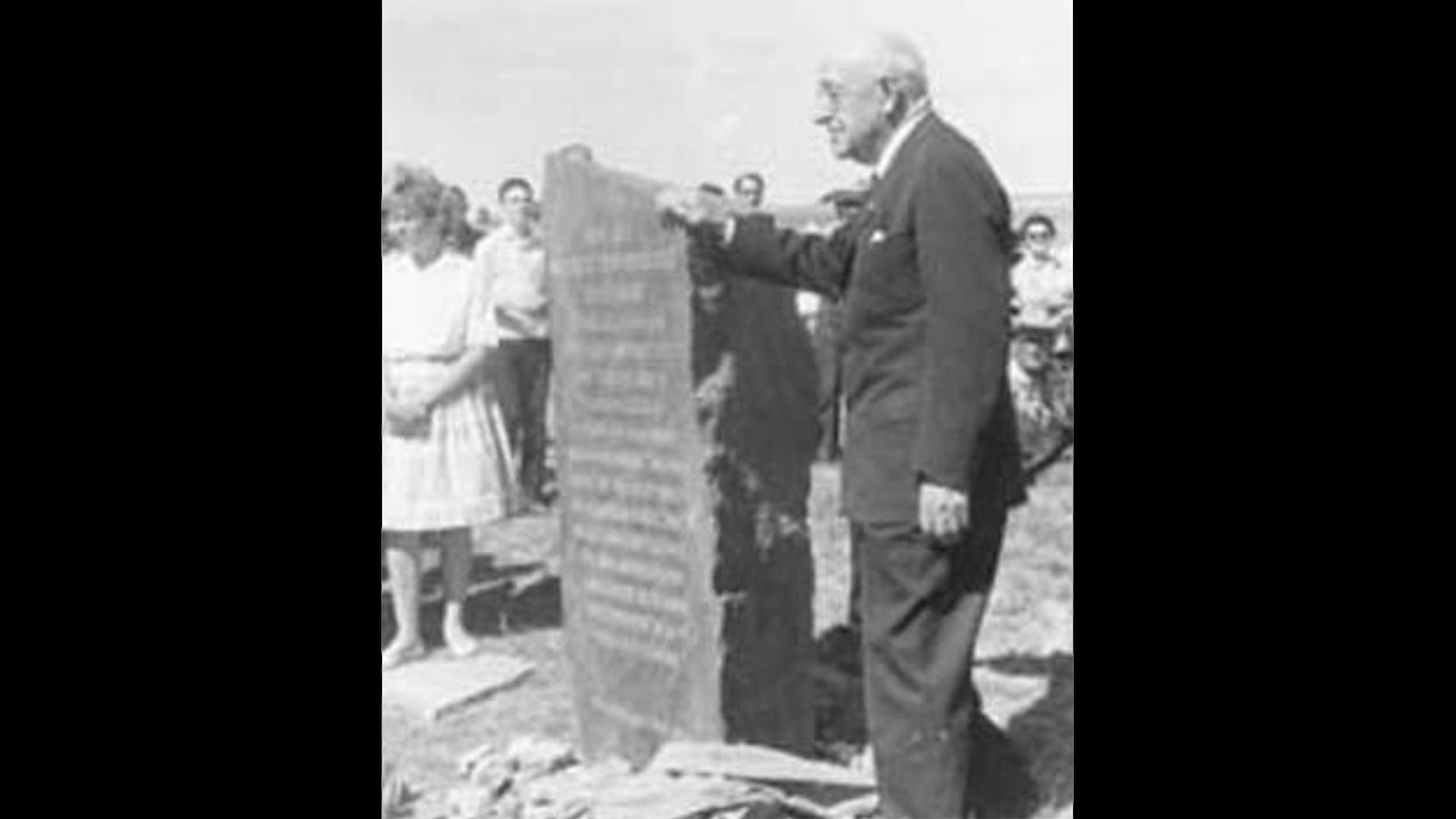
In 1964, a monument was erected over the unmarked grave of Mother Featherlegs. Russell Thorp, a former stagecoach driver, identified the grave and was present when it was unveiled using a replica of the pantaloons she was known to have worn. (Courtesy Wyoming State Archives) 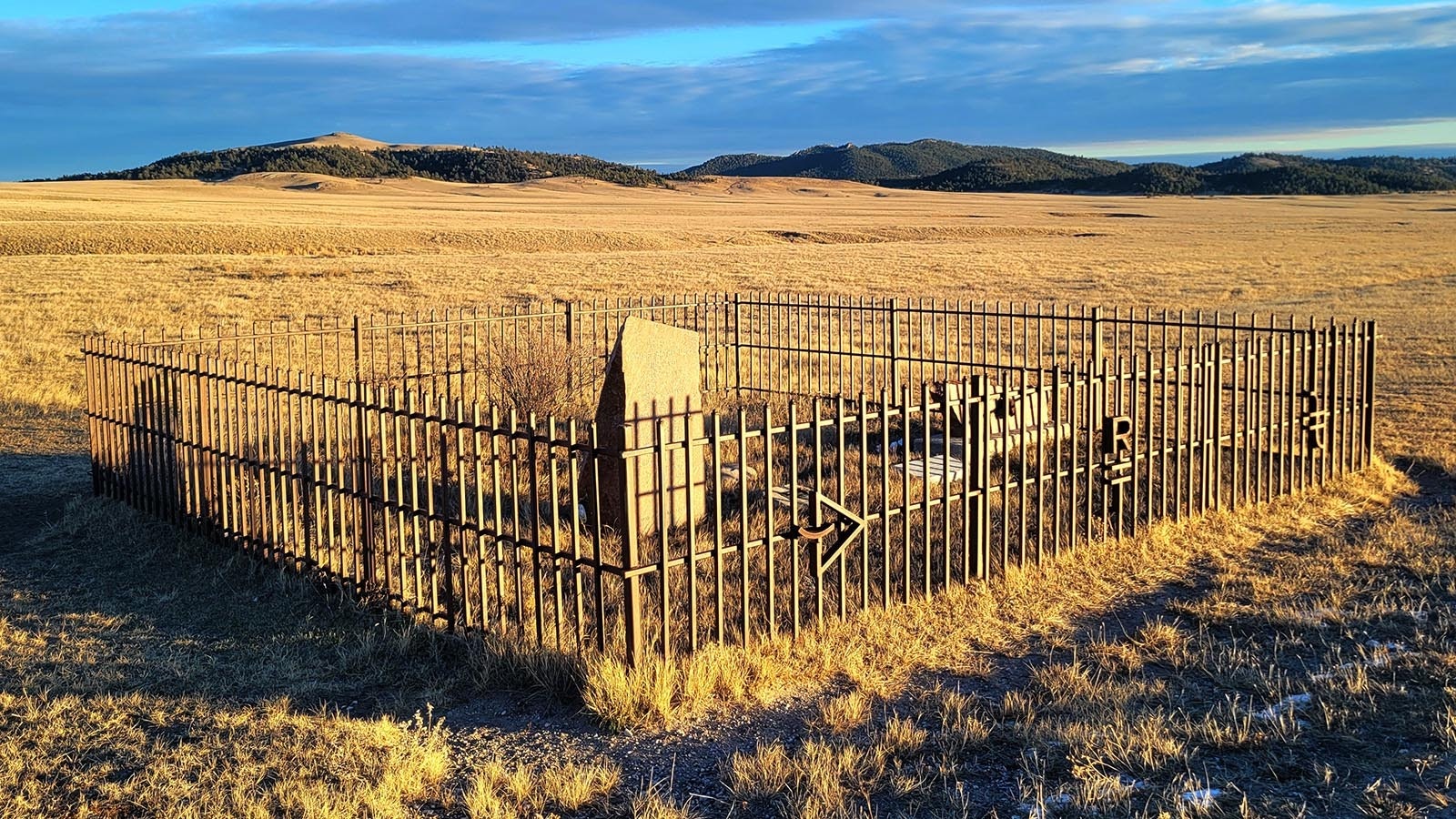
Near the Rawhide Buttes, a monument had been erected to a red-haired madam, Mother Featherlegs, that ran a house of entertainment along the Deadwood Cheyenne Stageline from 1876 until her murder in 1879. Visitors are welcome to pay their respect to this lady of the prairie. (Courtesy Taylor Barnett)
Death Of A Madam
In 1897, Mrs. O. J. Demmon, the wife of a rancher who lived at Silver Springs four miles away, came to visit Mother Featherlegs. Demmon was horrified to find that her friend had been murdered. According to Thorp, Mother Featherlegs had been shot while filling a bucket of water at the spring. The suspect was the outlaw, Dangerous Dick Davis.
“In the soft soil about the spring were tracks made by moccasins, the kind of footgear always worn by Dangerous Dick,” Thorp said. “The murderer had fled, taking with him the twelve or fifteen hundred dollars that the “Old Woman” was known to have had.”
The body of “Mother Featherlegs” was buried in a grave near her dug-out. She was soon joined by two other colorful characters from the Rawhide region.
Years later, in 1949, Agnes Wright Springs claimed in her book, “The Cheyenne and the Black Hills Stage Line,” that the identity of Mother Featherlegs had been discovered.
Springs claimed that it was later learned that “Old Mother Featherlegs” was “Mam,” the mother of Tom and Bill Shepard. These men were members of a gang of outlaws and cutthroats who lurked in the ‘slimy fastnesses’ of the Tensas swamps in northern Louisiana, after the close of the Civil war.
“With the return of the paroled Confederate soldiers, the doom of the band was sealed and its members were hunted like the wild beasts they were,” Springs said. “Both the Shepard boys died by the swift judgment of the lynching rope.”
Mam, whose real name was Charlotte Shepard, survived the execution and fled to Wyoming where she opened up her outpost along the Deadwood-Cheyenne stage line and became known as Mother Featherlegs. Another survivor of the gang was “The Terrapin” who later joined her at Rawhide Buttes under the name of “Dangerous Dick.”
“After murdering Mother Featherlegs, Dangerous Dick Davis, “The Terrapin,” went back with the plunder, to his old haunts in the swamps,” Springs said. “But there, after engaging in his old practices of murder and robbery, he was lynched within sight of where the Shepard boys had met their fate.”
Springs said that before he died, Dangerous Dick made a full confession and thus cleared the identity of the Old Woman of the Rawhide, Mother Featherlegs.
Moonlight Madness
The location of Mother Featherlegs' final resting place had been verified by Thorp who later was present when the monument was put in place over her grave.
“You may be interested to know that a school mate and myself spent a vacation in and around Raw Hide and Muskrat Canyon and like fool things that kids sometimes undertake, we decided to dig up the remains of Mother Featherlegs,” Thorp said.
It was the summer of 1893 when Thorp was 16 years old. Mother Featherlegs had been buried for fourteen years and the two teenagers decided to dig her up under a full moon.
“We camped nearby and proceeded to do this job at night,” Thorp said. “When we removed the lid of this home-made pine coffin, her features were clearly recognizable, with a great mass of red hair.”
Horrified, they hastily nailed the lid back down.
“After all those years the body had more the appearance of being slightly mummified, and the coffin was not rotted,” Thorp said.
He filled the grave back in and they covered it back with the heap of rocks.
In 1936, Thorp, then 59, returned to the spot with Griffith, the editor of the Lusk Herald.
“To the newcomer or the uninitiated, this is just another pile of rocks,” Griffith later wrote. “But to the old-timer who knows the history of this country, it is the last resting place of “Old Mother Featherlegs,” one of the last of the colorful Western characters who made history in the days of the free and open range.”
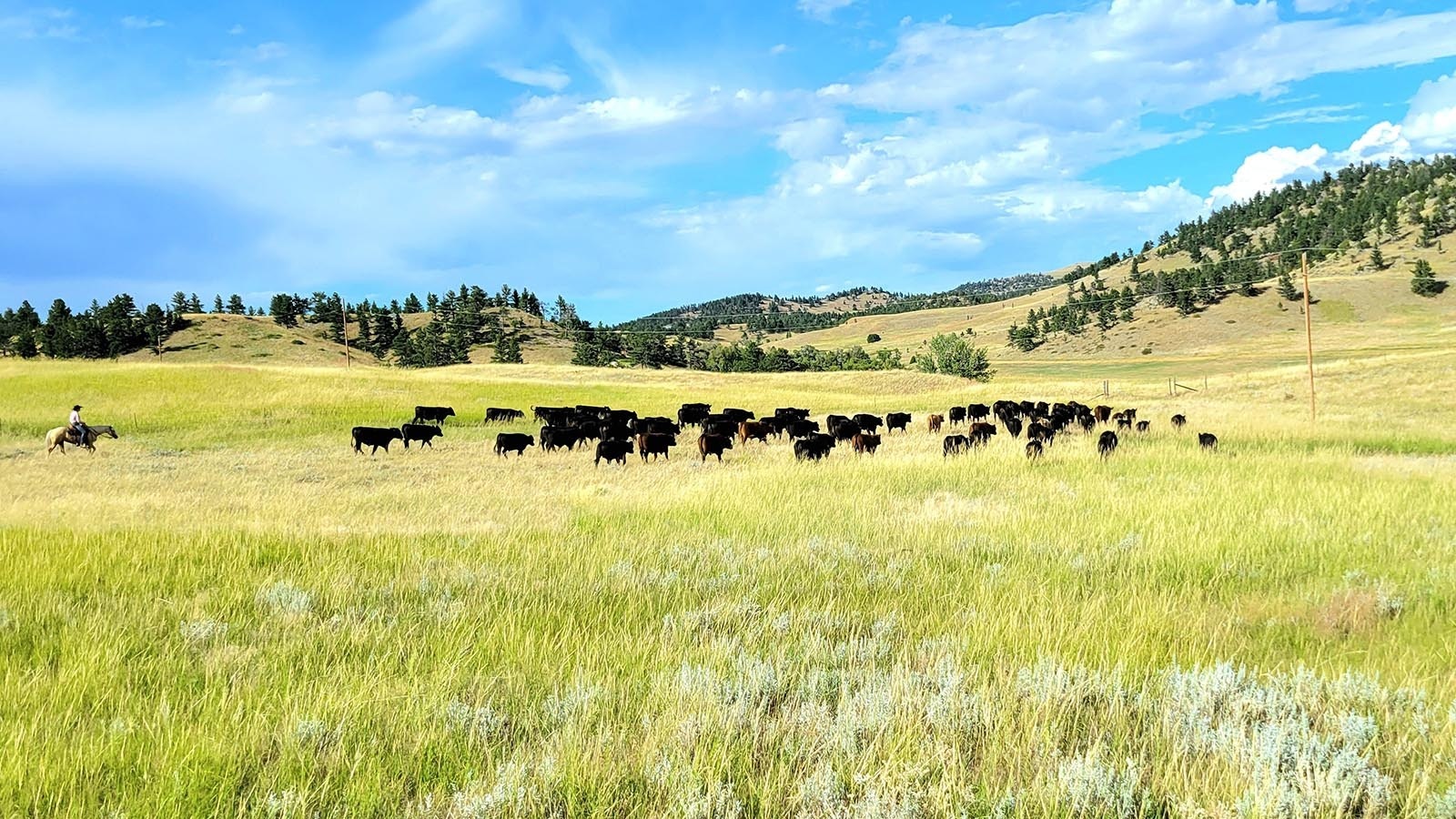
Mother Featherlegs arrived in Wyoming in 1876 and opened a roadhouse to accommodate the stagecoaches running between Cheyenne and Deadwood. Her house of entertainment, no more than a rude dugout, was successful until her murder in 1879. The scenery around her grave remain much the same as it did in the late 1800s. (Courtesy Taylor Barnett) 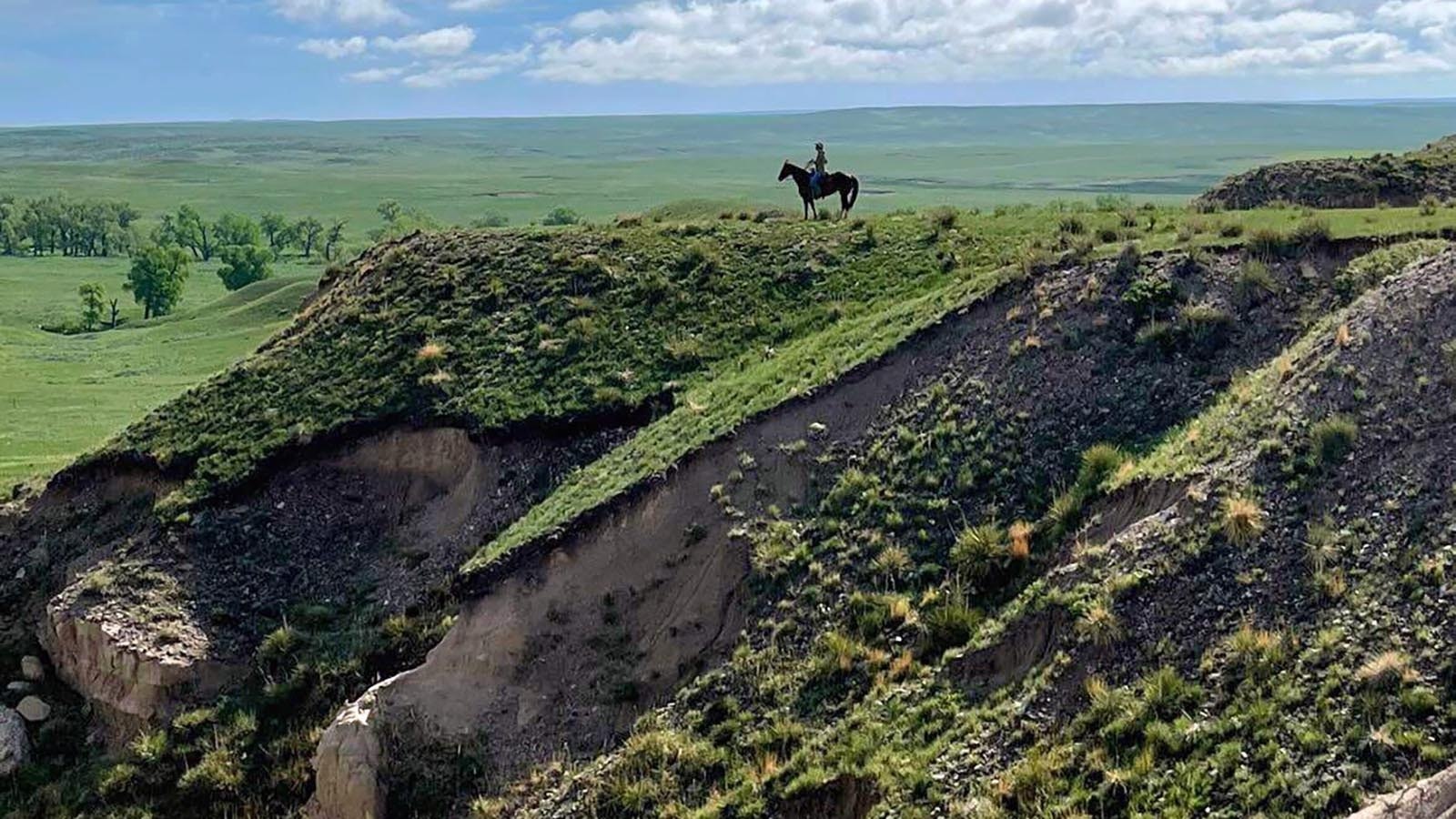
Mother Featherlegs arrived in Wyoming in 1876 and opened a roadhouse to accommodate the stagecoaches running between Cheyenne and Deadwood. Her house of entertainment, no more than a rude dugout, was successful until her murder in 1879. The scenery around her grave remain much the same as it did in the late 1800s. (Courtesy Taylor Barnett) 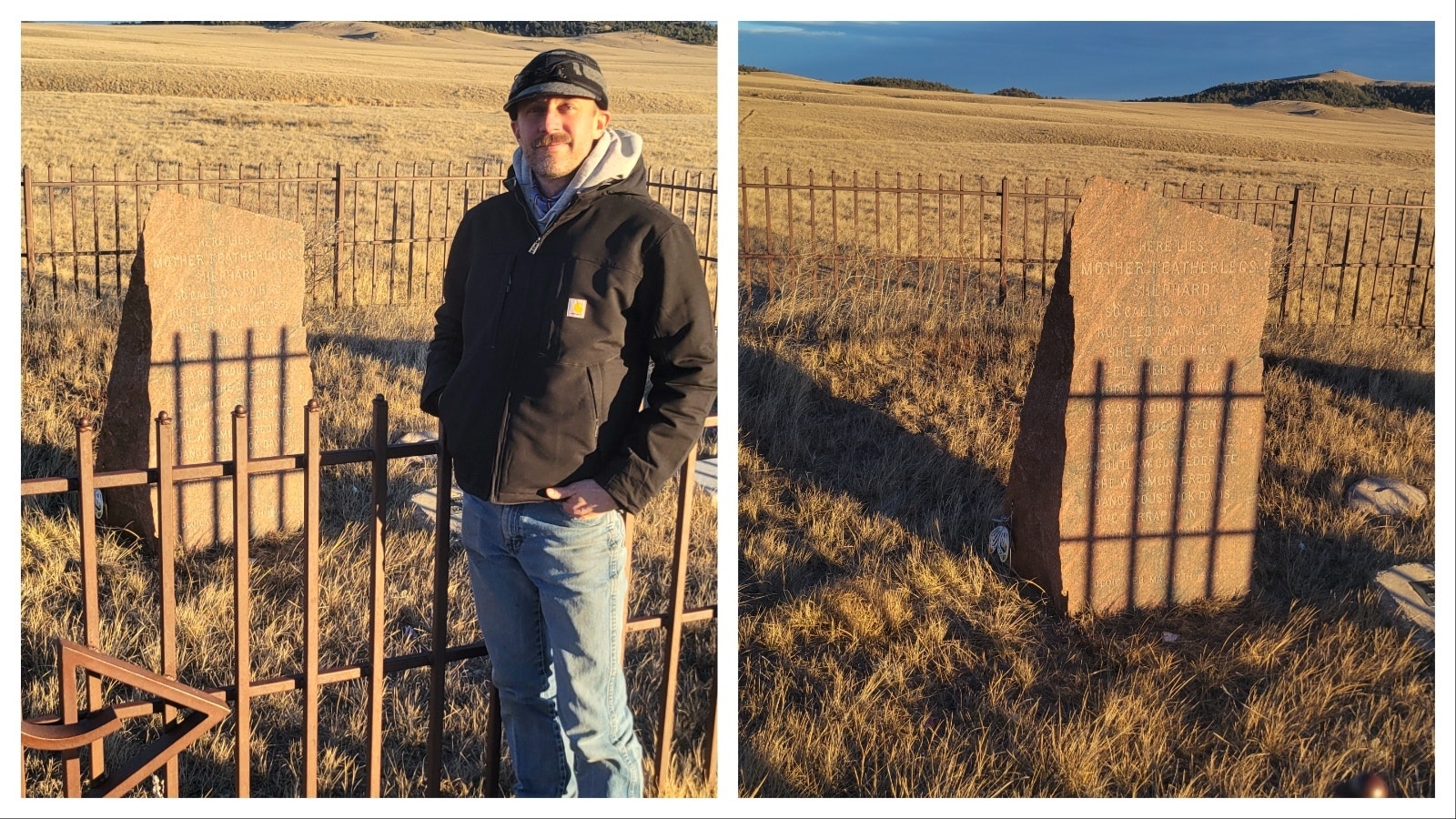
Taylor Barnett has spent his life on the ranch that once belonged to Mother Featherlegs, a madam that ran a roadhouse along the remote Deadwood Cheyenne stage line. He said that remnants of her dugout still exist and that he occasionally still finds evidence of her years plying her trade in 1876 until her murder in 1879. (Courtesy Taylor Barnett)
Dedication
For the next 30 years, Griffith lamented that there was no proper stone to mark Mother Featherlegs grave.
Author June Willson Read in her book “Frontier Madam” wrote that his wife, Mary Ann Griffith, grew weary of the complaints of her husband and Bob Marrow, the manager of the Ord Ranch where Mother Featherlegs final resting place lay.
“Either do something or quit talking about it,” Mary Ann told the men at dinner one night.
The two men decided to erect a monument to Mother Featherlegs memory.
They promptly used their connections to get the project going. Read said that a stone was donated by Lake Harris, who operated a stone monument business in nearby Jay Em, and he requested $100 to sandblast the epitaph on it.
Jeannette Sager and Gertrude Chamberlain each contributed $25, but Griffith and Barrow needed to find someone to donate the rest of the money. Griffith called Dell Burke, the local madam who was still operating the Lusk brothel, the Yellow Hotel. She agreed to provide the remaining $50 to her fellow madam.
The 3,200-pound pink granite slab was dedicated in May 1964 during a reenactment of the stage running between Deadwood and Cheyenne.
Women from the Jay Em community church served lunch at the event. More than 750 people showed up and Thorp unveiled the monument by pulling a rawhide thong from a pair of red pantalettes.
The epitaph read, “Here lies Mother Featherlegs Shepard so called as in her ruffled pantalettes she looked like a feather-legged chicken in a high wind. Was a roadhouse Ma’am here on the Cheyenne Black Hills stage line an outlaw confederate. She was murdered by Dangerous Dick Davis the Terrapin in 1879 for a $1,500 cache. Dedicated May 17, 1964.”
The Legend Of The Pantaloons
Legends about Mother Featherlegs continue to resurface. The infamous pantaloons from the dedication that were prominently displayed are believed by some to be the real thing. However, they were made for the dedication and said to have been stolen off the monument shortly after.
In 1990, these long-lost pantalettes were said to have mysteriously resurfaced in a Saloon 10 located in the frontier town of Deadwood, South Dakota. A “posse” composed of vigilant Lusk residents embarked on a daring mission, successfully raiding the saloon and triumphantly recovering the invaluable historical garments. The red artifact was then proudly displayed at the Stagecoach Museum in Lusk.
However, JoAnn Wade of the Niobrara Historical Society said that it was all just a ploy to get people to visit their museum and the pantaloons were fake replicas that they no longer have.
“As part of an advertising campaign for the Legend of Rawhide, a contingent from Lusk went to Saloon Number 10 in Deadwood to 'reclaim' a pair of recently made pantaloons that were on display at Saloon Number 10,” Wade said. “It was obviously a successful advertising ploy in the fact that we can’t seem to get rid of the rumor.”
A fence has been placed around Mother Featherlegs' grave and visitors are welcome to visit.
The monument is on private ground and those paying their reverences are asked to respect the ranch it is on. The scenery around her is virtually unchanged from when she ran her roadhouse and the once vibrant stage route has grown silent.
“Her dugout is a pile of rocks now,” Barnette said. “It’s all caved in and there are just pieces of rusty artifacts that occasionally surface on our ranch like barrel straps and old tins.”
Despite the rumors that continue to swirl around Mother Featherlegs, Thorp and others said she was very real. Her legacy lives on in Niobrara County in a granite monument erected by those that never wanted her forgotten.
Jackie Dorothy can be reached at jackie@cowboystatedaily.com.