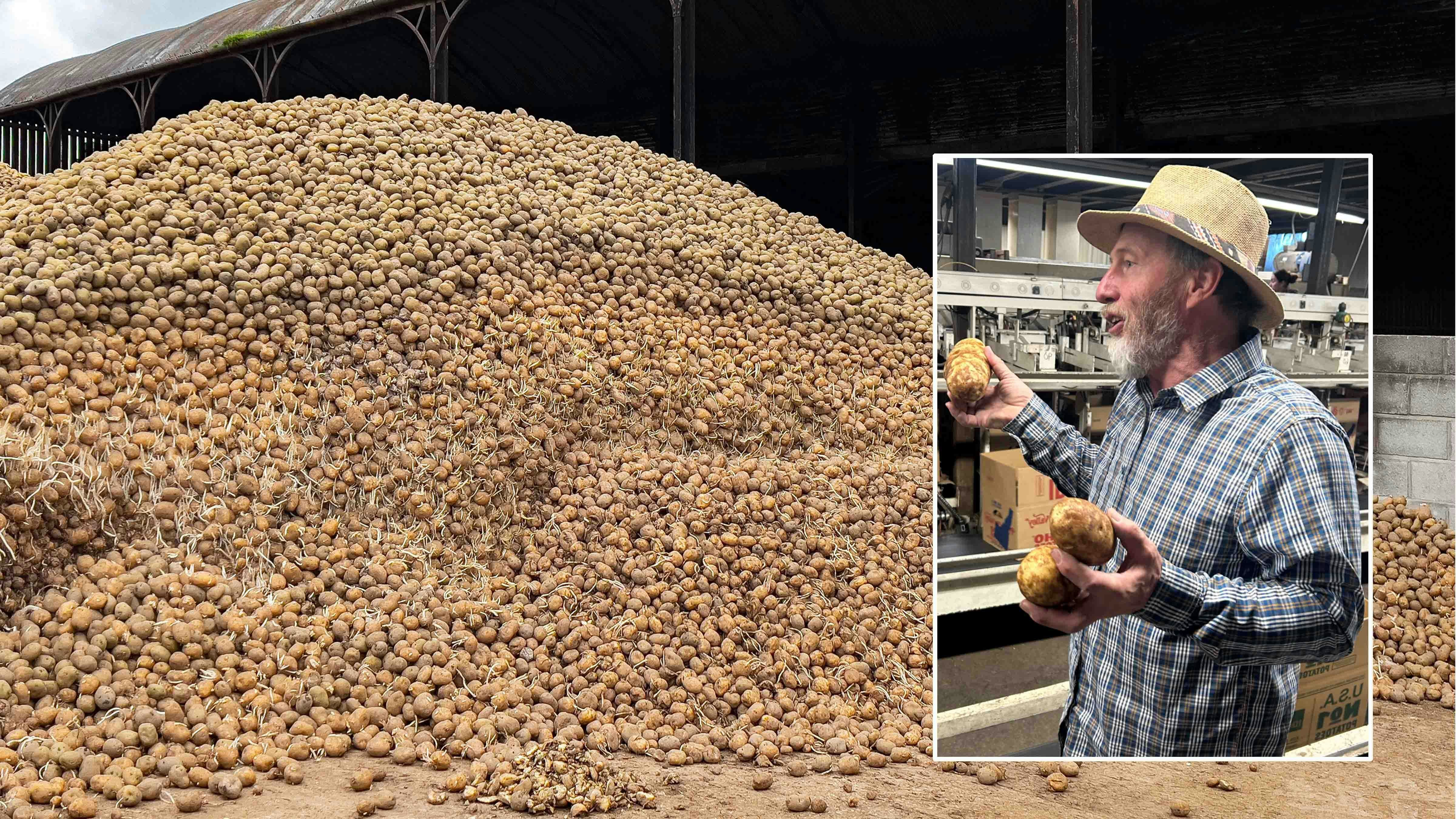
With what one expert described as a “potato flood in Europe” and elsewhere, the potato market is so saturated that one Idaho farmer is trying to give away tons of spuds to needy people.
“We were just getting to the point where we were having to discard all these potatoes, dump them on the ground, or use them to feed cattle or whatever. But I’d rather see them go to feed hungry people,” Rexburg, Idaho farmer Kent Sutton told Cowboy State Daily.
He put out a plea on social media, stating that he had “millions of pounds” of potatoes to give away.
All he asked is that takers cover the freight costs of getting the spuds to food banks or other worthy destinations.
He wasn’t sure what to expect, but the response floored him.
“In about 20 minutes, I had booked 10 semi loads of potatoes to go out over the next two weeks,” he said.
“Each semi load is 42,000 pounds,” he added.
There was at least one request for excess spuds from the Star Valley area of Wyoming, he said. And food banks as far away as the Midwest also answered the call.
He’s almost caught up with his potato glut for now. But he’s sure he’ll have many more pallets of potatoes to offer once he starts to dip into his stored crops.
“We’ll have more coming down the road. We’ll probably have to get some more jettisoned in three weeks or so,” he said.
Dehydration Market Dries Up
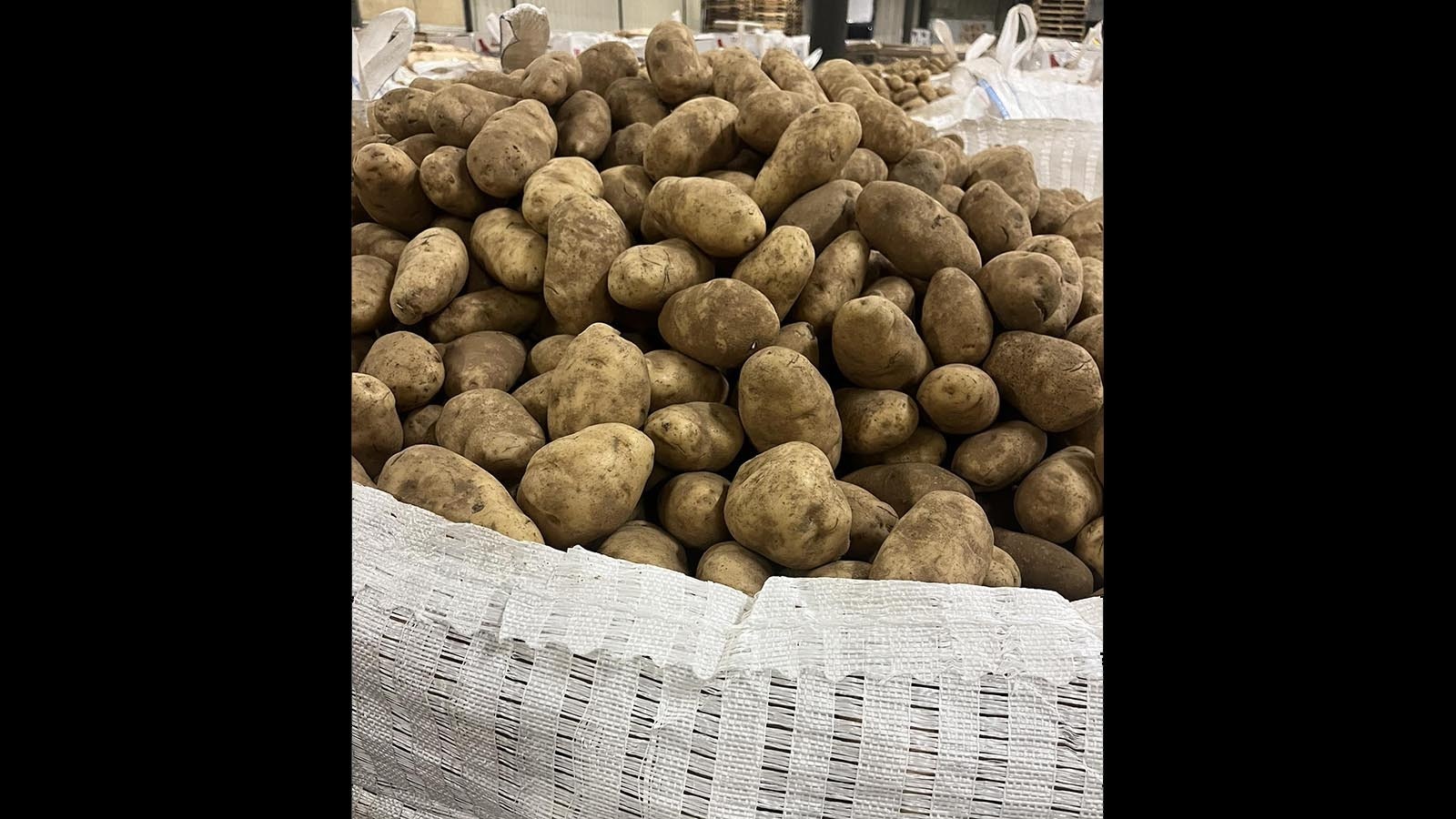
Sutton said that in his case, his mountain of surplus spuds boils down to size.
Two major markets for potatoes, restaurants and grocery stores, want potatoes in a specific size range.
Normally, he sells his “off-sized” potatoes, to dehydration plants in his area. Those processors meet the market demand for potato flakes or freeze-dried potatoes.
But this year, they aren’t taking in any more potatoes, leaving him and other farmers stuck with potatoes that “are either too big or too small” for the food service and grocery markets, he said.
“The market for the processors’ finished product, dehydrated potatoes, is really slow. They can’t export them,” Sutton said.
Some farmers have been offloading their excess to local beef cattle ranches and dairies, where cows can gobble potatoes to their hearts’ content.
Sutton said his farm decided to try something more altruistic, offering to help feed the hungry, and he was humbled by the response.
“We really didn’t want attention from it. We just wanted to make things better for somebody,” he said.
What’s Going On With Potatoes?
Idaho Farm Bureau spokesman Sean Ellis told Cowboy State Daily that there’s a potato glut.
“There is definitely more supply than demand right now,” he said.
“One of my bureau member farmers told me that he’s getting only $2 per hundredweight (100 pounds of potatoes) at a processing cost of $10 per hundredweight,” he said.
The problem of too many taters isn’t confined to just Idaho, said Patrick Hatzenbuehler, associate professor and extension specialist in Agricultural Economics at the University of Idaho.
With exceptional growing conditions, “there was a potato flood in Europe” in 2025, he told Cowboy State Daily.
2024 was a good year for European potatoes as well, he said.
While U.S. and Canadian potato production has been down a bit, it seems that production is still outpacing demand in some markets, Hatzenbuehler said.
“From what I’ve seen in the trade data, there has been a decreased demand on the dehydrated potato side of the market,” he said.
Lamb-Weston closed its massive potato processing plant in Washington state in 2024, “but a lot of growers in that region still planted,” he said.
Things are bound to even out eventually, but for now the potato oversupply is holding, he said.
“I don’t see anything on my radar that is going to drive things down anytime soon,” Hatzenbuehler said.
As for Wyoming, potato farms are few and far between here, Wyoming Farm Bureau spokesman Brett Moline told Cowboy State Daily.
He spoke with bureau member farmers in northwest and southeast Wyoming who used to grow potatoes, but called it quits.
The story was the same from both corners of the state, Moline said.
“Crop diseases and prices have pushed potatoes out of Wyoming,” he said.
Mark Heinz can be reached at mark@cowboystatedaily.com.