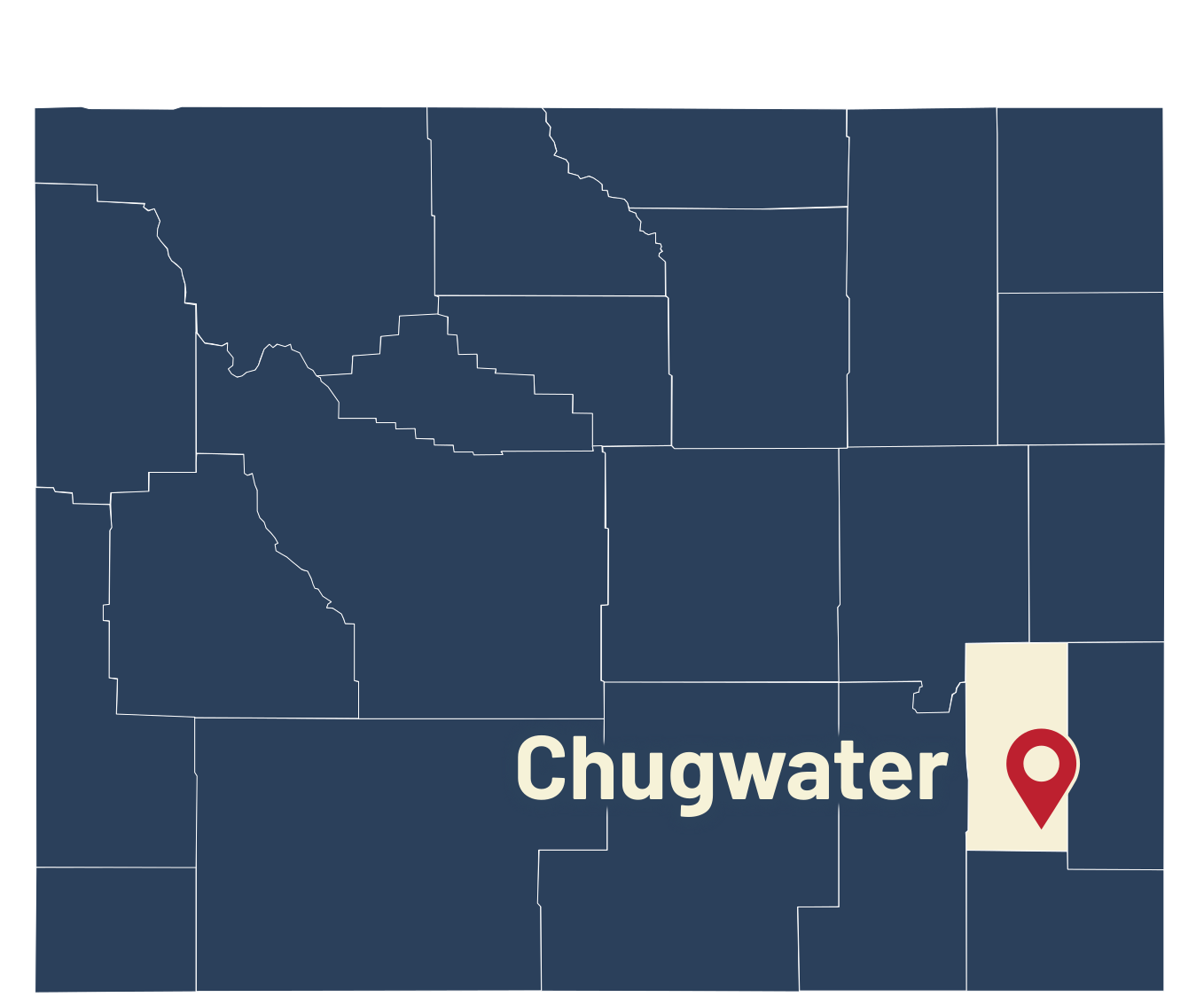
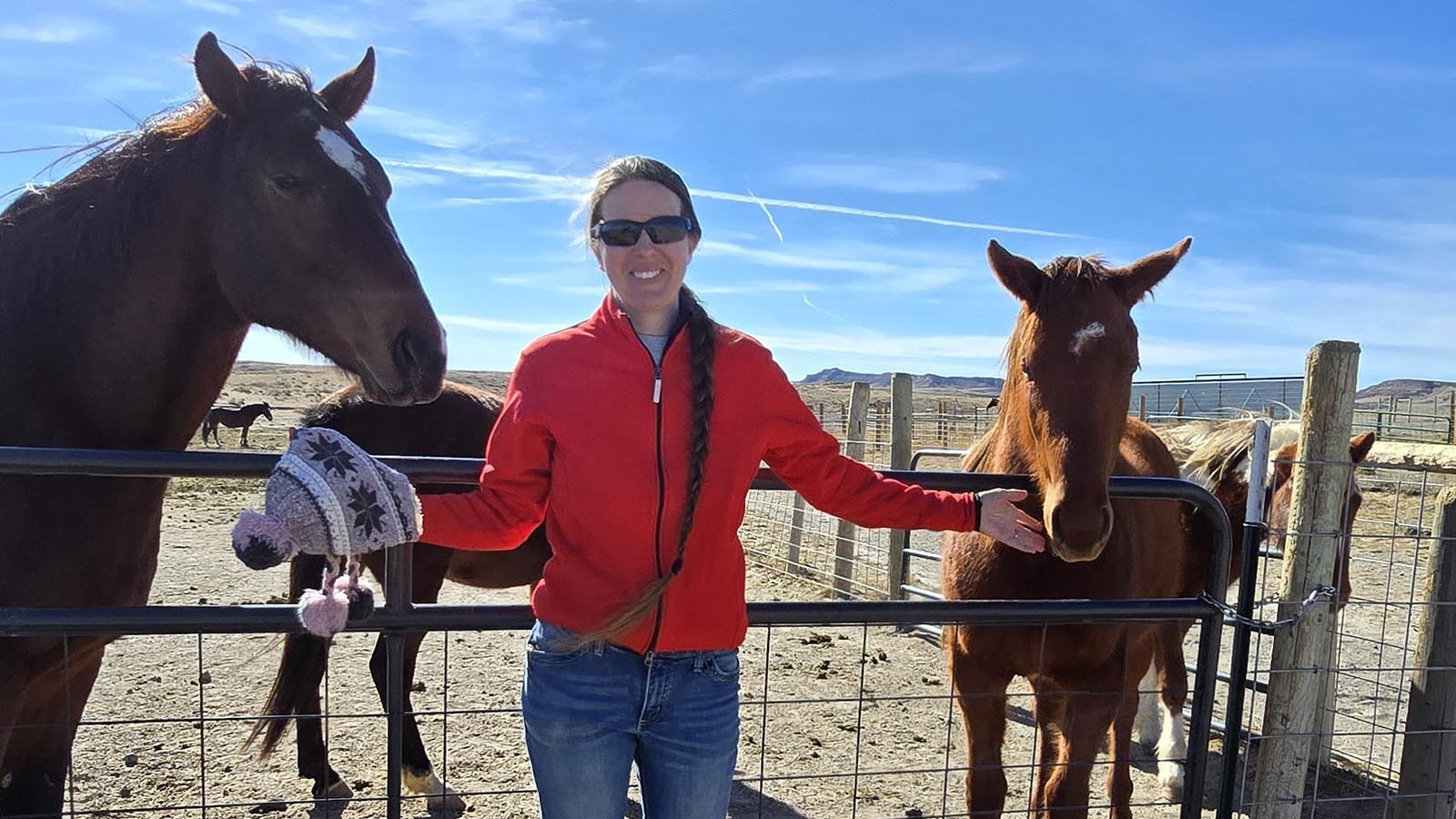
CHUGWATER — The horses are all warm and chocolate, white and creamy, brown and caramel, their tails calmly swishing as their wide and curious eyes watch farrier Meghan McGann working on the hooves of a fellow horse.
“This foot isn’t going to look pretty and be comfortable to her,” McGann tells Cowboy State Daily, pointing at a deep notch in the hoof.
The cuticle was damaged in an injury and, just like fingernails, likely won’t ever grow back correctly. It's dangerous because the notch could catch on something and tear up the horse's entire hoof, so it has to be trimmed.
McGann's goal, as with all the horses, is minimal intervention.
She lops off one of the notches at an angle so it’s seamlessly in line with the rest of the hoof.
There’s a quick smoothing, and then she sends the horse back home to the waiting herd.
“Now that’s out of the way, it will be six months until it gets kind of long again and needs another trim,” she said.
There’s never any fuss as the horses are brought to McGann. They all come willingly, without a rearing or sound of protest.
It’s as if they all get that McGann is there to help them.
That’s something McGann prides herself on. As she sees it, this is all about developing a partnership with the horses.
Now all the horses appear hearty and healthy, but it wasn’t always so.
These are all retired racehorses, some of them once worth millions of dollars. Some were in such bad shape when they arrived at Kate Anderson’s ranch in Chugwater that she thought they might have to be destroyed.
But there’s something healing about the wild Wyoming landscape for horses born to run free.
It’s a healing gift that has helped these horses regain the health they’d lost even when all the traditional approaches had failed.
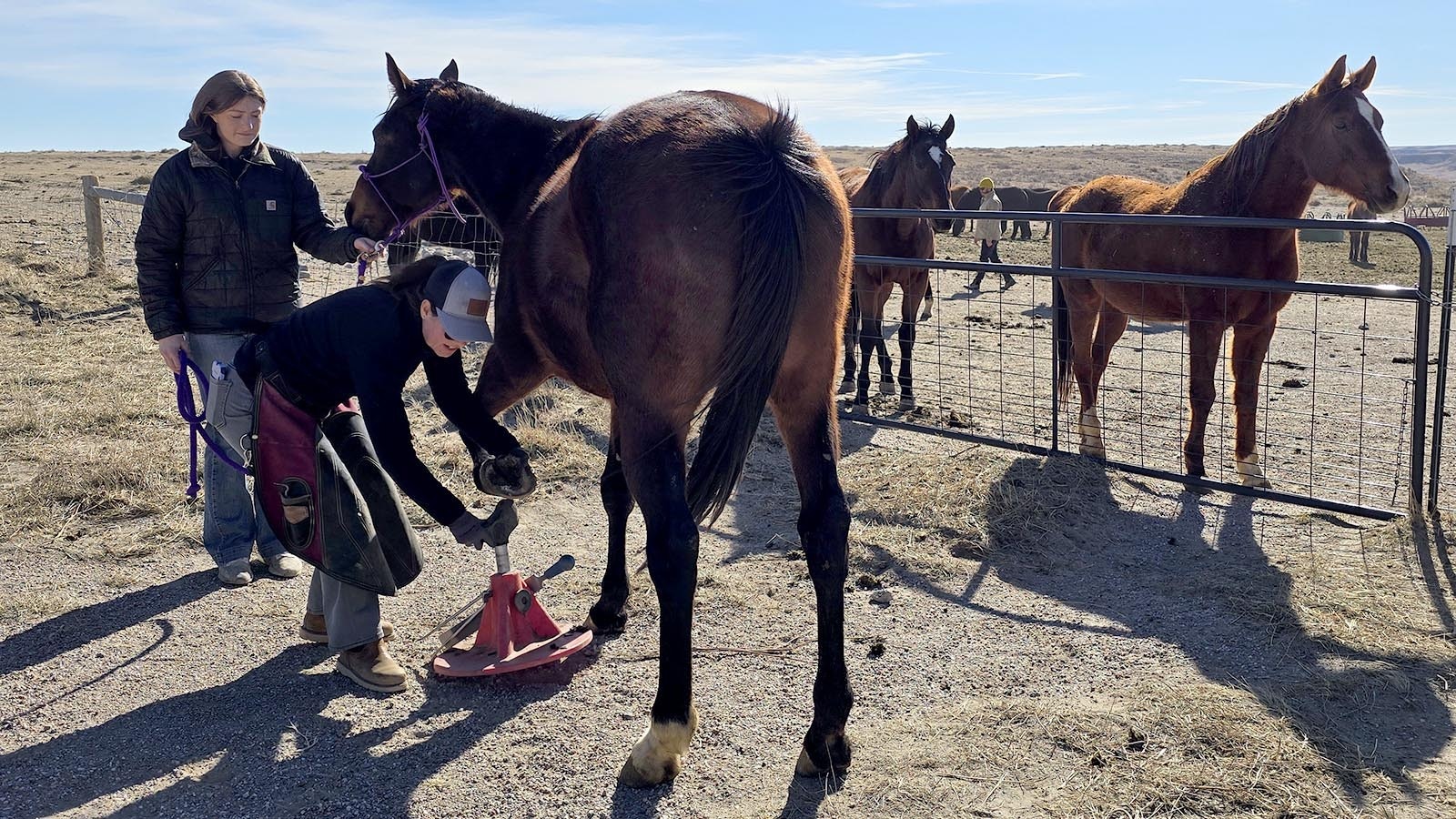
Meghan McGann works on a horse's hoof at Kate Anderson's ranch in Chugwater, while several other horses wait patiently in the background for their herd member to return. (Renee Jean, Cowboy State Daily) 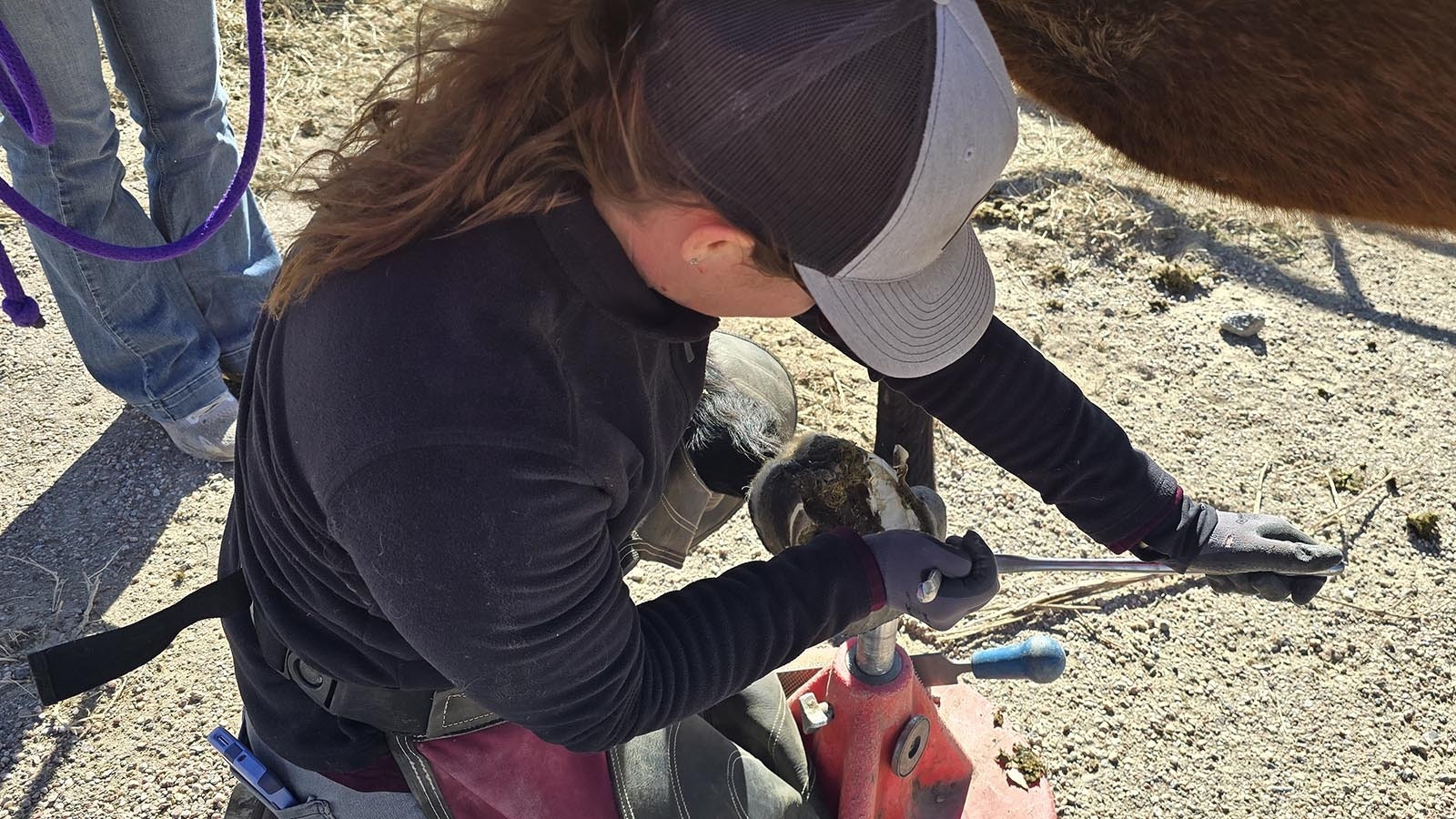
Meghan McGann works on a horse's hoof at Kate Anderson's ranch in Chugwater. (Renee Jean, Cowboy State Daily) 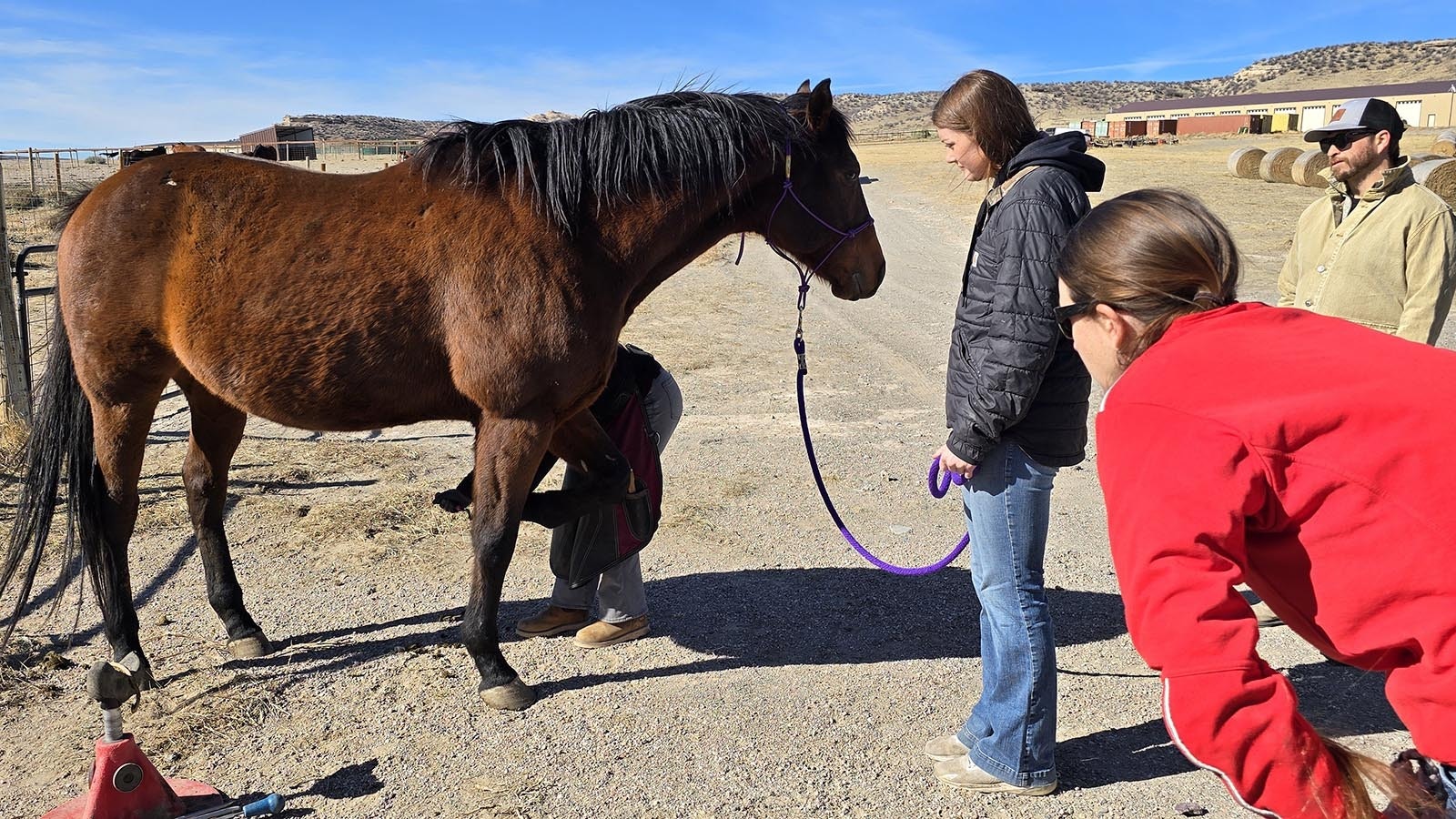
Kate Anderson, front, looks on as farrier Kate McGann, behind the horse, works on this racehorse's hooves. (Renee Jean, Cowboy State Daily) 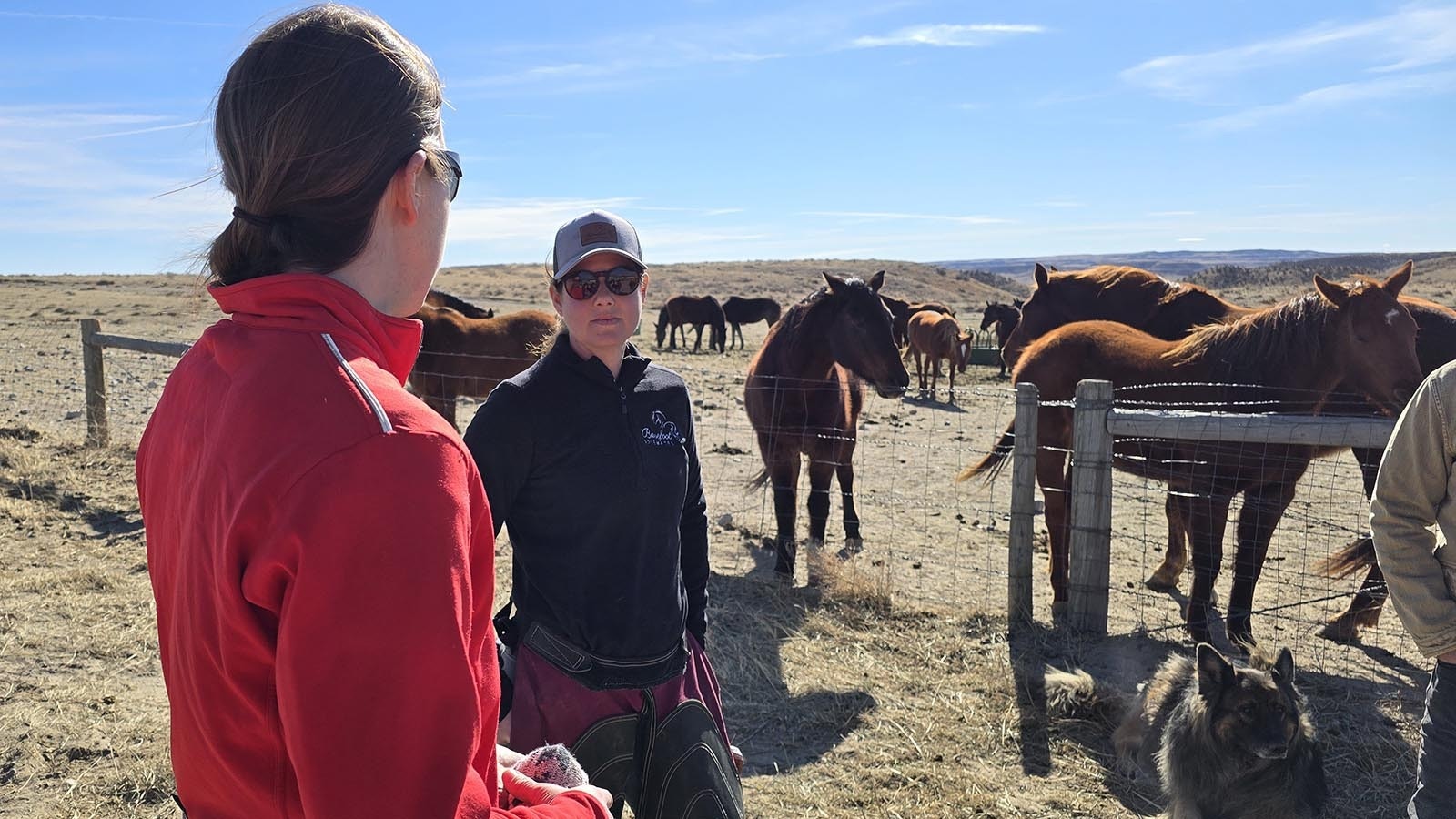
Kate Anderson, front, talks to farrier Meghan McGann about the care they're giving the retired racehorses, in the background, at Anderson's ranch in Chugwater. (Renee Jean, Cowboy State Daily)
Last-Ditch Efforts
Anderson wasn’t looking to cure racehorses with the world's worst hoof problems when she started out. That's something that happened by accident.
A classically trained dressage rider, Anderson began buying Thoroughbreds to rehabilitate and resell from off the track at Arapahoe Downs in Denver in 2016.
At the time, she was actually seeking to avoid horses that had any severe or costly problems.
“We were rehoming quite a few horses every year,” she told Cowboy State Daily. “Right around 30 to 40 head of horses. And inevitably, you gather horses that end up having problems that were not obvious.”
Anderson took a traditional approach with these problem horses at first — corrective trimming, glue-on shoeing, bodywork, and the like.
“A lot of them it might help, but it never really restored them, to the point where they could be confidently adopted out,” Anderson said. “So, we started just turning them out on our ranch.”
Anderson had no particular plan in mind for them at that point.
She’d already done everything she knew to help them, and she needed to focus on the horses she could help.
Then something completely unexpected happened with the horses she had given up on and was leaving to roam free on her ranch in Chugwater.
“We noticed over the years that these horses were improving on their own,” she said.
Not just by a little, either. By a lot.
They were like completely different animals.
“So, we started to use that more heavily, and eventually it became our first line of care for horses that have problems,” she said. “We would immediately turn them out.
"Instead of it being a last-ditch effort, it became our primary defense.”
The Gift Of Varied Terrain
There’s been a consistent belief in the racehorse industry that Thoroughbreds just have genetically deficient feet.
They're destined to a post-racing life of long toes, low heels, flat soles, and other such problems. They’re like hothouse beauties that must be coddled to the end of their days.
But from what Anderson has seen at her ranch, this turns out to be something of a myth.
Thoroughbreds aren’t born with bad feet. Those deficient feet are made.
And the Wyoming landscape, with its gift of varied terrain and abundant sagebrush, can help heal those deficient feet.
“I have a very strong hunch that movement is critical,” Anderson said. “Probably not just in horses, but since we’re talking about horses specifically, they need to move.
"I think we’re increasing the blood flow in the body in general, and in the feet especially.”
In the high plains, varied terrain is a given, which is true of Anderson’s ranch in Chugwater as well.
The ground can be sandy, grassy, gravelly, rocky — her four-legged patients have their choice of whatever feels best to their aching feet.
“The foot is highly innervated,” Anderson said. “There are a lot of nerves in the foot that provide feedback to the horse from the environment.
"So, I think, without getting that feedback to the foot, it’s hindering their ability to heal.”
There’s also a cushion in the back of the foot that tends to atrophy if a horse doesn’t move enough or is shod for a long time, Anderson added.
“So, I think we’re starting to restore some of the health of those tissues through movement, and then we’re actually giving these horses time to heal,” she said. “This is not a three-month or a six-month rehab protocol.
"These horses are one to two years of turnout before the foot is confidently in a better spot.”
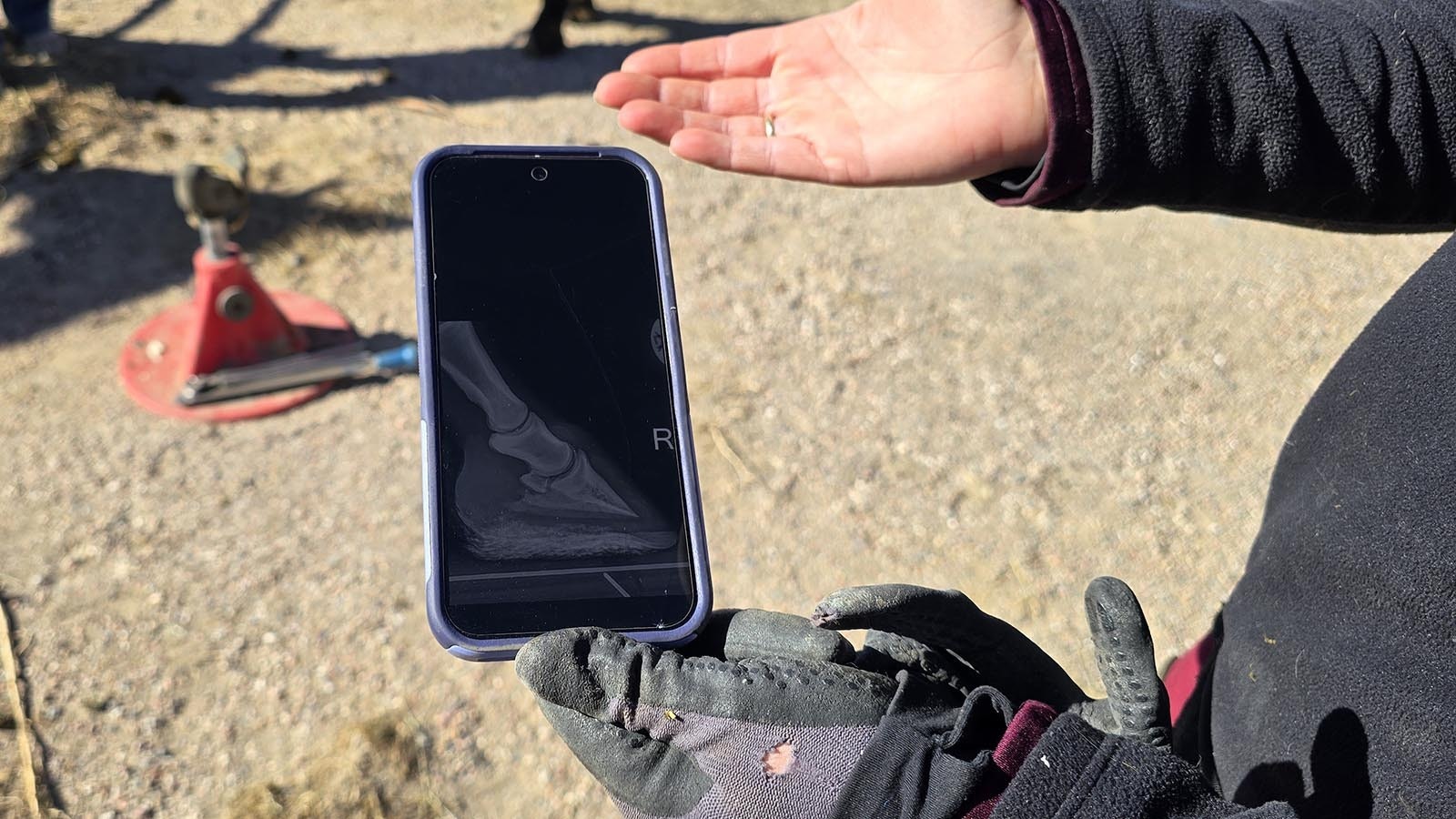
An X-ray of a healthy horse's hoof. (Renee Jean, Cowboy State Daily) 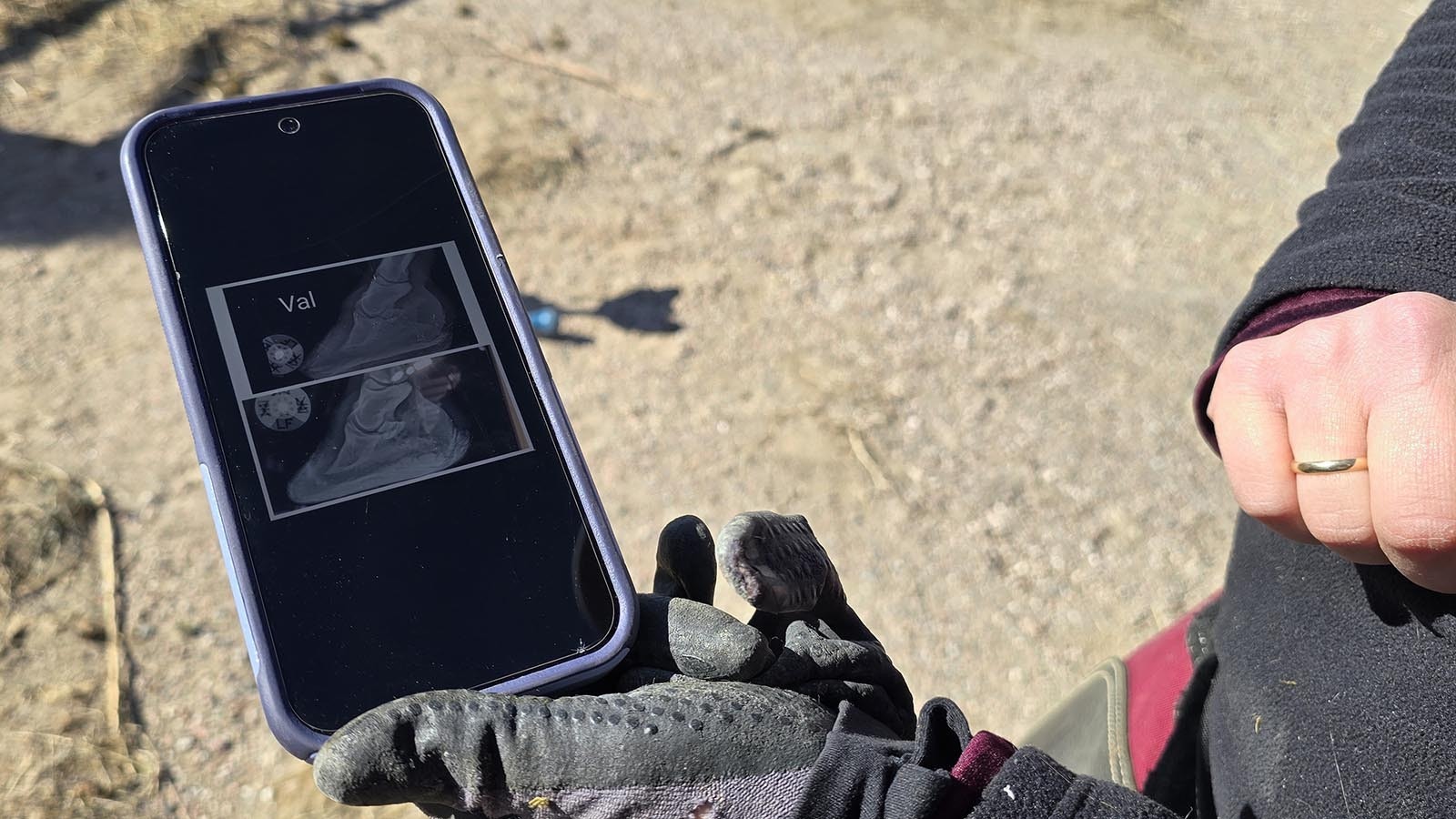
X-rays of two less-healthy hooves. (Renee Jean, Cowboy State Daily) 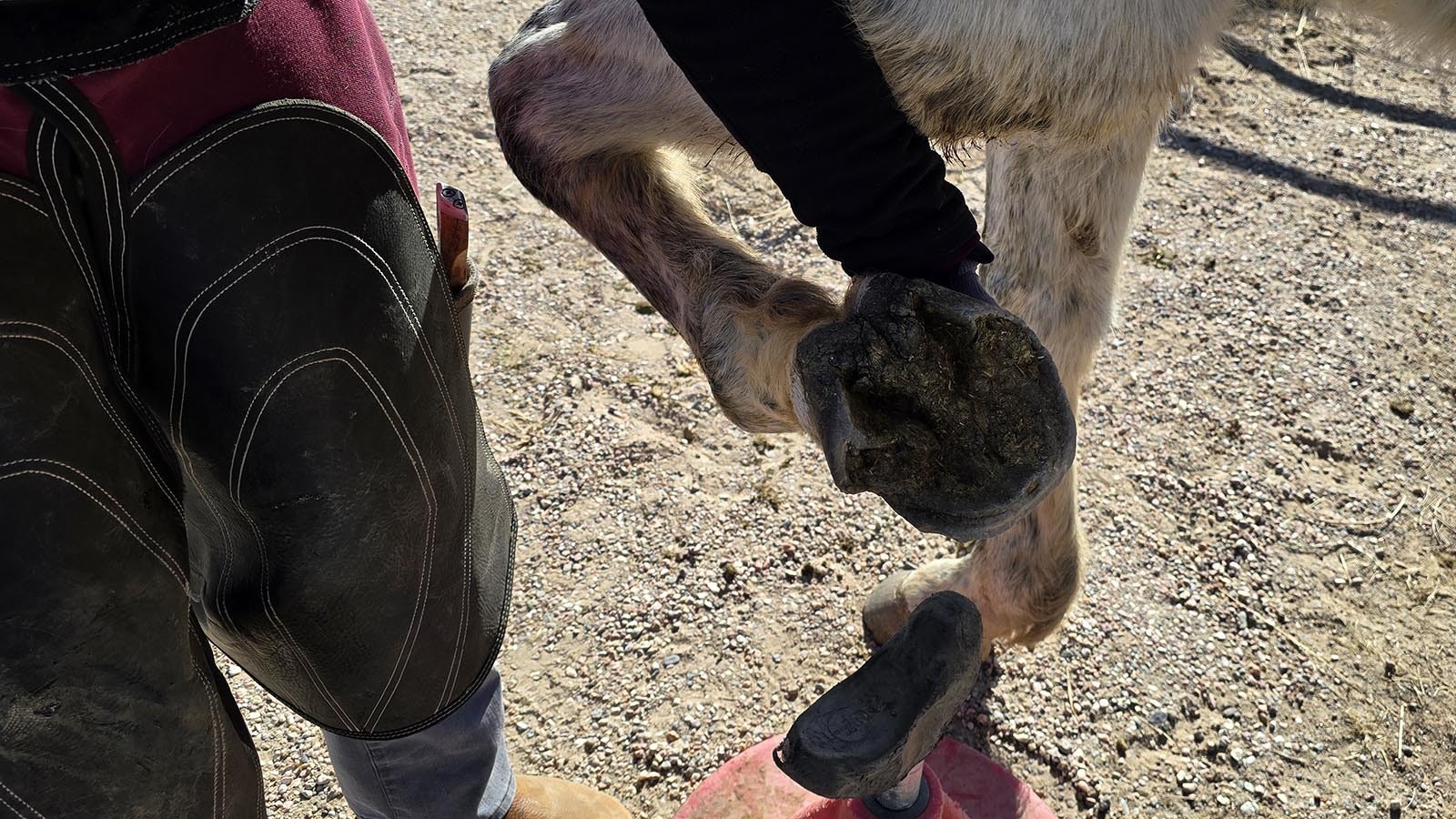
Damage to this horse's cuticle causes its hoof to grow back with a depression that could be dangerous if not properly trimmed. (Renee Jean, Cowboy State Daily)
Something About Sagebrush
Diet is another factor Anderson believes might be crucial.
“Racehorses typically have a heavy grain diet, which for horses can cause problems with digestion,” she said. “It basically changes their gut biome and how they digest, and they tend to have hay that’s not very diverse. It might be one or two, maybe three species of grass or alfalfa.”
When they get to Anderson’s Chugwater Ranch, however, that changes.
“They eat everything out here,” Anderson said. “From the sage to the bushes on the hills and the grass. It’s everything. And they go through a pretty notable metabolic shift.”
As a result, there’s a period where the horses do look a bit rough, like they might be getting worse instead of better.
“But when they get through that, if we let their gut heal, they come out the other side looking amazing,” Anderson said. “They develop more muscle, and they tend to carry their weight really easily at that point.
"Thoroughbreds are known for being hard keepers, but we’re just not seeing that after they go through that metabolic shift,” she added. "So, I think there’s likely healing of the gut that’s occurring, which will also play a role in healing the foot.”
“Hard keepers” refers to the thinner profile that is typical of racehorses.
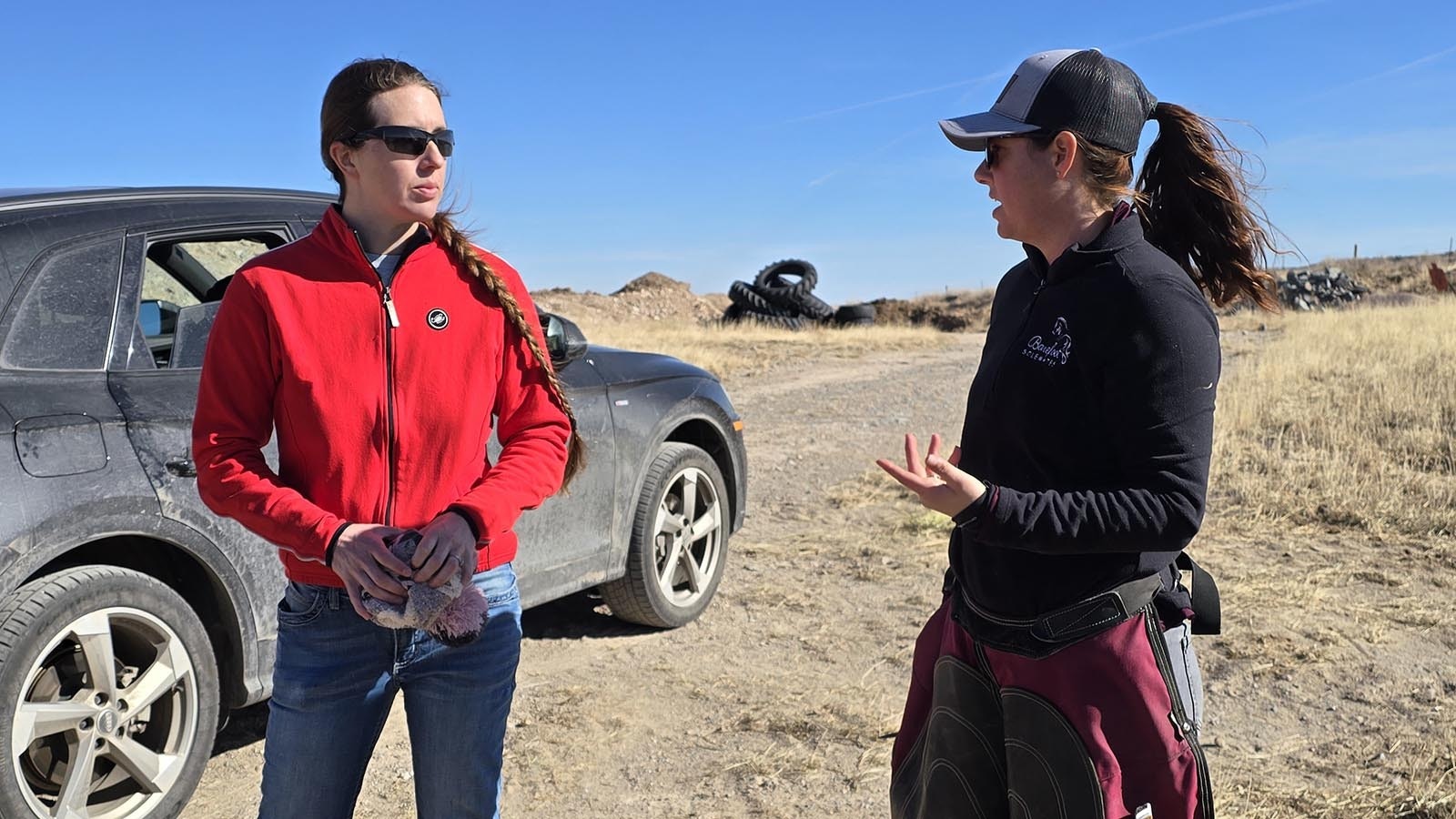
Kate Anderson left, and Meghan McGann discuss next steps for horse care at her ranch in Chugwater. (Renee Jean, Cowboy State Daily) 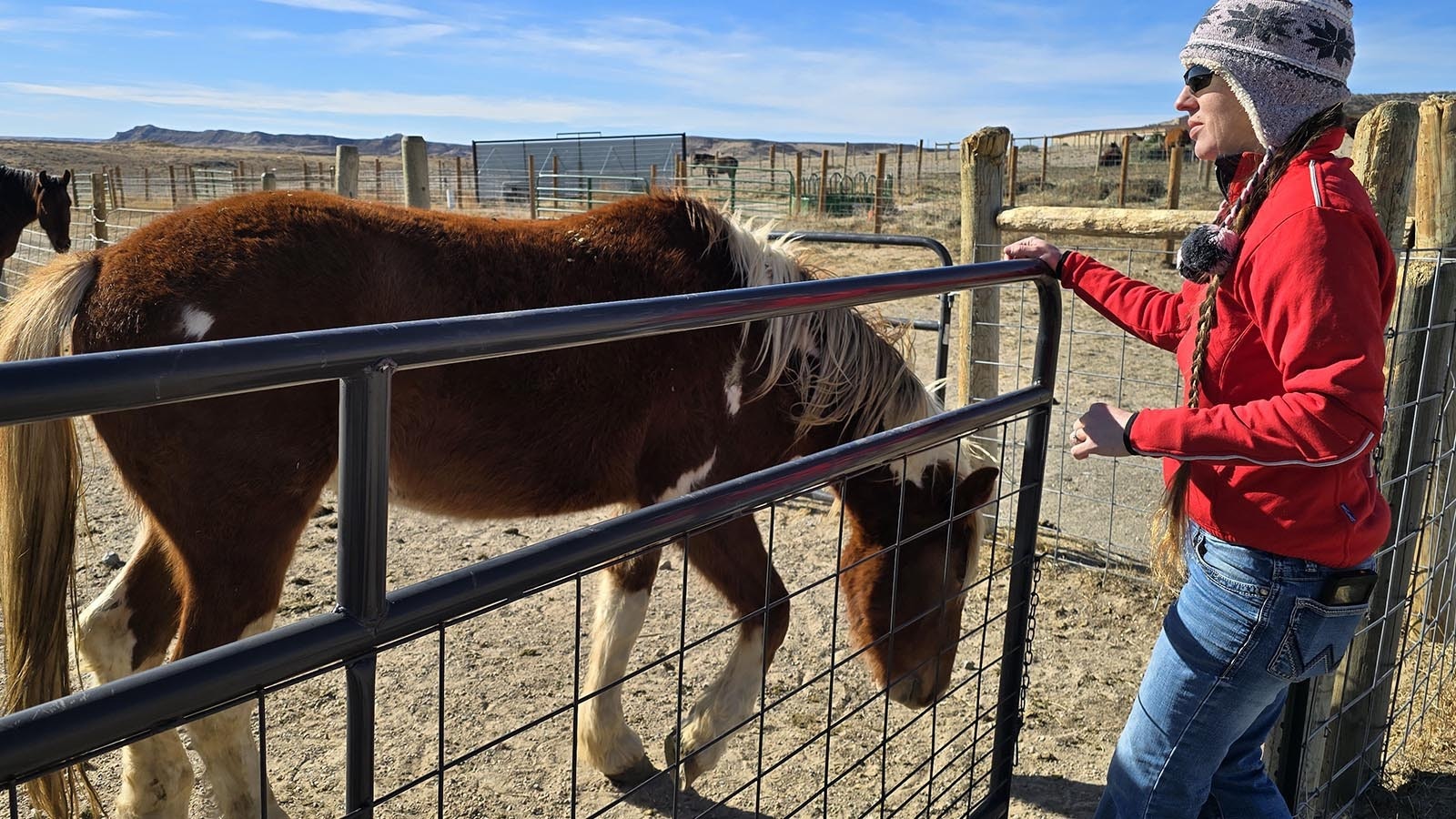
Kate Anderson shuts the gate behind her at her ranch in Chugwater. (Renee Jean, Cowboy State Daily) 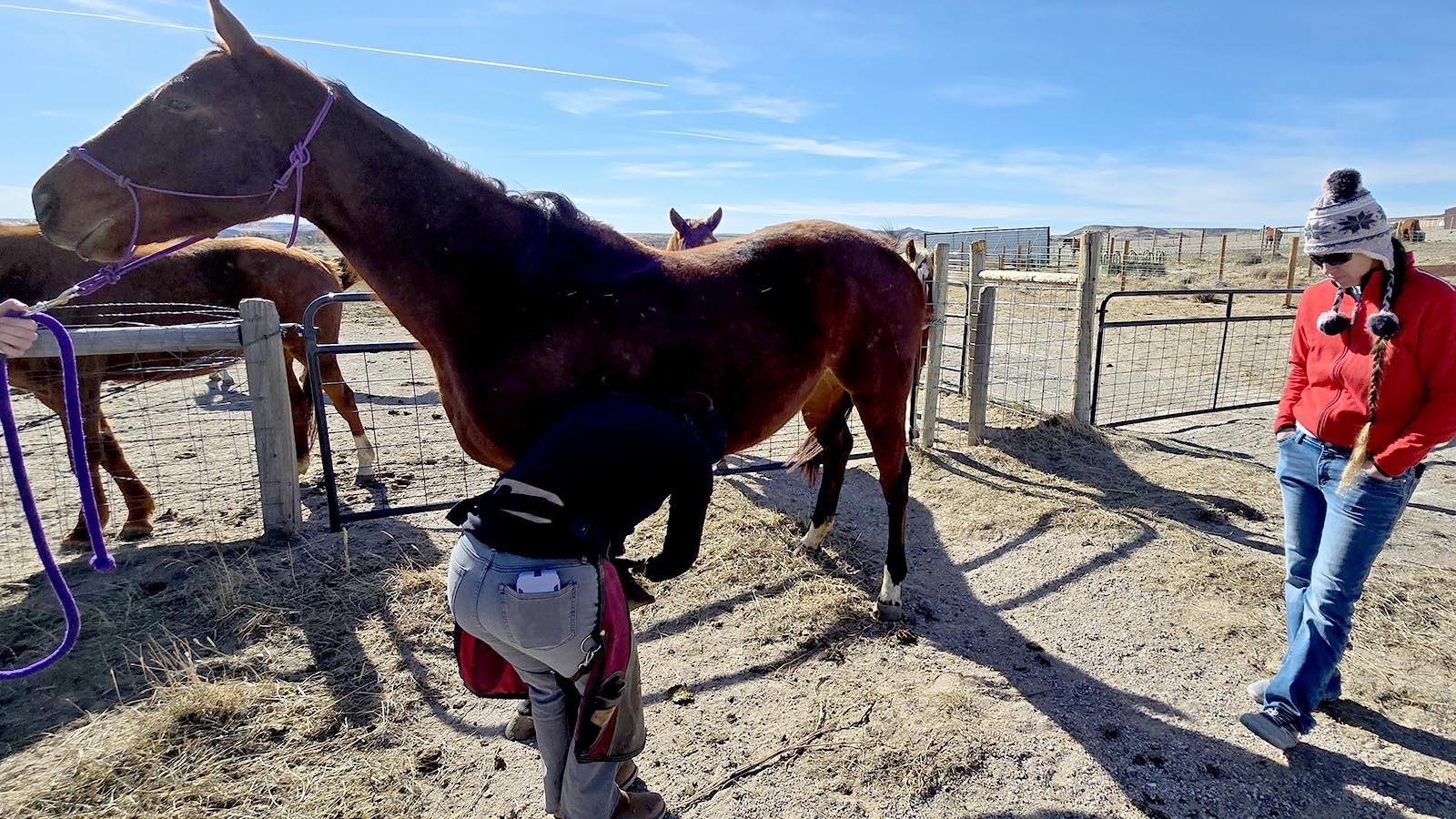
Kate Anderson, right, and farrier Meghan McGann discuss a racehorse whose hooves are being trimmed at Anderson's ranch in Chugwater. (Renee Jean, Cowboy State Daily) 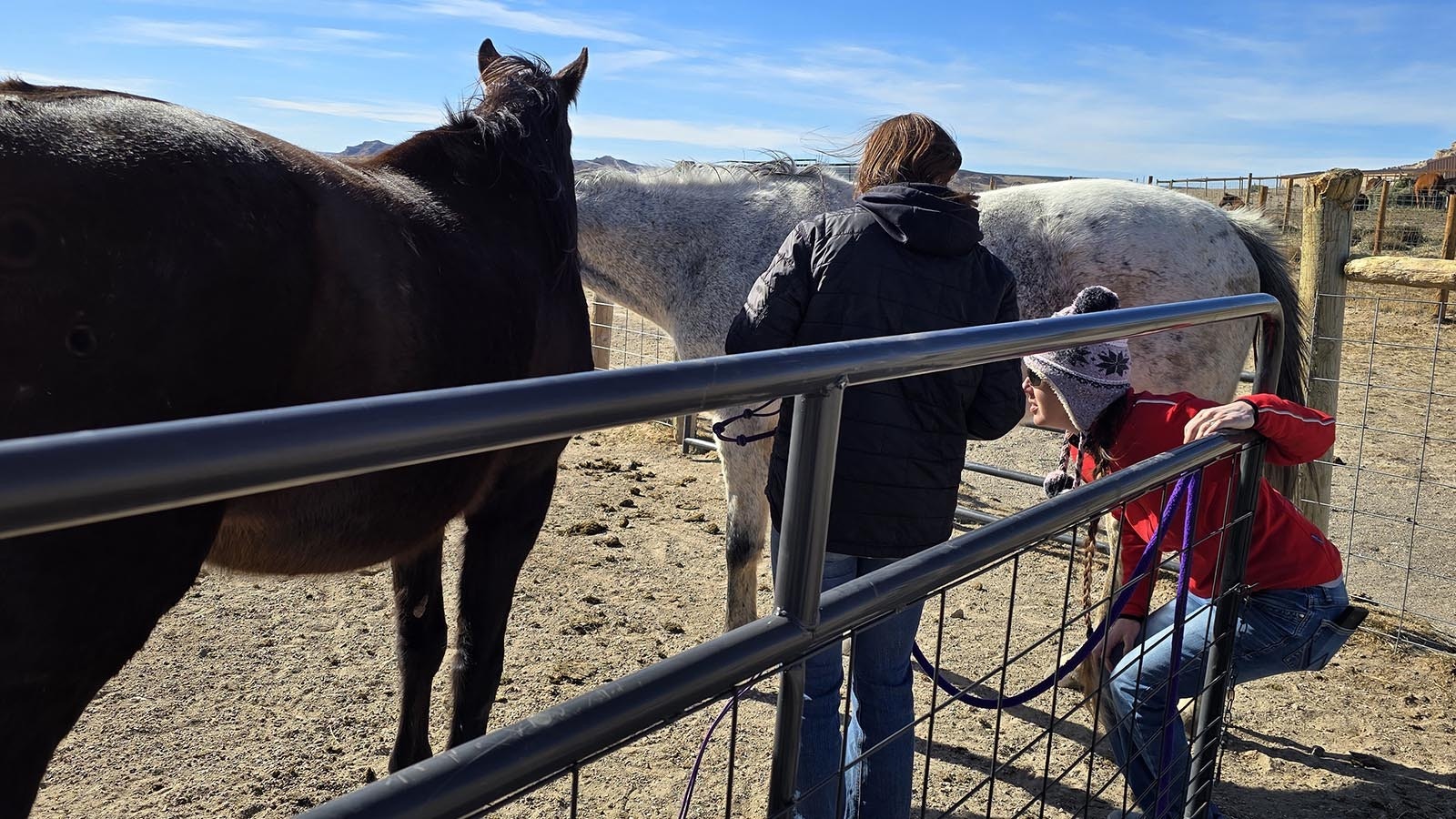
Kate Anderson, kneeling, looks for the next racehorse she wants to bring out for a hoof trim at her Chugwater Ranch. (Renee Jean, Cowboy State Daily)
Research Ongoing
Word has begun to spread in the horse-racing industry about what Anderson is doing at her Chugwater Ranch.
As a result, she’s taken over the care of some very high-dollar horses, some worth upward of $2 million or more, and some of them from foreign countries, like a filly recently flown in from France.
She’s also hearing from many racehorse owners who are interested in what she’s learning at the ranch about better hoof care for racehorses.
“They’re either already trying to incorporate more turnout or downtime and that sort of thing,” she said. “We’re also seeing a little more (of) horses starting to race, (where) they basically train without shoes on, and then they might get shoes for the race and then they’re pulled.”
Anderson has begun working with noted hoof researcher and veterinarian Dr. Robert M. Bowker, a Michigan State University professor emeritus of anatomy who has examined hundreds of equine hooves over a 40-plus-year career.
“His goals are, he’s very passionate about learning about horses,” Anderson said. “So, his primary goal is, ‘How can we help these horses?' And secondary to that is … publishing what we find in our studies.
"So, we’re currently doing a combination tracker and behavioral study.”
Anderson met Bowker when she went to hear a lecture by a well-known farrier who knows Bowker.
She invited the farrier to come out and look at the work she was doing and, after visiting the ranch, the farrier put Anderson in touch with Bowker.
“We check every single horse every day,” Anderson said. “And for the research, we’re utilizing trackers and taking notes of what’s happening on a day-to-day basis.”
Anderson plans to continue research with Dr. Bowker and hopes to really hone in on how the Wyoming landscape heals horses, starting with their hooves and ultimately traveling up to their backs.
“We’re starting to gather enough hoof X-rays to start to see patterns over time, as well as patterns between horses,” Anderson said. “And we’re lucky, because we have a pretty large number of horses — 75 right now — and we get to keep most of them for several years. So, this is not just a snapshot.”
It’s groundbreaking work happening in a slice of Wyoming frontier where the horses roam free over healing red dirt and watch farriers work under a bright sky with their wide and curious eyes.
Renée Jean can be reached at renee@cowboystatedaily.com.