Dear editor:
Rep. John Bear says the world needs more cowboys and fewer “eco-feminists.” It’s a catchy line, but catchy doesn’t mean correct. What it really offers is a false choice: tradition or education, grit or intellect, Wyoming or the wider world.
That framing might work for a culture war headline, but it doesn’t work for reality.
Here’s the truth: the world doesn’t run on single archetypes. It never has.
Cowboys didn’t survive on toughness alone. They relied on knowledge of land, weather, animal behavior, cooperation, and adaptation.
Strip away thinking, learning, and problem solving, and the cowboy myth collapses into pure fantasy. The irony is that the very independence Bear celebrates depends on the same intellectual tools he dismisses.
The idea that universities must choose between “practical” education and so-called “woke” disciplines misunderstands what education is for.
Universities aren’t trade depots designed only to produce immediately monetizable skills.
They are places where people learn how to think, write, analyze, argue, innovate, and understand systems larger than themselves. Those skills don’t expire. They travel across careers, industries, and generations.
Calling entire fields of study useless because they examine gender, power, culture, or the environment isn’t serious critique — it’s ideological shorthand.
Words like “woke” and “cultural Marxism” aren’t evidence; they’re conversation stoppers. If a program is ineffective, prove it with data. If a course is poorly designed, improve it. But dismissing inquiry itself is how societies stagnate.
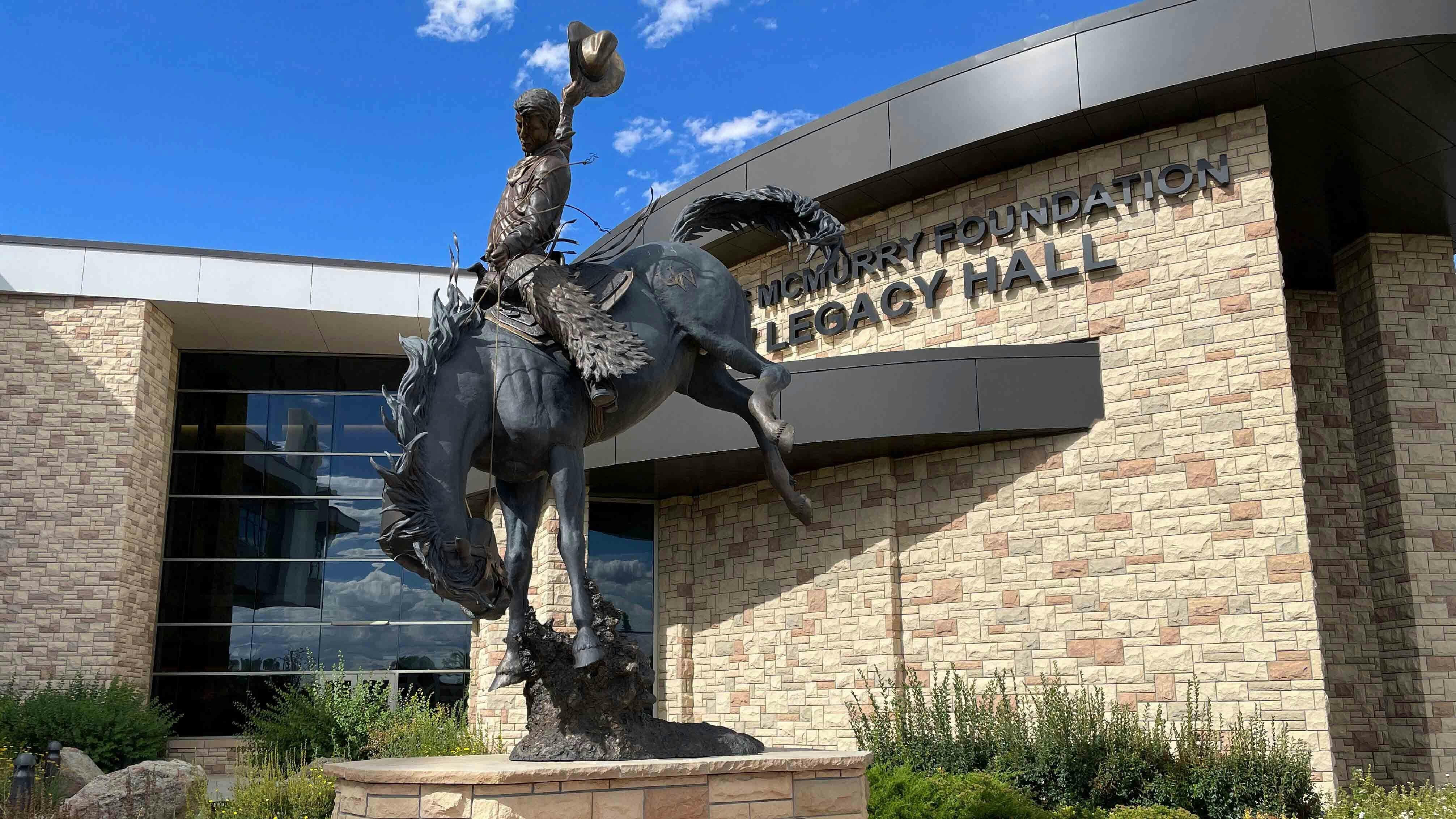
And let’s be honest about the “cowboy” metaphor. It’s meaningful to many people, but it’s also selective.
It centers a narrow image of strength and identity while implying that anyone outside that mold is less valuable.
Wyoming history, like all history, is more complex than one symbol. Women, Indigenous peoples, immigrants, scientists, teachers, laborers, and scholars all shaped this state and continue to do so.
The modern world isn’t asking Wyoming students to choose between staying rooted and being educated. It’s asking them to be adaptable.
Climate pressures, economic shifts, healthcare needs, technological change, these aren’t solved by toughness alone.
They require understanding systems, ethics, data, and human behavior. Environmental science doesn’t erase ranching; it helps preserve land.
Gender studies doesn’t destroy communities; it helps explain how policies affect real people differently.
Bear worries that certain educations send students “off to Boston or San Francisco.”
But mobility isn’t betrayal. People leave, learn, and return or they stay and apply what they’ve learned locally.
A strong state isn’t one that traps its young people inside a single identity; it’s one that equips them to succeed anywhere and choose Wyoming because it’s thriving, not because alternatives were closed off.
This doesn’t mean tradition has no place. It means tradition isn’t fragile. It doesn’t need protection from ideas.
If cowboy values truly stand for resilience, responsibility, and independence, then they can coexist with critical thinking, academic freedom, and intellectual diversity.
The world doesn’t need fewer eco-feminists any more than it needs fewer cowboys. It needs people who can think across difference, solve complex problems, and respect multiple ways of knowing.
The real danger isn’t education that asks hard questions. It’s the belief that only one kind of person is allowed to ask them.
Savannah Maddocks, Gillette