It was a field of dreams that no one else wanted when Tommie Kniseley and her husband David showed up in 2006, looking for a little place to call their own.
The couple liked what they saw and weren’t put off when they learned the city wouldn’t be willing to provide them with sewer or water.
“Developers had been looking at it,” Kniseley recalled. “But at the time, the county and state were not agreeing on things, so it couldn’t be developed. Then we came along and said, ‘Hey, this looks like a great little place.’ And they’re like, ‘Well you’ll have to take it without strings attached, or having a hookup to city water or anything.”
At the time, the location wasn’t all that close to the city anyway, and the couple decided that’s the way they liked it.
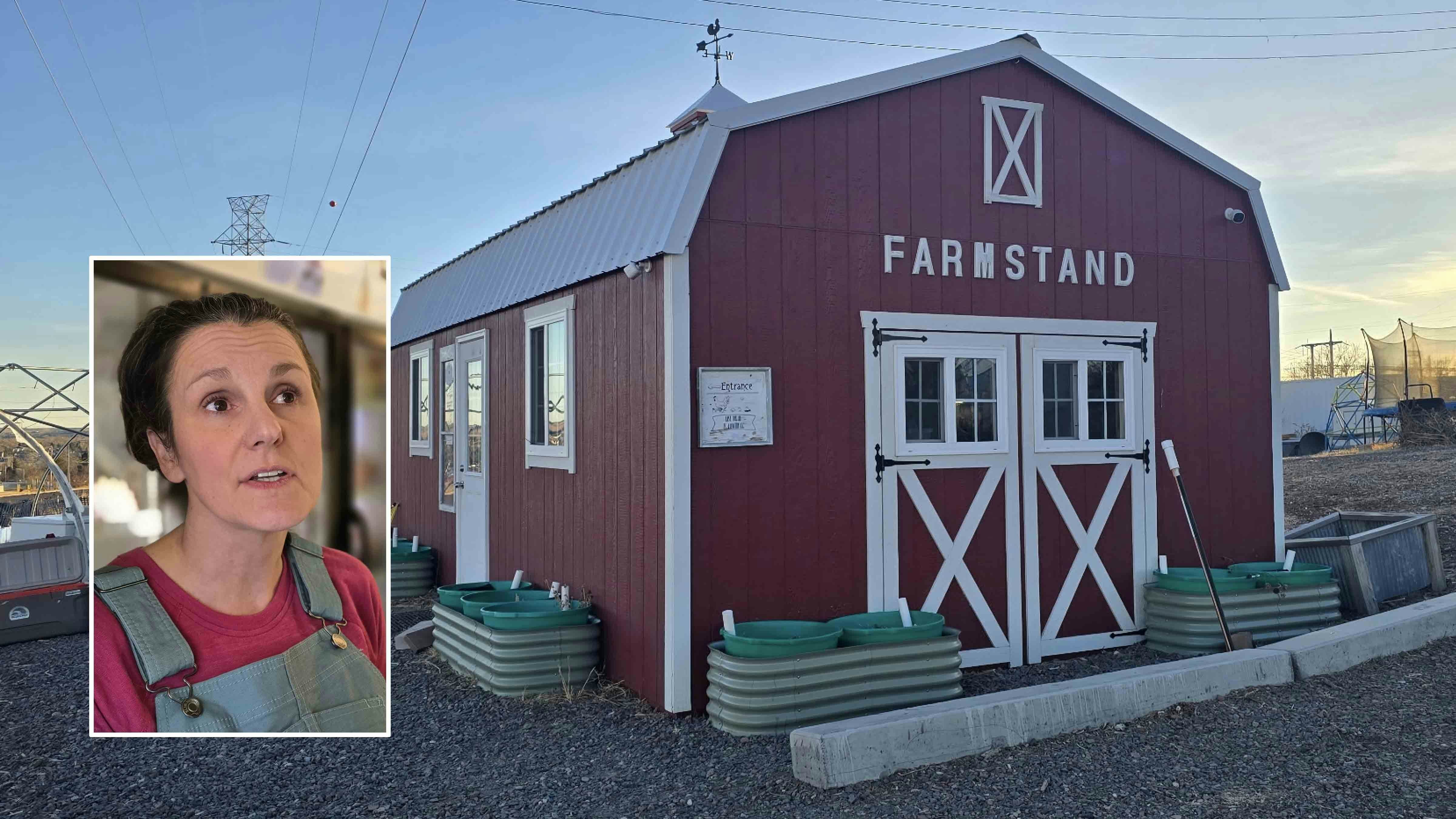
Twenty years later, though, a lot has changed for this couple and their ranch, where they have been raising chickens and turkeys as well as the occasional dairy cow, steer, or bull. Cheyenne’s tentacles have reached out and grown up around them. Now the couple faces a forced annexation that threatens not just their way of life, but their family’s business model. A shock that comes even as the couple has just begun to find their stride, thanks to Wyoming’s Food Freedom Act, with a 307-style farmstand where they sell products from not just their operation but others as well.
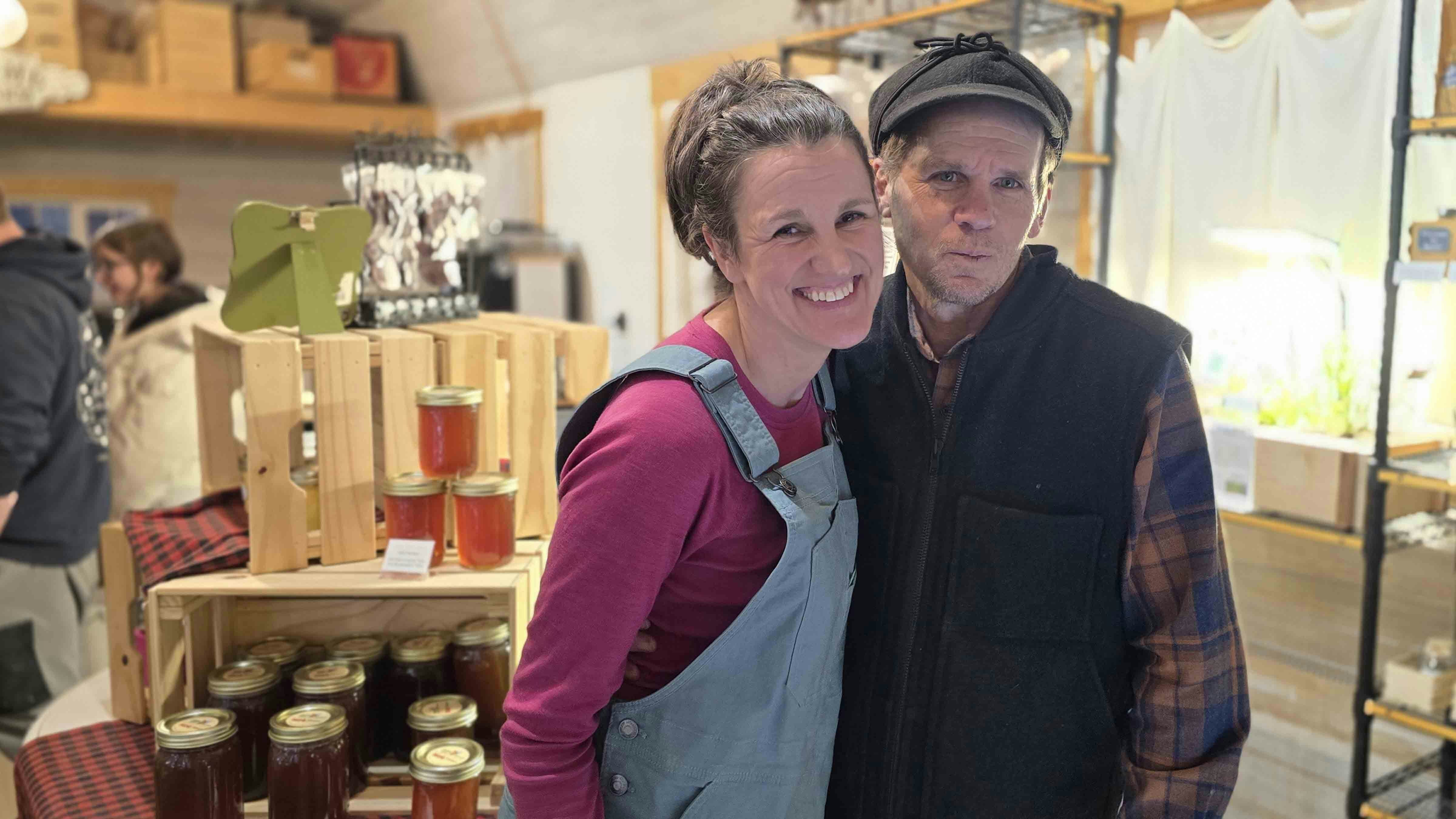
“Isn’t it ironic,” Kniseley said, shaking her head as she looked around the store which carries products from about 50 producers in all. “Like, they kind of pushed this land into a farm use, or just a single household use, and now they’re like wait a minute.”
Kniseley remembers how the deer and the antelope used to play in their yard when they were first starting out.
“It was so fun, a great place to live,” she said. “And I’ve always grown something. We’ve always had like horses, and then we got chickens. That’s the gateway animal. Once you get chickens.”
From there began all the building and dreaming the couple was doing in the world, as they were raising their family.
“Honestly, we found a huge benefit with our children, too,” Kniseley said. “If we grew food, they ate their vegetables so much better, because they knew where it came from. They were part of the process.”
Seeing that was part of what made her think she wanted to do more, to help other families experience that as well.
A Map Foretold The Future
Kniseley told Cowboy State Daily she started asking questions in 2022, when she inadvertently learned their farm might be in the pathway of the city’s annexation plans. They were attending a city council meeting on an unrelated matter, when she happened to see the city’s plans for their farm’s future hanging on a wall.
“They had a huge map, almost as big as this wall,” she said, gesturing to one end of her farmstand. “And they had Jefferson Street going right through our property.”
Kniseley has been asking questions ever since, off and on, about what an annexation would mean for Wy fresh farm.
At first, she was told she’d be “grandfathered” in, and that they’d still be able to operate as before.
But that answer lacked specifics, she realized, and she really needed to know more.
“If I’m grandfathered in for one cow, but I have to keep her bred to produce milk, so I might also have a calf,” she said. And so do I —“ she stopped speaking and made a gesture with her hand, like a knife slitting her throat. Then she shook her head, before continuing, “I don’t want to do farming like that.”
And with meat birds, that’s a seasonal type of thing, Kniseley said. But sometimes things happen. Birds get sick. Birds get attacked. The whole flock might be lost.
Maybe one year she ends up not having any meat birds as a result for a year or two. Would that mean she could no longer restore her flock once she was able?
“So, I mean, just questions,” she said. “Even silly things, like, can I do three-year rabies vaccines for my animals in the city?”
And that’s just the beginning of all the questions she has for the ranch and its operation, let alone the Wy fresh farmstand she started during the COVID-19 Pandemic.
“I have 50 farmers depending on me,” she said “What is this going to cost them? We have to pass on our fees to customers, so I’m trying to prepare for everything, and we haven’t been getting answers. It feels like they’re just going to push it through.”
That was a feeling that intensified when Kniseley was told by a council member that her farm wasn’t a good use of land in Cheyenne, particularly as it is working to address a huge housing shortage.
Annexation isn’t the only area where Kniseley and her family have been at odds with the city of late, she added.
The city manages the drainage situation a bit differently than the county, and, so far, Kniseley has been unable to get them to agree to shunt water to where she and her family dug some ditches to manage the runoff.
That runoff is carrying down sediment and covering up her fences. That led to one of her dairy cows wandering over the fence one day and getting lacerated teats.
Kniseley still had to milk the poor cow, otherwise it would get mastitis. But because she’s been unable to work things out with the city, she’s stopped keeping a dairy cow. She doesn’t want that situation to ever repeat itself again.
Addressing Safety Concerns
Cowboy State Daily reached out to Cheyenne Mayor Patrick Collins, who was not available to address questions.
Cheyenne city officials told Cowboy State Daily the city has been identifying areas where county land is now completely surrounded by the city limits. Wy fresh farm and several other properties are in one of these last, remaining pockets, identified in 2022.
Cheyenne Senior Planner Seth Lloyd told Cowboy State Daily there are a number of practical reasons why cities prefer to annex such areas.
“Whenever those property owners exit their land, they’re going to be driving on a city street,” he said. “There’s continuity of fire department, police department responses, and continuity of regulations that generally comes to county pockets.”
In the area, not necessarily at Wy fresh farm in particularly, there was a recent fire, Lloyd added, and the “weird nature” of county versus city pockets resulted in some misdirection for firefighters.
“So, there was confusion on the scene between the two different fire district fire departments,” he said. “There was like, ‘Who has jurisdiction here, who’s supposed to take the lead?’ Those sorts of things.”
Some of the properties in these county pockets also have other issues, such as septic systems that are too small for the lot, or parcels that are well under the city’s minimum acreage.
“So, there are potential issues with the water they’re getting out of the ground,” he said. “There’s potential issues with septic systems being too close to wells, that sort of thing.”
Annexation, he added, can make it easier to connect with city water and sewer in an area that has been continuing to develop.
On Track For Ag Zoning
Since the city has initiated a petition to annex the properties that include Wy fresh farm, Lloyd said all of those property owners will be allowed to continue any land uses they had that were legal in the county.
“So, if I had a legal car repair facility in the county and the city annexes me, I can continue that car repair facility,” Lloyd said. “That’s a land use determination, and deals with how you’re using the land.”
Both city and state codes support grandfathering in uses of property if the city is the one initiating the annexation.
But there are some complexities facing the Kniesleys, Lloyd acknowledged, particularly if the zoning were to end up being something besides agriculture.
If, for example, a disease did wipe out the ranch’s flock of meat birds, and they were unable to restore that population for a year or more, they would no longer be considered a continuing use and would no longer be allowed.
But, Lloyd, added, the planning department is recommending an ag zone for the property in its ordinance, which is to be presented to the council Feb. 9.
“I don’t see any reason why the council would not (give them that),” he added. “But it’s going through the process, so who knows what happens at the end of the day, but at the moment, they’re on track to have ag zoning.”
As far as the question about shooting coyotes who are attacking and killing birds in their flocks, that’s not a question he himself can answer, Lloyd said.
“That’s more of a question for our police department,” he said. “My department deals with the usage of the land. So, can they have a flock is the question you ask my department, and the answer is, ‘Yes, you can have a flock.’
“‘Can you protect your flock?’” he said. “I don’t know what options you have for protecting your flock. That’s more of a police department, in terms of firearms. It might be a health department, or something like that, in terms of putting out like poison. Or there’s different ways, like traps, so Animal Control might talk about traps, Health might talk about poison, and the police department might talk about guns and firearms.”
As far as the ongoing issue with runoff burying the family’s fences, Lloyd said that sounds like a problem that needs to be raised with the city’s engineer, to see if there’s a better solution going forward.
Making The Best Of A Pandemic
The Wy fresh farmstand, meanwhile, which has helped her family’s farm become a little more profitable, was an outgrowth of things that happened In 2020 during the pandemic.
“So was doing farmers markets here in town,” she said. “And the city shut down our farmer's market. Walmart’s shelves were bare, so I’m talking to farmers about it and my friend had a goat dairy. She has all this milk that’s perishable, and she has no way to sell it.”
One of her other friends, Chelsea, bakes bread that she was trying to sell, and there were Kniseley’s vegetables.
“So, we put together an online farmers market, and it did really well,” Kniseley said. “We all pulled together. And that’s what this has always been, a group of farmers just pulling together.”
Their online farmers market was a shoestring operation from the beginning, operating out of a horse trailer.
“We were really bootstrapping everything,” she said. “But it was really neat to see, all the people coming together to support us. And we needed that.”
Thanks to that, the group was able to put aside some of their money to buy an actual farmstand.
“We managed by the grace of God to buy this shed here that we’re using as a farmstand right before the crazy building costs skyrocketed,” she said. “I mean it was literally right before that.”
Kniseley watched YouTube videos about electric and plumbing, to figure out how to get everything working right.
“Then we just continued to grow and bring on other farmers,” she said. “Last year, we built a bigger greenhouse.”
Keeping Dollars In Wyoming
For Kniseley her mission has been to keep Wyoming dollars in Wyoming. And that’s what her customers like about the Wy fresh farmstand, too.
Rodney, who asked that his last name not be used, comes to the store weekly to buy fresh milk from The Spotted Dairy. He’s one of the many customers buying about 105 large gallon bottles of dairy three times a week.
“There’s nothing wrong with what’s going on in this store,” he said, as other customers came and went, arms loaded with 307 products of their choice. “They’re helping people. People are bringing stuff in to be sold, and people are coming in to buy that stuff to take care of their needs.”
It’s the American way, Rodney added.
“Everyone is just trying to make a living,” he said. “This is helping everyone.”
Rodney was among customers who have signed a petition asking Cheyenne to reconsider annexing the Wy fresh farm and its farmstand, that serves hundreds of customers.
Not all of those customers are from the Cheyenne area, either Kniseley added. Some of them come up from Colorado to shop in the store.
“I just talked to a customer today, who is from Colorado,” Kniseley said.
Kniseley told the customer she doubted that helped the city much, since there’s no income tax on food items.
On the contrary, Kniseley was told. The customer always turns her Wy fresh farmstand shopping trip into an entire day of shopping.
“She went to Hobby Lobby, she went here, she went there, and waited for us to open at 3,” Kniseley said. “So, I do feel like this could be a bigger benefit.”
Renée Jean can be reached at renee@cowboystatedaily.com.