LARAMIE — Kyle Summerfield found Charles Nye walking the halls of the University of Wyoming’s School of Energy Resources last week with news that couldn’t wait.
“I have a cool thing to show you,” Summerfield said, gesturing toward his visualization lab.
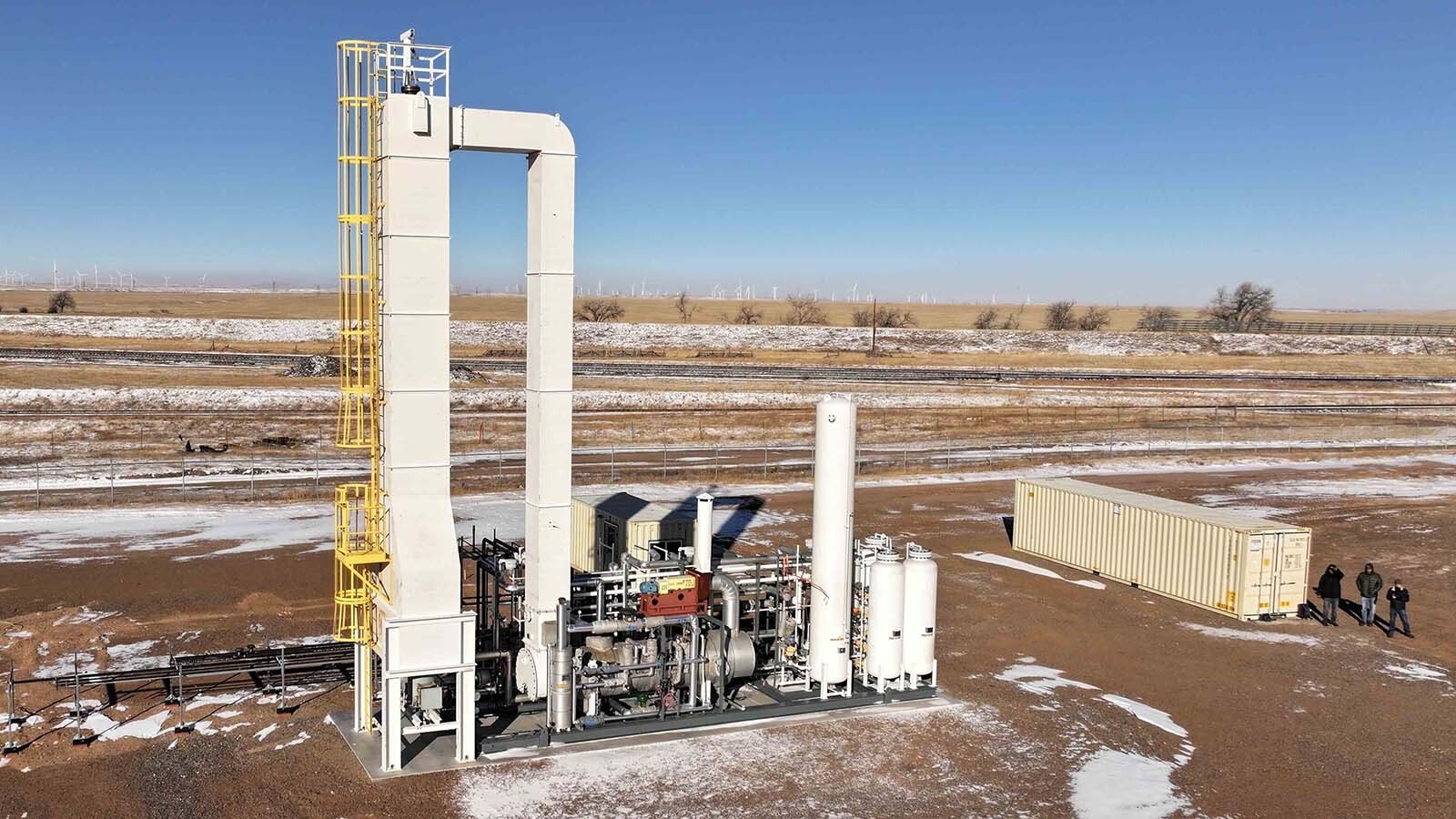
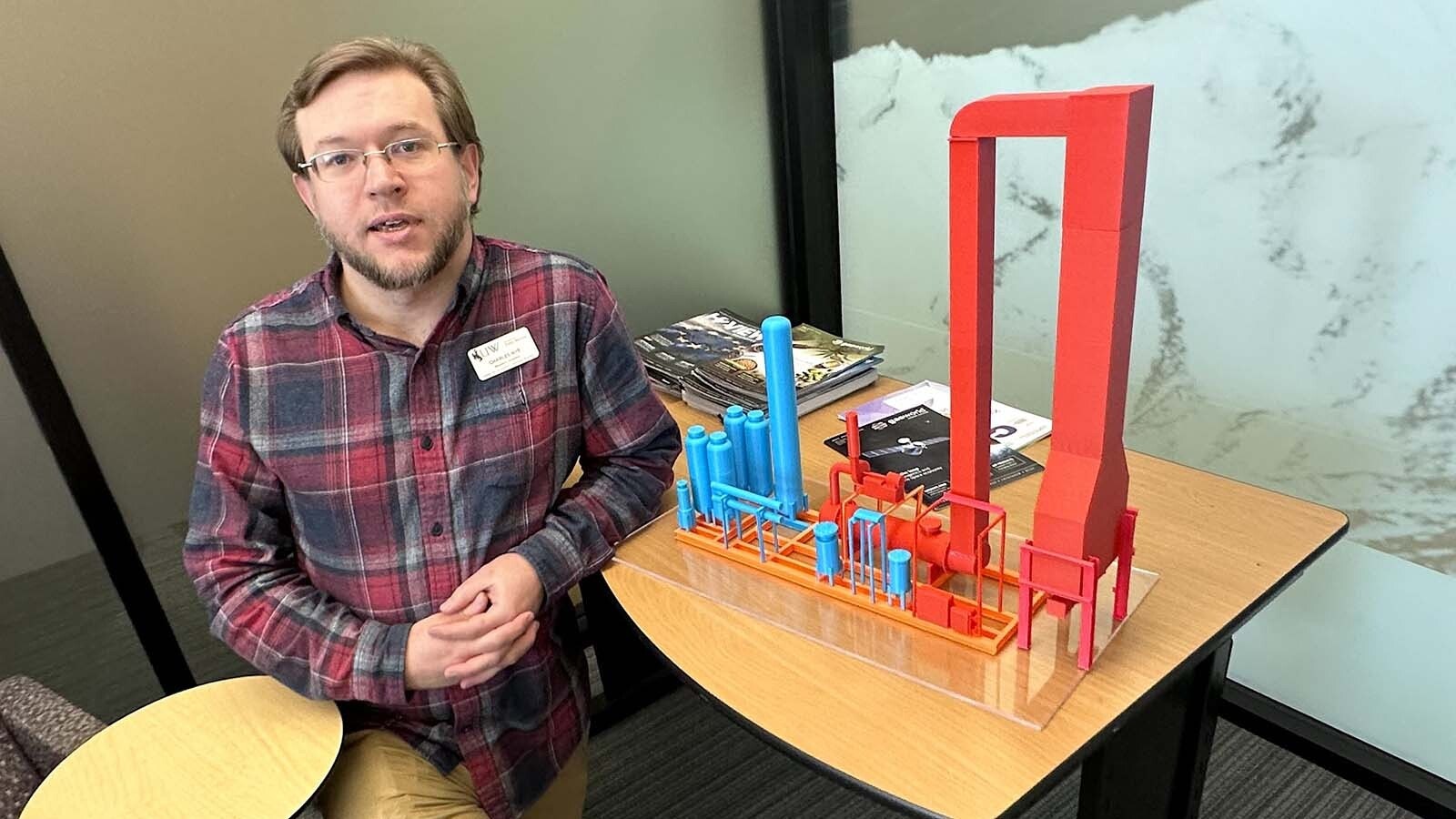
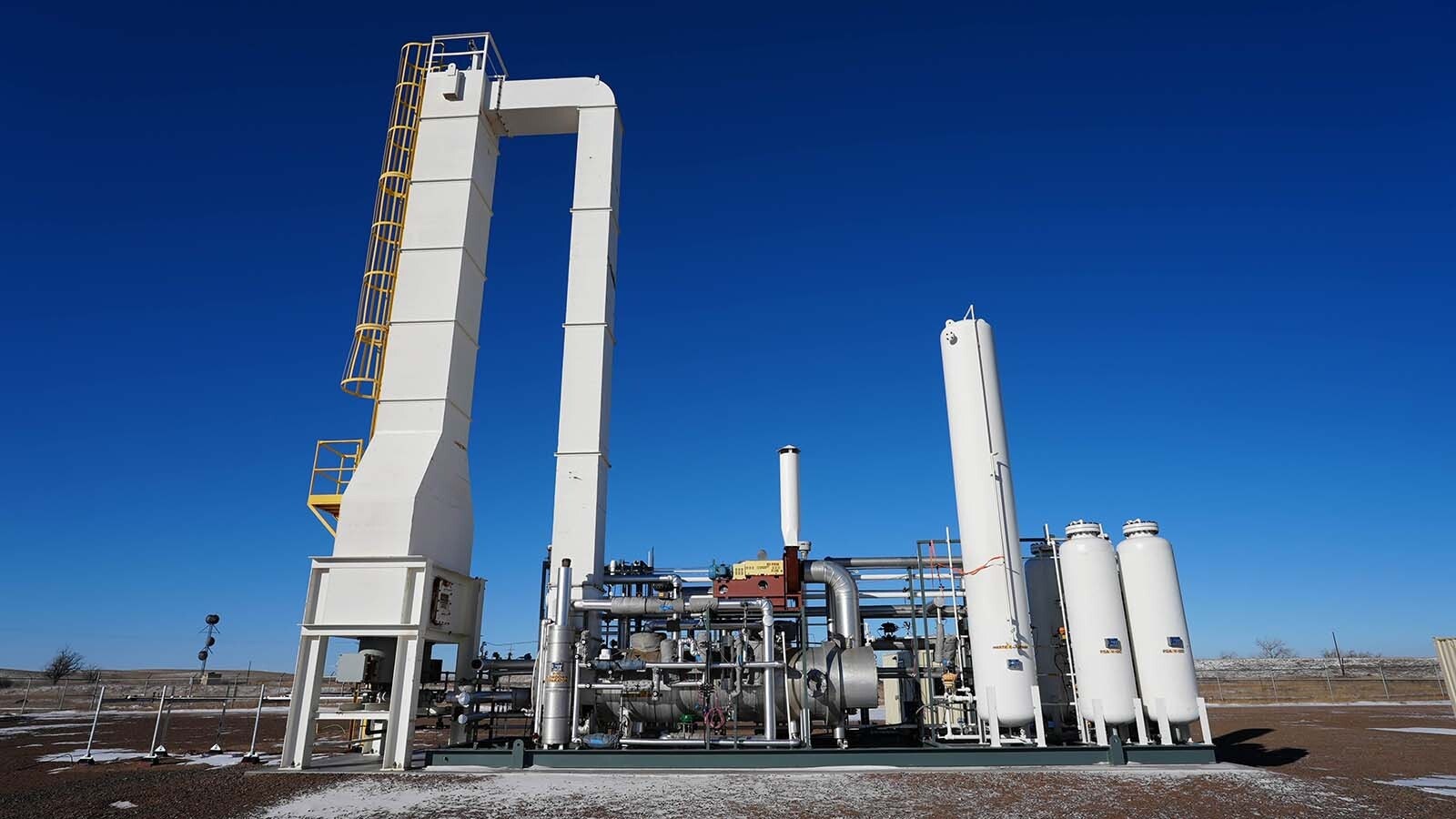
There, on one of several screens, Summerfield unveiled a navigable 3D model of what UW researchers believe will become a significant energy innovation — a pilot hydrogen production facility taking shape in Cheyenne.
His team had captured the device using drone footage, then transformed video and photos into a model that can be examined from all angles.
“From that 360 that we did, I put together a 3D model,” Summerfield explained, rotating the image to show pipes and equipment in vivid detail. “We can highlight things, we can generate novel perspectives.”
For Nye, a senior research scientist with UW’s Hydrogen Energy Research Center, the model represented something more than a technical achievement.
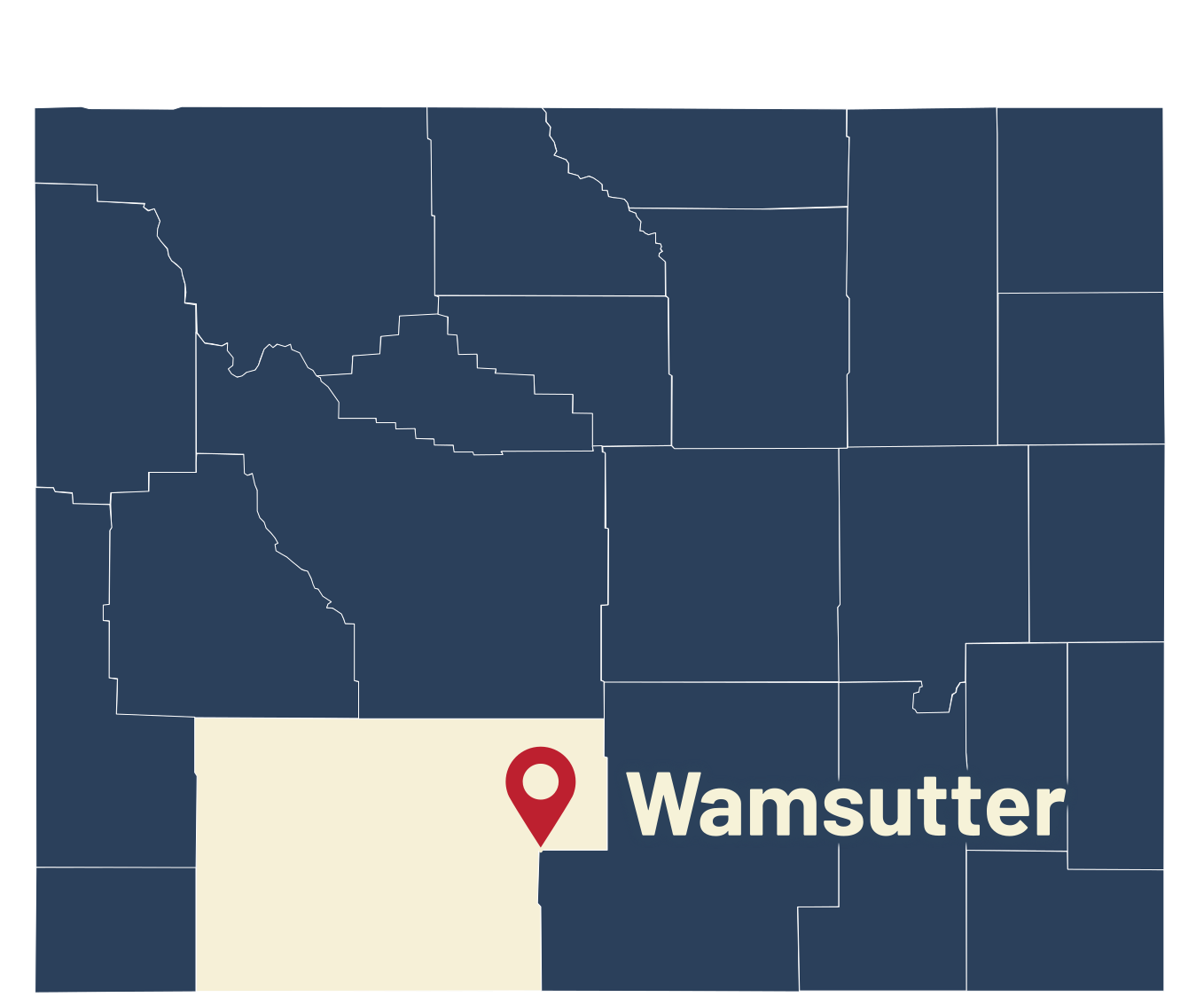
It was a window into Wamsutter’s potential energy future — one where oil and gas waste streams could be transformed into hydrogen fuel destined for markets in the Pacific Northwest.
Waste Transformed
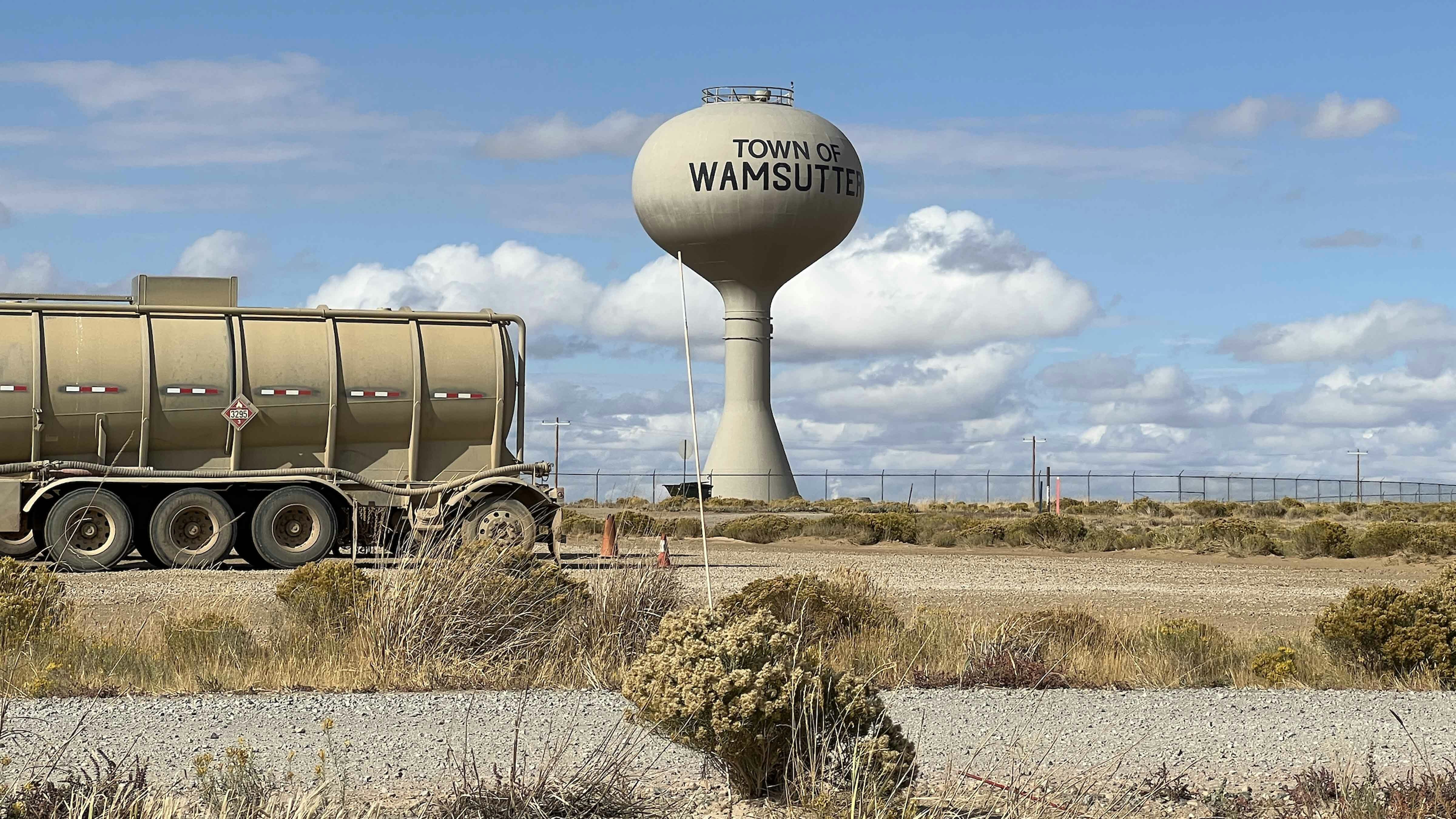
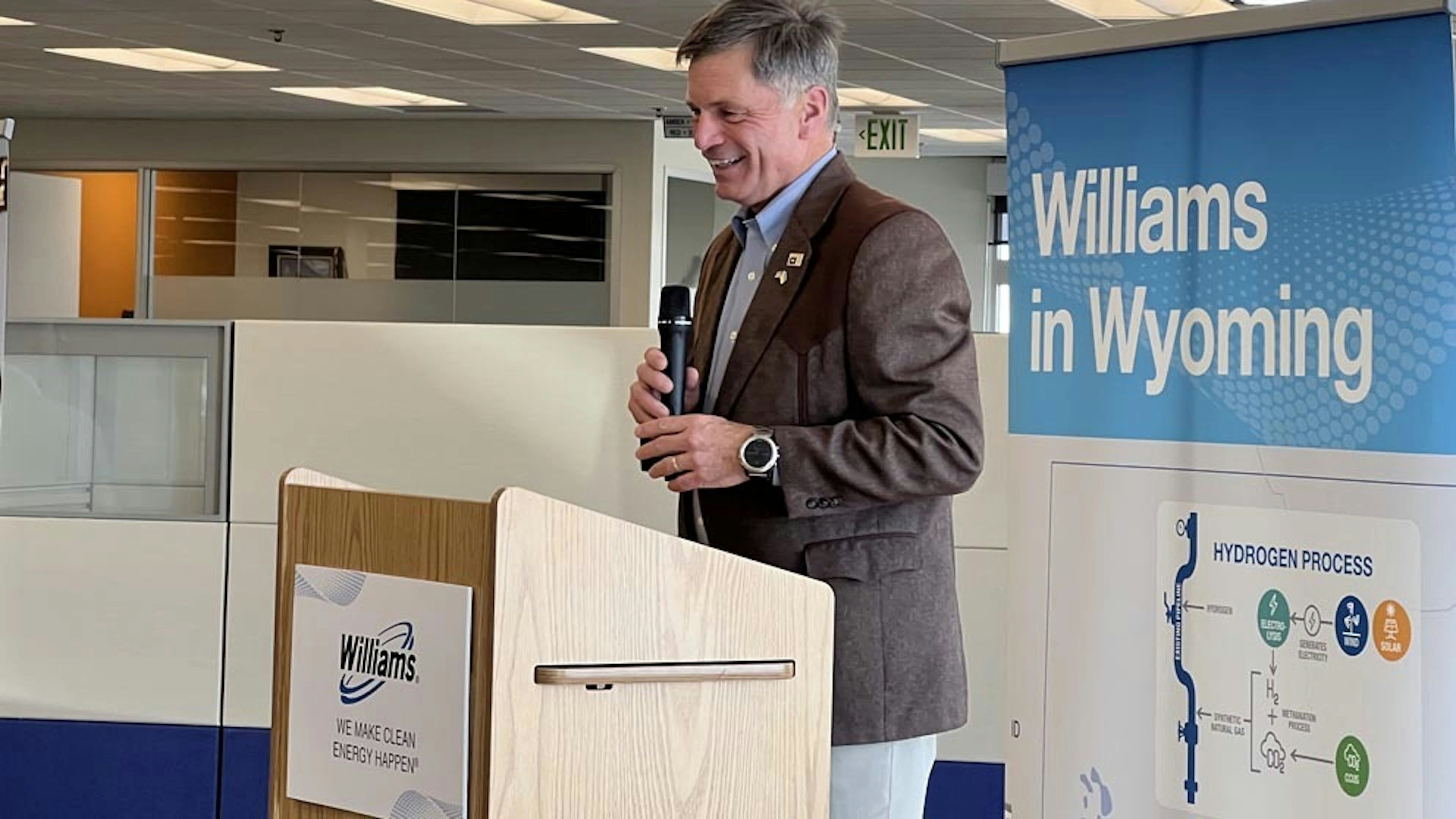
Since 2022, Gov. Mark Gordon, Williams Companies and UW’s School of Energy Resources have been partnering to develop technology that could transform Wamsutter — a small town in Sweetwater County where Williams operates extensive natural gas infrastructure — into a major player in the emerging market for hydrogen fuel.
The technology combines water desalination with hydrogen production using two things the oil and gas industry has in abundance: produced water and off-gas that would otherwise be flared or discarded.
“This thing could be run, theoretically, entirely on waste byproducts,” Nye said. “The device will eat the hydrocarbon, and it will eat the water, and then it spews out hydrogen.”
Produced water is salty water that comes up from underground with oil and gas — it’s been there as long as the hydrocarbons have, entrained deep in the rock.
Companies currently spend money pumping it back down into disposal wells. The pilot project offers an alternative: use it as a feedstock, which can be supplemented with natural gas.
“It would be way better if they didn’t have to spend money pumping this produced water, which they put so much effort into pulling up with the oil and gas, back down,” Nye said.

Proving Ground
The pilot plant south of Cheyenne — built in conjunction with Williams and Engineering, Procurement and Construction, a local Cheyenne company — represents what researchers call the “valley of death” in technology development: too big for a laboratory, too small for commercial industry.
“This is smack in the middle of the valley of death, and this is the transformational work that SER does,” Nye said. “We take a laboratory concept, which is cool, and we bridge the valley of death by jumping right into the middle of it. When we are done the technology should be mature enough for a commercial company to use.”
The facility is designed to produce approximately one ton of hydrogen per day — not yet commercial scale, but far larger than anything achievable in a lab. A commercial operation might be 100 to 1,000 times bigger.
Currently, half the device is set up and ready to operate. But completing the project requires additional funding.
“Were funding available, we could have this thing operational by next fall, by September,” Nye said. “Without additional funding, we probably won’t be able to deliver on that timeline.”
Adding Value
Eugene Holubnyak, director of UW’s Hydrogen Energy Research Center, told Cowboy State Daily Wyoming needs to stop simply exporting raw resources and start adding value.
“We do have natural resources, but we just export natural resources without transforming them into something more useful,” Holubnyak said. “By using this device, you take waste from an oil field — oftentimes this natural gas is being burned right on the field because there’s not enough capacity. If you add something that is more valuable to that mix, you can take that extra waste that you normally are burning.”
The technology can also produce clean water as a byproduct, which matters in the water-stressed West.
Nye stepped in to explain, “We can tune it to get increased water output if we’re in a dry year. We could also just get full throttle hydrogen out.”
Hydrogen, he noted, opens doors to additional products — supplying the explosives and fertilizer industries.
“One of Wyoming’s severe disadvantages is we don’t have any coastline, any ports,” Nye said. “We need to have high value-added products to export efficiently.”
Northwest Pipeline
Williams Companies operates a large interstate natural gas pipeline from Wyoming to the Pacific Northwest. Power plants in the Hermiston, Oregon, area already run on Wyoming natural gas. The infrastructure for reaching those markets exists.
“As a longtime owner and operator of energy infrastructure in Wyoming, Williams is well positioned to leverage our existing assets for the blending, storage and transportation of green hydrogen to local and regional markets, including the Pacific Northwest via our Northwest Pipeline,” Williams officials stated in a 2022 announcement.
Brian Hlavinka, director of Williams’ New Energy Ventures team, called Wyoming “an important state in the future of hydrogen development.”
“Williams’ existing natural gas infrastructure will continue to be the key to unlocking the energy solutions of the future,” Hlavinka said.
And those markets want what Wyoming could offer. According to an August 2025 analysis from the Pacific NorthWest Economic Region (PNWER), Washington, Oregon and Idaho are expected to require hydrogen imports to meet demand starting in 2035 and continuing through 2050.
Regarding hydrogen-powered cars specifically, the PNWER report focuses on heavy-duty trucking and transit buses, not personal vehicles:
“Hydrogen for heavy-duty long-haul trucking and transit buses represents a compelling near-term opportunity to decarbonize the transportation sector while catalyzing regional demand,” stated the report, noting “potential for the adoption of fuel cell electric vehicles.”
More than 85% of that projected hydrogen demand is expected to come from industrial uses — refining, chemical manufacturing, ammonia and the production of low-carbon fuels like sustainable aviation fuel.
Market Headwinds
While the partnership between Williams and UW continues, market conditions have shifted significantly since the project launched in 2022.
Williams has supported research initiatives evaluating hydrogen blending and pipeline material performance through its partnership with UW’s School of Energy Resources.
However, the company told Cowboy State Daily on Wednesday that current market conditions have significantly reduced near-term interest in pipeline transportation of hydrogen.
“As a midstream transporter, Williams responds to the needs and commercial direction of our customers,” the company stated. “If and when there is renewed market demand for hydrogen transport, we would reevaluate blending potential and any associated infrastructure requirements.”
Federal incentive structures for hydrogen production have also changed significantly over the past year.
As a result, many hydrogen projects across the industry, including those in early feasibility stages, are no longer able to meet the updated federal requirements, according to Williams.
Given this shift, Williams said it is not currently pursuing federal hydrogen incentives for this project or other hydrogen-focused activities in Wyoming.
However, the company said it continues to monitor policy and market developments and remains engaged in research partnerships, including its collaboration with UW, to evaluate technologies that may become viable under future incentive structures.

Drop-In Replacement
Hydrogen burns much like natural gas, which makes it attractive for existing applications.
“In a dumb burner, like in your gas grill, it’s a drop-in replacement,” Nye said. “It burns just like methane, which is natural gas, and we export that.”
Hydrogen has another advantage: it appeals to customers willing to pay a premium for lower carbon intensity.
“Hydrogen is cool because it’s a carbon-free hydrocarbon,” said Nye. “This means that it hits a sweet spot that can be more agreeable to everyone.”
Wyoming companies have already invested heavily in sealing leaks and reducing emissions from their natural gas operations, making their product more attractive to environmentally conscious buyers in the Pacific Northwest.
“The people who are trying to reduce their carbon footprint and who are willing to pay more to do so — why not sell them the product that they’re demanding?” Nye said. “If they make it worth our while, it makes economic sense.”
For now, the researchers await word on funding, while demand for hydrogen continues to build, according to the recent PNWER report.
It found: “Significant growth projections for hydrogen and hydrogen-derived synthetic fuels in the region. Demand is expected to be strong regionally and, while international demand was not formally assessed, there is a recognized opportunity for hydrogen exports to Asia.”
David Madison can be reached at david@cowboystatedaily.com.