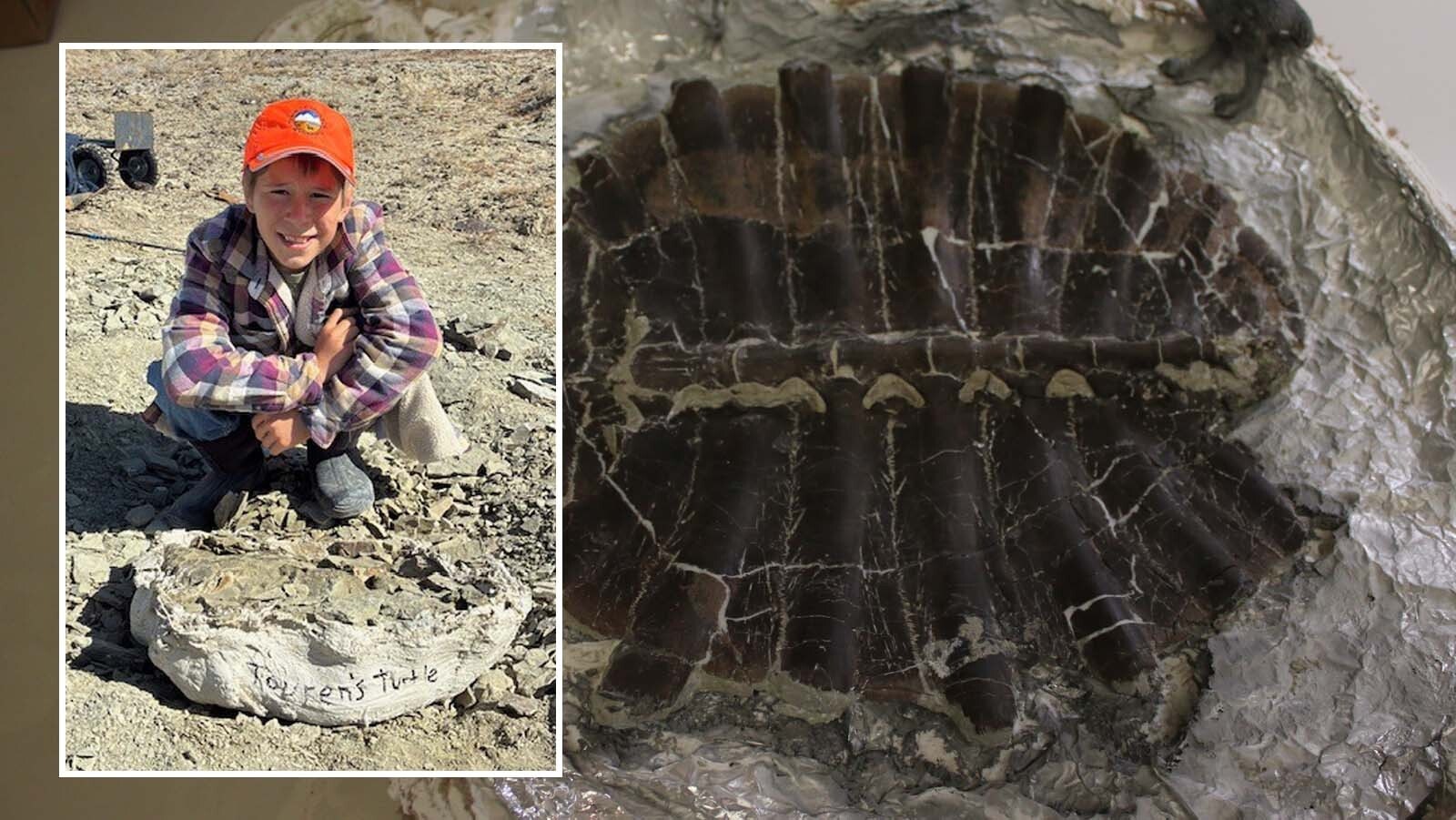
An 11-year-old roaming the arid Greater Green River Basin of southwest Wyoming made a remarkable find: a soft-shell turtle on the half shell.
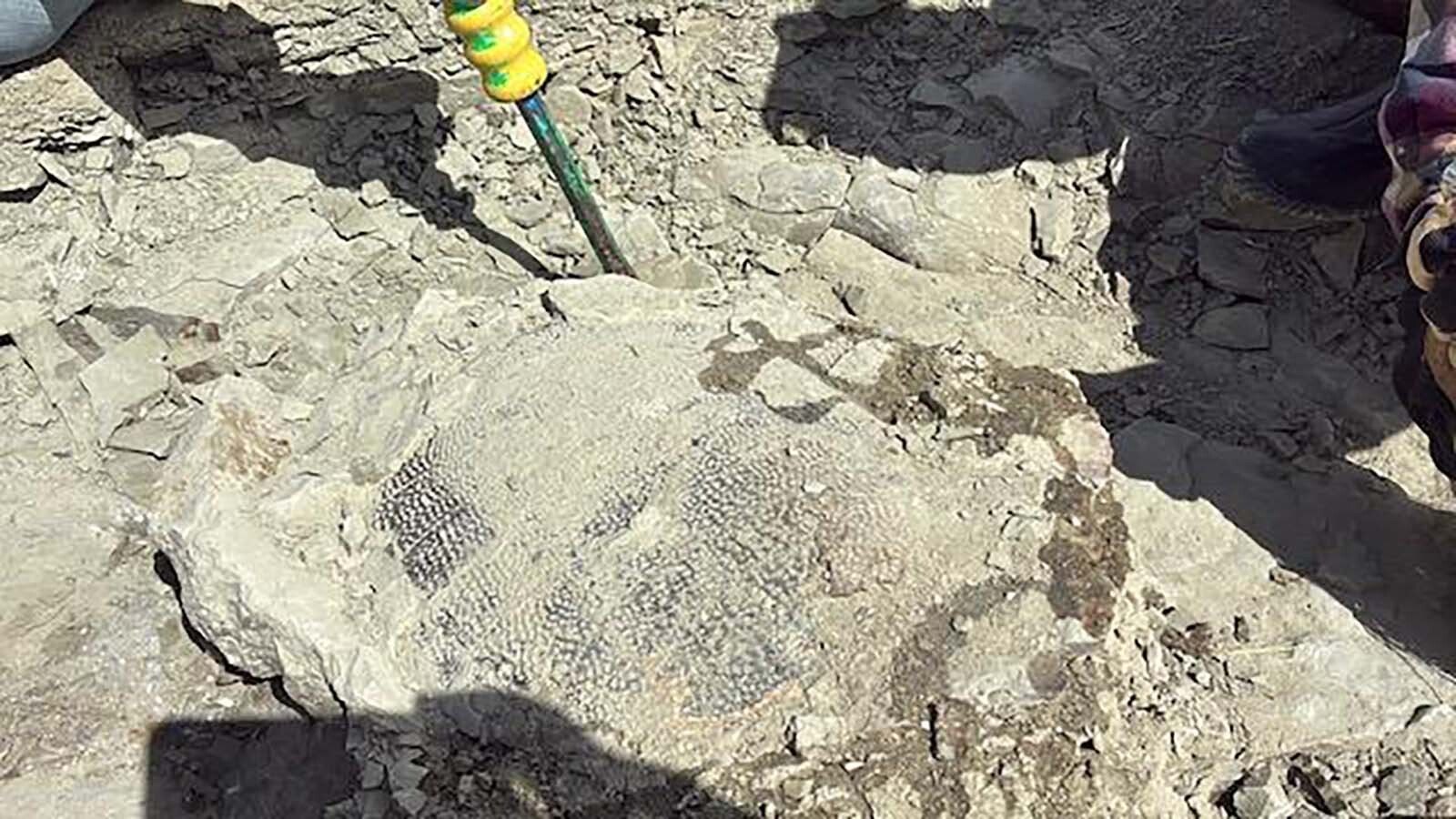
Touren Pope was rockhounding with his grandparents, Patti and Tom Patterson, when he spotted a tiny speck of turtle shell sticking out of the ground. It turned out to be a foot-wide shell from a turtle that lived in the area over 48 million years ago.
“They reported it to the Bureau of Land Management’s (BLM) Rock Springs Field Office when they realized it was something good,” said J.P. Cavigelli, collections specialist at the Tate Geological Museum in Casper. “They showed me a picture, and I said (our team) was heading out that way and could make an extra stop.”
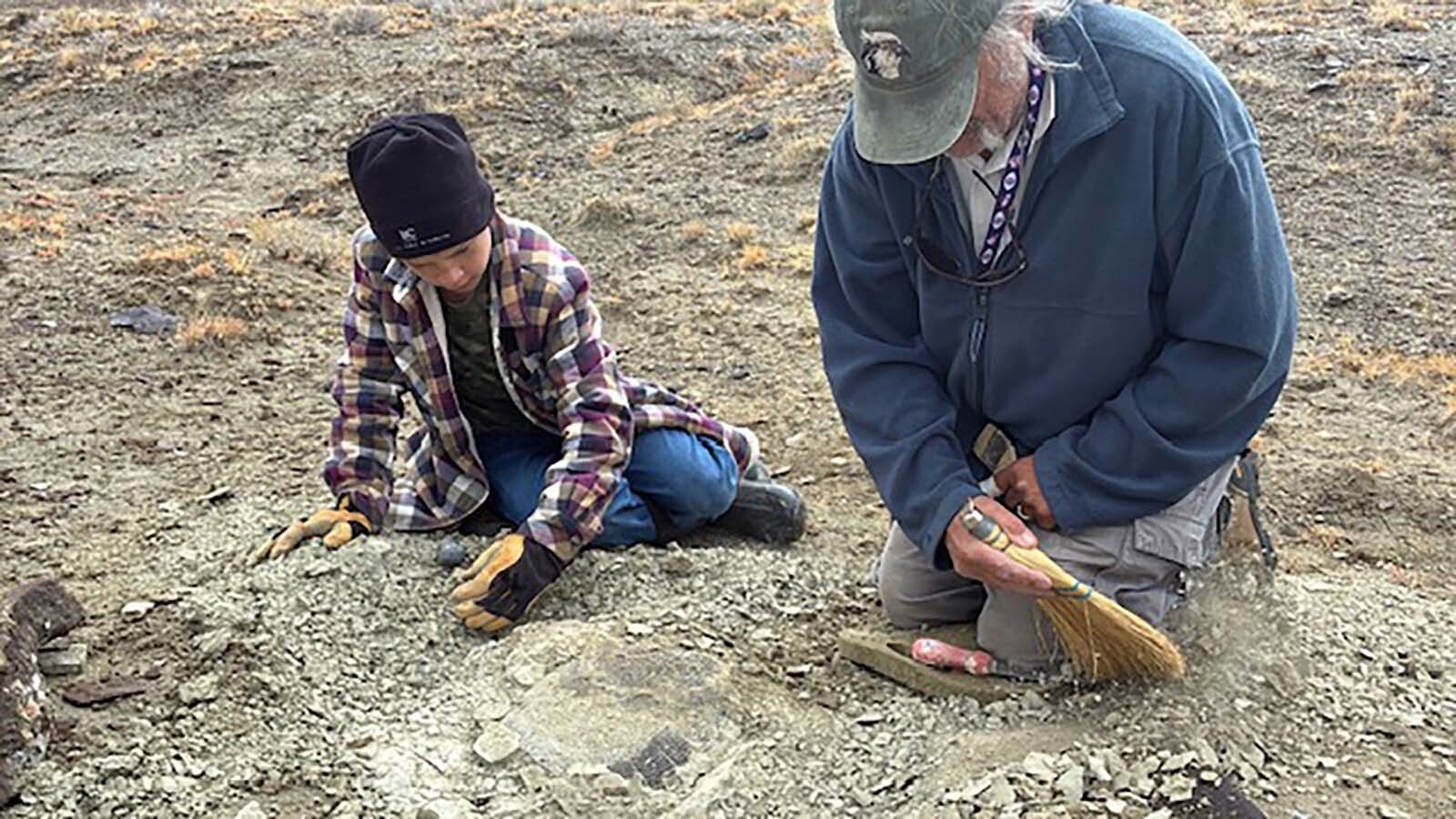
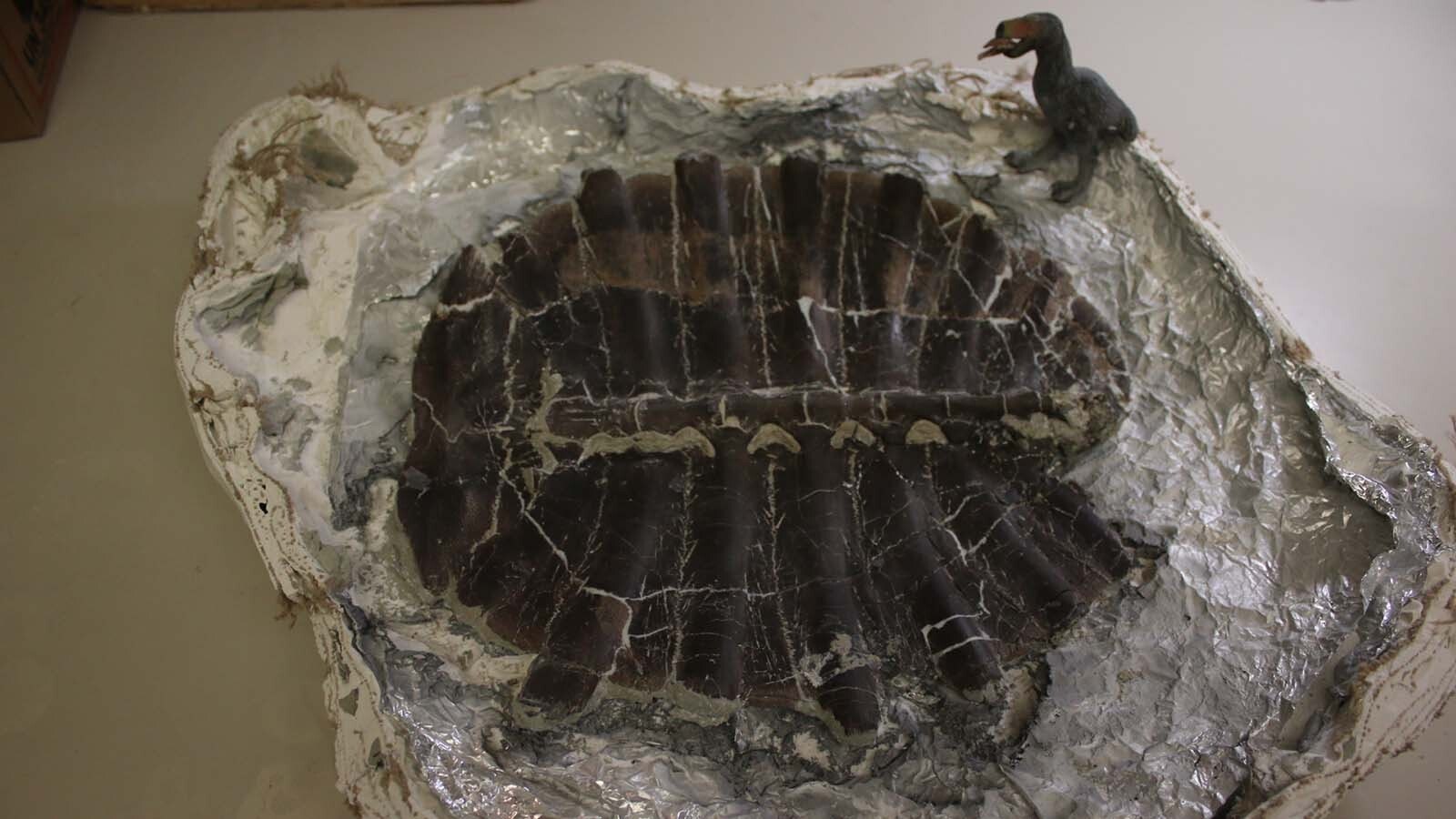
Touren got the opportunity to work alongside Cavigelli to collect the fossil, which was taken to the Tate for preparation. Now, the turtle shell has been freed from the rock encasing it, revealing the beautifully preserved fossil.
“I've sent him out to go find the next one,” Cavigelli said. “Finding a complete soft shell is pretty cool.”
Turtles Today And Yesterday
There are still soft-shell turtles living in Wyoming today, but this turtle was found in the Bridger Formation, a 48-million-year-old layer of rock that’s only known to exist in southwest Wyoming.
It contains the fossils of bizarre animals that evolved after the demise of the dinosaurs, including the giant saber-toothed rhino-like Uintatherium.
“It was one of the earliest explored formations as the Transcontinental Railroad was coming west,” Cavigelli said. “It’s bluish-brown badlands are well-known for fossil mammals, crocodiles, and turtles, or at least parts and pieces thereof.”
Wyoming was a very place while this turtle was alive. The sediment and fossils from the Bridger Formation reveal that it was a lush, tropical environment that supported a thriving ecosystem of plants and animals.
According to Cavigelli, the few paleontologists who scour the Bridger Formation are usually looking for fossils of lemurs and early primates. The more common animals, like turtles, crocodiles, and fish that lived there, are often overlooked.
Touren’s discovery was a 2-inch-by-2-inch section of spongy brown in the badlands. It wasn’t much, but that’s how most paleontological discoveries start.
The timing couldn’t have been better. Based on what he saw in the field, Cavigelli believes the fossil couldn’t have been exposed very long.
“Very little of it had weathered away, so it had probably been exposed two rainstorms ago or something like that,” he said. “That's the beauty of what Touren found.”
The Best Field Assistant
Some kids skip school to go on hunting trips or to see ballgames.
Touren, who lives in Idaho, got permission to take a few days off in September to lead Cavigelli and his field crew to the spot where he found the turtle in southwest Wyoming and get it out of the ground.
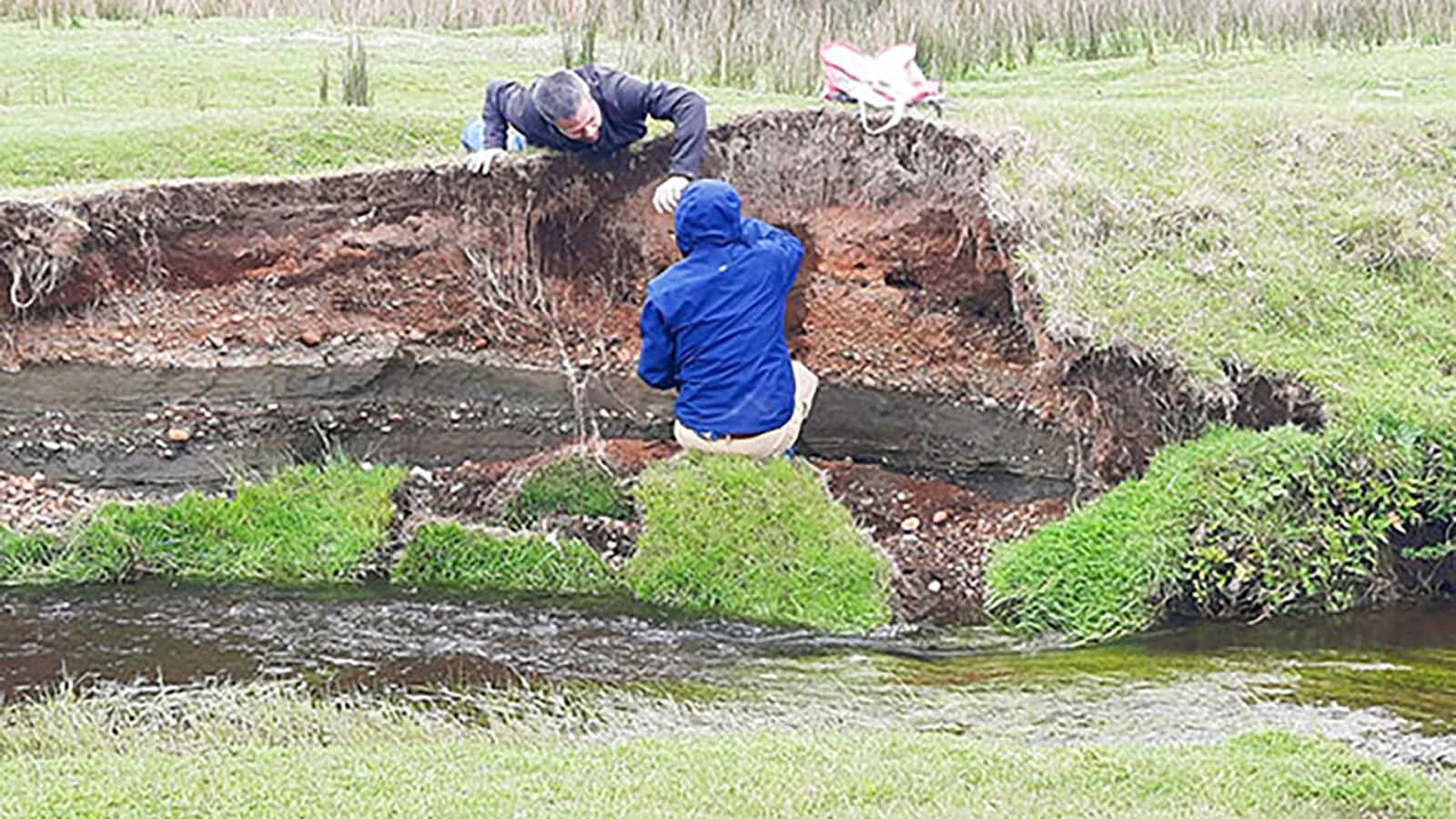
Once they got there, Cavigelli isolated the fossil from the rock and covered it with strips of plaster soaked in burlap. That created a reinforced plaster shell around the turtle's shell to keep it safe and intact.
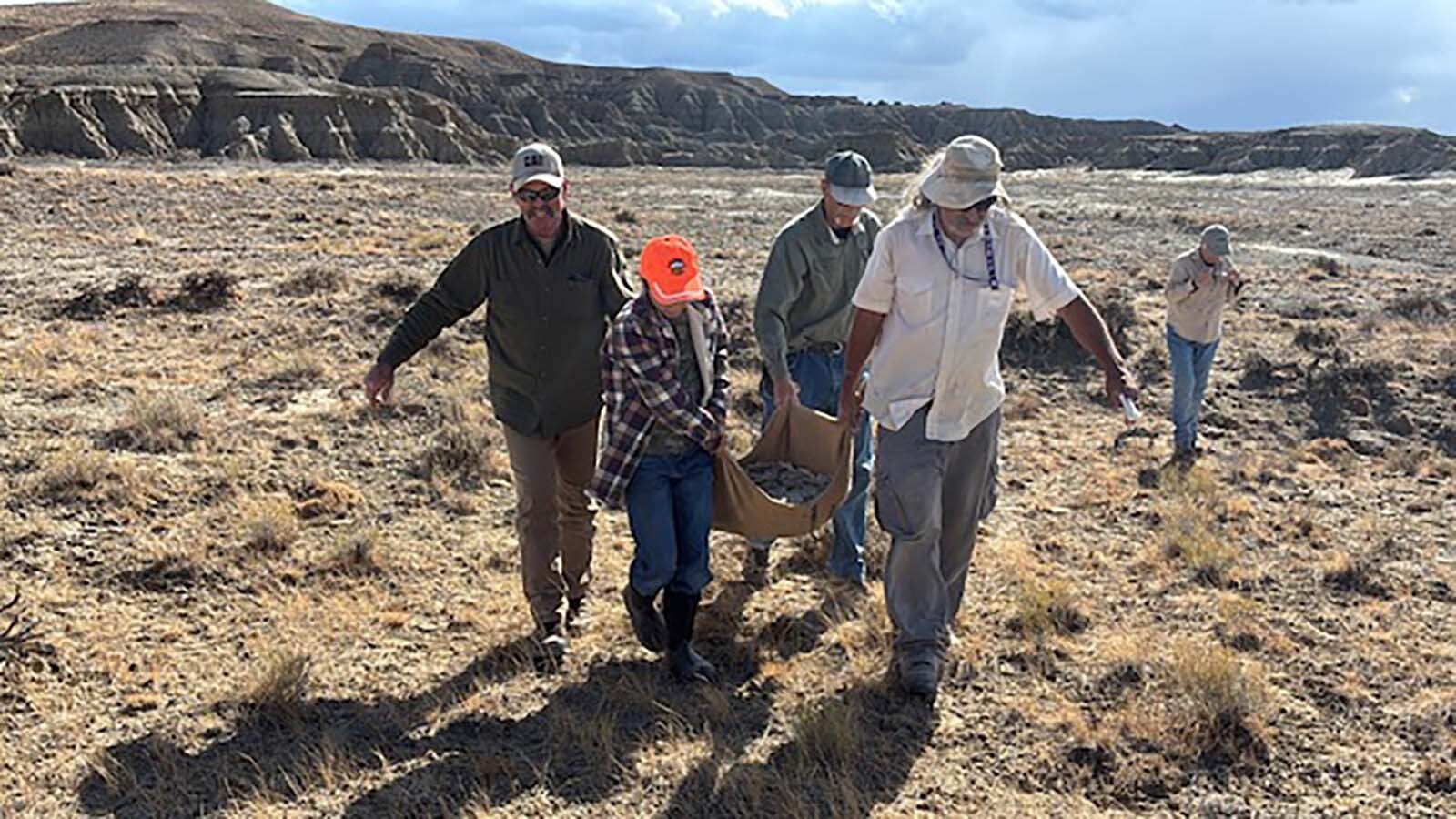
Once it was jacketed, the fossil was loaded onto a stretcher and carried out of the Greater Green River Basin. Cavigelli took the fossil with him to Casper so it could be prepared in the Tate’s fossil preparation lab.
“We showed the young guy what you do with a cool find,” Cavigelli said. “It took less than two hours, including letting the plaster set, and Touren was my main assistant. My volunteers mostly sat around and supervised.
Turtle On The Half Shell
After many hours of meticulous work, “Tiny Timmy” has been exposed in all its glory. The fossil is a nearly complete carapace, from the top of the turtle’s shell.
There are several species of soft-shelled turtles from the Bridger Formation, so the species “Tiny Timmy” has not yet been identified.
Most of these turtles are known only from partial specimens, so Touren’s turtle has much to contribute to the scientific analysis of the paleoenvironment where it lived and died.
“Turtles are fairly common out there, but soft-shell turtles are very distinctive and not very common,” Cavigelli said. “Finding a complete soft shell is pretty cool.”
Touren and his family also received accolades for the procedure they followed after finding the fossil.
While people can collect and keep invertebrate fossils on federal land, all vertebrate fossils must be reported and collected by paleontologists working with accredited repositories.
“Those fossils belong to the people of the United States,” Cavigelli said.
The Tate Geological Museum is a repository for BLM fossils, so “Tiny Timmy” will have a permanent home in the museum’s collections. Cavigelli said Touren and his family have an open invitation to visit their fossil whenever they’d like.
“We have a Cretaceous soft-shell turtle on display right now, and it might be fun to put an Eocene one right next to it,” he said. “It’s definitely display-worthy, and I hope Touren comes to visit someday.”
Contact Andrew Rossi at andrew@cowboystatedaily.com
Andrew Rossi can be reached at arossi@cowboystatedaily.com.