
On Valentine’s Day 1987, Wyoming and Colorado State delivered a basketball thriller for the ages at Moby Gym in Fort Collins.
With the Cowboys trailing and time running out, Reggie Fox buried a three-pointer to force a second overtime. Then Turk Boyd hit another clutch three to send the game to a third extra period.
Wyoming won 81-78, launching a magical run that would carry them through the Western Athletic Conference tournament and into the NCAA Sweet 16 with victories over Virginia and UCLA.
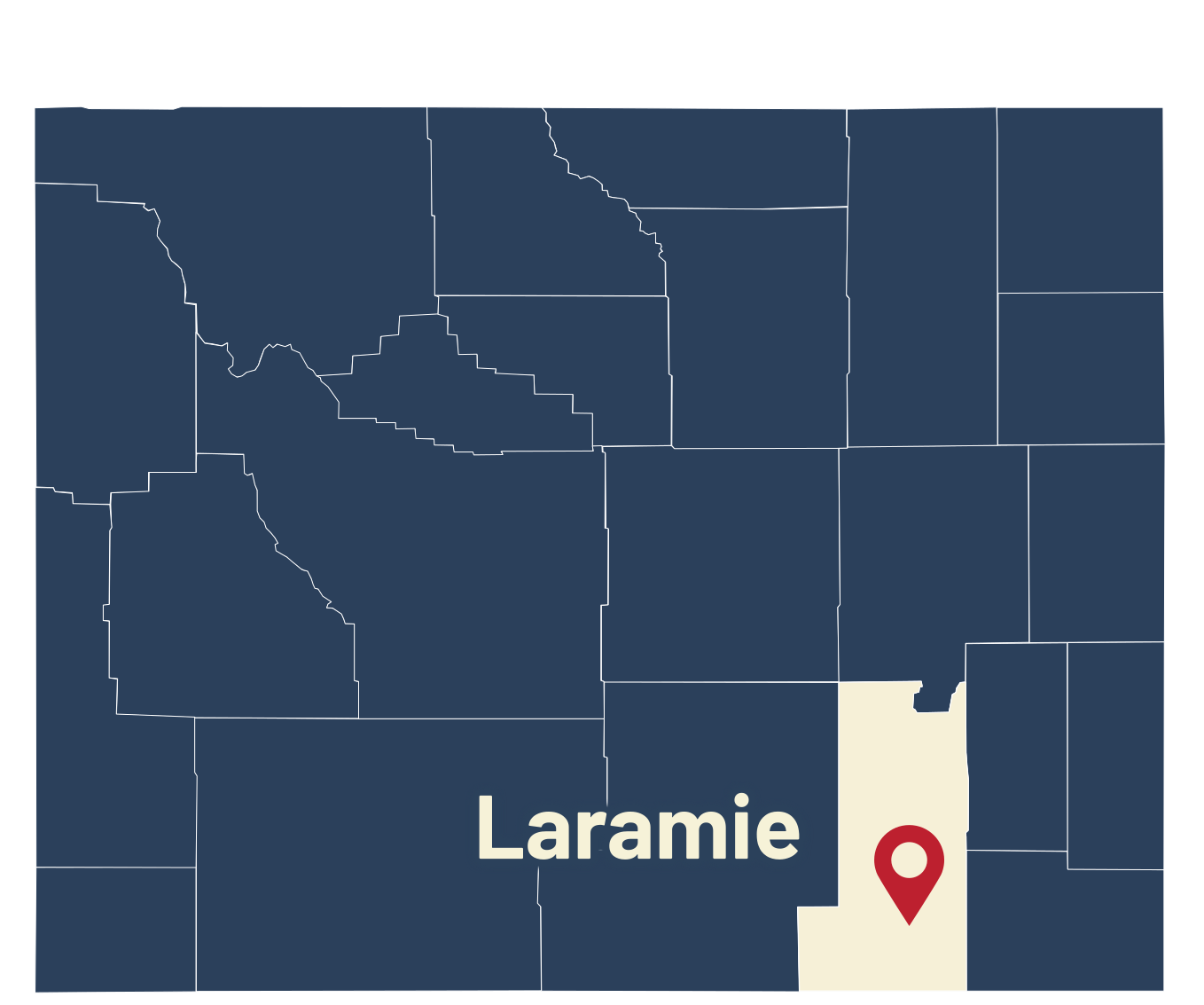
Nearly four decades later, the Border War tips off Saturday night in Laramie with both programs desperate for a win. It’s game number 245 in the all-time series. Both teams are coming off blowout losses, and their Mountain West records sit at an identical 3-7.
At the same time, these rivals could be facing dramatically different futures in the rapidly evolving landscape of college athletics.
Raising Kids Right
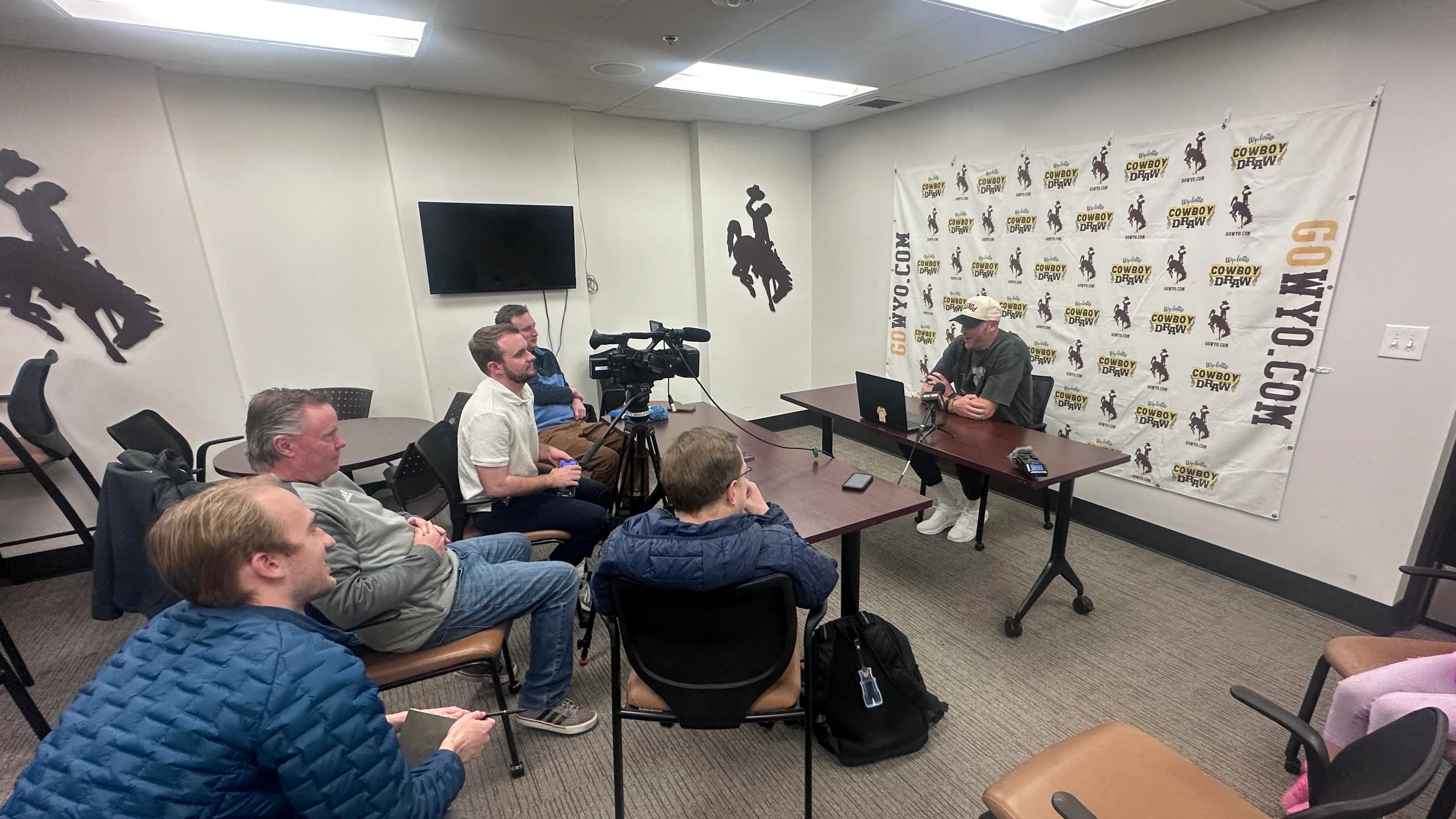
At Friday’s press conference, Wyoming head coach Sundance Wicks offered reporters an unexpected illustration of what the Border War means to Wyoming families.
He called his young daughter Grace to the front of the room.
“This is my daughter, Grace. She’s adorable. She’s the cutest thing on planet Earth,” Wicks said. He explained that as they drove to campus, he told Grace they were playing the Rams this weekend.
Grace then sang a few bars of what has apparently become a family anthem: “It sucks to be a CSU Ram.”
“She sings that religiously,” Wicks said, grinning. “All in fun because you can be friendly and still have a rivalry. But I want my kids to grow up in the state of Wyoming, understanding that when they hear Rams, they don’t think of like a nice, you know, animal that’s in the mountains somewhere. They think of a rivalry.”
Wicks then turned serious for a moment.
“The deeper you get into these roots, the more you get entrenched in this state, you better raise your kids right,” he said. “And it better be brown and gold.”
Investment Question
Beneath the joyous family sentiment lies a harder truth about what it takes to compete at the highest levels of college basketball. Asked what Wyoming needs to reach the level of programs like Utah State, which makes the NCAA tournament consistently and sits atop the Mountain West, Wicks delivered a lengthy and candid response.
“It’s a loaded question,” Wicks acknowledged. “There’s numerous ways I could go with that question.”
He rejected the easy answers — that he just needs to coach better, or recruit better, or develop better. Each of those, he said, leads to another question about resources and retention.
“I would look at the programs and I would ask the general media to study the programs that are at the top of their league in all facets, from their coaching to their resources to their retention,” Wicks said. “I think that’s what makes places and programs special, is that they invest in their coaches. They invest in the retention of their players. They invest in the resources to help with retention of their players. They invest in their facilities. There’s a lot of investment that has to go on with everybody involved.”
Wicks noted that without those investments, programs must rely almost entirely on relationships to keep players from leaving.
“If you don’t have some of the latter, then your relationships got to be pretty good, and you’re hoping that your relationship beyond a shadow of doubt will be the one thing that keeps your players coming back,” he said. “And nowadays, we know that as good as your relationships can be, if it’s not quite matching on a certain level somewhere else, you’re probably not going to be able to retain them.”
He concluded with a sharp observation about modern college athletics.
“Honestly, right now in a microwave society, we don’t believe in steps anymore,” Wicks said. “We just believe that we can pop something in the microwave, we’re going to have it, and we may have success for a year. But winning forever, winning for a long time, creating a culture of sustainability and accountability and credibility that lasts for a long time — that’s really, really a foreign concept nowadays. Very rare programs have that type of consistency and championship pedigree.”
Wednesday’s Reckoning
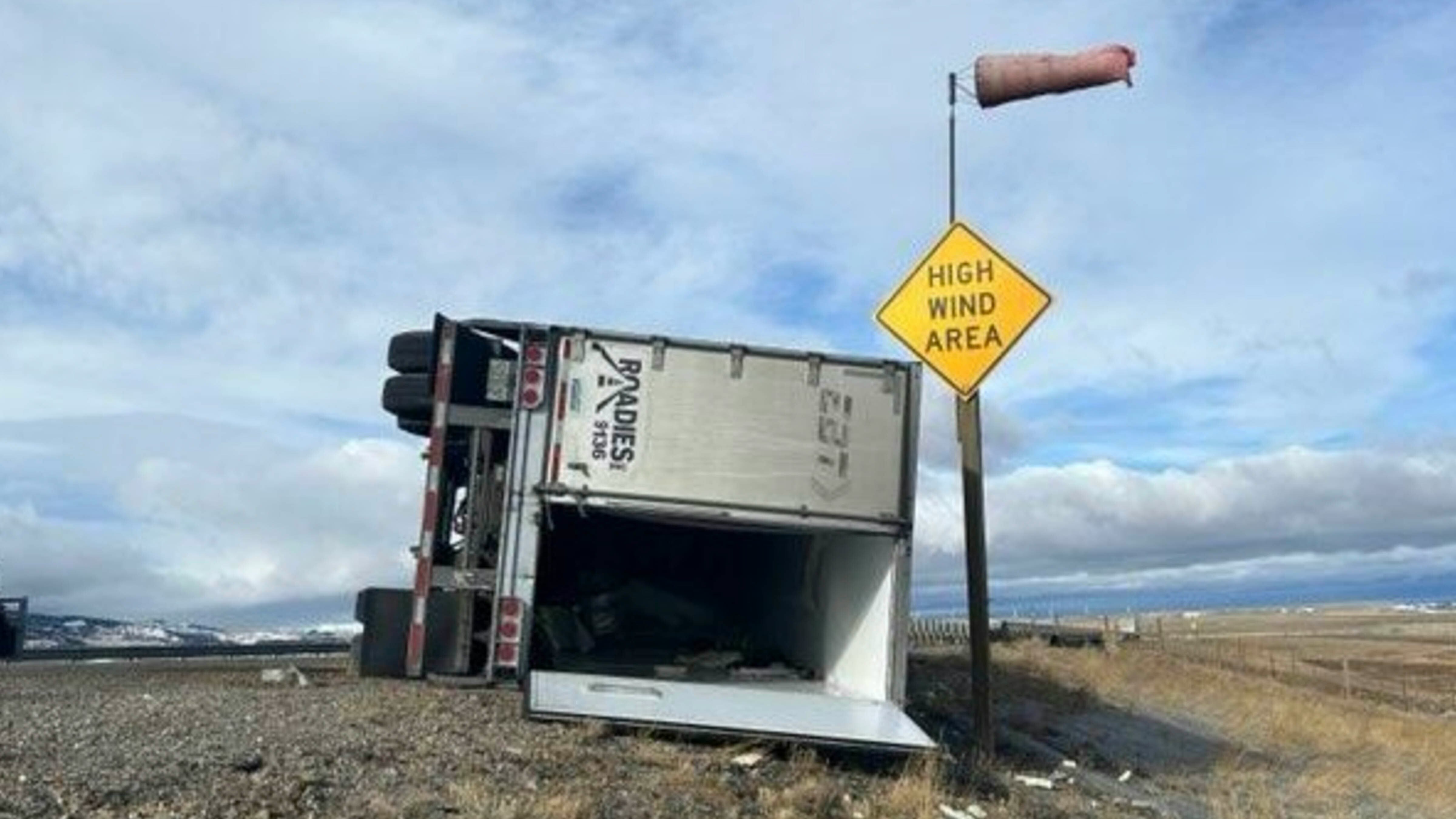
Two days before that Friday press conference, Wicks watched Utah State dismantle his Cowboys 91-56 at the Spectrum in Logan, one of college basketball’s most hostile environments. The Cowboys trailed by 20 at halftime and never mounted any semblance of a comeback.
Kevin McKinney, the voice of Wyoming athletics, explained on the radio broadcast the resource disparity that separates programs like Utah State from Wyoming.
“I talked to a former assistant today, and they (Utah State) have a good NIL situation so they can pay players and they certainly get good players,” McKinney said. “They’re able to retain them, which not everybody can do.”
In an interview with Cowboy State Daily, McKinney elaborated on Utah State’s basketball culture.
“Utah State’s a little different thing,” McKinney said. “It doesn’t matter who comes in there and coaches. They’ll get good coaches because they can win there. Their pedigree is basketball. They love basketball.”
He traced that tradition back decades.
“Utah, BYU and Utah State were always basketball schools back in the day,” McKinney said. “They evolved into football schools because of the money, but they always love basketball.”
Asked whether Wyoming could compete at that level, McKinney acknowledged the painful truth the season has revealed.
“We always wanted to compete with them,” he said. “We never said they’re out of our league. That’s the hard transition we’re in — having this reckoning.”
After the blowout in Logan, Wicks kept his on-air postgame comments brief.
“See you at the Border War,” he told the broadcast team.
McKinney turned his attention to the battle ahead.
“That is a big time game, we all know,” McKinney said. “And the Cowboys didn’t have it tonight. They better have it Saturday night because CSU, they’re coming to town.”
Keep It Alive
With Colorado State departing for the PAC-12 after this season, the future of the basketball rivalry remains uncertain. At Friday’s press conference, Wicks was emphatic about Wyoming’s intentions.
“The goal is to never let that thing die,” Wicks said of the Border War. “If we play game 245 now, and 246 later this year to make sure we play 247 — we’ve been working on the contract negotiations.”
He left no room for ambiguity about where responsibility would lie if the series ends.
“If this game doesn’t get played again, it won’t be because of us,” Wicks said. “We will do what we have to do at Wyoming to make sure that the Border War stays alive.”
Brian Roth, the voice of the Colorado State Rams, expressed identical sentiments from Fort Collins.
“It would be crazy if Colorado State and Wyoming in all sports don’t continue their rivalry,” Roth told Cowboy State Daily. “You think about the travel and it’s 60 miles between the two schools. It’s easy for the soccer teams to play each other in non-conference, for volleyball, for the basketball teams.”
Roth said keeping the rivalry going is a priority for CSU’s administration.
“The football rivalry — keeping that going was very important to the athletic administration at Colorado State and to the president of Colorado State,” Roth said. “It has been a long-standing rivalry for each of those two schools. And I think the fan bases love it. In my mind, there’s no reason not to play that.”
McKinney offered the Wyoming perspective on the rivalry’s meaning.
“Our fans are so passionate about this, and to lose this, it would be a tragedy,” McKinney said. He noted that Wyoming fans have long felt Colorado looks down on them, which intensifies the rivalry’s importance.
“I’ve always felt like, and I’ve seen it for years and years, they’re OK with the rivalry,” McKinney said of CSU’s fan base. “But they’re not as passionate about it as Wyoming.”
Pac-12 Bound
Colorado State represents everything Wyoming aspires to be — and everything the Cowboys fear falling further behind.
The Rams are leaving the Mountain West, along with San Diego State, Boise State, Utah State and Fresno State. They all officially depart for the PAC-12 beginning July 1. The move promises significantly enhanced media revenue and resources that will make competing with Wyoming even more lopsided.
McKinney didn’t mince words about how Wyoming views the departure.
“I think there’s no doubt that we’re hurt by it because we’ve been partners with these guys for a long time,” McKinney said. “We have deep relationships with the staffs and the administrators and coaches themselves. But it hurts when that happens — when you’re left out. Nobody wants to be left out.”
Asked directly whether Wyoming felt snubbed by not being invited to the Pac-12, McKinney nodded.
“I think so. I think we would look at it that way,” he said.
Roth acknowledged the financial implications of the move.
“I do know that it is of the utmost importance,” Roth said of NIL and revenue share funding. “Head coaches are great. Good head coaches are great. But in this day and age, if you don’t have the finances to facilitate an ideal budget that’s going to put you in an upper echelon in the league, then you’re going to be behind the eight ball. And the talent level in your program most likely is going to take a hit.”
He noted that CSU’s entry into the Pac-12 raises the stakes across the board.
“You are now in a league with other like-minded universities that are all in on college athletics and are doing everything that they can to make sure that their NIL and what they are able to provide with revenue share is going to be as high as they possibly can make it,” Roth said. “Because they know that everybody else in that league is doing everything in their power to do the same thing.”
CSU President Amy Parsons framed the decision as essential for the university.
“We are taking control of our future at CSU by forming an alliance of six peer institutions who will serve as the foundation for a new era of the Pac-12,” Parsons said in the university’s announcement. “This move elevates CSU in a way which benefits all our students, bolsters our core mission, and strengthens our reputation for academic and research excellence.”
Silver Lining
McKinney suggested the departures might offer Wyoming a silver lining.
“I suppose the teams that are remaining are the teams that we can compete with better,” he said. “I hate saying that because we believe through all these years that we could compete with anybody and we tried our darnedest and our fan base helped us do that.”
He paused.
“But we’re not in that game anymore,” McKinney added. “And we’re certainly not in the (SDSU) Aztecs’ basketball league right now.”
Ryan Thorburn, communications director for UW Athletics and co-author of a book chronicling the Border War football rivalry, echoed this assessment.
“I think in the new Mountain West, which will lose five really good programs, they can compete for an actual Mountain West championship next year,” Thorburn said.
Budget Battle
The Wyoming Legislature’s Joint Appropriations Committee has recommended denying UW’s request for $6 million in funding to help the athletics department meet new NCAA requirements stemming from the House settlement, which fundamentally restructures college athletics by imposing obligations related to student-athlete compensation and NIL compliance.
In response, the Associated Students of the University of Wyoming drafted a resolution urging the legislature to fund the athletics request, warning of consequences for the state’s only four-year public institution.
“Athletic Director Tom Burman has stated that without this funding, the University would be forced to choose between maintaining Division I status or transitioning to a lower level of competition, a shift that would materially diminish the University’s visibility and recruitment competitiveness,” the ASUW resolution states.
Athletic Director Tom Burman painted a dire picture Thursday in comments to Cowboy State Daily.
“We appreciate ASUW weighing in on budget cuts and how they will impact athletics,” Burman said. “Bottom line is we continue to evaluate the long-term impact, but we do know that not approving our exception request of $6 million and cutting the university by $40 million will be catastrophic.”
Desperate Teams
At Friday’s press conference, Wicks set the stage for Saturday’s showdown.
“These are two teams that need a win,” Wicks said. “Identical records. Their conference records identical, overall records identical. Both have had their ups and downs this season.”
Roth, from Fort Collins, agreed.
“You look at Colorado State and Wyoming, they’ve had very good non-conferences and have struggled a little bit in Mountain West Conference play,” Roth said. “How do you cure what ails both of these programs right now? A rivalry win. That would really help either one of these two teams, whoever comes out on top on Saturday night.”
He added that the matchup’s appeal transcends the standings.
“This is why I want to keep it going, because it’s fun to go up to Laramie and play in the Double-A with the students right on the court there at the end line,” Roth said. “And nobody likes Colorado State in that building. It’s fun. And vice versa when the Cowboys come to Moby Arena.”
Roth summed up the rivalry’s enduring appeal, even if both teams had 0-20 records.
“I’d still be looking forward to the game coming up on Saturday,” he said.
Buzzer Beater
On March 11, 1988, the Border War produced another moment Wyoming fans share with their children.
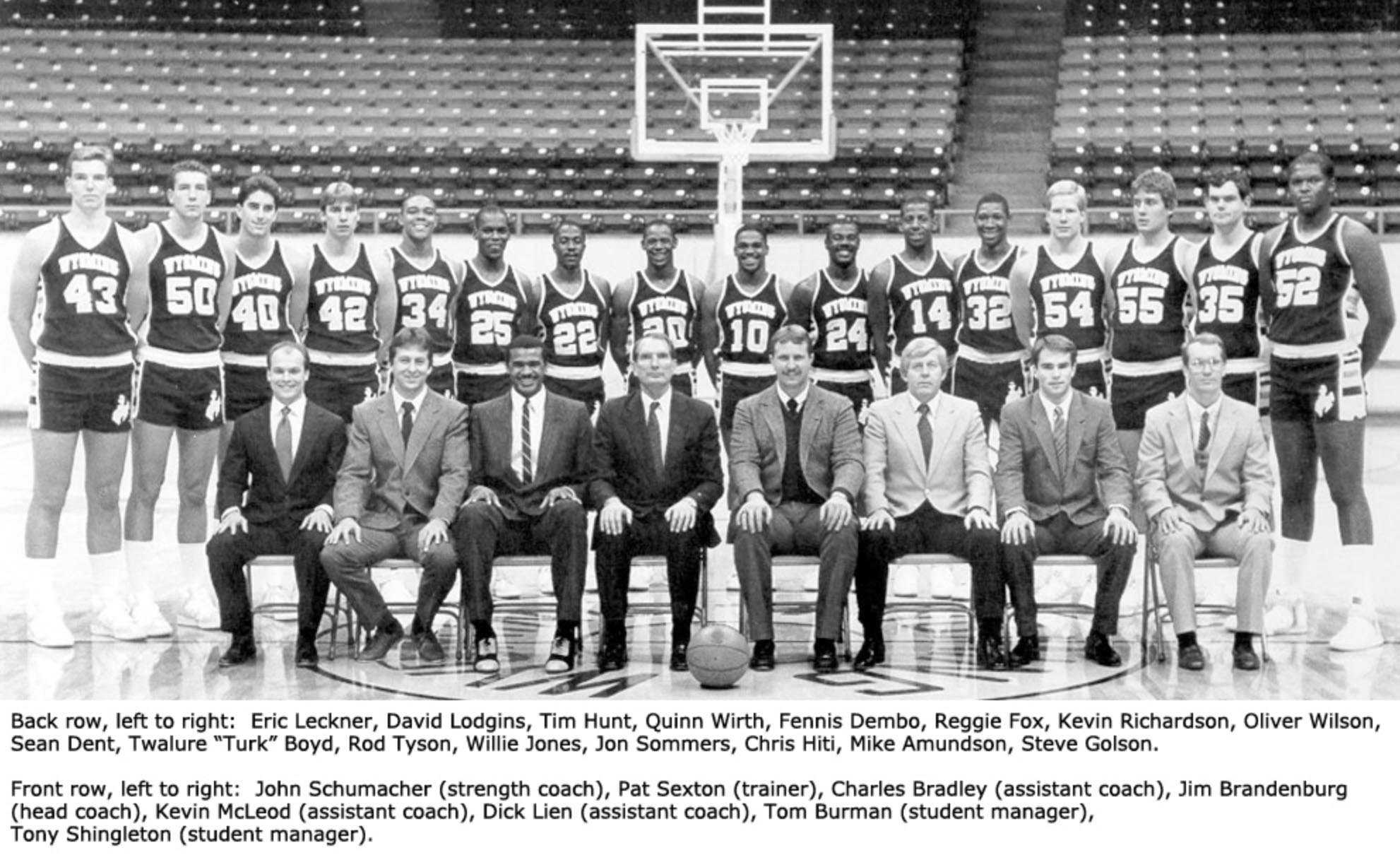
With two seconds remaining and the score tied at 58 in the WAC Tournament semifinals, Wyoming’s Eric Leckner caught a three-quarter-court inbounds pass at the top of the key. The 7-foot center turned and launched a 19-foot shot that found nothing but net as time expired.
Wyoming 60, Colorado State 58.
The Cowboys went on to win the tournament and earn another NCAA bid, capping one of the program’s greatest eras under Jim Brandenburg.
That’s the kind of magic the Cowboys will chase on Saturday after the 7:30 p.m. tipoff in Laramie.
In the moment, Wyoming must shake off Wednesday’s 35-point loss. Big picture, they want to boldly face a tough financial future while CSU prepares to ascend to the Pac-12.
“You kind of almost got to get over yourself and think about the past, think about the Pokes of the past,” offered Coach Wicks during his Friday press conference. “I expect a good old-fashioned Border War.”
David Madison can be reached at david@cowboystatedaily.com.