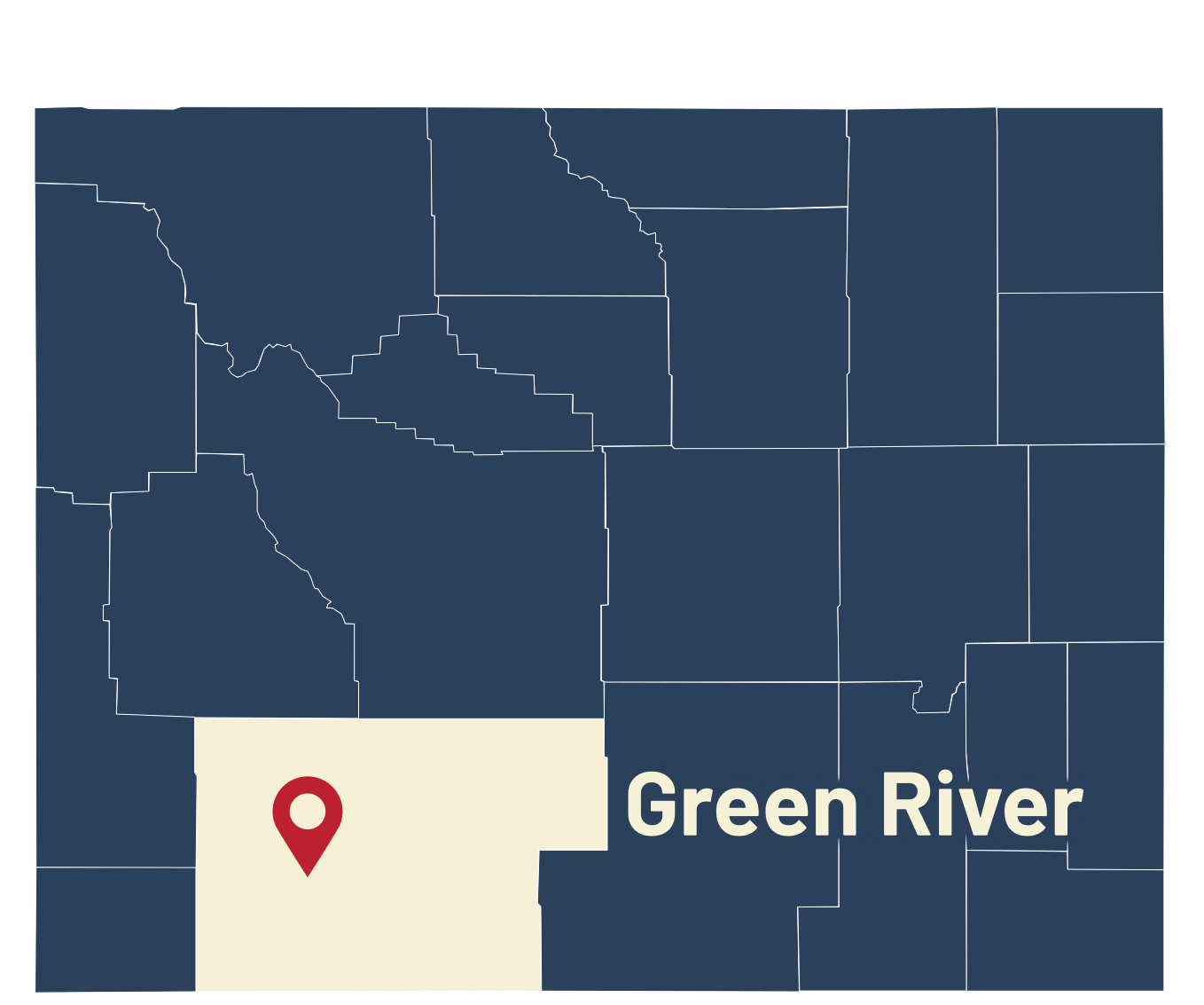
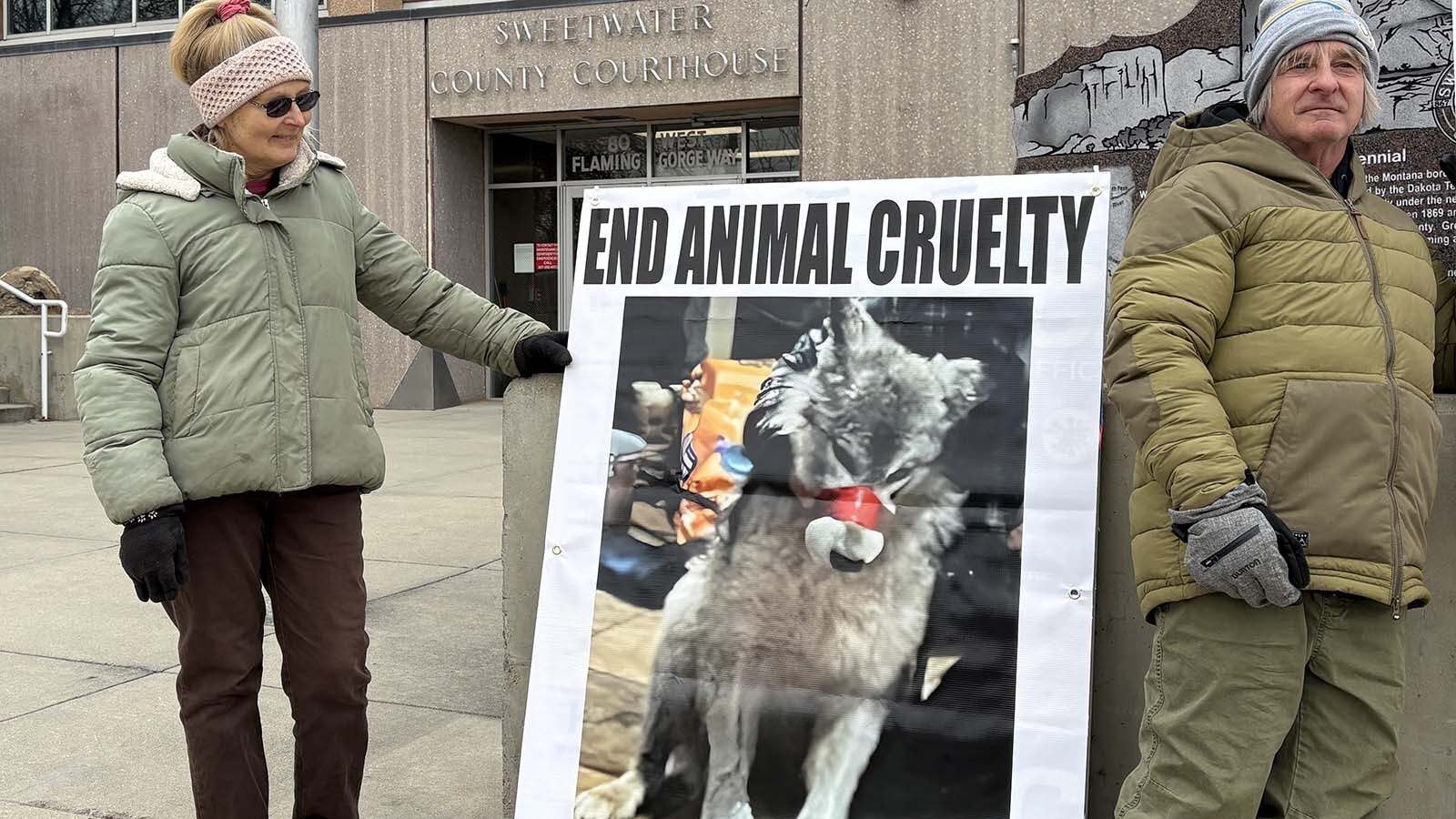
GREEN RIVER — A Wyoming judge on Wednesday in Green River hinted that he would not dismiss the felony animal cruelty case against an alleged wolf torturer, but would let it go to trial.
Cody Roberts, 44, was indicted last year by a grand jury with felony animal cruelty, which carries a penalty of up to two years in prison and up to $5,000 in fines.
That followed claims that he ran over a wolf with a snowmobile, brought it injured and muzzled into a bar in Daniel, Wyoming, taunted it and later killed it.
Roberts appeared in court Wednesday via virtual link from a room or office backlit by a harsh semi circle of light.
Sweetwater County District Court Judge Richard Lavery, who is presiding over the Sublette County case after a local judge conflicted out of it, stopped short Wednesday of denying Roberts’s motion to dismiss the case as an unlawful prosecution.
Roberts’ attorney, Robert Piper, argued in court Wednesday that Wyoming’s exception to its animal cruelty statute — rendering immune from prosecution acts of hunting, capture, killing and destruction not otherwise prohibited by law — should block Roberts from being prosecuted.
But Lavery hinted that he intends to deny that motion and let the case see a jury.
“I tend to think the defendant’s broad definition of the predator exception goes too far,” said Lavery, adding that he’d later file a written order so the case parties could have the benefit of his reasoning. “It just seems a bridge too far to say the state can’t pursue a case that constitutes torture or torment to an animal (under that exception).”
That echoes in part Sublette County Attorney Clayton Melinkovich’s argument that Roberts’ encounter with the wolf was not one long capture, and that the portion of law during which Roberts allegedly behaved cruelly was a “possession” of the wolf, which isn’t a carveout under the law.
Lavery then continued into a trial-planning process.
Trial in this case, unless Lavery reverses course or other events intervene, will begin March 9 in Sublette County District Court.
Upend Wyoming's Laws
The argument hinged upon whether Melinkovich’s theory - that Roberts committed an act of cruelty not allowed by law and not covered by the exceptions - would upend Wyoming’s laws allowing wildlife hunting sports that could cause an animal to suffer.
Piper gave examples like trapping, bow hunting and black powder rifle hunting.
Piper also argued that the fact that the state Legislature added a ban on torturing wildlife to its animal cruelty statute last year, after headlines about Roberts’ interaction with the wolf erupted, shows that the law didn’t cover Roberts’ conduct already.
Roberts captured the wolf in late February 2024, before the law was changed.
Piper quoted Aristotle during his argument.
“The law is reason free from passion. We need not collectively condone Mr. Roberts’ conduct to find the indictment is flawed,” he said. He indicated also that the court should resist massive activist and social media movements, of the type that have orbited this case.
“And I would ask the court to decline the state’s invitation to create an ex-post facto, catch-all statute,” Piper added.
State Of Mind
Melinkovich countered in his argument, saying his interpretation of the law and decision to pursue a felony case on that don’t jeopardize hunting and trapping in Wyoming.
That’s because the state’s definition for torture or torment includes a state of mind, he said.
The definition calls torment and torture “every act, omission or neglect whereby the willful and malicious infliction of pain or suffering is caused, permitted or allowed to continue when there is a reasonable remedy or relief.”
To torture an animal illegally, a person must harbor willfulness and malice toward that act in his mind, Melinkovich said.
“There’s nowhere any risk whatsoever, that a person hunting, lawfully hunting, can be subject to these statutes - because the intent is not there,” added the prosecutor.
Clair McFarland can be reached at clair@cowboystatedaily.com.