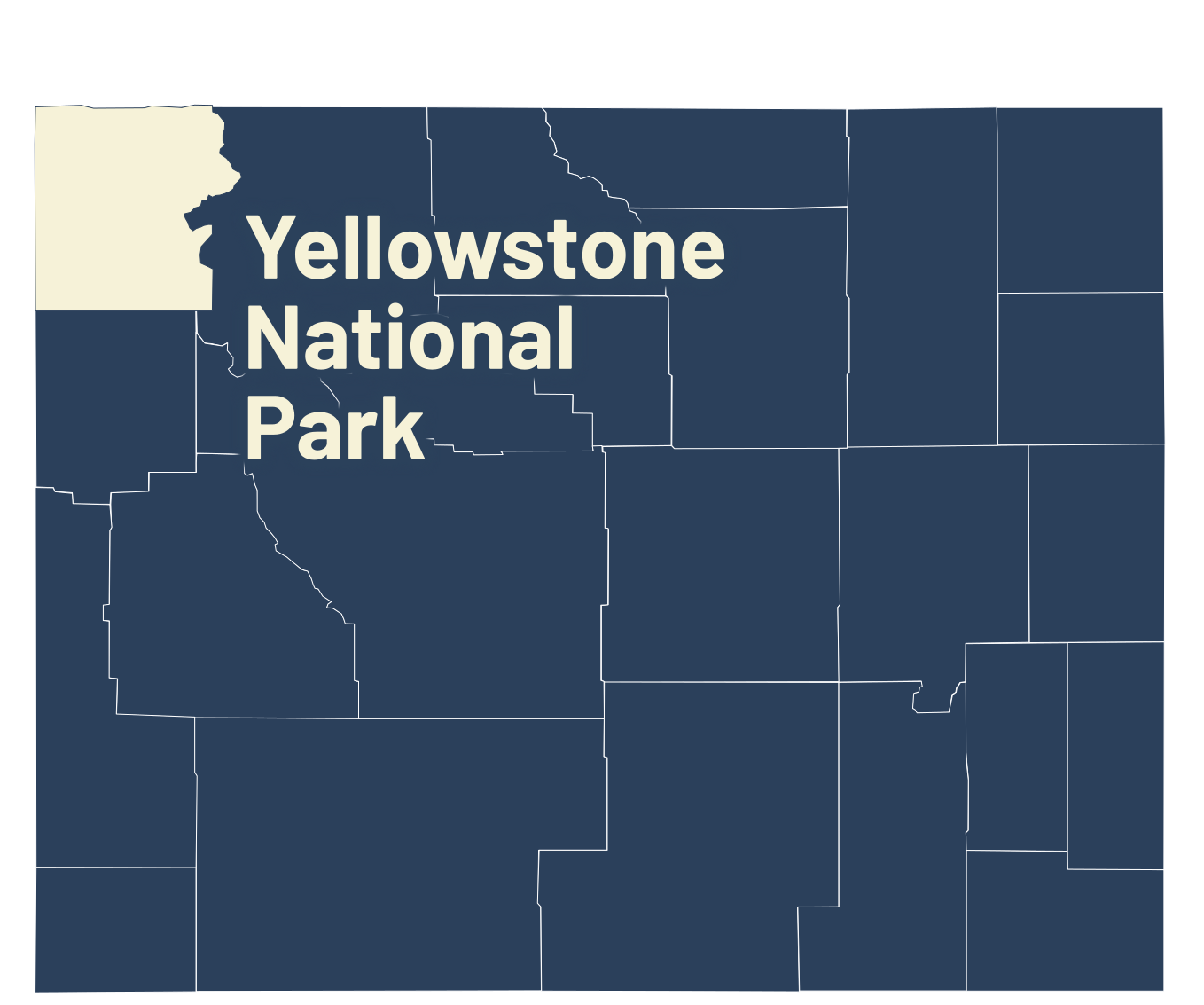
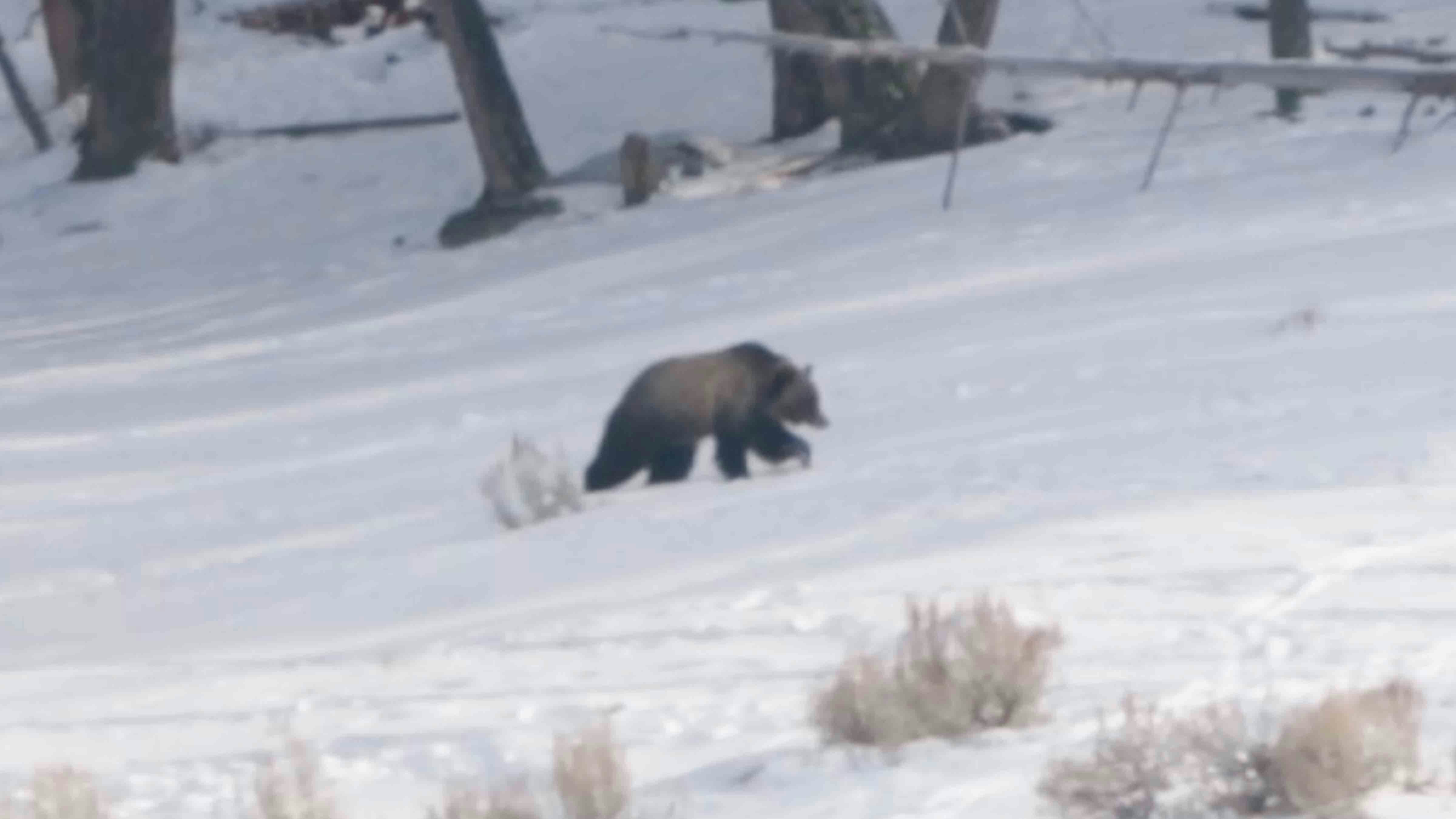
A grizzly spotted out wandering in Yellowstone National Park Monday might be up from hibernation incredibly early or awake incredibly late.
Either way, it was probably a food source that tempted the grizzly out of its den, wildlife experts said.
“This would be one of the earliest sightings on record,” prominent bear biologist Frank van Manen told Cowboy State Daily.
He has studied grizzlies in the Greater Yellowstone Ecosystem for years.
Up At The North End
The “January grizzly” was spotted at the north end of the park.
Wildlife photographer Rob Harwood told Cowboy State Daily that he spotted and took video of the grizzly on Monday, on the slopes of Specimen Ridge.
“He, or she, seemed to just be wandering,” and not zeroed in on a carcass or any particular food source, said Harwood, who runs Rob Wild Photography (video below).
He added that he couldn’t “hazard a guess” regarding the sex of the bear. It was an adult, but “did not look especially large.”
That rules out it being one of the “big old boars” (male grizzlies) that are most apt to be out at odd times, Harwood said.
Food Is The Key
Generally, grizzlies retreat to their dens for hibernation in late or early November. The earliest risers, again, usually the huge, dominant males, might emerge in late February or March.
Female grizzlies with cubs are usually the last to emerge. For example, the legendary Grizzly 399 usually made her first appearances with cubs before throngs of adoring fans in Grand Teton National Park in May.
Because of unusually warm weather this fall and early winter, some speculate that grizzlies, and black bears, were staying out later.
A young black bear was reported wandering around near Jackson early this month.
However, it’s food more than weather that drives bear hibernation, or lack thereof, experts said.
“Without knowing details about the (January) bear, its condition, etc., it is difficult to say what the drivers are for it being out now and it is likely a combination of factors,” van Manen said.
“While weather and winter plays a role in the timing of denning, the ultimate reason bears hibernate is lack of food, or lack of access to food,” he said.
“Bears with access to ungulate carcasses, for example, may remain active well into December. Similarly, first sightings of bears in Yellowstone tends to be bears that have access to a bison or other large carcass of animals that died during the winter,” he added.
Bears Aren’t Heavy Sleepers
Lori Roberts, a research assistant with Montana Fish, Wildlife and Parks, has been involved in grizzly denning research in Yellowstone and other places.
Compared to many other winter hibernators, grizzlies are relatively light sleepers, she said.
“They can be awake in the den. They aren’t like toads, or other species that go into a complete torpor for the winter,” Roberts said.
So, sometimes grizzlies go out and about, particularly if they smell food nearby, she said.
For example, grizzlies have been spotted out in December, feasting on the carcasses of large animals killed by wolves in Yellowstone’s Pelican Valley, she said.
“Bears are very food-driven and if they find something, they might make that trip out of the den. Because, why else would a bear leave the den in winter?” she said.
Park Service spokeswoman Linda Veress told Cowboy State Daily that visitors reported seeing a grizzly out, but no more information was available about the bear.
“Occasionally, bears do awaken and leave their dens during the winter and it’s possible to see a bear any month of the year,” she said.
For the past two springs, the first verified sightings of bears fully out of hibernation have been in early March, she added.
Mark Heinz can be reached at mark@cowboystatedaily.com.