Things have been really dry in many parts of Wyoming this winter but it's not as dry as Utah, where it’s record-breaking.
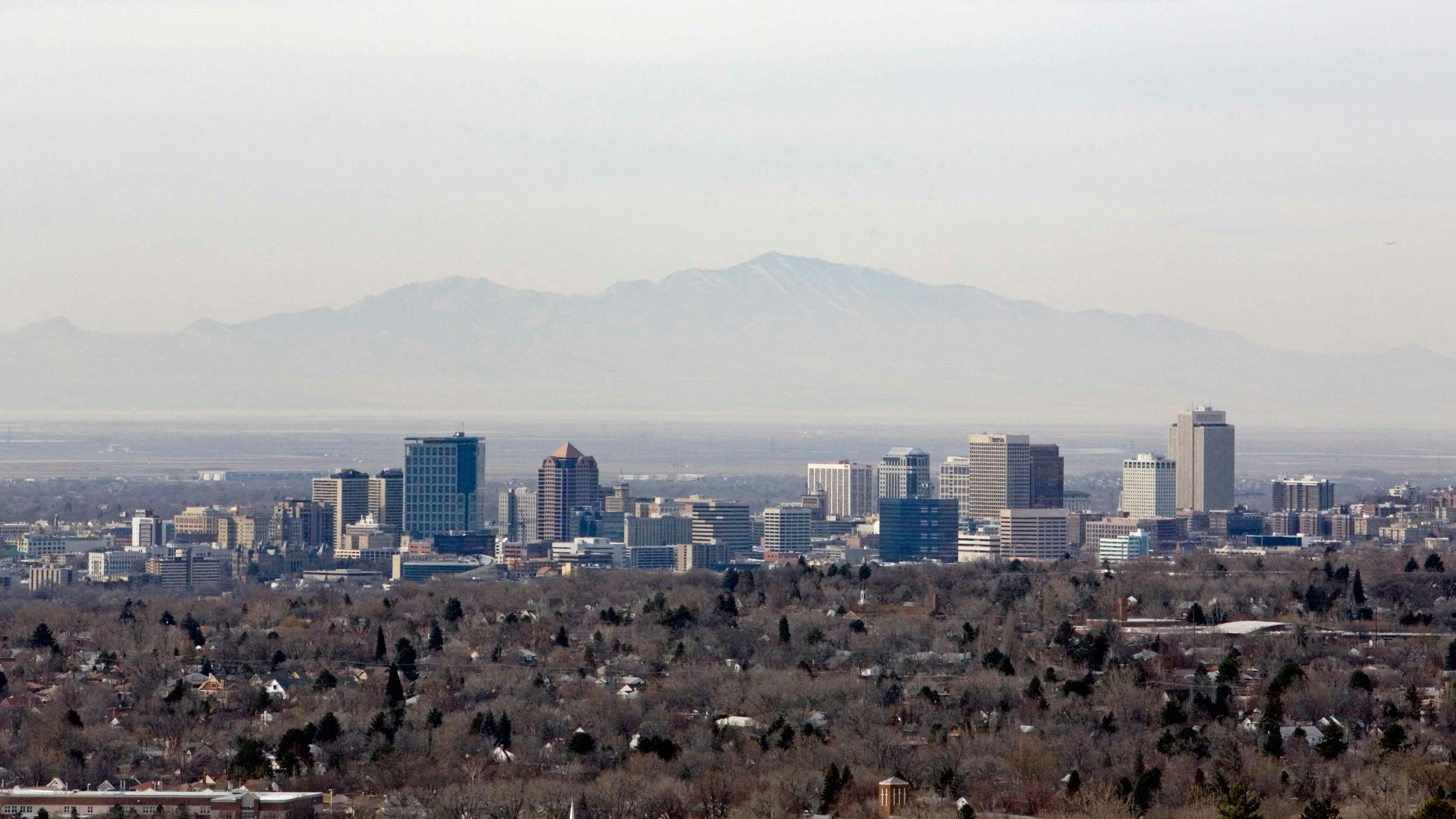
As of Jan. 27, only a tenth of an inch of snow has fallen on Salt Lake City, Utah, this winter. That’s the lowest snowfall on record, by a significant margin.
The warmer side of these storms means Utah’s snowpack is in dire straits. The latest records show the statewide snowpack is currently at 59% of the median, close to a new historic low.
“All the storms that we've had so far have been on the warmer side,” said meteorologist Brittany Whitlam with the National Weather Service (NWS) office in Salt Lake City. “We’ve had a good amount of moisture with our storms. It's just they've been on the warmer side, so the snowpack hasn’t been building.”
November and December were warm and dry across the Rocky Mountain Region. January was a bit colder and moister but lacking in significant winter weather.
With two months to go, what does the rest of the West’s winter look like? More of the same, or is there a dramatic change on the horizon?
According to Cowboy State Daily meteorologist Don Day, Wyoming might make up for lost time, but even an exceptionally snowy season might be too little, too late for Utah and Colorado.
“I think it’s going to be hard to make up the deficit,” he said. “If you were to draw up like worst case scenario of like luck, anything that could go wrong has gone wrong with the snowpack in the central and southern Rockies.”
Record Lows
As of Jan. 27, Salt Lake City, Utah, had received 0.1 inches of snow during “the winter season,” which begins on Oct. 1. Not only is that a new record-low snowfall by a significant margin, beating the previous record of 2.8 inches in 1938-1939, it’s well below the seasonal average of 28.2 inches.
“We usually receive an average of around 55 inches every water year,” Whitlam said. “We're obviously very far off from that.”
Colorado isn’t faring any better. Snowpack across the state is 58% of the median amount for this time of year, on track to be the lowest on record since at least 1987.
“The snowpack in the central Rockies is in a pretty deep hole,” Day said. “Even Wyoming's snowpack isn't nearly as good as it was a few weeks ago.”
Wyoming’s snowpack is still doing well, by comparison. Most of western Wyoming has over 100% of its average amounts, but that’s a significant drop from the over 140% measured in December.
“None of the mountain ranges in the Rockies have received much of any snow since Christmas,” Day said. “The further south and west you go, the worse it gets. Snowpacks in Colorado and Utah are just awful, because they haven't gotten any snow of consequence in December or January.”
Blame The Block
Why has winter been so lackluster? Blame the block.
A major high-pressure ridge developed over the Bering Strait in December. Day described it as “a logjam” that blocked cold, moist Arctic air from getting into the Rocky Mountain region and funneled it eastward.
That block dissipated by the beginning of January after several stubborn weeks. The West’s winter was grounding planes and causing power outages in Ohio, New York, and Michigan, while record-high temperatures in the 60s were recorded in Wyoming, Colorado, and Utah.
Whitlam said there were some signals of a below-average winter for Utah in long-range modeling done in the latter half of 2025. Even so, this has been “an odd year” across the board.
“When transitioning out of a La Niña, we usually see cooler, wetter conditions up in the Pacific Northwest,” she said. “We actually saw pretty warm conditions, and I know they're also struggling with snowpack as well.”
Day’s long-range forecast for the 2025-2026 winter season called for a longer, snowier winter. The block wasn’t anticipated by any meteorologists or long-range weather models.
“Even our best seasonal models did not forecast the block correctly,” he said. “Nothing was going to change until the block broke down, and they can be extremely stubborn. No one saw this coming.”
Where We’re Heading
Lackluster winter aside, Day referenced an oft-stated fact about winter in the West. It might be alarmingly dry, but it’s the time of year when it’s expected to be dry.
“I always remind people that the driest months of the year are December, January, and the first half of February,” he said. “There are places that don't even get a half inch of moisture, or even four-tenths of an inch of moisture, on average, during those months.”
Wyoming, historically, gets most of its moisture between February and May. Now that the jet stream is unblocked, the atmosphere over the western U.S. is wide open for more Arctic air to move in and bring much-needed moisture.
According to the long-range models Day has been following, the prognosis is positive going into February. Multiple cold-weather systems are forming in the Arctic Circle that should reach Wyoming, Utah, and Colorado unencumbered.
“The odds of a big snow event aren’t high until Feb. 10, but there are a couple of smaller systems that should arrive between now and the first week of February,” he said.
Day is keeping an eye on a “dynamically unstable” high-pressure ridge that will descend on the Rocky Mountain Region around Feb. 5. A week later, that ridge will dissipate and be replaced by a low-pressure system from the Arctic.
“I do this with much trepidation, but if you want to look at your calendar for when winter finally reaches the West, maybe it’s Feb. 10 or 12,” he said. “Snow chances get better, and it’ll stay colder for longer. Those are indications of a more active winter weather pattern.”
This is all extremely tentative, of course. Whitlam also referenced long-range modeling that showed a shift in mid-February, but said those models should be taken with “a grain of salt.”
“The more reliable forecasts aren’t showing much over the next seven days,” she said. “We’re still not going to see much snow in the short-term, especially for the Salt Lake Valley. As of today, there's no end in sight."
Repeating History
As soon as December turned sour, Day combed through Wyoming’s historical data to see if there was a similar season in the past. He settled on the winter of 2010-2011 as the best analogy he’s seen, and he’s sticking to it.
“It’s eerie how close we are,” he said. “It was a super-warm December, followed by January getting closer to what winter should be, only for it to really kick in in February. We had that really strong North Pacific block over the western U.S. with snowstorms and outbreaks of severe cold all the way to the Gulf Coast. We have seen this before.”
The patterns in the long-range models make Day more confident that the 2010-2011 winter season is a reliable analogue for the current season.
“The long-range computer modeling and historical records both support a turn of events in mid-February,” he said. “The question is, can that make up for the deficit?”
There’s a similar precedent in Utah. Whitlam needs only look at the recent past to see that trend.
“We have pretty big Marches in Utah,” she said. “During the 2022-2023 season, that’s when most of the biggest storms of the year arrived, and that was one of our biggest winters ever. We were below-average at this point last year, but that turned into a pretty-average winter when it was over.”
Winners And Losers
If the mid-February pivot comes to pass, Wyoming should do well. Many of its basins are in dire need of more snowpack, and Day believes there’s a decent chance they’ll get it.
“If you look at the snowpack conditions in western Wyoming, those should end up close to average, or, if not above, if we get into an active pattern in February, March, and April,” he said.
The situation in the south isn’t as promising. Colorado and Utah have already reached a deficit that wouldn’t be impossible to overcome, but it would take a lot.
“Most of the moisture throughout the year comes from our snowpack,” Whitlam said. “When you have more snowpack, it's able to hold on to the water for a little bit longer. At this point, a lot of Utah’s stations, especially the lower elevations, are at that lowest end of their snow water equivalent for our historical period.”
That’s not to say Utah and Colorado won’t get snow. They will probably get quite a lot of it, but Day isn’t optimistic that it’ll be enough to make up for the lost time and warm temperatures of December and early January.
“It would have to be consistently stormy for an eight to 10-week period to get the snowpack up to average in the central Rockies,” he said. “I don't want to say it'll take a miracle, but I will say thank goodness Salt Lake City isn’t hosting the Olympics this year.”
However, this could all be derailed by another block in the Arctic Circle. Could a similar pattern stubbornly form and keep winter off from the western states?
“That’s not what we see, traditionally,” Day said. “Climatologically speaking, block patterns tend to be the most intense in December and January and not nearly as prevalent in February, March, and April. The potential of a pattern that will block things for weeks is unlikely going forward.”
Hurry Up And Wait
December wasn’t great for winter weather. January was better, but still subpar. Things are looking better going into February, but they’re not there yet.
According to Day, the next two weeks will be relatively uneventful. There are some smaller winter weather patterns lining up that will reach Wyoming, but they probably won’t amount to much.
“We might see a little bit of snow in the mountains starting Wednesday into Thursday, and another storm system moving in around Tuesday of next week will do a little bit, but it’s nothing that’s going to add up to a lot.”
Whitlam isn’t conceding this winter season yet, and this one hasn’t been a total loss.
“Even with our low snow year, we're still on skis,” she said. “There's still enough snowpack to be out there, but in terms of what we could be seeing going forward, it's more of an unknown at this point. There's still hope on the horizon. We still have a few more months for colder storms.”
Unfortunately, even the most optimistic appraisals of the winter season going forward end on the same note. Day knows people are eager, angry, and worried in the here and now, but the weather doesn’t operate on our desired timelines.
“The six-week outlook is promising, but I don’t see a significant shift until mid-February,” he said. “For now, all we can do is hurry up and wait.”
Andrew Rossi can be reached at arossi@cowboystatedaily.com.