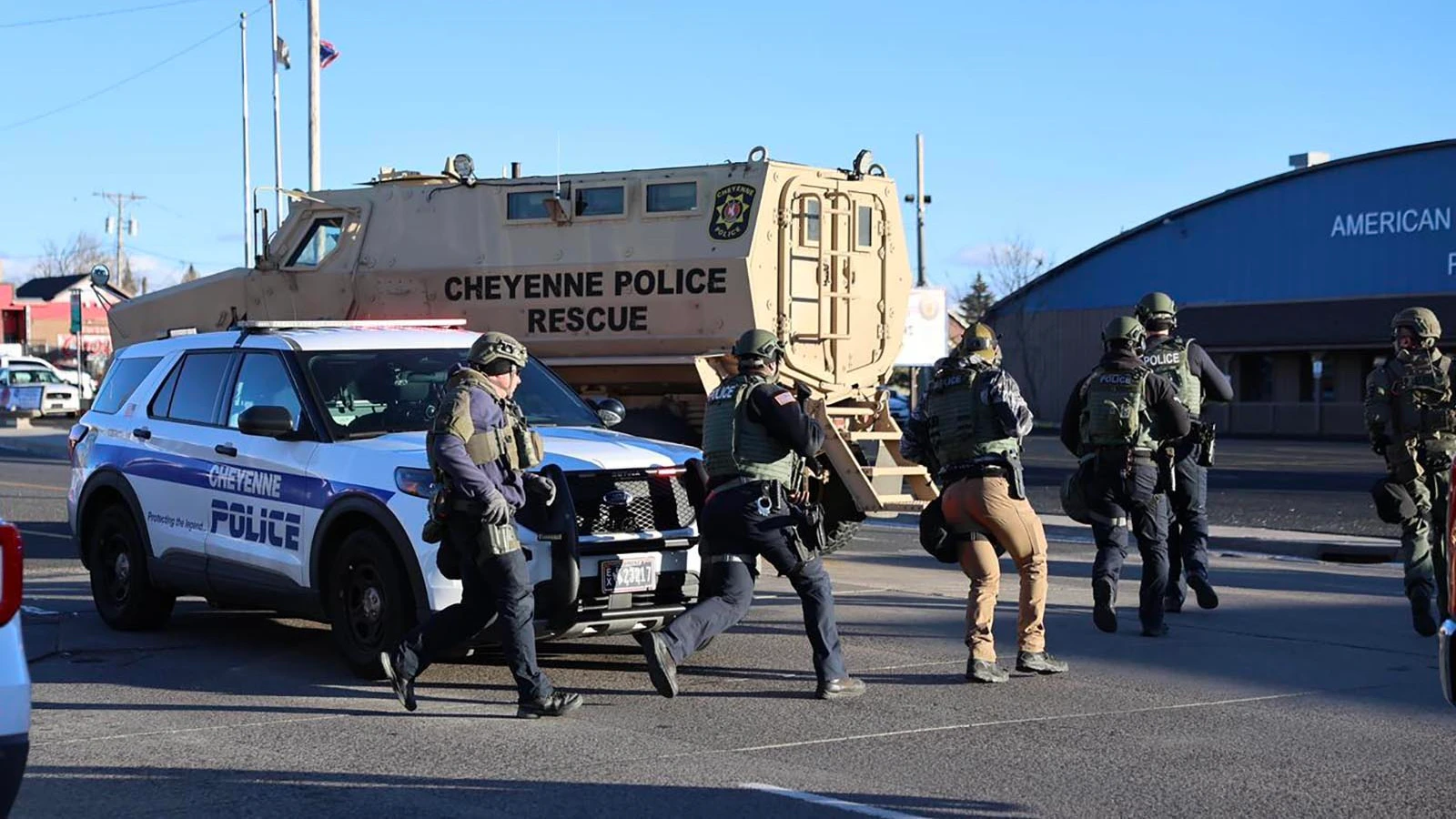
An ordinance to allow Cheyenne’s Fire Department and city workers to enter people’s homes and businesses for safety inspections using administrative warrants was shelved by the Cheyenne City Council on Monday, after council members agreed that the proposal was not specific enough.
The council voted unanimously to postpone the third reading of the ordinance, after more than a dozen Cheyenne-area residents spoke up against the ordinance during Monday’s council meeting.
The council had voted 6-3 in favor of the ordinance’s second reading Jan. 12 during a meeting where more than 20 area residents voiced concern.
The council will again take up the ordinance on Feb. 9. The Public Services Committee recommended the reading be postponed for two weeks. Mayor Patrick Collins reminded the public of this recommendation before inviting public comment on Monday.
“We heard from you guys at the last meeting that we need to take a little time and look at this ordinance,” Collins said. “That is the recommendation of the Public Services Committee and what I expect will happen tonight.”
Public Opposition Strong
Even with the postponement of the reading likely, public opposition to the ordinance drew numerous people to address the council.
The purpose of the ordinance in its current form is to establish “a straightforward, constitutional process for city officials to obtain warrants for inspections or investigations when consent is denied, or cannot be obtained, ensuring compliance with municipal and state law while maintaining constitutional rights of property owners.”
Under the ordinance, an administrative inspection warrant could be requested when access is denied or cannot be obtained in various circumstances, such as fire code inspections for commercial properties or routine or follow-up inspections when consent is refused to ensure compliance with the International Fire Code adopted by the City of Cheyenne.
The ordinance is in part a proposed solution to dealing with abandoned buildings within the city limits. But, many residents said, the ordinance is not specific enough in stating who can serve the administrative warrants and under what particular circumstances.
Cheyenne resident Gary Pugh told the council that the ordinance sets “a slippery precedent,” with the violation of the fourth amendment at its heart. The fourth amendment protects individuals against unreasonable searches and seizures by the government, requiring that warrants be issued only upon probable cause.
“This issue is not abstract, and it is not partisan,” Pugh told the council.
Concerns Over Broad Authority
State Rep. Ann Lucas, R-Laramie County, said she has heard from many constituents voicing concern over the proposed ordinance. Acting immediately when there is a real emergency is important, Lucas said. But she suggested the ordinance falls short of creating specific boundaries for circumstances that would make issuing an administrative warrant reasonable – such as situations that could put lives at risk. “I don’t think this ordinance is limited to emergent situations,” Lucas said. “I also believe laws should be enacted because they must be enacted, not because we can enact them.”
“We are being asked, once again, to trust the government," said Cheyenne resident Kathy Scigliano. “Private property rights are not an inconvenience to be managed. They are a constitutional boundary.”
Resident Patricia McCoy echoed Scigliano’s sentiment.
“We refuse to accept that the city's convenience should come at the expense of our private rights,” she told the council.
McCoy further said she agrees with the council that abandoned buildings in the city are an issue and need attention.
She offered an amended version of the ordinance, which, she said at the meeting, includes additional guardrails that the current ordinance is missing. McCoy’s amended version would provide authority to the circuit court rather than a city-appointed official, ensuring the warrants are reviewed by a state-level judge. The amendment would also define “abandonment” with “clear, measurable standards,” she said.
“I urge you to read this corrected version,” McCoy told the council.
Keeping the ordinance focused on abandoned and burned properties was a concern that resident Colin Crossman brought to the council.
Among the questions the current ordinance raises is who would have authority to issue administrative warrants. In its current form, the ordinance says that a municipal judge may issue an administrative inspection warrant upon proper application by an authorized city official or employee.
Fourth Amendment Issues
Pugh pointed out that, under the Fourth Amendment, a warrant must be issued by an independent, impartial judge based on probable cause. A municipal judge, he said, is appointed by a mayor and the city council.
“When residents fear that government agents enter their homes without an independent judge’s approval, trust erodes. People become less willing to cooperate with law enforcement, report crimes or engage with local institutions,” Pugh said.
Charles Miller, addressing the council remotely, said he was submitting an amendment. Similar to the amendment Patricia McCoy submitted, Miller said his amendment would move authority to a circuit court judge.
“The city cannot ask its own municipal court for permission to search its own citizens. That is a conflict of interest,” he said.
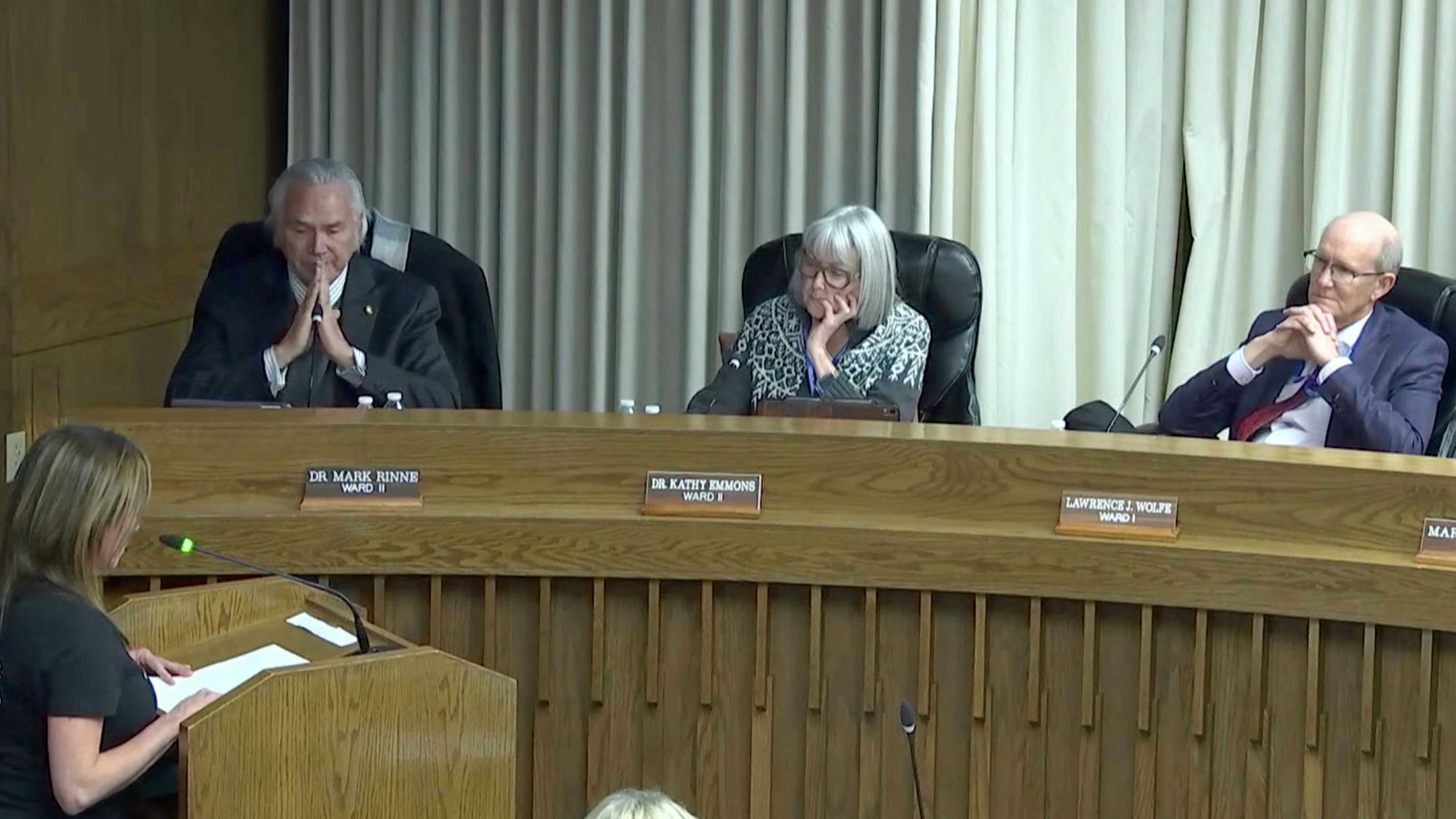
Upon hearing the concerns brought forth by area residents, council members discussed the ordinance and concerns raised among themselves.
“I’ve learned more about administrative warrants than I ever dreamed there was to learn about them,” said Councilwoman Dr. Michelle Aldrich. Aldrich said at the Jan. 12 council meeting that she would support the ordinance if it’s “amended significantly.”
Three substitutes to the current ordinance have been submitted to the council for consideration, Aldrich said.
“I just think that we really need more time to have the conversation and to have more input as we find the best possible way forward,” she said. “I think all of us would agree that there are properties in our community that have been neglected and are abandoned or are a health or safety hazard. We need to make sure that this is limited to those types of incidences and not broadly expanded or used in error.”
Councilman Ken Esquibel brought up the last six words of the Pledge of Allegiance: “with liberty and justice for all."
“That means all,” he said.
Aldrich and Esquibel, along with all other council members, voted to postpone the third reading of the ordinance until Feb. 9.
Kate Meadows can be reached at kate@cowboystatedaily.com.