Nature abhors a vacuum. So, as the weekend’s subzero temperatures began to vacate Wyoming, they were replaced by seriously strong winds to start the week.
Monday was a gusty day across Wyoming. There was a High Wind Warning across southeast Wyoming, with gusts of up to 65 mph. This was immediately after a weekend of subzero temperatures, with Laramie breaking its record-low temperature of -17, set in 1949, with -21 on Saturday, according to the National Weather Service office in Cheyenne.
While the winds of Wyoming were strong on Monday, it wasn’t another wind event like Wyoming experienced in December. There’s a distinct difference between what was blowing then and what blows now.
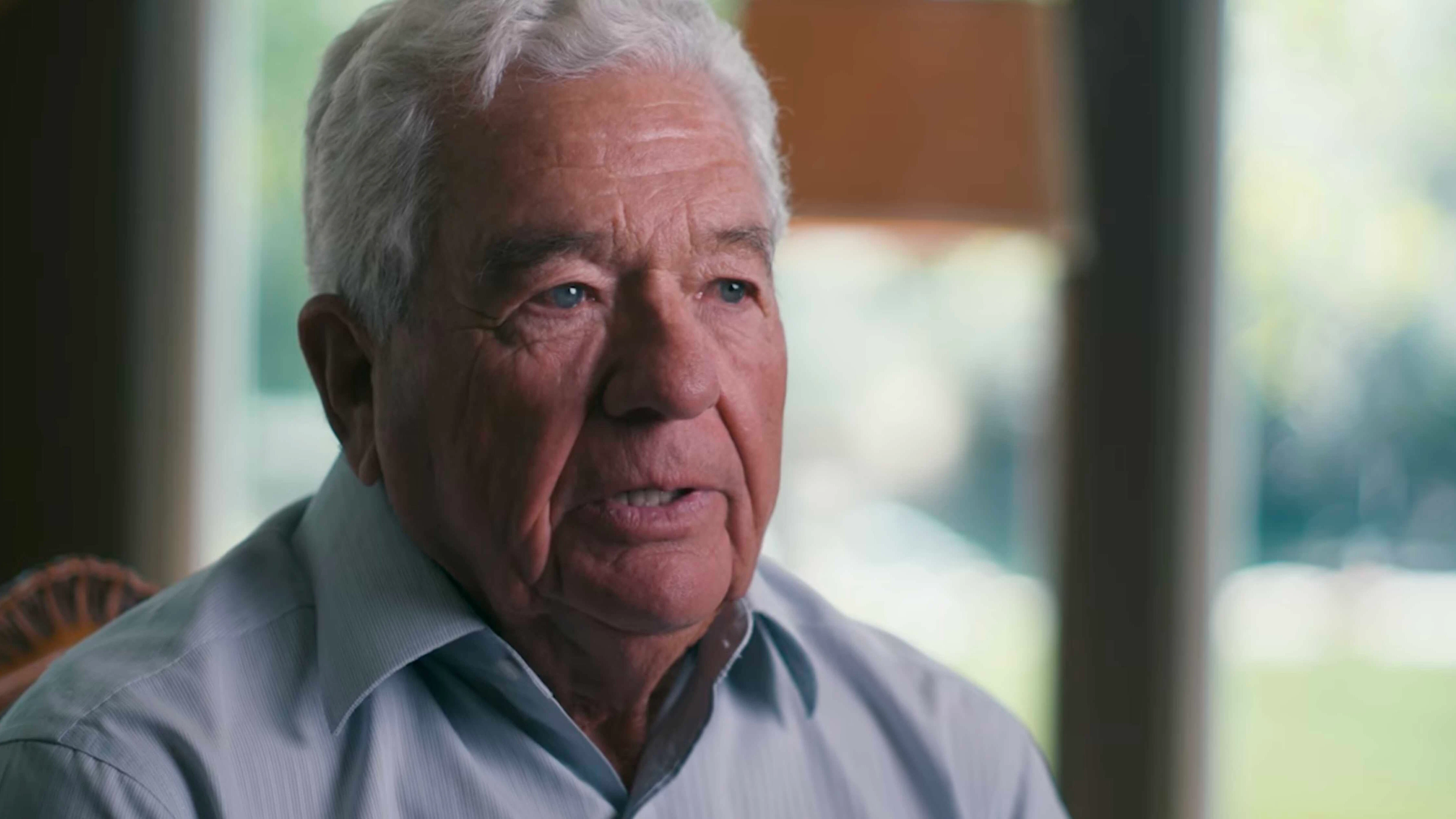
“General rule of thumb is that after an Arctic outbreak, when it starts to warm up, there's going to be a windy period,” said Cowboy State Daily meteorologist Don Day. “But Monday was a bit of a different animal than what we had in December.”
When It Blows
Monday’s wind gusts were strong, but they weren’t the result of a windstorm. That’s an important distinction, according to Day.
“The big wind events we had in December were driven by really strong winds aloft,” he said. “Those were jet stream winds, doing between 170 and 200 miles an hour, brought close to the ground by a change in temperature and pressure.”
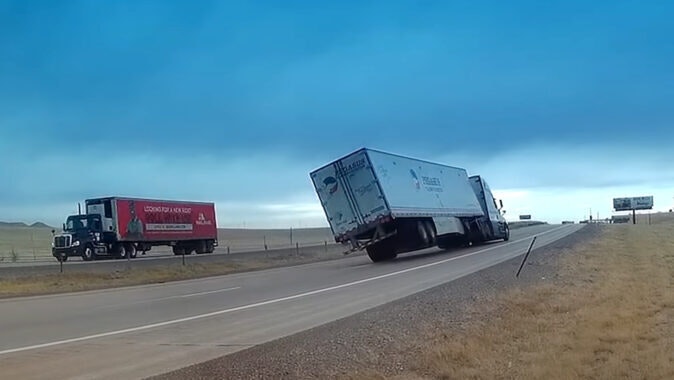
In mid-December, over 30 semi-trucks were blown over while traveling Wyoming’s highways in a 48-hour period. Wind gusts on Mount Coffin, one of the windiest places in Wyoming, reached at least 144 mph before the monitoring equipment recording the gusts was blown over.
That isn’t what happened on Monday. Winds were similarly strong, but for an entirely different reason.
“What we saw on Monday was a pretty good Chinook wind,” Day said. “It’s a different kind of wind, and they tend to be quite gusty.
Chinook winds are prevailing warm, westerly winds generated by the warming of air that has lost most of its moisture. Day said these conditions create turbulent gusts of wind, especially in mountainous terrain and along Wyoming’s major highway corridors.
“When cold, dense air starts to move, and you get warmer air coming in from the west, you get a big difference in air pressure,” he said. “There’s a big differential in air pressure from the west to the east of the Continental Divide. That’s why it gets super gusty, especially in what we call the wind corridors along I-80 and I-25.”
For The Duration
Wind is wind, right? Not exactly.
The key difference between Chinook winds and intense windstorms is the duration. Day said Monday’s Chinook winds were powerful, but they won’t be sticking around.
“Chinook winds aren’t as long-lasting,” he said. “Once the Arctic air gets far enough east, the gradient goes away, and the winds pull back. It’ll still be breezy, but there’s nothing that's going to generate crazy winds.”
The factor that intensifies Chinook winds is Wyoming’s topography. Wind gusts intensify as they go up and over the mountains, and the narrow valleys and canyons make them even more intense, like holding a finger over the end of a hose.
That’s not to say Chinook winds don’t have potentially unpleasant side effects while they’re blowing. A study by the University of Calgary Department of Clinical Neurosciences studied 75 patients who recorded the onset of migraines that correlated with weather data monitoring Chinook winds.
Their conclusion was that many patients experienced migraines on the days leading up to Chinook winds or when Chinooks were blowing, but usually only one or the other, not both.
Windy Winter
The frigid temperatures and dustings of snow in mid and late January were promising signs of a shift in Wyoming’s weather. The unorthodoxly warm, dry December is yielding to colder temperatures and increased moisture in February, March, and April, but transitions take time.
Day said the outlook for the coming weeks is promising, with consistently colder days and a better chance of snow in the areas where it’s needed most. Windstorms and Chinooks aren’t factoring into the forecast, but never say never.
“We don't see a high wind event like the ones in December occurring in the next couple of weeks,” he said. “I’ve also got enough experience around here, so I know not to say that there's no chance of another big windstorm, but from what we’re looking at and watching, it doesn’t look like it.”
Andrew Rossi can be reached at arossi@cowboystatedaily.com.