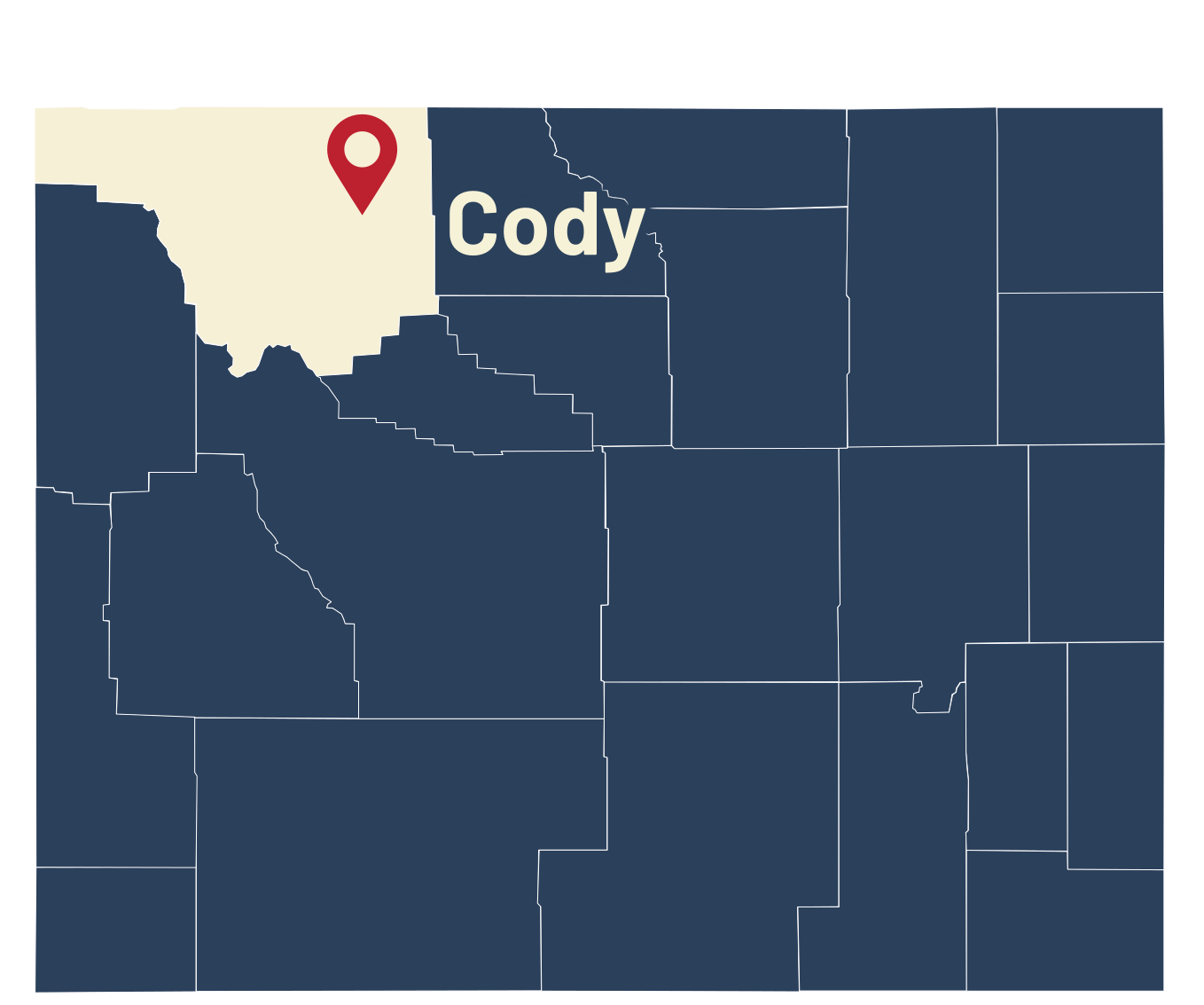
Growing up in Cody, Wyoming, in the 1950s and '60s, Pat Stuart had dreams of becoming an ambassador for the United States, traveling the globe in service to her country.
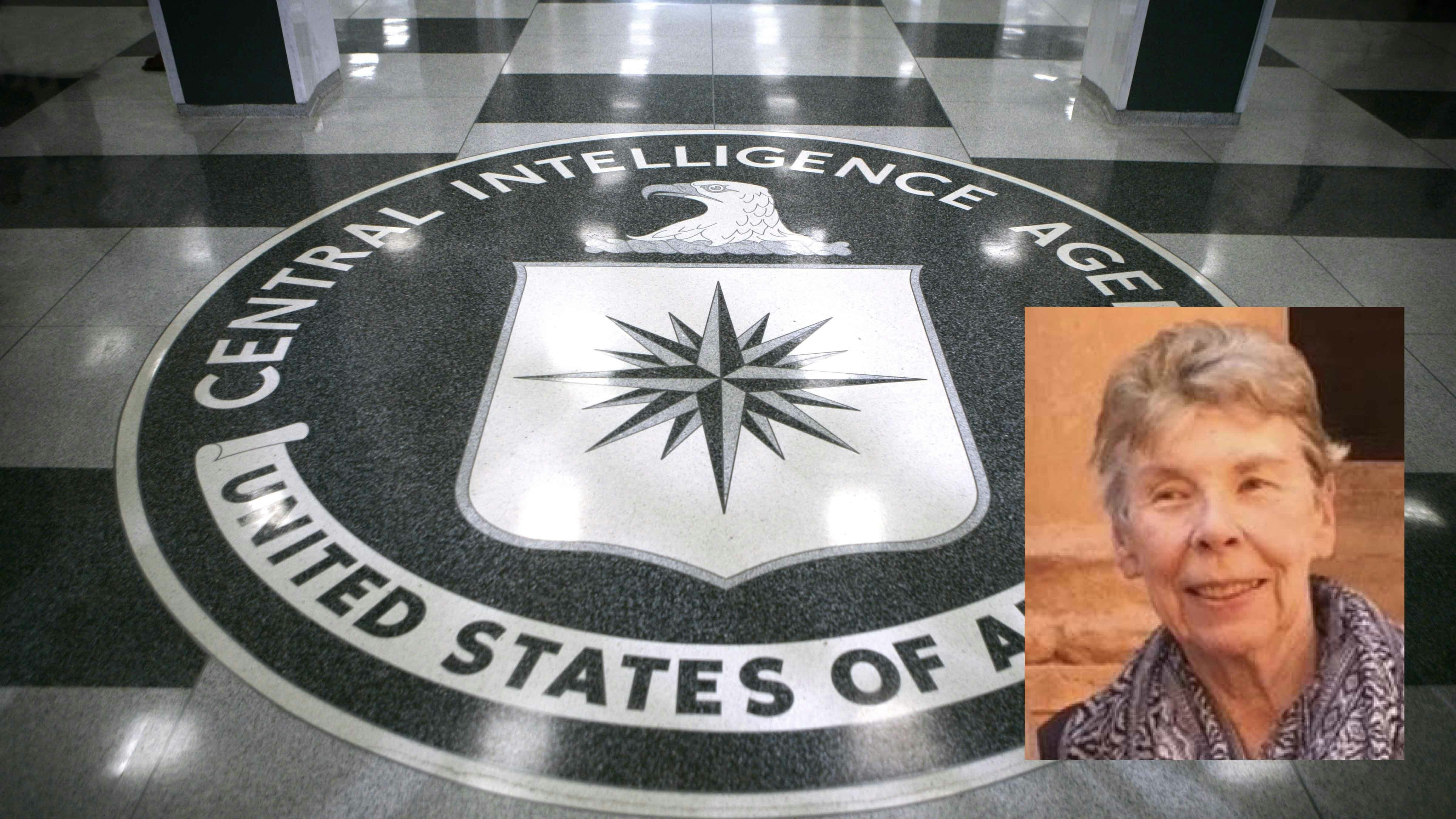
Instead, her career took her around the world as a different kind of public servant - one of the first female Central Intelligence Agency (CIA) operators and station chiefs, raising her daughter in some of the world’s most dangerous political hotspots.
A Very Wyoming Childhood
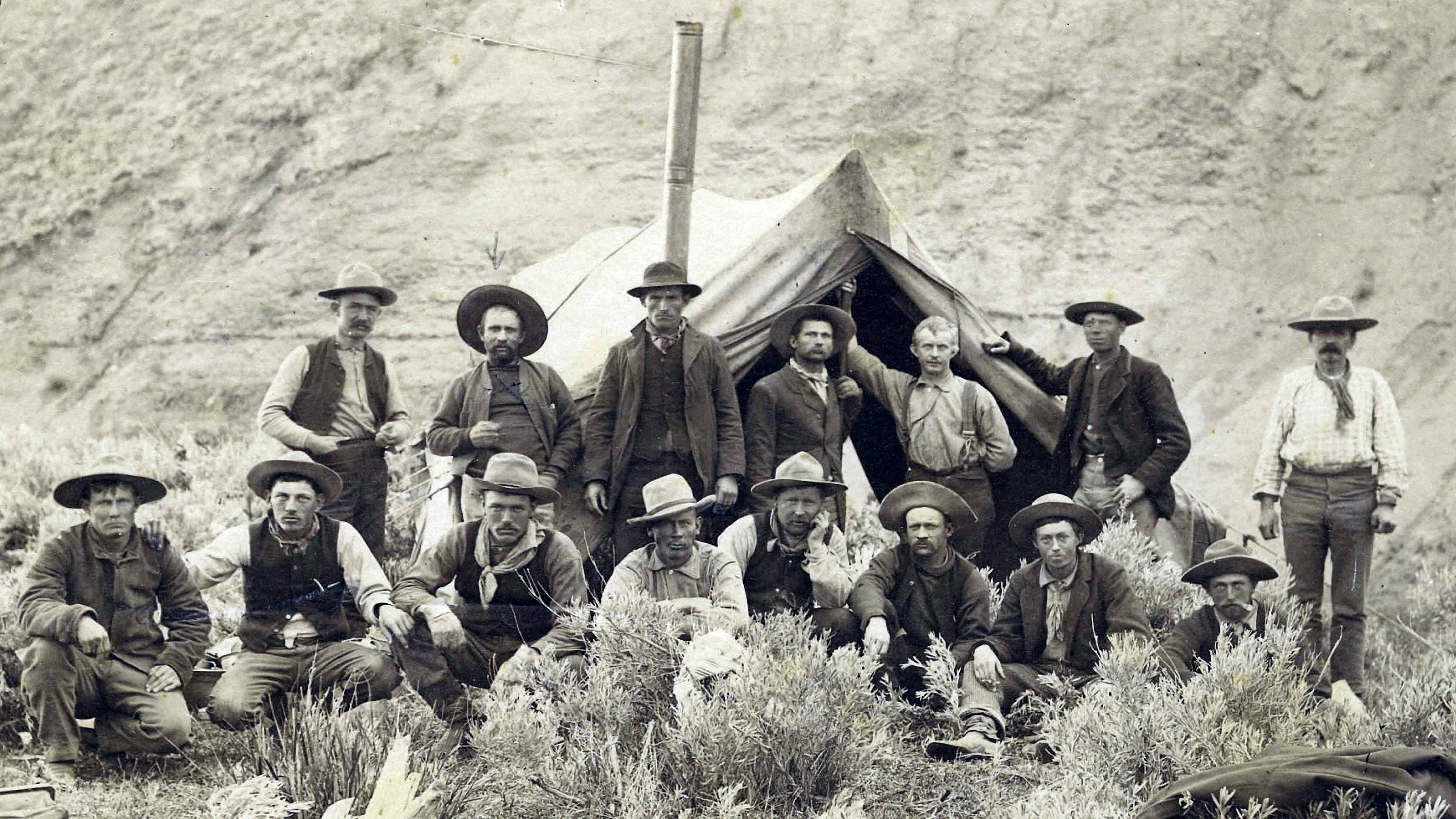
As a teenager in Cody in the 1960s, Pat Stuart's life was different than most of her classmates. Her mother, Marolyn Reher, had obtained a Forest Service lease in 1956 and, almost entirely on her own, designed and built with hand tools the family’s 1,200-square-foot cabin on Green Creek between Cody and Yellowstone.
Living out of a canvas tent, cooking over a campfire and tasked with watching her younger siblings, Reher’s oldest daughter, Pat, was not thrilled with the arrangement, according to her daughter, Robyn McGuckin.
“Being the camp cook and the go-to ‘mom’ for the other two siblings was not her thing,” McGuckin told Cowboy State Daily.
But Marolyn’s example - build your life, take decisions into your own hands - set Pat on a path of independence. So when it came time for the young woman to chart her own course, she dared to dream bigger than most women in America in the mid-1960s.
“Have You Thought About The CIA?”
Stuart had a dream, said McGuckin, of joining the Foreign Service and one day becoming an ambassador.
“She was a kid in a very small school, reading everything she could in the library, and essentially trying to figure out how to escape,” said McGuckin. “She developed this very romantic idea, based on what she read, of what it could be to be overseas as a representative of the US making a difference. And so that's what she wanted to do from a very early age.”
After graduating Cody High School, Stuart received (with honors) her BA in International Relations from the University of Oregon, and attended George Washington University as a Wolcott Fellow, attaining her master's degree in the same field.
Upon her graduation, and on the recommendation of her father, Stuart reached out to her congressional representatives for an appointment to the Foreign Service. But her delegation had something else in mind.
In an interview with the Cody Enterprise in 2015, Stuart said she asked former South Dakota Sen. Francis Case to write her a letter of recommendation for the state department.
“I wanted to be in the Foreign Service,” she told the interviewer. “He said, ‘Have you thought about the CIA?’”
McGuckin said that her mother had a roommate who graduated cum laude from the same university a year earlier, who had applied to the CIA and was accepted in an administrative position. But Stuart’s was the first post-World War II class in which the CIA would deploy women in covert positions, on the operation side.
“So it really was both the timing as well as her education and drive and willpower,” said McGuckin.
But because her ambition really was to become an ambassador, her daughter said Stuart wasn’t certain she should apply to the agency.
“But she figured, well, if my congressman told me to apply, I’d better apply,” said McGuckin. “And so she did, and she was accepted. And she had a very meaningful career. In a way, she was more effective - or somebody more ‘in it,’ really - than an ambassador could be, quickly.”
Balancing Family And Espionage
While attending college, Stuart met and married Bob McGuckin. They were married for 13 years before their daughter, Robyn, was born in 1972.
By then, Stuart had already solidified her career in the CIA. However, it was after her divorce from Bob in 1974 that Stuart’s dream of traveling the world in the service of her country began to take shape.
“I think when the marriage didn't work out, she was like, ‘Okay, well, if they'll let me go overseas with a minor, with a child, I will,” said her daughter. “And so, she did.”
From 1978 to 1981, McGuckin said she and her mother lived on a US Army base in Bonn-Bad Godesberg, Germany.
“I had a live-in nanny in a US apartment block on the US Army base,” said McGuckin.
From Germany, Stuart served as Chief of Station in Blantyre, Malawi, for two years, and in Ouagadougou, Upper Volta,which became Burkina Faso in 1984, while Stuart and her daughter were there. Because it was just the two of them on these escapades around the world, McGuckin said she and her mother had a very close relationship.
“We would just have these wonderful adventures where she would be like, ‘You know what? This weekend let's go for a drive, and let's take some picnic stuff, and maybe we'll pick something up along the way, and let's decide as we go what we're going to do,’” said McGuckin.
“And we would drive off. We would stop in the middle of the African bush somewhere, spread a picnic blanket, have a couple sandwiches and some hard boiled eggs or something, and carry on.”
McGuckin said those adventures with her mother gave her an appreciation for humanity, in all its colors - and languages.
“She went to the Foreign Service language school for French and Arabic,” said McGuckin. “Her French was very good, and her Arabic was passable, which is an accomplishment.”
The Hottest Hot Spots
As Section Chief, also called the Chief of Station, Stuart managed US official government relations, up to and including the Head of State/Presidential level, according to McGuckin.
“This included one post as the senior US diplomat in the host country,” she said. “Which means she was assigned an Ambassadorial post, but without the promotion and title.”
Stuart provided briefings to the senior-most U.S. officials, including to the sitting president on one occasion, and was given a commendation by President George H.W. Bush. She also directed counterterrorism and Middle East operations, dealing directly with former known terrorists and senior Middle Eastern officials.
At the height of the Cold War, Stuart was Section Chief for African operations and traveled extensively throughout the continent, as part of multiple cold war operations.
But McGuckin said the pinnacle of her mother’s career was as the Chief of Station in Tunis, which was the headquarters of the PLO (Palestine Liberation Organization) during the first Gulf War.
“I happened to be there as the war was breaking out,” she said. “I was in college at the time, and it was Christmas break or something, and they started evacuating everybody. And I'd already had my plane ticket, so I just left, and as Chief of Station, she was part of the staff that stayed.”
McGuckin pointed out that as a female in a primarily male-dominated post, Stuart faced significant opposition. But it was her ability to connect with people of all cultures and backgrounds that brought Stuart success.
“As a female spy and a female Chief of Station, there were some countries that were almost offended, because it was not an age for women to be in charge,“ said McGuckin.
“Even for the U.S., it was fairly progressive, let alone going to an African country that is very male dominated. But she had this ability to see through a lot of cultural differences into the human situation behind it all and just connect with people.”
Chocolate Chip Cookie Diplomacy
McGuckin related a story about the time her mother used a plate of freshly baked chocolate chip cookies to connect with a major figure in the local government, someone who she hadn’t been able to meet officially.
“She realized she was just down the road from him, so she walked down the road with a plate of American chocolate chip cookies that she had made,” she said. “And she just basically knocked on the door, met the servant, then the wife of the household, and said, ‘Hey, I'm new in town.’ And the wife then took her into the kitchen where the husband was tasting the hot sauce for dinner, and they struck up a conversation. They had some cookies, and then she was in.”
Despite what one might expect based on action-packed James Bond films, McGuckin said her Mother’s Day to day duties rarely involved gun-toting bad guys or car chases through the African desert. But that didn’t mean that Stuart’s job was risk-free.
“There were a lot of not terribly physical, but very risky things that she did, like leaving dead drops or picking up dead drops, meeting with people in covert situations,” said McGuckin. “She never told me that much about it, I just know about a couple of key operations she was involved in.”
McGuckin added that Stuart was also responsible for covertly acquired weapons technology that, according to the Department of Defense, preserved lives during Desert Storm and billions of dollars of defense development funds. She also devised a system to restructure the career category in the CIA to positively benefit women working in covert operations.
Retirement In Cody
Stuart finished out her career at what was basically the CIA “training camp,” where she was an instructor for young spies. It was around that time that she changed her last name to Stuart.
“She had never liked her maiden name, and she didn't particularly like her married name, so she decided to use a family name that came from her paternal grandmother,” said McGuckin. “Pat's grandmother was a significant early formative presence in her life.”
And it was no surprise to her daughter that, despite the exotic locations that she had traveled to during her tenure with the Agency, when she decided to retire, Stuart chose to come home to Wyoming and live a more rural life.
As a teenager, Stuart had saved her babysitting money and bought her first horse, a rough-and-ready range pony. She rode her horse to her job at Pahaska Tepee Resort - a 34-mile trip one way - but also rode the 22 miles into town, as well, just for fun.
“She used to ride up to Cedar and Rattlesnake (Mountains) with friends and take a sandwich or something and get Dairy Queen back in town with one of her girlfriends, who was also on a pony,” said McGuckin. “It was a very, very Cody kind of upbringing.”
In 1994, Stuart took over the family homestead at Heart Mountain that she inherited from Marolyn and began breeding and showing horses. She suffered a number of equine-related injuries, though, which contributed to an interest in local politics, and an unsuccessful run for Park County Commissioner in 2018.
“In 1996, she was thrown off a young 17-hand warmblood mare, broke her collarbone, a hip and two ribs, and pierced her lung,” said McGuckin. “She also suffered a punctured colon during a routine colonoscopy in Powell, which required a prolonged hospital stay. These events in many ways shifted her perception of both the U.S. healthcare, but particularly rural, non-affluent communities, such as here in Wyoming.”
In her retirement years, Stuart also fulfilled a dream of being an author. She self-published five books - two family memoirs, one novel (“The Tattered Spy,” loosely based on her experience in the CIA), and two non-fiction books.
Carrying On Her Mother’s Legacy
In January of 2024, Stuart suffered a massive stroke, from which doctors predicted she would not recover. But McGuckin said her mother regained the ability to walk and speak, though never at anything approaching her pre-stroke level.
On December 26, 2025, after sharing Christmas with family, Stuart passed due to atrial fibrillations, which had been the underlying cause of her stroke.
Growing up as the daughter of a woman who not only broke barriers but contributed to international peace by seeing and relating to people where they were, McGuckin said her mother’s experiences and world view shaped her own expectations of humanity.
“I am able to see people in her way, as people, rather than, ‘Oh, the Pakistanis are so different because of XYZ,’” she said. “They're basically just people. Yes, there are Pakistani traditions, there are Islamic traditions, there are Buddhist traditions. But people are basically people, and if you can identify with them as such, that's what it's about.”
Wendy Corr can be reached at wendy@cowboystatedaily.com.