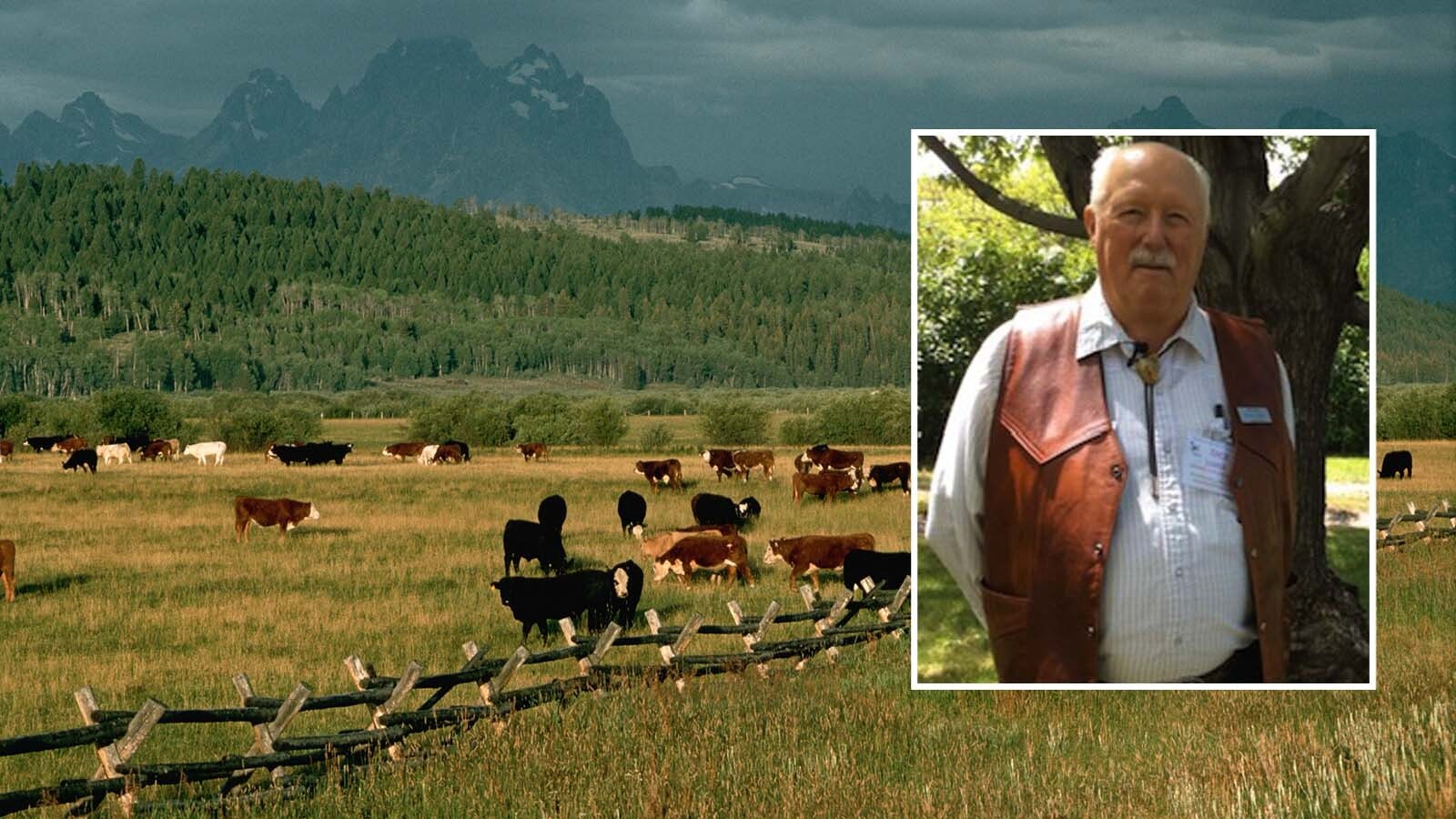
The public grazing industry has lost a legend with the death of Dick Loper of Lander.
“He was the father of grazing and grazing management,” Sen. Ogden Driskill, R-Devils Tower, told Cowboy State Daily. “Dick was revered. What he talked was kind of the gospel.”
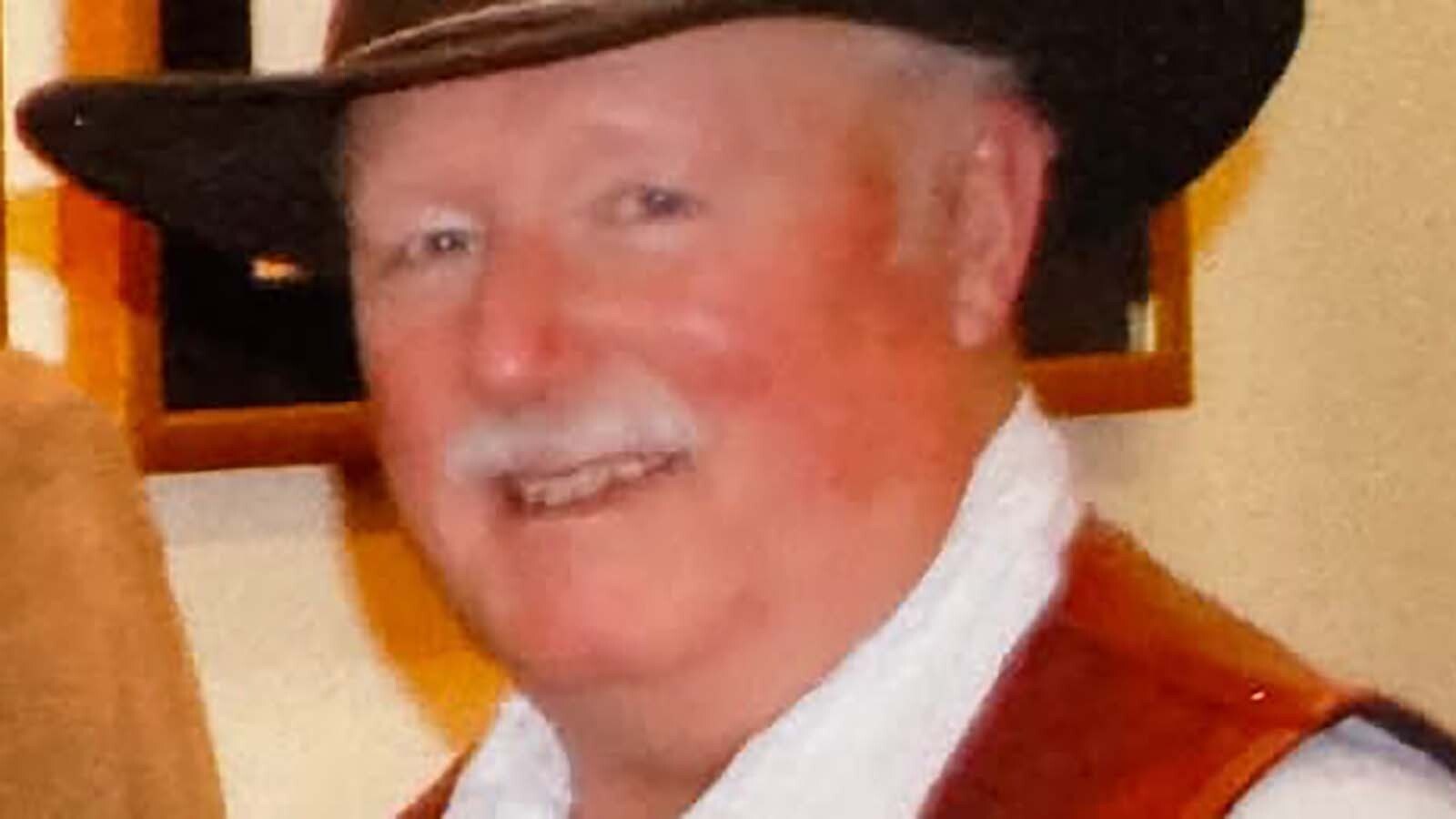
Loper, a longtime consultant on public rangeland management who sought to help family ranches navigate public land policy and regulations, died Jan. 6 of pulmonary fibrosis. He was 81.
Growing Up To Love The Land
Loper’s fascination with public lands took root in the Flint Hills of central Kansas, where he grew up. His wife of 43 years, Gail, told Cowboy State Daily he had a passion for plants early on.
“To him, a weed is a plant,” Gail said. “He used to tell me that.”
The landscape “shaped his lifelong respect for land, stewardship, and the working people who depend on it,” according to his obituary.
Loper served in the Vietnam War as a member of the U.S. Navy. He was in the service from 1961-65. He earned degrees in Range Science and Range Management before establishing a rangeland management consulting business in Lander in 1979.
Loves in Lander
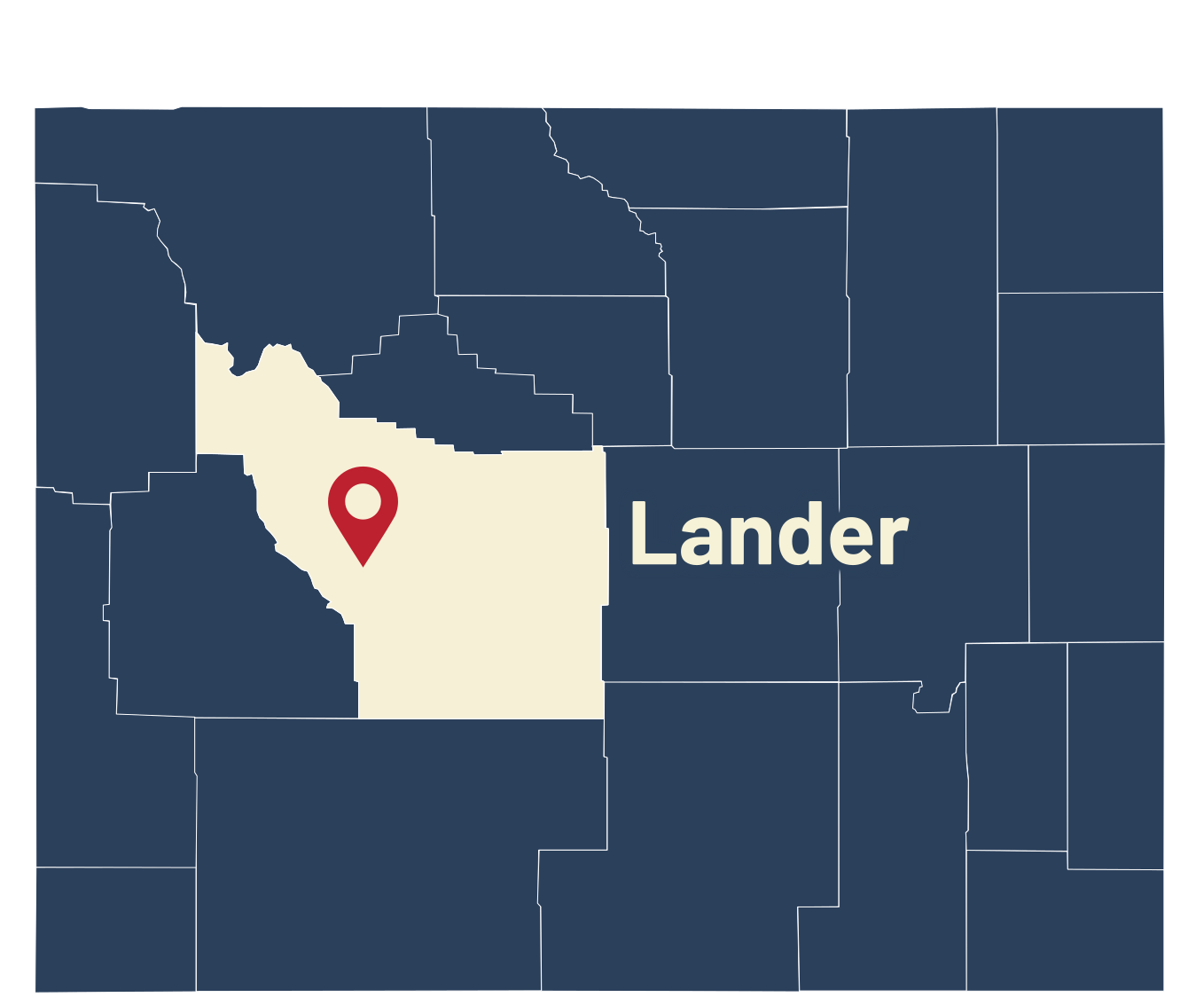
What brought Dick from his Kansas roots to Wyoming is a mystery, even to Gail. But he found his way to Lander, where Gail was working for a bank. He came in as a customer, she said.
Through his consulting business he focused on public rangeland management and issues affecting family ranches dependent on federal grazing lands.
“He was extremely dedicated to the family ranchers and that way of life,” Gail said.
Public Lands Legacy
As Loper became more well-versed in public land regulations and policy, the public land industry across the West relied heavily on his knowledge and advice.
“Dick had more knowledge of the BLM regulations than anybody else, hands-down,” Dennis Sun, publisher of Wyoming Livestock Roundup told Cowboy State Daily. “He helped a lot of ranchers with issues they had with the BLM. He was always available, always willing to help people.”
Loper was instrumental in starting the Wyoming State Grazing Board and worked as a range consultant for the State Grazing Board since its creation.
“What I really relied on Dick for was his extensive knowledge of rules and regulations and how things were done,” said Jim Magagna, who frequently crossed paths with Loper in his own agriculture career.
Loper was always available to answer questions, Magagna said, and made himself readily available.
“Many of us in Wyoming relied on Dick,” Magagna said. He was really our source for BLM grazing.”
In 2024, Loper was named as a Friend of the Public Lands Council (PLC).
“Generations of ranchers will benefit from Loper’s expertise and passion to better manage our nation’s treasured natural resources,” PLC President Tim Canterbury said in a 2024 news release announcing the honor.
Wyoming Agriculture Hall Of Fame
In 2013, Loper was inducted into the Wyoming Agriculture Hall of Fame. Each year, the Wyoming Livestock Roundup recognizes two Wyoming citizens or couples for their involvement in the state’s agriculture with the Wyoming Agriculture Hall of Fame induction. Sun, the first inductee into the Agriculture Hall of Fame in 1992, was present. U.S. Sen. John Barasso and then-senator Mike Enzi presented Loper with the award.
Enzi praised Loper in a 2013 address to Congress: “As a member of the Committee on Rangeland Classification, [Loper’s] efforts were crucial in gaining national attention for rangeland health, which led to the establishment of standards of healthy rangelands. These standards now give public land users and managers clear goals for grazing,” he said.
“On a personal note, it seems I can’t go very long without visiting with Dick Loper in Washington,” Enzi continued. “Dick is regularly in D.C. for meetings with federal agencies and other partners. It is always helpful receiving the latest on public lands during his visits.”
Gail recalled her husband’s dedication to public lands this way: “He was dedicated enough to get escorted out of a Smithsonian Museum,” she told Cowboy State Daily.
Museum staff escorted Loper out of the building after he criticized the museum’s display of grasses and grazing, Gail said.
“He was talking to people telling them this isn’t exactly how it is,” Gail said. “That’s how dedicated he was.”
Historic Artifact Collector
According to Magagna, Loper was a “great collector of historic artifacts” of the West and particularly of Wyoming.
Gail called his collection a “hobby-slash-business.”
For many years he collected Native American and cowboy objects and artifacts and antique guns, she said.
“That was kind of his outlet,” she said. “Because sometimes working on policies became difficult. His outlet was to deal in the cowboy stuff. And he loved that.”
One such artifact Magagna remembers is a kit of items made available to members of a social club for cattle barons who would gather in Cheyenne in the 1880s and 1890s.
“It was a very attractive package of things,” Magagna said.
Gail said her husband found artifacts at auctions and by attending gun shows. Most of the items were sold at auction in 2024.
Leaving His Mark
Loper leaves behind his wife and two daughters, along with grandchildren and great-grandchildren.
“He was a great husband and family man,” Gail said.
Loper’s career in public land grazing lasted nearly 50 years.
“In the ag and grazing world, he was absolutely a legend,” Driskill said.
According to his obituary, “his legacy lives on in the landscapes he helped protect, the ranching families he supported, and the many colleagues and friends who valued his wisdom and friendship.”
Gail said she hopes her husband will be remembered as an influencer of policies meant to help family ranchers continue to ranch in a place where it’s growing more and more difficult to be a rancher.
“I hope he will be remembered as someone who went out of his way to help the typical family rancher, the guy trying to make a living on the ground,” she said.
Kate Meadows can be reached at kate@cowboystatedaily.com.