JACKSON — When Ethan Pretsch worked for a company that built temporary structures for large industrial projects, he kept running into the same frustrating roadblock: fire suppression.
Data centers, manufacturing facilities, aviation hangars — they all needed fire protection, but traditional sprinkler systems were expensive to install, slow to activate and sometimes caused as much damage as the fires themselves.
“I went down this rabbit hole and found out there was absolutely nothing,” Pretsch told Cowboy State Daily, recalling his search for a technological solution. “I called one of the nation’s largest sprinkler companies, and they’re like, ‘Nope, but if you made anything like that, let us know.’”
So he did.
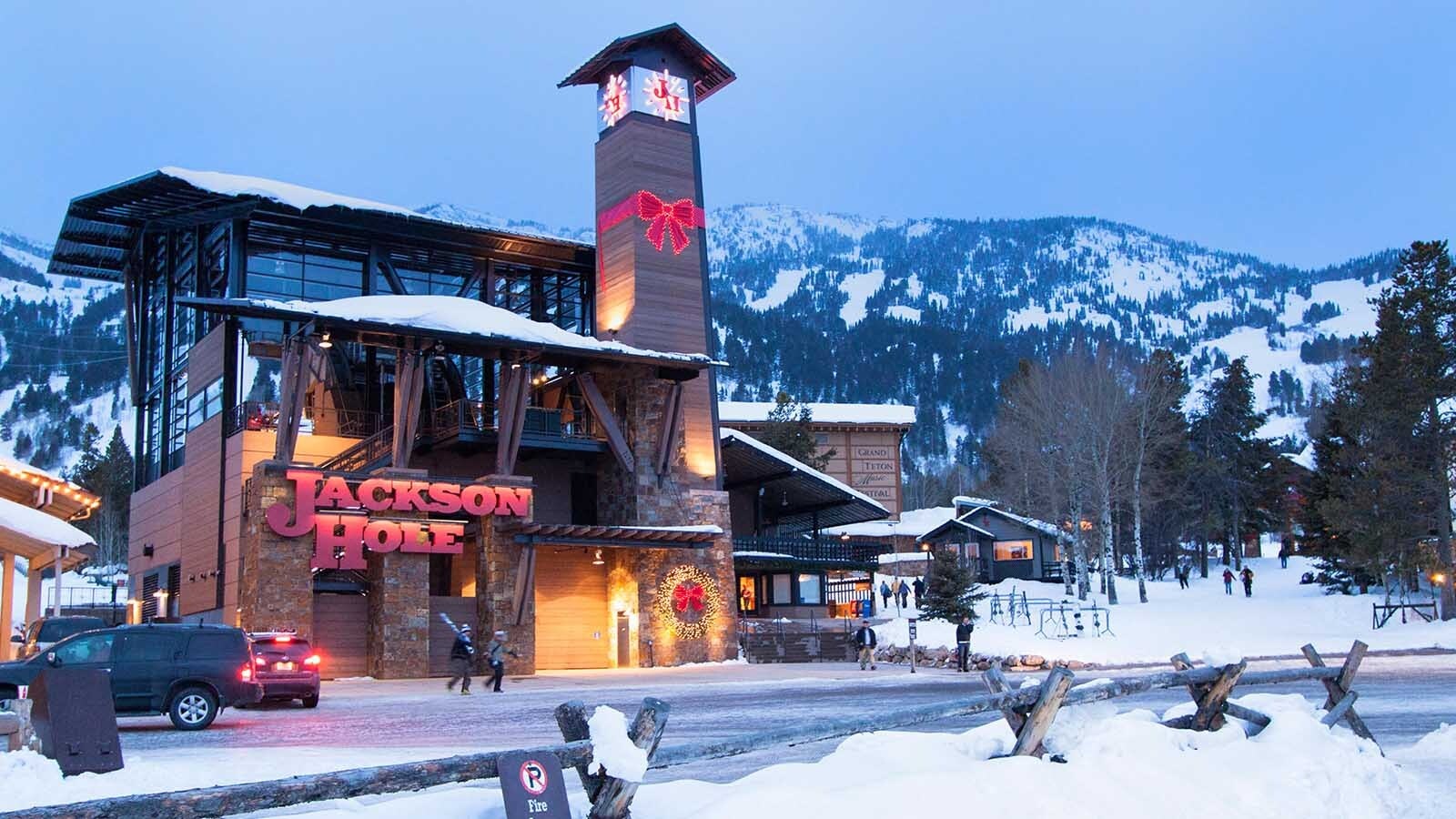
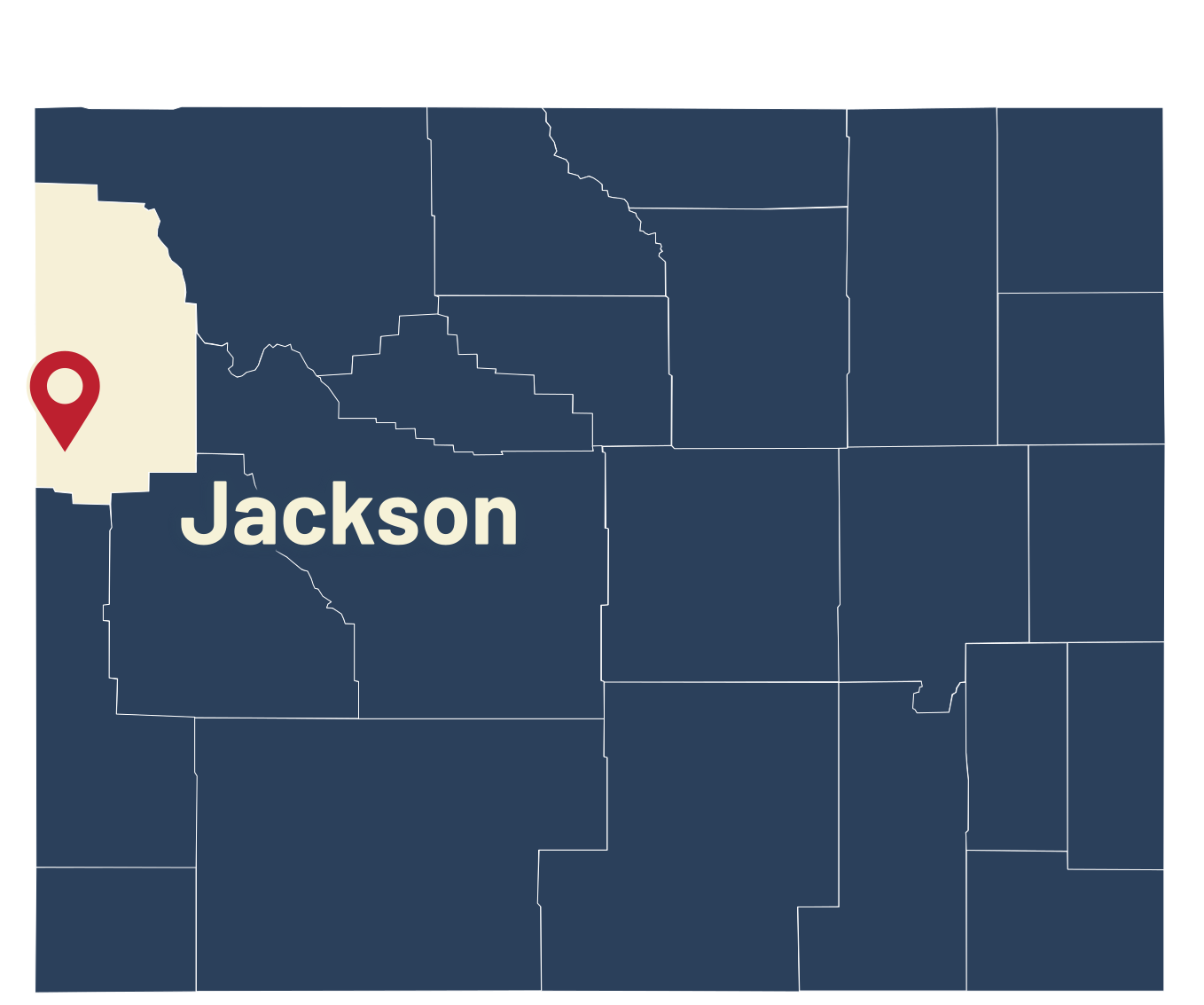
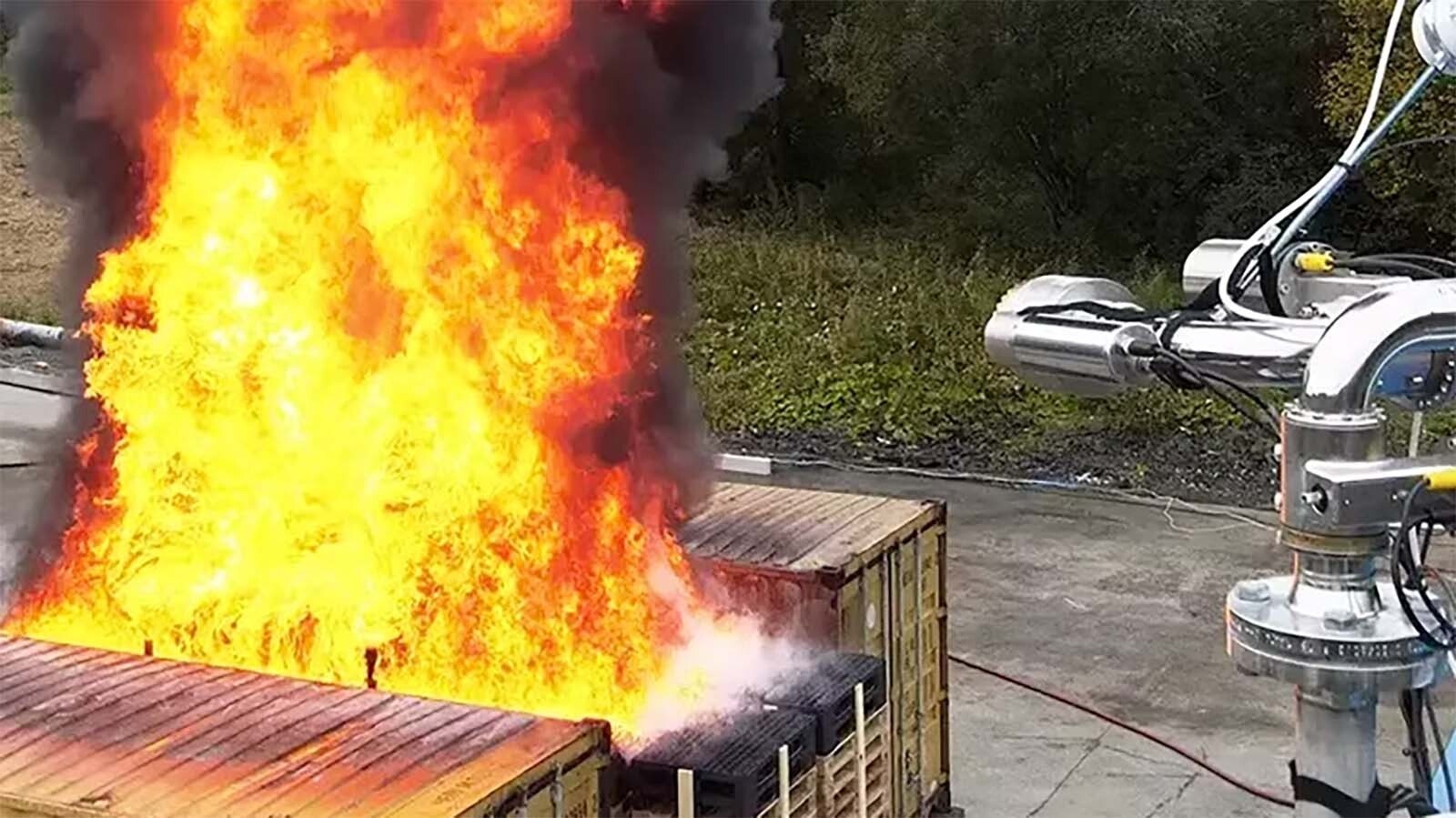
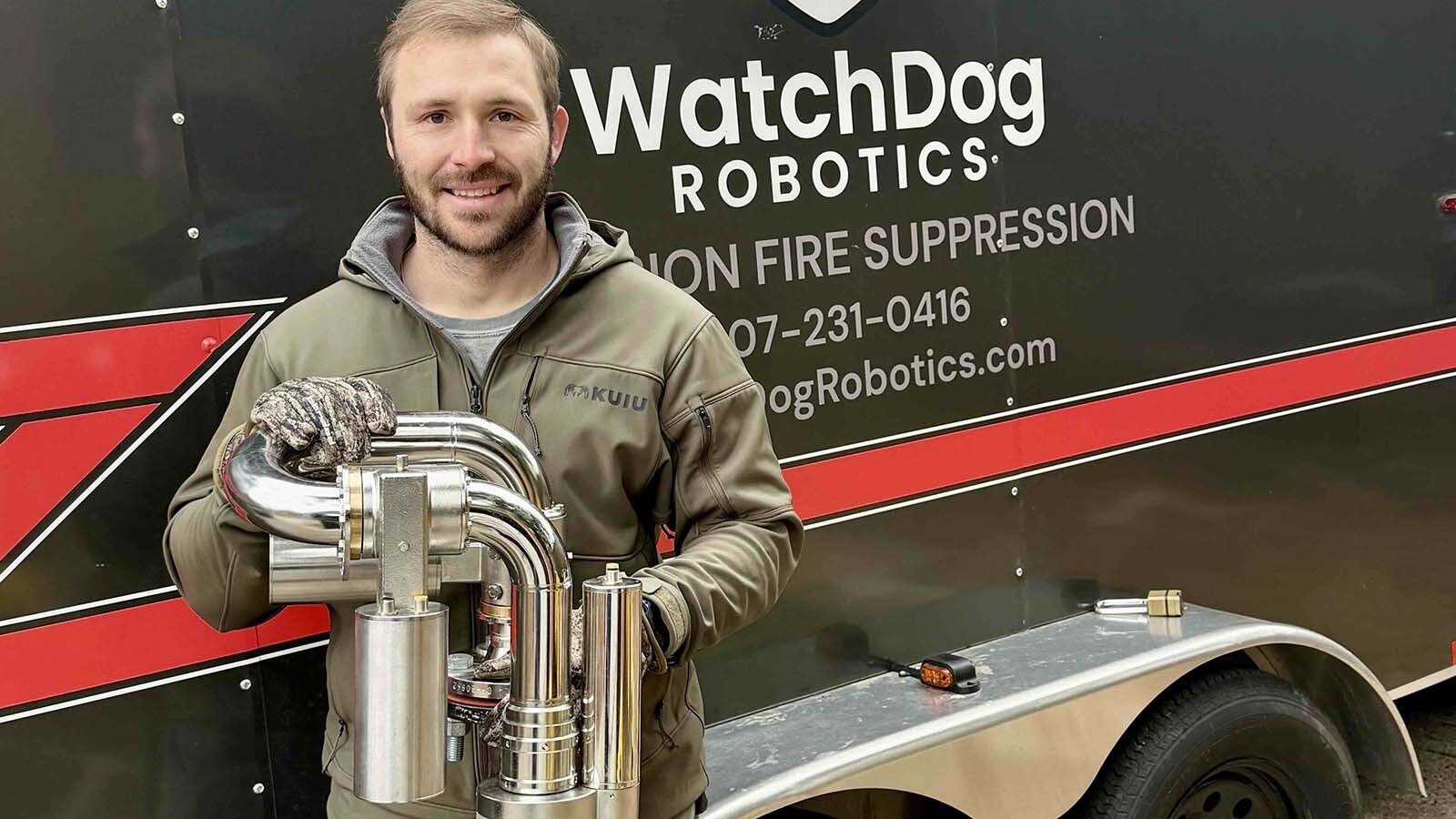
In 2024, Pretsch founded WatchDog Robotics, a Jackson-based startup developing autonomous fire suppression systems that use robotic water turrets paired with infrared sensors to detect, target and extinguish fires in seconds rather than minutes, he said.
The company’s flagship product, the NozzleBot, can detect a fire in two to four seconds and have water on target in eight to nine seconds, Pretsch said.
A typical wood fire can be extinguished in about 12 to 15 seconds. Traditional sprinkler systems, by comparison, take two to four minutes to activate.
“A fire grows exponentially,” Pretsch said. “Every second it’s growing and growing and growing rapidly. So being able to extinguish it within 12 seconds of ignition is a massive game changer.”
19th Century Technology
Traditional fire sprinklers have been around since the late 1870s and operate on essentially the same principles today as they did then, Pretsch said.
They’re designed as a last line of defense — great for saving a structure from total loss, but only after significant damage has already occurred.
Once activated, a sprinkler system runs continuously until firefighters arrive and manually shut it off, typically 25 minutes or more. By then, even if the fire is out, the water damage can be devastating.
“A sprinkler is going to douse it in a lot of water pretty quickly,” Pretsch said. “But only after there’s already a lot of damage. That’s great for not losing your entire building. But what about for things like a paper mill? You don’t want the fire to get out of control, and a sprinkler system will not save your machinery. It’s not going to save your production line from going down.”
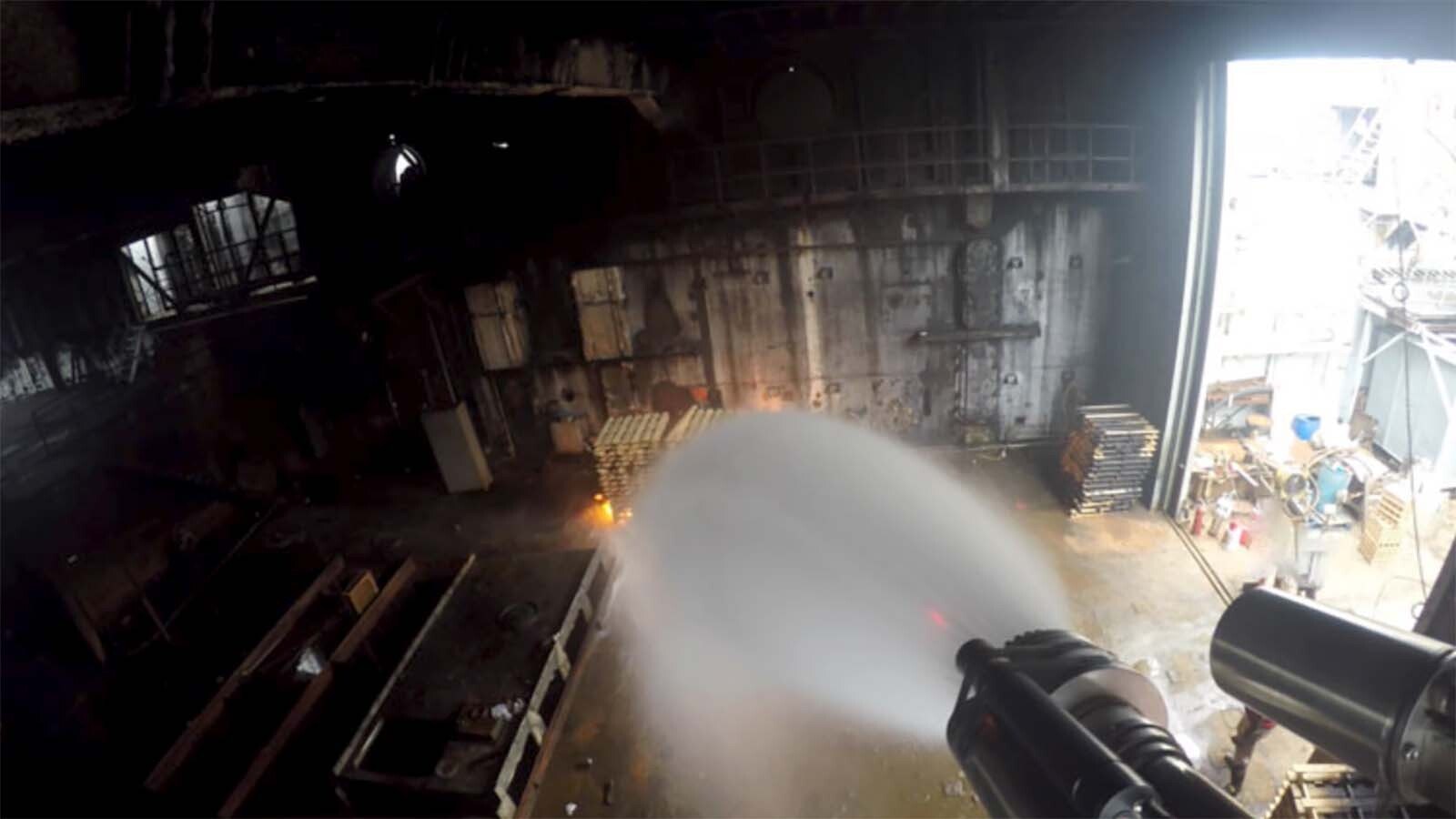
The NozzleBot takes a different approach, he said. Using triple-infrared sensors that detect the unique wavelengths of light given off by flames, the system triangulates a fire’s position and directs a motorized water turret to aim at it. When the sensors no longer detect flames, the water shuts off automatically.
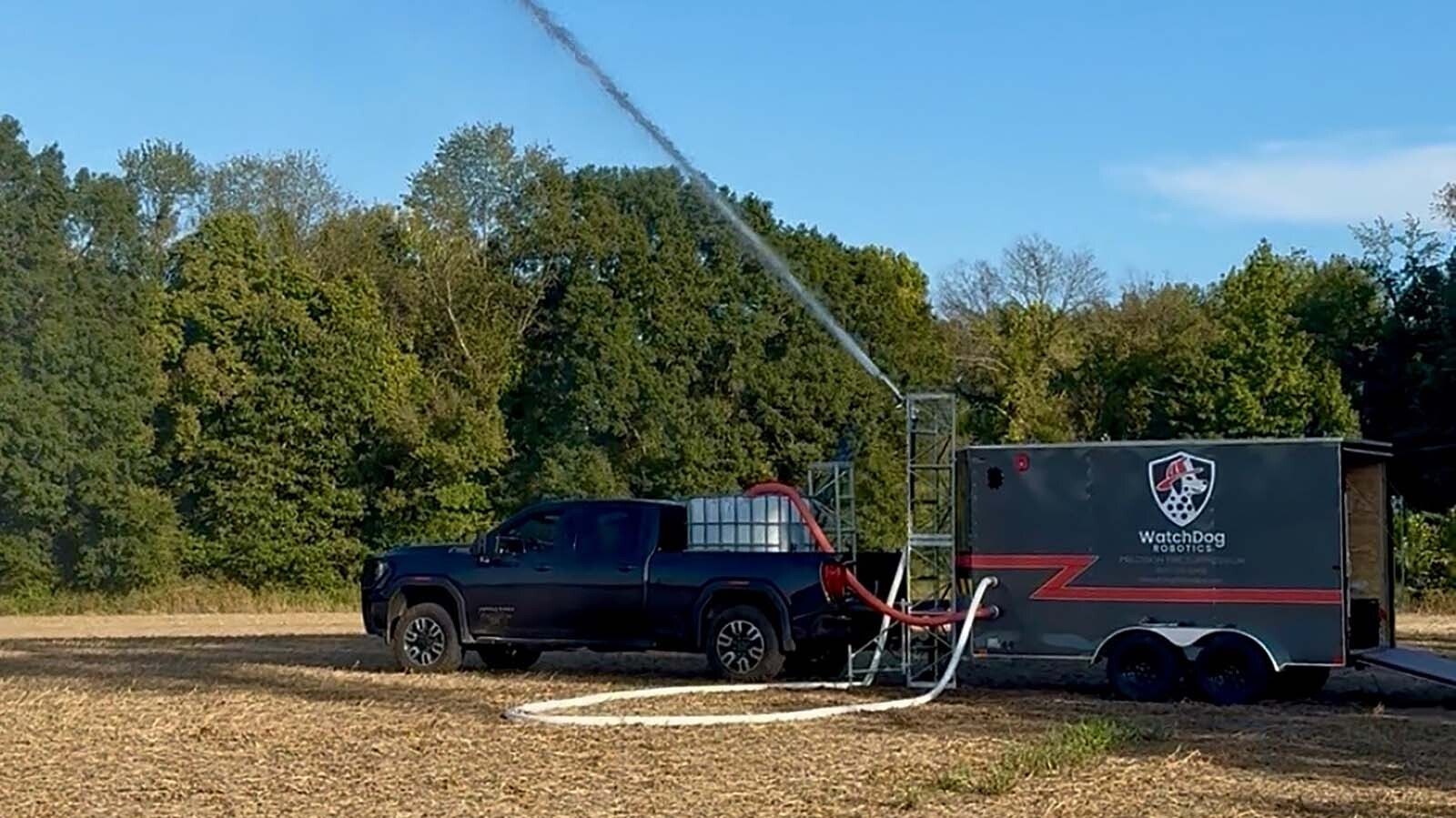
The standard NozzleBot can spray nearly 600 gallons per minute, rotate 360 degrees and reach targets up to 212 feet away. A single unit can cover up to 140,000 square feet. Sunbelt to Startup
Pretsch’s path to founding a robotics company wound through the temporary structures industry. He worked for Mahaffey USA, a company that built temporary facilities for large capital projects like data centers, where 2,000 workers might show up and need places to eat lunch, have meetings and store materials.
George Smith, who was president and CEO of Mahaffey USA before it was sold to Sunbelt Rentals in 2021, said fire suppression was a constant headache for the temporary structure business.
“The problem to solve was these are semi-permanent buildings, and they do need sprinkler protection,” Smith said. “And it’s very expensive to run sprinkler pumps and mains to get the water there.”
Smith, who is also Pretsch’s uncle, said he pointed his nephew toward a company that made autonomous fire vehicles.
Pretsch investigated but found it wasn’t quite what the industry needed. He began researching alternatives, eventually traveling to Australia and Europe to find partners who could help him build what he envisioned — a portable, rapidly deployable system that could protect temporary structures, industrial facilities and even homes threatened by wildfire.
“There’s nobody really doing what he’s doing,” Smith said. “He’s going to be the first person to the game.”
Wildfire Applications
While industrial applications drove the initial development, Pretsch sees enormous potential for wildfire defense — a particular concern for Wyoming and the broader Mountain West.
The mobile version of the NozzleBot is trailer-mounted and self-contained, with its own pump, power source and solar panels. It can draw water from ponds, lakes or other available sources. For a high-value home in the wildland-urban interface, Pretsch envisions parking multiple trailers around the property during fire season.
“For like a wildfire scenario, perhaps it detects a fire out on the perimeter of the property,” he said. “And so it says, ‘OK, there’s a fire coming. We need to spray the house down right now and make sure it’s soaked.’ Then when the house is covered, the fire’s approaching, let’s start actively battling the fire.”
Pretsch said he has met with Jackson Hole Fire/EMS officials, who have been supportive of the concept, particularly for freeing up firefighting resources during wildfire events.
“If there’s something like a wildfire ripping towards a town and you’re stretched thin on people, instead of having two people stationed to defend something like a substation or historical cabin, instead you can park a couple trailers there, calibrate them, and then you can leave them,” Pretsch said.
Wyoming Startup Story
WatchDog Robotics is headquartered in Jackson, though much of the testing and development work takes place at a warehouse in Tennessee. Pretsch said he hopes to eventually move operations to Wyoming, possibly to Alpine where space is more available and affordable.
The company is still in startup mode. Pretsch said his wife Tori, a pharmacist at Stone Drug in Jackson, has been supporting the venture while he builds the business. He has a few employees, including a chief operating officer, and is actively bidding on jobs now that the system is complete.
The name WatchDog Robotics is a nod to the Dalmatian — the historic firehouse dog that guarded equipment, calmed horses and helped clear streets for fire engines in the days before motorized trucks. Pretsch and his wife both worked at Triangle X Ranch in Grand Teton National Park during college and fell in love with Wyoming. They decided to stay.
“She certainly didn’t want to move back to Georgia,” Pretsch said of his wife. “So that’s how we ended up staying.”
Smith said the fire suppression market is ripe for innovation, particularly after the devastating Los Angeles wildfires drew national attention to the need for better protection.
“There were articles written about people trying to hire local private fire people to come protect their house,” Smith said. “And that just doesn’t exist. It’s a good niche. I think he’s found a good niche.”
Current Options
For homeowners in the wildland-urban interface who want to protect their properties now, there are already options available — though they come with limitations.
Darren Clifford, founder of the Wyoming-based wildfire preparedness company Caught the Firebug, said sprinkler packages are one of the most common tools used to defend structures from approaching wildfires.
In 2023, he was dispatched to eastern Oregon where his crew set up sprinkler systems to protect nine privately owned cabins threatened by wildfire.
“Not only did we set those up on the ground, but we also got on top of the roof and set them up on top of the ridges to keep the roof area wet from embers coming in and landing and starting those fires,” Clifford said.
Traditional sprinkler systems can be effective, Clifford said, but they have limits. They work best when properly set up with no gaps in the lines, and they’re not designed for fast-moving wildfires driven by high winds.
“Let’s say you have 25 mile an hour winds with gusts up to 40 or 50 and the fire is 150, 200 yards from your house,” Clifford said. “That’s not going to help.”
For homeowners looking to get ahead of fire season, Clifford recommends starting with a fuel management plan — assessing what fuels are on the ground and whether trees need to be limbed up to eliminate “ladder fuels” that allow fire to climb into the canopy. He also recommends having a sprinkler package ready and knowing how to set it up quickly.
Another option is fire-retardant wrap. Clifford said his company recently gave away a wrap package to a ranch in Dubois through a sponsorship contest. The material is designed to be wrapped around a home to protect it from radiant heat and embers. “The more awareness and the more preparedness you can be, the better,” Clifford said. “These days people don’t really understand that just because you live in an urban area, they think, ‘Oh well, it’s never going to happen.’ It can.”
David Madison can be reached at david@cowboystatedaily.com.