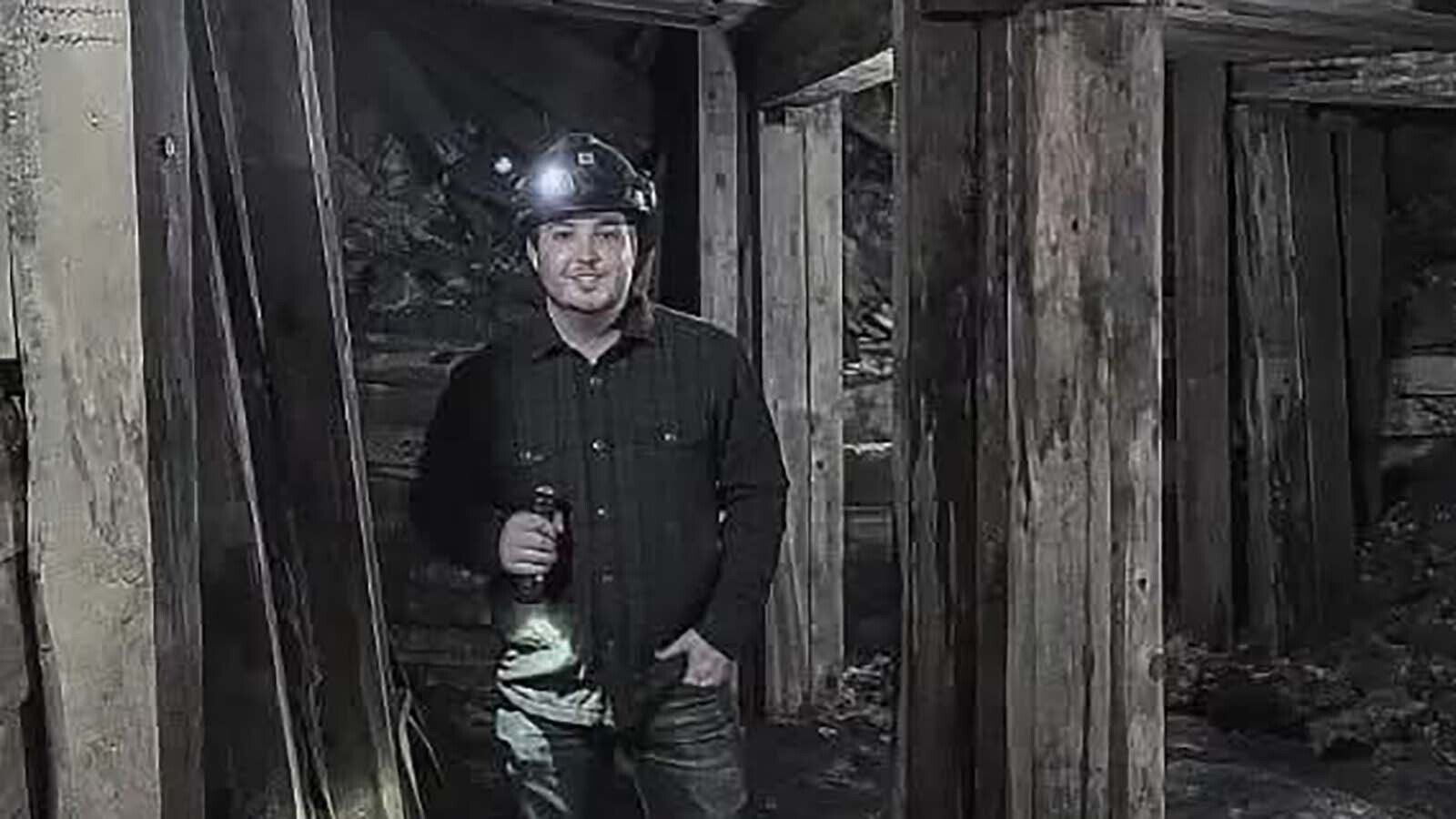
It was during the Covid lockdown that Levi Kessler of Spearfish, South Dakota first started exploring historic underground mines in the Black Hills.
He said he was tired of sitting on his couch watching “Tiger King” and got permission from private landowners to explore their abandoned mines with a few of his friends.
“We were super deep in the earth exploring this old mine from the 1890s and sat to rest in this big room that miners would refer to as a stope,” Kessler said. “You can see roots coming through the ceiling of this mine and my friend said that I should share this history below the pines.”
The friends were already researching the history of privately owned abandoned mines that they had gotten permission to explore and were sharing the information with the owners.
Kessler started sharing the history and discoveries they were making on Facebook under the name “History Under The Pines” and started finding like-minded people who loved historic mines and gold towns.
Kessler only shared his findings with the promise to the landowners that each private location would retain its anonymity to discourage trespassers.
“The whole goal of the project is to work with private landowners in and around the Black Hills, including Wyoming,” Kessler said. “I spend way too much time researching, but that's the most important part, especially since a lot of this history you can't find on the internet or with AI.”
Kessler, 28, said that though he is not a miner himself, he is well-connected with the mining world and has been able to bring various experts to each investigation ranging from logging specialists, mine safety officers and railroad historians.
When not exploring underground, he works in the tourism industry in Deadwood and is immersed in promoting the history of the Black Hills.
He has also amassed a large collection of historic books about mines that he and his crew use in their research about each site they plan to investigate and document.
Kessler estimates he spends at least 16 hours a week going through old newspapers, historic books and maps.
Usually they are just doing research during the winter but with the mild weather, the History Under The Pines crew have already begun heading underground.
“We recently got to this mine portal and it was 66 degrees and felt like summertime,” Kessler said. “We came out three hours later and it was in the 30s and snowing.”
Kessler said that they are doing this documentation for free because they believe that the history needs to be saved and they want to get others excited about the mines and ghost towns before they are lost forever.
“We know the landowners are busy, and we just want to be able to provide them with their history,” Kessler said.
Last year, he was contacted by a landowner who had found a fireplace on their property. The crew was able to solve the mystery of who had lived there and discovered that it was a large logging camp.
“We were even able to provide some metal detecting and dug up some of their artifacts for them on their private grounds,” Kessler said. “That was really cool and so we're going to do more stuff like that.”
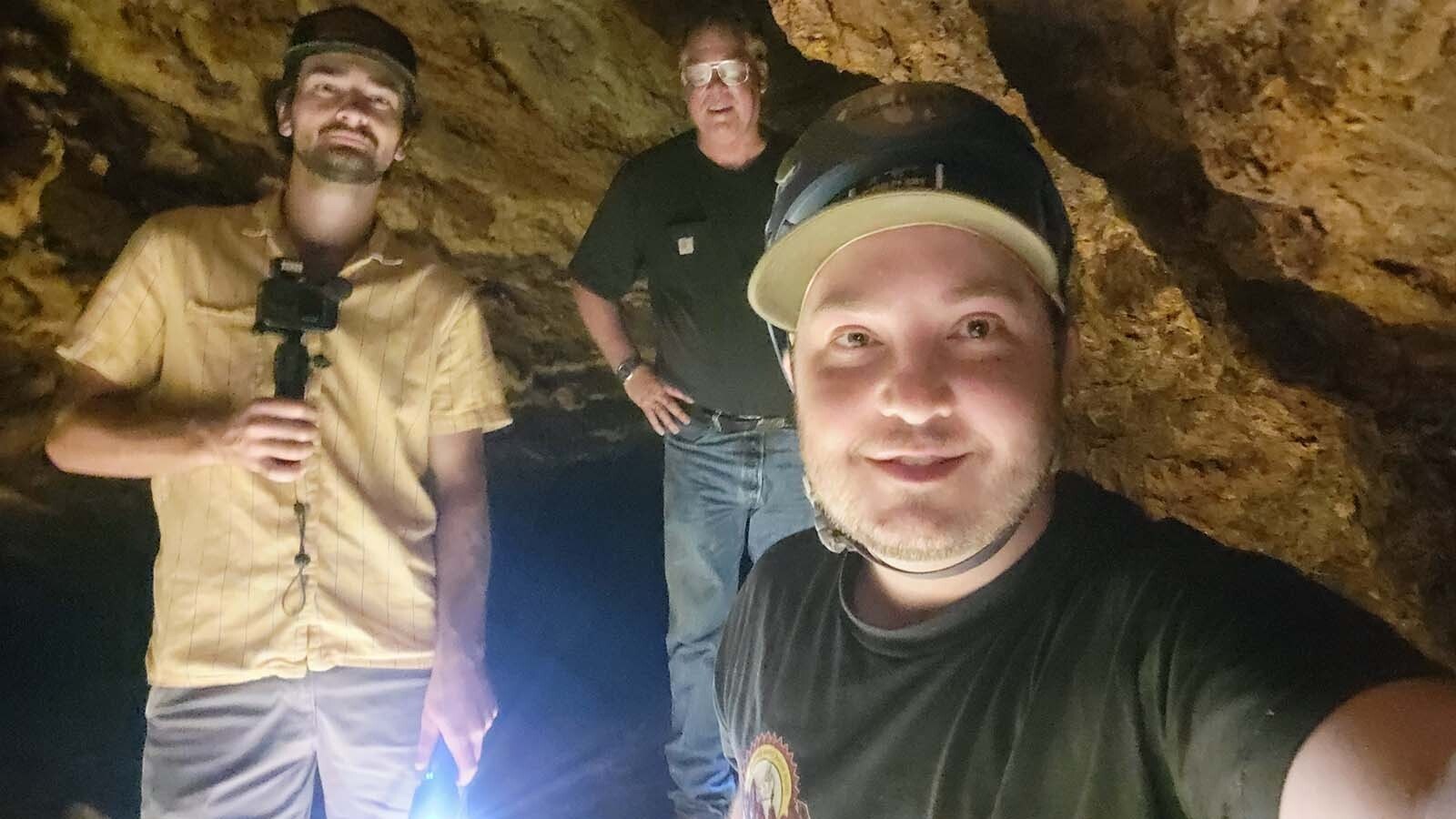
History Under The Pines are a crew who explore privately owned mines and ghost towns. Founder Levi Kessler pauses in an underground mine with his cameraman, Ethan, and fellow explorer, Tim. (Courtesy Levi Kessler) 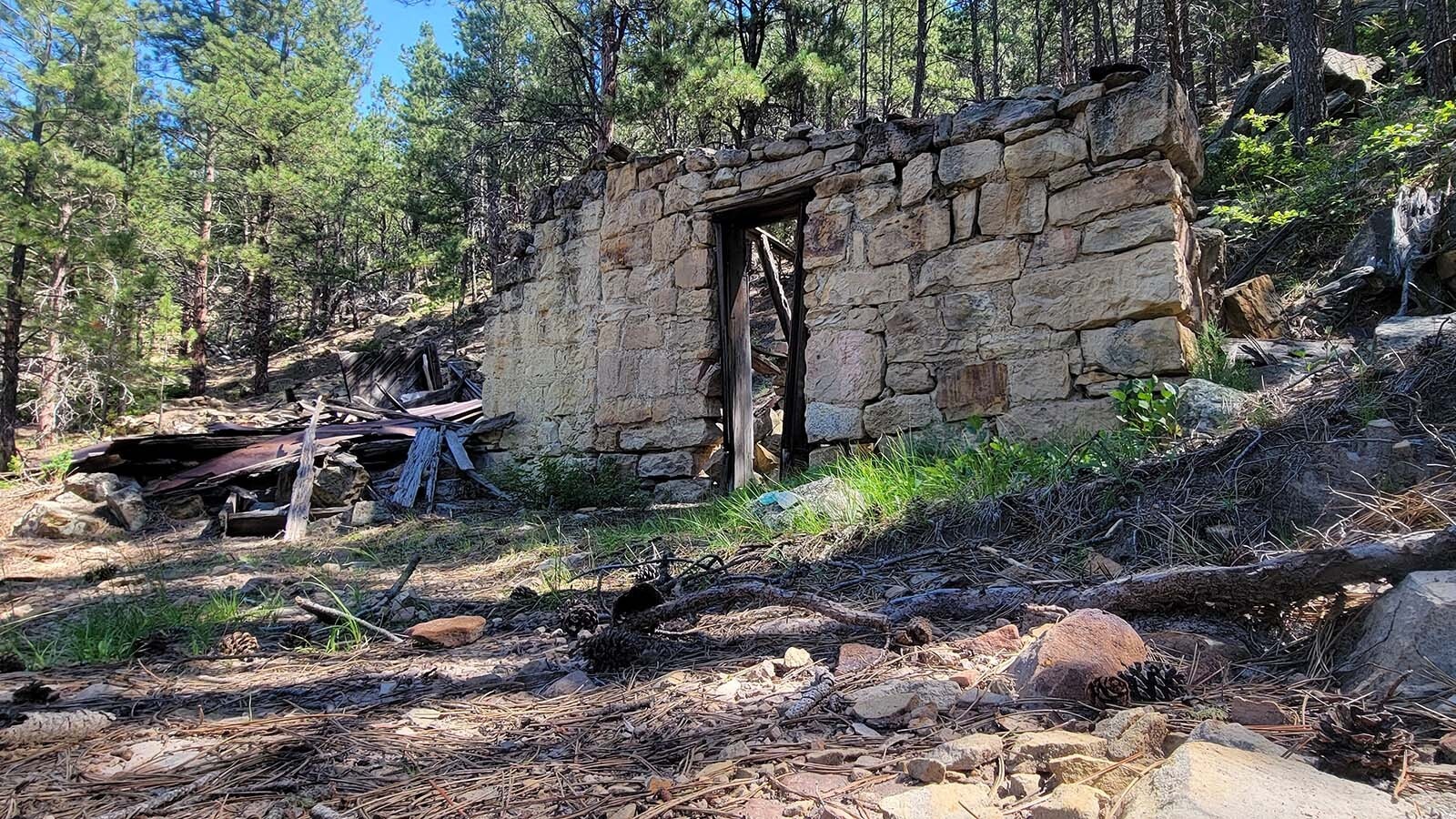
One of the goals of the History Under The Pines crew is not only to document buildings but to find the story behind them. This stone structure sits in an abandoned company mining town in Wyoming and Levi Kessler, founder of the history group will continue to dig into the story behind the building. (Courtesy Levi Kessler) 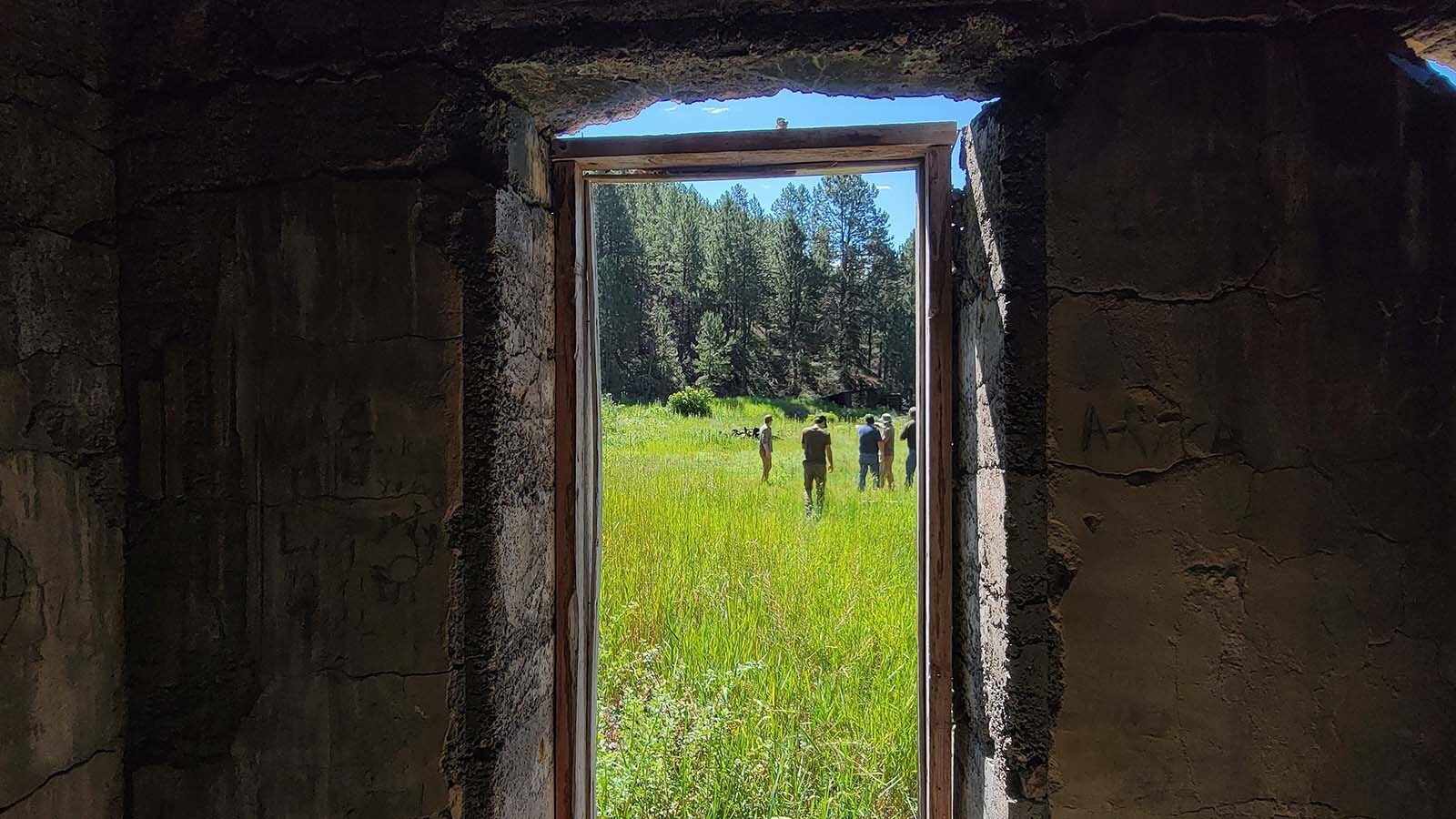
The History Under The Pines crew explored an old Wyoming mining ghost town and discovered the company safe. As part of their documentation efforts, they took a photo from the interior of the remains of the company safe that once sat at the center of the town. (Courtesy Levi Kessler) 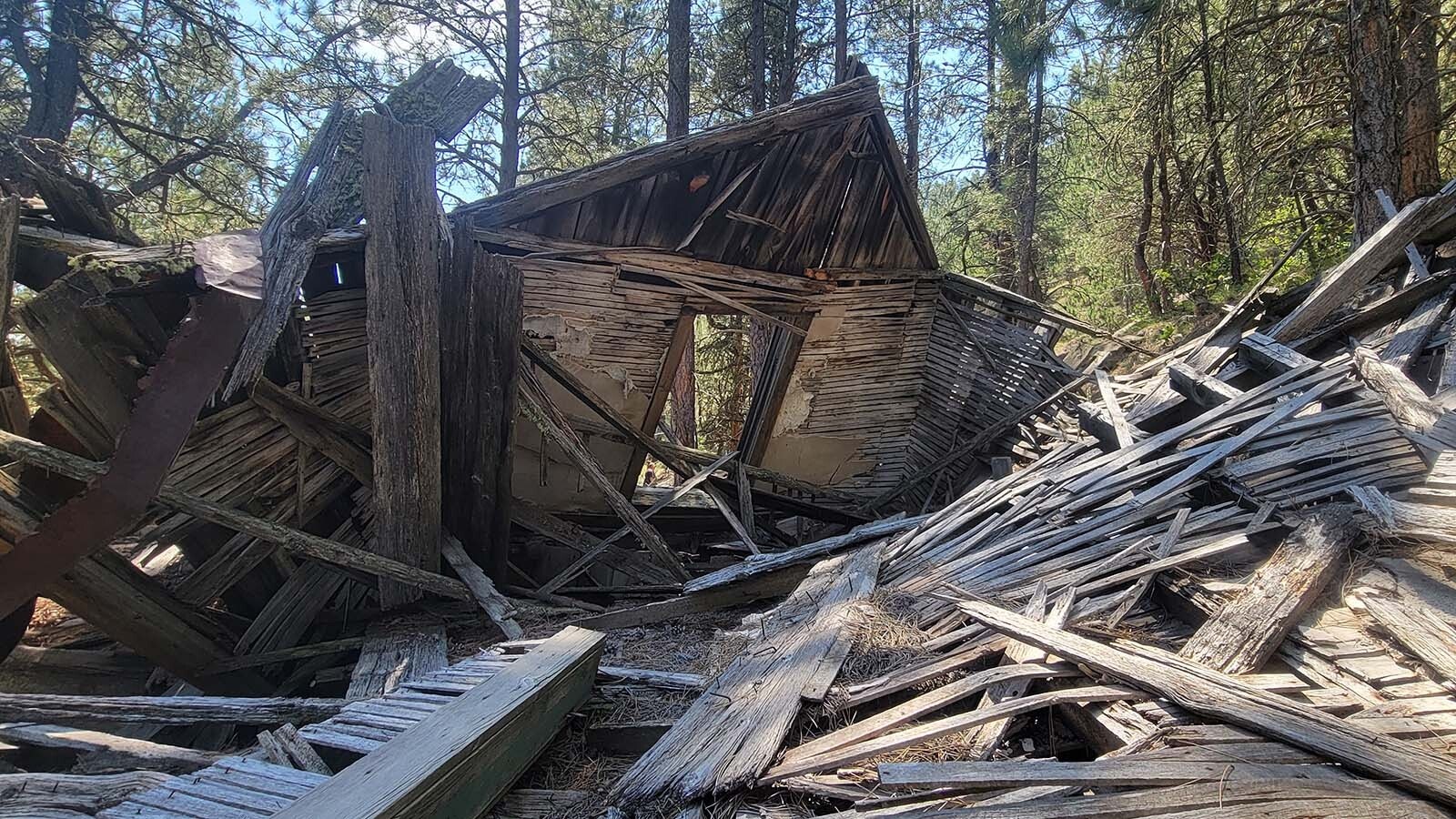
An old boarding house that is abandoned in a privately owned company mining town in Wyoming was documented by the History Under The Pines crew and this information presented to the landowner and on their public Facebook page. (Courtesy Levi Kessler) 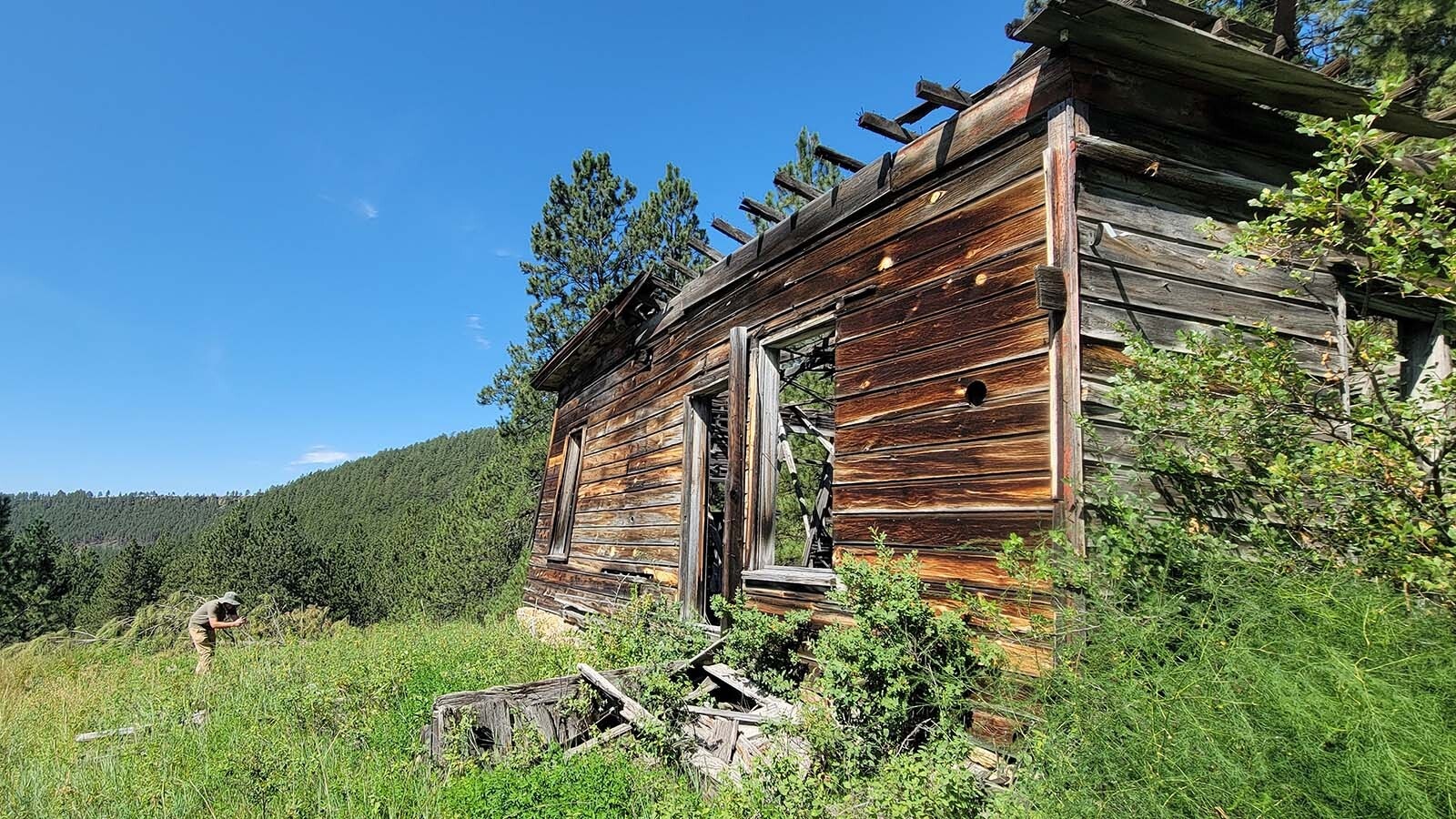
One of the crew members of History Under The Pines photographs an old home in a once vibrant company town now which is now an abandoned ghost town in Wyoming. (Courtesy Levi Kessler)
Wyoming Mining Ghost Town
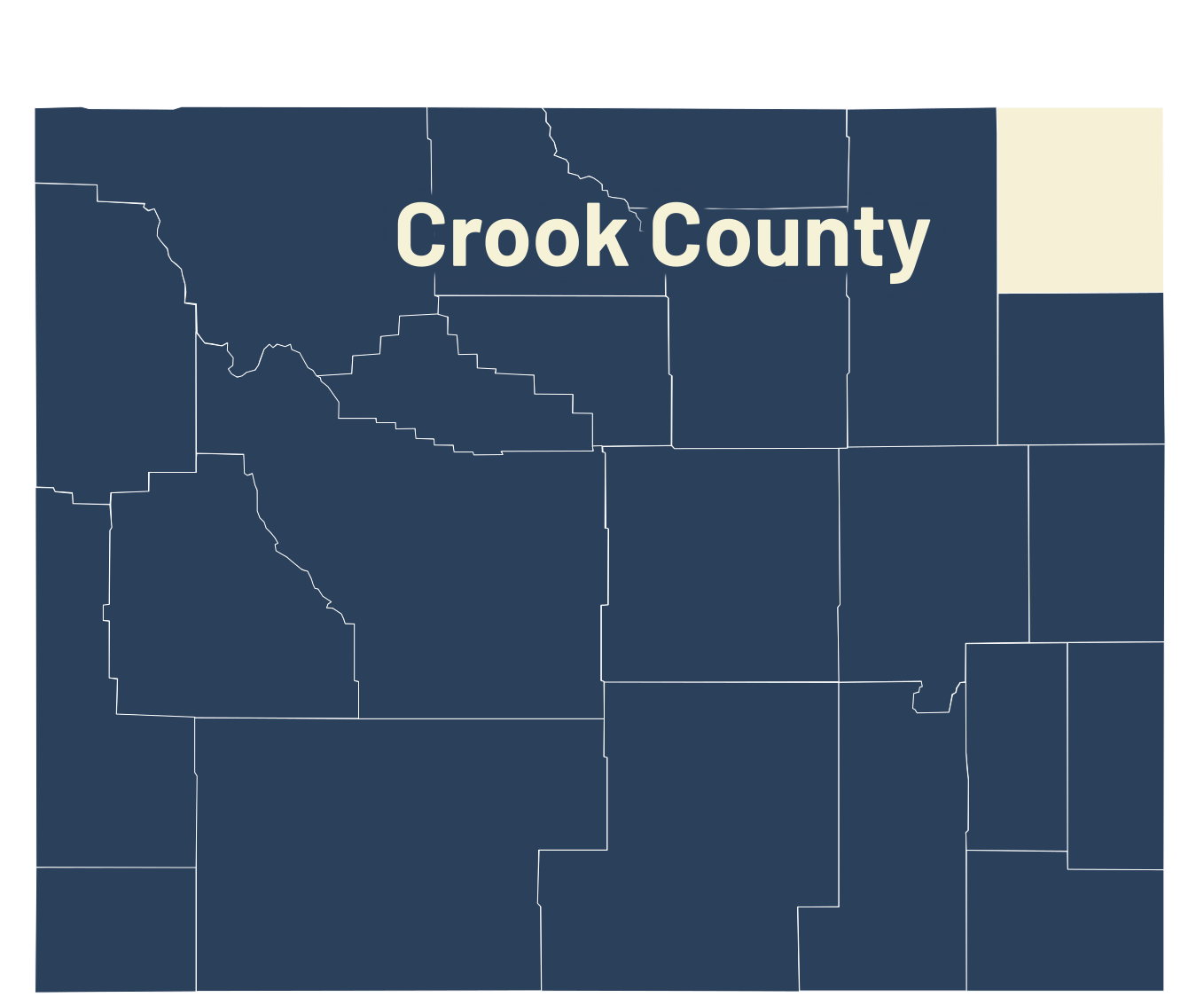
One of Kessler’s favorite projects was exploring a ghost town in Wyoming that was located on private property.
“It was a very large town, had numerous mines at it and tons of foundations,” Kessler said. “It was just one of the neatest things to see and to walk in history, and it reminded me of why I fell in love with history at the very beginning.”
While researching the property beforehand, one of Kessler’s crew members found an artifact tied to the property and they were able to present it as a gift to the landowner.
“It was really precious to have the history coming back to the town and to the landowner,” Kessler said.
On this project, Kessler was able to bring an entire crew to document the ghost town including a videographer, forest personnel, mapping specialist, railroad historian and a logging expert.
By the time they were touring the town, they already had a binder full of information about the town and started locating areas they had identified in old photographs.
“It was fun because I was able to stand where one of the photographers stood and take the exact same photo of the town,” Kessler said. “This town in the 1890s was home to over 1,200 people and had a booming business district.”
There is now nothing left today but foundations and mine shafts but Kessler said the history came alive as they walked down the abandoned town center. He said it was still hard to believe that they were walking where there had once been a chaotic scene of horse buggies visiting the various businesses that included an opera house, bank, general store, a company office, and doctor's office.
“Standing on that main street with nothing there is rather sad because even just in the 1940s, historians documented the town and said that there were standing buildings,” Kessler said. “But it's still neat because history happened here.”
He said that this disappearing landscape is why documenting this history both under the ground in the mines and above is important.
“When you think about what's going to be left in ten years, it might be nothing,” Kessler said.
During their research, Kessler also found stories about the people that lived there.
The site was once a vibrant Wyoming territory company town and Kessler learned that saloons were forbidden in this remote district. Once a week, a beer wagon was allowed to park in the town and, if the miner was lucky, he might be able to bribe the wagon driver to leave some whiskey behind.
“The company mine owners didn't want drunkenness and foolishness,” Kessler said. “They wanted work to get done and get done fast.”
Levi Kessler explores a historical dig at an old privately-owned abandoned logging camp in the Black Hills. He founded the History Below the Pines which digs up the history of privately owned mines and ghost towns. (Courtesy Levi Kessler) 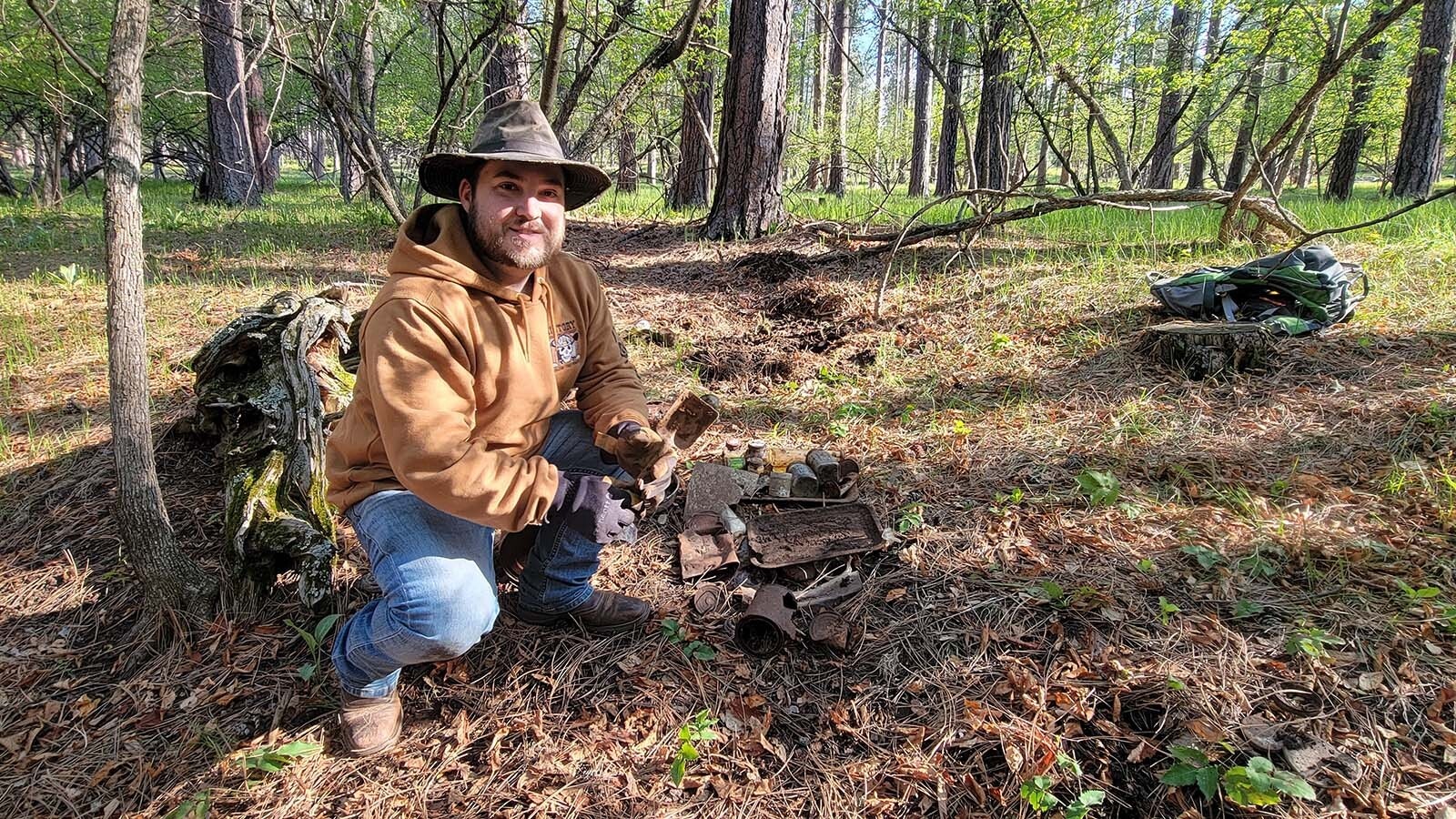
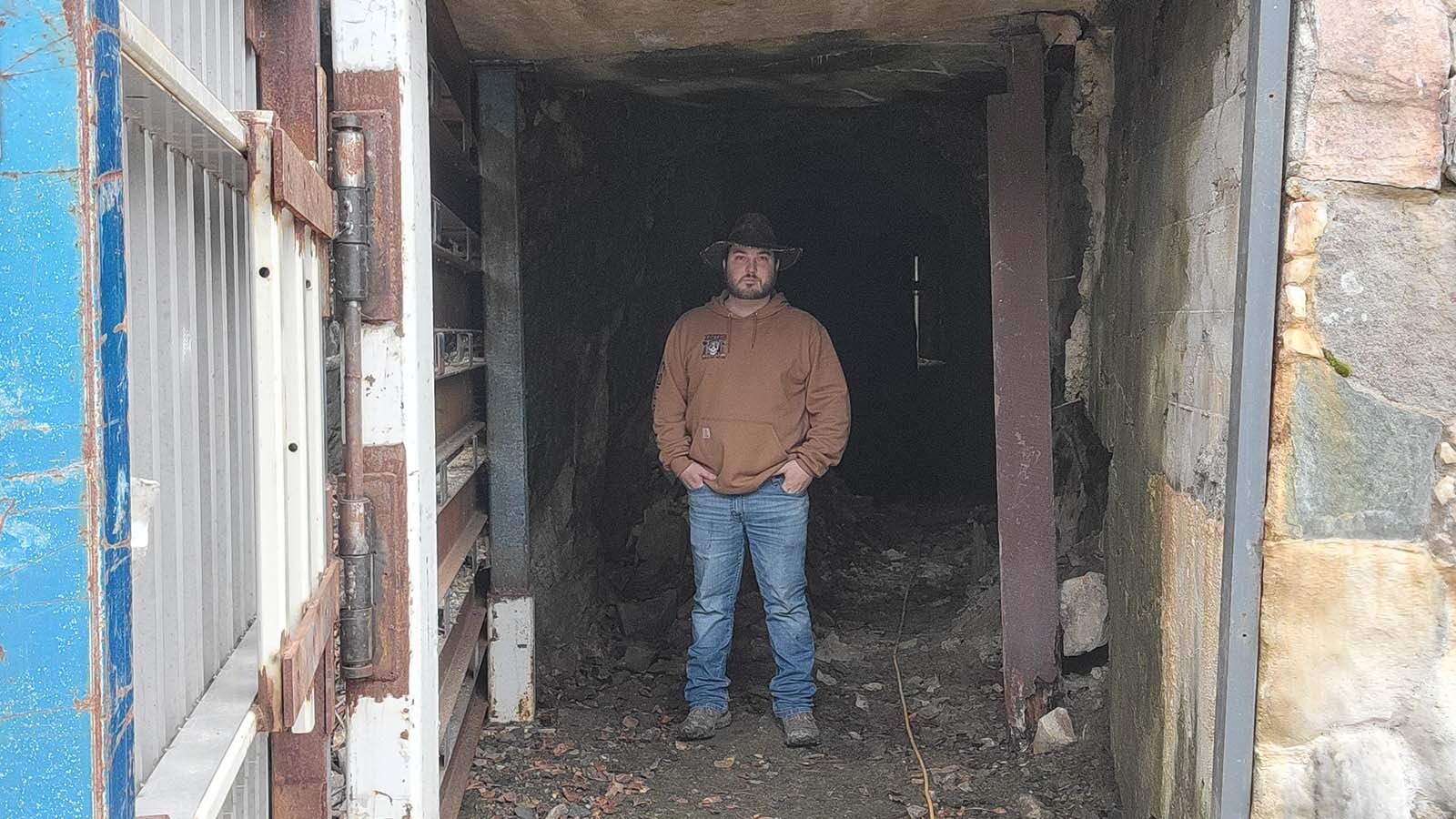
Levi Kessler, founder of the History Below The Pines, explores old privately owned mine portals in the Black Hills of Wyoming and South Dakota. He researches and documents the historic places beneath the ground and shares the information with the landowners in exchange for the opportunity to preserve the history. All the artifacts are recorded and remain the property of the property owner. (Courtesy Levi Kessler) 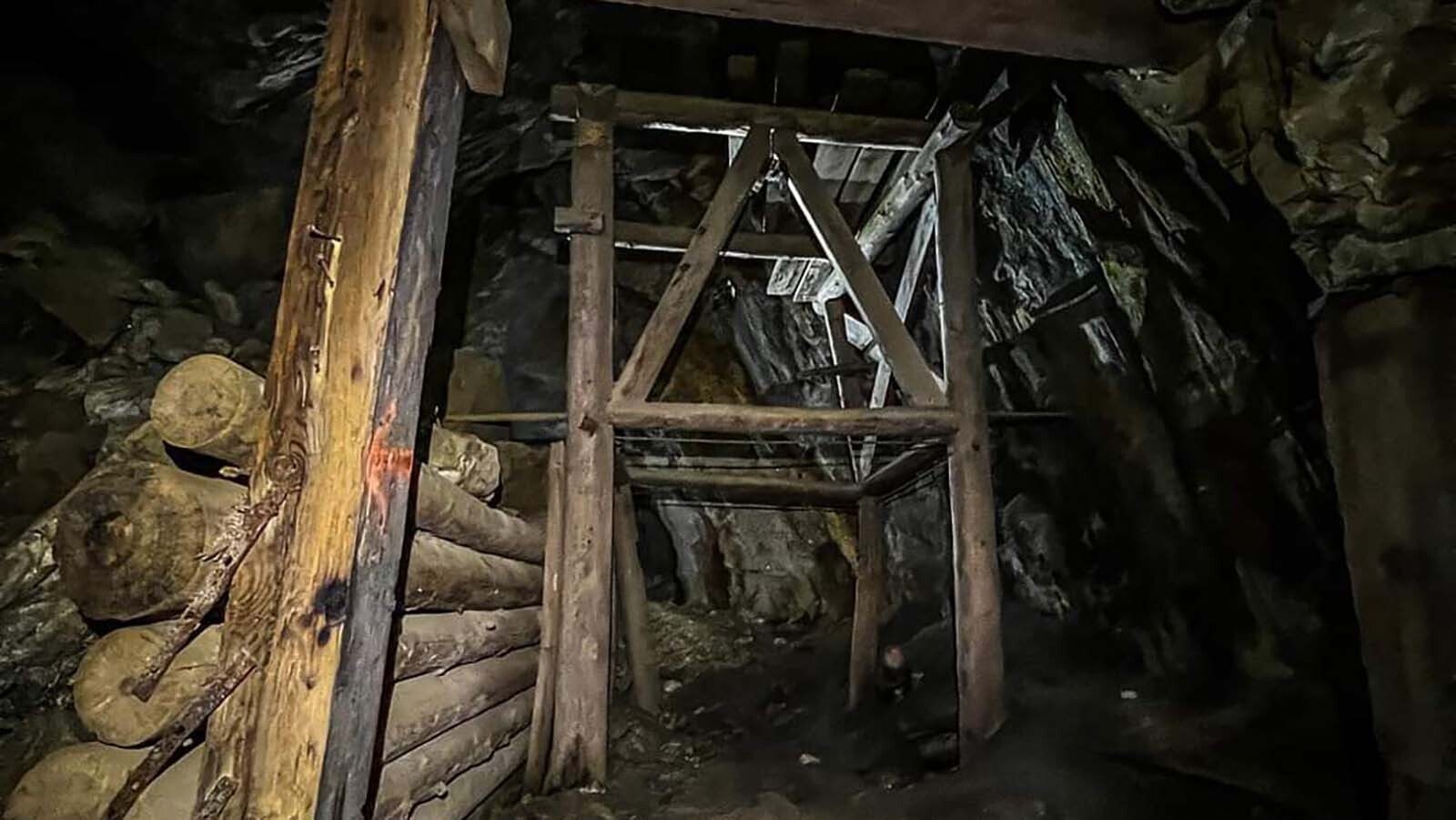
A boxwork deep underground in an abandoned mine was documented by the History Under The Pines crew as part of their efforts to preserve the history beneath our feet before it completely caves in and is forgotten. (Courtesy Levi Kessler) 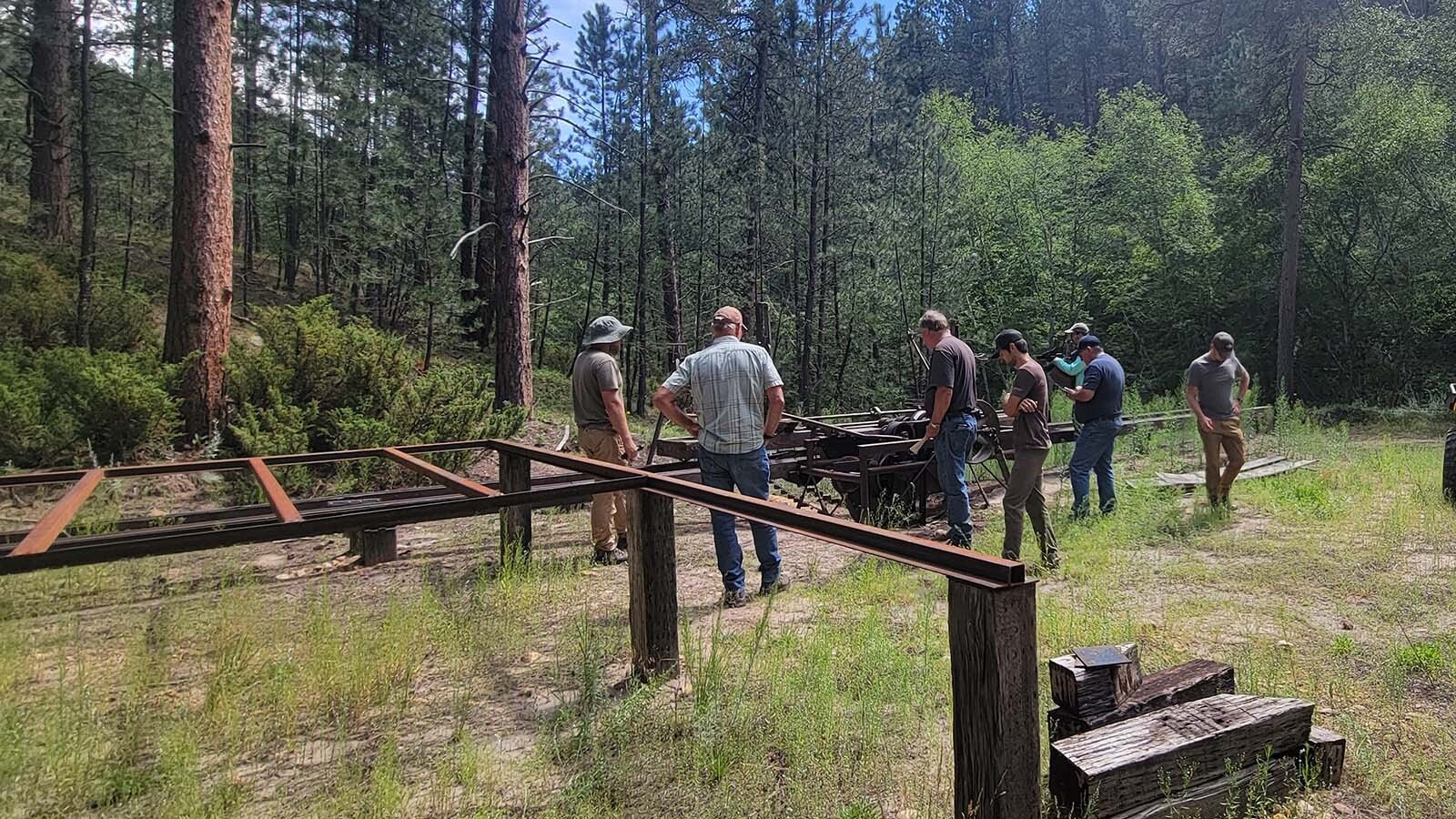
The History Below The Pines Crew documented an old sawmill that once supported a company mining town in Wyoming. The site is now a privately owned ghost town and the landowner gave the crew permission to explore the site in order to preserve the history before it is completely lost. (Courtesy Levi Kessler) 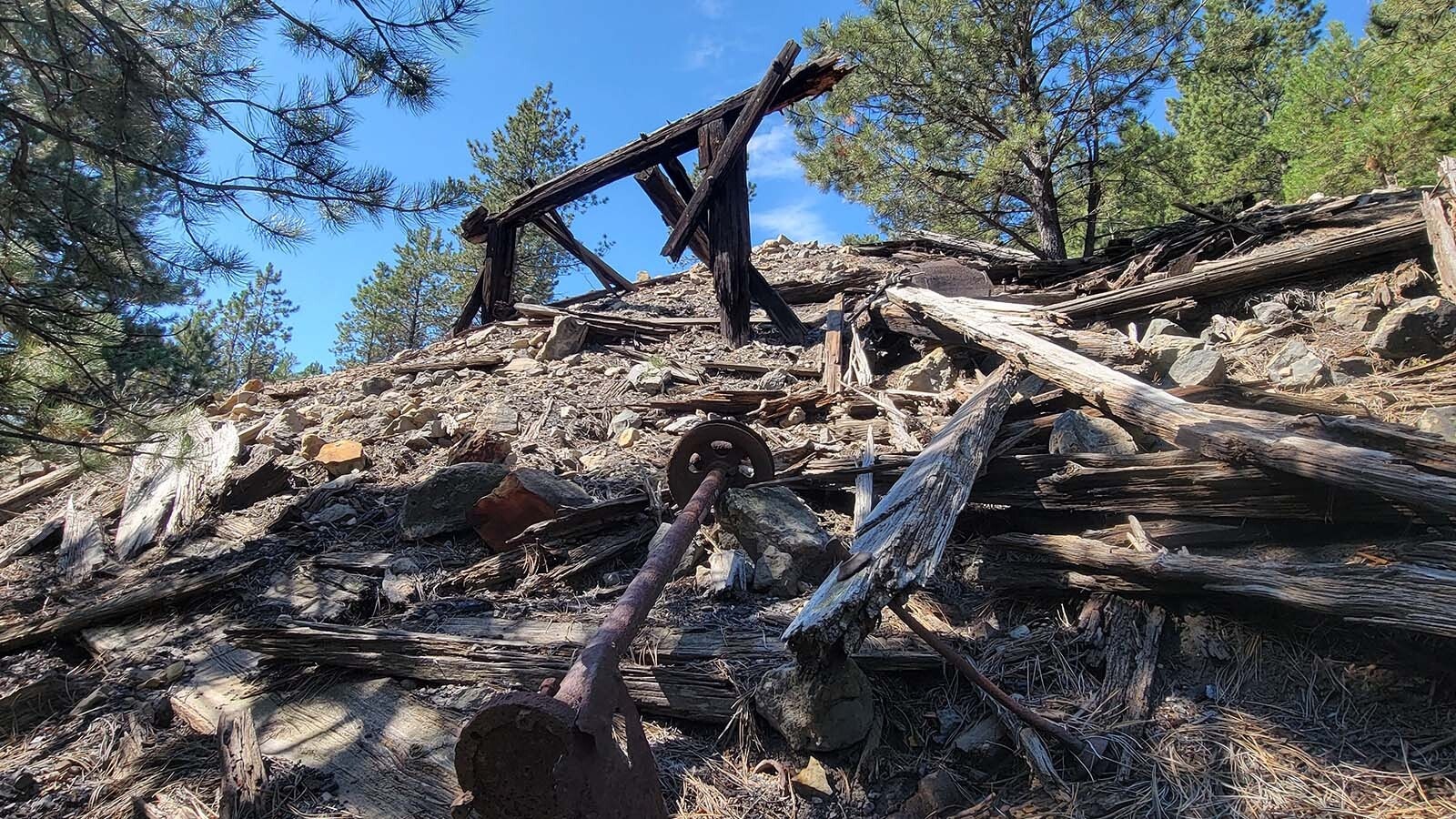
The remains of an old railroad trestle that connected one side of the valley to the other are some of the remnants of an old Wyoming mining town that were documented by the History Under The Pines crew. The rail supported the company town that is now a privately owned ghost town. (Courtesy Levi Kessler) 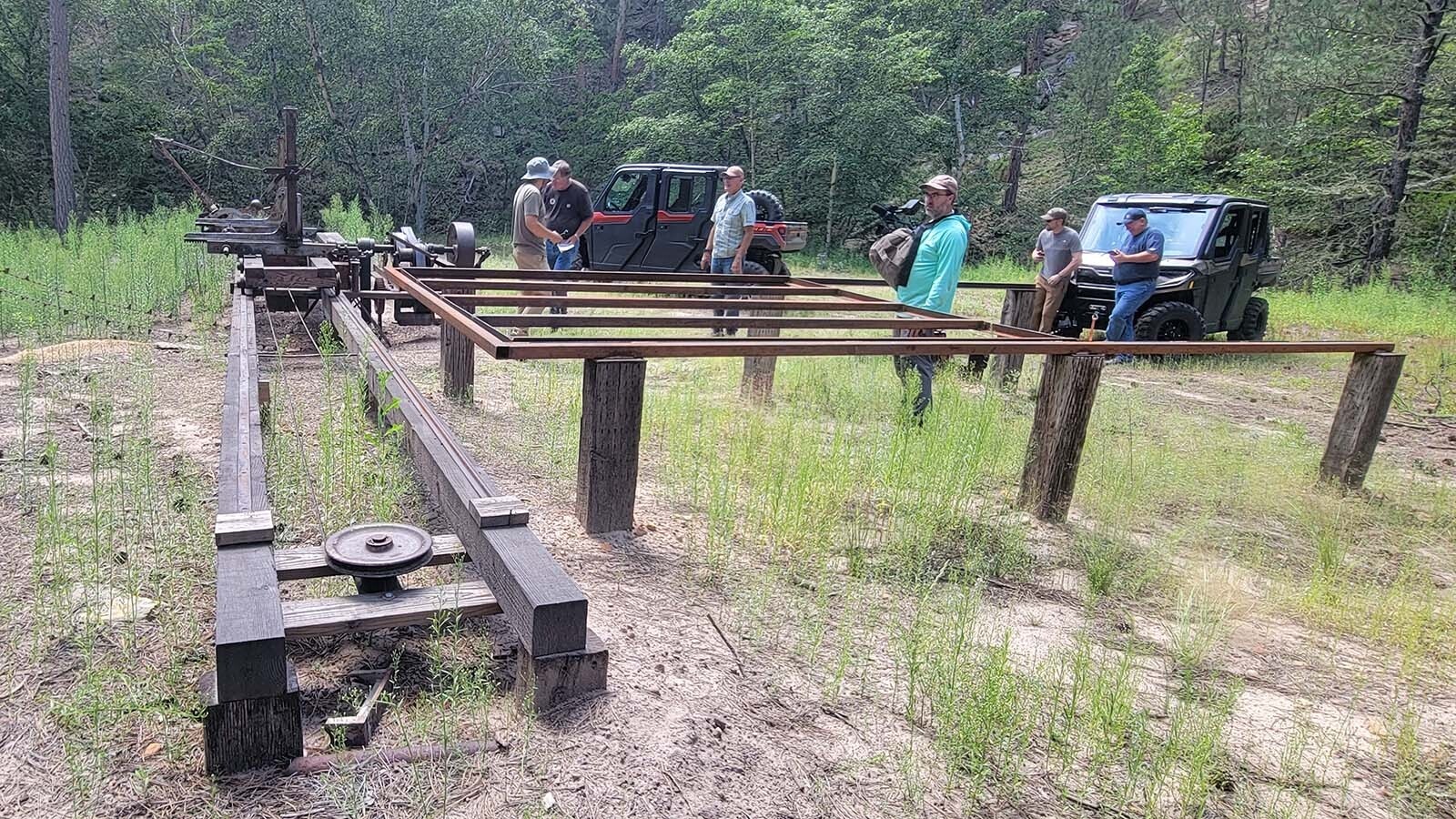
The History Below The Pines Crew documented an old sawmill that once supported a company mining town in Wyoming. The site is now a privately owned ghost town and the landowner gave the crew permission to explore the site in order to preserve the history before it is completely lost. (Courtesy Levi Kessler)
Dangerous History
Kessler said that he is not a gold miner and his goal is to dig up history rather than valuable minerals. He is also conscious of safety and consults mining engineers before heading deep into the earth.
“I have good friends who are mine safety officers and I can run some of the abandoned mine names by them,” Kessler said. “They will tell me if it has bad gas and which ones to stay out of.”
Kessler said there is always a risk associated with investigating old sites such as stepping into an abandoned cabin in a ghost town and falling through into a basement, or going into an abandoned mine and risking cave ins.
“I've been around mines for most of my life and avoid mines where the air is stale and there's not a breeze coming out of the mine,” Kessler said. “That means the air is not flowing and you cannot smell lethal gas that may be trapped in the shaft.”
The most recent mine he was exploring took Kessler and his crew through three miles of tunnels.
“The air got pretty stale once when we were about an hour in to the point where I was uncomfortable and I started backing out of that certain section of the mine,” Kessler said. “I take some risks, but not the risk of deadly air. I don't play with that.”
Kessler said that over the years people, including airmen from the Ellsworth Force Base in Rapid City, have been lost exploring mines. In the 1970s, one such enlisted man was exploring a historic abandoned mine by Rochford, South Dakota where rumors said that 20 miners in the 1800s were trapped in a cave in.
“He went down there with three of his friends, and they started roping into this abandoned mine, and he thought he could see the floor of this abandoned mine,” Kessler said. “He went off rope and ended up free falling to his death.”
The incident made the local paper and Kessler said that the Air Force, National Guard, local sheriff, police, fire department and EMS were all summoned to the mine to rescue the man, but it had become a body recovery instead.
Kessler said that he also has unverified accounts of another airman who was stranded in an abandoned mine on private property.
“The property owner said that airmen was trapped for three days,” Kessler said. “He was at the bottom of this mine and couldn't get out because he was in a shaft that was very deep.”
Kessler was told that the airman had free climbed down into the mine but wasn’t able to climb back out. He stood at the bottom of the shaft, yelling for help and was fortunate that he was finally heard.
Forging Ahead
Kessler said that there is also a certain bit of liability that comes with owning abandoned structures and abandoned mines.
“Urban exploration is huge on YouTube and often it's met with trespassing, not asking permission, and abusing and defacing property,” Kessler said. “By taking these places down, you are removing both yourself and your land from that liability, which is both responsible, but also sad.”
Kessler believes that the alternative is not publicizing what you have on your private property.
“By not talking about what you own, you're preserving the history and you're only telling a small circle that you own this abandoned mine or this abandoned cabin,” Kessler said. “You're protecting it, and you're not letting people come and stomp all over your grounds.”
As for History Below The Pines, they are expanding their explorations into Wyoming and Montana since they are only a few miles away from either state.
“We are working with private landowners to document their privately owned history,” Kessler said. “ Whether that's ghost towns, abandoned mines, defunct tourist attractions, abandoned ranches, anything else that may be history.”
The services they offer are completely free for the landowners and his crew all have their own specialties ranging from the videographer to the map expert.
“We just come in and we work with landowners and we do it all from the bottom of our hearts for free,” Kessler said. “We want to help preserve and document the history, because we live in an ever-changing world and things are happening fast. History is fading.”
Kessler said that he wants to keep his generation and those coming behind him interested in history and to make the history interactive and digital. He is getting ready to launch a podcast and website to reach his younger audience and excite them about history. That is the best way, Kessler said, to preserve the history beneath our feet from disappearing completely.
Jackie Dorothy can be reached at jackie@cowboystatedaily.com.