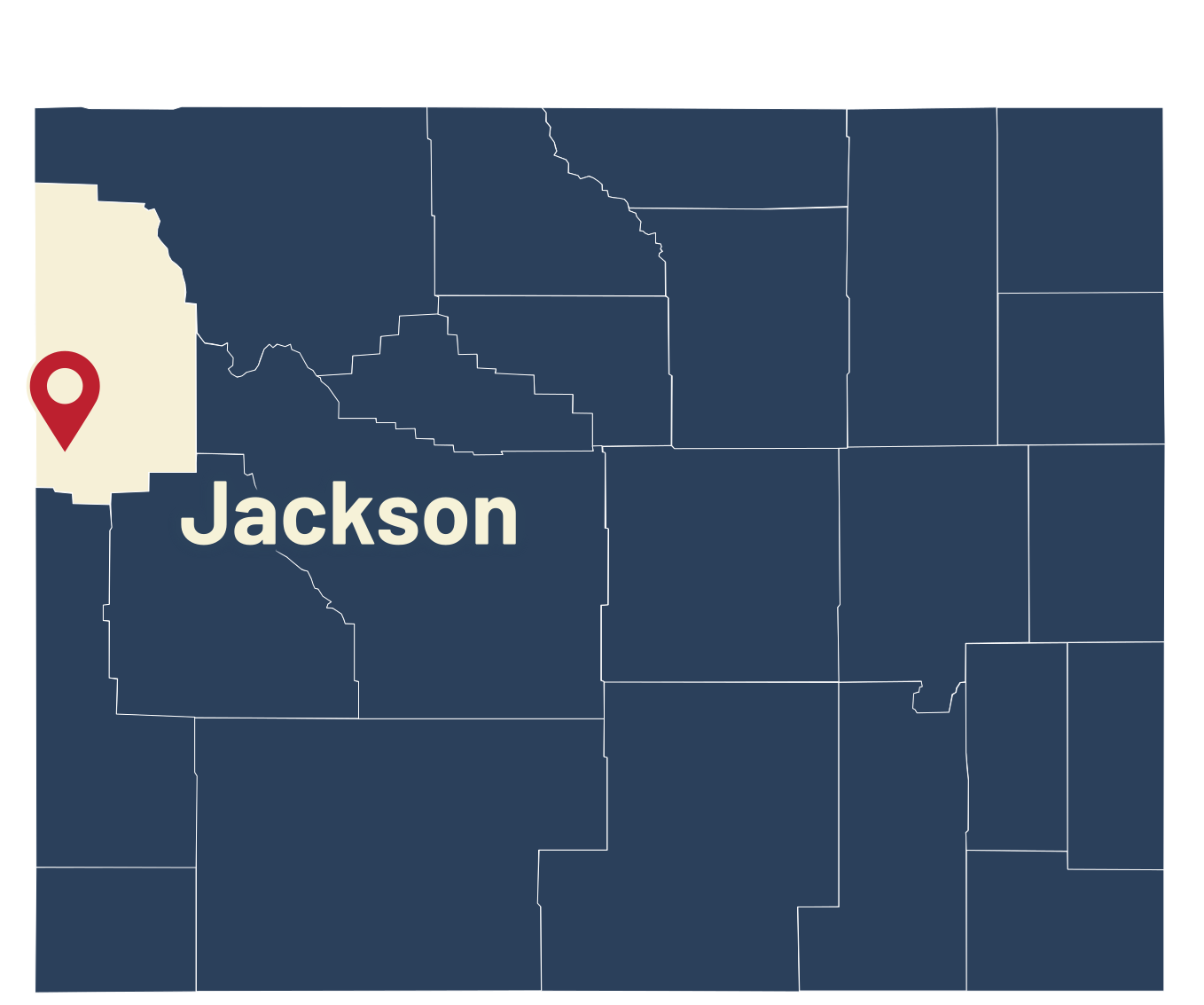
JACKSON — The old Polaris dealership along the highway coming into Jackson from the south wasn’t much to look at. Kim Greene’s father used to joke that it was a 20-year building in its 40th year.
“The owner was like, ‘Sure, you want to fix it up, feel free,’” Greene said.
She needed a place to receive 14 dogs she planned to ship from her facility in Nairobi, Kenya. The machine shop would do.
She converted it into a training facility in 2013 and brought over her first shipment. Then she started breeding.
“We were a fat man in a little suit at the end of year one and a half,” Greene said. “The machine shop didn’t get any larger, but we were expanding our population.”
Within 18 months, she was running out of space. But she wasn’t ready to leave Wyoming — she’d fallen in love with it the moment she arrived.
Greene had spent years in East Africa running a security consulting firm with her husband.
They’d raised protection dogs in Nairobi, where carjackings and home invasions made such animals an ideal companion for anyone with resources. When they decided to bring the business to America, they built a spreadsheet full of possible locations.
They drove through Denver, and Greene told her now ex-husband not to even stop.
“I will never live in a congested city like this,” she said.
They arrived in Wyoming at night, landing in Wilson. The next morning changed everything.
“When the sun came out on the first day, I was like, this is great. I don’t need to go any further,” Greene said. “Next on the map was Bozeman. I never got here. I flew back to Africa and started packing up the family.”
She was a longtime mountain biker and an avid skier born and raised in New Hampshire. Her twin boys had never seen snow. Wyoming offered a lot she wanted.
“We created a hard job for ourselves,” she admitted. “We had no money, so we couldn’t afford to buy a house. And we were going to try to relocate a business to what was a very small valley, where access to land was quite challenging. I didn’t read all the small print, but I fell in love with the mountains.”
While building the business in that cramped machine shop, Greene moved through a succession of Wilson rentals — a place on Baxter Creek Road, another on Indian Paintbrush, and finally a cabin below Teton Pass across from the Stagecoach Bar.
“It was 600 square feet and it was perfect,” she said. “One bathroom and we’d come from Africa and it was ample. It was so ample.”
She loved Jackson Hole and Wilson, loved Driggs and Targhee. But the economics of Teton County real estate were pressuring her business, and she was looking ahead for what her sons would need.
“We only stayed two and a half, three years because we just couldn’t afford to expand the business there,” Greene said. “And I needed the schooling that was going to be available in the public education system for my sons due to some learning challenges.”
Now her world-class protection dogs get their elite training in Montana, and sell for $175,000 each.
Jackson Legacy
Before leaving, Greene built relationships that endured. She donated a dog to someone who worked with Teton County Search and Rescue. Her animals became fixtures in the lives of Jackson Hole families.
One family had a teenage daughter who walked the pathways along the Snake River.
“Very gorgeous young teenage girl,” Greene said. “Definitely once or twice had people in the summer months heckling her and not treating her appropriately and with respect.”
The girl’s protection dog — sweet as could be in appearance — handled the situation.
“I have heard from the mother, that dog just absolutely let those boys know what was up,” Greene said. “That young woman felt that she absolutely could move her way out of a situation that was not welcome.”
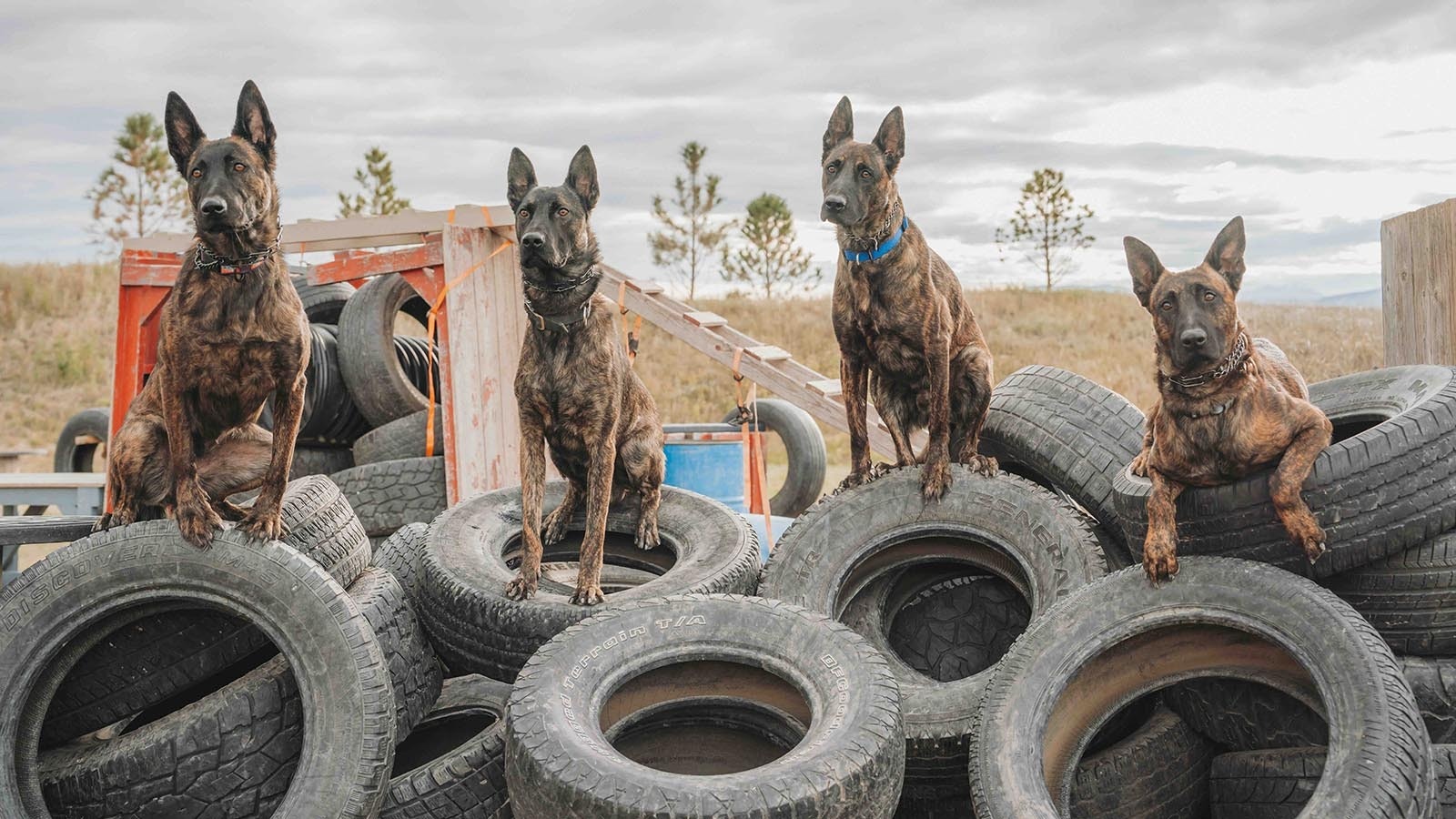
A Jackson Hole doctor’s family still has a dog Greene brought from Africa — now 14.5 years old. The crossbreeding of German Shepherd, Dutch Shepherd and Belgian Malinois supports remarkable longevity.
“Because of that crossbreeding, you end up with no ocular issues, you end up with no hip issues, and you end up with longevity in these animals,” she explained.
The family has since moved to South Carolina, but the dog lived in Jackson for a decade.
Alpine Pivot
Forced out of the cramped machine shop, Greene relocated the operation to Alpine. She shared a large barn across from the airpark with a horse boarding operation.
“Half of the barn was horses in boarding and half of the barn was us,” she said. “And it was a great training environment.”
The dogs raised around those horses developed a unique calmness.
“That cohort of dogs that were bred, raised and trained around those horses almost all went to horse families,” Greene said. “They were cool as cucumbers around horses because their whole lives they had had that environmental exposure.”
The Alpine arrangement gave Greene an idea. She started searching Montana, Wyoming and Idaho for a very specific kind of property: a failed equine dream.
“There are many failed equine dreams,” she explained. “Ten, 12 years ago there were a lot of properties that were very bespoke to horses and people either couldn’t afford to keep them or their interest changed.”
A 170-acre ranch in the foothills above Livingston kept appearing in her searches. It had once been a Parelli franchise — a specialized horse training operation — and sat in a town of 9,000 residents, 29 miles east of the Bozeman she’d skipped on her original search.
“It was way too much property. It cost way too much,” Greene said. “And I didn’t think we could afford something like this.”
But the zoning was perfect: commercial and residential with no overlays. The family could grow into it. They took on investors and made the move.
Today, Greene’s company Svalinn houses up to 46 dogs and employs 13 team members. The barn is staffed around the clock, 365 days a year. The company brought in $2.97 million in 2024 and was profitable.
“That is not an inexpensive proposition in this day and age,” Greene said.
She delivers between 20 and 22 dogs per year at $175,000 each — hand-delivered with five days of personalized training at the new owner’s home.
“Someone is purchasing a dog as an asset,” she said. “They’re purchasing the whole backstopping package that we provide for the duration of the dog’s life.”
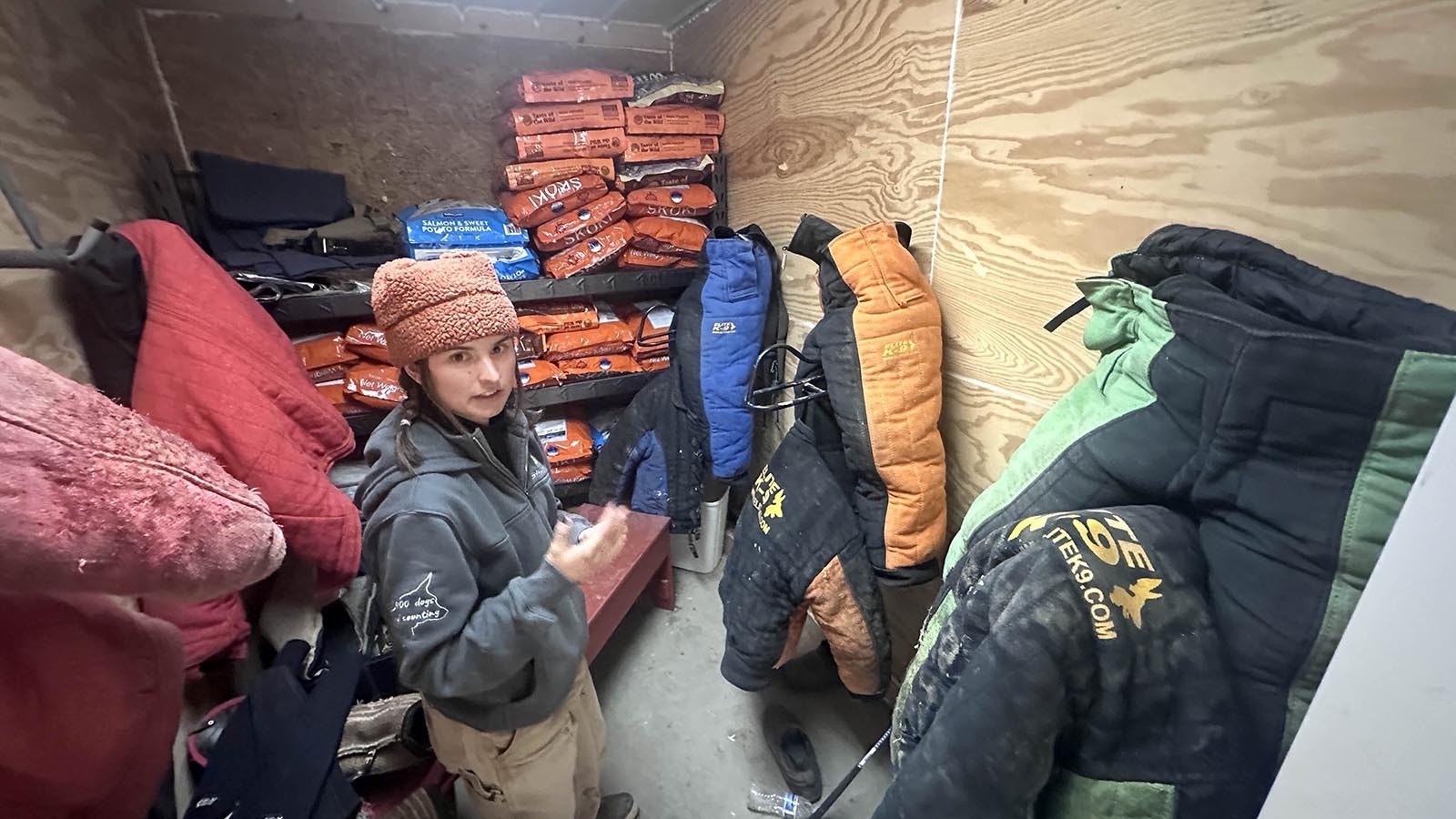
Svalinn trainer Indi Dubay works with a four-month-old pup named Cayenne, and shows off the bite suit room and fresh meat donated by a local butcher. (David Madison, Cowboy State Daily) 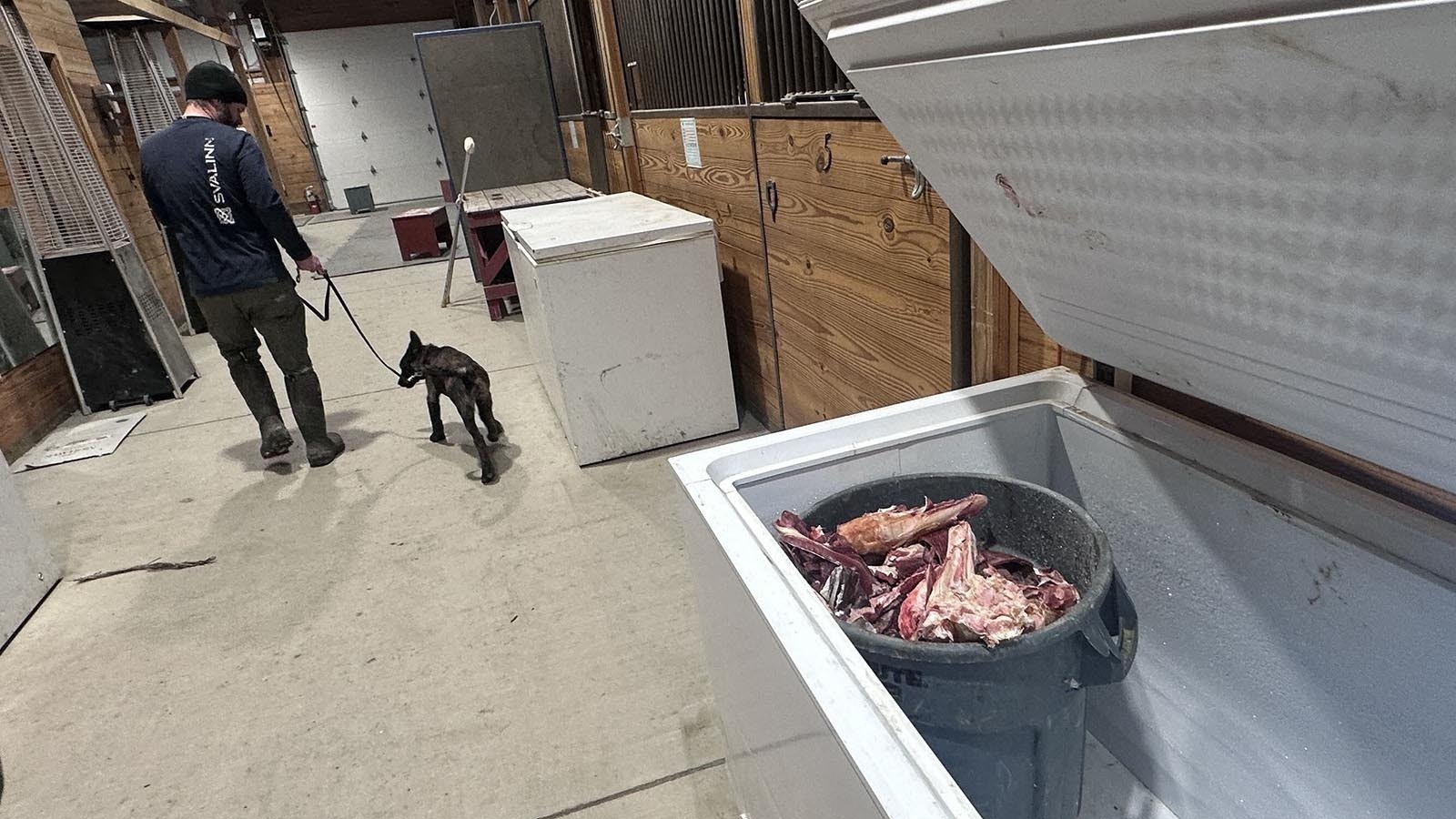
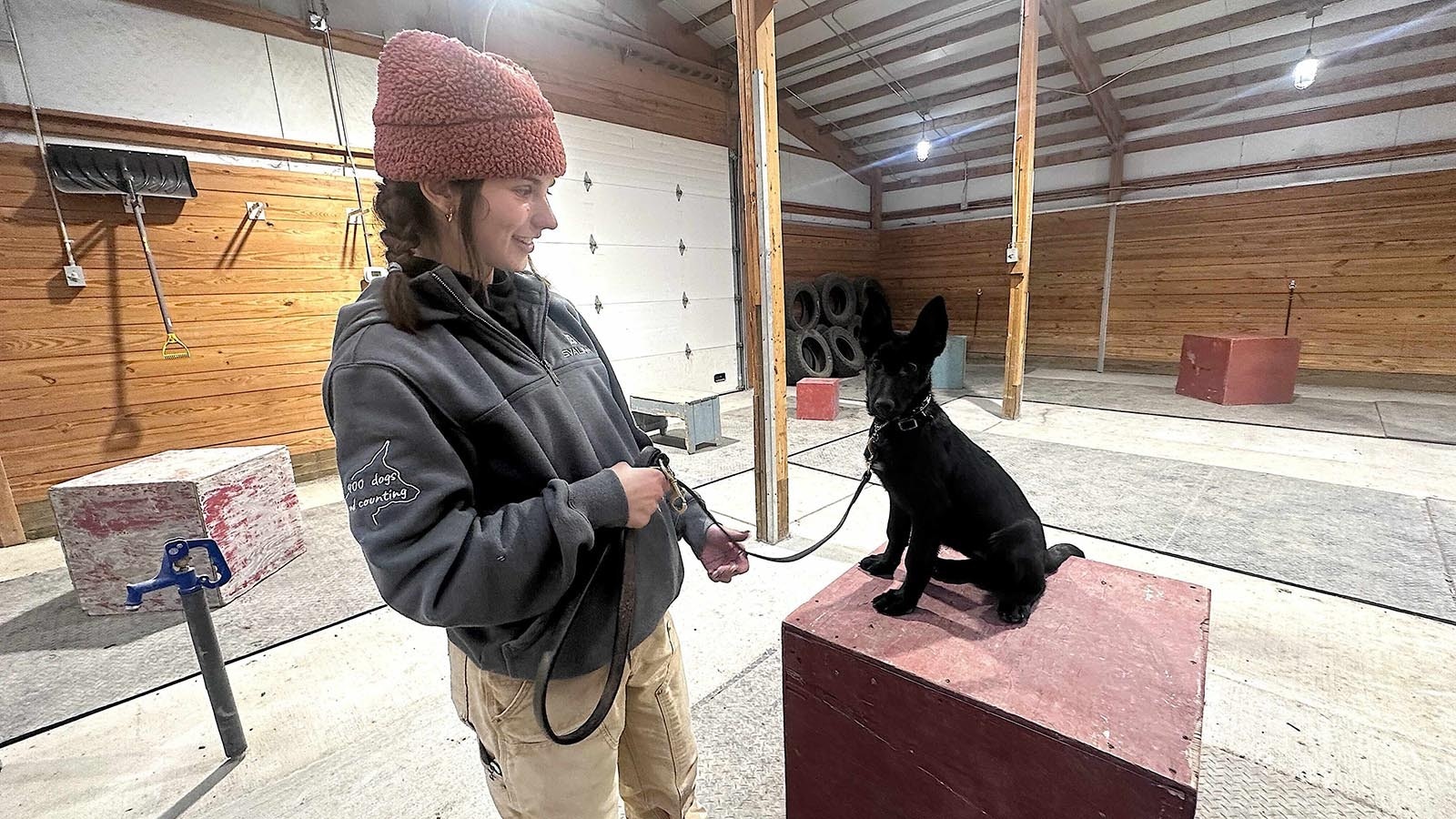
Svalinn trainer Indi Dubay works with a four-month-old pup named Cayenne, and shows off the bite suit room and fresh meat donated by a local butcher. (David Madison, Cowboy State Daily) 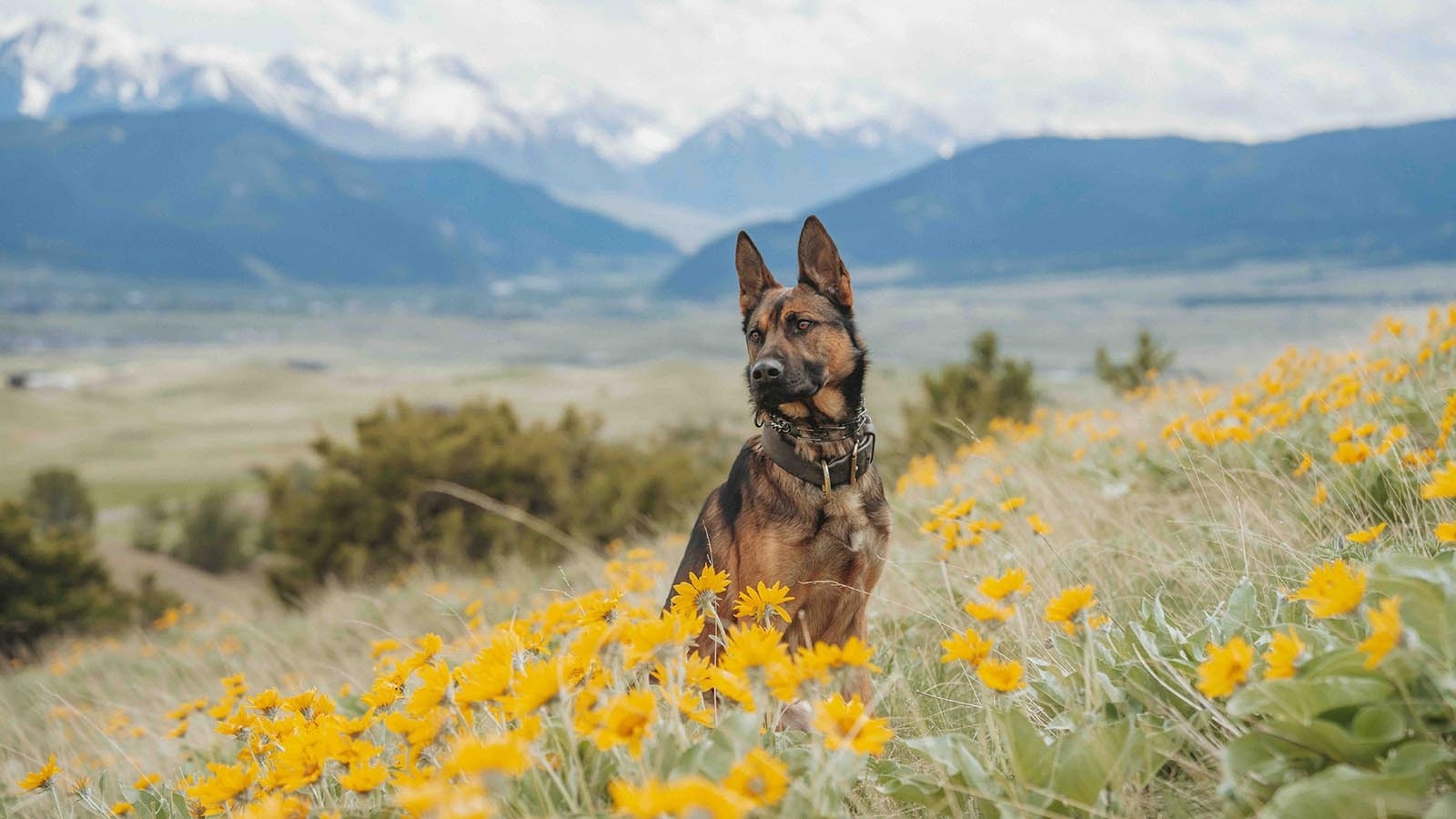
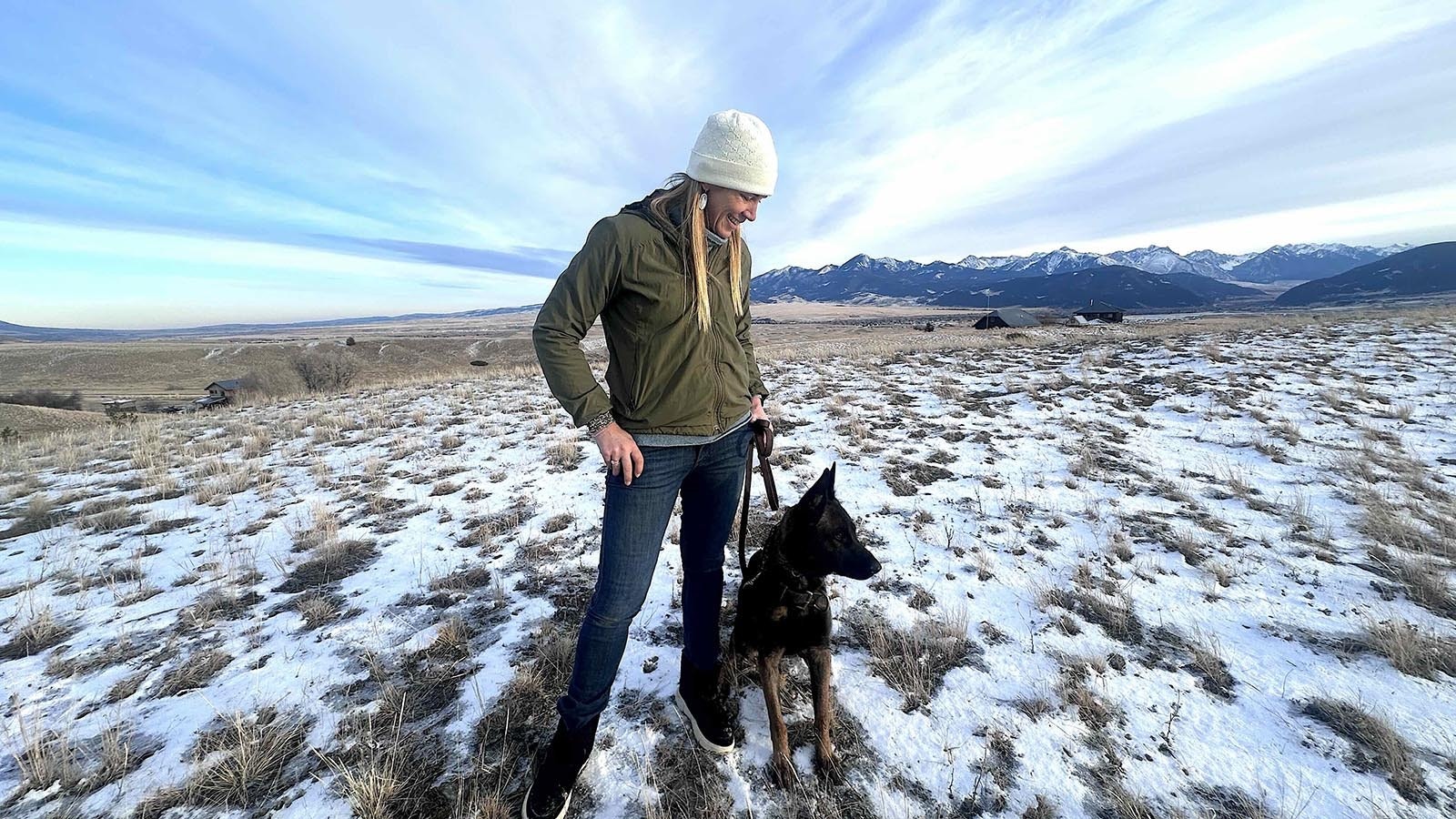
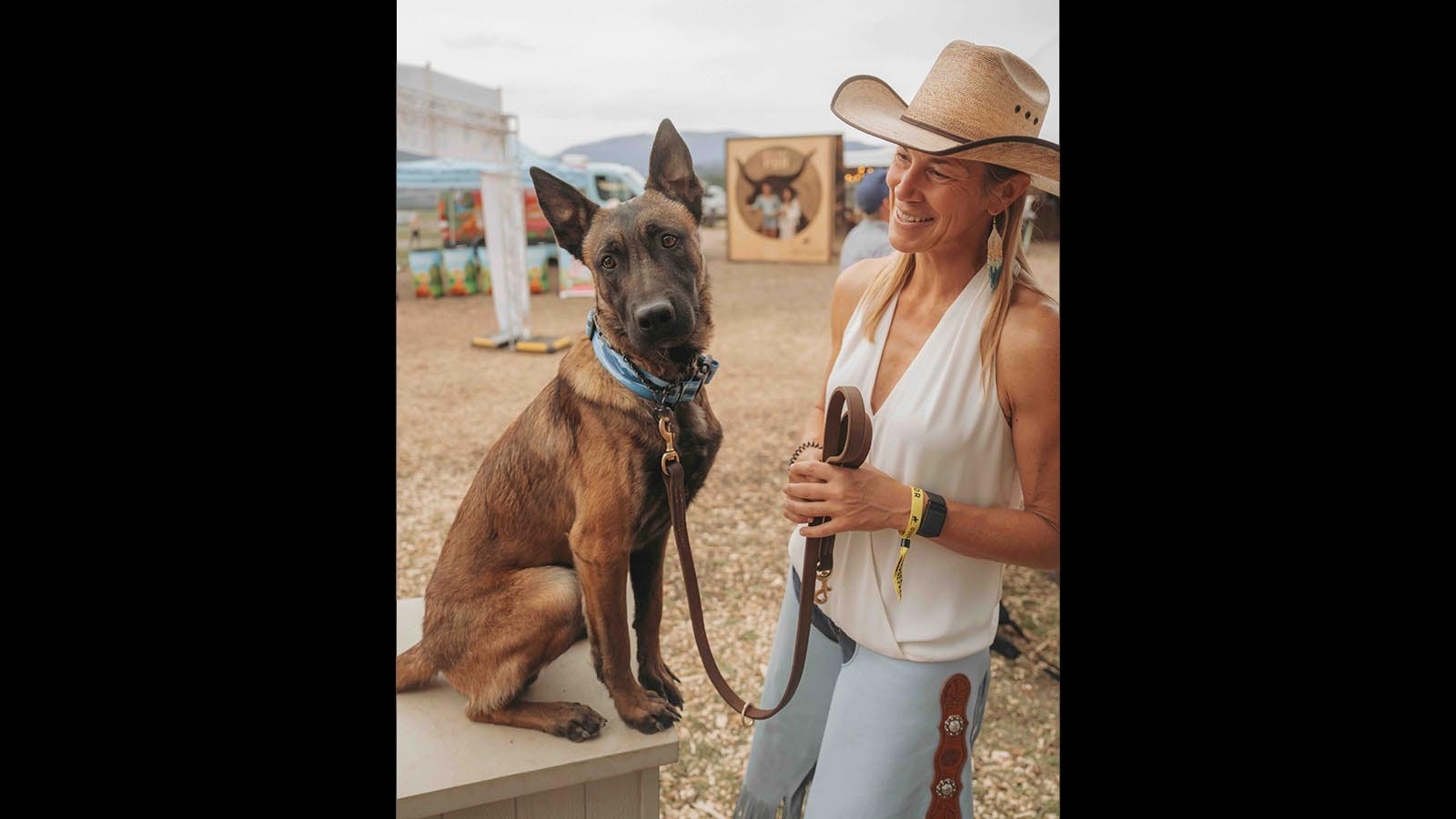
Kim Greene, founder of Svalinn, got her start in Kenya before moving operations to Teton County, Wyoming. She’s now based outside of Livingston, Montana. (Courtesy Svalinn)
African Origins
The business began in Nairobi, Kenya, in 2005. Greene had met her husband in Afghanistan, where she worked as a policy advisor to President Hamid Karzai. They moved to Nairobi and launched a security consulting firm called Ridgeback Ltd.
“It is strictly at the time and still to this day a non-permissive environment,” Greene said of Nairobi. “It is a place where the haves versus the have nots. There is just a lot of inequity in the economy and in social life. Anybody with more resources is a potential target.”
When Greene became pregnant, she needed a way to navigate the city without a firearm or bodyguard. The couple adopted a Dutch Shepherd mix named Banshee who kept strangers at a distance with her brindle coat and intense stare. In 20 years of business, only one Svalinn dog has ever had to deploy its protective training in earnest — and it happened in Kenya.
“It was a carjacking situation,” Greene said. “The father neglected to lock the back door of his vehicle. He got stuck in traffic and an opportunist opened the back door. His daughter was in a car seat and a Dutch Shepherd male named Bolt was on him so fast, I don’t think he even knew what hit him.”
Perfect Blend
The dogs are a carefully calculated cross of three shepherd breeds.
“If you ever Google Malinois videos, you will be entertained for the rest of your life and you will hopefully say, wow, that doesn’t look livable,” Greene said. “Those dogs have so much energy. They are ready to go all the time. That’s not livable for a family.” The ideal Svalinn dog weighs between 57 and 65 pounds.
“It’s a very user-friendly, travel-friendly dog that can kind of go anywhere, fits in the family car,” she said. “The smallest dog I’ve ever had was 41 pounds delivered, and the largest was probably 89 pounds. We haven’t even had a 90-pound dog yet.”
What separates these dogs from ordinary pets isn’t aggression — it’s perception. They learn to read human energy.
“If someone enters the room who woke up on the wrong side of bed, was a jerk to his wife this morning and he had too much coffee — even if you can’t see it on the outward — the dog is just kind of like, ‘What’s up?’” Greene said. “They are our barometers of our own feelings about things.”
Barn Tour
Svalinn trainer Indi Dubay leads visitors through the converted horse arena where the dogs live.
“We do feed the dogs a raw diet,” Dubay said. “We get donations from butchers — beef and bones.”
The training begins early with four-month-old puppies like Cayenne from the peppers litter. There have also been litters named after monsters and minerals.
“She’s super high drive and high energy,” Dubay said. “But she’s also very confident and super smart. She’s doing great in protection work right now for her age.”
The work starts with a simple game: dragging a rag on a string to build prey drive. From there, puppies graduate to bite tugs, then sleeves, then the full bite suit.
Wearing the suit is more art than athletics.
“There’s a lot more that goes into it than I think people realize,” Dubay said. “You’re reading the dog in real time and adjusting your behavior. If a dog is a little bit more timid, you have to make yourself a little bit less threatening to bring out the confidence. And vice versa — if a dog is super confident, you can test them in other areas.”
When asked about the philosophy of protection dogs versus firearms, Dubay offered a distinction.
“If you choose to carry a sidearm with you, then you yourself have to always be on alert,” she said. “That’s one of the things about these dogs — when you’re home with a dog you can relax and kind of know that everything’s taken care of. It takes the pressure off of you. We kind of think of these dogs as a 24/7 security detail. That’s their whole life, that’s their whole purpose and that’s what they want to do.”
Full Circle
Svalinn’s clientele now includes household names from corporate America, though Greene doesn’t share.
“Known individuals do have these dogs,” she said. “And I am completely, entirely confidential about who has the dog.”
The dogs her company produces aren’t weapons — they’re companions, said Greene. They also happen to possess extraordinary skills they rarely need to use.
“What we just saw was a perfect example of the ‘on switch’ and the ‘off switch,’” she said, watching a dog go from a training drill to rolling on its back. “To be able to deploy your dog and get them back into obedience, in just a nanosecond, is a really practiced art.”
Standing on a hill by her Montana ranch training facility, the barn nestled beneath snow-capped mountains, Greene reflected on the question she asked when she first set up shop in that crumbling Jackson Hole Polaris dealership: Are people willing to pay for a highly stable, highly social, obedient, lovable dog that happens to have a protective skill set?
“We thought the protective skill set was what would sell, and it did initially,” she said. “But if you ask any one of our canine owners how this dog has added value to his or her life or the family life, the protection piece is so at the bottom of the list. It is like this grounded creature who’s stable, social, obedient, your best friend, your best protector. They’re your shadow. It’s like they know you better than you know yourself.”
David Madison can be reached at david@cowboystatedaily.com.