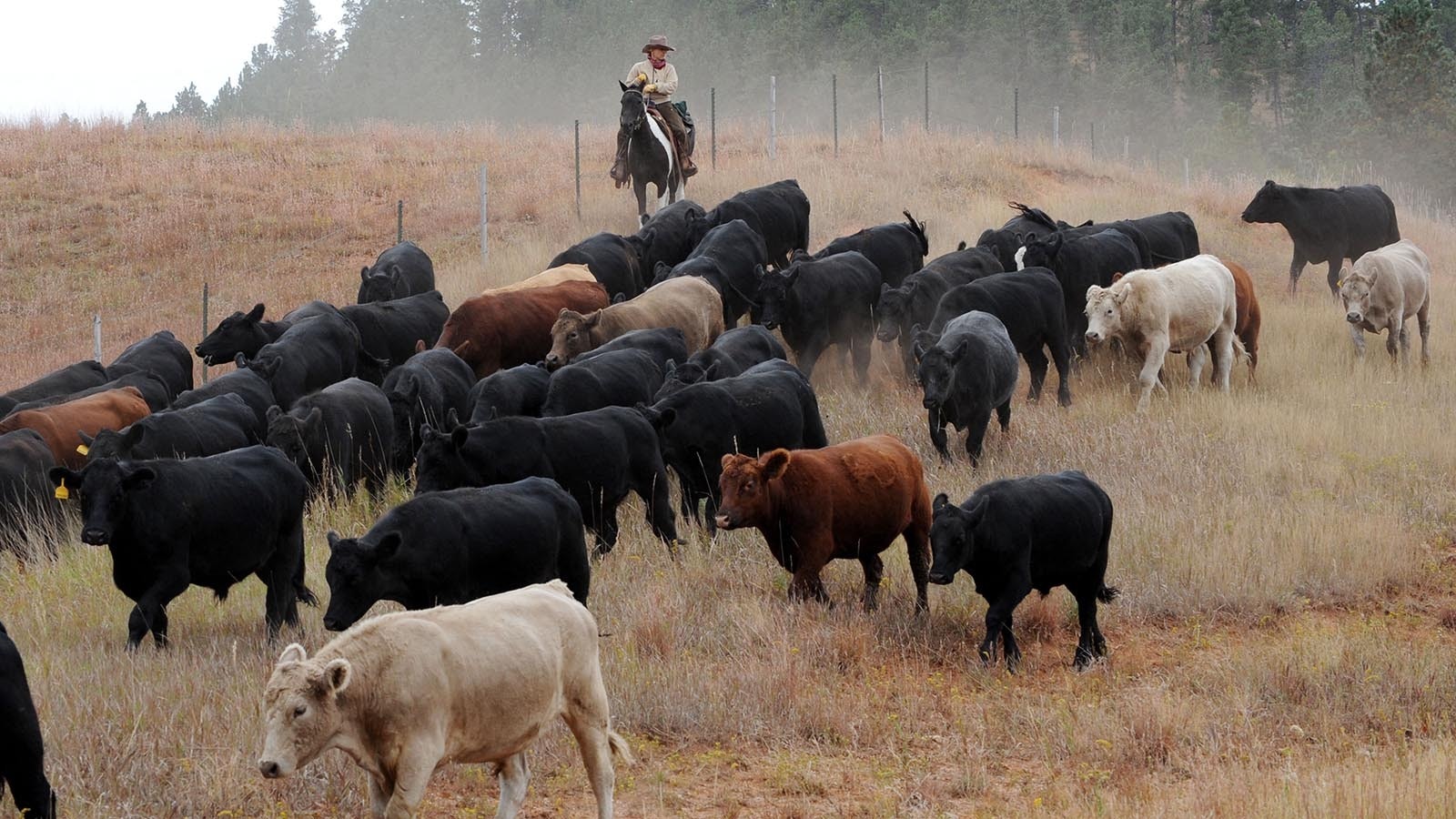
It was the end of a long day on a Wind River Basin ranch.
The couple Callie Surber had come to interview had been up since 4 a.m. They sat in a shop building, sheepdogs milling around them, taking time to talk with a graduate student they'd never met before.
Before Surber left, they invited her back to walk in their boots and work the ranch with them for a day.
"It was just really amazing how open these people were with someone who was a stranger until I met up with them in person," Surber said.
That openness would define her summer of 2024, as Surber interviewed 38 ranchers across Fremont County, Wyoming, for what would become a University of Wyoming Extension report on the pressures reshaping Wyoming's ranching industry.
She met people in garages while they worked on equipment, at local diners during lunch breaks, in pastures and living rooms. They served her iced tea against the summer heat and shared intimate details of their lives and livelihoods.
The resulting study, "Rancher Perspectives on Social and Ecological Change in Wyoming's Wind River Basin," was released in December.
Co-authored with Dr. Corrine Knapp of UW's Haub School of Environment and Natural Resources, it offers a rare window into an industry under siege — and a community's determination to endure.
"While we conducted the research in the Wind River Basin, there are broader applications across the state and the West," Surber said. "Anyone who works with livestock producers in Wyoming or has an interest in challenges facing the ranching industry might be interested in the findings.”
‘Amenity Ranchers'
The interviews sometimes grew emotional, particularly when the conversation turned to land prices and the fear of being priced out of ranching altogether.
"People were generally emotional around things related to land prices," Surber said. "I wouldn't say anyone talked about imminently losing their ranch.
"But there was a lot of concern about maybe one day being priced out just because the cost of inputs is so far exceeding what we're getting out of it."
What made those moments so charged was what lay beneath the economics.
"That big concern about losing the lifestyle was there," Surber said. "It's more than just a livelihood. It's a way that these people are living."
More than half of the ranchers interviewed depend on ranch income for their livelihoods. And more than half expressed alarm about a trend reshaping the landscape around them: wealthy outsiders buying up agricultural land.
These "amenity ranchers," as researchers call them, are typically absentee owners who buy land for recreation, scenic value, and wildlife rather than production.
The trend drives up property values and taxes, shrinks local agricultural output and blocks the next generation from entering the business.
One rancher described watching Wyoming's working landscape unravel.
"It's large public lands in conjunction with the large holdings of private lands that really make Wyoming special with what it does for our wildlife,” according to the study. "And I think it takes the two working together to keep that happening. And I think that, especially since COVID, it's falling apart. It's falling like dominoes."
Yet despite property values that could make many of them millionaires overnight, most ranchers told Surber they have no interest in selling.
One young rancher captured that sentiment when asked why he stays in the business.
"I don't know how to explain it," he said. "You don't make money, you're making a life."
Stewardship Specifics
Another recent study by the Western Landowners Alliance puts survey data behind what Wind River ranchers described in their interviews.
The WLA report, based on a survey of 649 landowners across 11 Western states, found that private landowners invested at least $407.5 million of their own money in conservation practices in 2024.
That figure that outpaced contributions from federal programs including the excise taxes on firearms and fishing equipment that fund state wildlife agencies.
Louis Wertz, communications director for the Western Landowners Alliance, said the organization set out to answer a question that is often overlooked.
"How much private landowners are putting out of their own pockets to care for land, water and wildlife," Wertz said. "We know anecdotally from working with Western landowners that people are putting a lot of their own money into conservation on private land.
"It's difficult for people to see. It's not reported, so we wanted to help fill in that picture."
The study also found that 59% of Western landowners intentionally passed up income-generating opportunities to benefit conservation — declining offers for residential development, agricultural expansion, or recreation access fees.
While most of those foregone opportunities were valued at less than $50,000, one in five exceeded $1 million.
"I was maybe most surprised by the foregone opportunity," Wertz said. "That's pretty remarkable. But for a lot of people who own these lands, that's something they understand very clearly.
"They bought the place to keep it out of development. Offers come all the time to subdivide it."
Wertz said the UW Extension study resonated with the WLA's quantitative findings.
"They kind of got at this holistic thinking," Wertz said. "It's really hard for them to separate out, ‘How do I keep my operation viable?' from these things for the environment that they want where they live and work.
"You can see that really directly in the Wind River study. They've kind of found the same things, but in a very direct conversational way with 38 producers instead of polling over 1,000 people. One was quantitative, one was qualitative."
The WLA study also documented costs ranchers absorb from wildlife — $101 million in crop, forage, water, and livestock losses across the West in 2024, plus $37.6 million in repairs.
Only 16% of landowners received any compensation, covering just 20% of their losses.
A separate 2024 survey of more than 4,500 Wyoming landowners cited in the WLA report found that 87% experienced fencing damage from wildlife and 53% reported crop losses — yet 83% said it was "not at all likely" they would subdivide their property.
'The Original Environmentalists'
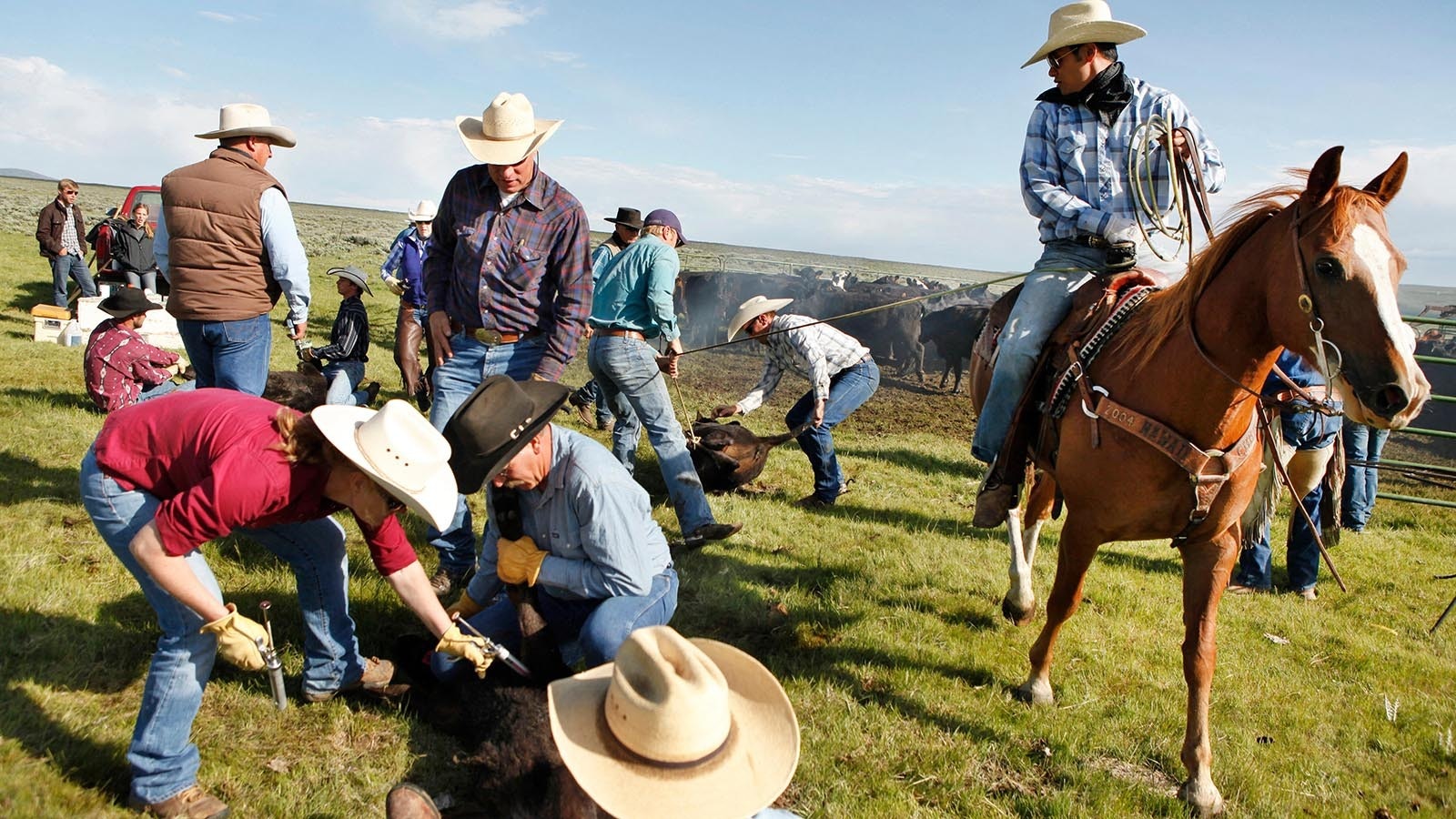
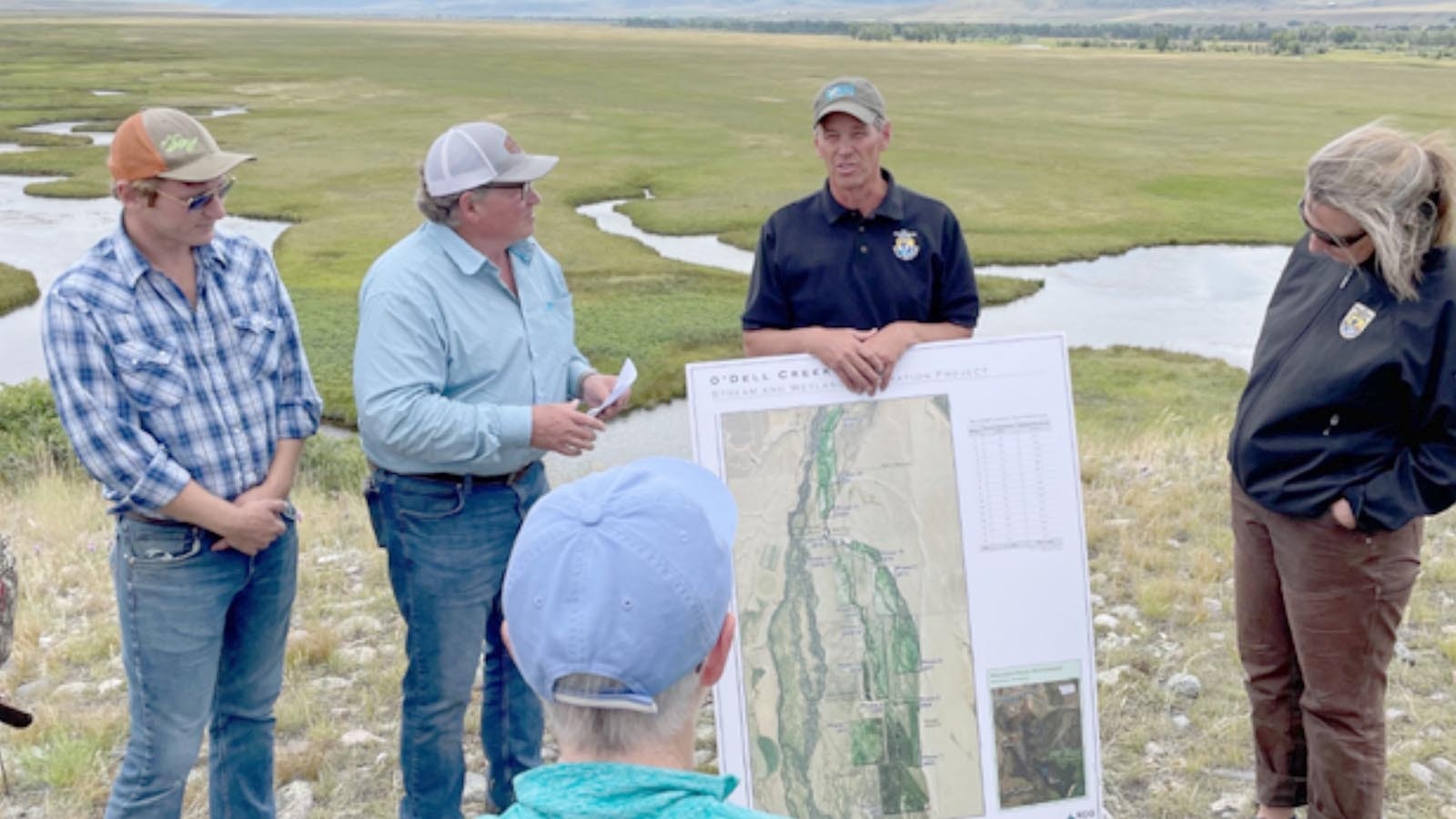
Wind River ranchers described rotational grazing systems, conservative stocking rates, and constant efforts to improve soil health and water management.
One couple captured a sentiment echoed throughout the interviews: "We're the original environmentalists. We've always taken care of our land, because it takes care of us."
One rancher summed up the philosophy: "Agriculture isn't perfect, but it's necessary. And on most fronts, I would say all the ranchers that we know try really hard to leave things better than they found them."
Some ranchers are turning to conservation easements — voluntary legal agreements that restrict future land use in exchange for payments or tax reductions — as a strategy to combat rising property taxes and prevent fragmentation.
"It stays with the property after I die. It stays with the property forever," one rancher explained in the study. "To me, that was awesome, because I couldn't imagine seeing it go."
But easements aren't for everyone.
The WLA study found 65% of Western landowners cite cost as a barrier to government conservation programs, 50% worry about losing control of their land, and 43% point to regulatory disincentives.
Policy Can't Keep Pace
If environmental challenges test ranchers' adaptability, bureaucratic obstacles test their patience.
Most Wind River Basin ranchers rely on grazing permits for public or tribal lands.
Making changes — adjusting timing, altering fences, installing solar wells — requires agency approval.
In nearly every interview with researchers, frustration with multi-year wait times emerged as a major theme.
But Surber emphasized an important nuance: ranchers drew a clear distinction between local land managers and higher-level policy.
"What really struck me was what a great and positive relationship these ranchers had with their local land managers," Surber said. "People were really quick to talk about what high levels of effort and great collaborators those local rangeland managers are.
“Typically, the issues they're facing come from what they describe as higher up — the federal level."
One rancher framed the disconnect: "We're going off 40-year-old management plans in an ever-changing climate. We need to be resilient and adapt to it. We can't effect policy change fast enough to match the pace of the environmental and social changes."
Input costs have surged since 2020. Climate effects — hotter summers, longer dry periods — compound the pressure. Water competition is intensifying.
Multiple ranchers invoked an old Western saying: "Whiskey is for drinking, water is for fighting."
The study found a telling pattern in how ranchers perceive their power to respond.
They generally felt capable of adapting to environmental changes through management decisions. But social and economic pressures — inflation, market prices, policy — left them feeling largely powerless.
"Environmental concerns are there, but I think they're something we can work through," one rancher said. "What my bigger concerns are is with policy."
As the UW Extension study concluded: "Ultimately, successful adaptation can enable ranchers to continue stewarding the open spaces that maintain the character of Wyoming — preventing major habitat fragmentation, allowing wildlife access to migration routes, supporting rural communities, and continuing cultural legacies."
When Surber emailed the finished report to each person she'd interviewed, a few wrote back, excited to see the culmination of those conversations in garages and diners and pastures.
"That was pretty gratifying," she said.
David Madison can be reached at david@cowboystatedaily.com.