A Republican lawmaker from Cheyenne unveiled a bill Thursday that, if it becomes law, would implement a process for Wyoming to sell between 30,000 and 200,000 acres of non-trust state lands in 10-acre parcels to individual families — at $1 an acre.
The preamble to the “Wyoming Homestead Opportunity Program” says Wyoming has housing shortages “that burden working families and impair economic growth.”
The state has non-trust state lands that aren’t necessary to a governmental purpose, the preamble asserts.
It then asserts that Wyoming could solve the housing issue by selling these nonessential parcels “at nominal consideration” to people who plan to live on them, and who will be subject to strict covenants and layout requirements.
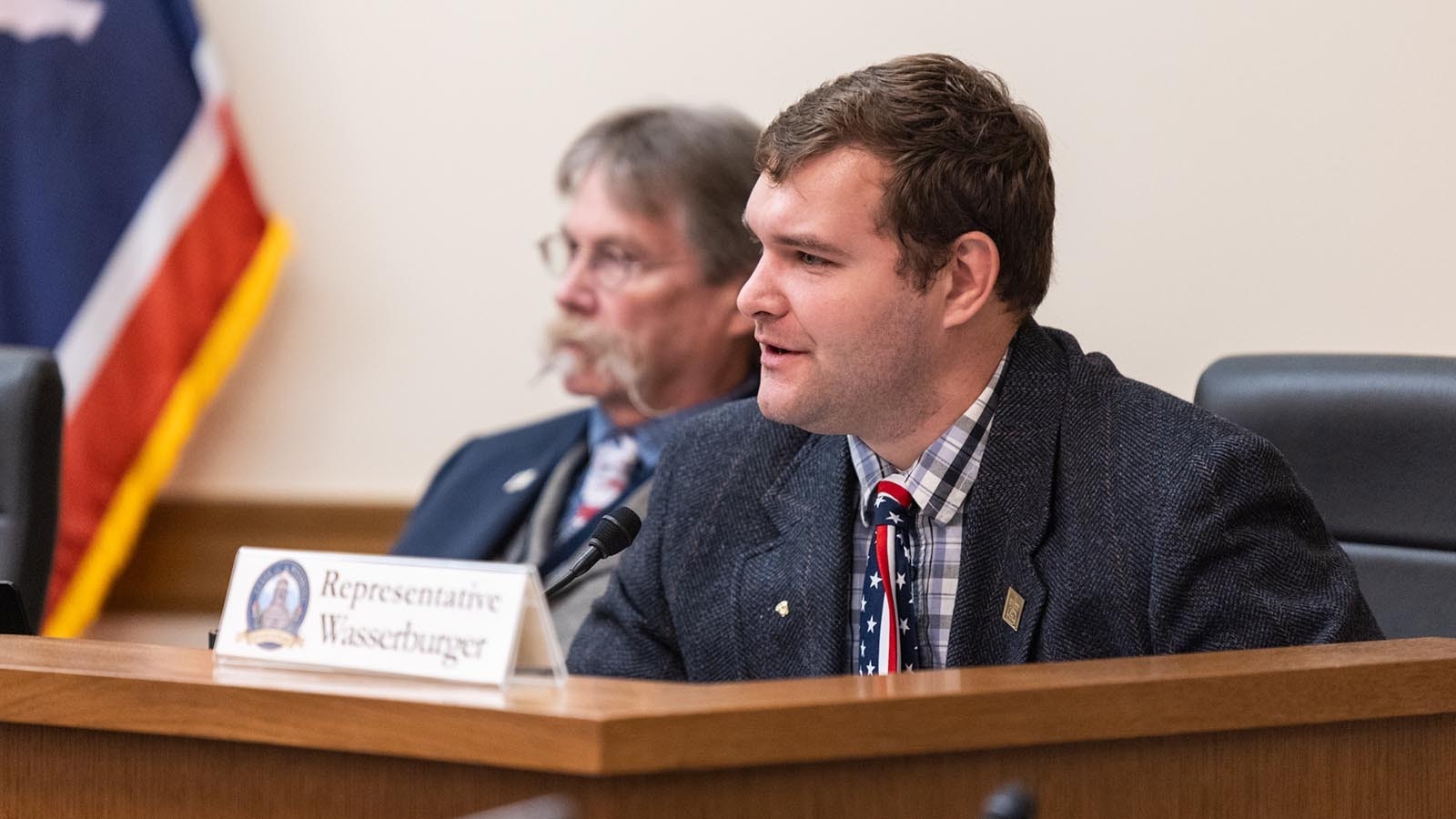
State Rep. Jacob Wasserburger, the bill's sponsor, declined Friday to give an interview within Cowboy State Daily’s deadline.
Which Lands?
State parks, school parcels, historical sites, recreational grounds, landmarks, archaeological sites, wildlife refuges, wilderness areas, school and institutional lands, and lands reserved for public use would not be eligible for sale under the act.
The bill seeks to mandate the Office of State Lands and Investments (OSLI) to search for between 10 and 20 “cluster” sites that would contain between 300 and 1,000 lots, each lot comprising 10 acres “as site conditions allow.”
That would put the state’s minimum selloff at 30,000 acres and its maximum at 200,000 acres.
Wasserburger’s bill also would require the OSLI to conduct surveys, environmental and cultural resources reviews, develop access easements and forge internal roads and minor improvements as necessary to build the “cluster” neighborhoods; and to group them away from flood hazard areas where possible.
The office would have to “seek local land use approvals” and comply with local zoning requirements, while buyers would have to comply with local safety codes.
This bill does not appear to give local governments an outright kill switch to halt purchases, however.
How Sold
With its auction map tallied, the OSLI would turn to “the board” to sell off the lands — on a random basis and without any mineral rights included — at $1 per acre to individual families bound to live on them within 20 years.
Those families would have to have been state residents for 12 months prior to buying the parcels.
The bill doesn’t specify which “board,” but OSLI’s corresponding board is the State Board of Land Commissioners, comprising all five statewide elected officials: the governor, state auditor, superintendent of public instruction, state treasurer and secretary of state.
Each lot buyer is limited to 25-acres. Businesses can’t buy the lots and would be barred from ever acquiring these lots.
The land would revert back to the state if a business bought it, the bill says.
The bill would ban commercial and industrial use; “multi-family” residential use, such as apartment complexes; short-term rental units like Airbnbs; and an arrangement that would yield a density greater than one family per 10 acres.
“The lot shall never be subdivided or replatted, and no boundary line adjustment shall be permitted except to correct a documented survey error that does not reduce any lot below its original acreage,” the bill says.
The bill would require each buyer to obtain a zoning classification allowing for single-family residential use, and to be confined to that use.
Within the first five years of a family owning a lot, that family could only re-sell the lot to another eligible family under the bill’s descriptions.
The bill bars OSLI from killing land transfers at random, or where the buyers have met all the bill’s requirements.
Any buyer who violates the bill’s requirements would see his land “automatically” revert back to the state. But he’d be given 60 days to “cure” his violation first.
OSLI would refund the buyer whatever he paid, plus any recording or closing costs he paid, the bill says. But he couldn’t receive compensation for “consequential” damages.
If the bill passes, the state would appropriate $250,000 from its checking account, called “the general fund,” into the OSLI for its lands study and selloff.
The Public Lands Guy
David Willms, associate vice president of public lands at the National Wildlife Federation, told Cowboy State Daily he doubts the bill’s mission is possible in Wyoming.
Citing a “cursory” browse of the state’s parcel viewer, Willms said he hasn’t yet identified a 3,000-acre “cluster” that fits the bill’s description of eligible state lands near the communities with the worst housing crises. He pegged those as Jackson, Sheridan, Kemmerer, Cheyenne, and Laramie.
“I’m having a difficult time figuring out what parcels would even qualify, or if there are parcels that meet the qualifications of the bill,” said Willms. “It think there are some issues here.”
Willms voiced concern and confusion at the bill’s mission to sell for $1 an acre could shortchange the state.
“I don’t know what the going rate per acre in Teton County is but it’s not a dollar,” said Willms, referencing the housing-short but exorbitantly wealthy county in Wyoming’s northwest region.
He also questioned proposed selloff’s impact on groundwater, property easements, and other practical facets, with neighborhoods slated for a minimum of 3,000 acres apiece.
“You’ve got to get infrastructure to them. Roads and power and so-forth,” he said. “If I’m a neighboring landowner I may not like this idea of the state coming in and potentially having to use eminent domain to run roads and power to those 300 homes as well.”
‘If We’re Going To Get Rid Of It…’
Rep. Karlee Provenza, D-Laramie, criticized the bill in her own Friday interview, calling its mission unclear.
She asked why it would bar apartment complexes if its mission is to solve the housing crisis.
Like Willms, she cast the $1 sale rate as an unfair yield to the state for its assets.
“If the state owns the property, the intent is that if the state – if we’re going to get rid of it – we’re going to make money off of it. Not just give it away,” said Provenza.
She voiced concerns about “local control issues” and said such exchanges should have more local official involvement.
To Provenza, who is an outspoken opponent of wholesale public land sale legislation, “it’s just another attempt to move in the direction toward sales of public lands; a foot-in-the-door technique to try to make the pill easier for us to swallow.”
Update - this story has been updated to include the comments of Rep. Karlee Provenza and David Willms.
Clair McFarland can be reached at clair@cowboystatedaily.com.