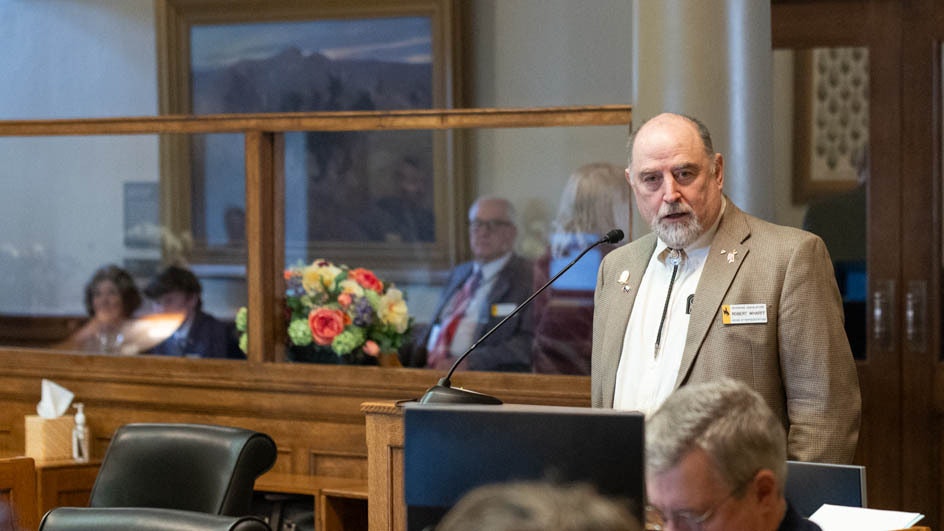
Wyoming legislators on Wednesday considered the difference between a tax and a fee in a debate over the legal limits of cities and towns' ability to raise money for stormwater management.
After hours of discussion on the Joint Select Water Committee, the consensus seemed to be that the existing legal framework is all very murky.
“Every time I read the bill, and every time I read Title 15 and Title 16, I get more confused,” said Rep. Ken Chestek, D-Laramie, referring to two sections of state law that govern municipal utilities and special district taxes, respectively.
“It’s a very confusing area. So my primary concern right now is that we don’t cause unintended consequences,” said Chestek, voting against a bill that would require municipalities to seek voter approval to impose stormwater management fees.
The effort died on a 6-6 committee vote.
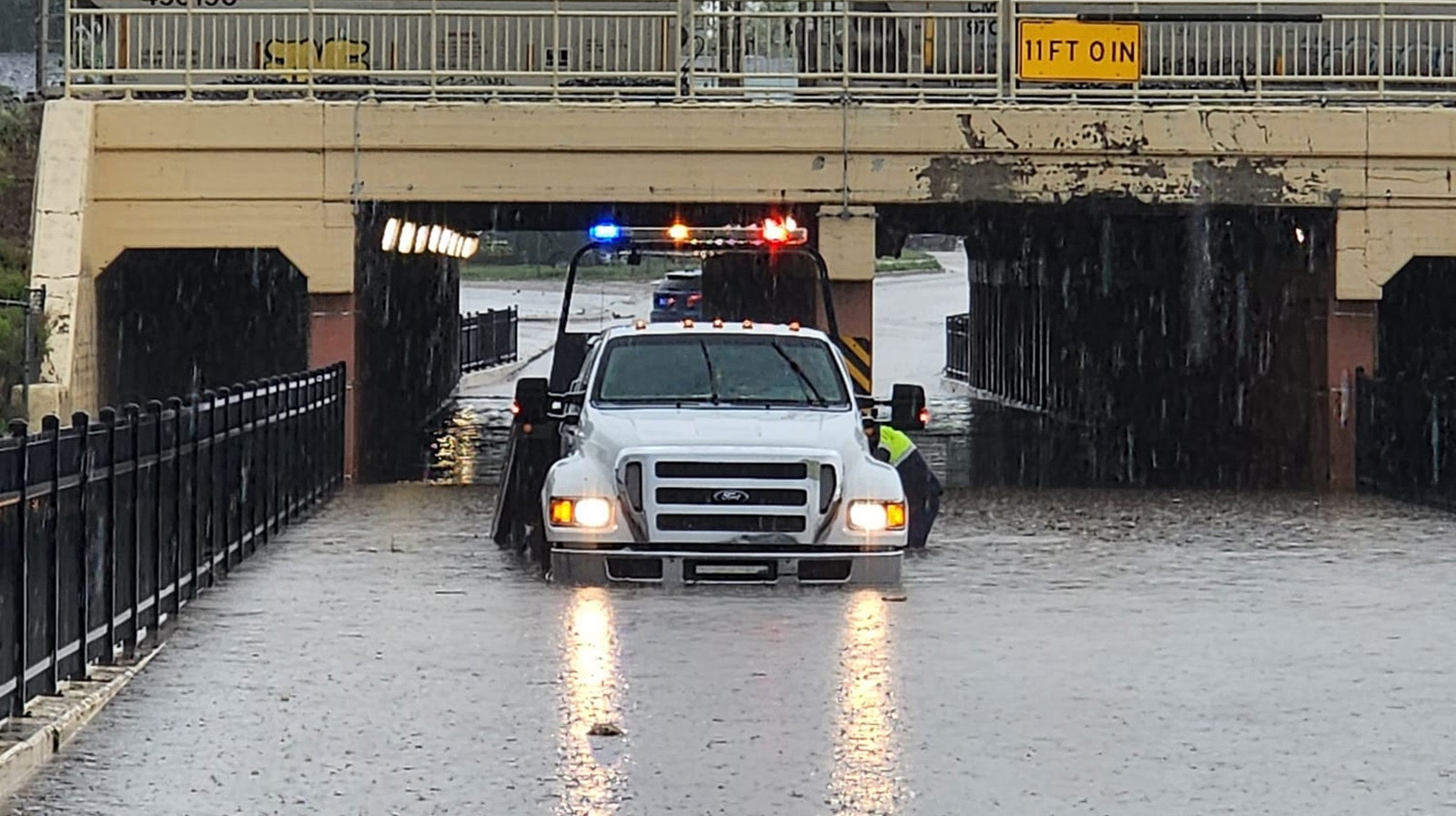
The bill’s demise is a reprieve for municipal leaders, but it also leaves cities and other stakeholders in a state of limbo as pressure builds to address stormwater infrastructure.
“We conducted studies over the past few years to establish what the investment in our current drainage system and improvements would take. And unfortunately, that number is in the $130 million range, with $30 million of those projects being critical,” said Laramie City Manager Todd Feezer.
Feezer’s comments come against the backdrop of major lawsuits brought against the cities of Laramie and Cheyenne, respectively, over stormwater management fees that have drawn the ire of major interests.
The University of Wyoming is suing the city of Laramie over a recently passed stormwater fee that put the school’s related annual expense at $450,000, according to Patrick Crank, general counsel for the University of Wyoming, who described the fee as an unlawful tax.
“The difference between a tax and a fee is that a fee directly benefits the person paying the fee… That’s not the case with these surface water management fees,” Crank said.
The city has since paused collections of the stormwater fee in question.
Tax Vs. Fee
As a rule of thumb, a “fee” is a charge designed to cover the cost of a specific service, like trash collection, whereas a “tax” can be levied for general public purposes. The distinction matters because Wyoming law requires voter approval before a municipality can impose a tax, but does not have the same standard for the imposition of a fee.
The UW lawsuit additionally argues that because the university is a state-owned, the city does not have the authority to impose a tax.
“We are alleging that this is a tax and not a fee," the lawsuit says. "If it’s a tax, it can’t be applied to UW because Wyoming statutes provide that cities, towns and counties, local entities cannot tax state entities for real property that they own and use in the regular course of their business.”
Push Costs Onto Individuals?
Ashley Harpstreith, executive director of the Wyoming Association of Municipalities, disagrees, arguing the stormwater levy in Laramie and Cheyenne are correctly characterized as fees and protected under Wyoming law.
“A stormwater utility fee is a charge tied to the cost and benefit of managing runoff and used exclusively for that purpose through a dedicated enterprise fund, “ she told committee members. “Municipalities are not asking for new powers, only to continue managing these services under the local authority the legislature has already granted.”
Harpstreith says the arrangement is especially vital in the face of declining local revenue from property tax cuts.
“Each new limitation…pushes essential infrastructure costs further onto the individual taxpayer in communities,” she said, going on to address UW specifically.
“These institutions and agencies rightfully contribute to Wyoming’s economy, but they also rely heavily on municipal infrastructures, streets, drainage systems, emergency response and utilities that are funded by local residents and businesses.”
Business Owners Want A Vote
Arvin Martinez operates a salvage yard in Laramie. He says the initial estimate for storm drain fees assessed on his business were $800 a month. In addition to feeling like the fee is exorbitant, he says the city did little outreach to give business owners like him influence over the process.
“Very few of us knew about it, until it smacked us in the face and we got our bill in the mail,” said Martinez, who supports the notion of requiring stormwater fees to be subject to a public vote.
Martinez is also bothered by the fact that a railroad runs adjacent to his property, but the company is exempt from the municipal fee, which he finds particularly vexing because it was the railroad embankment that caused his property to flood years earlier, he told committee members.
“We have been dealing with flooding problems for a long time. I’m not against fixing the problem, but we need to find a way to pay for it but not drive people like me out of business to do it,” Martinez said, whose opinion was shared by other local business owners.
Don’t Forget 1985
Legislators, business owners, and bureaucrats did agree on one thing: the threat of unfunded stormwater systems is real and imminent.
The town of Lusk in a recent year experienced a major flood that contaminated drinking water and isolated the town due to flood-related bridge failure, according to Sharon Buccino, legal counsel for the Wyoming Planning Association.
In 1985, Cheyenne was hit by a “supercell thunderstorm” which resulted in the most damaging flood in Wyoming’s history, killing 12 people, injuring around 70 and causing damage equivalent to around $200 million in today’s dollars, according to Cheyenne Mayor Patrick Collins
Pete Laybourn, a Cheyenne City Council member, remembers the devastation of 1985, and urged committee members to find a sustainable solution.
“I had the experience in 1985 … and when that flood happened, it filled this very room … and brought devastation throughout downtown and throughout the city,” he said. “That was a long, long time ago.
"But when we look around the country and around the world … there’s just no doubt that things have changed, and those floods are getting more devastating," Laybourn added. "It’s really important for us to come up with plans to deal with them.”
Zakary Sonntag can be reached at zakary@cowboystatedaily.com.