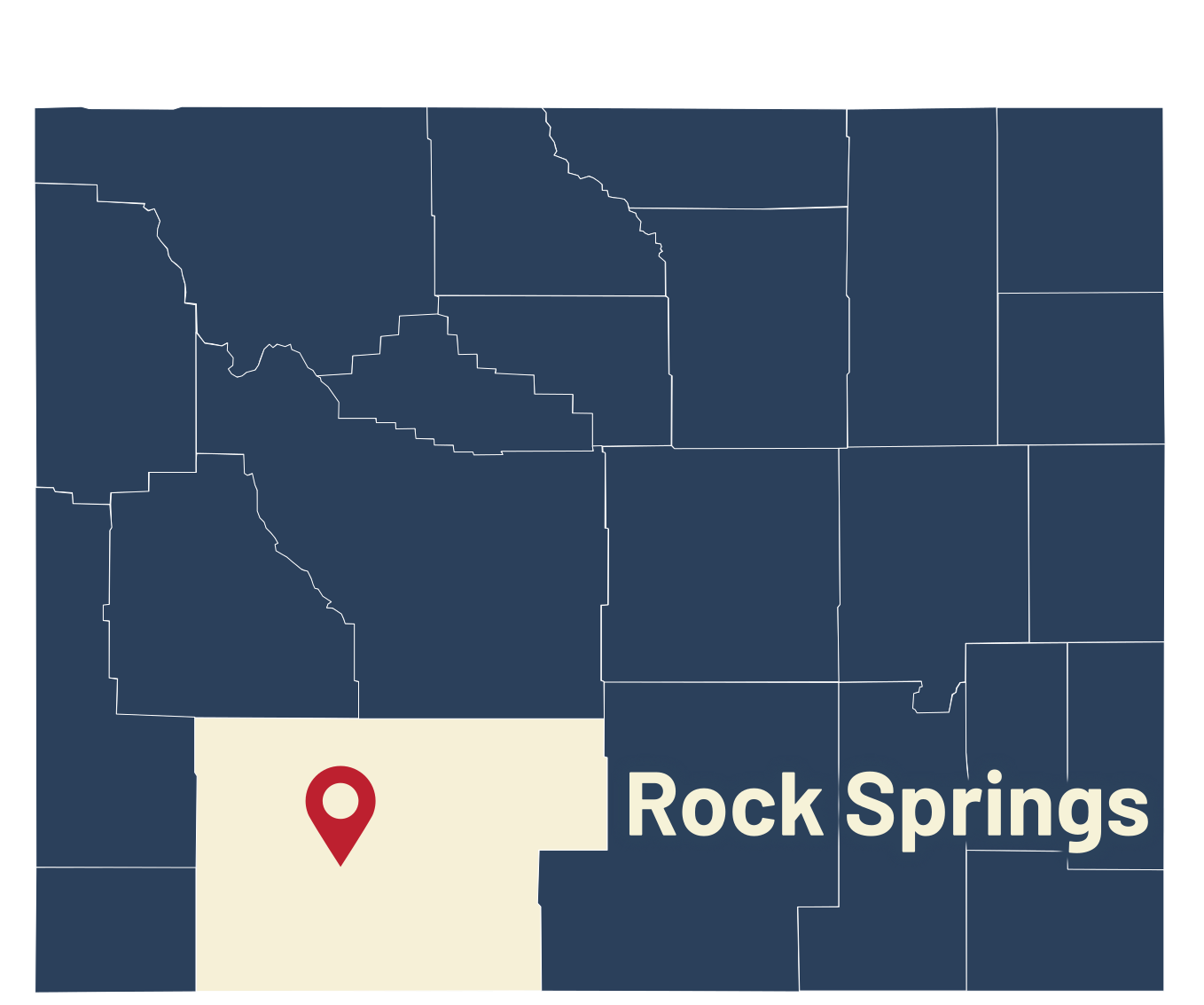
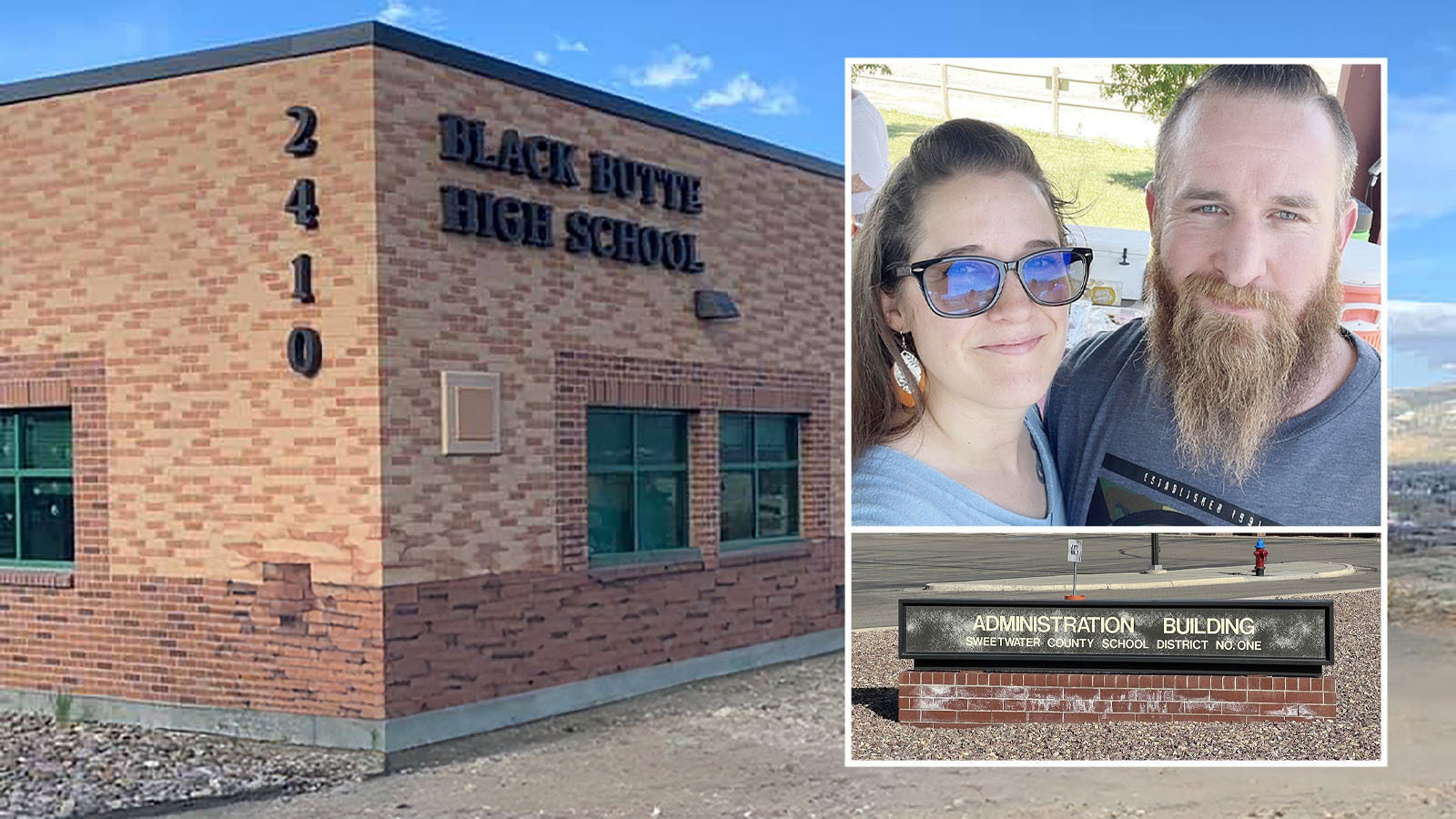
Three appeal judges overseeing Wyoming’s federal courts are considering whether a Rock Springs school district violated a local couple’s rights by passing a rule requiring “privacy” for transgender students.
That’s after Sean and Ashley Willey’s attorney Ernie Trakas traded arguments Wednesday in the 10th Circuit Court of Appeals with Sweetwater County School District No. 1’s attorney Eric Hevenor.
At stake is whether the higher court is going to reverse or uphold the April 2025 order of Wyoming-based U.S. District Court Judge Scott Skavdahl, who dismissed the Willeys’ civil rights case against the school district.
The parents pointed to a district rule requiring staffers to call students by their preferred names and pronouns, and to respect the students’ “privacy” in doing so.
They also pointed to the months during which school staffers reportedly called their teenage daughter by a boy name without telling them, and a dramatic episode in which Ashley Willey learned of her daughter’s alternate identity at a school event.
They accused the school of violating their parental right to the care, custody and control of their child.
Since Ashley Willey was a teacher in that same district at the time, she also accused the district of violating her religious rights by putting her under the names and pronouns rule.
Skavdahl dismissed the case on both fronts.
He said he wouldn’t create a law requiring school staffers to tell parents of changes in their children’s lives, and ruled the parents didn’t show enough evidence that the school had actually acted against them.

The Argument
Trakas told the three-judge panel of the 10th Circuit that the 2025 U.S. Supreme Court case Mahmoud v Taylor should decide the Willeys’ case in their favor.
In that one, a school had denied parents the ability to opt their children out of LGBTQ-themed teaching embedded in grades kindergarten through fifth.
That “likely” infringed their religious rights, the high court ruled, sending the case back to the lower court with that pronouncement.
10th Circuit Judges Nancy Moritz challenged Trakas, asking how Mahmoud could rescue his parental-rights claim when it addressed religious rights.
Trakas pointed to the century-plus of courts respecting parents’ right to raise their children.
“The policy at play here places an undue burden on that fundamental right,” said Trakas. “Here the district has a clear history of policies that required its personnel throughout the district to withhold any notice or notification to the parents concerning the adoption and use of sex-deviating names and pronouns at the request of the child."
One of the judges asked Trakas if he believes the parental right dictates an “affirmative duty … to advise the parents” of a child’s new identity.
That was the duty Skavdahl said he was unwilling to craft.
Trakas countered, saying school staffers who called the student by a boy name without her parents knowing were deploying a more subtle, but not less sinister, type of “coercion” on the child than the Mahmoud case featured.
Nah, Says School
Hevenor in his own argument said the Willeys haven’t brought evidence to support their claims.
He said the rule mandating respect for a student’s “privacy” is more general and bars teachers from questioning students about their choices or discussing them broadly, including with non-parent figures like other teachers and students.
The school’s rule followed an executive order by President Joe Biden saying his administration would apply “Bostock” — an anti-sex-discrimination-case regarding workplaces — to the concept of gender identity, and to federal laws regarding education.
Hevenor said the district was merely trying to follow that order.
A Rock Springs Middle School teacher who has since left the district emailed with the Willeys’ child about the school’s policy, about how to research gender topics, and how to exit quickly from a website on sexuality and gender, the Trevor Project, “in case you are browsing and don’t want someone to know you are on that website,” according to court documents.
Skavdahl ruled that this teacher acted outside the school’s policy, so the teacher’s actions didn’t prove the school’s policy violated the Willeys’ rights.
Hevenor agreed.
“I don’t think there’s any reason to believe that email exchange was in any way guided by an official (school) policy,” he said.
Moritz asked Hevenor if the parental right gives schools a duty to tell parents when a child is transitioning.
“No, and if they did, they’d be violating the students’ fundamental right to — one — exist, and their right to free expression,” answered Hevenor.
The three judges — Moritz and Richard Federico, and U.S. District Court Judge Ann Marie McIff Allen — have taken the case under advisement.
Way Later Though
The Wyoming Legislature in 2024 passed a law requiring schools to tell parents about major health changes concerning their children.
By then, the Willeys’ child was no longer a student at Black Butte High School in Rock Springs. Most of the harms alleged in the lawsuit happened in 2022.
Had an earlier version of that bill passed in 2023, Trakas told Cowboy State Daily prior, it may have helped the parents remedy some of the harms they believe continued into that year.
But it’s hypothetical to look back and reconsider the whole action in light of a law that didn’t exist at the time, he added.
Clair McFarland can be reached at clair@cowboystatedaily.com.