Pine martens might not have the glamorous status of Wyoming’s big apex predators, but they are hugely important, even if they’re occasionally humiliated by squirrels, a biologist said.
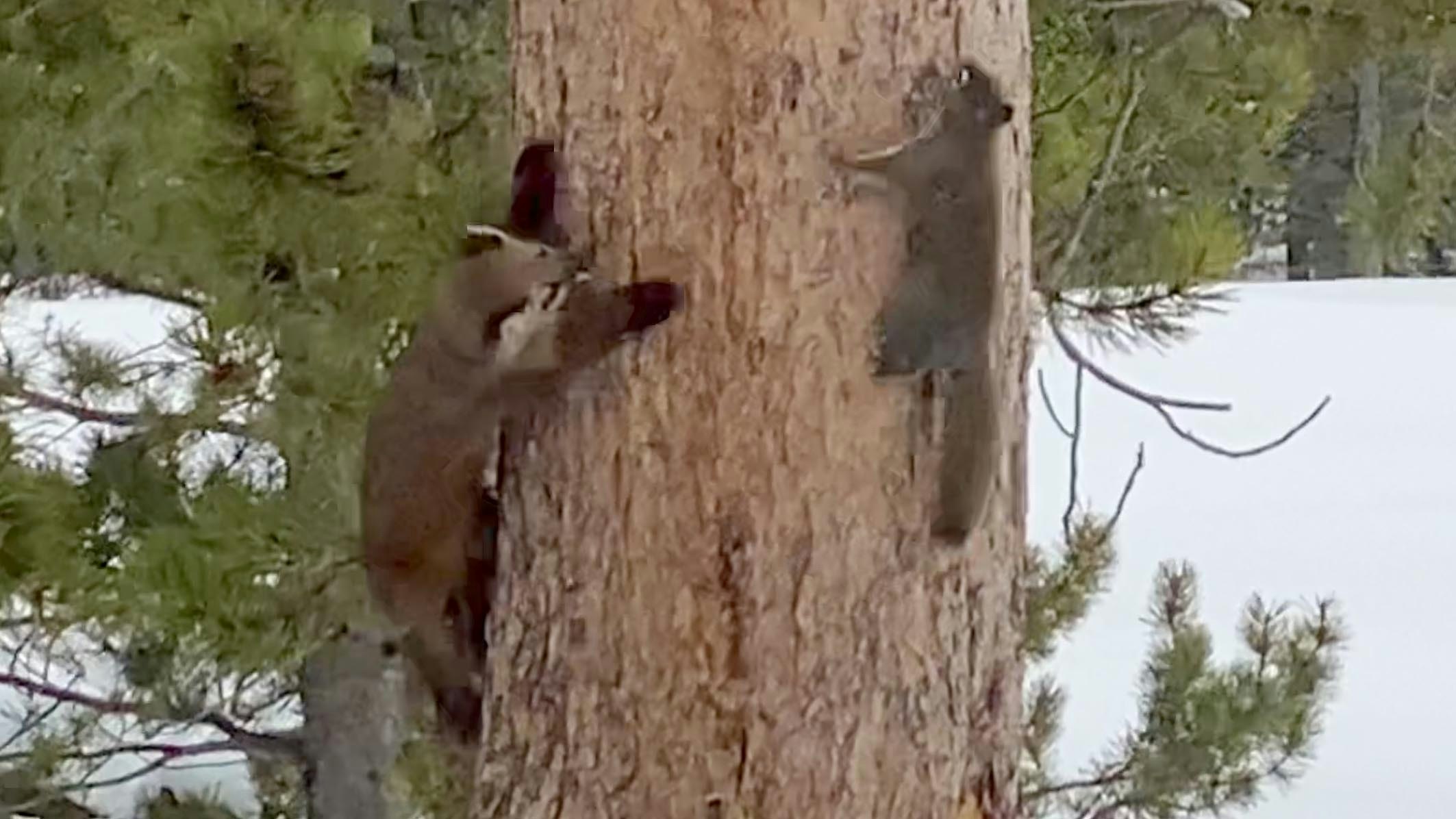
Squirrels will pull the clever trick of getting a predator to follow them up a tree trunk. Then, the squirrels will lead the predator on a fruitless chase, burning laps around the tree, and always keeping the predator on the other side of the trunk.
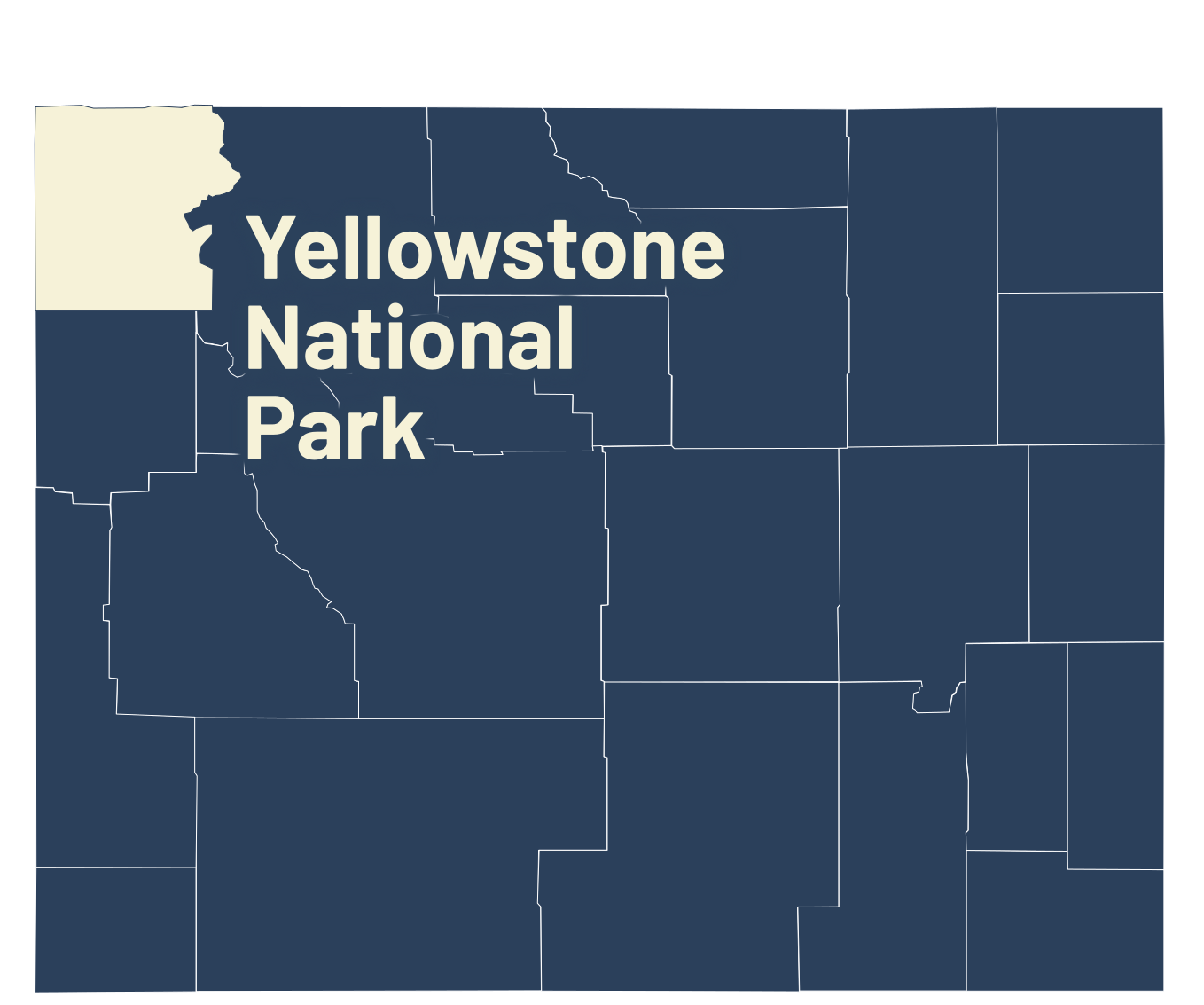
A video taken during a recent winter in Yellowstone National Park shows a red squirrel doing just that to a pine marten — which is a member of the weasel family.
Pine martens are very quick and elusive, making capturing them on video in the act of hunting rare.
The marten should feel no shame over not catching the pesky squirrel, said John Koprowski, a zoology professor and dean of the University of Wyoming’s Haub School of Environment & Natural Resources.
“I’ve probably seen a couple hundred of those kinds of chases, with various predators, and I don’t think I’ve ever seen a success,” he told Cowboy State Daily.
The ‘Baby Brother’ Of Predators
Despite that marten going away hungry that time, martens as a species punch above their weight when it comes to controlling the rodents in Wyoming and other states, Koprowski said.
“They are out there hitting squirrels and other small mammals. They are cleaning up those forest systems,” he said.
Not as much is known about martens as some of Wyoming’s larger wildlife species, but that could change soon. The Haub School secured funding for a study of martens here, probably starting this summer, Koprowski said.
The study might involve putting radio-tracking collars on some martens, to gain a better picture of the animal’s movements, habits and distribution in Wyoming.
He’s looking forward to helping give martens their due.
“You get lots of information on the big things; grizzlies and elk and bison and wolves. And with some of the smaller animals you don’t get much information. Martens are one of those. They are like the baby brother of the predator community,” he said.
Two Subspecies
Two subspecies of pine martens were recently recognized, Koprowski said: the Pacific marten and the American marten.
Most of the martens in Wyoming are Pacific martens, he said. American martens can be found in northern Wyoming, up near the Montana state line.
They are strictly a forest species, “so that cuts a lot of Wyoming out” as potential habitat, he said.
There are martens in the Yellowstone ecosystem, as well as in some other forested mountain ranges, such as the Wyoming Range, the Wind River Mountains and the Snowy Range, Koprowski said.
There is a trapping season for martens in Wyoming. John Eckman, vice president of the Wyoming Trappers’ Association, told Cowboy State Daily.
“They are common in the high country,” he said.
Red Squirrel Is Their Favorite Dish
Though martens have a variety of prey, red squirrels are apparently their favorite, Koprowski said.
“They are tied closely to red squirrels,” he said.
And the presence of martens is a good indicator of a healthy forest, he added.
Despite their name, red squirrels in Wyoming sometimes aren’t red. Their fur turns more of a grayish color during the winter, Koprowski said.
So, the gray-colored squirrel in the chase video is a red squirrel, and its pursuer is probably a Pacific marten, he said.
The chase in the tree might have been a last-ditch effort on the part of the marten, he added.
Martens typically stalk and ambush red squirrels on the ground, near the squirrels’ pine cone middens, or “the piles of pine cones that they create in the center of their territory,” he said.
After stalking up on a squirrel in a cat-like manner, a marten will rush “in a final burst” hoping to make a catch and kill, he said.
In the instance of the video, it could be that the marten had already done that, but the squirrel was lucky enough to make it to the tree.
Once up the tree, the marten might have decided that since it was “already invested” in making a meal out of the squirrel, it was at least worth a Hail Mary, even though it ultimately didn’t work out.
Wildlife photographer Kristy Williams of Estes Park, Colorado, frequently visits Yellowstone, and caught the video during a snow coach tour.
“The pine marten finally gave up, as if he was out of breath. And the squirrel just sat up in the tree, looking at us” in a defiant manner, she told Cowboy State Daily.
‘That Body Shape Is Not By Accident’
Martens are long, lean and fierce, Koprowski said.
Though Williams was lucky enough to catch sight of a marten hunting in the open, many of their exploits take place out of sight, in the tight spaces where squirrels, mice and other prey go.
“That body shape is not by accident. It’s all about running though tree cavities and hollow logs, and zipping through tunnels,” he said.
Mark Heinz can be reached at mark@cowboystatedaily.com.