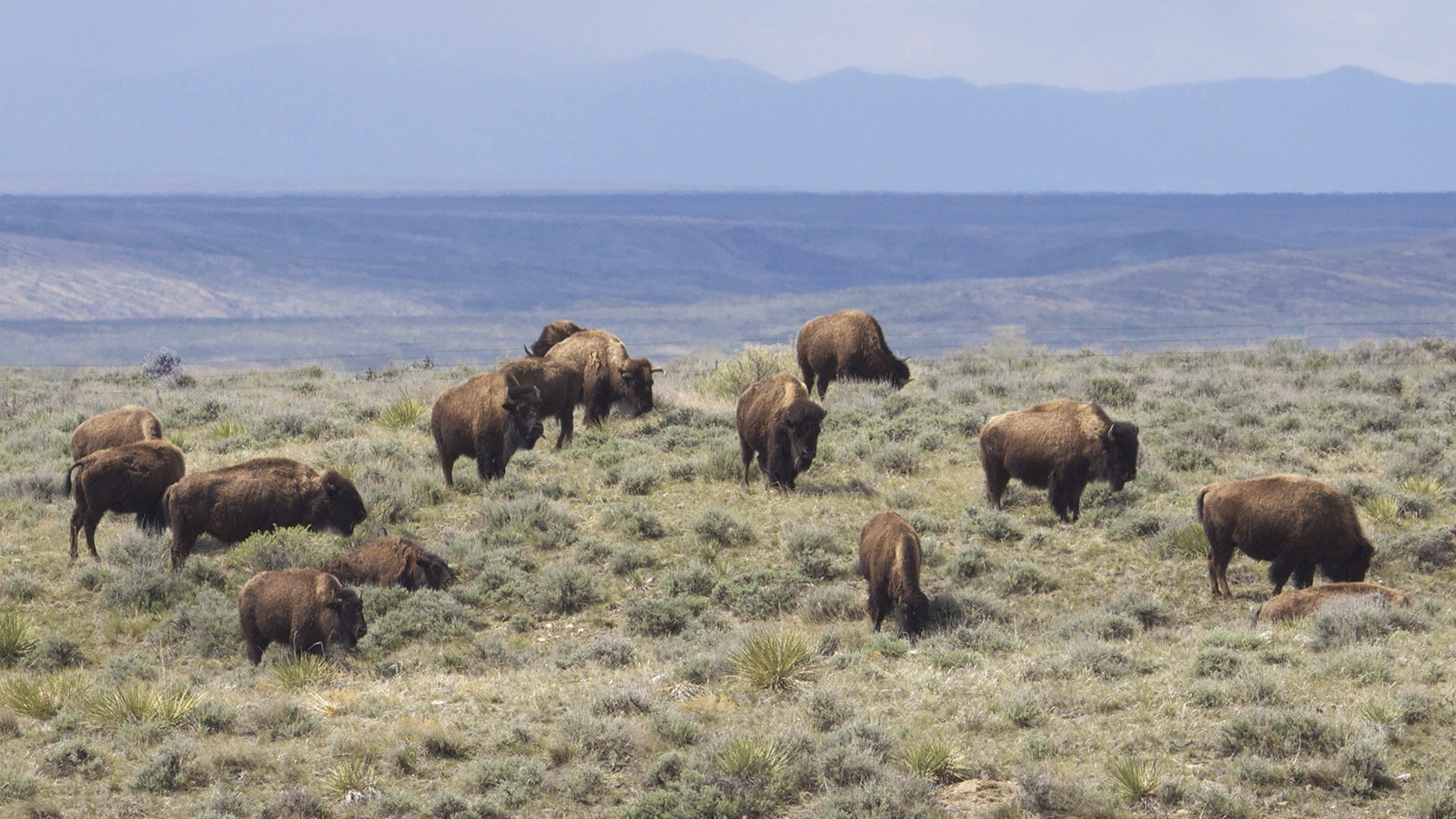
A spat over whether to allow bison on federal grazing leases in Montana could have repercussions for Wyoming bison ranches. If bison are reclassified strictly as wildlife, that could make raising them illegal in Wyoming.
Under the direction of Interior Secretary Doug Burgum, the Bureau of Land Management (BLM) is calling for bison to be removed from 7 grazing allotments, totaling roughly 63,000 acres in Phillips County, Montana, the Western Ag Network reported.
The American Prairie conservation group is running the bison there under a permit issued by the Biden administration in 2022.
However, the BLM claims that American Prairie is managing the bison as wildlife, not as a food-producing livestock herd, and therefore is in violation of the Taylor Grazing Act.
On Friday, the BLM issued a notice of proposed decision to rescind the Biden-era permit. If the decision is finalized after a 15-day protest period, the bison would be removed from the allotments – which would be returned to cattle grazing only.
‘Slippery Slope’
American Prairie spokeswoman Beth Saboe told Cowboy State Daily that the bison are currently classified as livestock. And although the animals aren’t slaughtered and processed for meat, American Prairie allows hunters to shoot 20 to 25 per year, with special permits.
Reclassifying those bison strictly as wildlife could reverberate throughout the bison ranching industry, Saboe said.
“I think this will have unintended consequences. And it will be a slippery slope,” she said.
Dylan Handrich, owner of the Prairie Monarch bison ranch near Laramie said his herd of 500 to 600 bison is raised only on private land, so any changes in federal grazing permitting for bison won’t affect him directly. Although, he has run bison on federal grazing allotments in the past.
Prairie Monarch raises bison for slaughter and meat, and the demand for bison meat is growing nationwide, he said.
However, if the classification of bison as wildlife only, and not livestock, reverberates beyond the Montana decision, that would affect his business.
Wyoming law forbids raising wildlife herds in captivity. So, if bison were classified only as wildlife, he might have to quit ranching them, he said.
Conservation Grazing
So far, the BLM is hinging its decision on the argument that American Prairie has gone against the Taylor Grazing Act because it is managing that particular bison herd in question as wildlife.
The group is managing the bison for “conservation, genetic restoration and public enjoyment” when the Taylor Grazing act is intended for food, milk or fiber-producing livestock grazing only, according to the BLM.
Beth Saboe said the American Prairie herd, roughly 940 bison, is in somewhat of a gray area. They aren’t a meat production ranch herd contained to small pastures, but neither are they a “free-ranging herd,” she said.
They are contained within fences on roughly 600,000 acres of habitat south of Malta, Montana in the Missouri Breaks country, she said.
The BLM grazing allotments in question are within that habitat area.
Since bison are the area’s natural grazers, they help restore prairie habitat, according to American Prairie.
Each year, hunters can enter a lottery-style draw for hunting permits for the American Prairie herd. The permits cost $300 each.
Ranchers Applaud Decision
The Montana Stockgrowers Association and other ranching organizations applauded the BLM’s move to remove the bison from the grazing allotment, the Western Ag Network reported.
They said that would return the grazing allotments to their original intent, and help local ranchers and ranching communities.
However, Saboe said it’s a misconception that American Prairie has been buying up ag land and shutting ranchers out.
“We lease grass back to more than 25 local ranching families who run about 8,000 head of cattle,” she said.
In a statement from the group, American Prairie CEO Alison Fox said bison were grazing on her group’s allotments long before the Biden-era permits were issued.
“We've had permission to graze bison on some of these allotments for 20 years and have followed the law, complied with every requirement, and prioritized transparency at every step,” she said.
Various Classifications
Handrich said bison “have a lot of different classifications.”
In Yellowstone and Grand Teton national parks, they’re classified as wildlife. On ranches like his, they’re classified as livestock.
However, some meat processors classify them as an “exotic species,” he said.
On his ranch, “they’re fully vaccinated and treated as livestock,” he said.
Handrich said bison ranching has its advantages.
“They are native grazers on this continent. They actually help build the soil,” he said.
They’re also adapted to surviving Wyoming’s winters, so they need less feed during the cold months than cattle do, he said.
As he sees it, Bison should be allowed on BLM land.
“If they allow the mustangs, the horses on BLM land, why not give the Bison that same status?” Handrich said.
Mark Heinz can be reached at mark@cowboystatedaily.com.