Logs and stone from an old cabin become valuable relics from Wyoming’s past when you understand the stories attached to them, said historian Clay Gibbons.
He said that the ax-hewed logs, hand-carved rifle slot and forged nails are the only evidence left from an arrest that was the talk of the territory more than 140 years ago.
For years, Gibbons had been searching for a trapper’s cabin that was the scene of a showdown between Sheriff Frank Canton and the notorious horse thief, Teton Jackson, in 1885.
Gibbons wanted to stand where Canton had stood with his six-shooter aimed at the startled thief.
“Ever since I heard that story, I thought, 'Damn, I wonder which cabin that was?'” Gibbons said. “That would be so cool to stand in a threshold of that cabin right where Canton had his gun on Teton Jackson.”
Gibbons said it would be amazing to see the fireplace where Teton Jackson had crouched near during the standoff. The outlaw was lighting his cigar when Canton burst into the room with his six-shooter aimed straight at the horse thief.
In a surprising turn of events, Gibbons discovered that not only had he stood in the cabin he was looking for, but the cabin was on Gibbons' own property.
Years before, Gibbons and his dad had rescued an old trapper cabin. They had taken photos of it in its original location near Hyattville and then disassembled it to place on Gibbons' land where he had planned to rebuild it.
Only afterward did a friend uncover the history of the cabin and discovered that it was the very cabin Gibbons had been looking for all these years.
Unfortunately, the spring after Gibbons had recovered the cabin, a fire had destroyed many of the logs and Gibbons has been unable to reconstruct the cabin.
However, the logs that are left still hold the history from the manhunt more than 140 years ago.
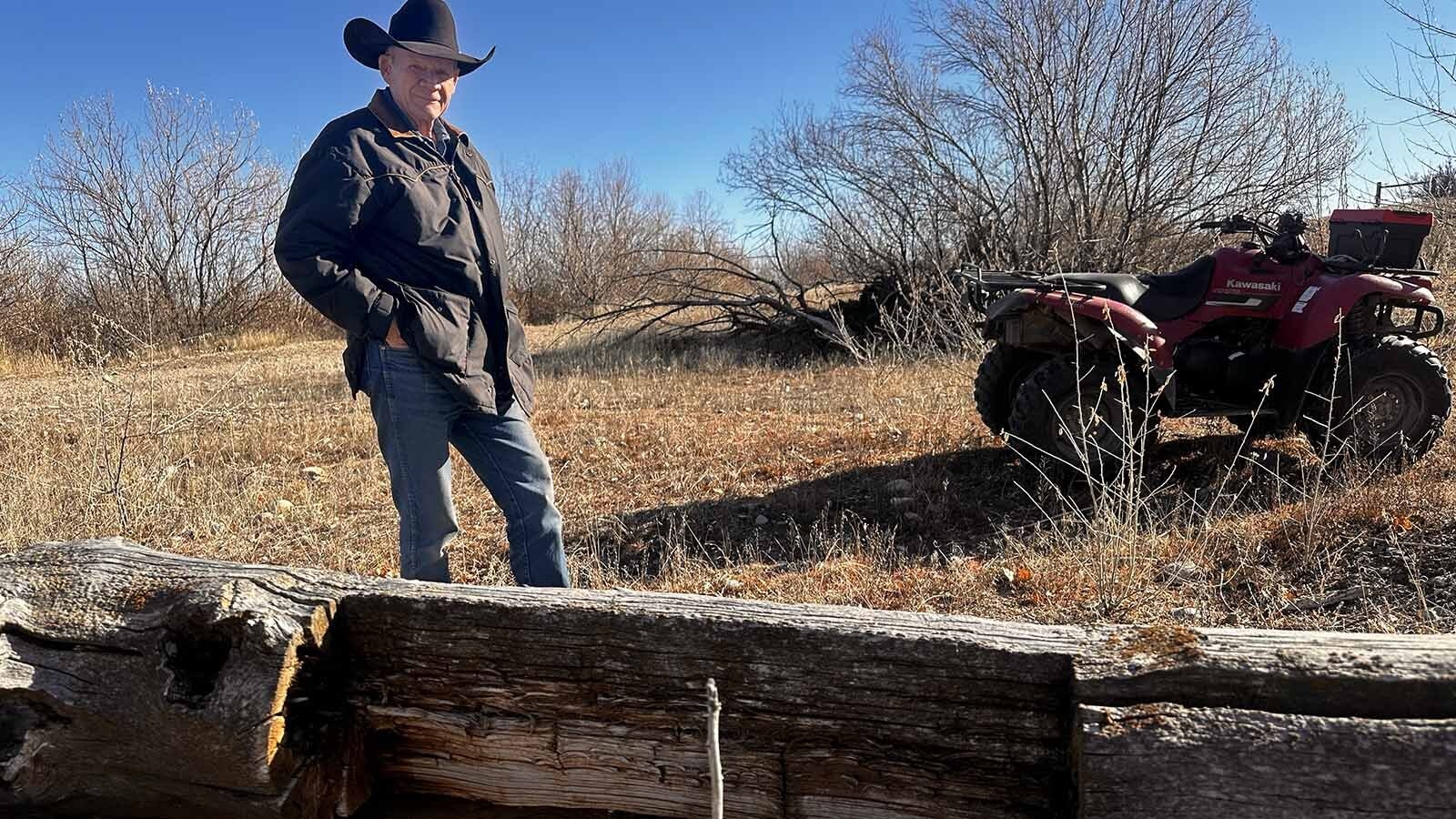
When someone is looking for history, it is sometimes written in the logs. These logs came from a cabin that was built in the 1870s and was the temporary hideout for the notorious horse thief Teton Jackson. Sheriff Frank Canton and his deputies had surrounded the cabin and surprised Teton Jackson in 1885, successfully arresting the wanted bandit. (Jackie Dorothy, Cowboy State Daily) 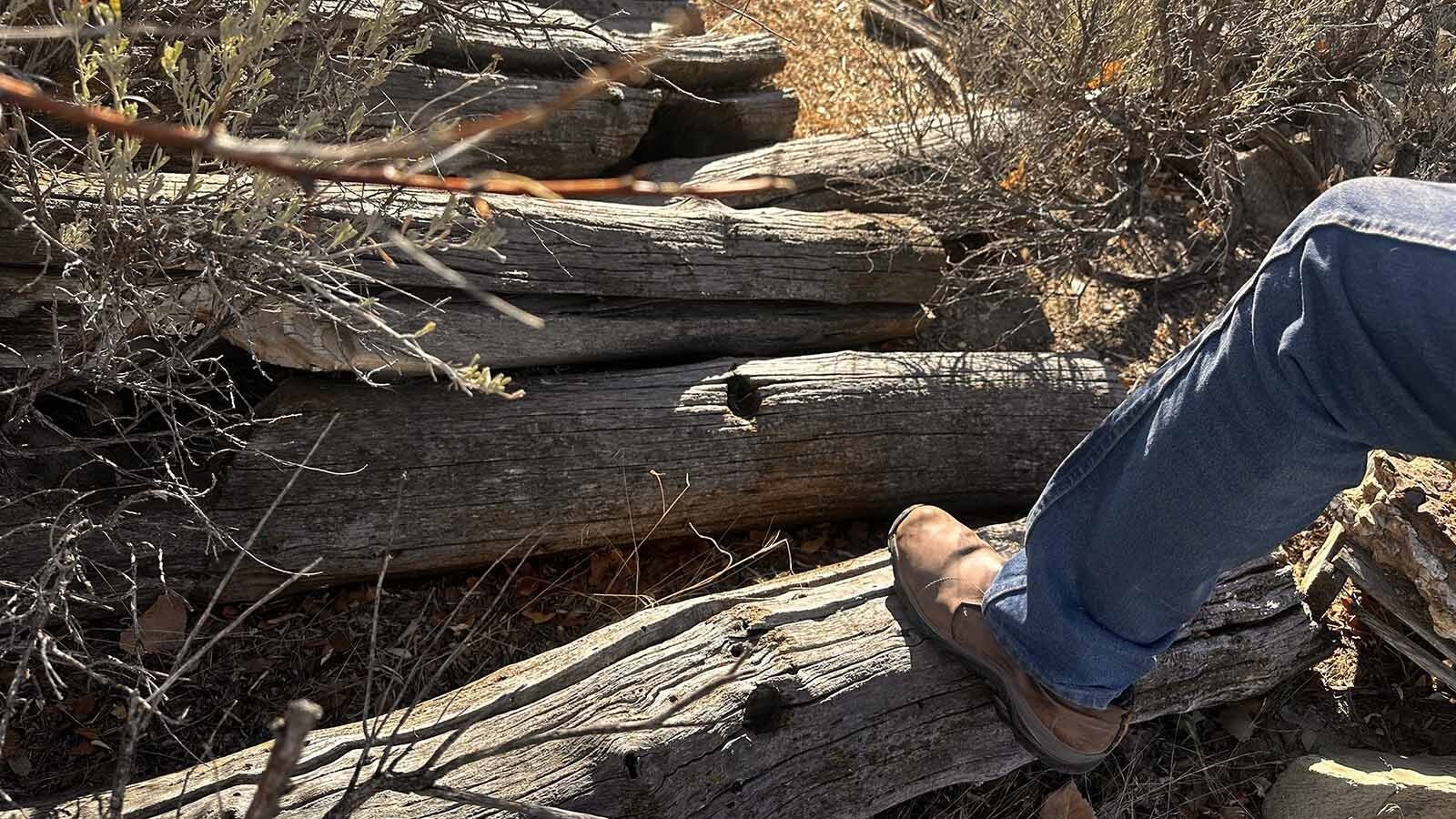
When someone is looking for history, it is sometimes written in the logs. These logs came from a cabin that was built in the 1870s and was the temporary hideout for the notorious horse thief Teton Jackson. Sheriff Frank Canton and his deputies had surrounded the cabin and surprised Teton Jackson in 1885, successfully arresting the wanted bandit. (Jackie Dorothy, Cowboy State Daily) 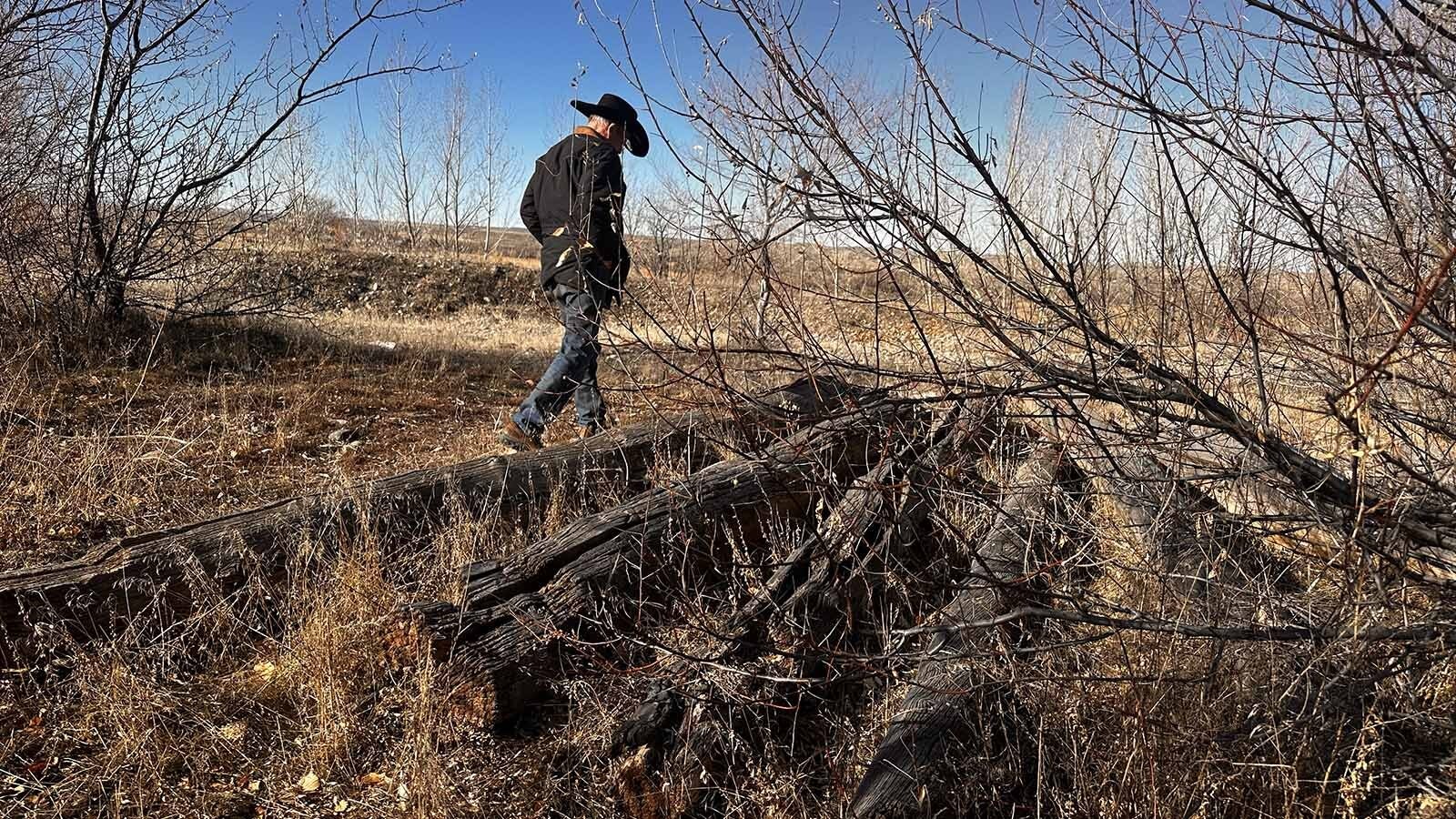
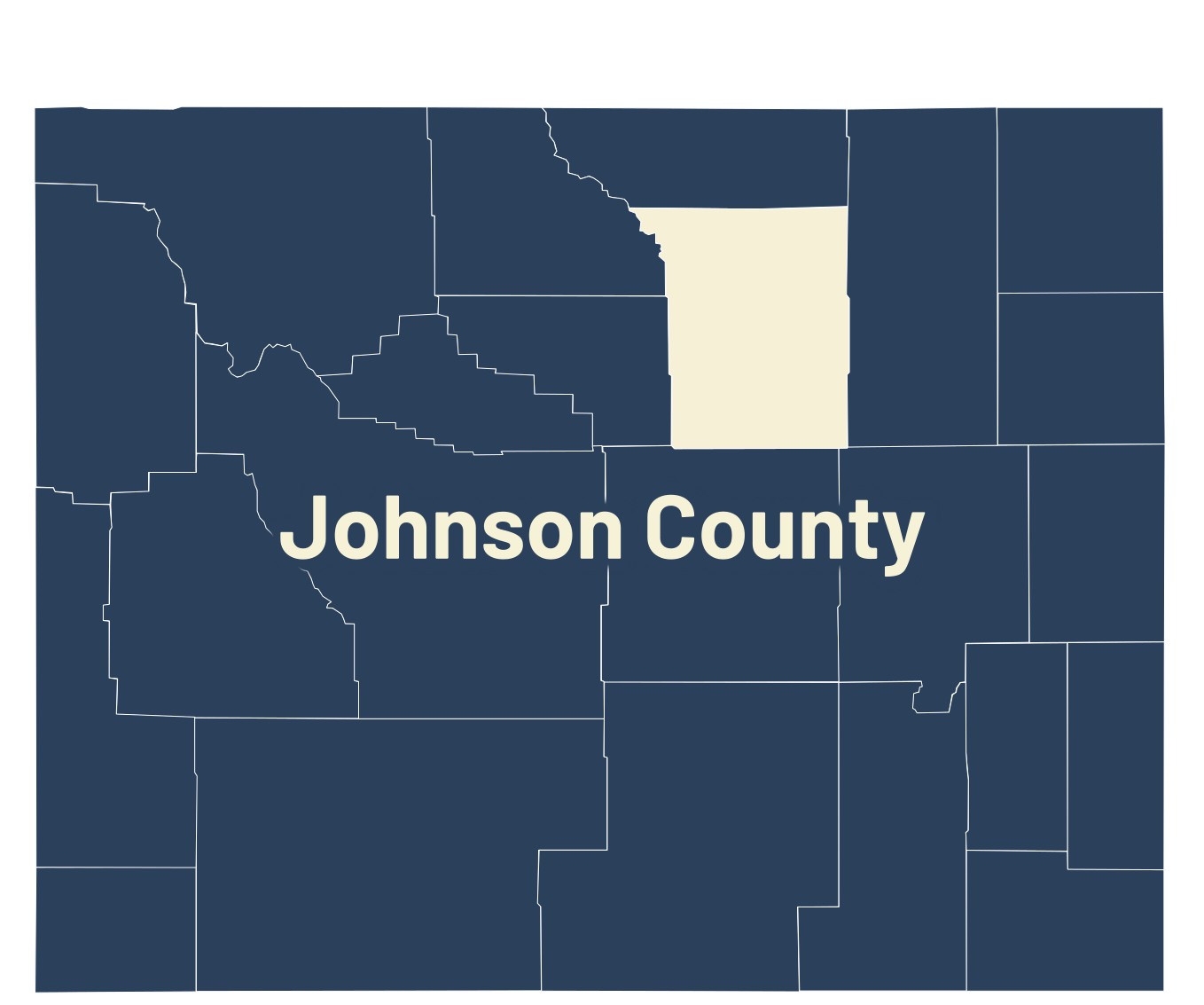
In 1885, Johnson County Sheriff Frank Canton rode up to a cabin just before dawn to arrest the notorious horse thief, Teton Jackson. The logs from the cabin have been rescued and still remain as a relic to this infamous showdown that occurred in remote Hyattville over 140 years ago. (Jackie Dorothy, Cowboy State Daily) 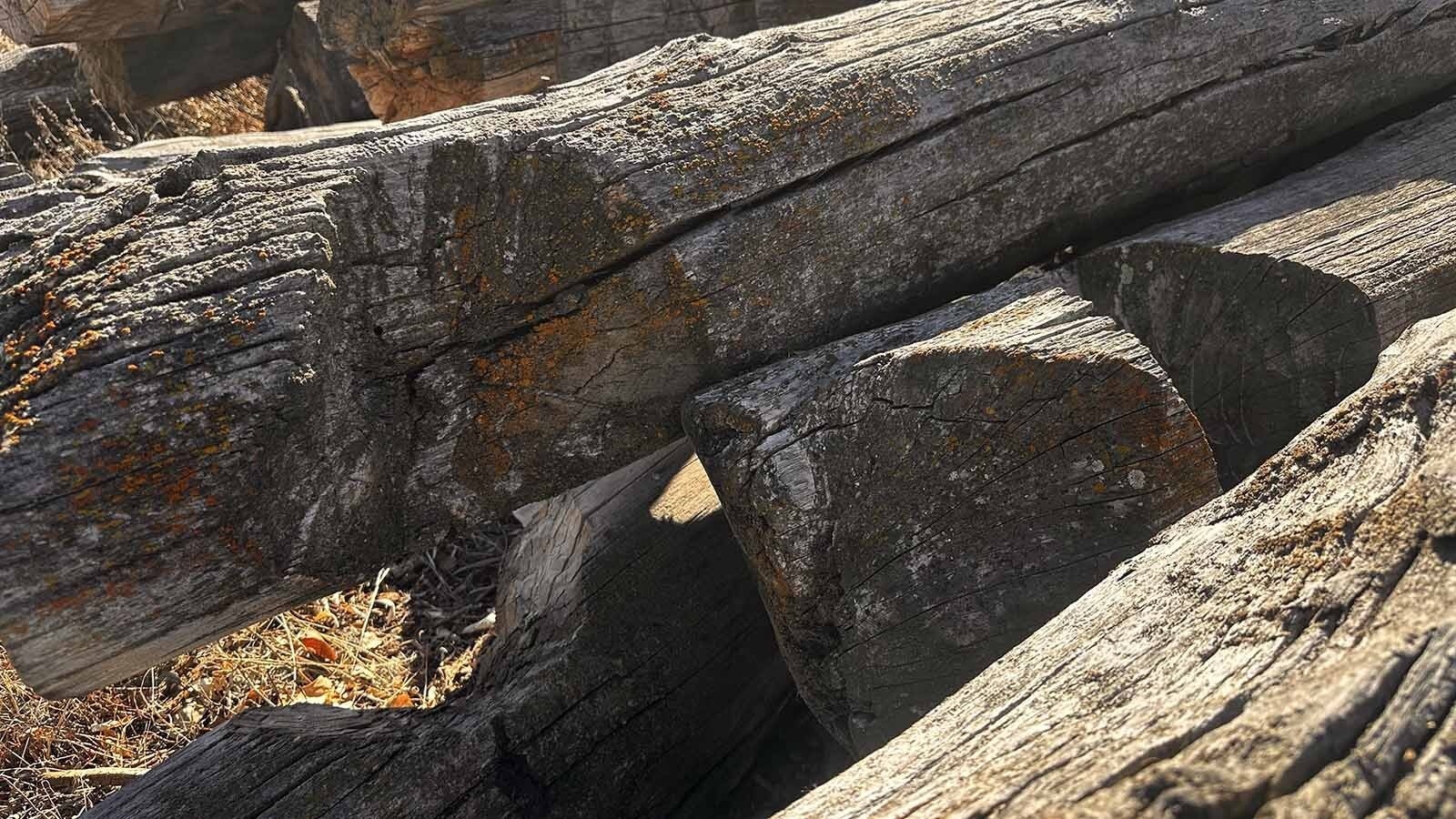
When someone is looking for history, it is sometimes written in the logs. These logs came from a cabin that was built in the 1870s and was the temporary hideout for the notorious horse thief Teton Jackson. Sheriff Frank Canton and his deputies had surrounded the cabin and surprised Teton Jackson in 1885, successfully arresting the wanted bandit. (Jackie Dorothy, Cowboy State Daily)
The Outlaw
Canton had been elected Sheriff of Johnson County in 1882 and spent most of his time in the saddle, chasing down outlaws, many of whom were well-known in the annals of history.
Years later, Canton shared the story of the arrest of Teton Jackson in his autobiography “Frontier Trails,” where Canton describes Teton Jackson as a former member in a gang of Mormon outlaws called the Destroying Angels.
Canton also said that Teton Jackson was a murderer, though there wasn’t enough evidence to convict Teton.
According to Canton, the Territory of Utah had offered a $3,500 reward for the capture — dead or alive — of “Teton Jack,” but that bounty was ineffective.
For years, the horse thief had operated out of the Jackson Hole area out of reach of the law.
On Oct. 10, 1895, The Boomerang described the remote region that Teton Jackson had used for a hideout with his gang and nearly 1,000 stolen horses.
The report said the outlaws would heat a frying pan and scald the brand on a horse, effectively erasing the brand so they could place their own on it the next spring when the hair grew back.
“Only two canyons through the mountains afford an opening into the Hole, and these were so narrow that in winter they were practically impassable,” the Boomerang wrote. “By November, they became so deeply filled with snow that it was foolhardy to attempt their passage.”
Canton said that Teton Jackson had about a dozen hard men with him and would sell horses in the Black Hills for a good price in the spring.
The gang would steal 10 or 15 head from each herd on the range scattered over a large area of country and drive them into the isolated Jackson’s Hole. The owners would not miss their stock for months, and even then would think their little bunch had strayed off.
“Teton Jackson was a famous horse thief and very good at what he did,” Gibbons said. “He had plenty of whiskey and even brought in magazines and books for his guys to read in the wintertime.”
According to the Boomerang, the gang thrived in the remote canyon and had a "jolly carnival," growing fat on the plentiful game and hosting shooting matches, horse racing and gambling.
“Twenty-five years ago this was the most-talked-of outlaw rendezvous in the world,” Canton said. “When the thieves had secured eight hundred or one thousand head, they would then doctor the brands and as soon as the new brands healed over they would put the herd on the trail and drive them over through Johnson County, Wyoming, to Deadwood and other mining towns in the Black Hills where they would find a good market for them.”
This systematic stealing continued for several years until Canton received a telegram from Billy Hosford, an officer in Blackfoot, Idaho, saying that Teton Jackson had recently stolen about 50 head of fine horses from two ranchmen by the names of High and Stout, and that he was seen by two Snake Indians heading toward the Big Horn Basin.
The Showdown
Lucas, his last name lost to time, was an old trapper and hunter who had a cabin at the mouth of Paint Rock Creek Canyon in the Basin.
Canton suspected him of being in league with Teton Jackson’s band of horse thieves.
The cabin was 40 miles from Buffalo over the Big Horn Mountains and Canton took two deputies, Chris Gross and Ed Loyd, and left Buffalo at dusk.
He said that it was hard riding through pine timber and windfalls and they reached the cabin about two hours before daylight near the Paint Rock Creek and Medicine Lodge Creek.
“I’ve been way up on that mountain horseback,” Gibbons said. “That country is nothing but rocks, and you really have to pick your way around through there. I’m amazed that Canton and his deputies made the ride in the dark.”
Canton said that when they found the trapper’s cabin, they tied their horses to trees and got positions in good shooting distance of the cabin.
“The cabin had only one door and one window and we did not know that Teton was there and only suspected that he was in the cabin,” Canton said. “But I did not intend to take any more chances than I would have done had I been sure that he was there.”
Just before daybreak, a candle was lit in the cabin and sparks began to come out of the chimney. The lawmen approached the cabin.
“I gave my Winchester to Gross and Loyd and gave orders for them to watch the window and door and stop anyone who might try to escape,” Canton said, according to the Boomerang. “I then drew my six-shooter and stepped quietly into the cabin.”
Teton Jackson was squatted down in front of the fireplace trying to light his pipe with a splinter. The outlaw was only half dressed and had not yet buckled on his six-shooter, although it was lying within his reach with a belt full of cartridges.
“I covered him at once with my revolver, and ordered him to throw up his hands, and at the same time called for my deputies to come in and handcuff him,” Canton said.
Lucas the trapper was slicing up venison for breakfast and two other men were still in a bunk in the cabin.
After the deputies had everyone lined up, they learned these two men were wolf hunters traveling through and not associated with the outlaw.
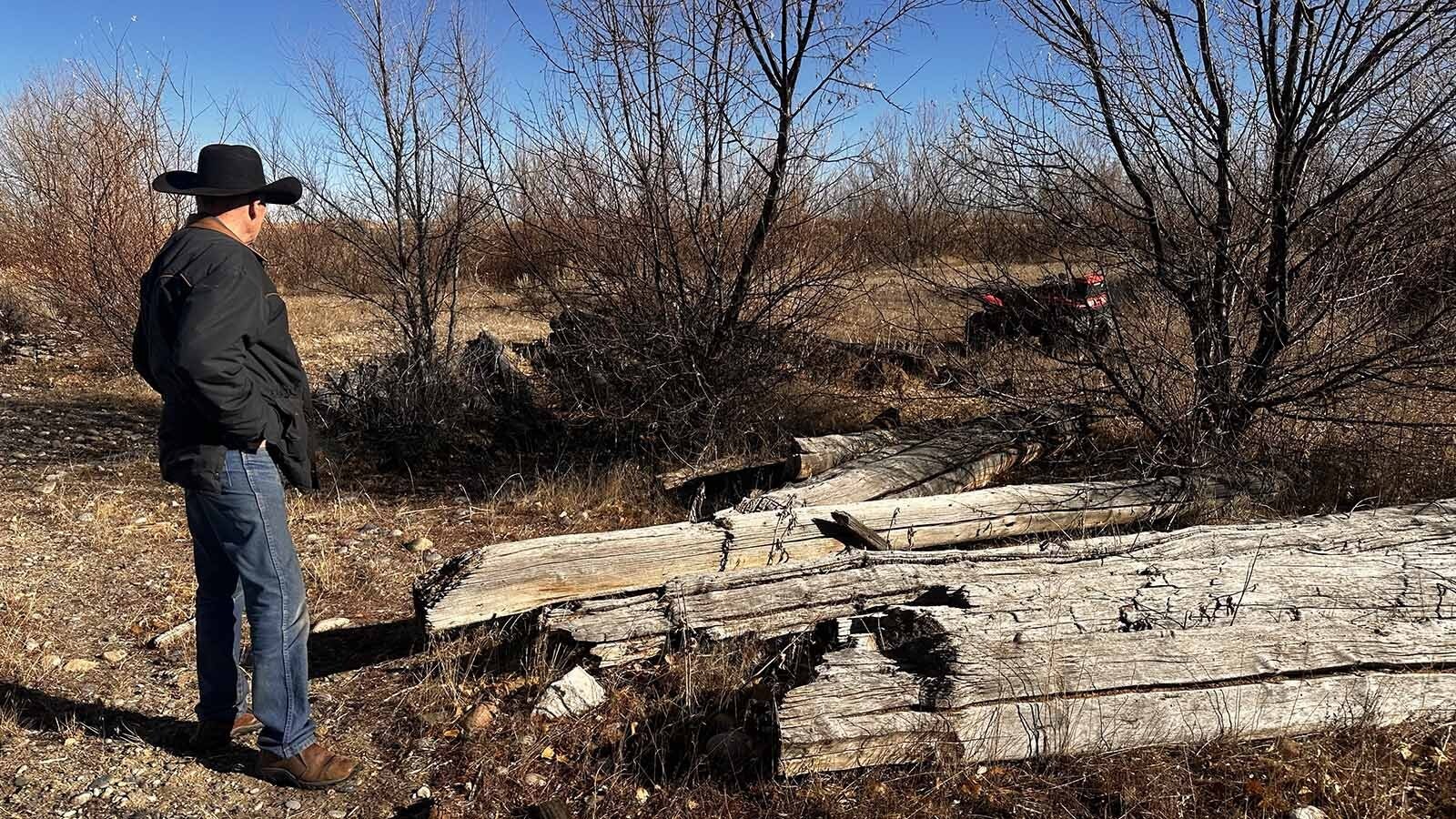
In 1885, Johnson County Sheriff Frank Canton rode up to a cabin just before dawn to arrest the notorious horse thief, Teton Jackson. The logs from the cabin have been rescued and still remain as a relic to this infamous showdown that occurred in remote Hyattville over 140 years ago. (Jackie Dorothy, Cowboy State Daily) 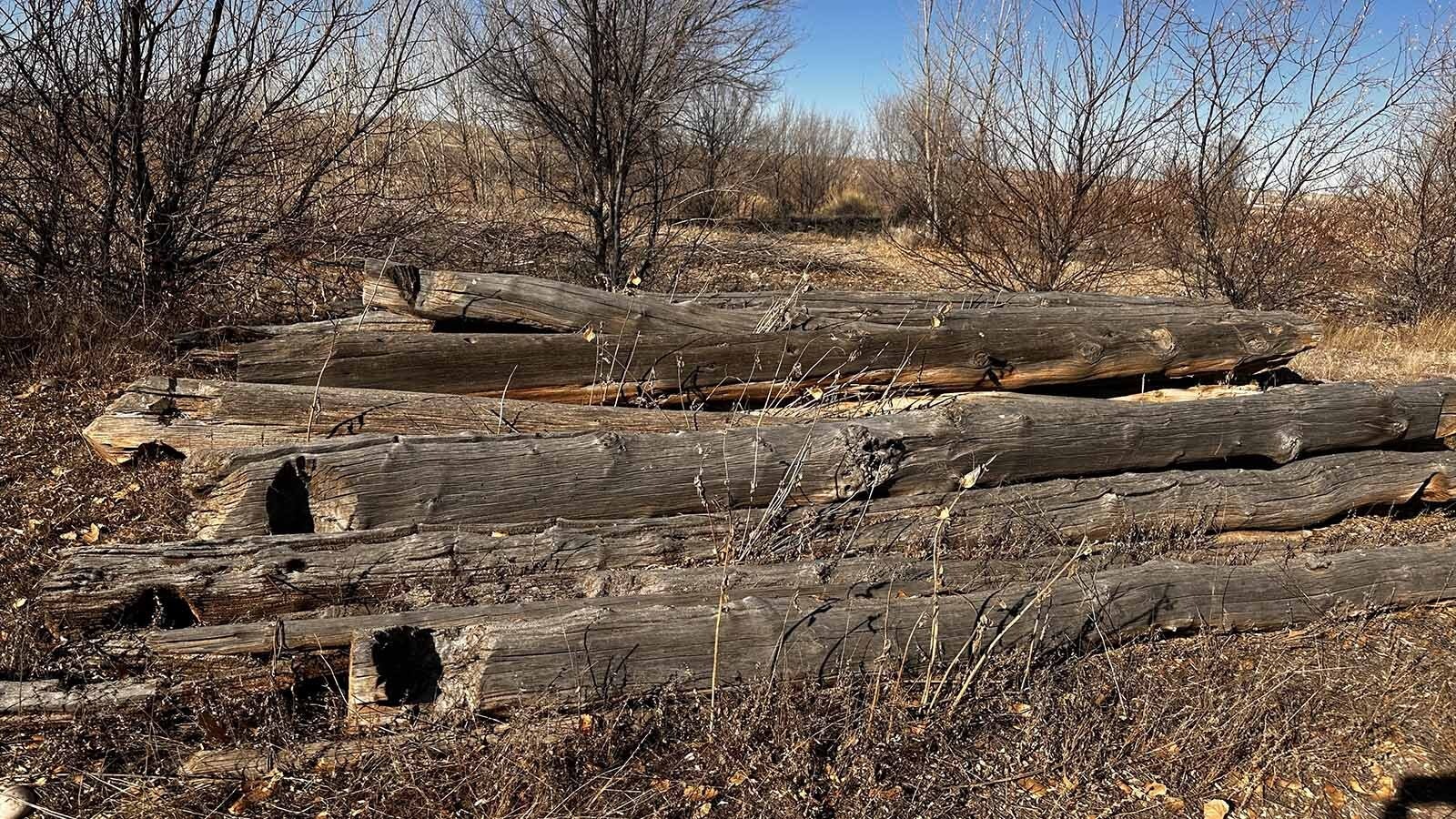
In 1885, Johnson County Sheriff Frank Canton rode up to a cabin just before dawn to arrest the notorious horse thief, Teton Jackson. The logs from the cabin have been rescued and still remain as a relic to this infamous showdown that occurred in remote Hyattville over 140 years ago. (Jackie Dorothy, Cowboy State Daily) 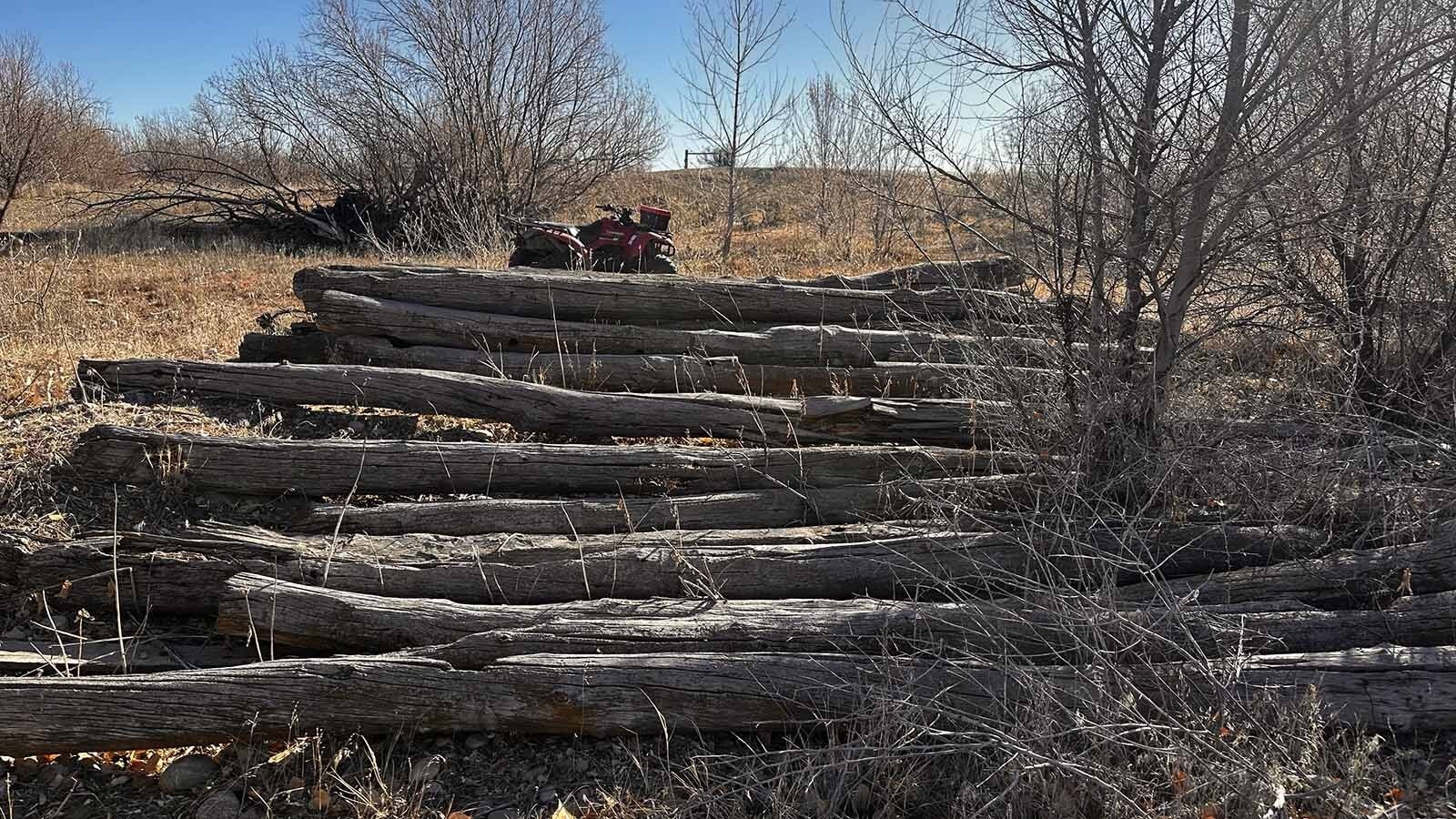
In 1885, Johnson County Sheriff Frank Canton rode up to a cabin just before dawn to arrest the notorious horse thief, Teton Jackson. The logs from the cabin have been rescued and still remain as a relic to this infamous showdown that occurred in remote Hyattville over 140 years ago. (Jackie Dorothy, Cowboy State Daily) 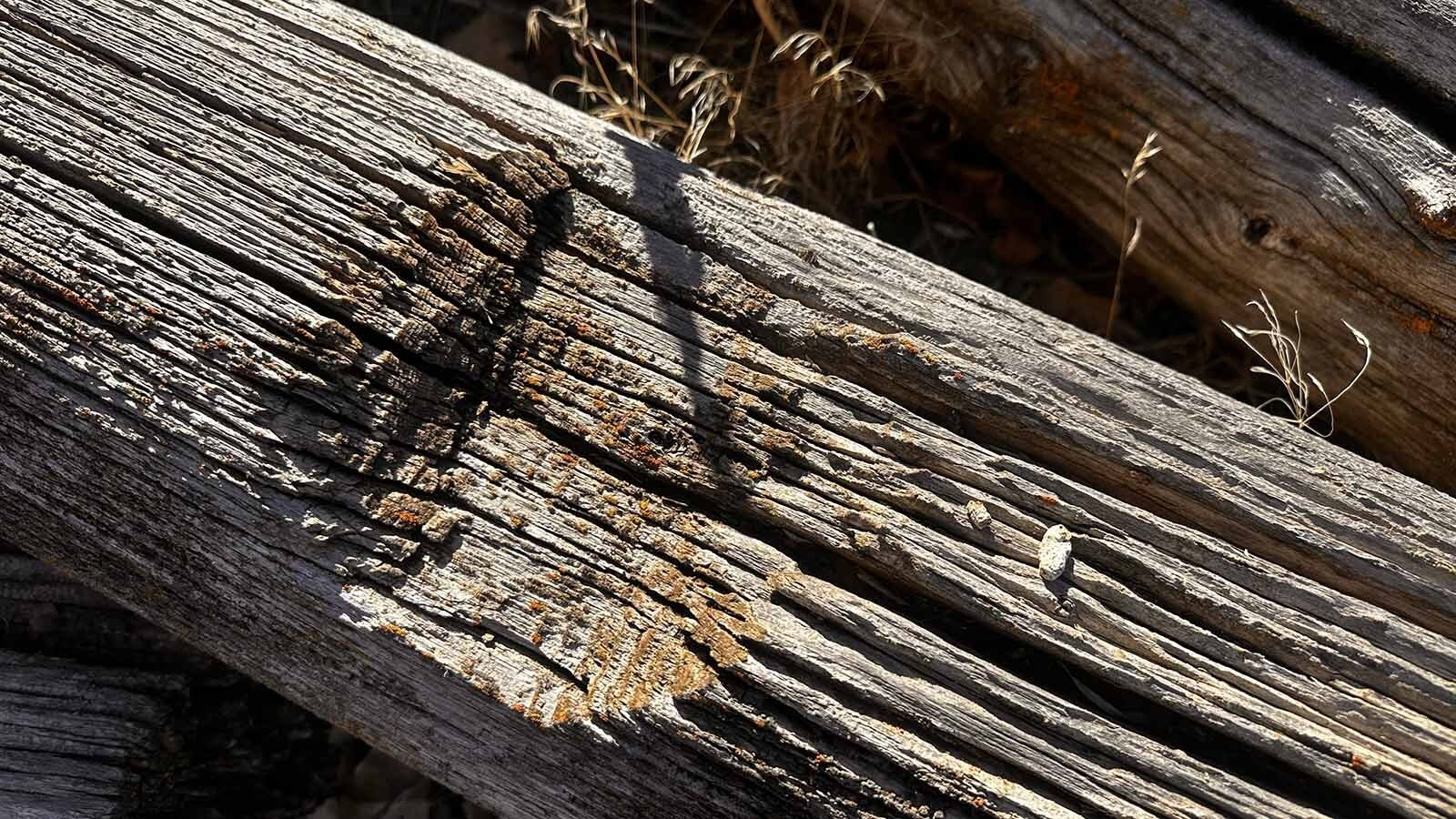
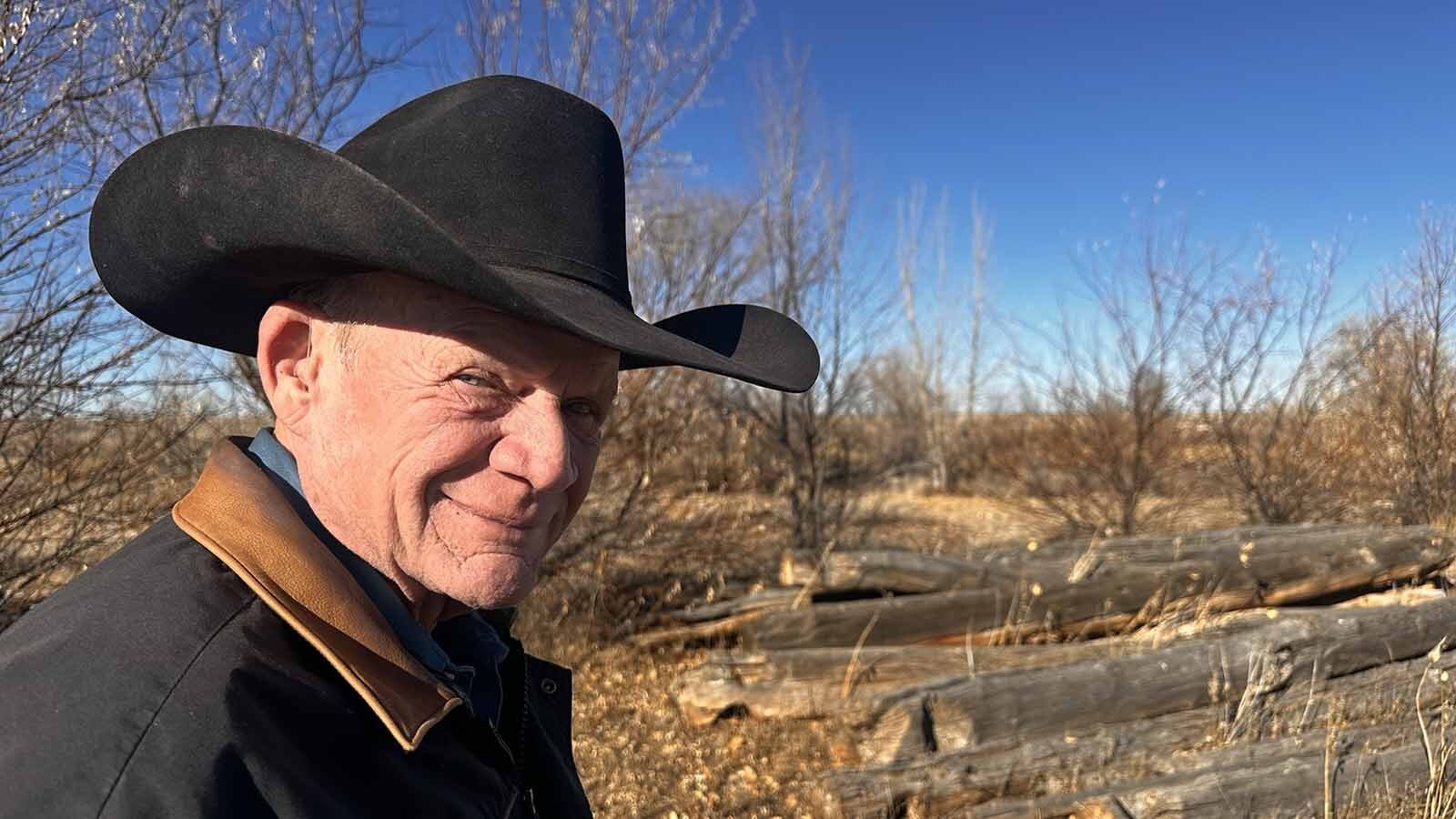
When someone is looking for history, it is sometimes written in the logs. These logs came from a cabin that was built in the 1870s and was the temporary hideout for the notorious horse thief Teton Jackson. Sheriff Frank Canton and his deputies had surrounded the cabin and surprised Teton Jackson in 1885, successfully arresting the wanted bandit. (Jackie Dorothy, Cowboy State Daily)
Held At Gunpoint
While his deputies and Lucas rounded up the stolen horses, Canton said that he sat in the cabin alone with Teton and described him as an unpleasant companion.
“He was about forty-five, over six feet in height, weight a hundred and ninety, stubby beard, raw-boned, coarse features, flaming red hair, red face, and eyes as black as a snake’s,” Canton reportedly said.
Canton had taken a seat about 6 feet from the outlaw with his revolver in his hand. Teton Jackson began to complain that the handcuffs were too tight and hurting him.
“He said that if I would take them off he would keep quiet and promise not to hurt me,” Canton said. “I told him that I was not the least bit uneasy about his hurting me, and that I had no objection to granting his request, but that he was the one that was taking all the chances, for if he made the slightest move I would kill him.”
Canton then threw the keys over to Teton Jackson, who removed the handcuffs and pitched keys and cuffs back at the lawman. The horse thief rubbed his wrists theatrically and began to threaten Canton, disregarding the gun.
“I told him that I would prefer to take his dead body as it would be less trouble to handle than a live one,” Canton said. “I then threw the open handcuffs on the floor at his feet and told him that if he did not snap them on his wrists in ten seconds, he could take his medicine.”
Teton Jackson had the cuffs back on in less time than required.
When the deputies returned with the stolen horses, they put Teton on one of the horses, tied his feet together under the horse’s body, and landed him in jail in Buffalo that night.
The Cabin
Gibbons was fascinated by the story, even more so when he realized how a coincidence brought him to the same cabin 120 years after the arrest of Teton Jackson.
Twenty years ago, Bill and Dave Greer near Hyattville were putting up a feedlot. An old cottonwood cabin was going to have to come down, and they offered it to Gibbons.
“I took a whole bunch of pictures so I could rebuild it,” Gibbons said. “We numbered the logs and moved it here.”
He also took the rocks from the original fireplace, but before he could rebuild the cabin back to its original state, a fire swept through his property and destroyed many of the logs.
“This cabin didn’t have any meaning for it, other than I knew that Lum Williams was the one that built the cabin and it was the first cabin built in that country,” Gibbons said. “I also noticed that the cabin had a rifle slot cut into it.”
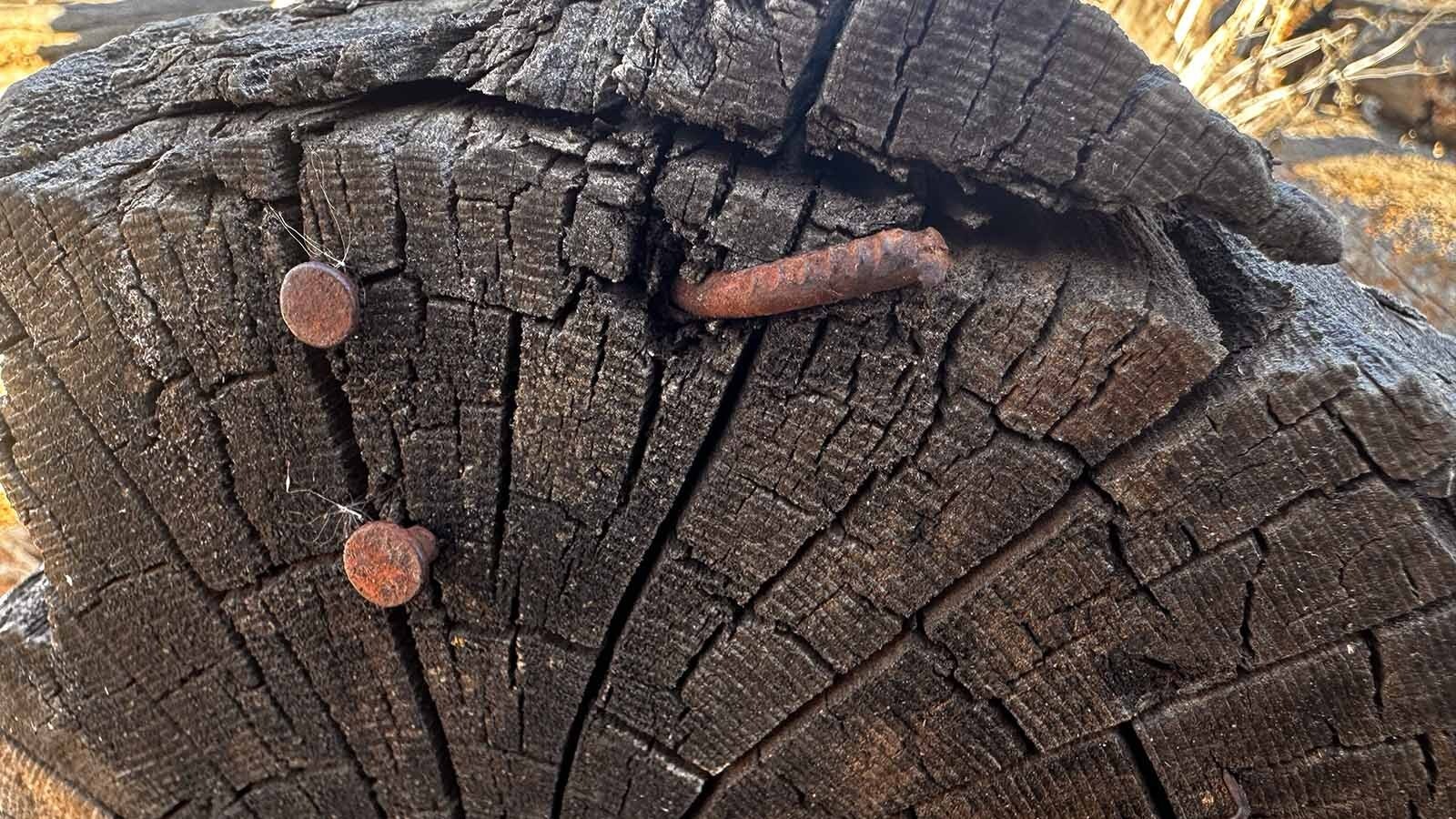
The cabin was situated with a hill behind it for protection and occupants of the cabin could look up the cabin to see if danger was coming. A hand-forged ring, presumably to hitch a horse, was attached to one log.
“The cabin would have been built in the 1870s during Indian troubles,” Gibbons said. “When the fire burned half the logs, I lost one of my most valuable possessions.”
It was after the fire, that Gibbons discovered that true historical value of the cabin. The hand carved rifle slot, which survived the fire, may have been for protection not just against Indian attacks but against lawmen.
As he surveys the logs today, Gibbons said that they are reminders of a time, not that long ago, when outlaws were roaming Wyoming’s remote lands.
Jackie Dorothy can be reached at jackie@cowboystatedaily.com.