
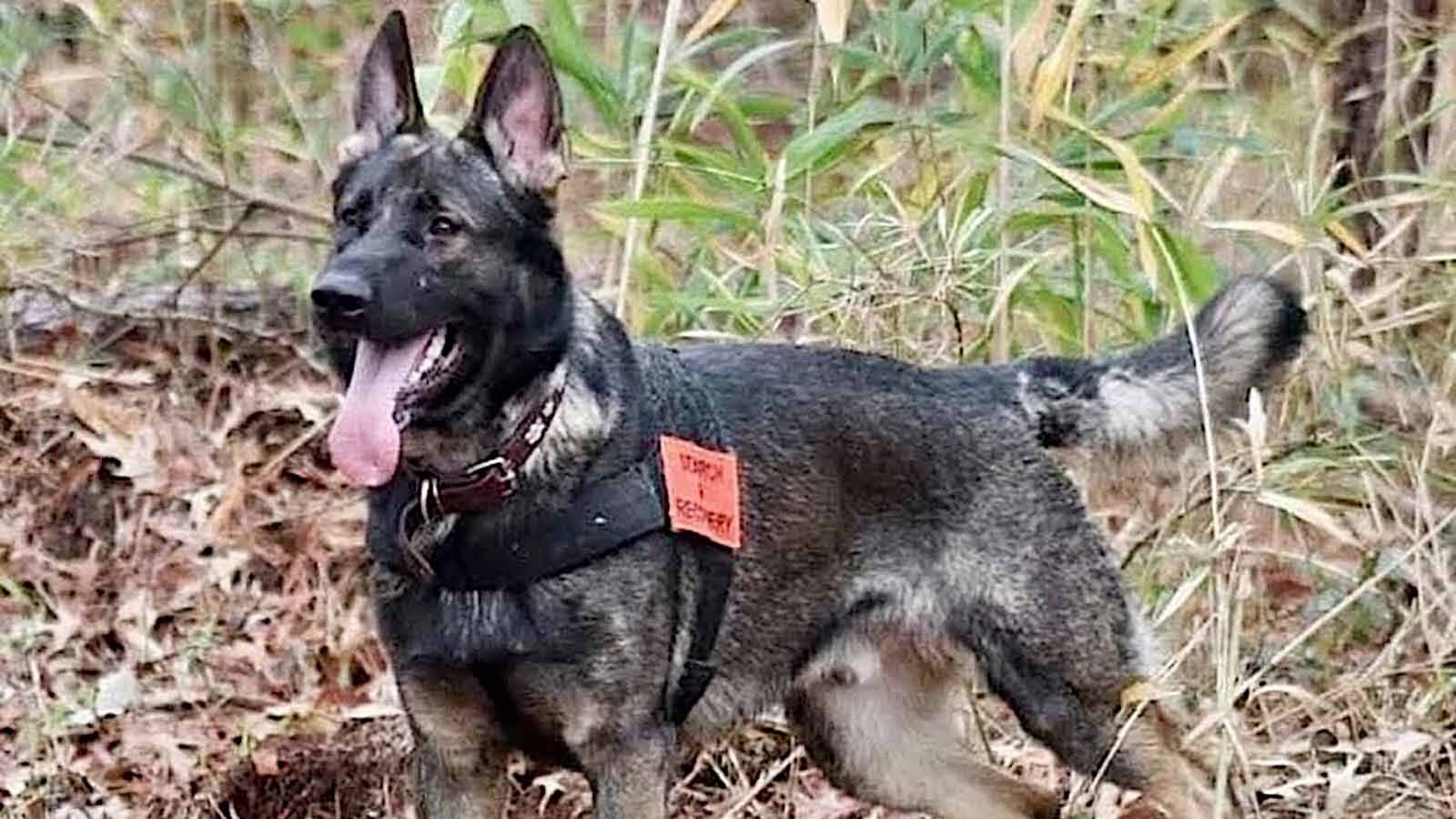
A Wyoming-based search and rescue German shepherd that has worked East Coast disasters searching for human remains needs some help from his human friends.
Owner and trainer Brandy Eggeman of Riverton founded the volunteer group First Landing K-9 Search and Rescue, which provides law enforcement agencies the services of highly trained dogs at no cost.
She said her 6-year-old human remains detection K-9 Bueno needs an expensive surgery, or he may die.
Eggeman, 55, is a U.S. Army veteran who returned to Wyoming to live and help on the family ranch last year after the loss of her father in an accident.
For more than three decades, she has been involved in dog training and has more than two decades of experience in search-and-rescue efforts, much of it based out of Virginia.
“I’ve worked with a lot of different organizations,” she said. “I work with the National Center for Missing and Exploited Children. I am part of the American Society of Canine Dog Trainers International, and they have a standard of certification through their organization.”
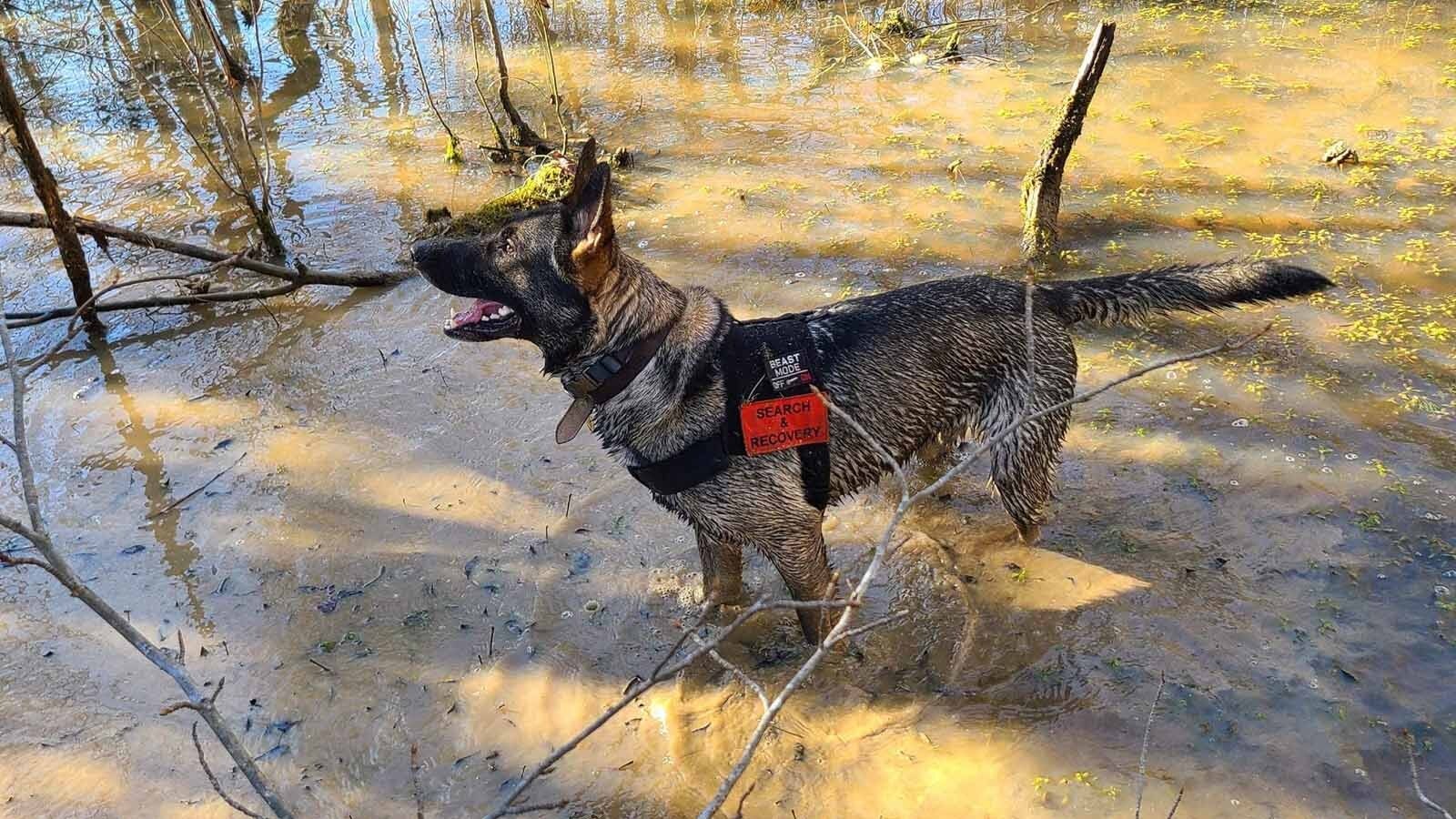
Bueno and Eggeman were deployed to western North Carolina and Tennessee following the flooding caused by Hurricane Helene in late September 2024 to search for bodies.
He has also worked cases for law enforcement in Virginia and along the East Coast.
Eggeman said that two years ago she noticed a slight change in Bueno’s gait and took him to see a veterinarian.
Initially, the vet dismissed the issue, but she kept pushing and asking for an MRI scan.
When the scan was done it showed a bacterial infection that the vet guessed came up through his bladder into his spine.
A course of two antibiotics over the year seemed to clear things up.
Then on Thanksgiving it returned, and by December the K-9 was having trouble walking. The family has $10,000 already invested in his MRIs.
A veterinarian neurologist in Virginia suggested a few potential courses of action that have not worked.
When Eggeman took Bueno to a vet in Billings, Montana, she learned that he will need another MRI and surgery that will cost $25,000 — and their insurance is tapped out.
Disintegrated Disc
The surgery calls for a veterinarian to remove a disc that has disintegrated in Bueno's back and compressed the nerves that control the dog’s rear legs.
The disc will be replaced with metal plates that will take the pressure off the nerves and essentially make him as “good as new, and he can go back to work,” Eggeman said.
Without the surgery, Bueno will lose the use of his back end and rear legs.
“He lives, breathes and dies to work,” Eggeman said. “He may go incontinent.
"A that point, I have to make a decision of which is going to be better for him, to euthanize him, or deal with all the problems that entails.”
Eggeman said Bueno is good at what he does.
He has found a 275-year-old body in Virginia, and one of her previous human remains detection dogs, Beans, uncovered a 250-year-old body.
With human remains detection dogs, homicide work is not the only mission. They are also called on for suicides, clandestine graves, and archaeological work, Eggeman said.
The training involved to certify a cadaver dog typically takes about two years.
Prior to Bueno, Eggeman had a dog named Rock that was involved in finding the body of a teen girl in a West Virginia case where the body had been buried in a garbage pile for two weeks.
As part of notoriety of that case, Eggeman can be seen on a Court TV segment testifying about Rock’s work.
“They tried really hard to get me kicked out of court,” she said. “But they couldn’t basically mess with my credentials and background.”
More Tragedy
When Eggeman moved back to Wyoming last year, she contacted the Fremont County Sheriff’s Office to let it know about her group and dogs.
The agency recently contacted her asking about some work it had for a dog.
That’s impossible now because in addition to Bueno, she had a 4-year-old search dog that died at the end of November.
“I lost him through a freak accident. He was supposed to be my up-and-coming dog, and I’m not entirely sure what happened,” she said. “But he ended up passing away within three days.”
In addition to the search-and-rescue group, Eggeman has brought her longtime dog training business to Wyoming with her move called Citizen K9 Dog Training & Agility.
She has yet to establish a strong client base and has taken a job as a veterinary tech to help makes ends meet.
Bueno and the search-and-rescue dogs before him owned by Eggeman have all been German shepherds.
She is coauthor of the training book for the breed titled: “Training Your German Shepherd Dog.”
“I just love the breed, the intelligence and everything,” she said.
Because of friends who learned about Bueno’s condition and the loss of her other dog, Eggeman has been given a Belgian Maliniois that she’s been told will “change her mind” about just using German shepherds for search and rescue.
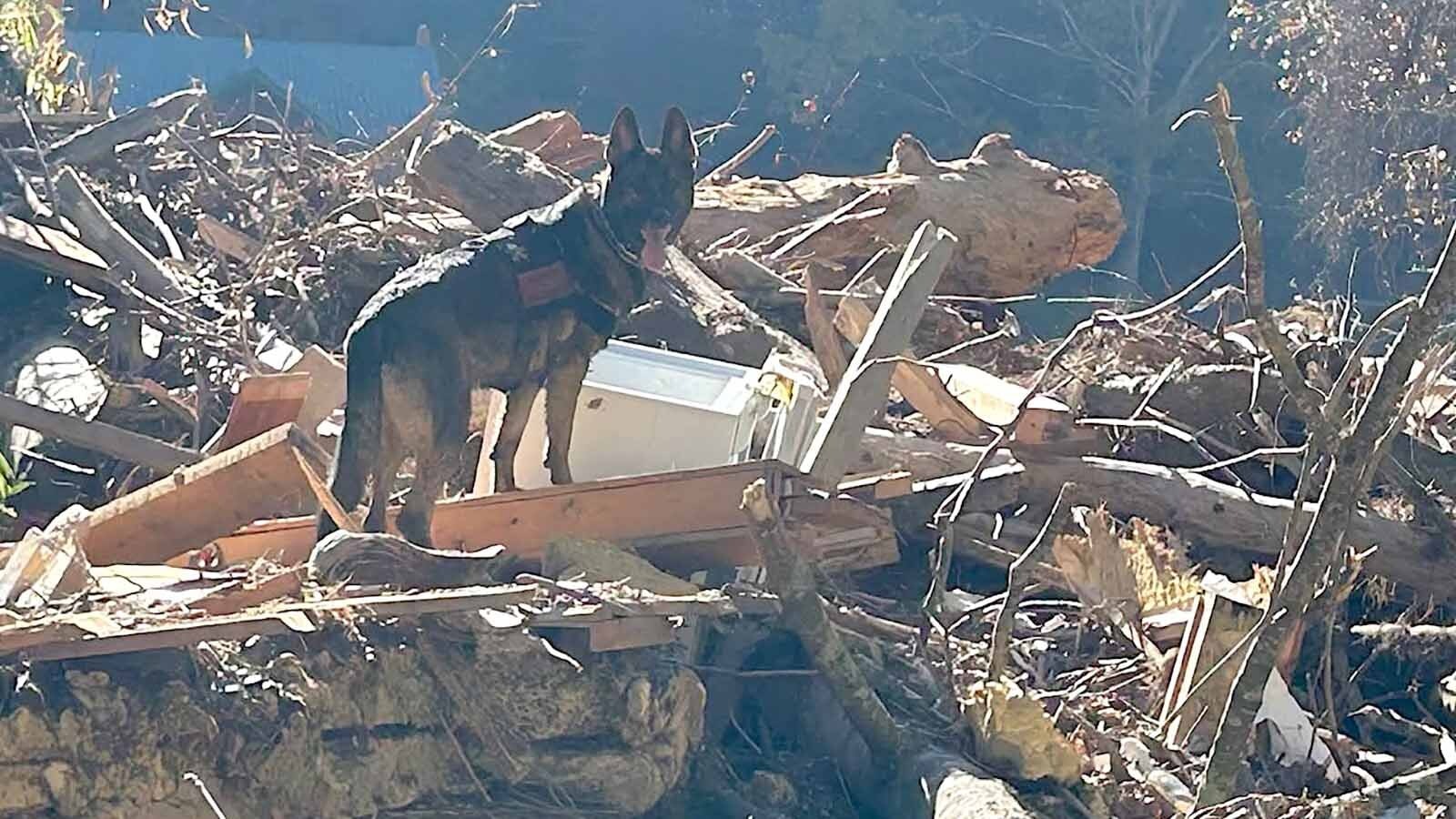
Bueno worked the aftermath of Hurricane Helene in North Carolina. (Courtesy Brandy Eggeman) 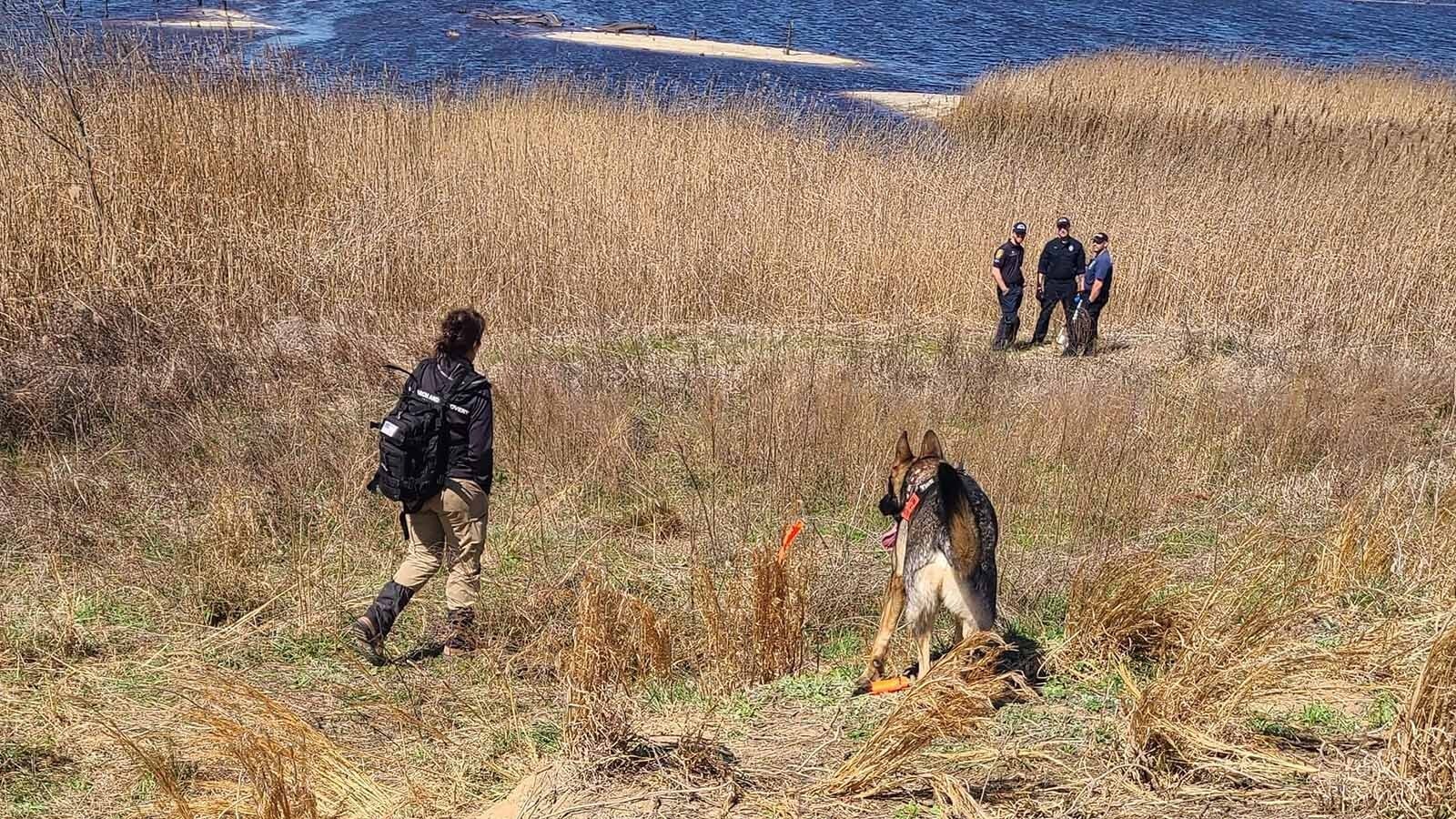
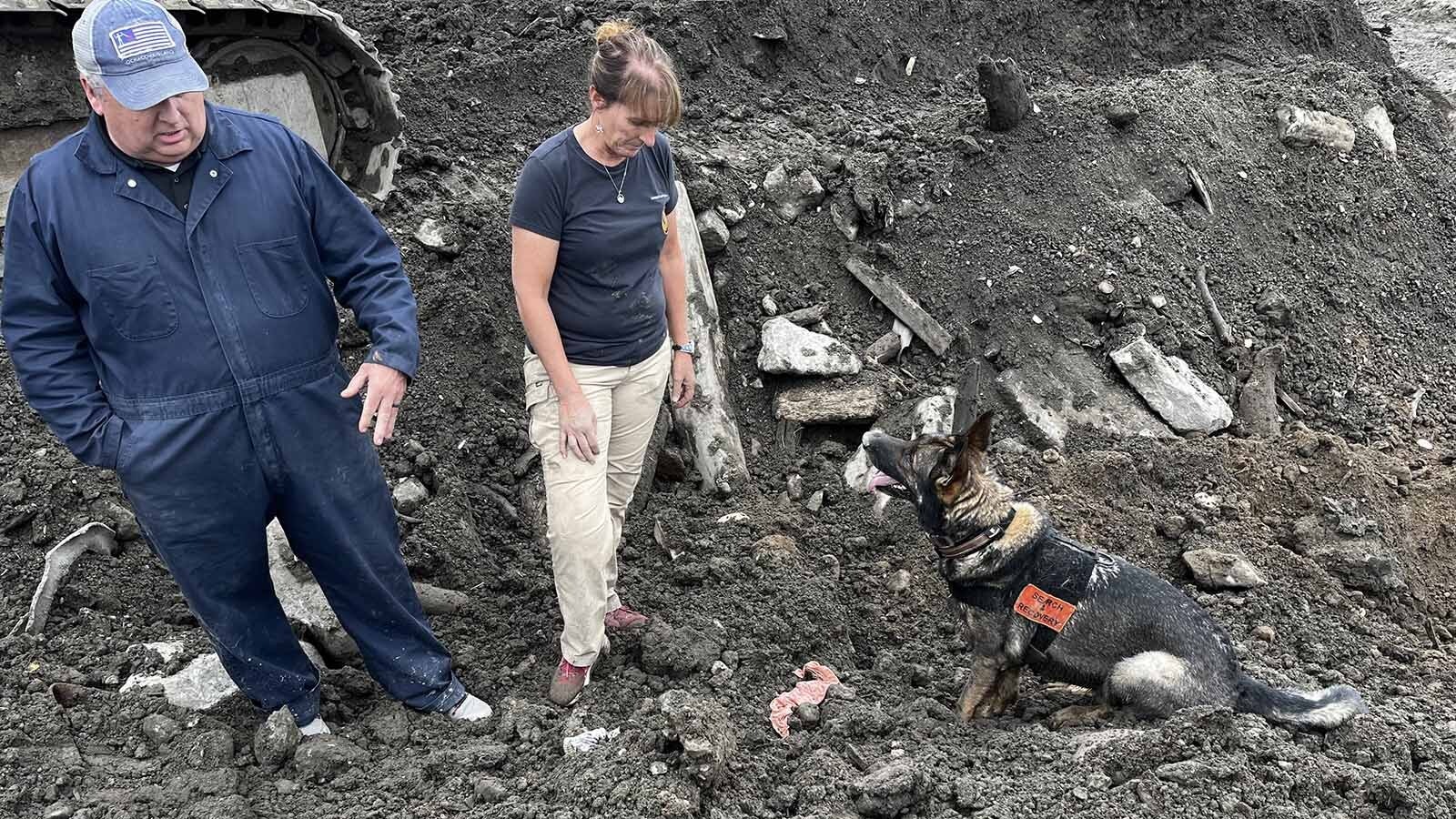
Bueno in the field with law enforcement and his handler, Brandy Eggeman. (Courtesy Brandy Eggeman) 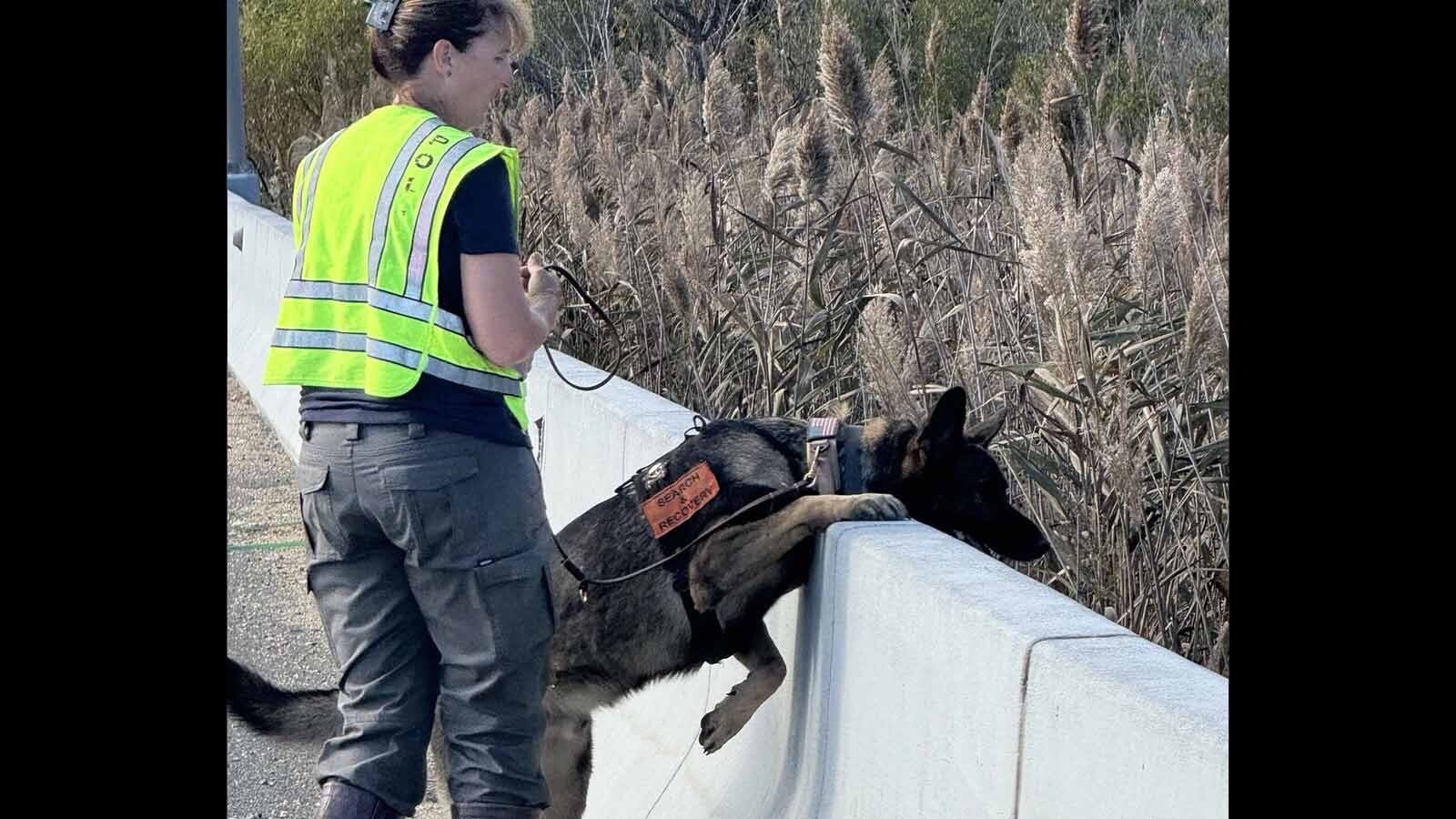
Bueno puts his nose over a barrier to investigate. (Courtesy Brandy Eggeman)
A Start In England
Initially, Eggeman and her family were in England when she first started doing search and rescue.
She said she had a German shepherd that was “phenomenal” in going out and searching for her kids, and she trained the dog using “air scent” to find people.
She spent three years on a search-and-rescue team there, and when she moved to Virginia worked with the Virginia Department of Emergency Management for 17 years using mainly “air scent” dogs.
In 2008, she started First Landing K9 Search and Rescue using just cadaver-trained dogs “because I just saw this huge need for them,” she said.
The cadaver dogs need to be able to recognize various scents involved in the decomposition of human remains released from death to skeletal remains.
Eggeman said her family’s move to Wyoming and financial output over the past year has left her unable to come up with the money for Bueno’s surgery.
A friend in search-and-rescue community suggested she launch a GoFundMe as a means to raise money, save him, and allow Bueno to work again.
The GoFundMe is at 28% of its $9,000 goal.
With Bueno out of commission, the closest cadaver dogs now available to law enforcement in Wyoming are in Colorado and Montana, she said.
Eggeman said a friend who is a sheriff’s deputy with a cadaver dog has offered to spend time in Wyoming this summer for the First Landing group while Eggeman works to train her new puppy and tries to see Bueno healed.
“If we don’t come up with the money for this, it’s not looking good,” she said.
Dale Killingbeck can be reached at dale@cowboystatedaily.com.


