
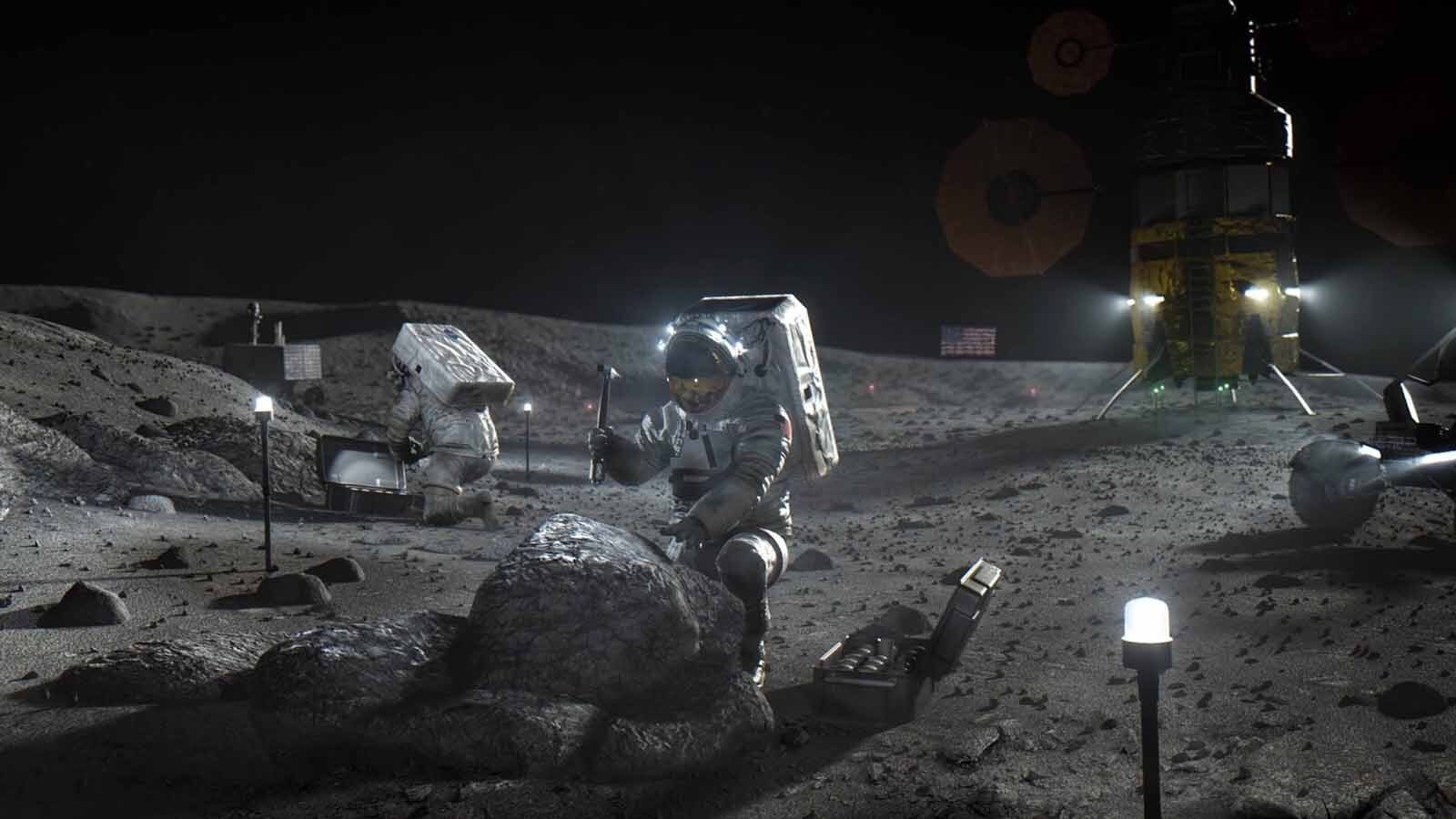
NASA wants to put a nuclear reactor on the moon by 2030. Wyoming wants one by then, too.
The space agency and Department of Energy announced Tuesday they had signed a memorandum of understanding formalizing their commitment to deploy a fission surface power system on the lunar surface within the next four years.
“Under President Trump’s national space policy, America is committed to returning to the Moon, building the infrastructure to stay, and making the investments required for the next giant leap to Mars and beyond,” NASA Administrator Jared Isaacman said in the agency’s announcement. “Achieving this future requires harnessing nuclear power.”
Nuclear Newswire, published by the American Nuclear Society, reported Tuesday that NASA and DOE press releases “do not state specifically whether the reactor will actually be operating on the moon by 2030, or whether it might be built by then but not yet deployed.”
The publication noted that “NASA’s and the DOE’s joint ambitions for a lunar fission surface power system have been characterized by delays and uncertainties as shifting priorities have led to changing designs and schedules.”
According to an August 2025 NASA request for information, lunar reactors should be prepared to launch by the first quarter of fiscal year 2030 — which translates to the last quarter of calendar year 2029, Nuclear Newswire reported.
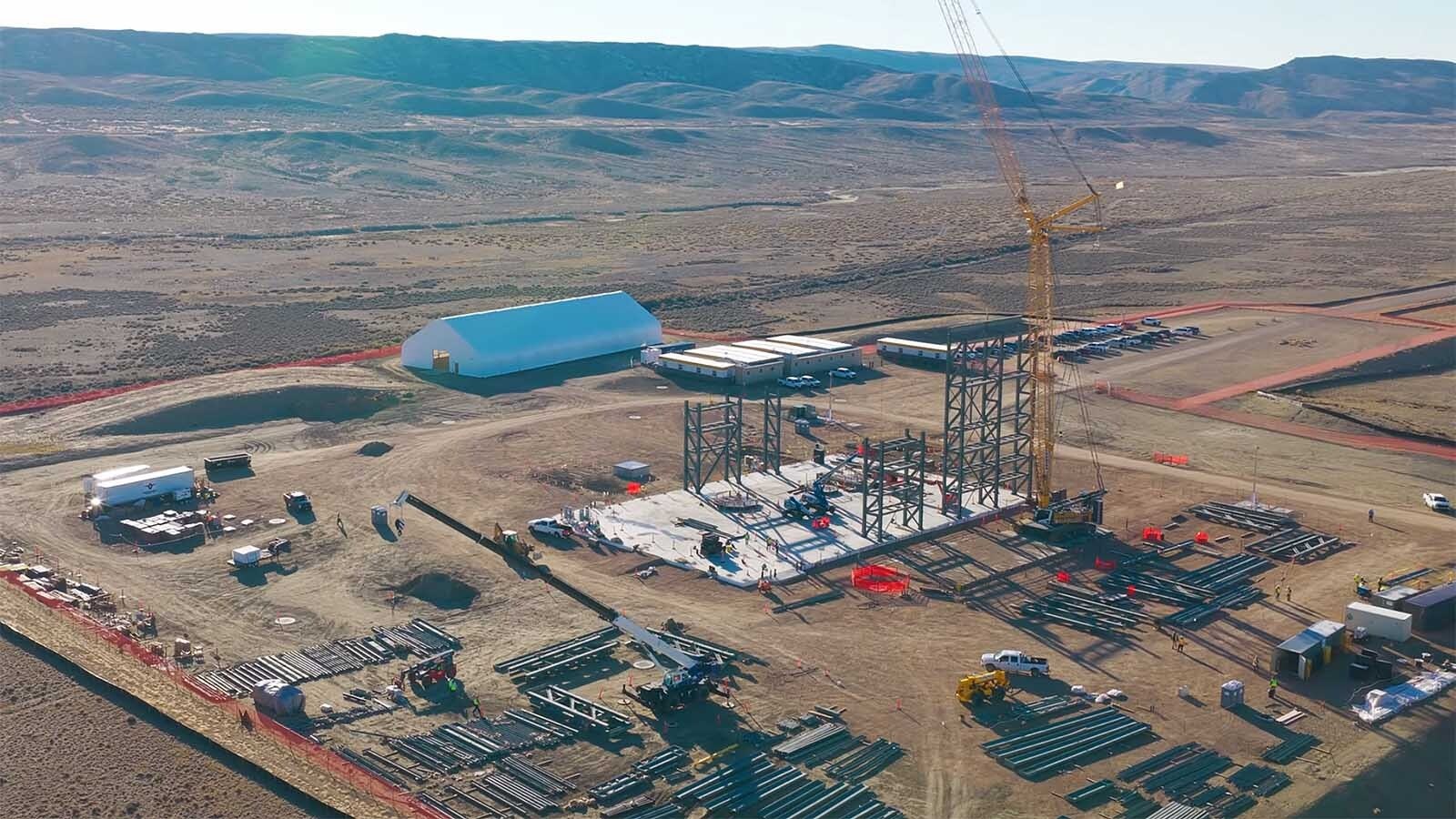
TerraPower’s Kemmerer plant, by contrast, is already under construction with a 2030 completion target.
Power Problem
Obviously, the moon presents unique challenges that Wyoming doesn’t face.
Interesting Engineering — an industry news site — reported Tuesday that the moon “experiences nights that last approximately 14 Earth days,” during which “solar panels cannot generate electricity, and temperatures drop.”
“A fission surface power system is being developed to address these limitations,” the publication reported. “Unlike solar power, nuclear fission provides electricity regardless of the lunar day-night cycle, temperature variations, or dust accumulation on equipment.”
Scientific American magazine reported Tuesday that putting a nuclear reactor on the moon “will require a significant amount of engineering to make sure it works as desired on the lunar surface.”
The publication noted that many lunar landers equipped with batteries and solar panels “ultimately run out of fuel — either because of a lack of sunlight as the moon turns on its axis or because their batteries die.”
Space Race
The United States isn’t alone in its lunar nuclear ambitions.
Russia and China announced plans in March 2024 to cooperate on deploying a nuclear reactor on the moon sometime between 2033 and 2035, according to Nuclear Newswire.
Last August, then-acting NASA Administrator Sean Duffy framed the effort in competitive terms: “We’re in a race with China to the moon, and to have a base on the moon we need energy. This fission technology is critically important.”
Space.com reported Tuesday that nuclear power “makes sense for crewed outposts in deep-space locales such as the moon and Mars” because “fission systems can generate electricity continuously for years without the need to refuel, and they aren’t affected by changing weather or sunlight conditions.”
The two reactors being developed serve vastly different purposes.
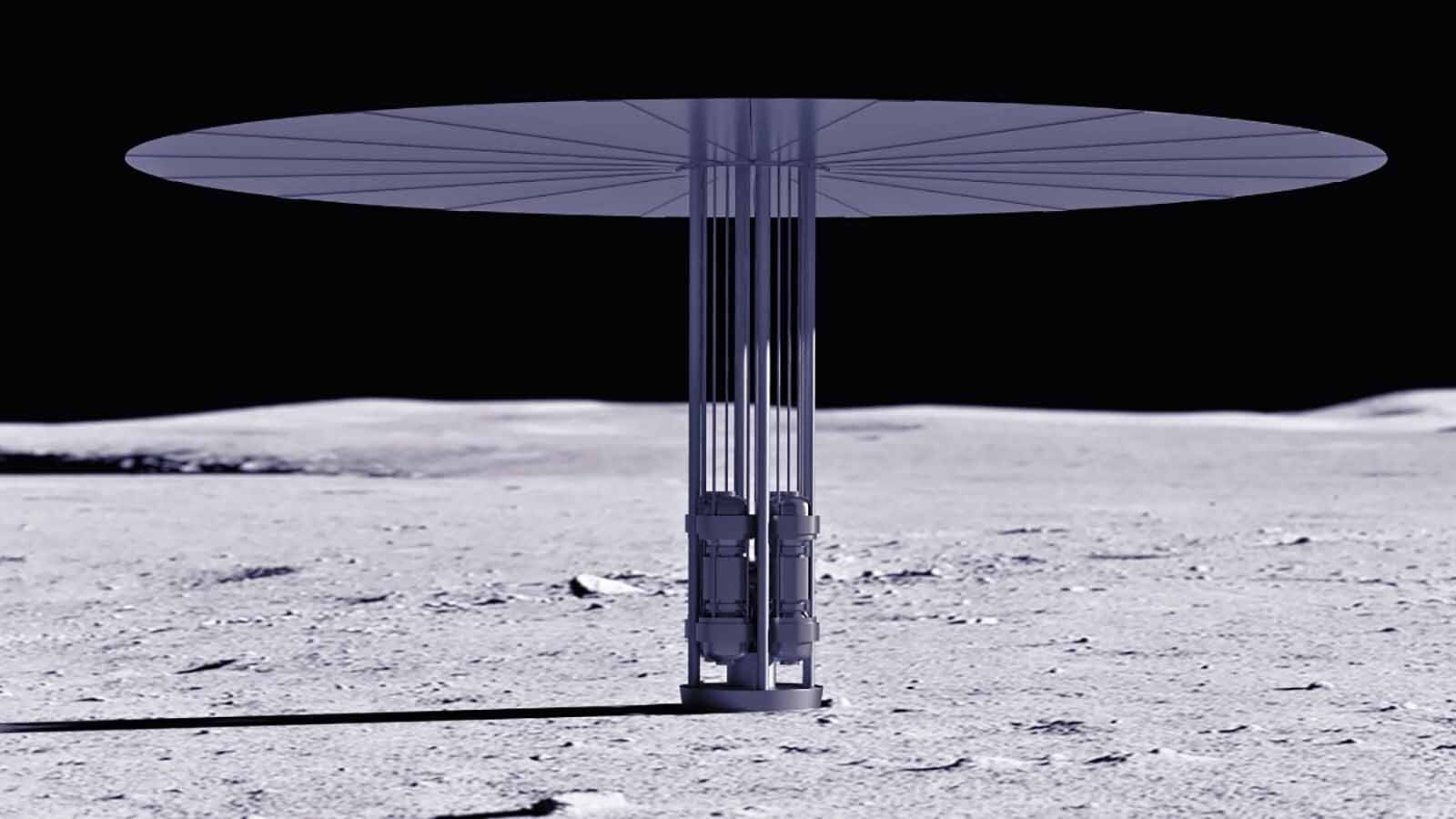
NASA’s lunar reactor would produce about 100 kilowatts of electrical power using a closed Brayton cycle system, according to Nuclear Newswire — enough to power roughly 80 homes.
TerraPower’s Natrium reactors each provide 345 megawatts of baseload power, with built-in energy storage that can ramp up to 500 megawatts. A dual-unit facility would provide 690 megawatts of firm power — nearly 7,000 times the lunar reactor’s output.
NASA said in its Tuesday announcement that it anticipates “deploying a fission surface power system capable of producing safe, efficient, and plentiful electrical power that will be able to operate for years without the need to refuel.”
A spokesperson for TerraPower told Cowboy State Daily the company had “no official response” to the lunar reactor news.
Idaho’s Role
U.S. Secretary of Energy Chris Wright acknowledged the scale of the challenge in Tuesday’s announcement.
“History shows that when American science and innovation come together, from the Manhattan Project to the Apollo Mission, our nation leads the world to reach new frontiers once thought impossible,” Wright said. “This agreement continues that legacy.”
Outside Idaho Falls, not far from Craters of the Moon National Monument, groundwork for the nuclear lunar mission continues to be laid at the Idaho National Lab.
The INL’s Fission Surface Power initiative is a collaborative effort between DOE, NASA and INL to develop a nuclear fission power system capable of supporting long-duration missions on the Moon and Mars.
“INL has been involved in this project for several years,” Sarah Neumann, a media relations manager at Idaho National Laboratory, told Cowboy State Daily. “In addition, INL fuels and tests nuclear power sources for deep space exploration, such as the Mars Perseverance rover (among others).”
According to an INL fact sheet, the laboratory “hosts a unique capability for enabling deep space exploration that spans the limits of our own solar system and beyond.”
The Space Nuclear Power and Isotope Technologies Division at INL’s Materials and Fuels Complex assembles and tests Radioisotope Power Systems, which provide heat and electricity to spacecraft operating in remote, harsh environments where solar power is not viable.
The fact sheet notes that “two-dozen RPSs have provided electricity to space missions since 1961,” and that “RPSs provide safe, reliable power where alternative power sources are not possible.”
The systems are fueled with plutonium-238, which generates heat as the material decays.
Generators fueled and tested at INL are currently powering the Mars Science Laboratory Curiosity rover, launched in 2011; the Pluto New Horizons mission, launched in 2006; and the Perseverance rover, launched in 2020 and successfully landed on Mars in 2021.
According to INL, systems launched in 1977 “are still operating and sending back data from well beyond the edges of the solar system.”
The next nuclear-enabled space mission, Dragonfly — a NASA rotorcraft lander headed to Saturn’s moon Titan — will also use an INL radioisotope power system, according to the fact sheet.
Battelle Energy Alliance manages Idaho National Laboratory for the U.S. Department of Energy’s Office of Nuclear Energy.
David Madison can be reached at david@cowboystatedaily.com.