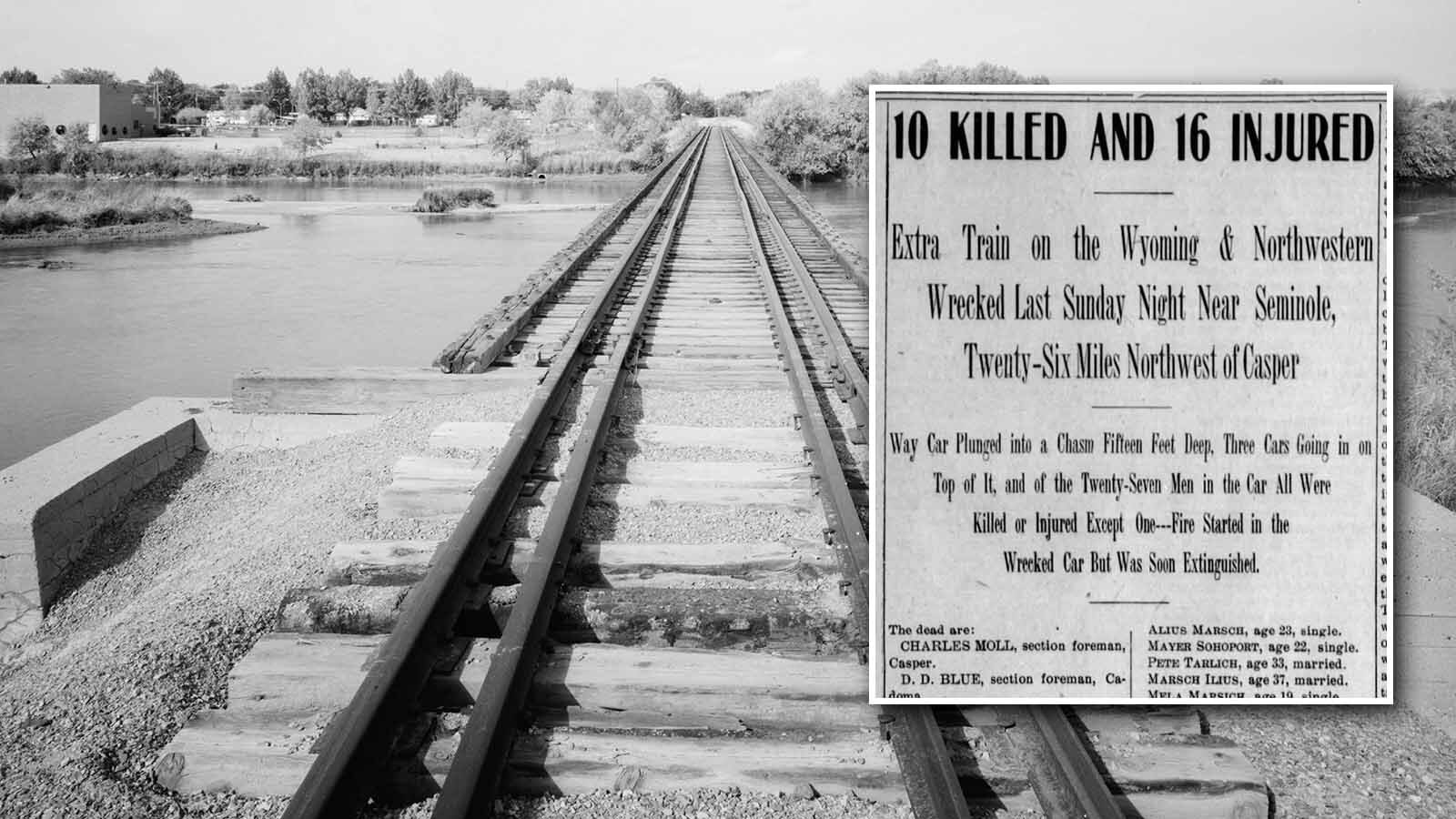
The Chicago, Burlington and Quincy train from Casper to Denver that ended up in a raging stream in 1923 near Glenrock has been noted by many as the worst passenger rail disaster in Wyoming.
But another significant Casper-area wreck seems to have stayed below history’s radar.
Even Casper rail historian Con Trumbull, who has written a book about the 1923 Cole Creek wreck and done extensive research on the state’s rail past, was surprised when the wreck was brought to his attention.
He's also a steam locomotive engineer, assistant trainmaster and archivist for the Nevada Northern Railway in Ely, Nevada.
“That’s a bad wreck,” he said after looking at articles from Casper and other state newspapers from late March and early April 1906.
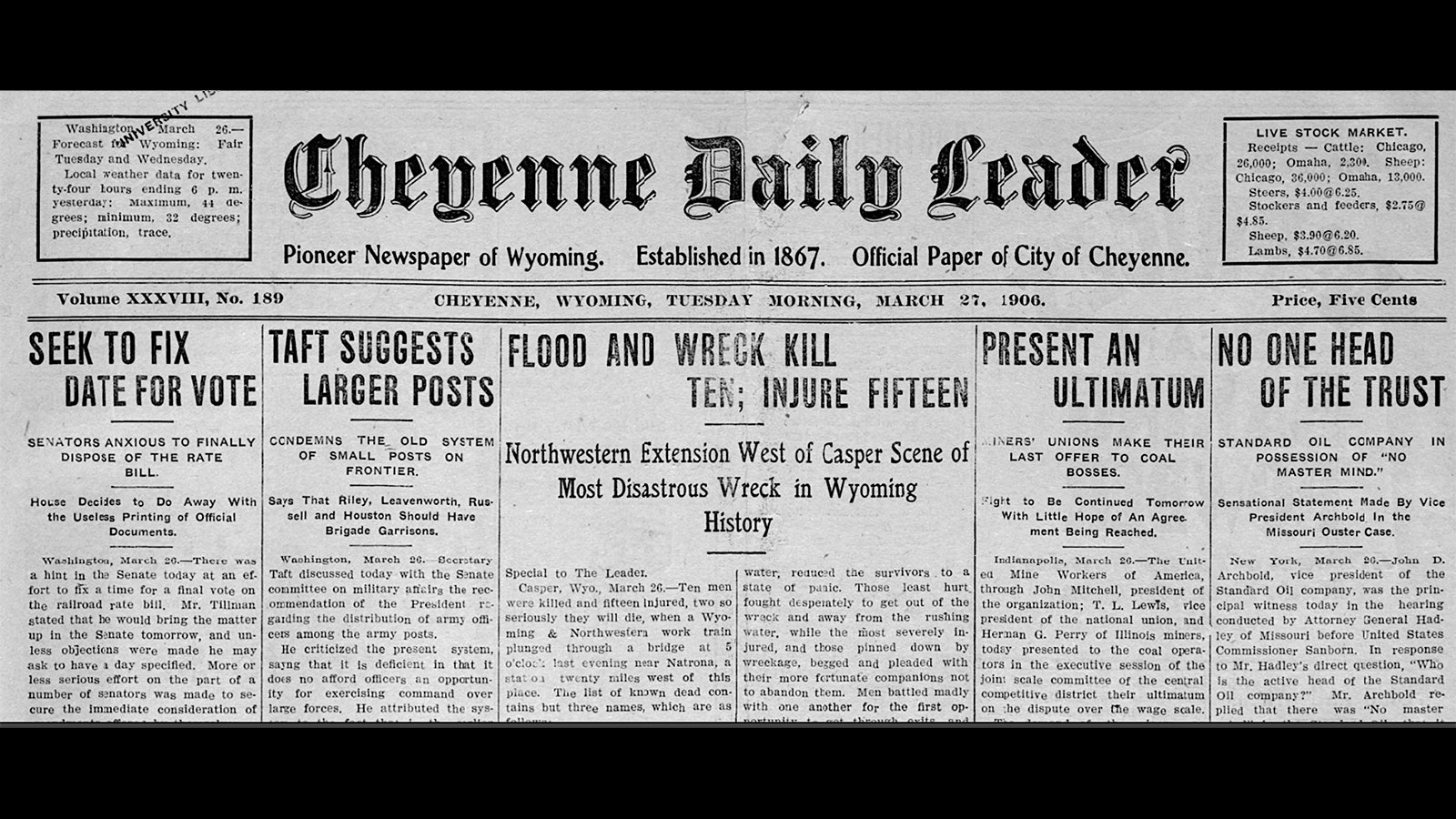
The Cheyenne Daily Leader headline on March 27, 1906, put the incident in context with other rail disasters in the state at the time.
“Flood and Wreck Kill 10; Injure 15,” the headline read. “Northwestern Extension West of Casper Scene of Most Disastrous Wreck in Wyoming History.”
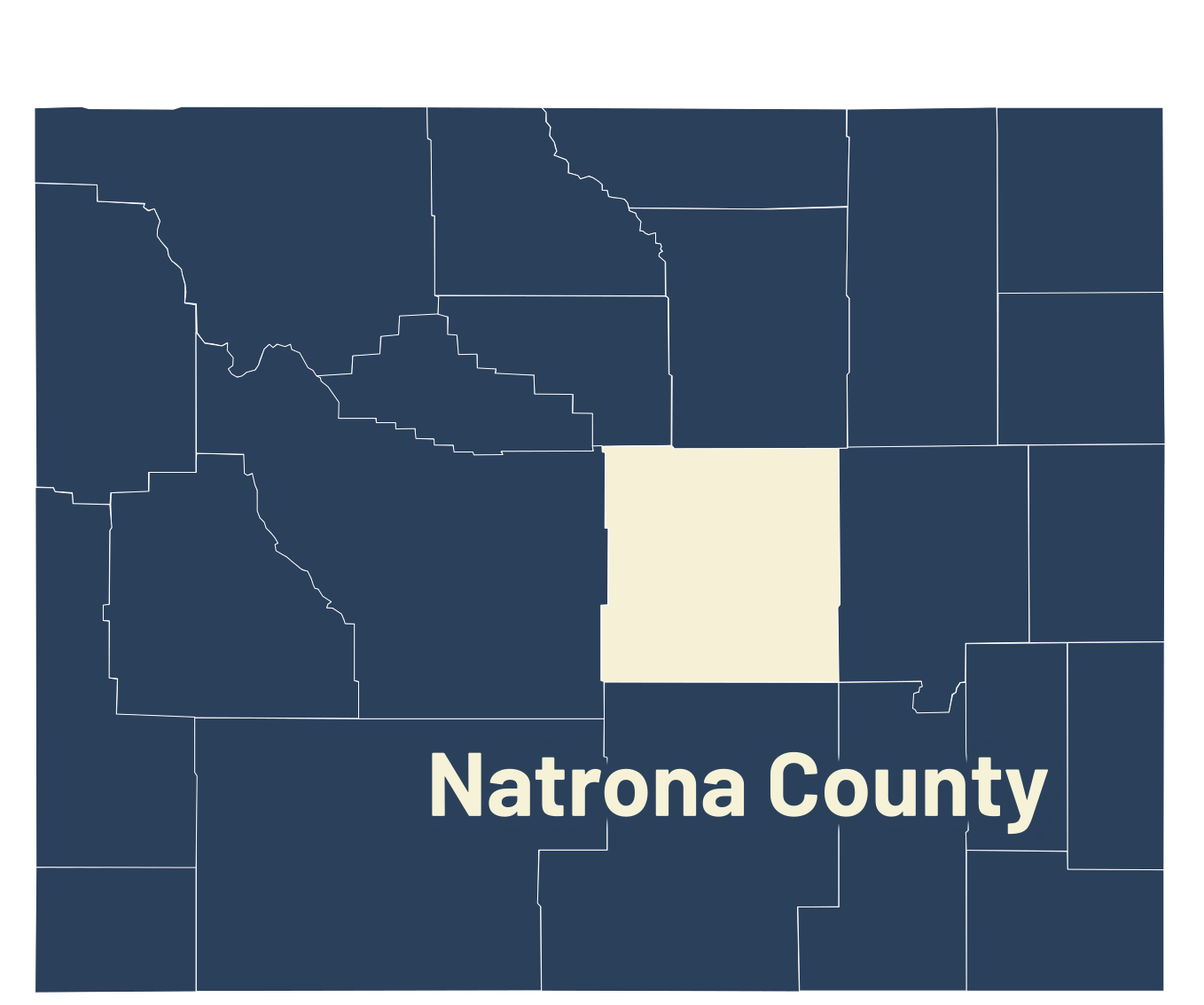
The carnage at the Chicago & North Western Railway site “caused tears to come to many eyes of strong men who turned their heads from the terrible scene,” the Natrona County Tribune reported on March 29, 1906.
Many state newspapers of the day gave ink to chronicle the disaster that happened as the railroad laid track on its way to Lander.
Many of the dead on the 27-member work crew train carried names that reflected Eastern European heritage.
In addition to Charles Moll of Casper and D. D. Blue of Cadoma, both section foreman, there were J.S. Price, a section hand; Bude Redakevic, Stejan Sarcar, Mane Knesevic, Pete Vejnevic, Mili Rodakenic, Jack Lyons, and Louis Behr, who all lost their lives.
Ages listed showed the oldest was 40 and the youngest 20.
Repairing A Washout
The Tribune reported that the train had traveled from Casper to near Powder River with a load of gravel on a Sunday morning, March 26, 1906, to repair a washout that occurred on the line the Friday before.
“After unloading the gravel and doing some switching at Powder River it started for Casper at 8 o’clock in the evening,” the newspaper reported.
The crew of a train that was stopped on Friday by the washout joined the work train and a “way car” was added on behind.
Trumbull said “way cars” were a catch-all term that included cabooses as well as other crew cars such as a bunk car.
“If it had 26 men in it, my guess is that it was a bunk car,” he said.
The newspaper said the train consisted of a heavy engine, No. 2, two large water cars, a way car, a tool car, and the “Wyman way car” named after the conductor of Friday’s train and his crew.
That car was added on behind.
Weather had been wet and rainy, and when the train traveling between 15 and 20 mph passed over a “four-foot culvert in the old channel of Casper Creek” in the Natrona area some 26 miles northwest of the city, the engine, tender, and two water cars miraculously made it over.
William Stephens, the fireman on the train, told the Tribune that he was just stepping across the platform from the engine to the tender when the engine hit the culvert.
The engine “seemed to go down several feet and then almost instantly rise back up again.”
“It threw me up and forward, my head striking the roof of the cab and I came down safely inside,” he said.
When the rear wheels on the tender went down, the tender broke away from the engine, causing it to raise up and the drivers to come down on the inside and outside of the rails.
The Disaster
The first way car filled with the gravel crew tipped down into the channel, which was 15-feet deep according to estimates. The 4-foot culvert had been covered with 11 feet of fill.
The men inside were thrown to the front of the car. The tool car behind the way car broke in two with half of it falling onto the way car below.
Things got worse when the two heavy water cars uncoupled from the tender and rolled back onto the way car where the men were trapped, the newspaper reported.
The other train crew in the last way car and in the engine rushed to the creek to try and save their comrades.
The newspaper described the scene as “the awful cries of the poor injured creatures, pinned down beneath the tons of wreckage, the roaring of the rushing waters and the moaning and groaning of the dying.”
The wreckage caught fire and men dipped their coats and hats in the water to put it out.
Wet snow started falling and, after a night of work using mostly hands and some rudimentary tools, all the injured men had been removed.
Four bodies were impossible to get to until an engine arrived that could move heavy timbers from the wrecked cars.
Shortly after the wreck, those unhurt in the last car sent word to Casper by tapping into a telegraph line.
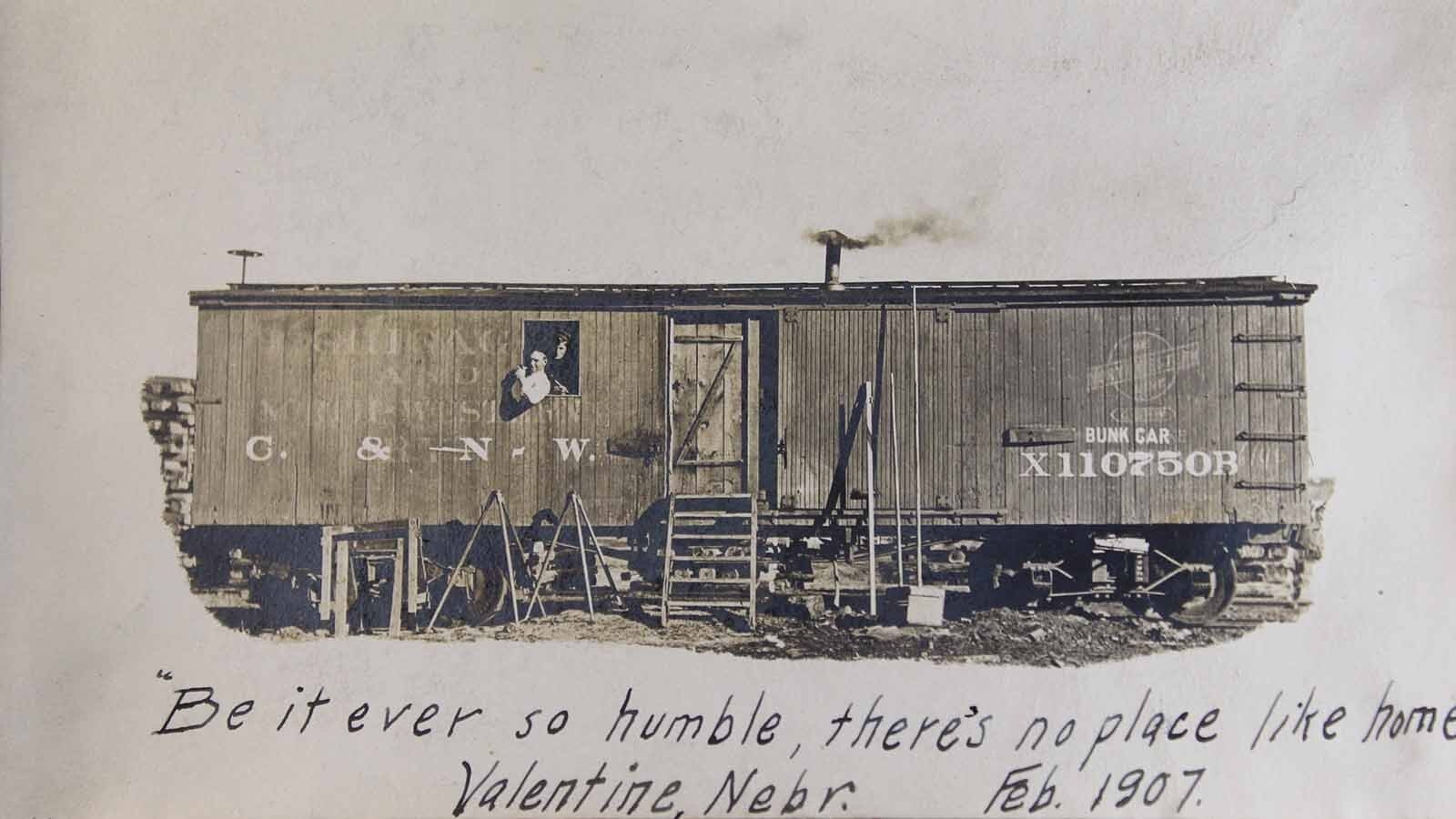
A C&NW bunk car at Valentine, Nebraska, in February 1907. It is most likely a similar car to what was carrying the men involved in the wreck. These served as homes on wheels for track crews and would carry bunks, cook stoves, etc. (Courtesy Con Trumbell) 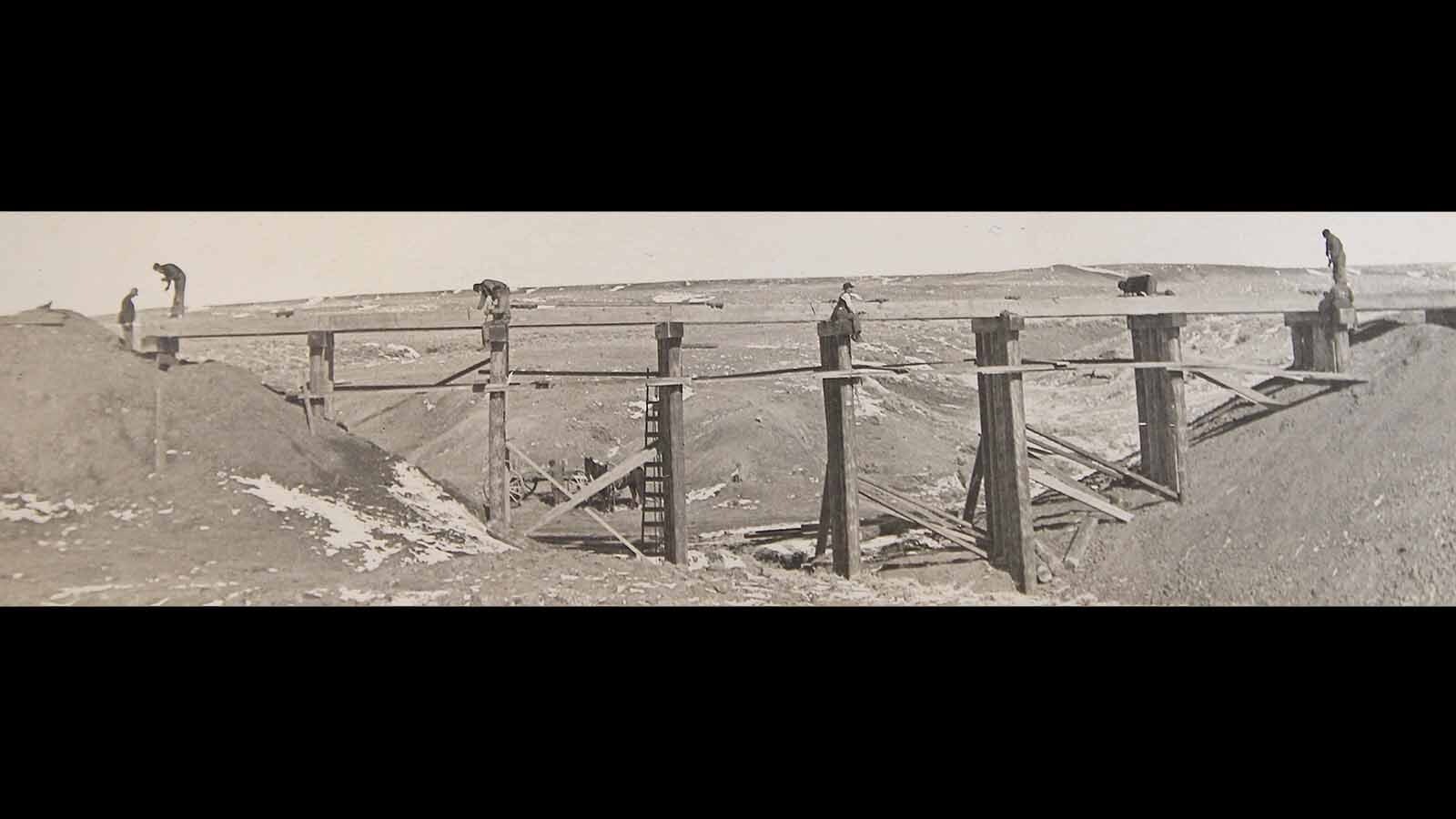
A pile bridge near Wolton, WY, in 1906, on the Chicago & North Western line. The bridge is typical construction of pile bridges during the time period. (Courtesy Con Trumbell) 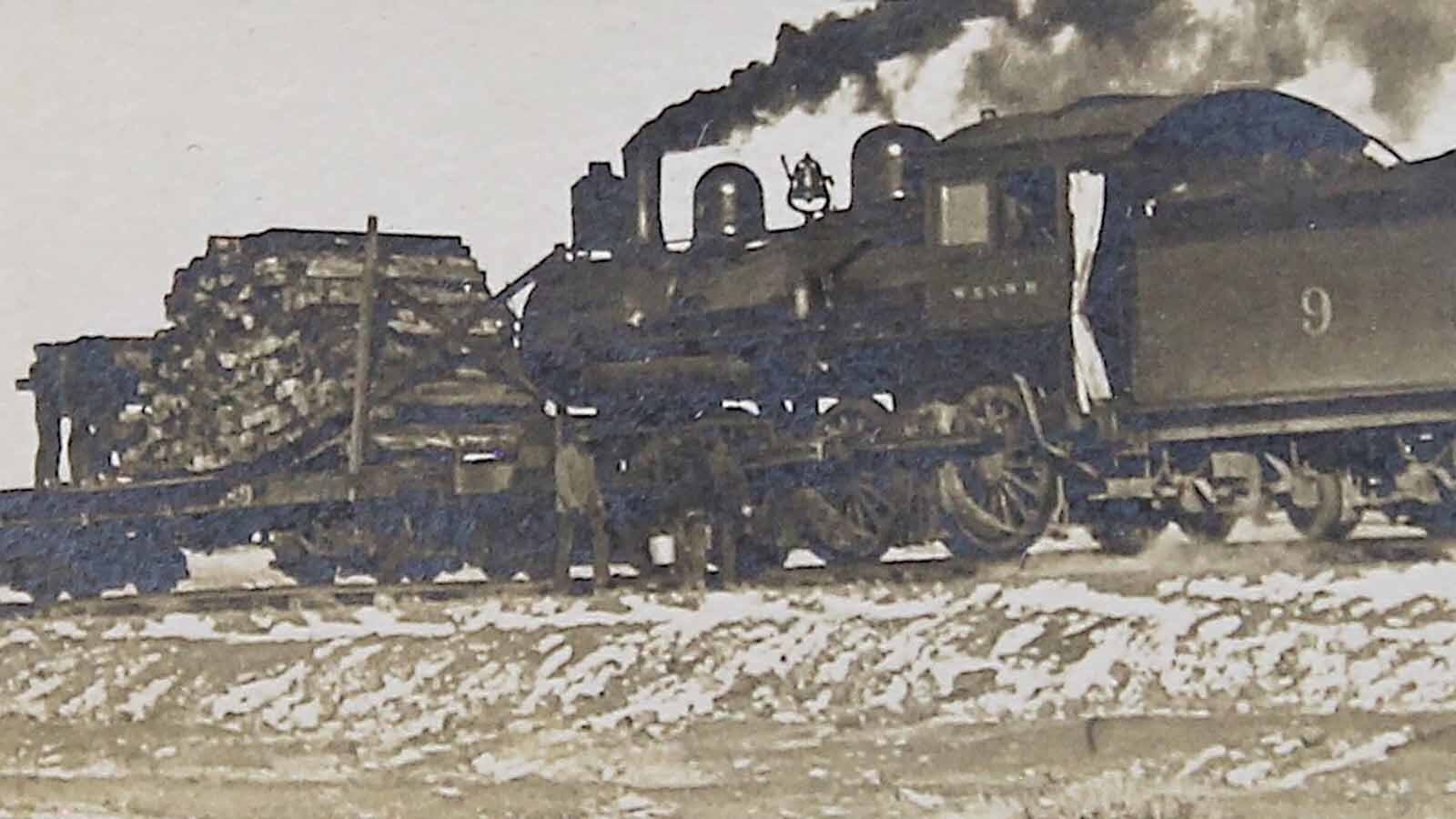
A construction train between Casper and Shoshoni, 1906. (Courtesy Con Trumbell) 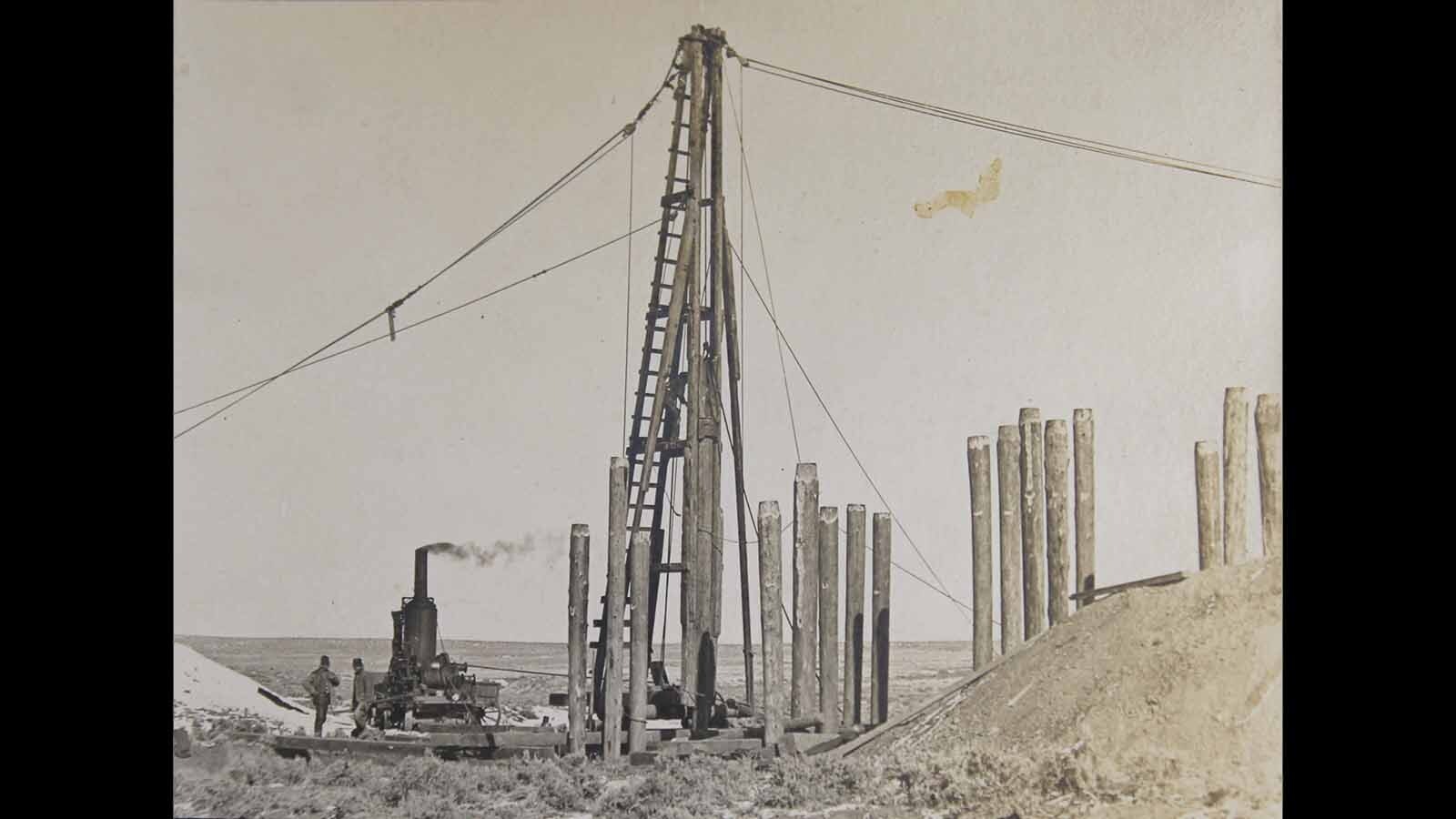
A steam-powered pile driver used in bridge construction and repair, between Casper and Shoshoni, 1906. (Courtesy Con Trumbell)
From Rain To Snowstorm
But a rescue train became impossible when it was discovered that timbers on the North Platte River bridge had also been broken by the waters and the storm.
Men left the city on hand cars through the rain and at midnight reached Cadoma 12 miles away.
The rain turned into a “blinding snowstorm” the newspaper reported.
Rescuers started walking and the first of the rescuers didn’t arrive at the crash site until 7:30 a.m. on Monday.
A Catholic priest offered last rites, and two doctors were among the initial responders from Casper.
D.D. Blue, the section foreman, was pinned between the cupola of the demolished way car and the end of a water car. He was initially still alive.
“His friends were unable to give him any relief,” the Tribune reported. "He even asked his son, who had an almost miraculous escape to kill him and end his suffering.
"Blue’s son was in the cupola of the ill-fated car and when the crash came was thrown through the window into the stream. He was the only one in the car who escaped without injury.”
A rescue train was finally sent to the site later Monday after a pile driver arrived in Casper to fix the North Platte River Bridge.
Doctors from Douglas and railroad people from Nebraska were part of the efforts to deal with the crisis at the scene.
Diverted Water
An inspection of the wreck site showed the washout was caused when an ice gorge in the main channel of Casper Creek diverted a heavy volume of water into the old channel.
The water rushed down with force enough to wash away the dirt filled in over the culvert.
The track had been inspected at 10 a.m. and again at 4 p.m. and was fine. The flood was surmised to have occurred between 4 p.m. and 9 p.m.
Any follow-up to the wreck story disappears from state newspapers after the initial reporting.
A coroner’s jury decision reported on April 5, 1906, in the Tribune called the wreck “purely accidental and unavoidable being caused by the elements.”
Trumbull said he would characterize the wreck in the top five worst he studied in central Wyoming.
He believes the reason it may have been passed over in historical accounts is because it wasn’t a passenger train like the Cole Creek disaster and that many of those who died and were injured were immigrants.
“I hate to say it, but in the grand scheme of American history, immigrant stories get lost,” he said. “They were kind of nameless people who built the country.
"The Cole Creek wreck got a lot of attention because there were some fairly influential people on it.”
His past research of Chicago & North Western records also never uncovered anything dated back to 1906.
He said when the line was torn down, a lot of records may have been lost, adding to its anonymity.
Trumbull said the fact the engine, tender and water cars made it over the washout is kind of amazing, as the rescuers' use of hand cars to try and get to the scene in the elements.
He notes the cause is the same as the Cole Creek disaster and several others in the West.
Washouts Happen
In the early 1900s, train wrecks were a lot more common than today.
He said the engineering on the bridges and over the culverts was probably “sound,” and that similar washouts continue to happen in modern railroading but with electronic sensors and other technology railroads can respond with fixes before a disaster happens.
Finding the spot of the wreck today would be difficult, Trumbull said.
The Chicago & North Western tracks, which kind of paralleled the Burlington tracks west of Casper, were removed after World War II. Both railroads shared the same track between Casper and Shoshone in the post-war era until the early 1990s.
The railroad then was acquired by Union Pacific and service ended to central Wyoming.
The state office building in Casper now occupies the site of the railroad’s former roundhouse and rail yard, Trumbull said.
Dale Killingbeck can be reached at dale@cowboystatedaily.com.