The Trump administration’s Environmental Protection Agency has made official what it signaled in July: Colorado cannot use federal authority to force the closure of coal-fired power plants.
It’s a decision the Trump administration says protects grid reliability, and also draws warning from environmental and health advocates that it endangers public health and Colorado's national parks.
EPA Region 8 Administrator Cyrus Western, a former Wyoming legislator from Sheridan, said the agency received roughly 120 pages of public comments before finalizing its disapproval last week of Colorado's revised 2022 Regional Haze State Implementation Plan (SIP).
"This is a win for coal because we are stopping a shutdown of a facility that was burning millions of tons of Wyoming coal," Western told Cowboy State Daily on Monday. "That's why I'd say this is a big win for Wyoming, a big win for coal miners in Wyoming."
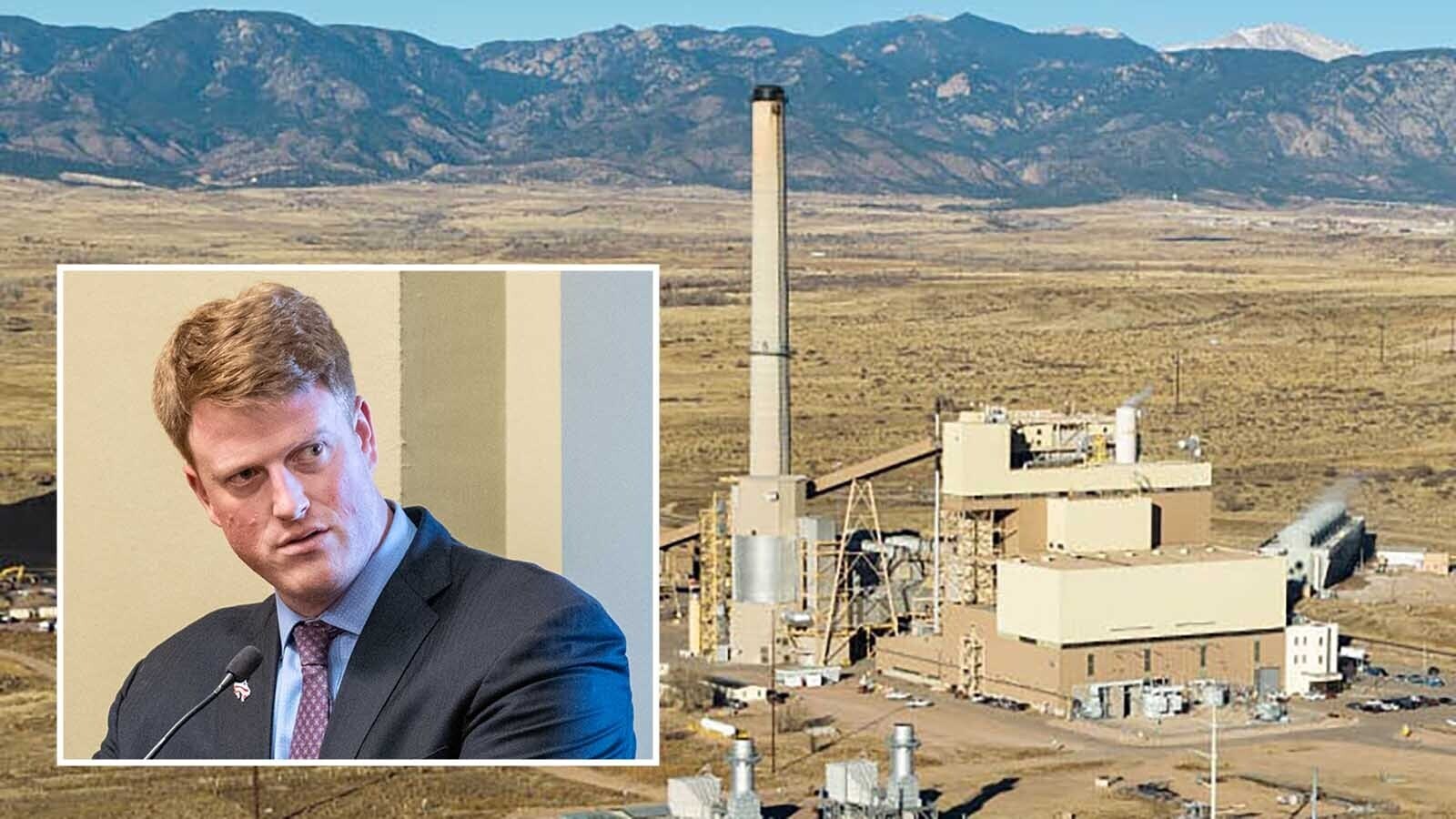
At the heart of the decision is the Ray D. Nixon Power Plant, which serves Colorado Springs and has burned Wyoming Powder River Basin coal since 2003.
Colorado Springs Utilities states it did not consent to the state-mandated closure.
"They made expressly clear to the state that they do not consent," Western said. "And that's why the agency ultimately decided that we are not going to approve this action, this SIP action, because they are trying to shut down this coal-fired unit."
Federal Decision
The EPA determined that Colorado's proposal to shut down coal-fired power plants without consent from all facilities does not comply with the Clean Air Act (CAA).
"These plants are vital to delivering reliable and affordable energy to Colorado families," the agency said in its announcement. "Shutting down these power plants is not necessary to meet Regional Haze requirements, and including forced closure deadlines for facilities that want to stay open would have been a misuse of the CAA."
EPA Administrator Lee Zeldin said the decision reflects the administration's priorities.
"Reliable baseload energy sources are essential to Powering the Great American Comeback and ensuring families have cost-effective energy," Zeldin said. "The Trump EPA has repeatedly demonstrated that we can achieve our statutory obligations, support baseload power, and improve visibility within our national parks."
Western said the agency also found Colorado failed to conduct adequate analysis of whether it could serve reliable power under various weather and demand scenarios without the coal plants.
"Administrator Zeldin and the Trump Administration are laser focused on ensuring Americans have an abundance of highly reliable and affordable energy," Western said. "EPA's denial of Colorado's SIP revision delivers this outcome in a manner that's fully compliant with the Clean Air Act while simultaneously providing for clean air for all Americans."
Environmental Opposition
Environmental organizations were quick to condemn the decision.
"EPA's decision to disapprove Colorado's plan is dangerous for Colorado's national parks and for everyone who values clean, healthy air," said Tracy Coppola, Colorado senior program manager for the National Parks Conservation Association.
"Millions of people visit our parks each year to experience the once-in-a-lifetime views, but pollution from coal plants continues to threaten the experience at Rocky Mountain, Great Sand Dunes and Black Canyon,” she said.
Margaret Kran-Annexstein, director of the Colorado Sierra Club, said the move would hurt consumers and health.
"Trump's attempts to prevent utilities from retiring uneconomic coal plants will increase electricity prices and deadly air pollution," she said. "The EPA has abandoned its environmental mission in favor of propping up the dying coal industry."
Dr. Sara Carpenter, a retired pediatrician who chairs Healthy Air and Water Colorado, raised medical concerns.
"As a physician, I'm deeply concerned by the EPA's decision to block Colorado's clean air plan," Carpenter said. "Coal-fired power plants are a major source of the fine particle pollution that sends children to the ER, worsens asthma, and increases the risk of heart attacks and premature death.
"Framing this as a legal or 'grid reliability' issue ignores the very real harm to Coloradans' lungs, hearts and brains."
Ean Tafoya, vice president of state programs for GreenLatinos, said the action undermines the EPA's core purpose.
"Actions like these are being sold to the public as protecting them, but in reality actions like these are undermining the very mission of agencies like the EPA," Tafoya said.
Jeremy Nichols, senior advocate for the Center for Biological Diversity, said the EPA is mistaken in its decision because Colorado had submitted a "landmark proposal" that would have benefited the state's open spaces, air quality and residents.
Earthjustice called the disapproval illegal, noting that Colorado's plan included retirement deadlines that utilities had voluntarily proposed.
"The plan was broadly supported by the state, utilities, industry, and environmental groups," the organization said. "Yet the Trump administration has once again tried to override decisions made by local utilities."
Health Claims
Western pushed back on arguments that the decision harms public health.
"I squarely reject those claims," he said. "Colorado did not need to shut down those coal-fired units in order to be complying with the Clean Air Act and to ensure that there is clean air for the public."
He accused environmental groups of creating a false choice.
"One of the things that NGOs have done a good job of is trying to make this a binary — it's one or the other," Western said. "But what we're saying is we can do both, that we can continue to burn this coal and hold industry to very high standards and ensure that we have clean air."
The decision could give Colorado Springs Utilities more runway as it faces reliability concerns about the 2030 closure deadline.
"What that really does is allow us some flexibility to begin continuing our talks with the state of Colorado," said Danielle Nieves, senior public affairs specialist for Colorado Springs Utilities, in July when the EPA first proposed its action.
The municipally-owned utility still plans to retire the coal portion of the Nixon plant by the end of 2029, but "our concerns are that that date does pose some very serious reliability challenges for us."
Colorado officials said they would press forward with state-level requirements regardless of the federal decision.
"Regardless of EPA's decision, Colorado will continue to lead," said Michael Ogletree, senior director of state air quality programs at the Colorado Department of Public Health and Environment.
"Coal plant retirement dates remain in state regulation, and many facilities have already closed or are on track to retire voluntarily because cleaner energy is more affordable and makes economic sense for consumers,” he said.
Colorado now must submit a revised plan within two years or the EPA will complete a federal implementation plan for the state.
Wyoming Impact
Travis Deti, executive director of the Wyoming Mining Association, said the decision helps the state's coal producers.
"In general, keeping those plants that use Wyoming coal from early retirement certainly helps our production," Deti said. "We finished the year up about 7% from the previous year, and Wyoming producers are optimistic about 2026."
The U.S. Energy Information Administration's December report showed coal consumption increased 9% in 2025, driven by an 11% increase in the electric power sector as natural gas costs and electricity demand rose.
However, the EIA expects coal consumption to fall in 2026 as renewable generation increases.
It’s possible, according to the EIA, that coal production will fall by less than consumption, "supporting a small increase in coal exports and rising coal inventories."
David Madison can be reached at david@cowboystatedaily.com.