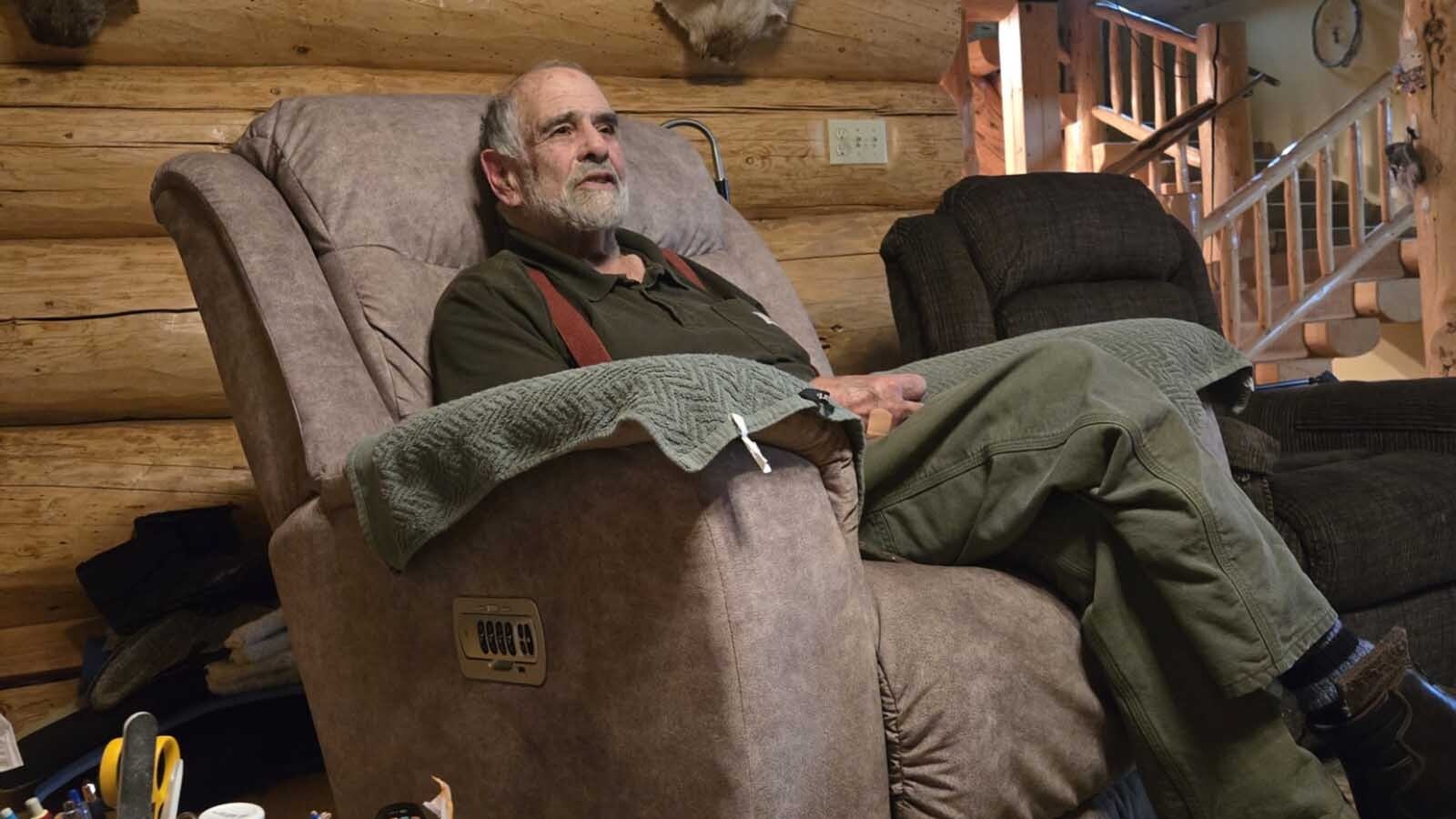
Llama expert, Navy veteran, and former commercial abalone diver Al Ellis imagined his 207-acre Sublette County ranch would one day become a sanctuary for veterans.
That vision is now taking shape after Ellis passed the deed for his property to the Boulder Crest Foundation just before Christmas.
“We want other people to enjoy this space — people who deserve it, people who we owe something to,” Ellis told Cowboy State Daily from the living room of his two-story log home.
“Llamas are the reason this house is here,” the 84-year-old said. “We visualized being old here and wheeling over to the big windows to watch the llamas.”
That’s what his wife, Sondra, enjoyed. She died in August after a lengthy health battle.
Butterfly Moments
Ellis talks about his life as a series of “butterfly moments” — events that happened at the perfect time to chart a remarkable path that led him to the underwater reefs off the California coast to the snowy peaks of the Rocky Mountains.
His story begins in San Francisco, where he spent much of his childhood in and around the bodega and produce stand his parents ran on the corner of Mission Street.
“By the time you’re 8, you can take your orange crate down the street,” he said about scrounging for stuff to put in their discarded wooden crates.
“Even in ’Frisco we got to be pretty feral,” he said.
Ellis learned to fish when he was 6. His aunt taught him.
That was a butterfly moment.
Ellis enlisted in the Navy when he was 17, a role he downplays today because he served during peace time between the Korean and Vietnam wars.
He worked on a salvage ship. Once, the ship ran up on a reef 1,500 miles from Brisbane, Australia.
Divers on the ship worked for days to blast the reef to free the ship.
When Ellis wasn’t standing watch, he paddled around on the reef and watched the divers work.
Another butterfly moment.
Watching the Navy divers blast the reef to free the ship, he developed an intense curiosity about diving.
Ellis found his way into competitive spearfishing, even then “an old, obscure sport,” he said.
Abalone And Urchins
A serendipitous meeting of a competitor who nearly speared the prizewinning fish that Ellis claimed at a meet off the coast of Santa Barbara led Ellis into the niche industry of abalone hunting.
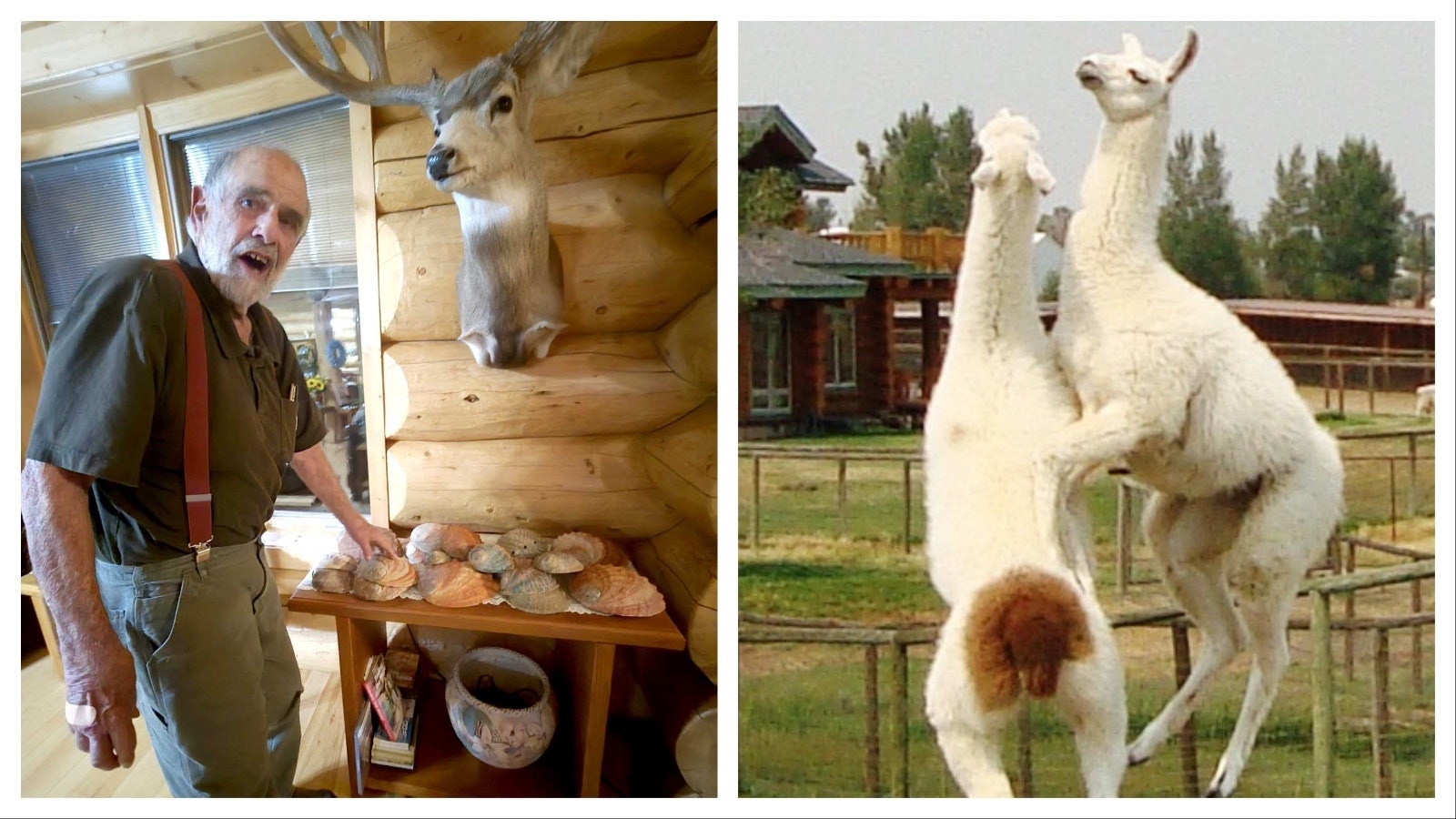
Abalone — large marine snails with ear-shaped shells — were once prized along the California coast, and their meat is considered a delicacy.
Ellis and his business partner later opened their own abalone operation, finding ways for divers and processors to earn more for their work — but he missed diving.
By the time Ellis got back into diving, the sea urchin industry was booming.
“The timing was perfect to get into urchins,” he said. “I got good at it right at the time the price went up.”
Another butterfly moment.
He bought a fishery with an old freezer that had, during World War II, stored shark livers for their vitamin A.
He converted the fishery into a seafood restaurant named Andrea’s.
When the California freeway claimed part of that property, he and his wife opened a bigger seafood joint closer to the water.
His wife continued to work there for nine years after Ellis retired from the diving industry and moved to Wyoming.
Wyoming And Llamas
By 1982 when he was just 40, Ellis was ready to retire from diving.
He and Sondra bought property on the Snake River near Jackson Hole. They had fallen in love with the country after visiting a friend in Alpine.
They bought some horses, then Ellis got a backpack and started exploring the Rocky Mountains.
That’s when an article about mountain pack llamas by outdoors writer Doyle Markham caught his attention. Markham operated Snake River Llamas in Idaho Falls.
“As soon as I read the article, I called him,” Ellis said.
He drove to Markham’s property and saw his llamas up close.
“Within five minutes of being on his property I told him I wanted one,” Ellis said. “He wrote the article, but it was his stud, Snake River Bandit, that lit the fire.”
Markham told Ellis he could get on a six-year waiting list for a weanling.
“I was so hooked, I couldn’t wait six years,” Ellis told Cowboy State Daily.
What followed was a long and arduous process of learning where to find weanlings and how to separate those that would make good pack animals from those that would not.
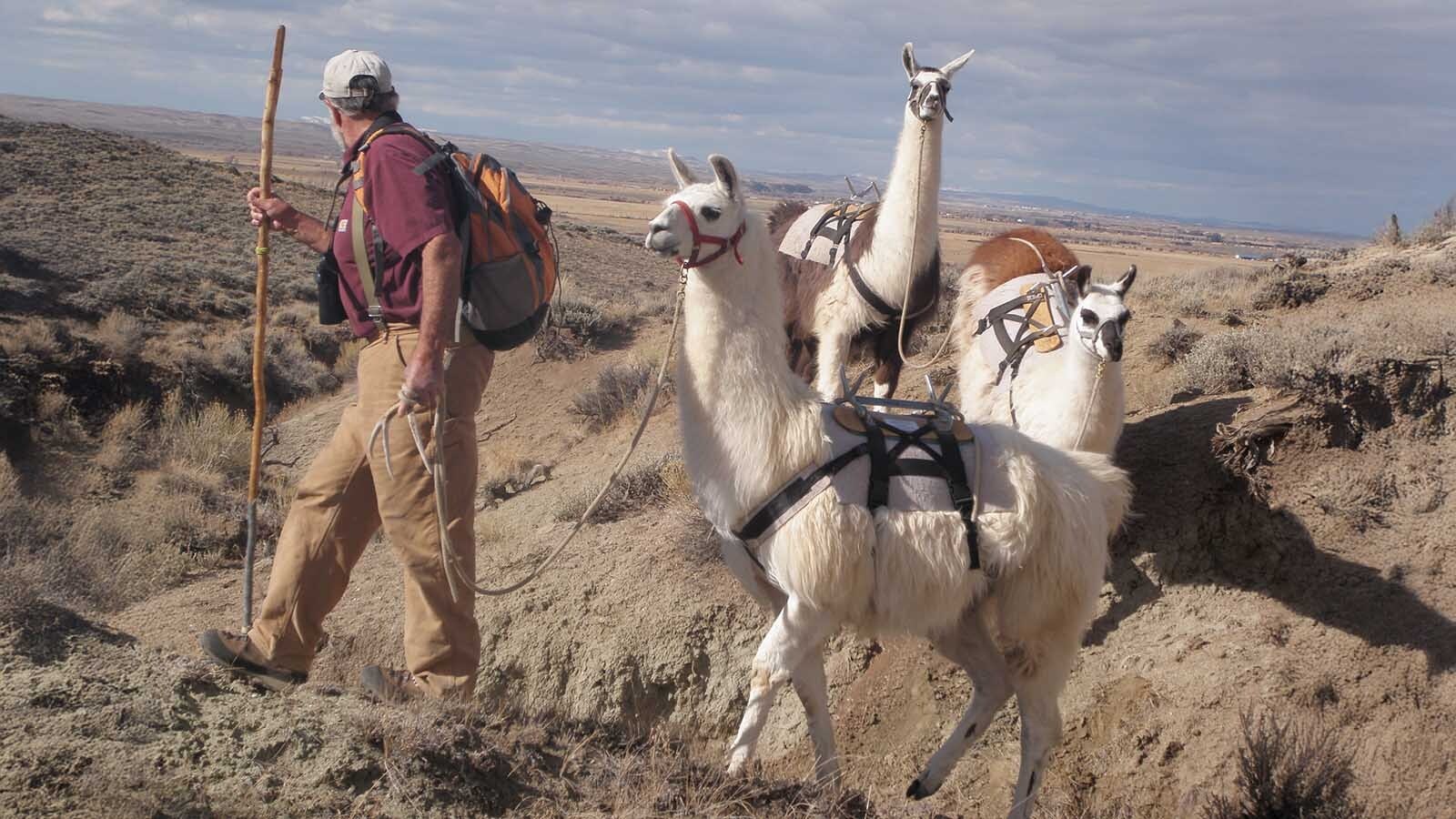
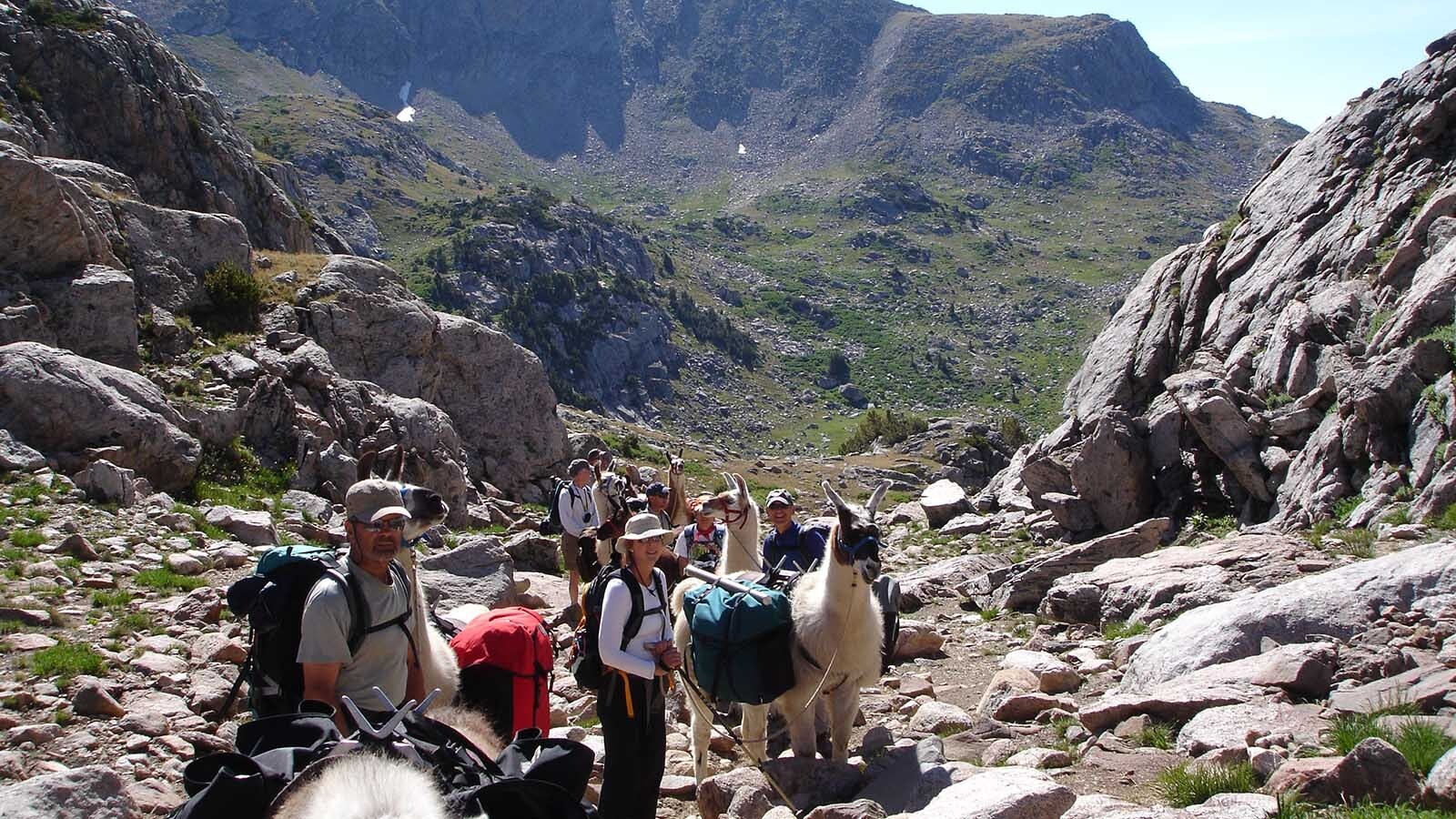
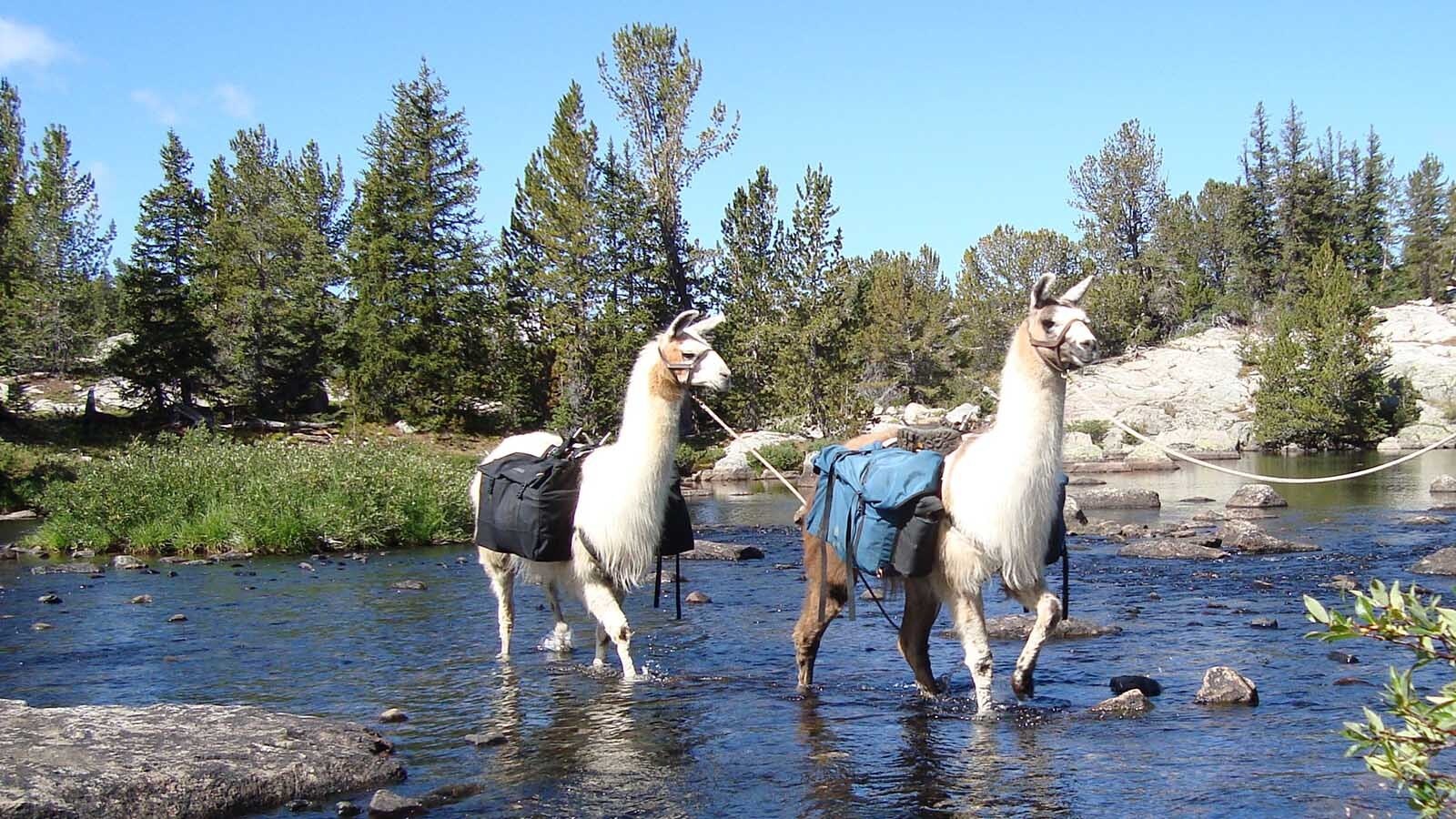
Ellis acquired six pack llamas, bred them, and spent the next decade in the mountains with his beloved pack animals, guiding trips in the Wind River, Gros Ventre, Teton, and Wyoming mountain ranges.
“It was unbelievable how many people on my trips had never seen a night sky,” Ellis said.
Yup, They Spit
People would gather around the llamas at the trailheads, in awe and full of questions.
“The first question is always, ‘Do they spit?’” Ellis said. “Of course. Their spit is their first line of defense. But a well-raised llama won’t spit at a person.”
He learned after a chance meeting with Rod Eastman, the son of well-known wildlife photographer Gordon Eastman, that his llamas were perfect for wildlife filming.
Ellis’ backcountry photography led to extended wilderness expeditions supported by his llamas.
By the time his herd had grown to more than 30 animals, Ellis was facing a tough choice.
The 12 acres he owned on the Snake River was not enough to sustain his operation. He knew he had to sell the herd, stop breeding the animals, or move.
He also knew he had an extremely valuable operation going. Llamas were in high demand, both as working pack animals and as show animals.
“They’d hit the ground at a minimum of $5,000,” Ellis said, referring to a newborn llama’s worth at the time.
Ellis said he also believed the type of llamas he bred were in danger.
“It was really a mission for me,” he said. “I had to carry it on.”
Boulder Move
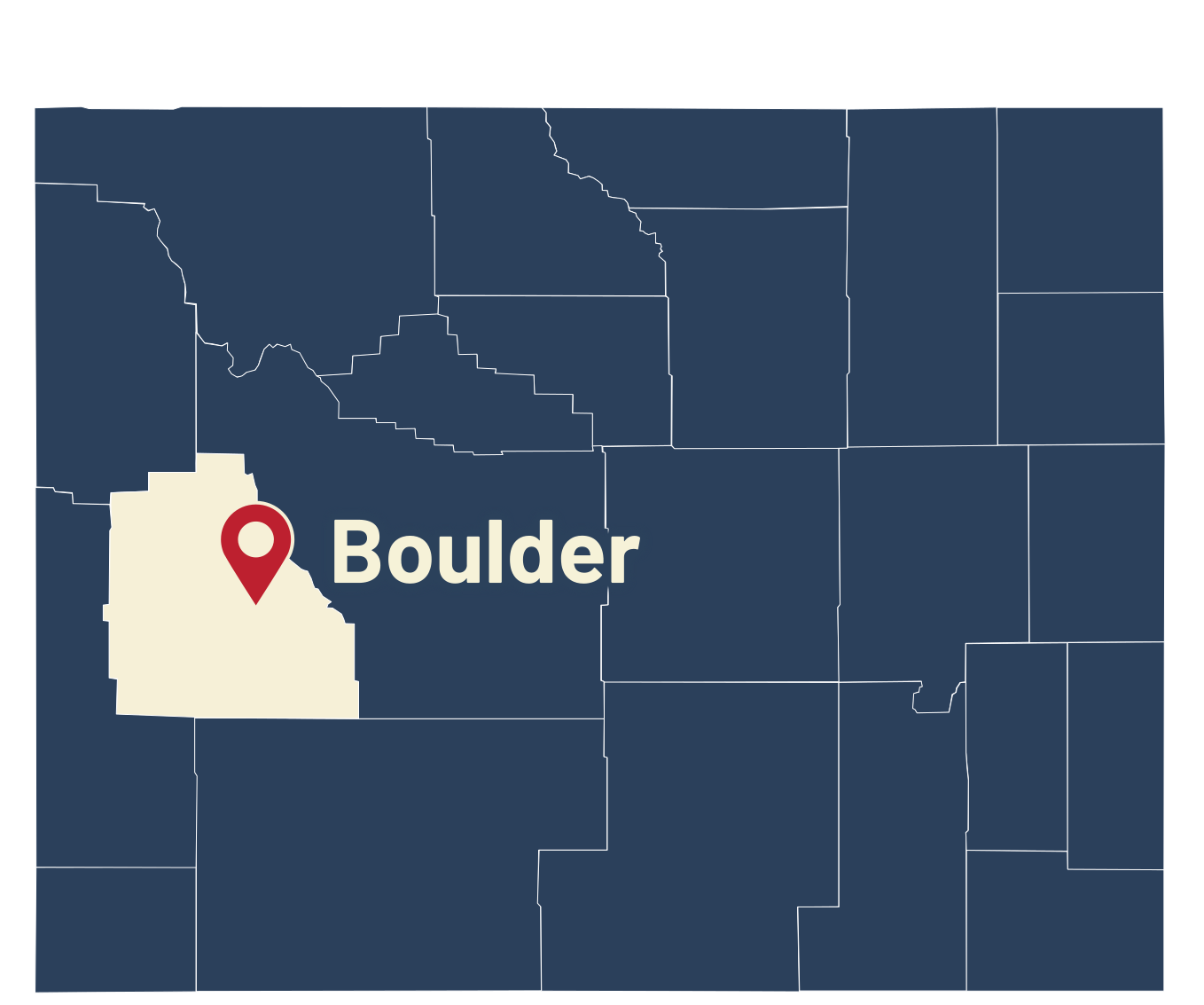
The Ellises bought a run-down cattle ranch in Boulder 12 miles south of Pinedale and sold their beloved property on the Snake River.
The ranch in Boulder was an eyesore at the time, Ellis said. The ground looked like a moonscape, and it was a tough sell for Sondra.
“I was enticing my wife from a 5,200-square-foot log home on the Snake River to come to a hell hole,” he said.
He promised her that they would build a nice log home on the property eventually. First, though, they had to set up adequate facilities for the llamas.
The Ellises moved to Boulder in 1998, and by 2012 were caring for 200 llamas on the Boulder property. Fewer than half — 60 — were pack llamas.
That summer, he was 70 and working on a broken foot. It was, he said, a wake-up call that it was time to be done.
By then he had introduced thousands of people to his beloved llamas.
Boulder Crest In Boulder
Fast-forward to summer 2025, a few months before Sondra died: another butterfly moment came.
Ellis was watching TV when he came across Johnny “Joey” Jones, a co-host on the FOX News Channel’s “The Big Weekend Show.”
Jones, a military veteran who had lost both his legs to a roadside bomb in Iraq, was talking about his New York Times bestseller “Behind the Badge: Answering the Call to Serve on America's Homefront.”
“I really liked him,” Ellis said, adding that he decided to reach out to Jones.
Gifting his 207-acre property to serve veterans and first responders was fresh on his mind. Perhaps Jones could give him some direction.
It was a long shot, Ellis knew. He tracked down Jones’ email online and fired off a note, doubtful anything would come of it.
“But I’ll be damned, he saw it,” Ellis said.
Not only had Jones read Ellis’ email, he knew who could make that happen.
Jones reached out to Ken Falke, a retired Navy bomb disposal specialist and co-founder and chairman of the Boulder Crest Foundation.
Falke had met Jones at Bethesda Hospital in Washington, D.C., where he would often go to visit wounded soldiers.
Jones completed Boulder Crest’s Warrior PATHH program, which focuses on transforming struggles into strength and thriving in the aftermath of trauma. PATHH stands for Progressive and Alternative Training for Helping Heroes.
“As soon as I met him, it was like ‘wow,’” Falke told Cowboy State Daily. “I was a diver. He was a diver. I was in the Navy. He was in the navy. There was this really interesting connection.”
Another butterfly moment.
Llamas And Vets
Boulder marks the fourth Boulder Crest facility in the country, with others located outside Washington, D.C., and in Arizona and Texas.
“I think in Wyoming, we’re going to take a little different approach,” Falke said.
Falke told Cowboy State Daily he has learned there’s a big push to help female veterans and rural veterans who struggle to get care.
Falke is also well aware that Wyoming has the largest veteran suicide rate per capita in the country.
“Our hope is to regionalize our services around Wyoming and Montana, Idaho and Utah,” he said.
In Boulder, llamas will be a significant part of the nonprofit’s operation.
Ellis said he believes the llamas will especially benefit families of veterans and first responders, noting the animal’s innate ability to spread joy.
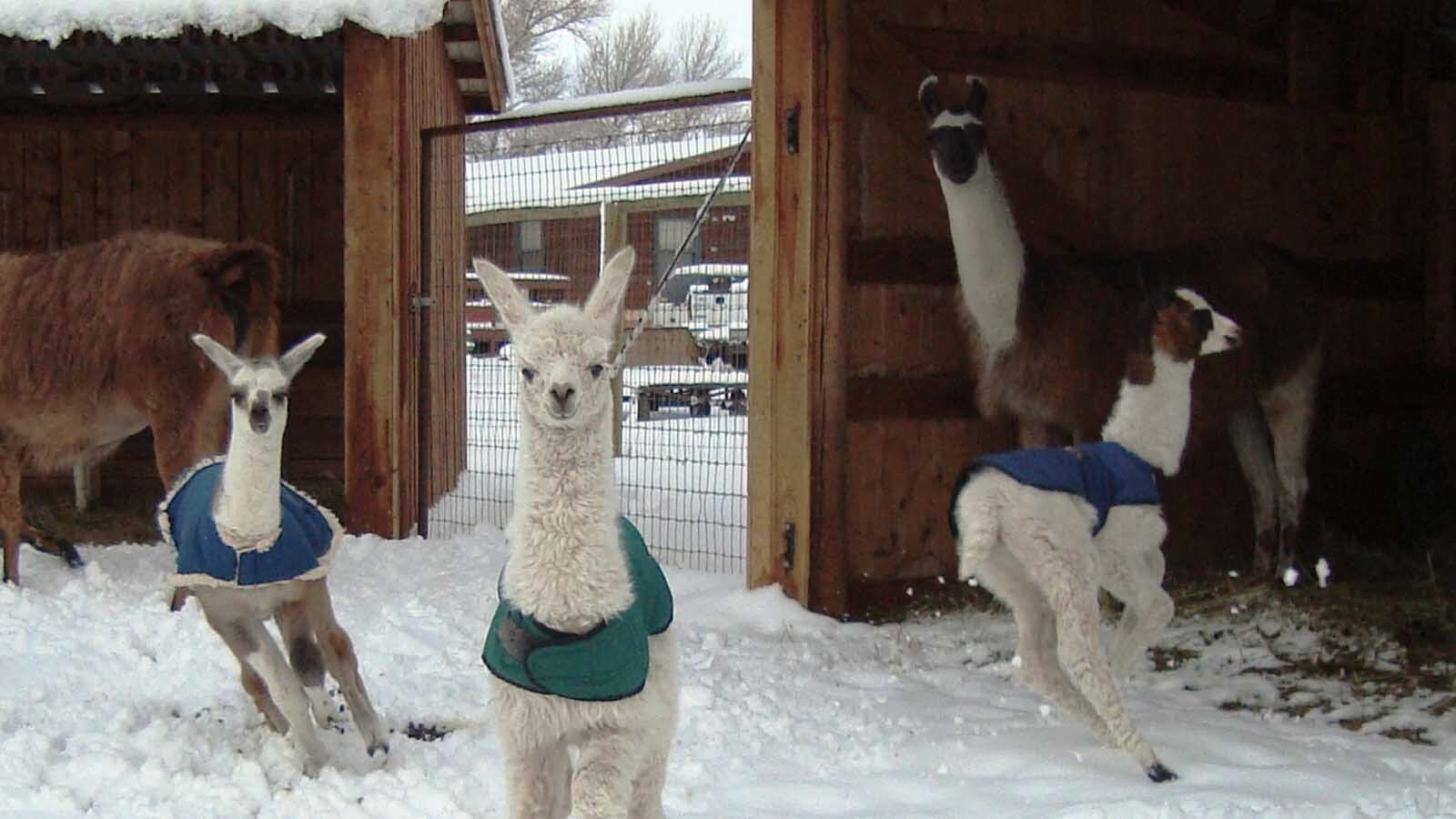
“Watching baby llamas play when they’re in a group is 100% contagious,” Ellis said.
Planning And Zoning Hurdles
The Boulder Crest Foundation will build a bunkhouse of sorts on the property for its Warrior PATHH program.
For the property to function as Boulder Crest envisions, a special conditional use permit was required, allowing the property to operate as a guest ranch.
That use permit was narrowly approved by the Sublette County Planning and Zoning Commission in December.
The approval faced pushback and initially failed on a previous reading.
At a September Sublette County Commission meeting, six area residents voiced opposition to the property being zoned to operate as a guest ranch.
According to the permit request staff report prepared by Sublette County Planning and Zoning Administrator Hayley Ruland, “Neighbors worried that once Boulder Crest assumes control, the operation could grow well beyond what is currently proposed.
“They fear future buildings and programs could shift the use toward a resort-like facility rather than a small guest ranch,” Ruland wrote.
The report also states that some residents “expressed concern about bringing trauma-affected individuals into a residential area without guaranteed on-site mental health professionals.
“They worry this could increase demands on local law enforcement and emergency services.”
Others voiced high praise for Boulder Crest’s reputation and the potential for Ellis’ property to benefit veterans, first responders and their families for years to come.
“I’m not religious,” Ellis told Cowboy State Daily, “but all these points come together. Boulder Crest could accept it and I could give it. It’s unbelievable.”
Kate Meadows can be reached at kate@cowboystatedaily.com.