The Natural History Museum Abu Dhabi in the United Arab Emirates (UAE) opened to much fanfare in November. The largest natural history museum in the Middle East was designed to be one of the world's premier institutions of its kind.
To do this, museum officials had a “wish list” of specimens and a sizable amount of money to acquire them.
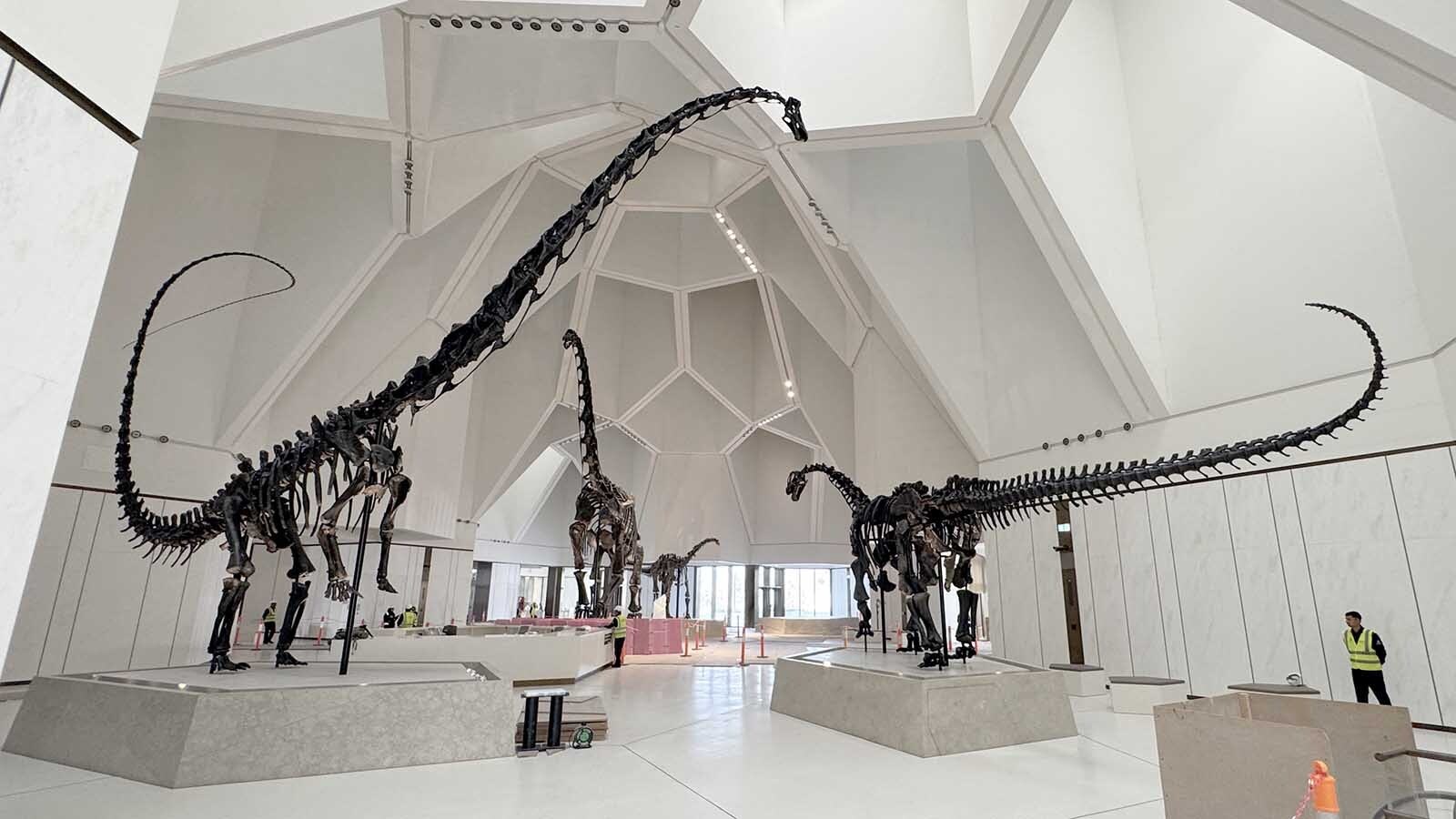
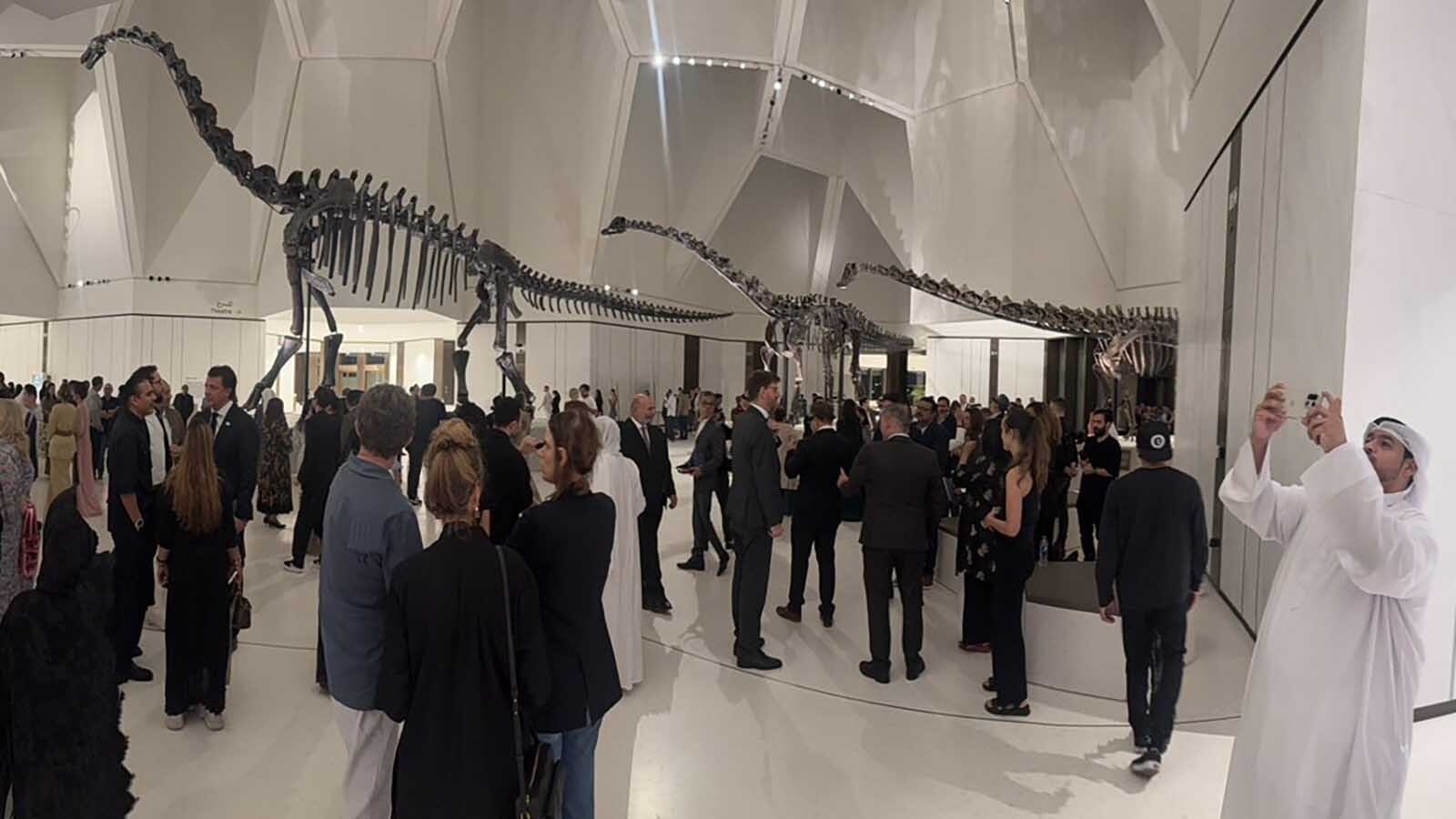
When visitors enter the 35,000-square-foot facility, they’re greeted by four massive long-necked dinosaurs: Barosaurus, Brachiosaurus, Camarasaurus, and Diplodocus. The specimens are touted as among the best, if not the first, of their kind ever found.
Three of those dinosaurs, and possibly the fourth, were excavated in Wyoming, along with a selection of other specimens making up the museum’s exhibits.
And once again, one of the world’s foremost museums was clamoring for Wyoming’s dinosaurs.
Sauropods On The Shelf
Pete Larson, president of the Black Hills Institute of Geological Research (BHIGR) in Hill City, South Dakota, has been one of the world’s top fossil collectors for the last 50 years.
His team excavated and prepared Stan the Tyrannosaurus, which was sold at auction in 2020 for more than $31 million, only to become one of the centerpiece attractions at the Natural History Museum Abu Dhabi when it opened.
“We lost as a result of a legal battle,” Larson told Cowboy State Daily. “I always tell people you don't have a real T. rex unless there's a lawsuit about it.”
After acquiring Stan, the Natural History Museum Abu Dhabi (NHMAD) contacted BHIGR to acquire additional dinosaurs.
They want impressive specimens so the museum would immediately be among the upper echelon of the world’s paleontological institutions.
Larson had plenty to offer. He had several sizeable sauropods lying around, waiting for the right person or institution to acquire them.
The three sauropods came from the Waugh Quarry, a Late Jurassic bonebed near Hulett in Crook County. Larson said he and his team have been digging in that spot since 1999 and found several “spectacular dinosaurs" that nobody seemed to want until the NHMAD came calling.
“It's a floodplain deposit in the Morrison Formation that’s approximately 145 to 150 million years old,” he said. “That makes it one of the youngest Morrison sites we’re aware of.”
The BHIGR had three sauropods at various levels of completeness, but they ensured they’d deliver fully complete skeletons to the UAE by the November opening. Larson and BHIGR have a reputation for being one of the best in the business of transforming partial dinosaur and other prehistoric animal fossils into perfectly complete exhibits through molding, casting, and sculpting the missing pieces.
Larson said these three specimens were the most ambitious projects BHIGR has ever undertaken, if only because of their sheer size. One is over 90 feet long, and another is over 30 feet tall.
“Our lab is not big enough to mount any of those dinosaurs,” he said. “We didn’t know exactly what they were going to look like until we got them completely up in the museum. It was a pretty good challenge, and we were very pleased with how they turned out.”
Chimerasaurus
The smallest and most complete of the three sauropods from the Waugh Quarry was the Camarasaurus, which is still over 60 feet long. Larson said ongoing studies of that specimen, and another collected from the same quarry, indicate that they are a potential new species of Camarasaurus.
“We’re keeping the other one for our museum in Hill City,” Larson said. “We've done some work with Cary Woodruff on describing the skull of that specimen, and that’s going to be a new species of Camarasaurus.”
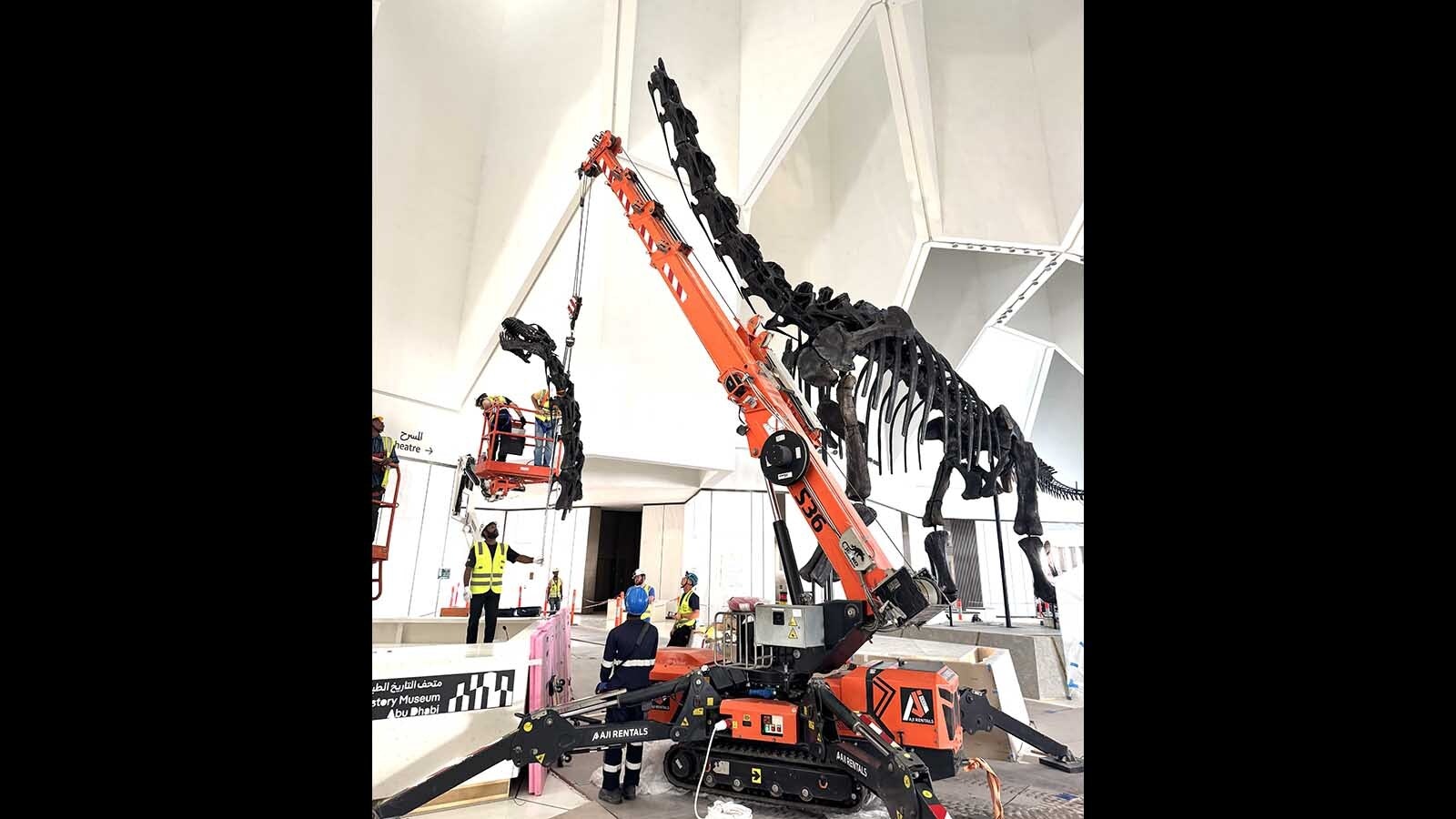
The largest and least complete of the three sauropods is the towering Brachiosaurus. Larson said that one was particularly challenging because of the way the NHMAD wanted it displayed.
“They wanted to have it on two different bases,” he said. “We mounted the front end on one base and the rear end on another so people could walk underneath the belly of the dinosaur.”
Brachiosaurus is a famous but rare dinosaur, known only from fragmentary skeletons or individual bones. The specimen collected by BHIGR consisted of a single upper arm bone, a single upper leg bone, both shoulder blades, and about 20 backbones.
The real fossils were mounted with replicas of original bones from the most complete Brachiosaurus specimen currently known, in the collections of the Field Museum of Natural History in Chicago, Illinois.
Everything BHIGR had from the Chicago specimen was modified to match the dimensions of the specimen from the Waugh Quarry. The remaining bones, missing from both specimens, were sculpted.
Larson said the Brachiosaurus’s skull was particularly notable. It was a replica of a mostly complete skull, the first of its kind, from a currently undescribed skeleton from the same region but a different quarry, 35 miles south of the Waugh Quarry.
“It’s a chimerasaurus, but it’s the only real Brachiosaurus mounted anywhere in the world,” he said. “That’s also probably a brand-new species.”
A World And Wyoming First
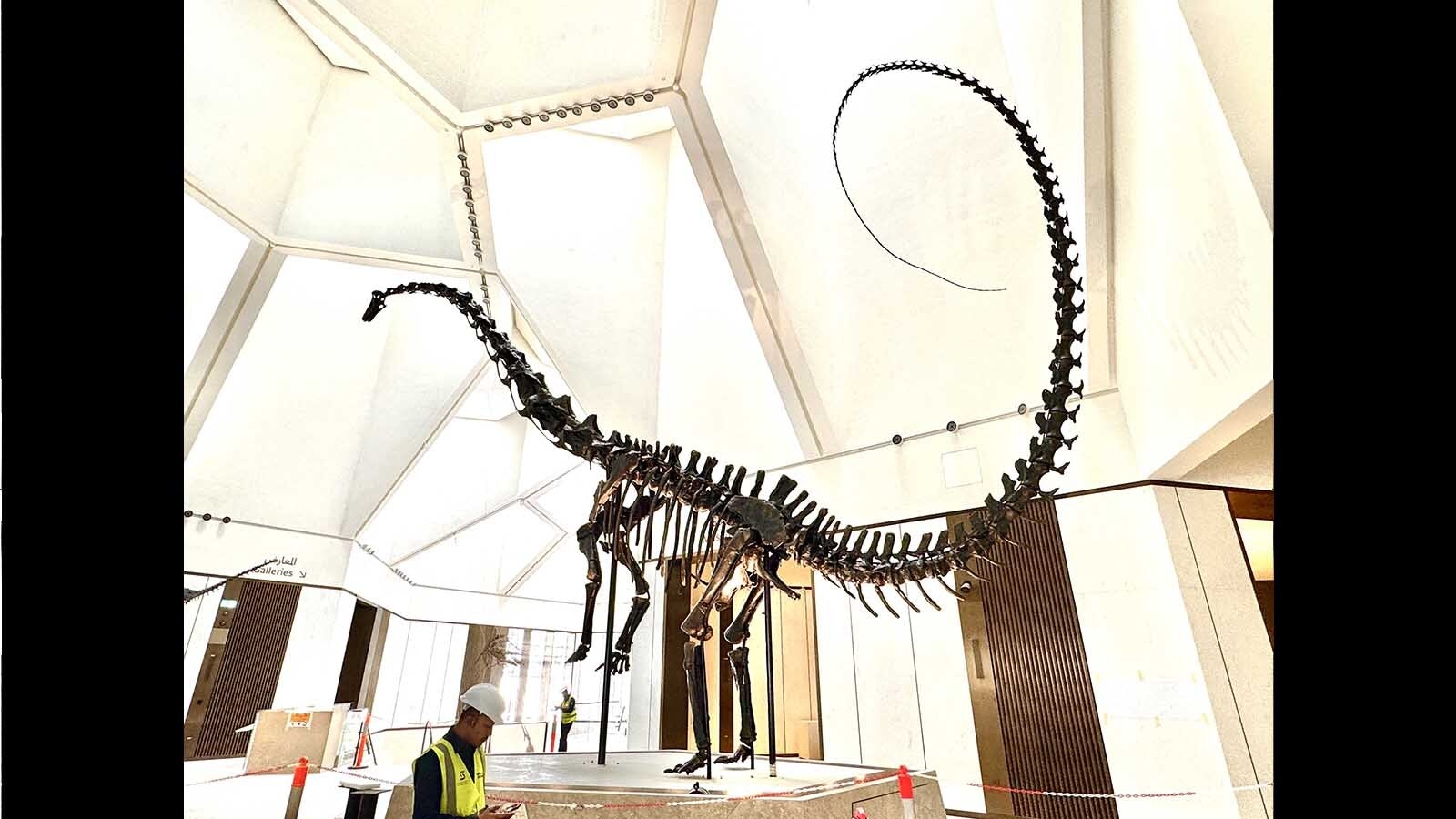
The real show-stealer in the NHMAD lobby is the Barosaurus, a 90-foot-long behemoth mounted rearing up on its back legs, making its remarkable long neck and tail all the more impressive.
According to Larson, that specimen is particularly exciting because it was discovered 50 miles from the site where the first Barosaurus fossils were found in Piedmont, South Dakota, in 1889.
“Those sites are probably the same age, so this specimen compares to the original,” he said.
The NHMAD Barosaurus is much more complete than the original specimen, and Larson said it’s the first, best, and most accurate specimen of this rare sauropod mounted in any museum in the world.
“There are a couple ‘Barosaurus’ specimens in other museums, but this one is different from the others,” he said. “We’re ascribing it to Barosaurus lentus, which would make it the only mounted original skeleton of that dinosaur.”
Ultimately, the NHMAD got three well-known sauropods that could all be previously unknown species. That’s a big deal for three big dinosaurs.
“These are three dinosaurs that have never been mounted before,” Larson said. “That's pretty cool.”
From Wyoming To The UAE
The NHMAD is home to other dinosaurs and prehistoric specimens from around the world and plans to add more in the coming years. Not all of them are from Wyoming, but several easily could be.
The fourth sauropod in the NHMAD lobby, a Diplodocus, came from a different fossil fabrication enterprise. Larson didn’t know where it came from, but it could have been excavated from any one of dozens of Morrison Formation sites in Wyoming.
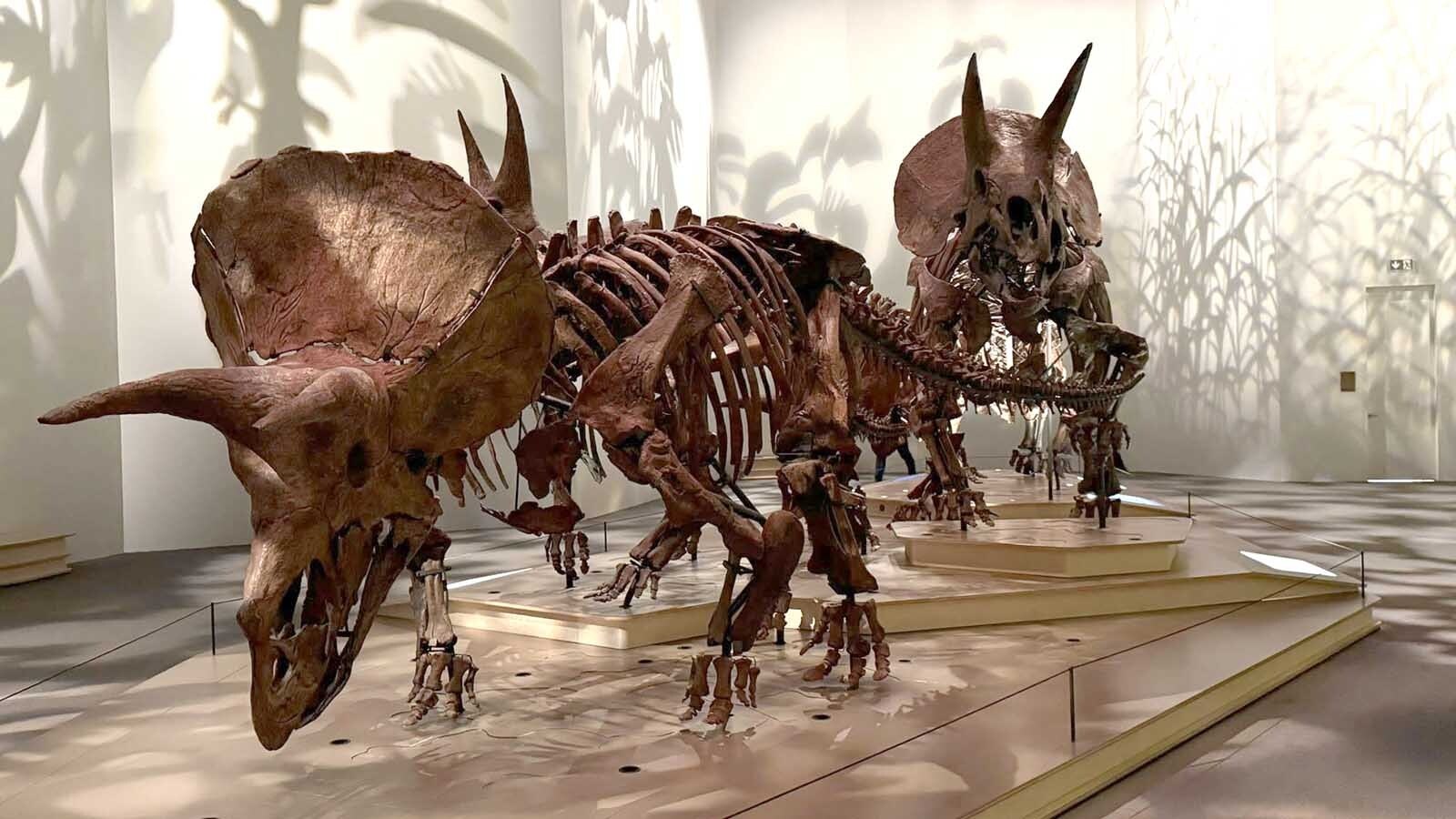
When the museum opened, it featured a traveling exhibit of five Triceratops specimens on loan from the Naturalis Biodiversity Center in the Netherlands. Those fossils were excavated from a single site in the Powder River Basin, with Larson’s assistance, in 2013.
The main gallery includes real-fossil mounts of Stegosaurus, Camptosaurus, and another Camarasaurus from the Jurassic Period, along with Denversaurus and Torosaurus from the Cretaceous Period. Some of the best specimens of each of these dinosaurs have come from Wyoming.
Neither of the two Tyrannosaurus specimens, Stan and “Mary,” is from Wyoming. They were found in South Dakota and Montana, respectively.
The NHMAD was unavailable to comment on the provenance of these specimens, but it wouldn’t be surprising if many of these dinosaurs reached the UAE, in one way or another, from Wyoming.
Larson acknowledged he’s currently working on another paleontology project for the NHMAD using fossils BHIGR collected from the Late Cretaceous Lance Formation in Wyoming. He couldn’t go into much detail but divulged that it’ll make for another exceptional exhibit.
“It's a pretty interesting deposit with three dinosaurs preserved together,” he said. “They’re not new species, but they tell a very interesting story,” he said.
The Work Continues
Work continues in the Waugh Quarry. Larson mentioned several specimens, either in the ground or in the BHIGR’s collections, that are just as exciting as the three sauropods at the NHMAD.
“There's another Barosaurus skeleton that we’ve got partially out of the ground, and we’ve collected half of an apatosaur skeleton,” he said. “We have a Stegosaurus from that site, bits and pieces of some of the smaller ornithischian dinosaurs, and lots of shed Allosaurus teeth. It’s producing interesting stuff.”
Many of those fossils will be displayed in the new museum Larson is building in Hill City.
The BHIGR is expanding out of its original 4,000-square-foot showroom into a spacious 32,000-square-foot museum, formerly a winery, that will showcase the best specimens collected in the institution’s 50-year history. Larson is preparing to open it in 2027.
One thing Larson emphasized is that the three sauropods, along with all the specimens at the NHMAD, will continue contributing to science. They are available for paleontologists to research, and the museum is expanding its staff by adding more researchers who will work on-site to see what can be learned from these fossils.
“It is intended to be a research institution, not just a bunch of displays,” he said. “They're going to have more researchers who will actually be there working on their collections and other projects around the world.
Larson has spent most of his career studying Tyrannosaurus and its relatives. Working with much larger sauropods was out of his usual paleontological wheelhouse, but he and his team found their work for the NHMAD particularly rewarding.
“These are, by far, the three biggest dinosaurs we've ever worked on, and it was a really cool learning experience,” he said. “The Waugh Quarry is a unique spot, and there will be more papers coming out about these dinosaurs.”
Andrew Rossi can be reached at arossi@cowboystatedaily.com.