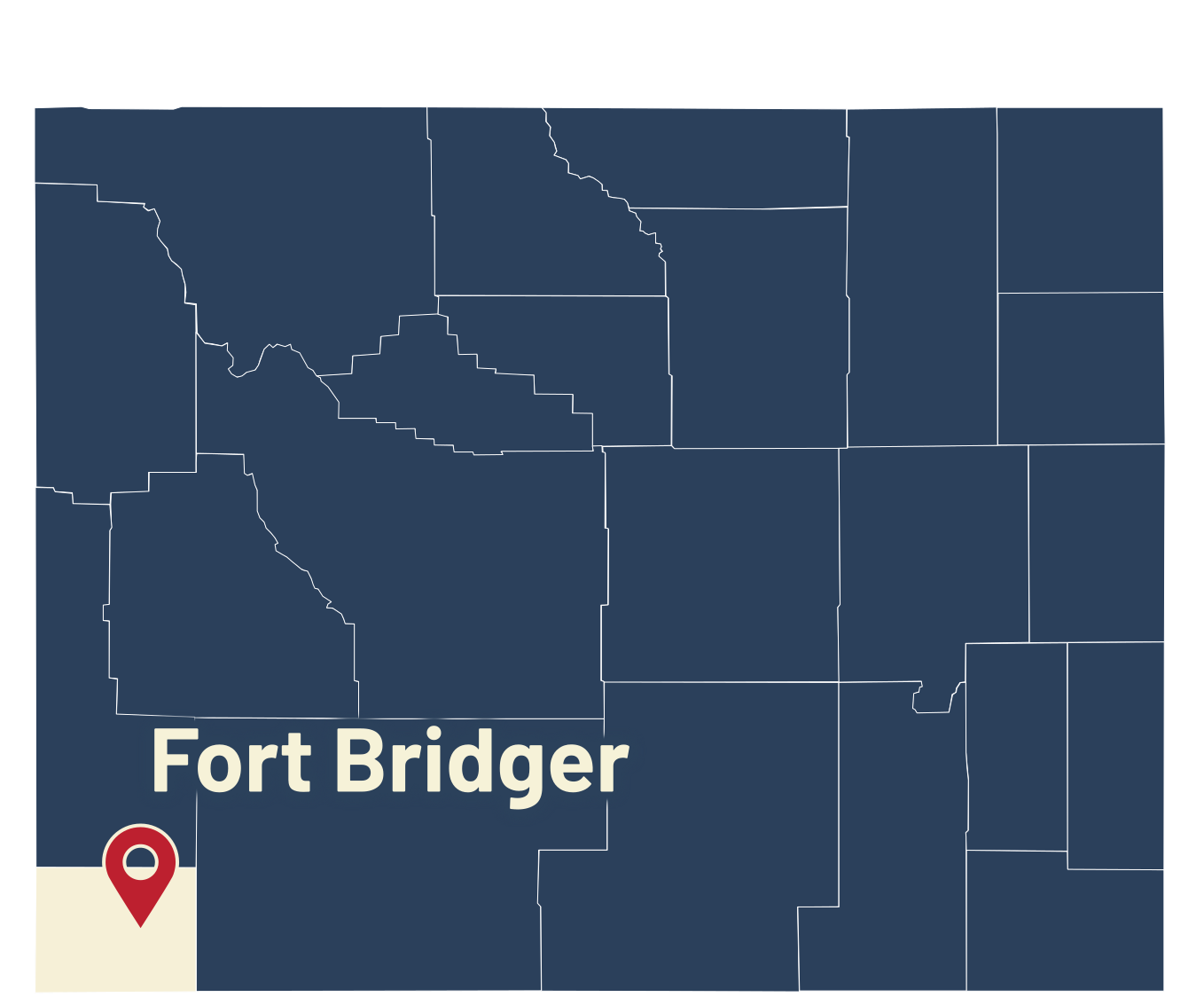
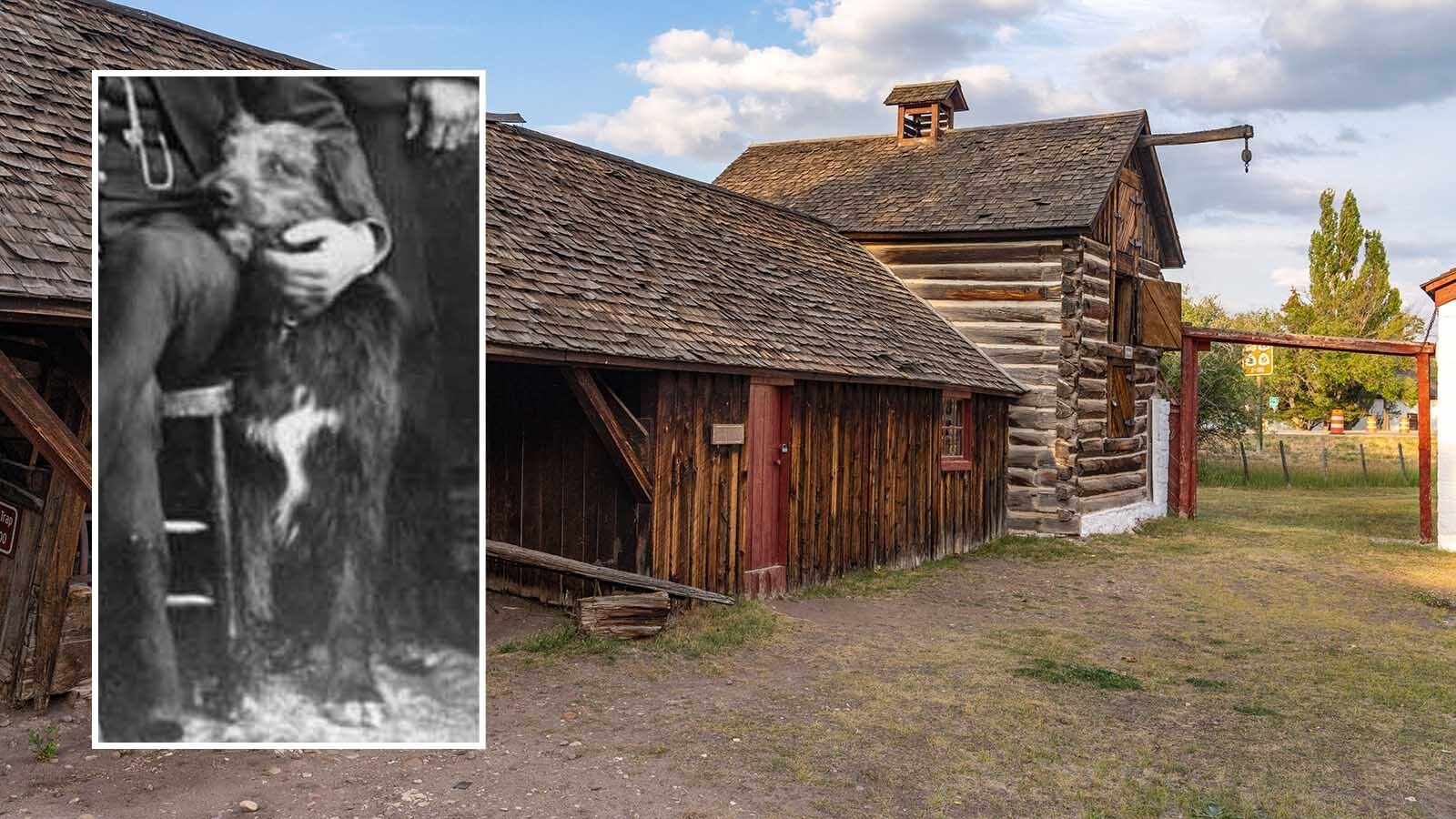
Famed world traveler and author Albert Cooper Allen was just 15 years old when he visited Fort Bridger, Wyoming, in 1894.
The story Allen wrote of that visit and his subsequent discovery was later republished in 1973 in Golden West magazine in an article by Dorothy Whittlesey.
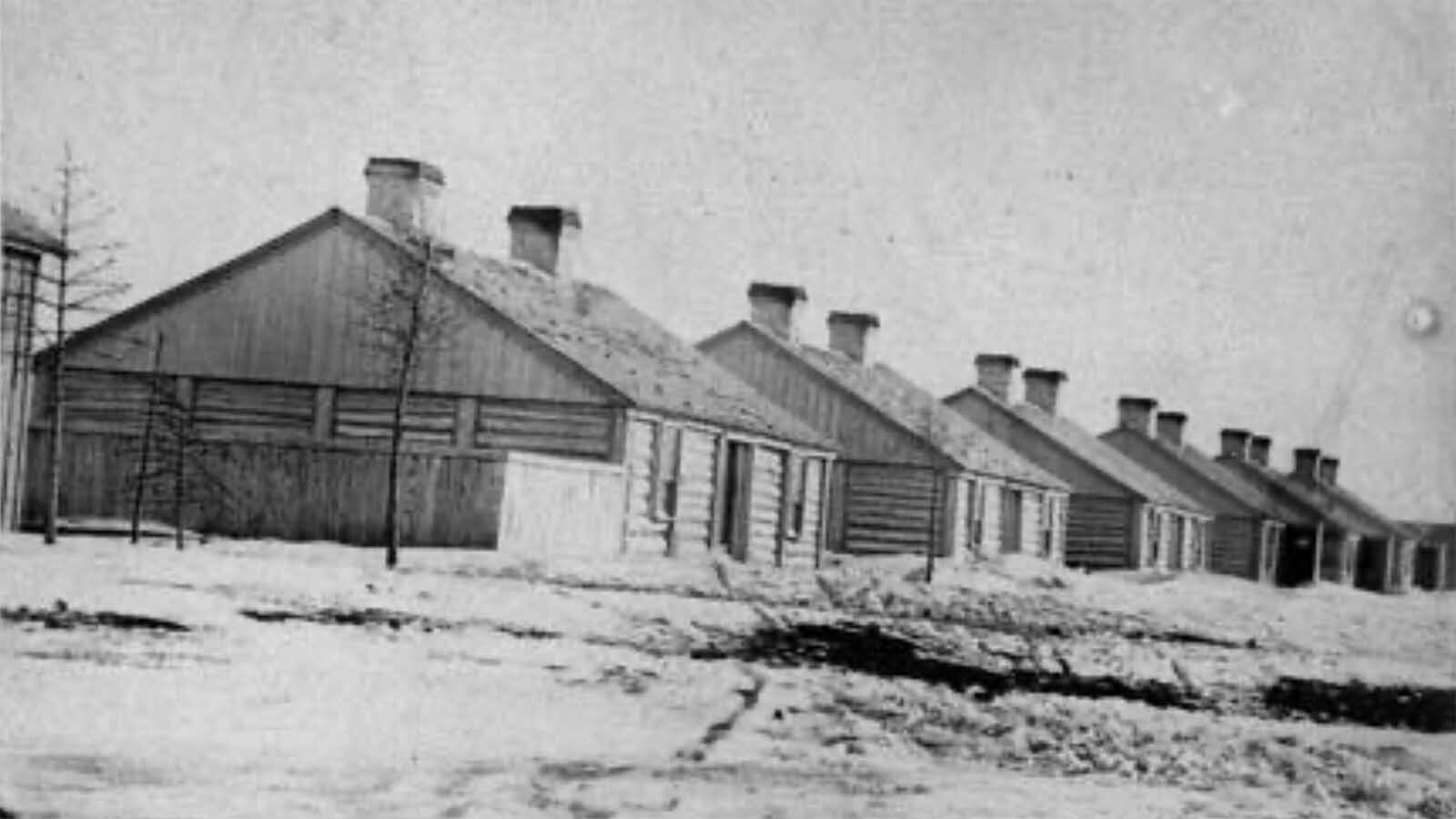
The fort had been abandoned for several years and was deserted by the time Allen first visited it.
He described how the buildings were falling into decay and being torn down.
Over near the old stables was a small grave enclosed in a fence of white palings, shaded by a weeping willow tree.
“In all this scene of desolation it was the only place that appeared to have been cared for and kept in good condition,” Allen said, according to the Golden West story. “It appeared to be the grave of a child, but the strange epitaph puzzled us.
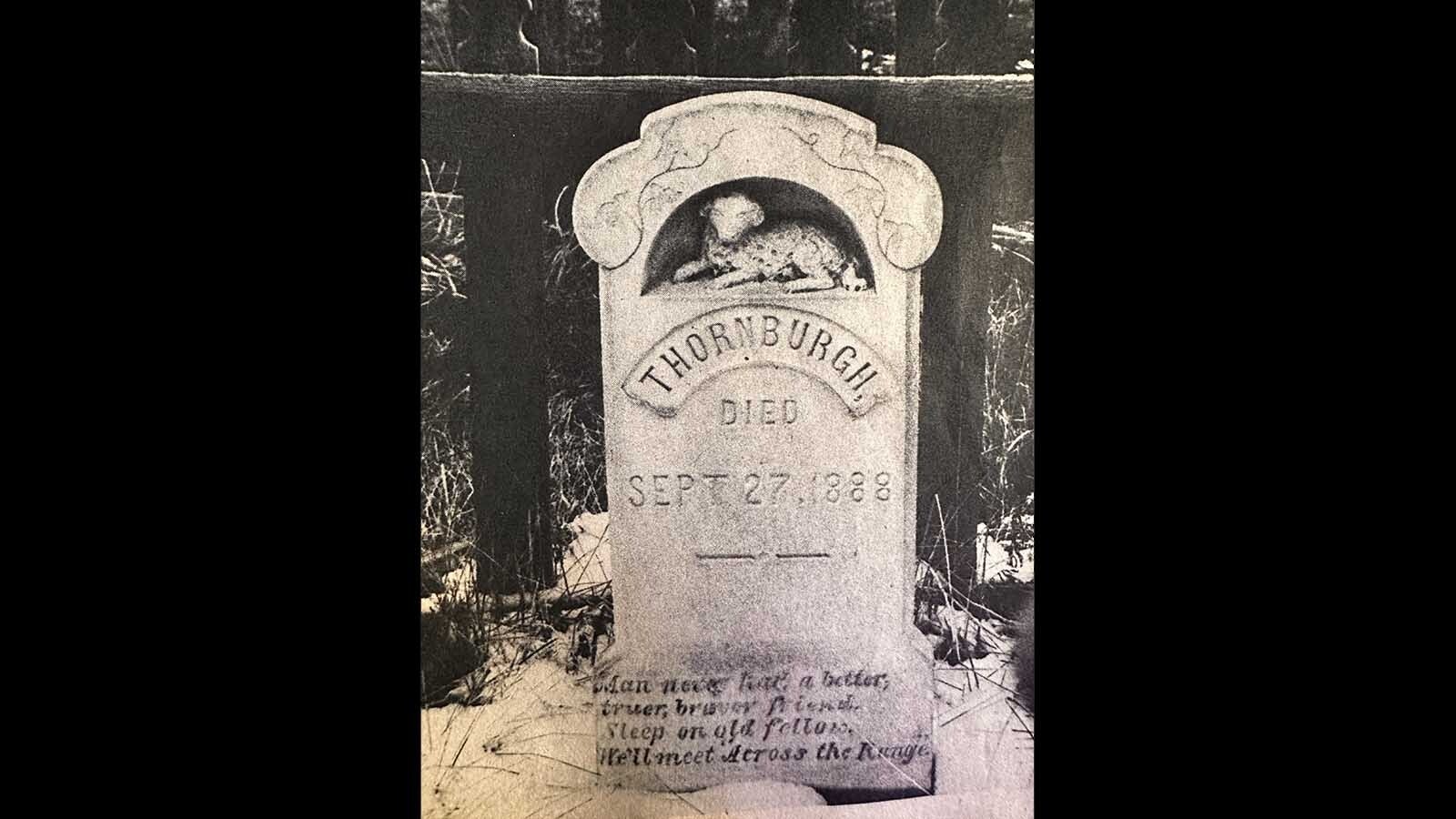
"On the stone was engraved a picture of a reclining dog.”
The inscription on the stone was for a Thornburgh, who had died on Sept. 27, 1888.
It read, “Man never had a better, truer, braver friend. Sleep on, old fellow, we’ll meet across the range.”
It was “Buck” Buchanan, a civilian teamster employed at Fort Douglas, who solved the mystery, according to the Golden West story. The stone marked the grave of his dog.
Allen got the story little by little and said that, often, the older man’s eyes filled with tears and Buchanan’s voice choked as he told of his beloved dog.
That conversation with Buchanan unraveled how Thornburgh became the hero dog of Fort Bridger. Following is that story as told by Allen and republished by Golden West.
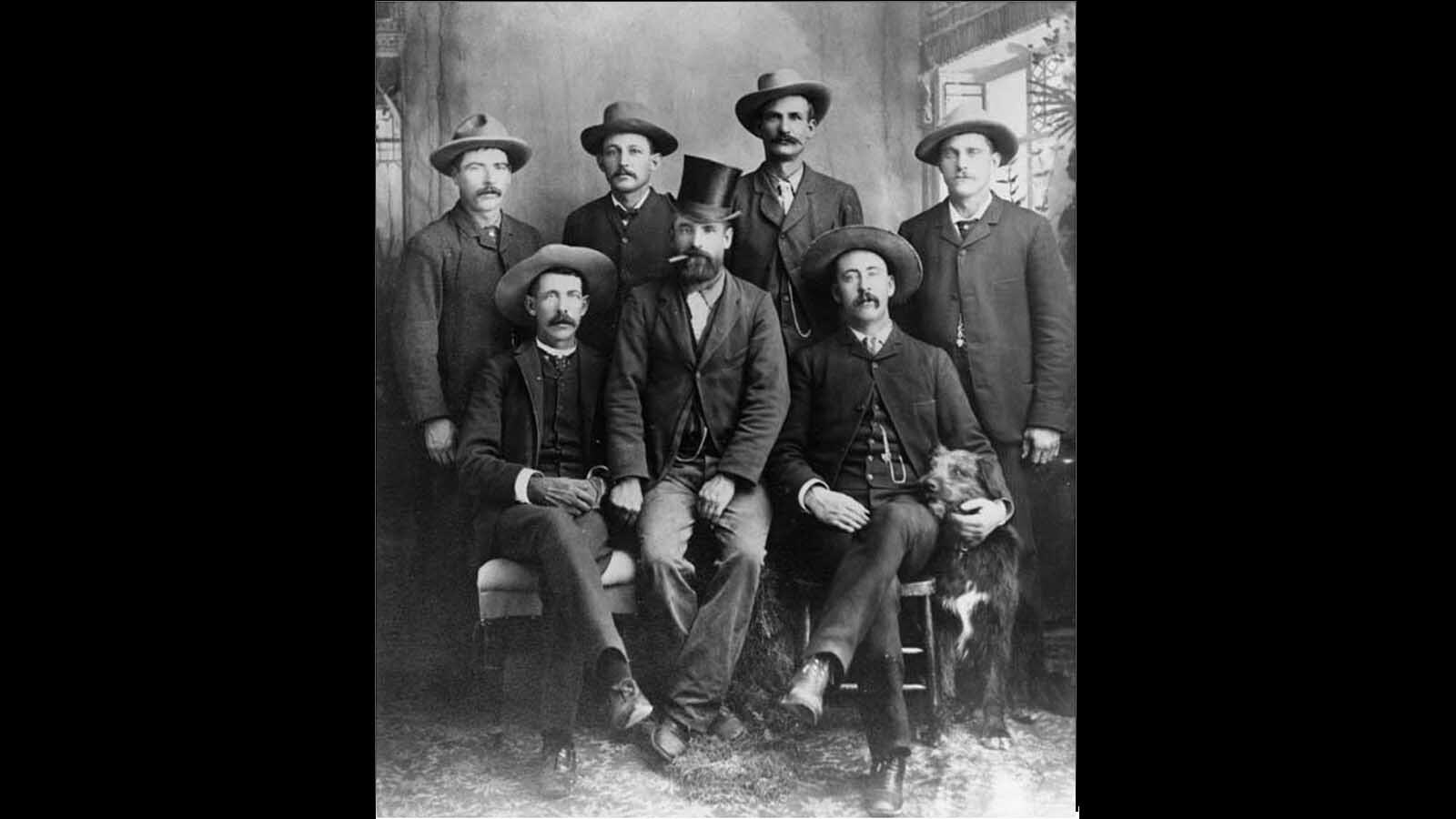
A Small Survivor
The story of Buchanan’s dog began when Maj. Thomas Thornburgh was ordered to go to the White River Indian Agency in Colorado.
He had marched from Rawlins with a wagon train and his men to save the agent, and in the process broke the 1868 Ute treaty.
On Sept. 29, 1879, Thornburgh and his command entered a small canyon on Milk Creek about 20 miles from the White River agency.
Three hundred Utes had hidden themselves in almost impregnable positions above the canyon.
As the soldiers entered, the Indians opened fire.
In the fight that ensued, Major Thornburgh was killed, then Captain Payne took command and withdrew to the wagon train.
Allen wrote that when they arrived, the soldiers found that every man with the train had been killed, the animals slaughtered or run off, and the wagons set on fire.
After the fight, soldiers salvaged what they could and buried their dead.
Among the wreckage, they found the body of a female dog with a little puppy yelping its heart out beside her.
The surviving soldiers named the small puppy Thornburgh after their major.
This story of Thornburgh the dog was faithfully recorded by the teenager as told to him by Buchanan and otherwise would have been lost.
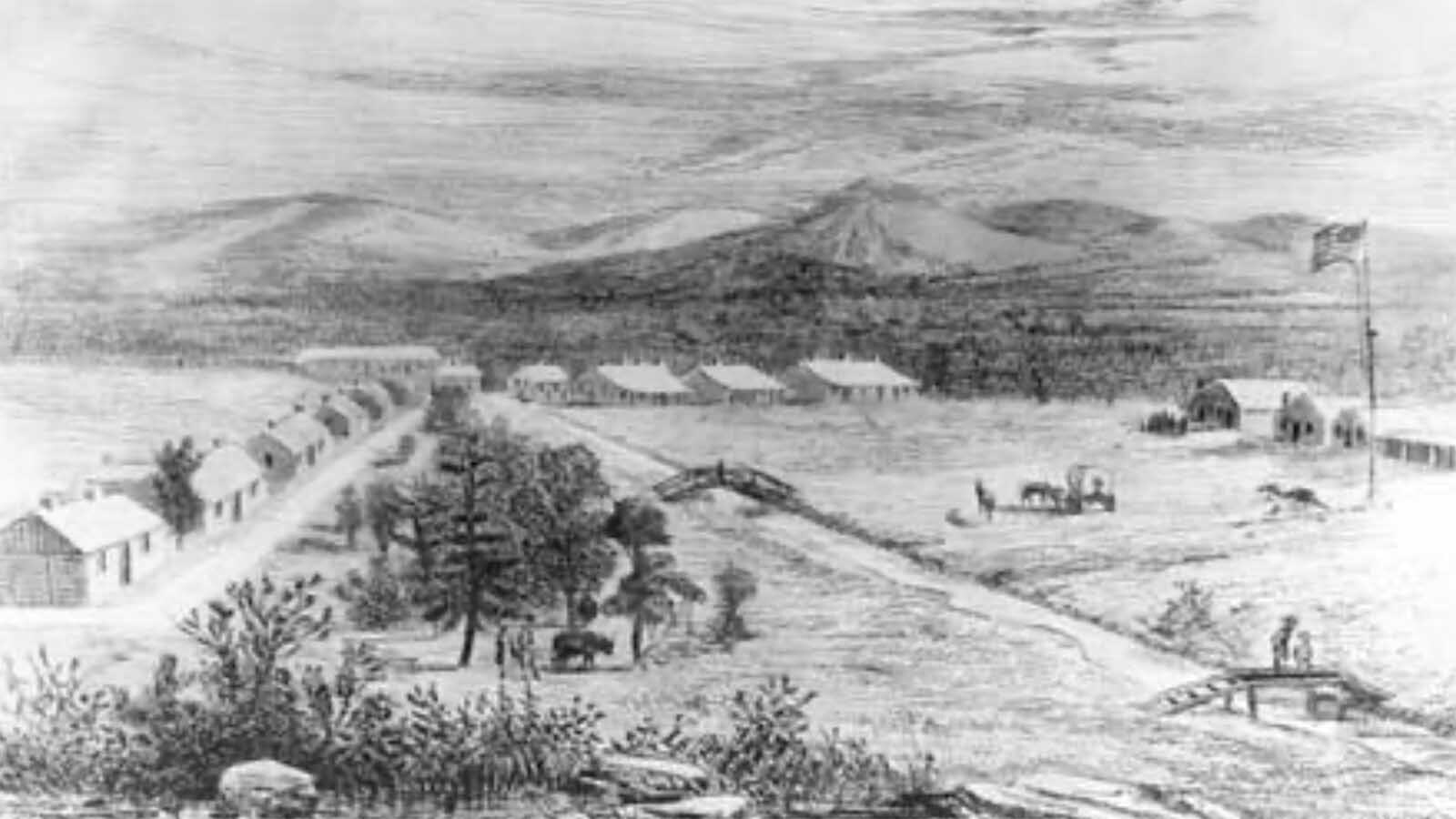
A Young Hero
Allen said that there was nothing remarkable about Thornburgh who was regarded as just another mutt that was a military camp follower, begging for scraps and belonging to no one.
Eventually, Thornburgh ended up a Fort Bridger.
There, he was but one of the half-wild dogs running about the garrison.
All these renegade dogs annoyed the commanding officer to the point that he had pronounced doom for any “cur" caught out on the parade ground.
Another annoyance for the officer was thievery. Someone had been stealing from the fort, and they had not been able to catch the culprit.
It was during this time when a sentry who sought shelter from a lightning storm under the commissary shed heard a commotion.
“In a lightning flash he glimpsed a dog, with bared fangs, standing with forelegs upon a prostrate man,” Allen said in his account. “The sentry recognized Thornburgh and called him, but he could not see if he was obeyed.”
The sentry was about to call for help when his corporal and another man came rushing in.
The light from their lantern revealed Thornburgh standing near the body of a man dressed in civilian clothing. Not far away was a sack, part of its contents scattered on the ground.
The man was alive but mauled badly.
“He was robbing the commissary and Thornburgh must have caught him sneaking away,” the corporal said.
The following day, Thornburgh was declared a hero and the commanding officer immediately lifted his order of execution for all the dogs.
“The morning after his fight with the thief, Thornburgh was found in his bed stiff, sore and bedraggled,” Allen said. “The commanding officer, bluff old soldier that he was, heard of the dog’s condition, visited him personally, and ordered the post veterinarian to give Thornburgh every care.”
During the fight, Thornburgh had been cut badly in the side with a knife and from then on, he was ready to fight whenever he saw the flash of a blade.
Once he recovered, Thornburg was given a new collar with a brass tag stamped with his name and fed at the company kitchens. He was petted by the men and lived at the stables.
On several occasions, Thornburgh was said to have distinguished himself by his unusual deeds.
“One night in particular, out on an Indian campaign, he warned the sentinel when marauding Indians sneaked up under cover of darkness to cut loose and stampede the horses and mules of the command,” Allen said.
A Loyal Friend
Buchanan continued to share the story of Thornburgh with Allen and told him in detail how his special friendship was first formed with the dog.
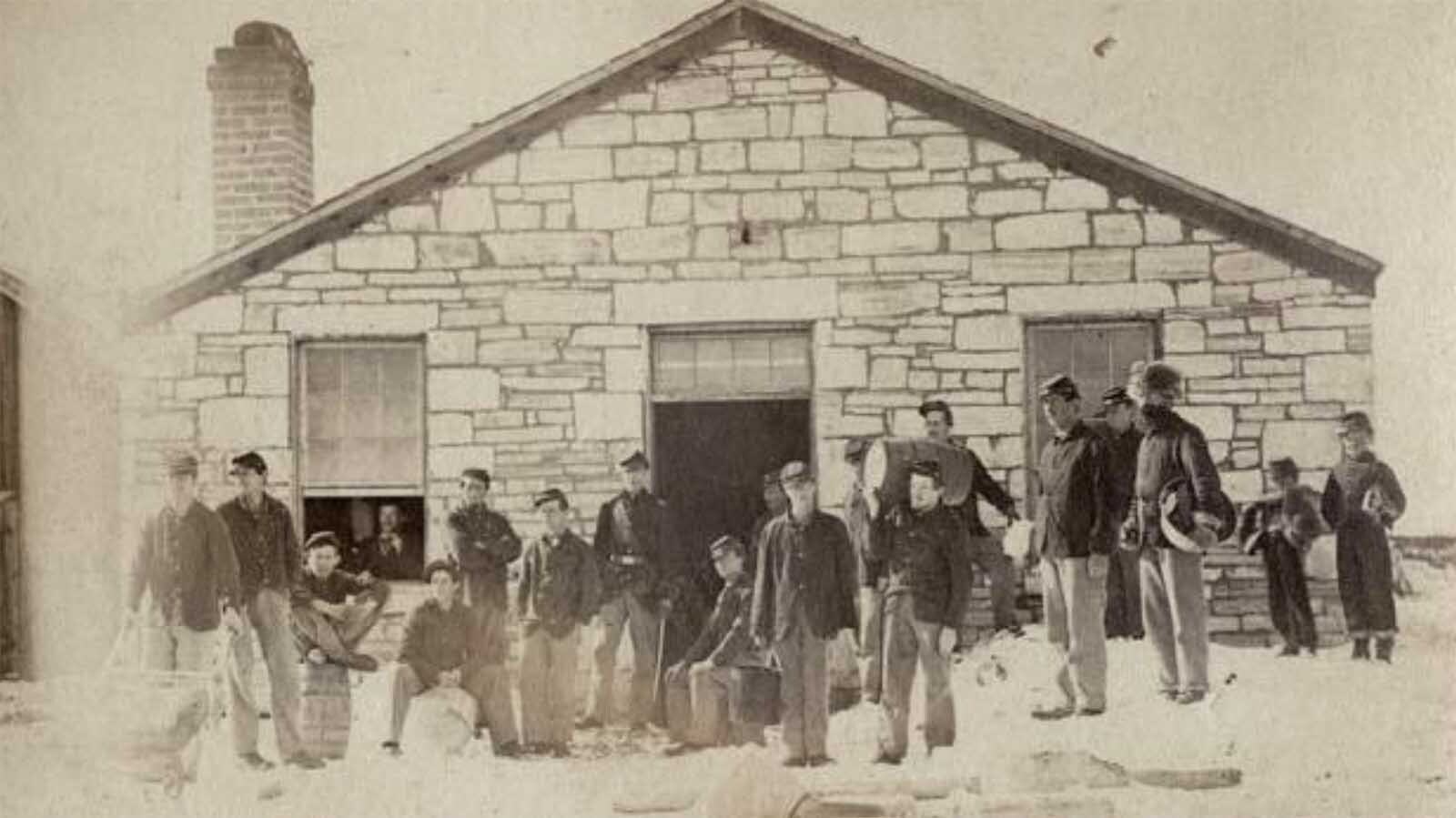
He was a civilian teamster and arrived at Fort Bridger to be met with a wary Thornburgh who only trusted soldiers.
He growled at Buchanan when he approached the doorway where Thornburgh was laying. One of the teamsters started to order the dog away when Buchanan stopped him.
“Hold on,” Buchanan said. “Just leave him alone. I’ve handled dogs before and I think I can this fellow.”
“Don’t try anything rough or he’ll nail you,” warned the teamster.
“No fear of that,” Buchanan said. “But we have to live here in the same quarters, so we’ve got to get acquainted.”
Buchanan then extended his hand casually, palm up, and with that small gesture began a deep friendship. He spoke soothingly to the dog and years later, relayed the conversation with Allen.
“Thornburgh, you’ve made a mistake. You and me has got to be friends or enemies,” Buchanan said. “We’re going to settle it right here. Come. Let’s be friends.”
Thornburgh eyed the civilian narrowly but refused to move from the doorway.
Buchanan pulled up a chair and sat quietly down very near the snarling dog. For a while he looked the dog squarely in the eyes, smiling and crooning to him. He urged the dog to approach.
After a long while, Thornburgh arose and approached. He smelled the extended hand and allowed it to touch him.
Slowly, Buchanan patted his head, sliding his fingers, almost imperceptibly, back of the dog’s ear and gently scratched it. Then Buck removed his hand.
Thornburgh looked up, hesitated, then edged closer, placing his muzzle on the man’s knee.
“Well, old fellow, I guess we’ll be friends from now on, won’t we?” Buchanan said.
That evening as Buchanan sat smoking among the teamsters, Thornburgh came to his side and placed his nose on the man’s knee. Buchanan laughed and rubbed his head and ears.
After that, the two were inseparable.
“Thornburgh’s was a jealous devotion and he soon refused to allow anyone to so much as slap his master on the back,” Allen said. “One could shake his hands with Buck, but that was all.”
Beloved Savior
Thornburgh’s reputation as a hero continued to grow.
One payday, some of the men were playing a game of faro down behind the corral. Most of the players had been drinking heavily, and a quarrel ensued.
In the melee, one of the soldiers drew a knife and raised his arm to drive it into his adversary.
“As the blow descended, the raised arm was suddenly grasped as in a vise,” Allen said. “The grip was around the bared wrist, and the pain was excruciating as it was violently shaken and the knife went flying through the air.”
Thornburgh had grabbed the man’s wrist just in time to save the other soldier’s life.
Another time, Thornburgh earned a medal when he saved the life of a small boy who had fallen into a raging torrent.
He had grabbed the youngster and pulled him to safety. The grateful parents presented Thornburg with a beautiful new collar with a silver plate engraved with his name and the words: “For most distinguished gallantry.”
Kicked By A Mule
Often when in the post, Buck turned his mules loose in the big corral among others that were not working.
Buchanan taught Thornburgh to sort out his mules whenever he needed them. However, one day this routine chore turned to tragedy.
Buchanan had turned his team into the corral when the shavetails (untrained mules) were loose in the corral.
When he received an order to hitch up and go to the commanding officers’ quarters, Buchanan went to the gate and sent Thornburgh for his team.
“The dog went with a dash and began to cut them out and drive them toward the gate,” Allen said. “The shavetails had not been used to him and they dashed wildly about the corral, scattering the other animals."
Thornburgh dodged in and out doing his best, but the new mules had the rest badly disorganized. Fearing for his safety, Buchanan called Thornburgh to him, but in the noise his dog did not hear his command, Allen related.
A shavetail kicked viciously at Thornburgh who swerved, but slipped and the mule’s hoofs landed squarely on his side.
Years later, Buchanan recalled the story with tears in his eyes.
He just heard one last yelp from Thornburgh, who was thrown several feet into the dust, where he lay motionless.
Buchanan rushed to his unconscious dog and picked up the limp form. He placed his poor dog in his own bed, but Thornburgh soon breathed his last.
In a tribute to his beloved friend, Buchanan had the granite grave marker created and Thornburgh was laid to rest.
Three years after sharing this story with Allen, Buchanan lost his job as teamster at Fort Douglas, and Allen believed that Buchanan now lies in an unmarked grave in Salt Lake City.
While his own grave may be lost, Buchanan made sure that Thornburgh, the hero dog of Fort Bridger, would not be forgotten.
Jackie Dorothy can be reached at jackie@cowboystatedaily.com.