An anti-rodeo law that would all but ban the sport in New York City represents the kind of trend Wyoming rodeo defenders hate to see and is something they hope will not spread.
The proposed law, which landed on the New York City Council's New Year’s Eve agenda, would ban all calf roping, flank straps, and electric prods at rodeos.
The law didn’t pass this go-round, something advocates of the so-named Voters for Animal Rights blamed on timing, saying that a “supermajority” of councillors supported the law and that it would have passed at any other time.
They intend to see the measure re-introduced this year in what they hope will be a more advantageous timeframe.
That has some rodeo advocates like the group Bronc Riding Nation calling for a full-court press to correct what they see as misinformation in an ongoing culture war that’s attacking the cowboy way of life.
Wyoming cowboys told Cowboy State Daily they don’t want to see laws like this getting spread around. It’s a little bit like the first broken window on an abandoned building — it tends to invite more of the same down the line.
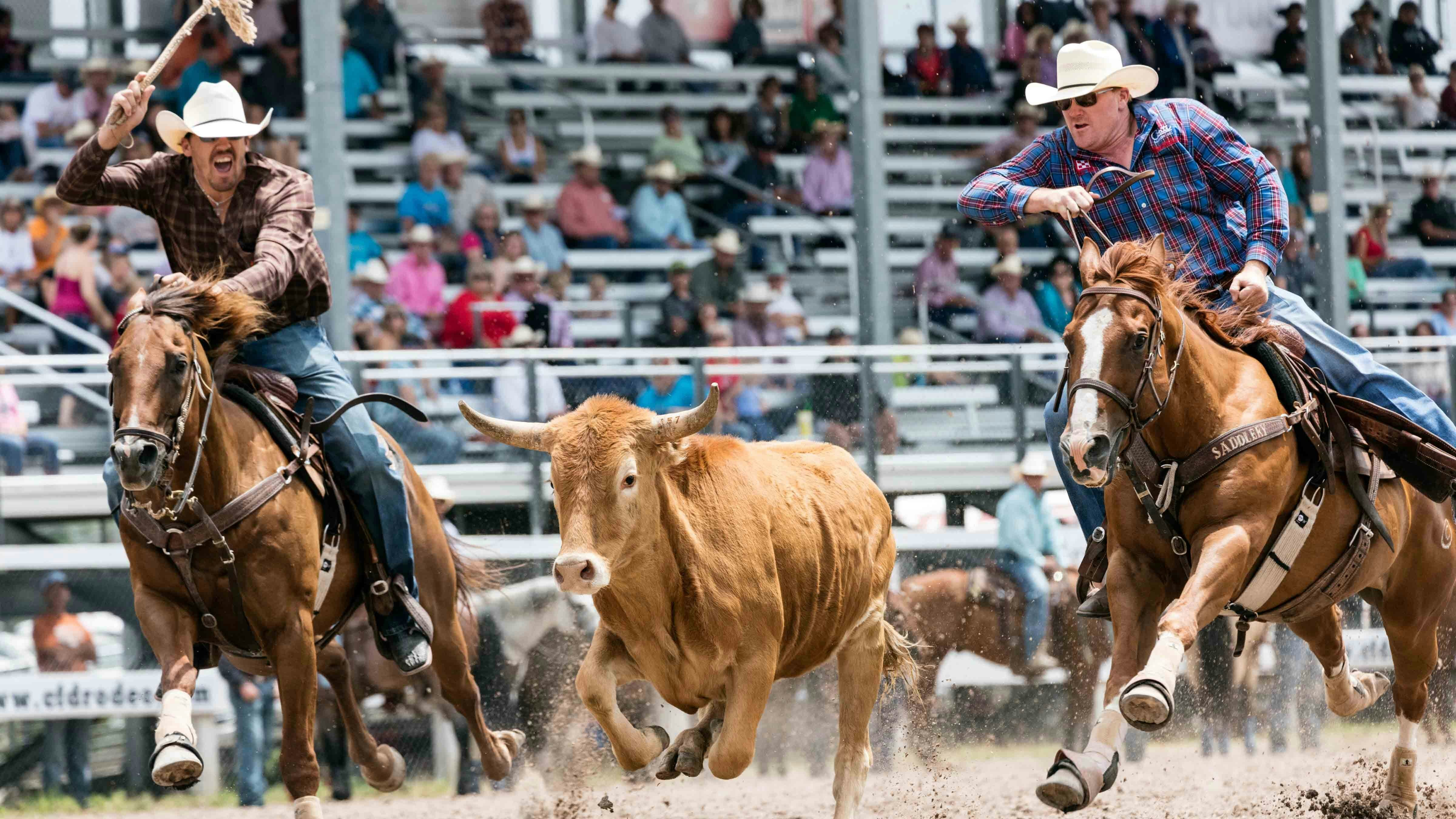
“I think it’s a lot of misinformation,” retired bull rider Marc Gill told Cowboy State Daily. “In the tie-down roping, there’s already rules in place. They are enforced. There are fines involved for improper treatment of an animal.”
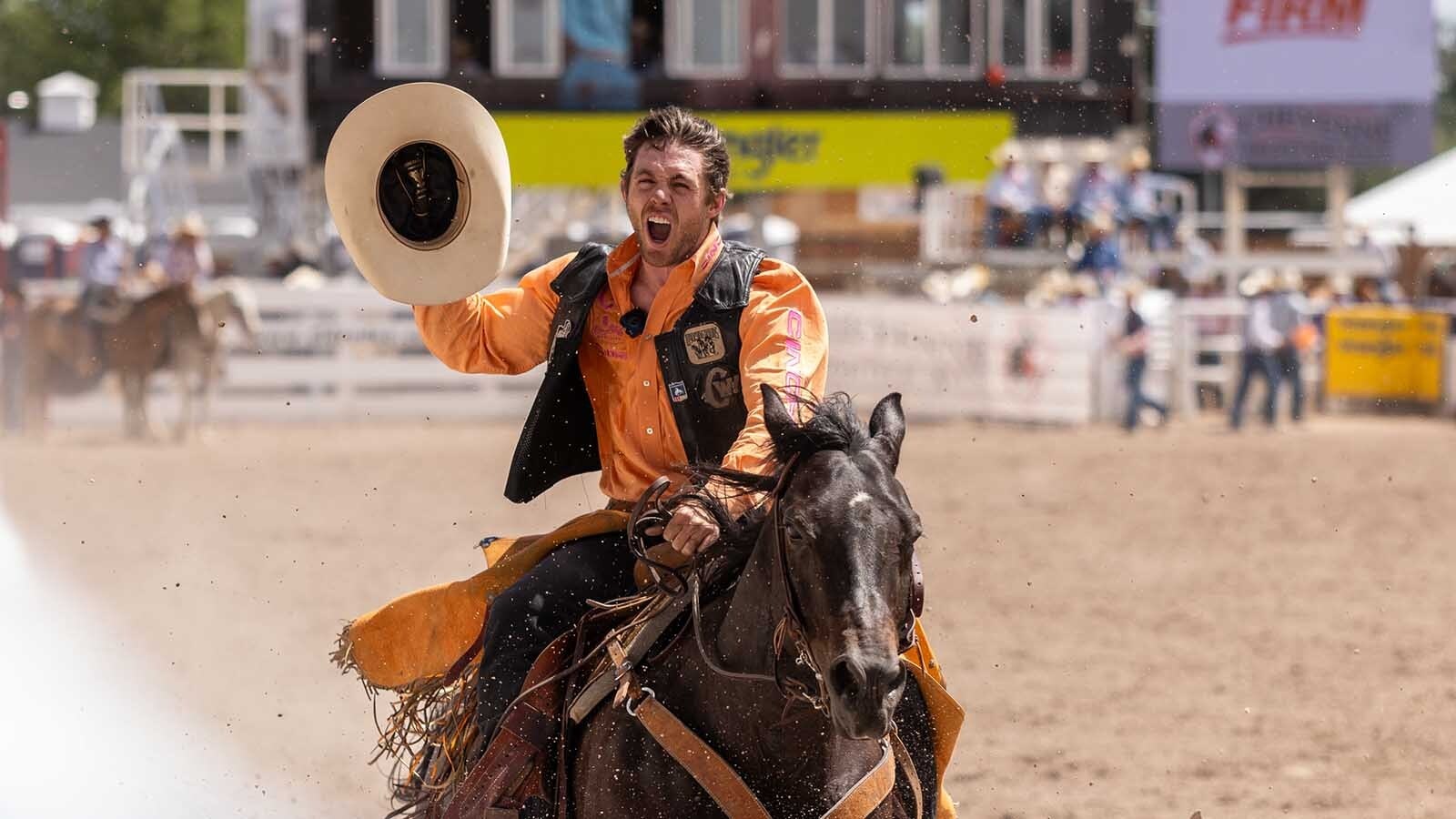
Flank Straps Don’t Actually Make Animals Buck
As for flank straps — wide leather straps lined with fleece situated around an animals flank like a belt — don’t actually cause bucking as many critics think.
“It changes the manner in which they buck a little bit,” Wyoming livestock handler J.D. Hamaker told Cowboy State Daily.
What it does is "makes them kick," he said.
Animal rights activists have made claims that the straps are intended to be painful or that they’re placed in sensitive areas like the groin.
That is patently false, both Hamaker and Gill said.
In fact, a flank strap that’s put on too tightly or that is in any way painful will inhibit bucking, they both Gill and Hamaker.
“We cannot teach them to buck. We can’t make them buck by being mean to them,” Hamaker said. “What people don’t really realize about bucking horses and bulls is that fear or pain are the two worst things that can happen … if you’re trying to get them to perform.”
They’re placed around a horse or bull’s flank, between the last rib and haunch and never, as some animal rights groups have claimed, around the groin or testicles.
A proper flank is set so that it is loose enough to almost fall off of the animal whenever it extends its legs for a kick.
It’s meant to be a minor annoyance, like a tickle, and is immediately removed as soon as the 8-second performance ends.
“There’s nothing in the flank that will cause any pain,” Hamaker said. “In fact, we routinely inspect our flanks to make sure that the sheepskin lining hasn’t got any spots that have started to wear off, where it can cause any burn or anything to them.”
Flanks also have to be fresh and clean, Hamaker added.
“We want those flanks to be clean and not have chunks of mud in them or anything that will cause any discomfort,” he said. “It’s completely opposite of the things that the animal rights people try to put out there."
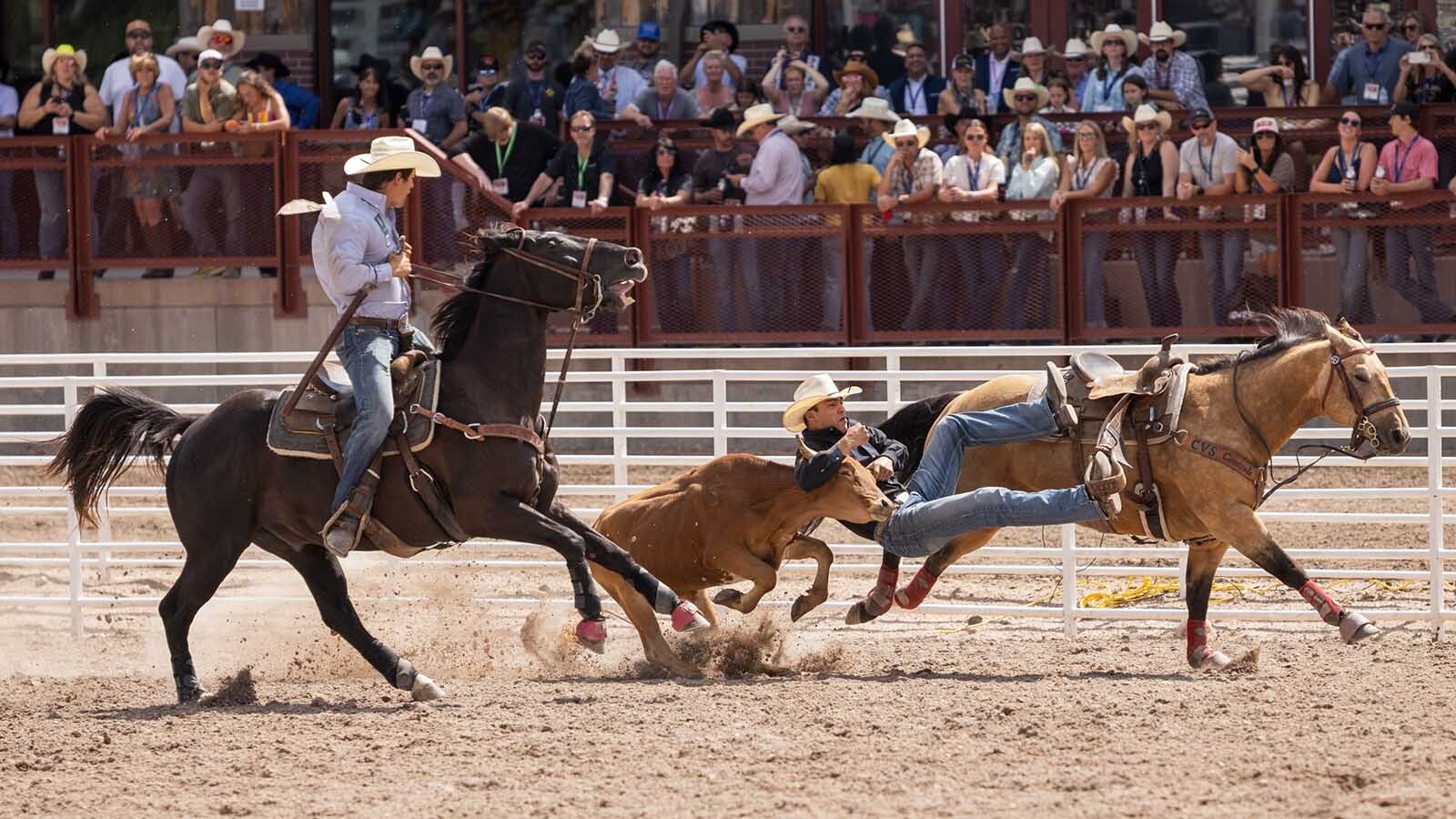
Good Buckers Are Stars Worth More Than $250,000
Bucking is actually a function of genetics, both Hamaker and Gill said, and it goes back to some of the earliest and oldest days of the West.
In the days of famous Wyoming bucking bronc Steamboat, for example, cowboys looking for rodeo stock could simply ask area ranchers for the horses that were bucking off their ranch hands to supply their needs for roughstock.
By the mid 1900s, most of the buck had been bred out of ranch animals.
“People in that timeframe figured out that they were going to have to start raising (buckers) themselves,” Hamaker said. “They weren’t going to be able to go buy them off those ranches anymore.”
By the 1970s, genetics were better understood and efforts to cultivate the best buckers started to skyrocket.
“I mean, the number and quality of good rodeo livestock athletes that are out there right now is hugely different than back in the day when I competed,” Hamaker said. “It’s just night and day different.”
These days, the best buckers are worth a quarter of a million dollars, he added.
Big Time Secret, for example, recently sold at auction for $187,000. The 5-year-old gelding was a new record at the Binion sale, but doesn’t surprise Hamaker.
“He was just 5 years old, which is young in age, and not proven,” Hamaker said. “So he was a prospect. If you would take one of those very established animals at the very top of their game, like the bucking horse of the year, it would be very easy to market them for the over $250,000 range.”
Most of the time, though, those celebrity animals are not for sale at any price, Hamaker added. And that’s the case for many of his best buckers, all of whom get star athlete treatment.
“We are not about to allow anyone to do anything that would hurt one of our animals or cause them to be uncomfortable in their job,” Hamaker said. “We’re going to fight those things completely. I mean, when you have an animal that’s worth $250,000, they’re going to get the utmost, greatest care in the world.”
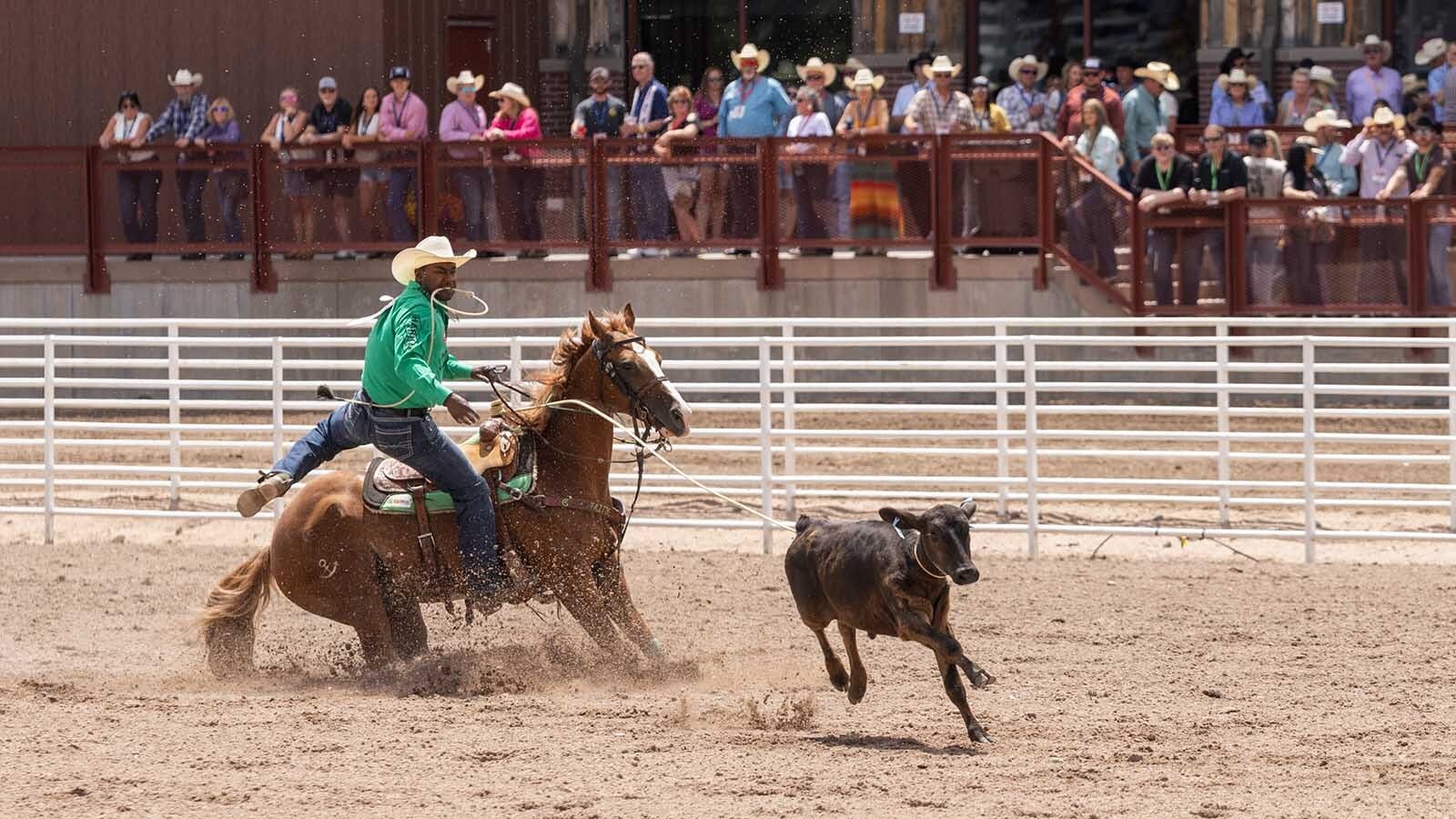
Not Every New Yorker Hates Rodeo
Madison Square Garden in New York city hosts a sold-out Professional Bull Riders event every year.
“I see people pouring into Madison Square Garden every year when the PBR comes to town,” New Yorker Danielle Mannino told Cowboy State Daily. “People enjoy it. It comes every year, and it gets sold out, I believe, every year.”
Mannino is a fan of Cheyenne Frontier Days, and believes rodeo is a strong part of American culture and shouldn’t be banned.
“It’s a lot of people’s livelihoods, so it doesn’t bother me,” she said.
While some New Yorkers feel strongly about it, Mannino feels that many have simply not been exposed to rodeo and don’t know that much about it.
“People just probably aren’t informed,” she said. “They don’t know these things. They just think of it as like, unfair to the animals. But I know they’re treated nicely, because I’ve been to Cheyenne and I’ve seen (rodeo) firsthand.”
That up close look included a behind-the-chutes tour, Mannino said, where a lot of the ins and outs of rodeo were demonstrated and explained.
“They’re good to the animals,” Mannino said .”I think a lot of the people who work in rodeos and all the cowboys, they’re good to them. I saw a lot of very happy animals back there where they’re kept and they’re being trained. I never saw any animal cruelty.”
Easy Life For These Celebrities
Many of Hamaker’s best buckers have their own following of fans and are celebrities in and of their own right. Hamaker said his operation does what it can to make sure these rodeo stars are living the best life possible.
“It’s a pretty easy life for some,” he said. “I mean, when they’re worth that kind of money … they are pampered animals. A lot of those animals might only compete less than five minutes a year. They might buck for eight seconds eight times a year.”
All of Hamaker’s livestock have protection from weather and spend far more time roaming the pastures to eat than they do performing.
Hamaker also deliberately limits the number of shows each of his livestock athletes compete in, to ensure that they are in top form for every performance.
The animals are also carefully watched after a performance for any sign that a muscle has been pulled or strained. Appropriate experts are brought in for care if so, up to and including a massage therapist.
“It’s really like any athletic event that a human would do,” he said. “Those athletic events that are physical, you are likely to pull a muscle or something sometime. That doesn’t mean it’s inhumane. It’s just like your own child. You’re going to let them wrestle or do whatever athletic.
"And there’s going to be times that they will have some physical discomfort just from that activity. So, you deal with it when you get it, just like you would with a human athlete.”
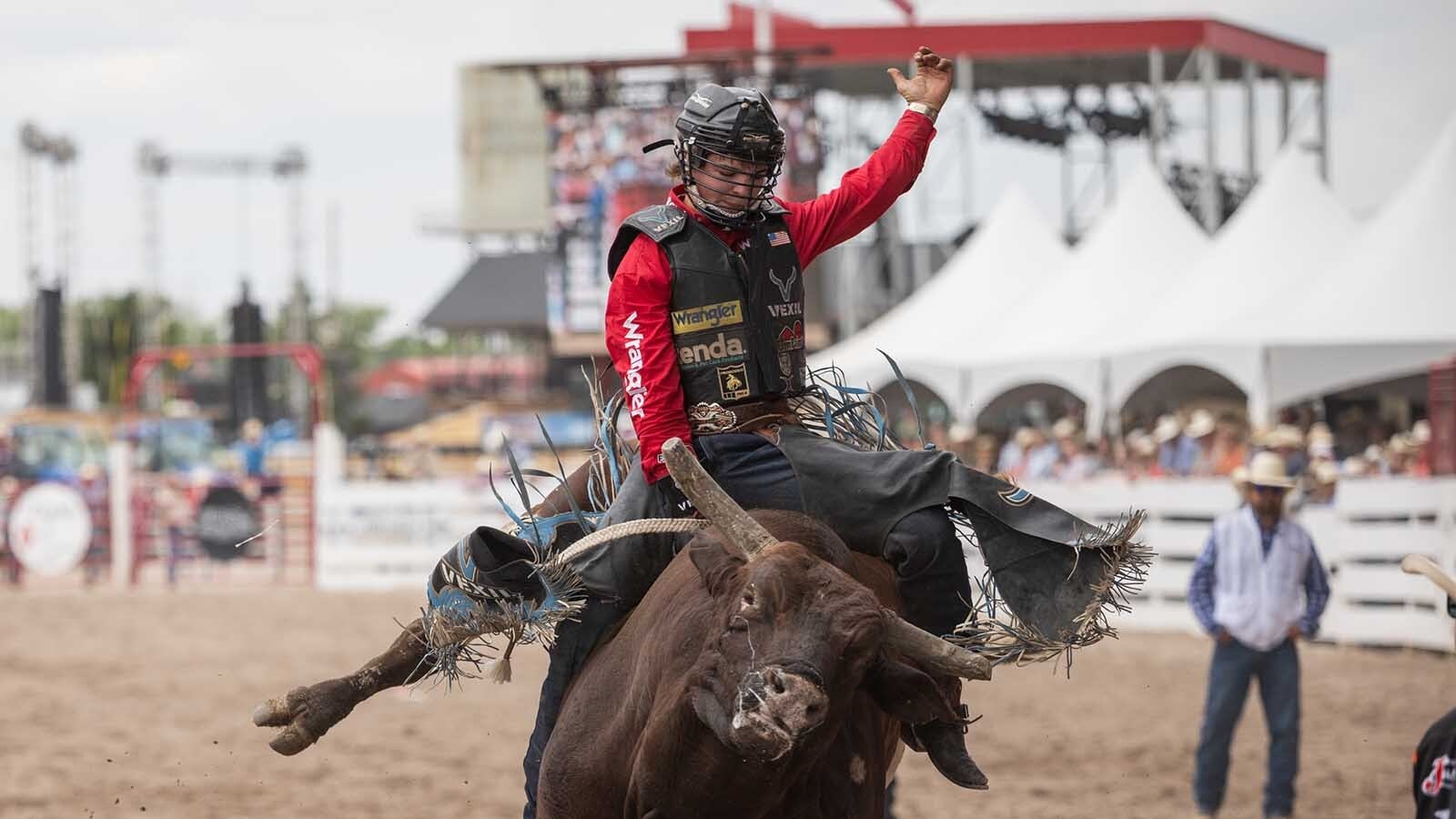
Strict Rules For Safety Already In Place
Electric prods, meanwhile, have strict guidelines for use in place under the Professional Rodeo Cowboys Association.
Among them, they are to be used only when strictly necessary for safety, and they may only touch an animal’s hip or shoulder.
“Those have been proven to be completely humane and one of the most humane ways to move livestock, if they’re used in a proper manner,” Hamaker said. “And there are rules in the Professional Rodeo Cowboy Association that require us to use them in a humane and proper manner.”
Hamaker believes the PRCA is no doubt already aware of the debate taking place in New York City with this rule, and likely already involved in it.
“That’s who we need to let handle these types of situations,” he said. “The PRCA has a division that knows how and the best way to fight these things.”
But it’s still concerning whenever these kinds of laws surface, Hamaker and Gill said.
“Anything that threatens the rodeo way of life and the atmosphere of rodeo and the culture is certainly a threat that needs to be taken seriously,” Gill said. “Governing bodies like the PBR and the PRCA are constantly evolving to try to do their best diligence to make sure livestock are protected.”
Gill advised people who want to learn more about how rodeo is really done to sign up for a behind-the-scenes tour. Those are commonly offered at many rodeos, including Cheyenne Frontier Days.
Why The World Needs More Rodeo
Attacks on rodeo have come and gone through the years, Hamaker added, and it’s something he’s seen before.
“PETA has probably been the longest standing animal rights group around,” he said. “But there’s been several others, too. It seems like a few years ago it was worse. There were more protesters at certain rodeos and certain cities than I’d seen in the last three or four years, so I kind of felt like we were maybe winning the battle a little bit, the misinformation battle with the general public.”
The world needs more rodeo, Hamaker believes.
“It’s family-oriented,” he said. “They still play the National Anthem, stand for the National Anthem. They pray before every event, and there usually isn’t content in the event that people feel uncomfortable having their small children see.”
The sport reflects both Wyoming and American values that societies need today.
“The people in it are honest, good people,” he said. “It’s got the right people involved that have the right morals and everything about rodeo is what America should be.
"People feel that a lot of parts of American are drifting away from that, and rodeo is the opposite side of that spectrum.”
Renée Jean can be reached at renee@cowboystatedaily.com.