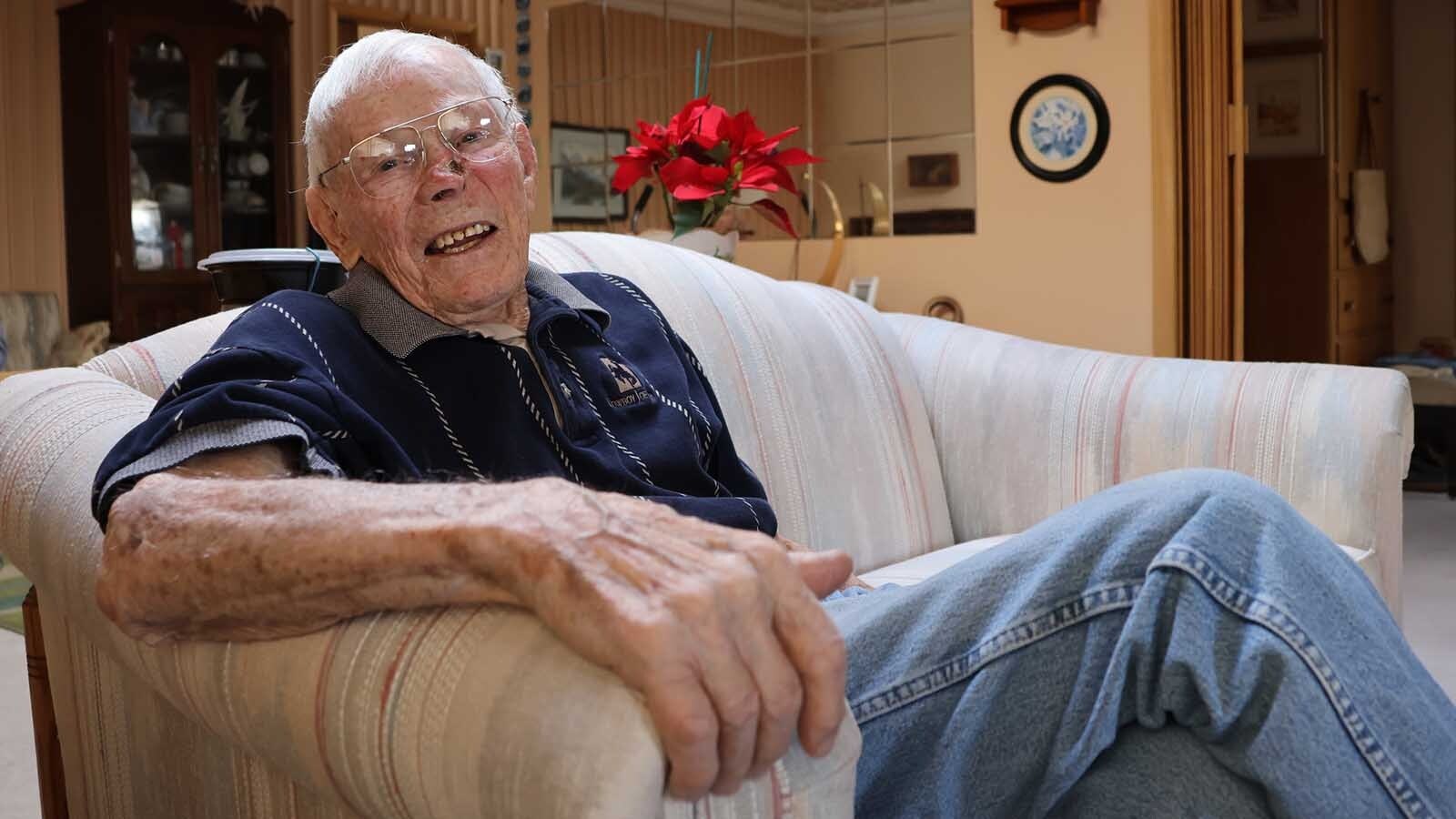
Bob Willis went through the Battle of the Bulge in January 1945 with some Kentucky moonshiners trying to make life challenging for the Mormon among their ranks.
But it was the Book of Mormon in his pocket that saved him from a piece of shrapnel from a tank round that blew up beneath him during the Battle of the Bulge — and likely played a part in him reaching his 101st birthday, which he celebrates Saturday.
The retired Laramie dentist still has the book and the shrapnel in a little glass case.
As one of the few remaining World War II vets from the “Greatest Generation” in Wyoming, he looks back over the past century with the war years still vivid in his mind.
“I’m just a survivor,” he said. “I’m no kind of hero.”
But his boots-on-the-ground memories of his time overseas reflect a man who did his duty. The Purple Heart on the shelf is a symbol of the cost.
Sitting in his two-level home where he and his wife, Kaye, raised their five children, Willis showed Cowboy State Daily two Nazi flags, a German tanker sheepskin jacket, Nazi arm band, German soldier jackets made of rabbit fur, German field glasses and two pistols — a German Luger and Hungarian .38-caliber pistol.
He also had put a 4-foot bronze-handled ceremonial sword in a black sheath on a bed.
“This was from burgomaster’s office in Deggendorf, Germany,” he said. “These are my prizes.”
The treasures from his time in Europe speak of when GIs broke the chains of Nazi rule that enslaved the European people and returned home with a few spoils of war.
The pistols came from piles of weapons Americans demanded Germans turn over after they took German towns. The jackets came from warehouses that supplied German troops, and the Nazi armband may have come from a house that he occupied along the way.
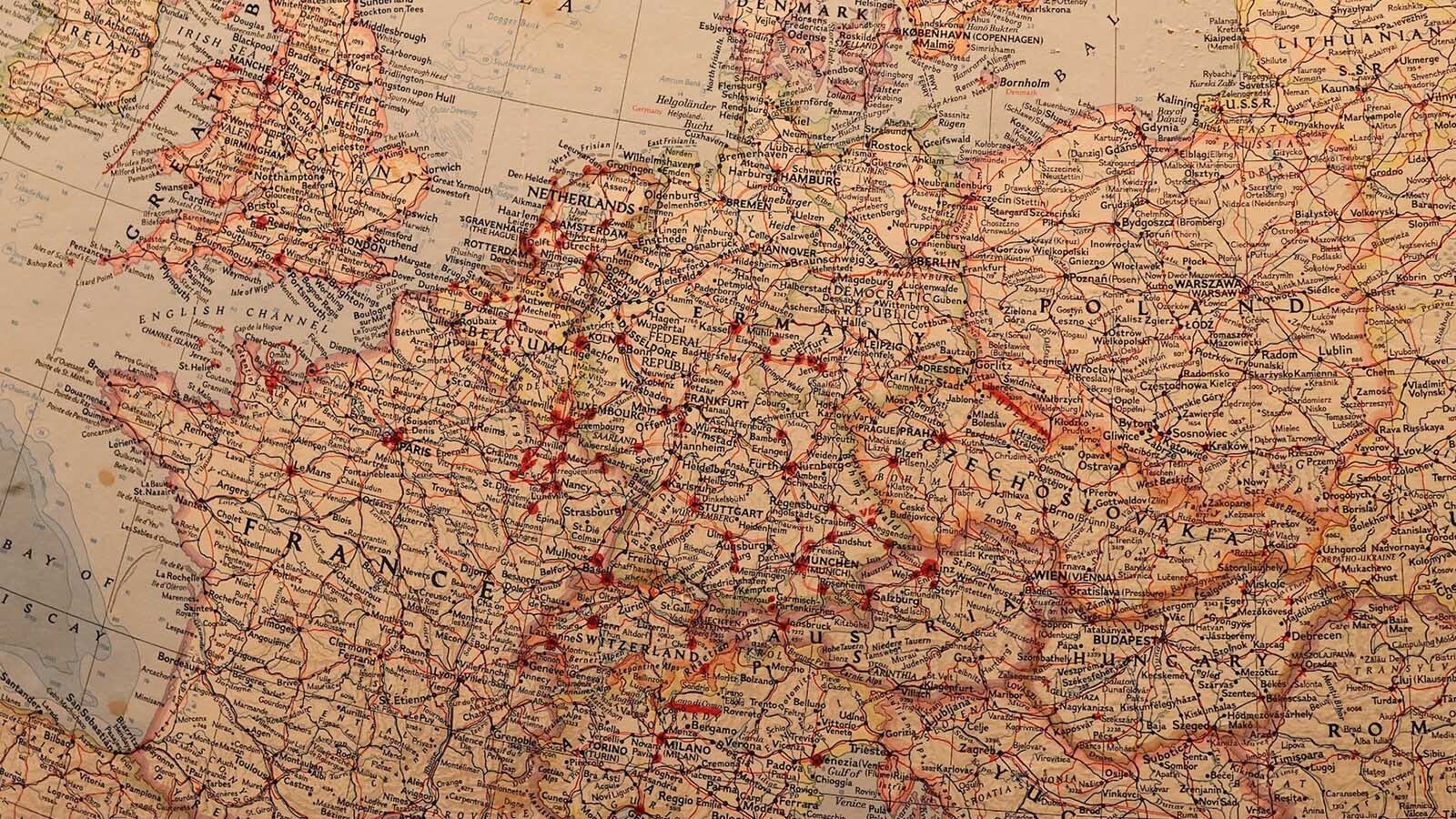
On a basement wall is a world map with red pins detailing all the places his boots covered in Europe during the war.
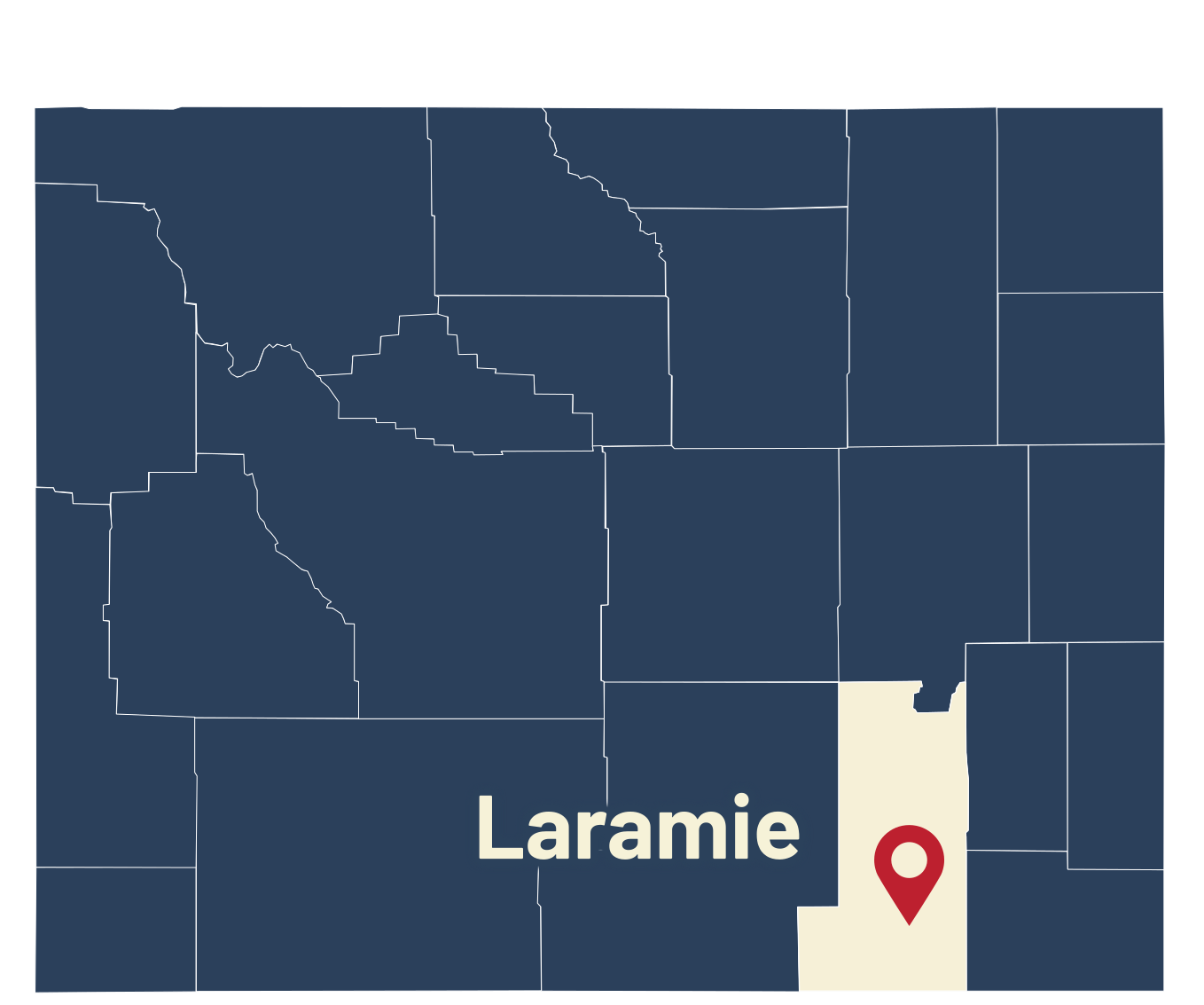
The son of an LDS couple, Andrew and Amy Willis, who moved to Cowley, Wyoming, to help settle that town, Willis was born Jan. 10, 1925.
His father, who was a graduate of the University of Wyoming, decided to move to Laramie in 1929 and take a position with the university’s extension service.
When Pearl Harbor was bombed on Dec. 7, 1941, Andrew Willis, a World War I veteran and member of the Wyoming National Guard, was called into active duty as an officer, his son recounted.
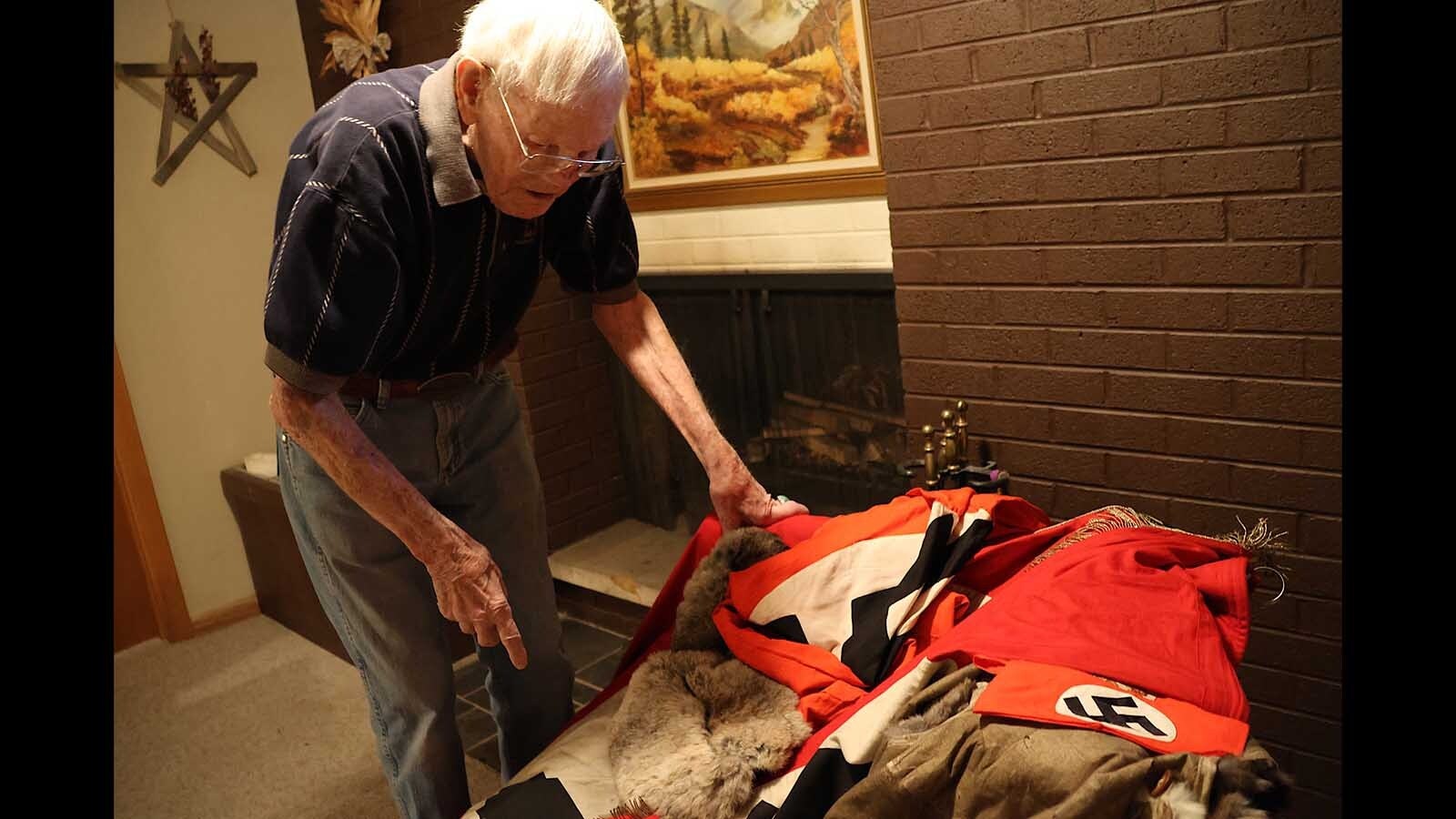
Bob Willis shows a visitor some of the souvenirs from the war that he brought back from Europe. (Dale Killingbeck, Cowboy State Daily) 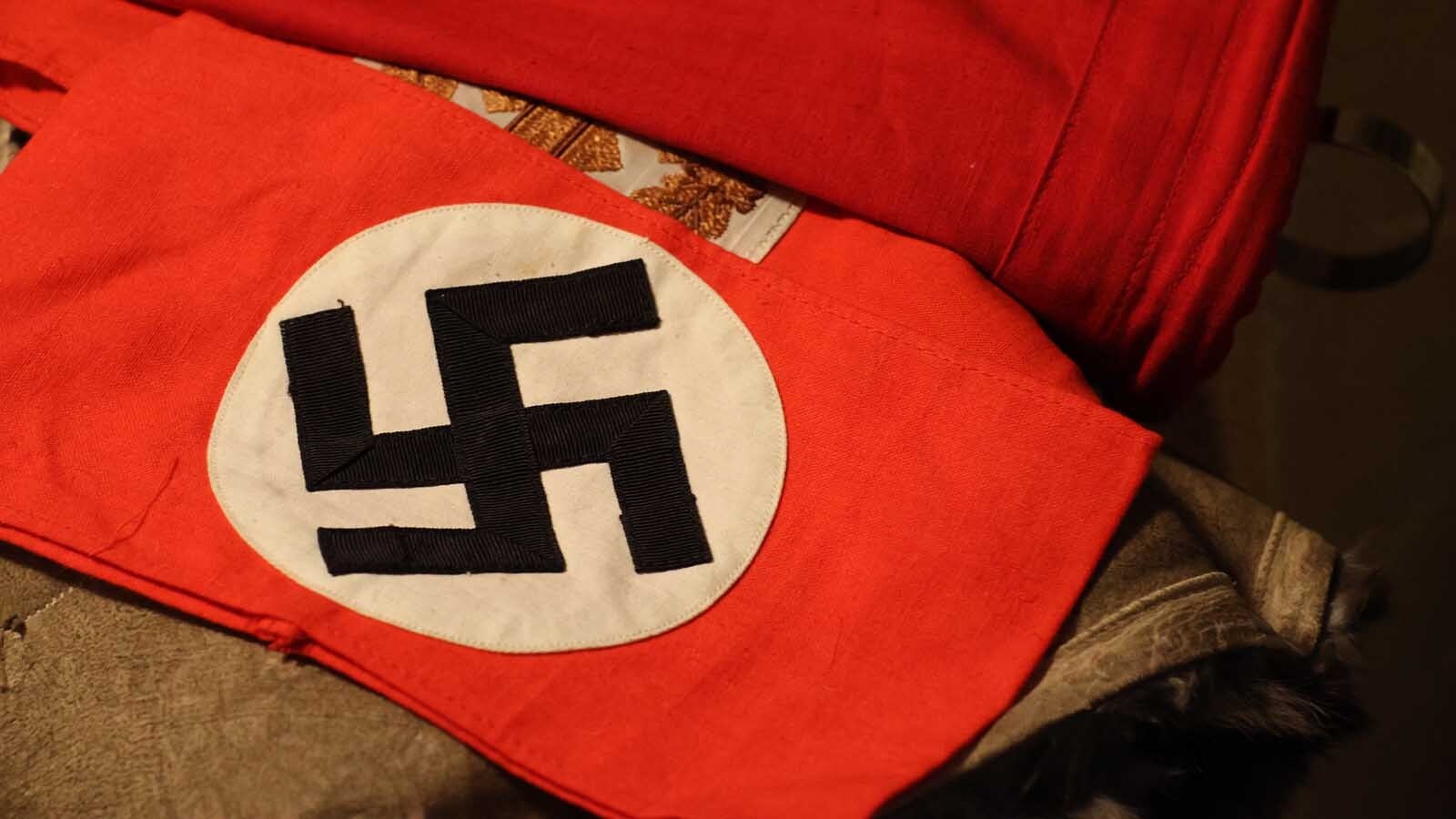
A Nazi armband that Bob Willis found during his war service in Europe. (Dale Killingbeck, Cowboy State Daily) 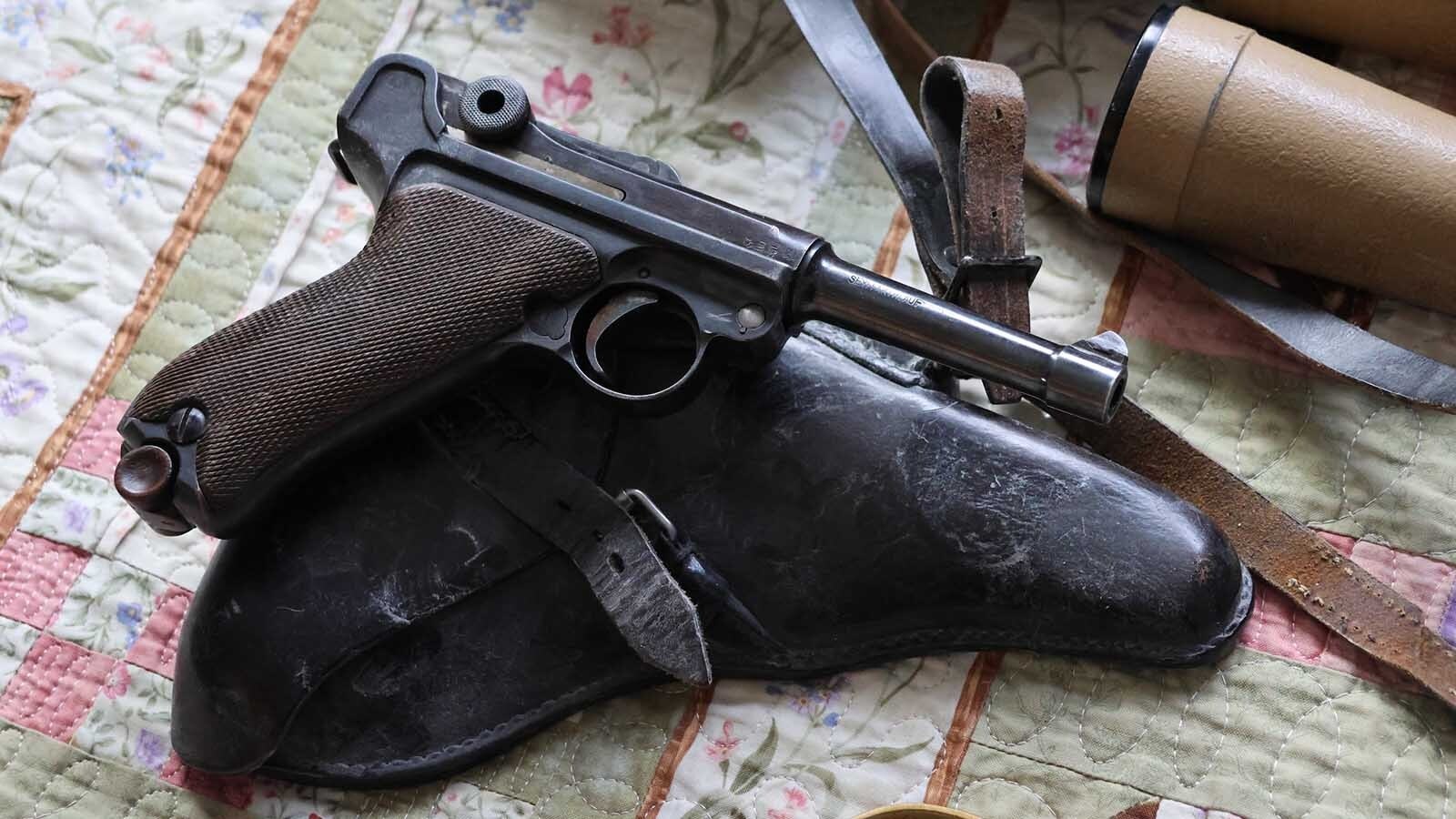
A German Luger pistol that Bob Willis brought back from World War II. (Dale Killingbeck, Cowboy State Daily) 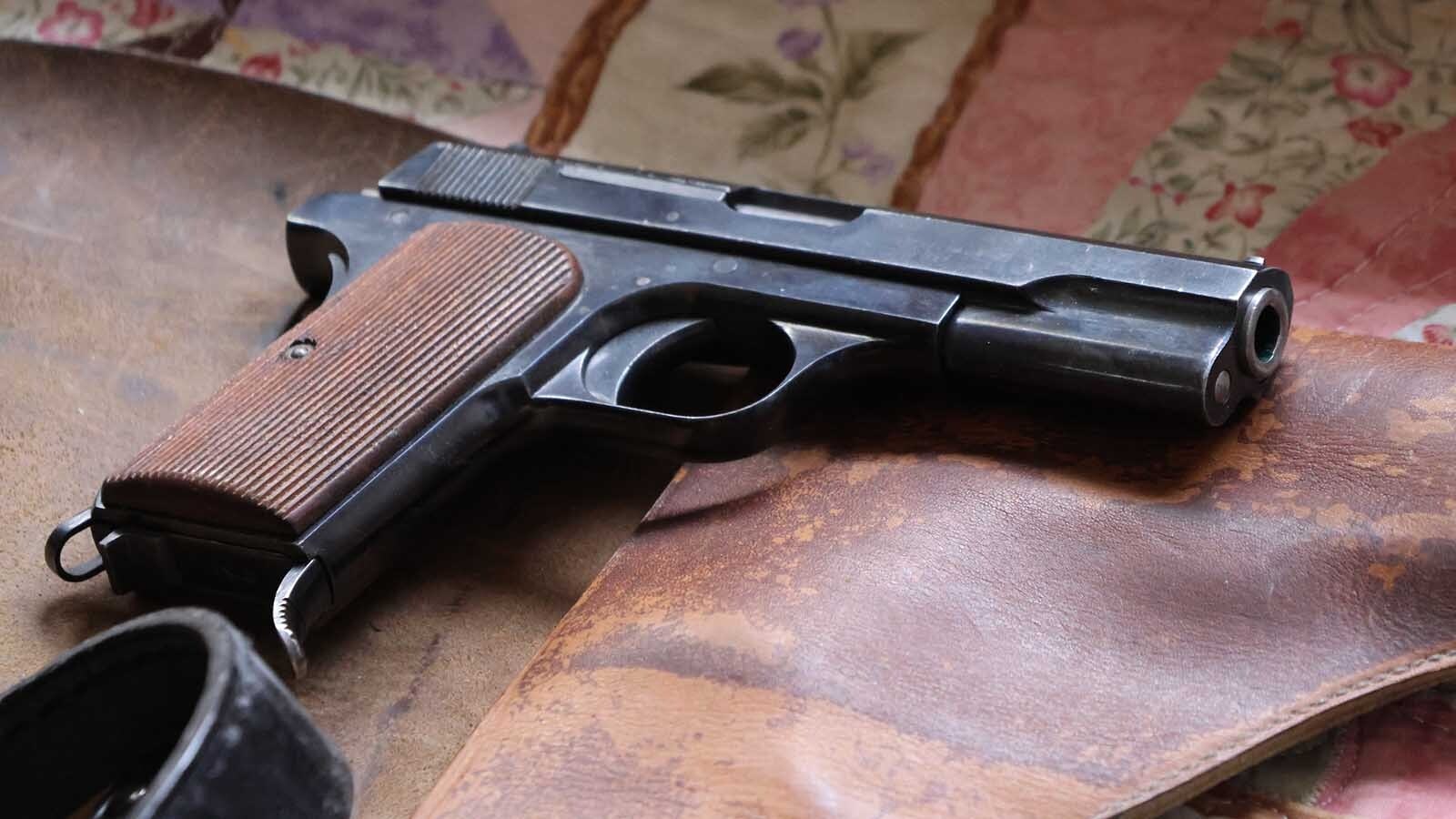
A Hungarian pistol that Bob Willis brought back from World War II. (Dale Killingbeck, Cowboy State Daily) 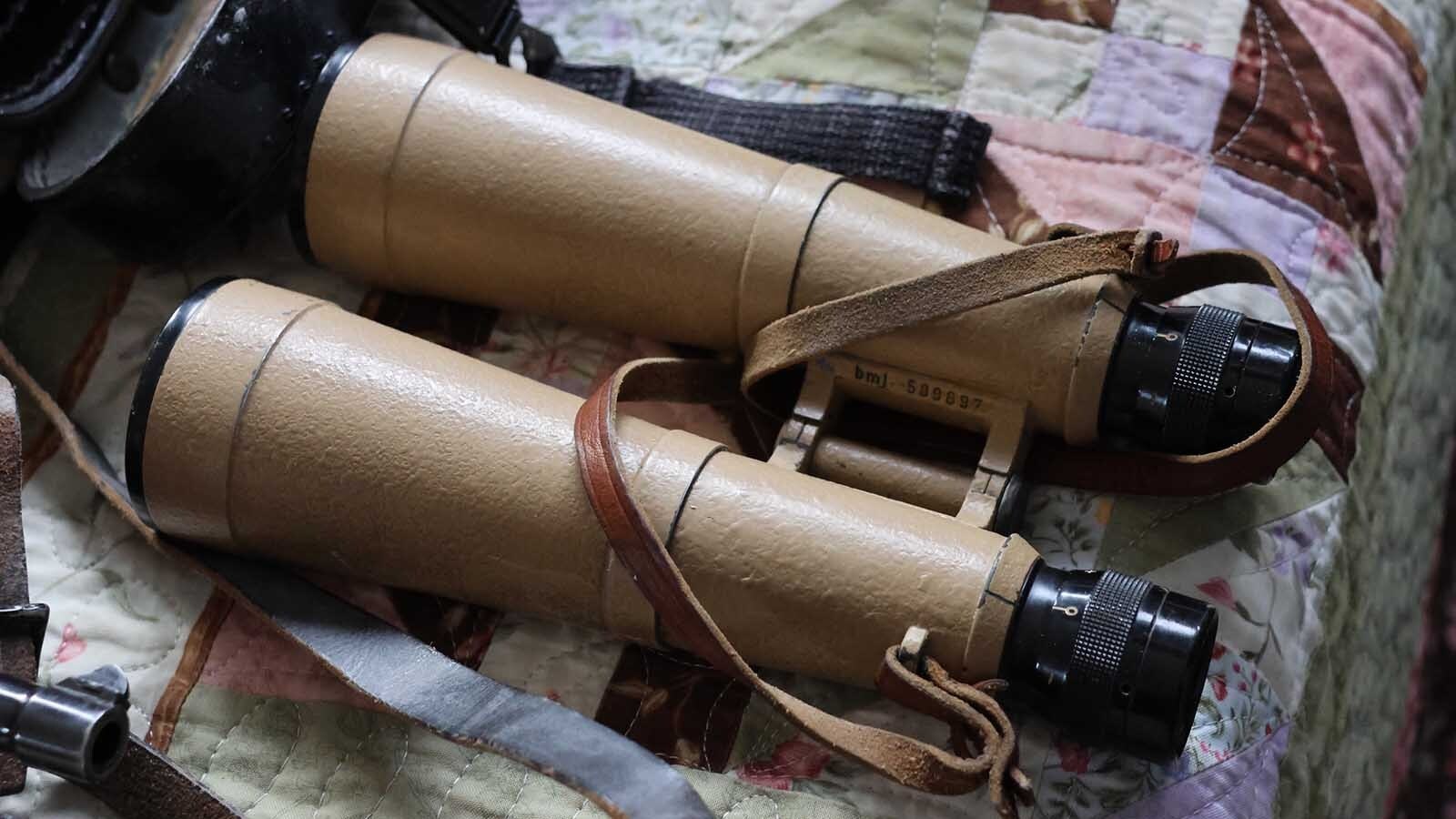
A pair of German binoculars that Bob Willis brought back from World War II. (Dale Killingbeck, Cowboy State Daily) 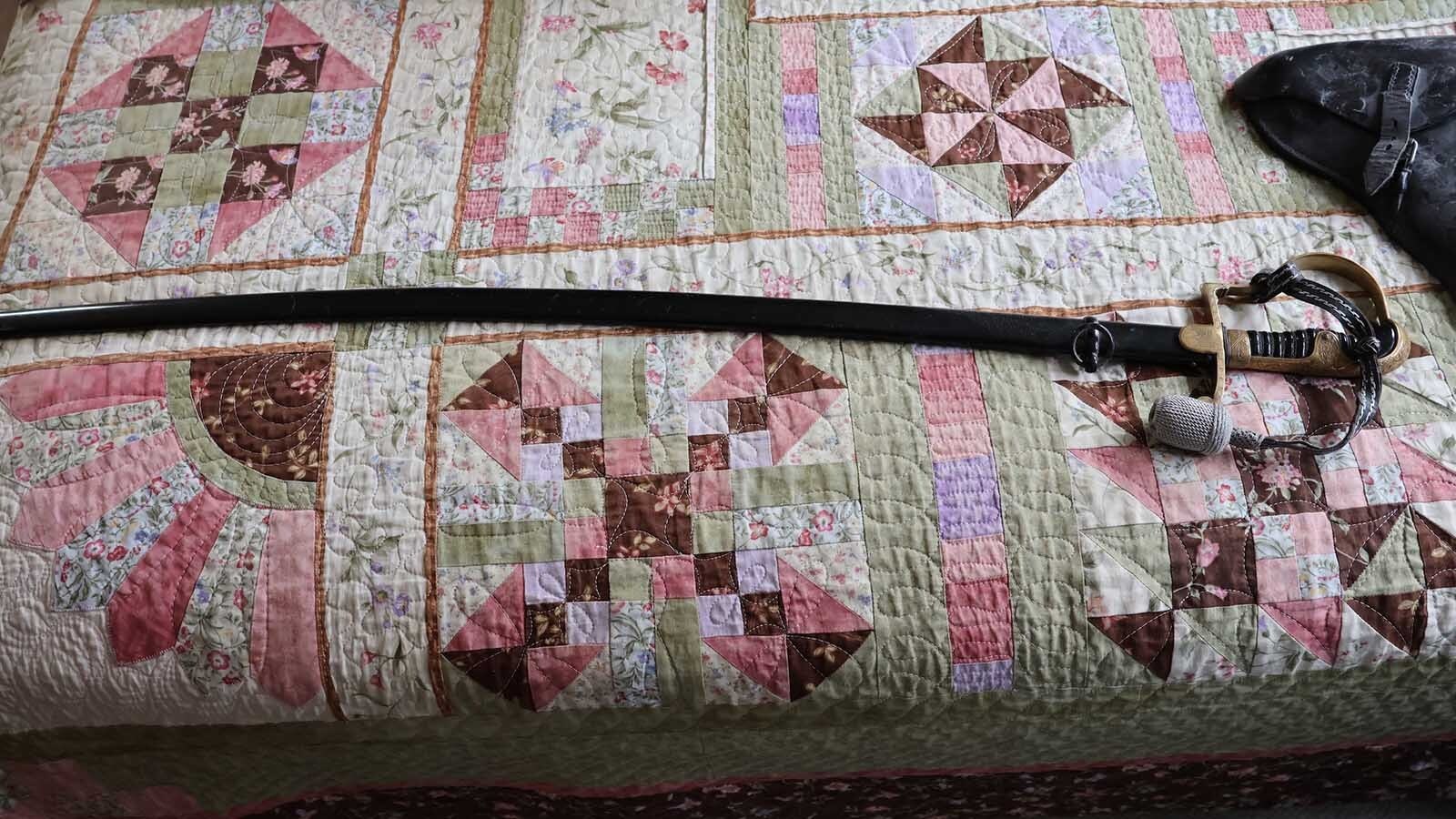
A sword that Bruce Willis picked up at a burgomaster’s office in Germany. (Dale Killingbeck, Cowboy State Daily)
Move To Washington State
Willis said he did his sophomore year in high school at Olympia, Washington.
The next year, his dad was transferred to the U.S. Army Air Corps and the family moved to California, and then Arizona for his senior year.
Willis was drafted when he turned 18 but obtained a deferment that allowed him to finish high school and graduate in Tucson.
Following graduation in 1943, he went through boot camp at Fort Benning, Georgia, and because of his high test scores was initially sent to the Colorado School of the Mines as part of the Army Specialized Training Program designed to provide soldiers with technical skills and potentially lead to officer status.
After a quarter at the school with the D-Day invasion on the horizon, the program was canceled and Willis was sent to the 66th Infantry Division at Camp Robinson, Arkansas, and then Camp Rucker, Alabama.
He served as a “demonstrator” running the rifle range and other duties to train new recruits.
Then he volunteered to be sent overseas.
In 1944, Willis was sent to Camp Myles Standish outside Boston for training as a replacement infantry soldier for those lost in the initial invasion of Europe.
He and others were shipped to England on the S.S. Mariposa, a former luxury liner in Hawaii converted to be a troop transport ship.
From there he was sent to Europe, where he said he landed on Omaha Beach two months after D-Day and camped on its heights for a time until he was sent to the 26th Infantry Division, nicknamed the “Yankee Division.”
“We were in northern France taking all kinds of towns,” he said.
Initially, Willis said he had roles guarding the command post and then was sent to a front-line infantry company.
There he found the captain was a Pima Indian who graduated from the University of Arizona in Tucson. When the officer learned Willis graduated from high school in Tucson, Willis said he took the young soldier “under his wing.”
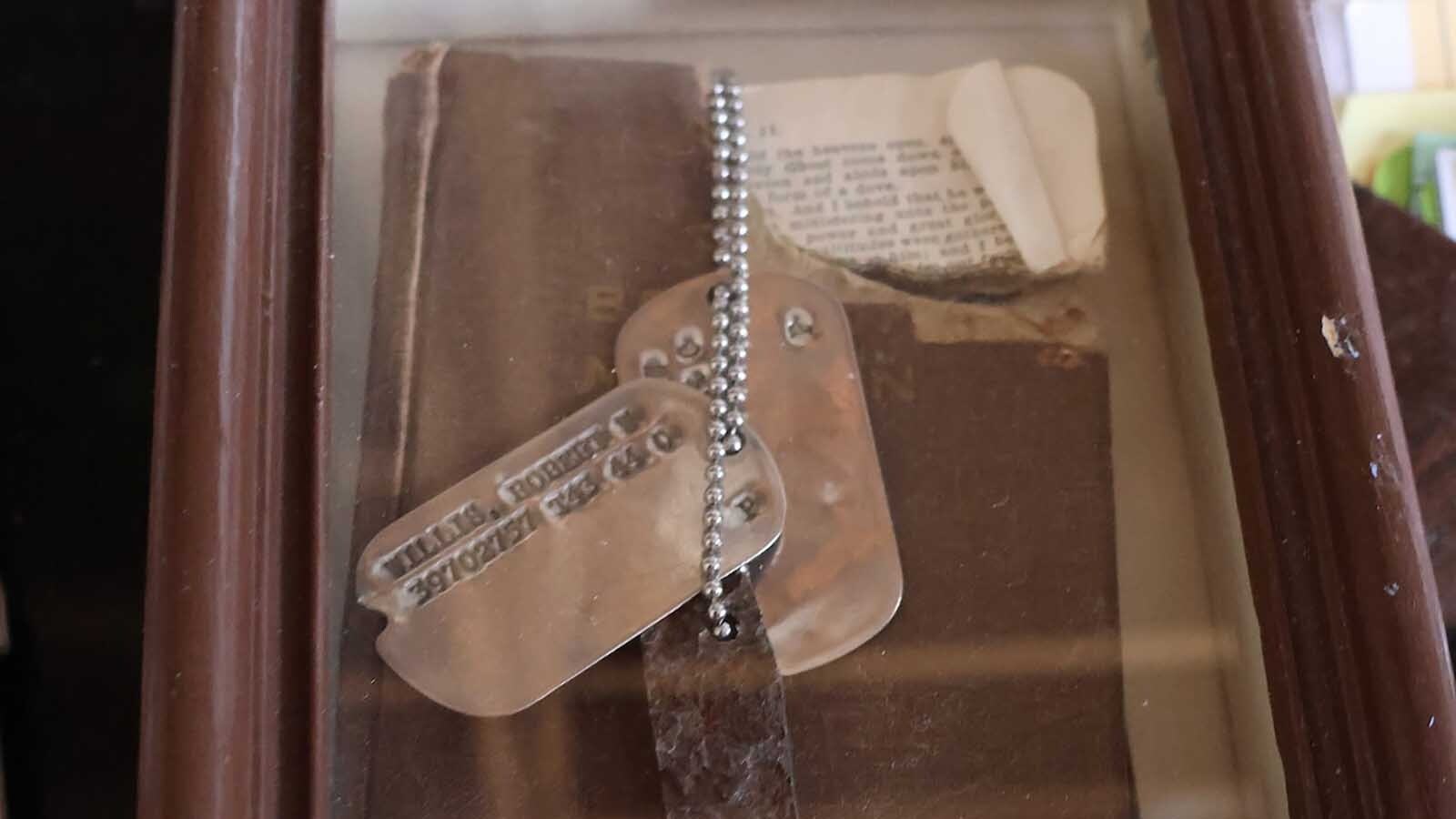
The Book of Mormon and piece of shrapnel that hit the book before entering Bob Willis’ body. (Dale Killingbeck, Cowboy State Daily) 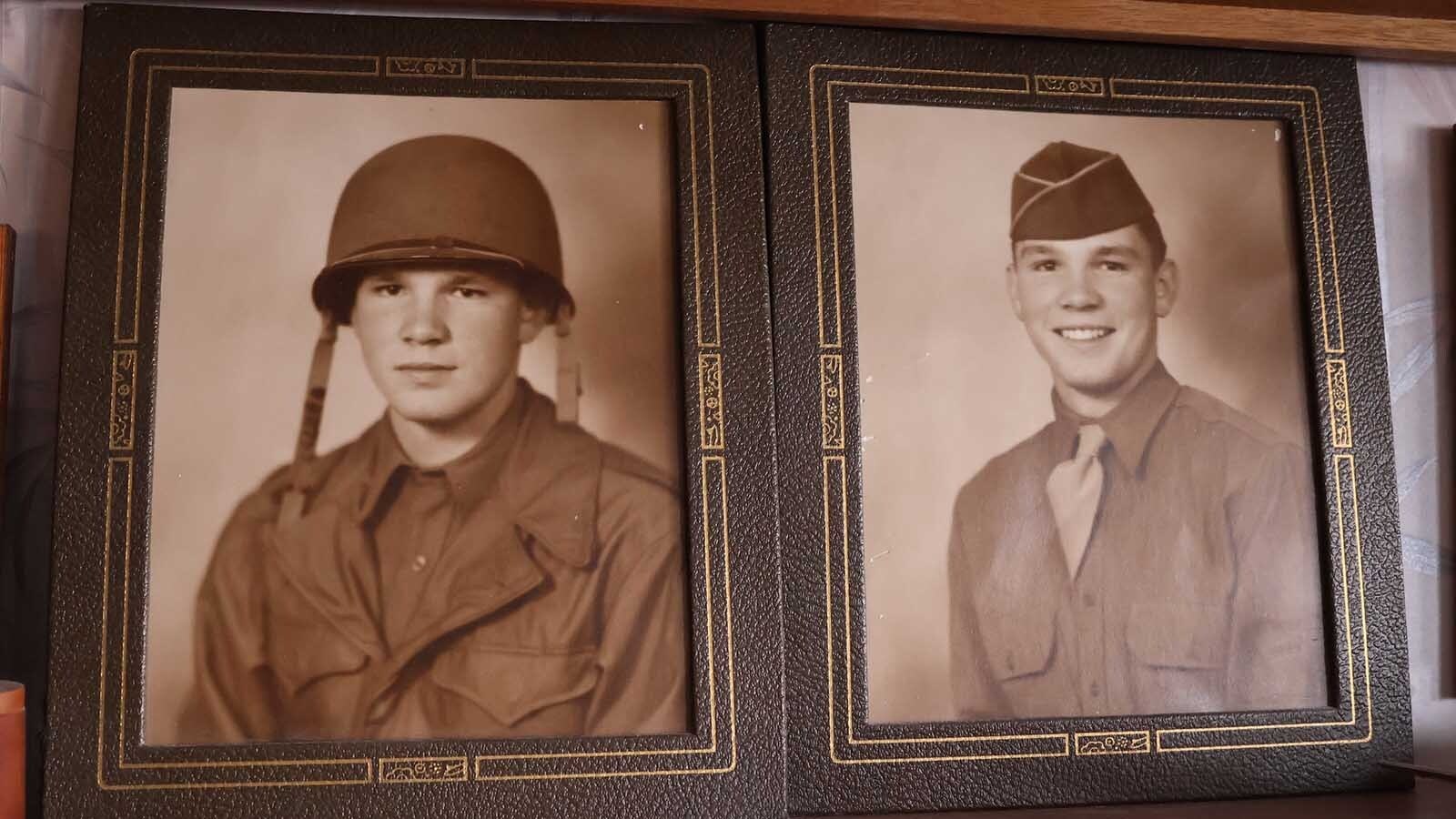
Bob Willis as a young soldier in the U.S. Army. (Dale Killingbeck, Cowboy State Daily) 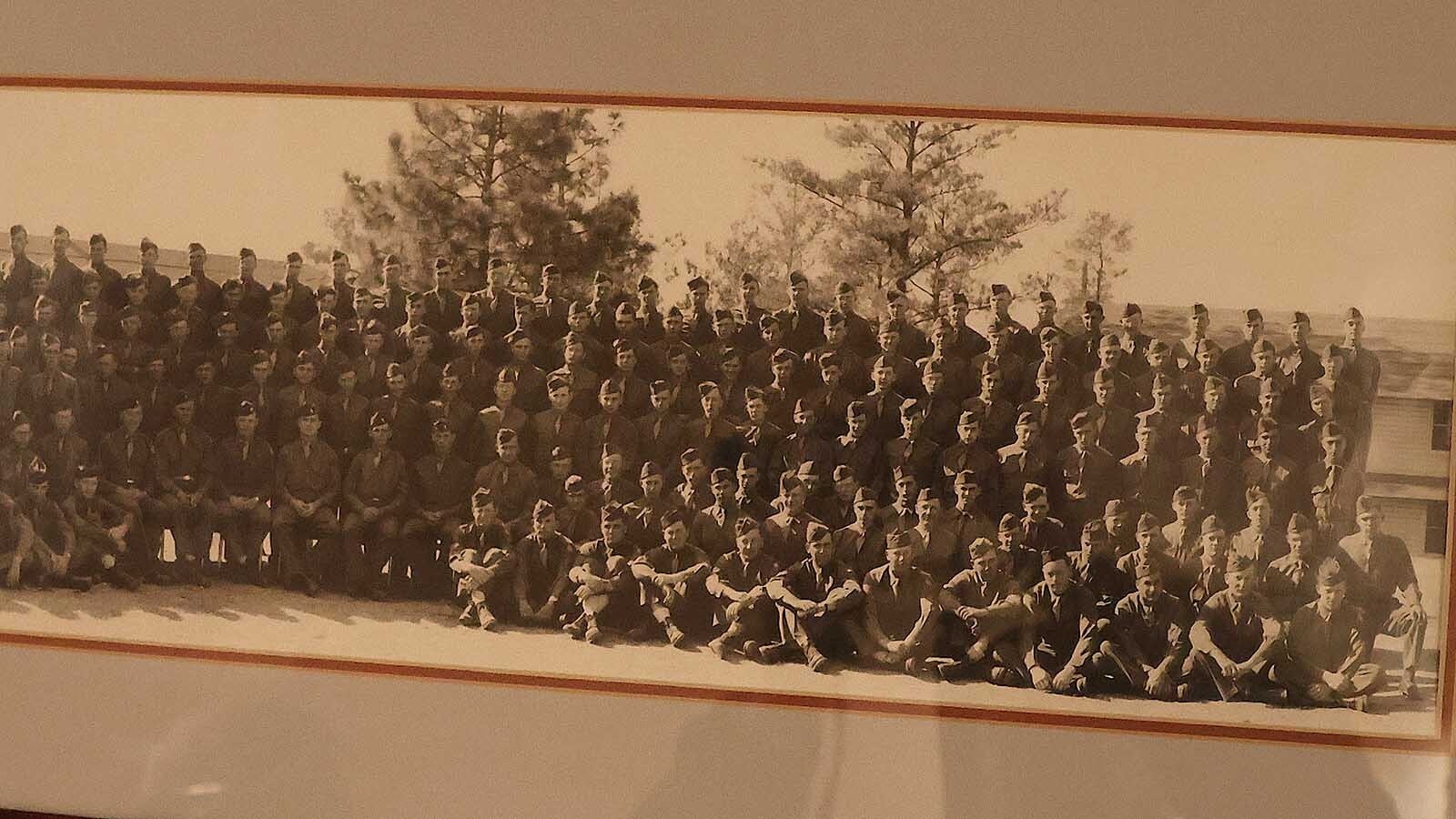
Bob Willis has a photo of all the soldiers he went through boot camp with at Fort Benning, Georgia, on the wall in his basement. (Dale Killingbeck, Cowboy State Daily) 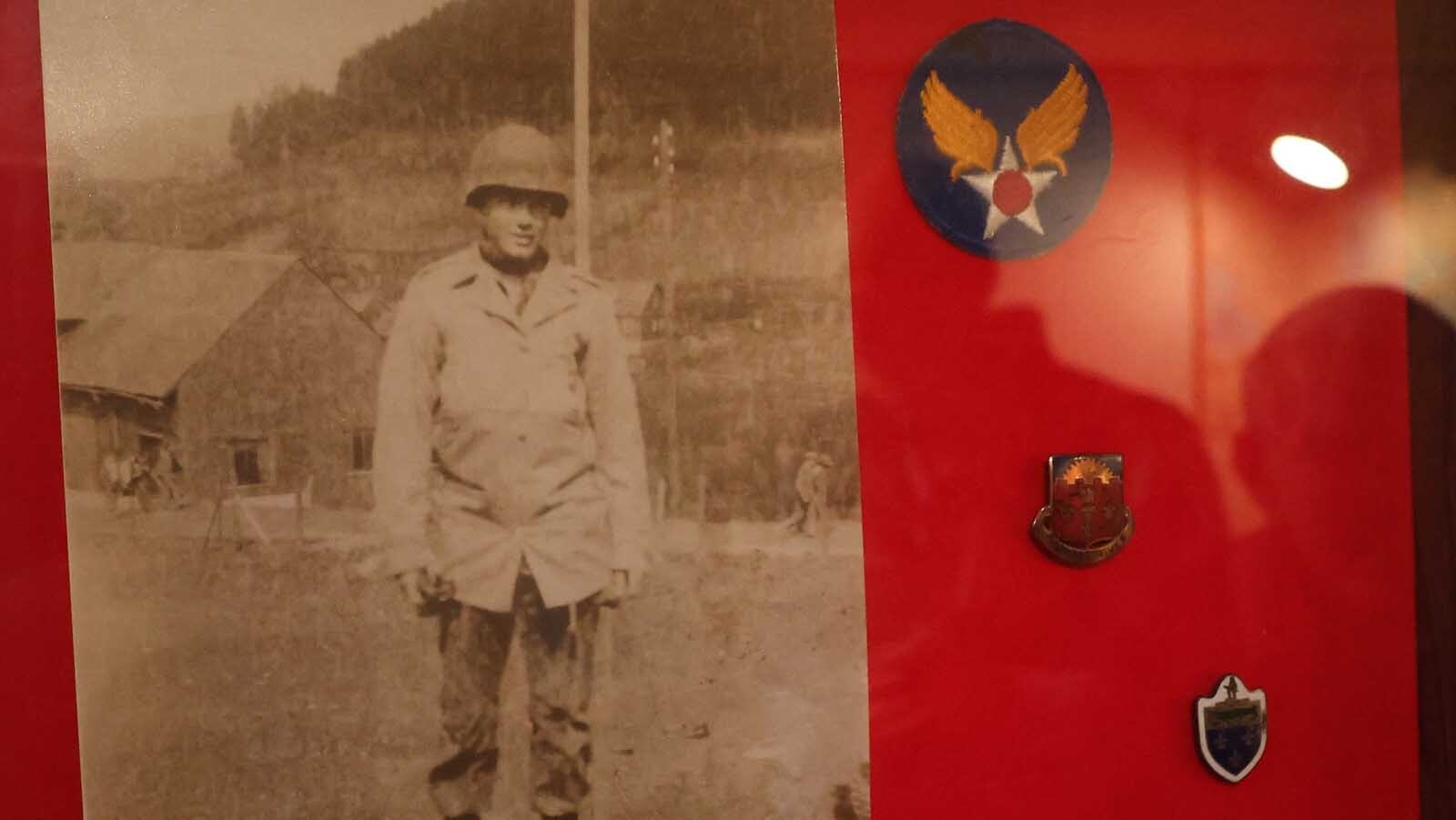
Bob Willis poses in Europe near the end of his time overseas. (Dale Killingbeck, Cowboy State Daily) 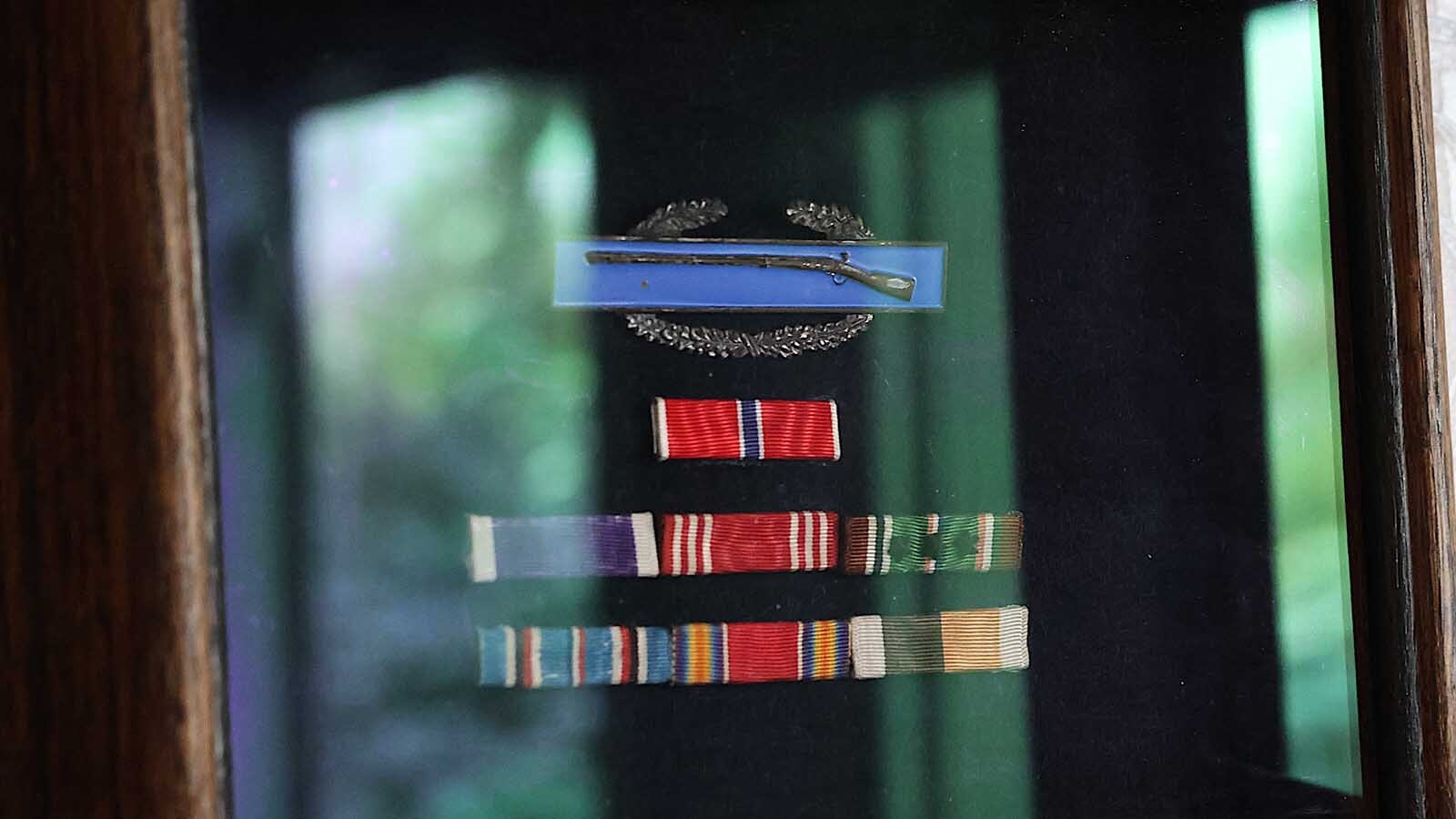
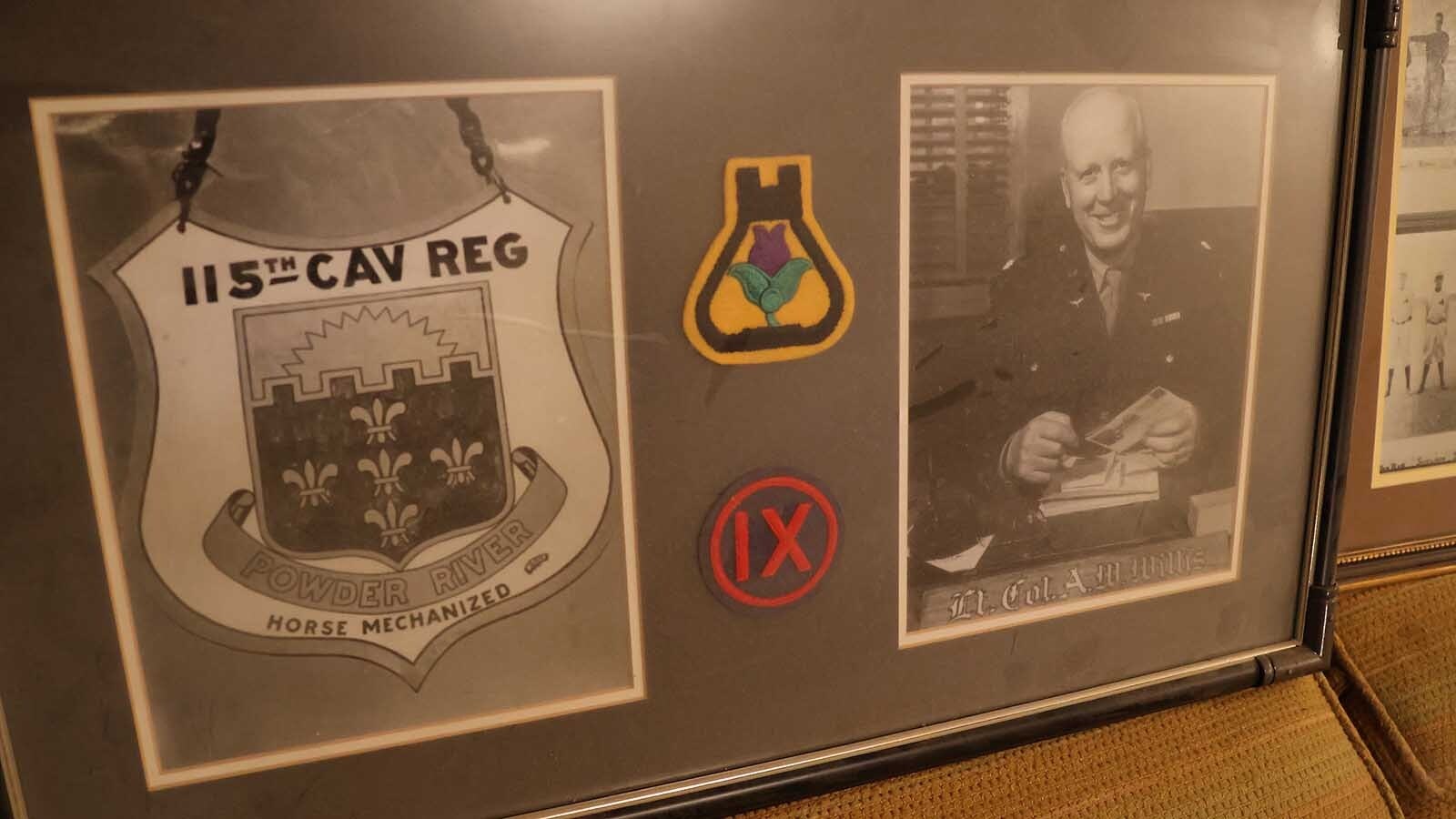
The ribbons and infantry rifleman badge earned by Bob Willis during his service. (Dale Killingbeck, Cowboy State Daily)
Fighting In France
After heavy fighting that fall, the division was sent to Metz for a rest in December.
That's when then the Germans staged their counterattack that became known as the Battle of the Bulge. The 26th Division was among the first sent to stop them.
Willis said they had regular uniforms and coats and were not prepared for the snow and bitter cold that arrived with the winter of 1945.
“They just put us in the back of trucks and went until we couldn’t go any further and ran into the Germans,” he said. “It was like having a foxhole in the Snowy Range because it was the coldest winter they had ever had.”
Every night he and his comrades had to scrape snow and dig a hole in the frozen forest ground. He said sometimes he and a buddy had to put their arms around each other to keep from freezing.
He also faced some challenges related to his faith from a couple of Kentucky soldiers who were moonshiners prior to the war.
“When they found out I was a Mormon, they gave me nothing but grief,” he said. “I never had a cup of coffee or a taste of whiskey all the while I was there because I was a ‘little Mormon boy.’
"They took advantage of that, and I had nothing but misery from them until I got out.”
He looks back on the hot cups of coffee that on most bitter cold mornings were sent to troops at the front in their foxholes. He wonders why he didn’t accept the hot drink as just a way to try and get warm. Water was his primary drink, and once in a while milk if it was available.
As part of the Bulge fighting, his company one day was ordered to take up another position. Willis remembers walking with other troops down a path and coming up on a farmhouse when bullets came whizzing at them from Germans in the house.
“I fired into the house a few times and there was a (U.S.) tank down next to the house,” Willis said.
His captain ordered him to go to the tank and tell them to fire a round at the foundation of the structure. Willis said he went alone to the tank and banged on the hatch with the butt of his rifle to get the tanker to open the hatch.
When a soldier did, Willis shared the captain’s order — and before he could get off the tank, a German tank sent an ordinance round into the tank just below his feet.
Blasted Off Tank
It blew him into the air, and when he landed, Willis realized he took a piece of shrapnel in his side. The metal had been slowed by the Book of Mormon that he had in his jacket pocket.
“I could still walk, so I went back to the captain and told him that I had been hit,” he said.
Willis was ordered to go to the aid station about a mile away in the area of Bastogne, France. There medics cut the piece of shrapnel out of his side.
Willis said the medics did not know how deep it went. If it pierced his body, there was a serious threat of infection.
He was sent to another station, and medics scraped the wound and saw a fraction of skin barrier remained in place protecting organs and sent him to a hospital.
Without the Book of Mormon slowing the shrapnel, Willis believes he likely would have suffered internal damage to his body. In the days when penicillin was just starting to be used, infections were just as dangerous as the Germans.
“For a lot of guys, once an infection got in there, it was hard to get that out,” he said. “When I was in the hospital, I was holding the hand of a guy who had an infection in his gut when he died.”
Following three weeks of recovery, Willis was sent back to his company, but a short time later an order came down for his captain to choose two Purple Heart recipients to be sent to a military police unit. Willis was chosen.
Willis was in that role through the end of the war in the European theater in May 1945, and across Europe after the war until February 1946.
Among his assignments was at a hospital where German soldiers were being treated.
He accompanied a German soldier to local farms to get milk, eggs, and butter and protected the English nuns who worked there from the German military patients they served.
Because the Germans had no gasoline, the soldier he accompanied drove an ambulance converted to steam power and fired by charcoal, he said.
Another assignment had him taking German civilians who were Nazi collaborators to a prison near Salzburg, Austria. Those trips involved going past the road that led to the infamous Eagles Nest used by the Nazis and Hitler in southeastern Germany.
Protecting Holocaust Survivors
Willis and a buddy also for a time were charged with protecting Jewish women who survived the Buchenwald concentration camp.
He said one of the women shared how her husband and little son had been sent on one train, and she was put on another.
Initially, the women were being kept as potential witnesses for Nazi war crimes but then were released after there was a decision that they would not be needed.
“They treated me like their little brother,” he said. “They were all older than me.”
His major regret is not getting their names so he possibly could have found them later in life to see what happened after his assignment.
After completing his service, Willis was sent home in February 1946. His father was still in charge of an air base in California and had a short period left in his service.
They enjoyed a reunion, and the family rented a house on Balboa Island for time before returning to Laramie.
Willis said his mother always wanted a doctor in the family, so he pursued pre-medicine studies at the University of Wyoming as well as taking ROTC training. He also met Kaye.
After graduation, he was called back to the Army as an officer and trainer in Kansas for troops in the Korean War.
He married Kaye in 1953, and in 1954, he decided to go to dental school at the University of Oregon. The couple had their first child two weeks after arriving at the school.
After earning his dental degree, and with a second child added to the family, the couple returned to Laramie in 1958.
Willis said his wife earned a law degree and had a successful practice in town, while he initially worked with a dentist before launching his own practice where he served the community for four decades.
Now a century and a year old, Willis looks back and sees “a good life.”
With Kaye, he raised their five children and is happy for their accomplishments — all college graduates “with wonderful families.”
One current sadness is that his wife of 72 years is in a care facility, and he can’t take care of her.
As a member of the “Greatest Generation,” Willis said he learned a lot from his military service and noted that the demands and required sacrifices fell on everyone who lived through those times.
“We just learned to answer a call,” he said. “And take instruction.”
Dale Killingbeck can be reached at dale@cowboystatedaily.com.