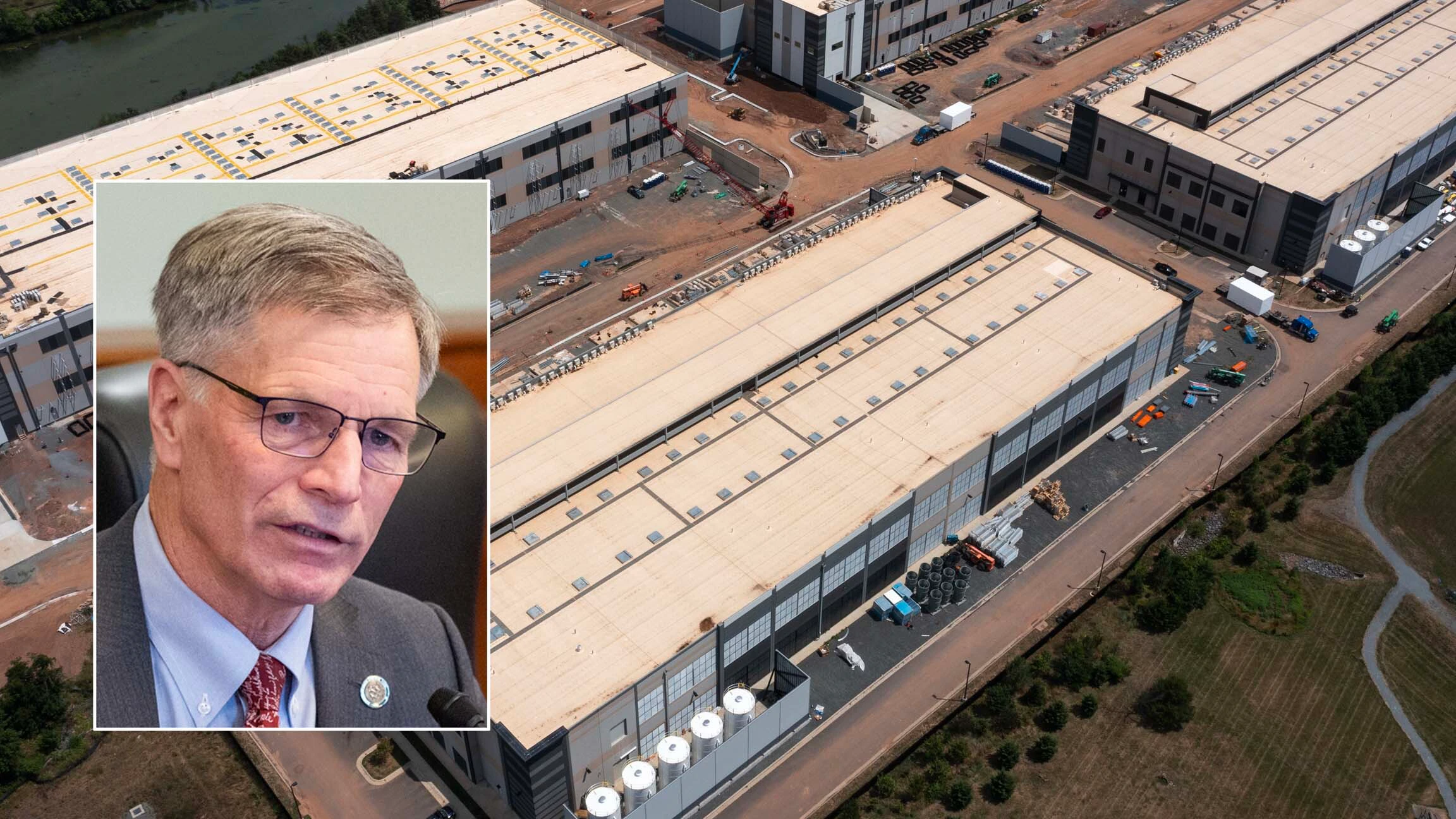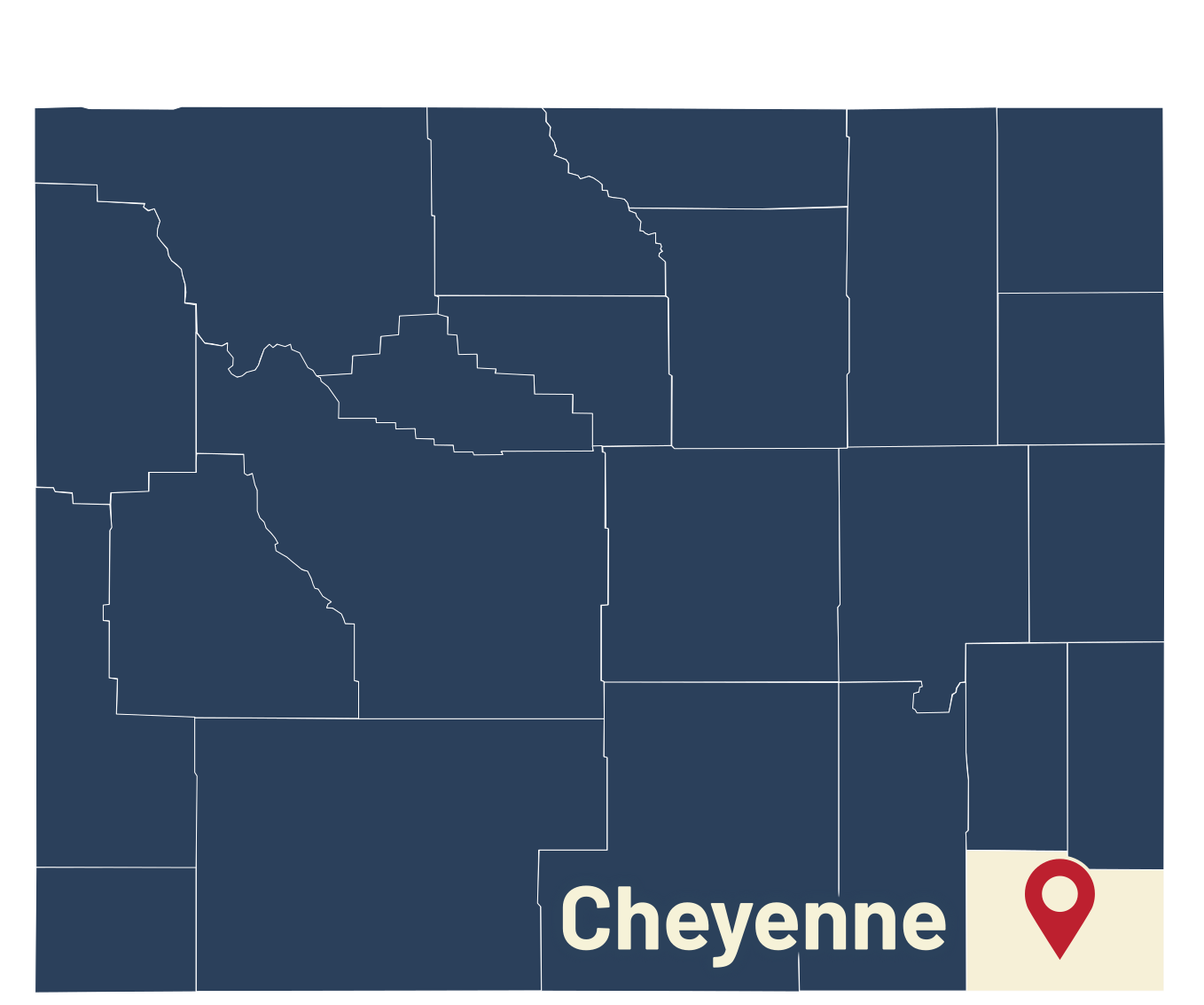
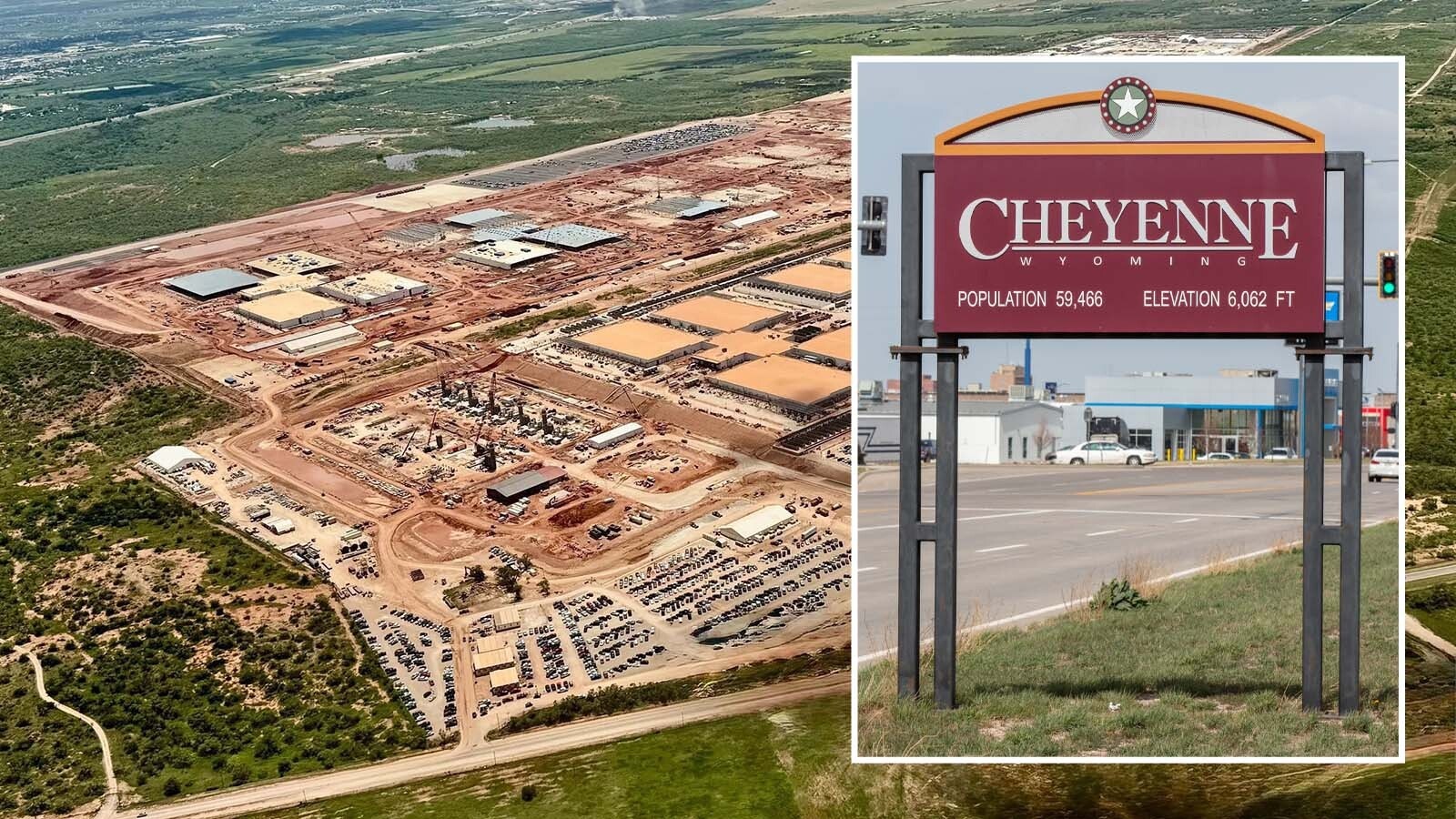
In August, Cheyenne welcomed a 1.8-gigawatt data center being built by Tallgrass Energy and Texas-based Crusoe Energy Systems.
At the time, that was the largest data center yet to announce plans for Wyoming. It received a lot of attention statewide because the facility would use almost twice as much power as the entire state.
It also sparked a lot of legitimate questions about where the power was going to come from and how that would affect ratepayers, as well as where the water would be coming from, and how that would affect agriculture.
While the company promised at the time of the announcement to minimize these things by recycling water and working with local officials, details were scant.
Now more details have emerged about how exactly the company plans to accomplish these aims.
The details were part of a Laramie County Commission meeting on Tuesday when the company’s building permits came up for consideration.
The project, which is to be located south of Cheyenne on Terry Bison Road, ultimately received a unanimous thumbs up from the Laramie County Commission, even as neighbors criticized it and urged commissioners to reconsider the project.
That’s now significantly increased in size, according to presentations by Crusoe and Tallgrass representatives.
Project Jade will now be a 2.7-gigawatt facility, almost three times the present power use of the entire state of Wyoming, and almost an entire gigawatt more than was announced in August.
In all, the facility could scale up to 10 gigawatts.
Raymon Williams is project director for Tallgrass. He said the company will build a series of gas turbines and fuel cells to provide that initial up to 2.7 gigawatts of power to the data center facility that Crusoe Energy Systems is building.
“That’s a lot of power,” Williams said. “And it includes a mixture of different technologies, including natural gas fired turbines, as well as fuel cells.
"So, it’s going to be a big development. It’s going to be a big deal. And it’s going to be an exciting project for us and for the community we believe.”
Matt Field, chief real estate officer for Crusoe, said their goal is for the data center to bring all of its own power, so that it doesn’t affect local utility rates.
“We’re colloquially viewing it as BYOP,” he said. “Bring your own power. So, we’re bringing our own power. We’re not trying to get the physical infrastructure that’s here to bring us power.”
Not So Fast …
The million-dollar question — quite literally — when it comes to “bring your own power” projects is whether the project plans to eventually connect with the existing power grid or remain an island unto itself, Sen. Cale Case, R-Lander, told Cowboy State Daily.
“When their power is not working, do they rely on the grid or not?” he asked.
If not, they would be a “different animal” than most, Case said, in terms of potential impact on the price customers could be paying for energy.
While the rhetoric all sounds good, it’s something that has to be watched, Case said, and it’s something he will only believe when he sees it, because it’s easy to make such promises in advance of construction.
If they do connect to the grid, then the question becomes what happens if their own power generation comes up short.
“Do they buy power from Black Hills Energy?” Case asked. “Will other customers be protected in that transaction?”
It’s when the utility is scrambling to buy power expensively for an existing bank of customers and then has to suddenly supply a data center as well that things get dicey for consumers, Case said.
Tax Structures Could Be Changing
The Wyoming legislature will be looking at changes to sales taxes on electricity, which has, up until now, been very lucrative for cities like Cheyenne.
“We’re going to put a gross receipts tax on electricity eventually,” he said. “And we’ll get rid of the local sales taxes, which means Cheyenne cannot get sales tax revenue from that.”
The gross receipts tax is being seen as one way to restore equity in the energy sector.
The state’s tax revenue structure has been heavily weighted toward fossil fuels in the past, and something renewables haven’t been subject to.
Shifting to a gross receipts tax would ensure all players in the energy sector are contributing a fair share to state tax revenue.
“The Corporations Committee and the Revenue Committee have been looking at this,” Case said. “We had a study done that shows we can tax gross production of electricity, gross sales of electricity, and what that means is we’ll tax people in other states and tax our own people, too everybody.
"But because our own people pay sales taxes, we can get rid of that, or reduce it, and at the same time, begin to collect taxes from Oregon, Washington. And that will be good for Wyoming.”
If that change to the tax structure is realized, it could change the equation on whether data centers are as beneficial to cities when it comes to the economic development, Case added.
“I’m just warning people, that’s in the works,” Case said. “Having a gross receipts tax on electricity produced or sold in Wyoming would be a very healthy thing that would allow us to grow with, no matter whatever type of generation — pumped hydro even, it doesn’t matter — into the next century.”
What About Water Use
Field said the company’s plans are to use a closed loop system to cool its databases. Project plans show five buildings of up to 800,000 square feet.
The initial water fill will be equivalent to 20 households, Field said. After that, water use for one year on an ongoing annual basis will be equivalent to less than three households.
“So, you really don’t add water to this,” he added. “You fill it once. The water impact is so much less than it used to be. And part of this is we’re actually bringing the water to the chips. We’re not just pushing air across things anymore.
"We’re bringing cold water into the racks adjacent to the chips to cool them down. … We have a much more efficient way to cool the chips than we did historically.”
The water that is used to fill the closed-loop system will draw from far below the aquifers that supply Laramie County and Cheyenne’s water.
“We’re not going to utilize public water resources for our facility,” Williams said. “We’re going to construct deep groundwater wells.
"We’re going to follow all of the state engineer guidelines and ensure we meet all the requirements of the state engineer, as well as making sure that they function as intended.”
The location will also include onsite wastewater treatment and septic systems, so that they are not a burden for municipal systems.
“We’re going to be very self-sufficient for our industrial system,” Williams said.
About The Companies
Nationwide, Tallgrass operates large-scale, multi-commodity infrastructure.
“That includes more than 10,000 miles of pipelines and energy-related assets across 14 states,” Williams said. “Here in Wyoming, we’ve operated assets for more than a decade. We actually consider Wyoming our home.
"We have the third largest employee population base here, with more than 200 existing employees living and working in Wyoming.”
Tallgrass operates more than 3,000 miles of natural gas, crude oil, water and carbon dioxide pipelines in Wyoming.
“We have two CO2 wells,” Williams added. “We have water wells and other infrastructure located here as well. Over the past three years, we’ve invested nearly a billion dollars into the state’s economy, which would include our Trailblazer CO2 project … over in eastern Laramie County.”
Tallgrass’ investment on this data center will dwarf all of its previous investments at $7 billion. Yes, that’s with a “B.”
Crusoe’s total investment, meanwhile, could potentially be more than $50 billion.
“We’re estimating the construction wages will be in excess, well in excess of a billion dollars,” Williams said. “Beyond that, we’ll have billions of dollars in combined tax revenue over time that’s going to make this project an incredible addition to this community.”
Based in Texas, Crusoe Energy Systems, meanwhile builds and operates large-scale data centers and bills itself as a vertically integrated AI factory.
Its business model is to identify low-cost, underutilized energy sources and co-locate data centers directly on site.
That latter factor was an important consideration for the location of its Wyoming project.
“This particular area of Wyoming offers all the fundamentals that this project needs to be successful,” Williams said. “It has reliable access to natural gas pipeline infrastructure.”
It’s also near a CO2 pipeline, which means carbon dioxide from the facility’s power generation can be captured and transported for use elsewhere or permanently stored, if that’s advantageous or desired.
The site is also close to major railway and interstate transportation corridors, which will make it easier to bring large pieces of equipment on site.
“We have access to a fiber optics network,” Williams said. “And we have a great regulatory environment here that supports large energy and business investment.”
The county’s skilled workforce helps complete the picture for a successful project, Williams added.
“The community has experience in supporting large energy projects,” Williams said. “So, with all of these factors, this area has a really natural advantage for us, and this is why Tallgrass continues to invest here.
"We want to bring this important project to Wyoming to support the state, the broader community, and our friends here in Laramie County.”
National Security
One other detail that emerged from the Laramie County Commission meeting of interest is that the Tallgrass-Crusoe facility will be a “national security level” facility, part of a broader, national effort to win the Artificial Intelligence race.
Drew Perkins, chief of staff for Gov. Mark Gordon told Laramie County Commissioners that Wyoming was among states invited to a recent series of meetings in Washington, D.C., in November, the subject of which was the nation’s AI race.
The meetings included U.S. Secretary of the Interior Doug Burgum and National Energy Dominance Council Executive Director Jarrod Agen.
“President Trump has referred to the AI race, the AI competition we have right now going on with, particularly, China, as the great conflict of the 21st Century,” Perkins said. “Secretary Burgum referred to it as the arms race of our generation, and that what we have is, this is going to be fueled by data centers, the power to do data centers.”
Failure to win the race will mean ceding global leadership and dominance to China, Perkins said Wyoming and other state leaders were told.
The other thing that the governor’s office will be closely watching, Perkins added, are the promises that have been made with respect to water and electrical consumption by the facility.
“We believe this is headed in the right direction,” he said. We believe that both (water and power consumption) are addressed in this project, and it’s one of the things that we watch very, very carefully in the governor’s office.”
Perkins indicated the governor’s office is aware that sooner or later the data center will likely want to tie into the grid, just in case there’s a loss of power.
A task force is already working on ensuring that the promise isn’t merely illusory when it comes to remaining behind the grid.
“That’s not just for this project,” he said. “But as Wyoming moves forward, as we have these data centers, as they build behind the meter, self-power generation to fuel this, that there is a way that this will be meaningful and tie into the gridl.
"And the Legislature, I believe, has solved this problem to some degree with what they call tariffs, so that any incremental costs associated with tying into the grid, when that time comes will be borne, in this case, by Crusoe and Tallgrass.”
In the long run, having a business sector that can consume energy in state, rather than exporting that energy elsewhere, will be helpful to the state as a whole, Perkins said.
“Consuming those sources locally, rather than having to ship them off to California or ship them to Japan or Asia or wherever else that this natural gas might be burned,” he said.
“If we can consume that here and have that power here and continue to have Wyoming be an energy leader in energy production, that is a boon, not only for just data centers, but to our core industries as well,” Perkins added.
Renée Jean can be reached at renee@cowboystatedaily.com.