After Gov. Mark Gordon announced his approval of the Wyoming Department of Transportation’s full, $282.8 million request for the next two-year budget cycle, state lawmakers on Monday questioned the agency’s staffing shortfalls, snowplow collisions and the cost to outfit state troopers with tasers.
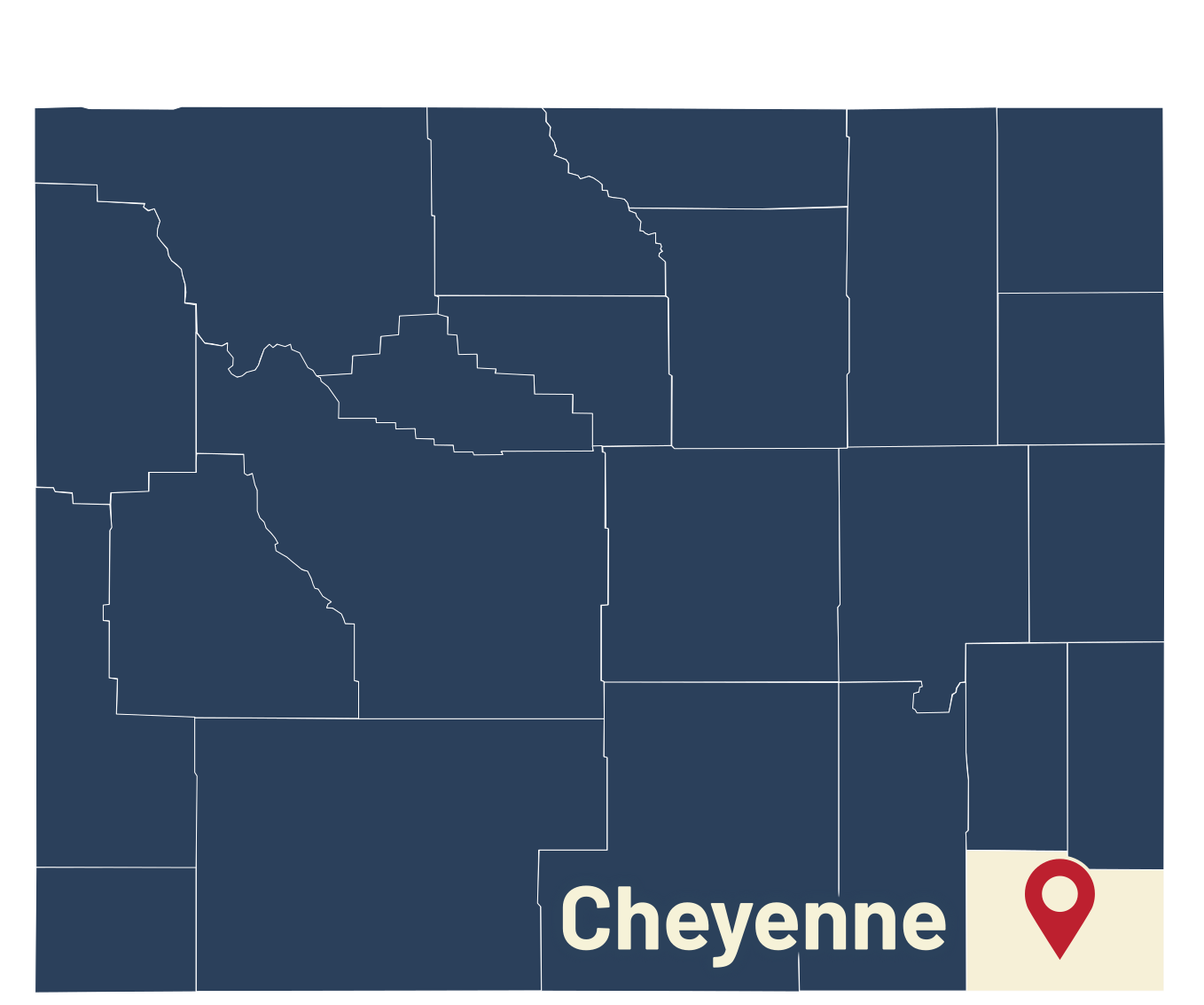
The meeting of the state Legislature’s Joint Appropriations Committee at the state Capitol in Cheyenne marks the start of week three, in the committee’s four-week budget-planning marathon.
The full Legislature will also help craft the state’s budget at the start of the Feb. 9 session.
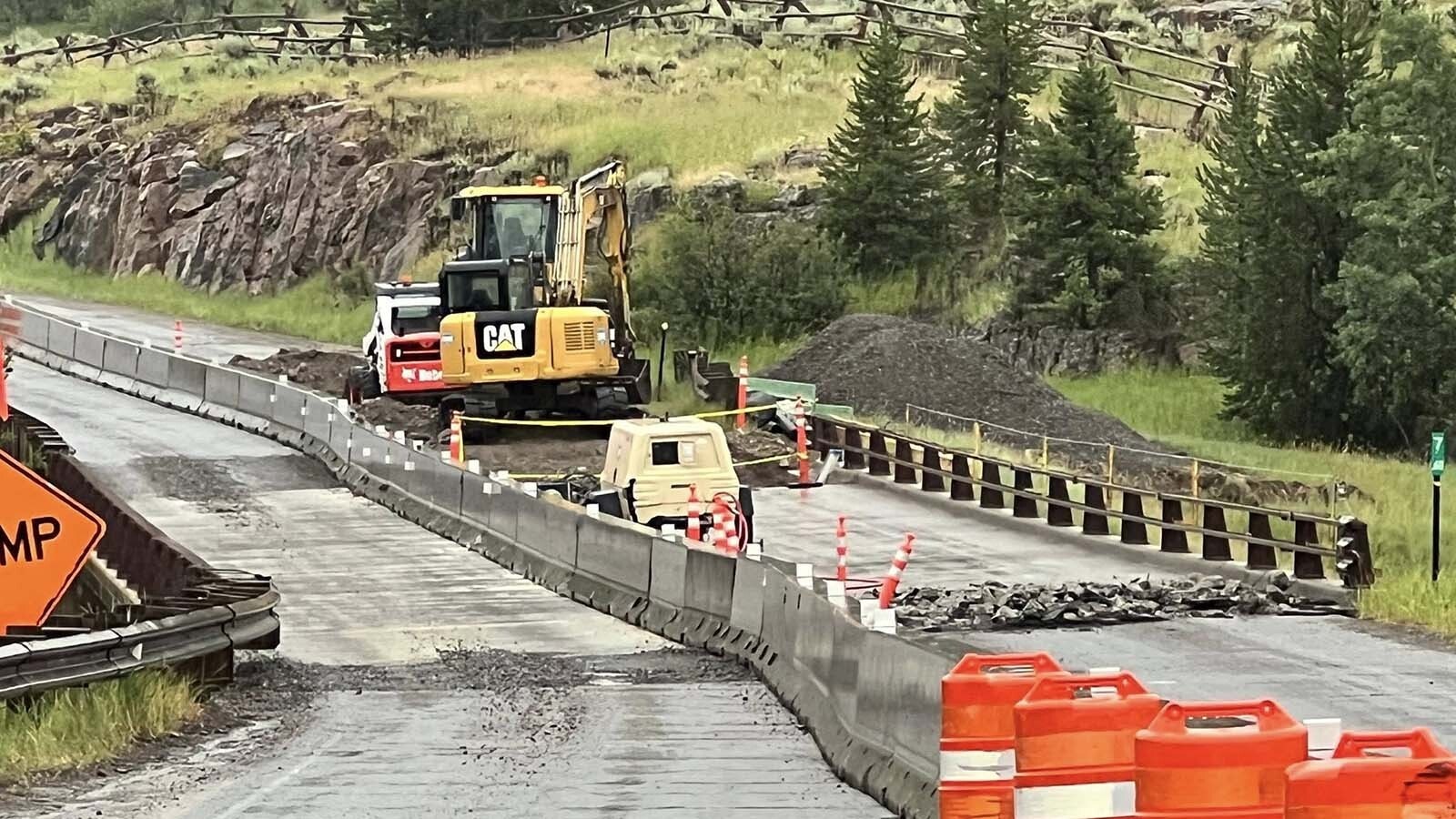
The Wyoming Department of Transportation frequently voices funding woes and anticipated shortfalls of at least $400 million, along with its mandate to maintain thousands of miles of state highways.
The Wyoming Legislature tried to remedy that in the 2025 session by moving vehicle sales tax into the agency’s coffers in the future.
WYDOT will start collecting that money in fiscal year 2027, agency Director Darin Westby told the committee during the Monday meeting.
In the meantime, the agency is asking for $256 million for the 2027-28 biennium in standard, rolling costs plus $26.74 million in exception, or specialized requests, for a total of $282.75 million.
Gordon backed the entire request, albeit with some tweaks regarding funding sources.
The agency’s budget for the most recent biennium was more than $30 million less than the current request, at about $250.2 million.
WYDOT unique among state agencies in the nation as one of just two, with Wisconsin, that includes its state highway law enforcement agency under its umbrella, Westby told lawmakers.
That structure has advantages and disadvantages, he said, as shortfalls in the Wyoming Highway Patrol tend to pull from the highway fund; but the structure lends “synergies” in addressing crash scenes and road closures simultaneously.
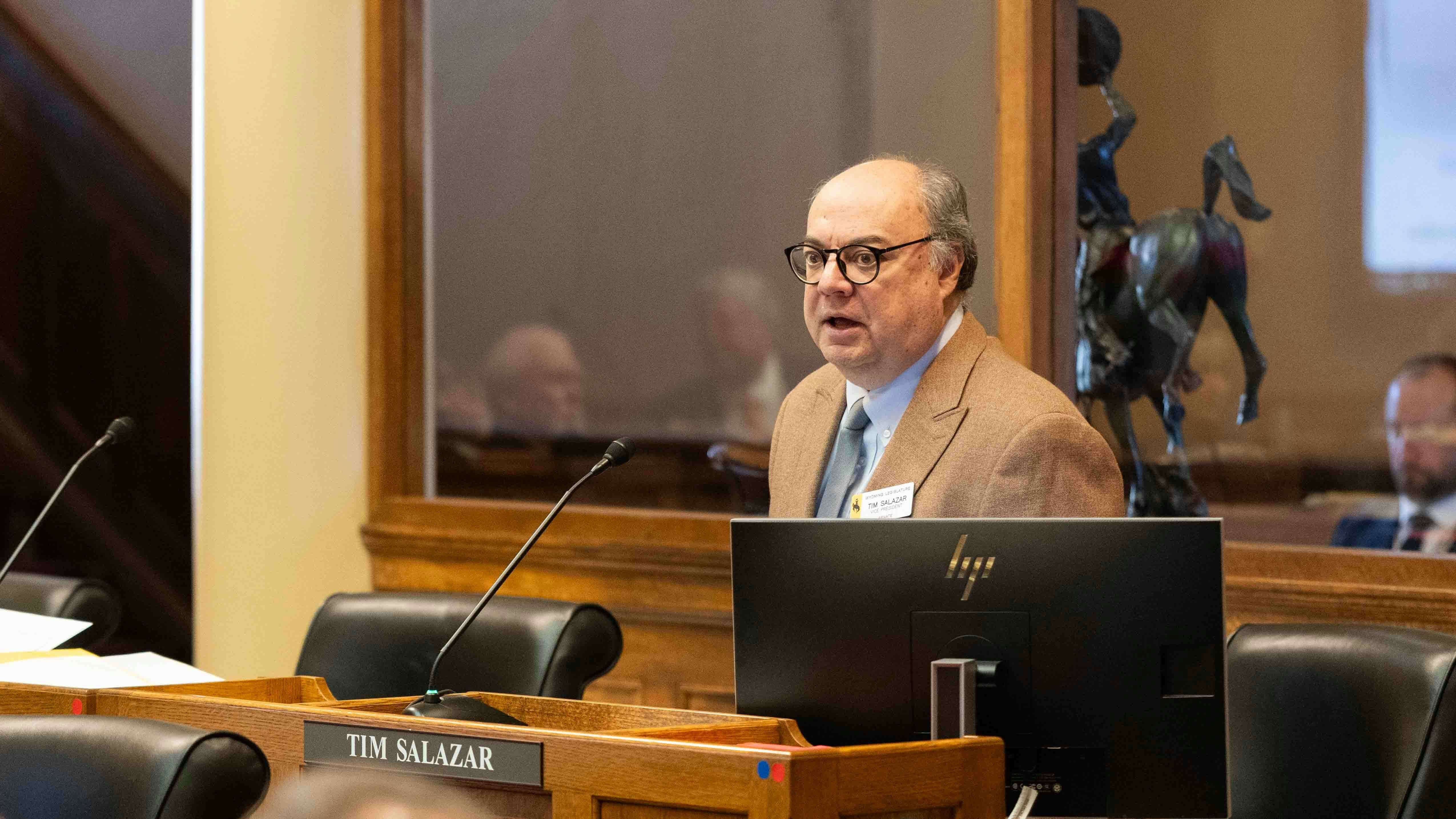
“So that’s a very diplomatic answer,” parried Senate Appropriations Chair Tim Salazar, R-Riverton, who had asked Westby whether he liked having the Wyoming Highway Patrol within his agency.
The Law Enforcement Side
Of the overall budget, the Wyoming Highway Patrol’s request is $91.23 million for the two-year cycle.
The agency’s documentation of its pitch notes that $5.75 million of that is from federal money.
WHP’s most recent two-year budget was $84.24 million. The agency has 269 full-time employees.
Westby said it had 70 vacancies in 2023 but “we’ve whittled that down to 25, 30.”
Entry level troopers are still behind market standards, he said, adding that “the main folks out on the road doing most of the enforcement… (are) getting close to 20% behind market.”
Salazar asked what it would cost to bring those troopers up to market standards.
WYDOT Deputy Director Taylor Rosetti said he’d find that figure.
The turnover rate among a different group of entry-level troopers is about 35% per year, Rosetti added under questioning by Sen. Mike Gierau, D-Jackson.
Gierau worried aloud about seeing higher turnover if the state doesn’t give troopers a raise but continues to pay for their peace officer training and certification: maneuvers that could drive them into other jobs.
The Dark Tunnel
WHP requested nearly $7 million in “exception” or special budget requests within its $91 million ask.
One of those is a $542,524 request for newer GPS tech to replace the 15-year-old systems troopers are using to crunch scene data now, according to the agency’s budget documents.
The systems being outdated and seeing maintenance outmoded isn’t the whole issue, Rep. Ken Pendergraft, R-Sheridan, offered.
“You recently had a major crash inside the tunnel,” said Pendergraft. “The existing GPS mapping – and there was a lot of that to do — wouldn’t operate.”
Pendergraft said “the new stuff does operate in a tunnel.”
His reference was to the Feb. 14, 2025, crash inside the Green River tunnel, which placed the structure out of use for months and killed three people.
WHP’s equipment was “inadequate,” Westby acknowledged, adding that Wyoming Division of Criminal Investigation Director Ronnie Jones lent his team, with their technology, “to do that work for us.”
But that “took him out of what he was doing,” at the time, Westby added.
Helping To Pay For Air Services
WYDOT’s other exception requests include an $18.4 million increase to “capacity purchase agreement funding.”
The Wyoming legislature in 2019 established the Capacity Purchase Agreement for Wyoming Air Services Enhancement fund, to help pay for air services throughout the state.
The budget authority now infusing the fund isn’t enough to cover the expenses the airports and air services need, the agency’s budget request says.
Five airports in Wyoming are using money from these agreements now, said Westby. When the legislature built the fund, he added, its plan was for airports to wean off of the program.
COVID-19 delayed that vision, he said.
But at least one airport, Gillette-based Northeast Wyoming Regional Airport, is leaving the program, Shawn Burke, WYDOT Aeronautics Division administrator, told the committee.
Cowboy State Daily reported Monday on the airport’s success.
Tasers
WHP is asking for $300,000 per biennium on an ongoing basis, for tasers and associated programs and technology.
House Appropriations Chair John Bear, R-Gillette, asked WHP Col. Tim Cameron whether he’d be comfortable with making that a one-time request, rather than a rolling payout.
Cameron said he would.
Rep. Scott Smith, R-Lingle, asked why the agency is making such a significant shift toward tasers.
“Wyoming Highway Patrol, culturally, has a great respect for the sanctity of life,” answered Cameron. “Without a taser we’d resort to either hands or an impact weapon (like a) baton.”
Troopers shy from using a baton unless it’s necessary, because of “the optics of that.”
But the certification and virtual reality program associated with the tasers is slated to cost $86.66 per month, Sen. Dan Laursen, R-Powell, noted.
Cameron said the virtual reality system puts the trooper-in-training in a stress environment, and one in which his trainers can monitor his responses and use of the weapon.
Odds And Ends
WYDOT’s other exception requests are:
- $323,480 for replacement computers
- $2.087 million for building occupancy costs
- $593,818 for IT allocation
- $631,148 for vehicle usage
- $589,877 for body camera, in-car camera and digital evidence platforms
- $90,660 for in-car modems and antennae
- $710,864 for “core operational & mandated recurring software licensing & maintenance costs”
- $856,800 to increase field supervision effectiveness
- $186,801 for ballistic helmets with face shields, for law enforcement
- $486,200 for trooper equipment costs
- $575,582 for leadership training costs
- And $360,000 for vehicle radar systems.
Clair McFarland can be reached at clair@cowboystatedaily.com.