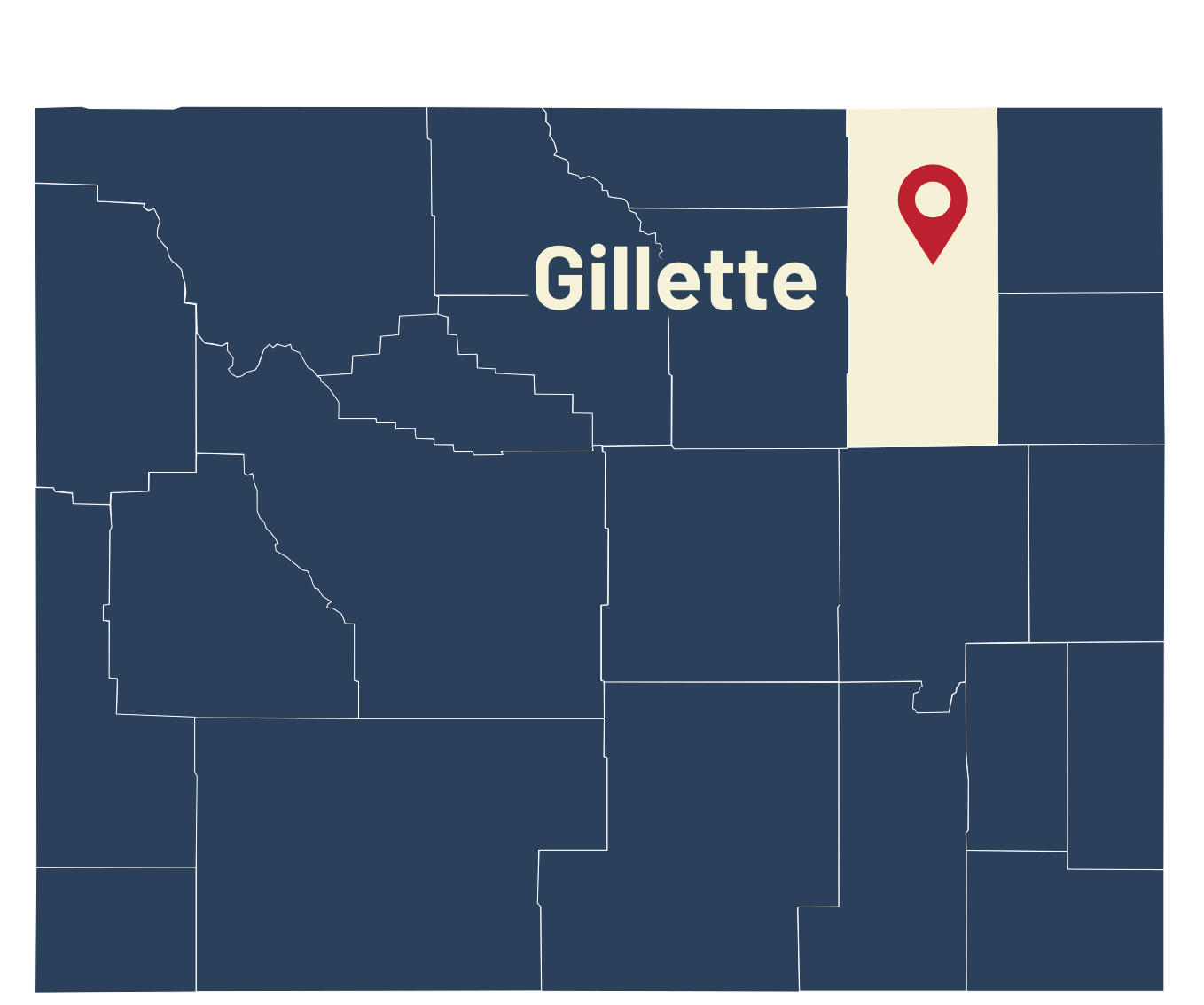
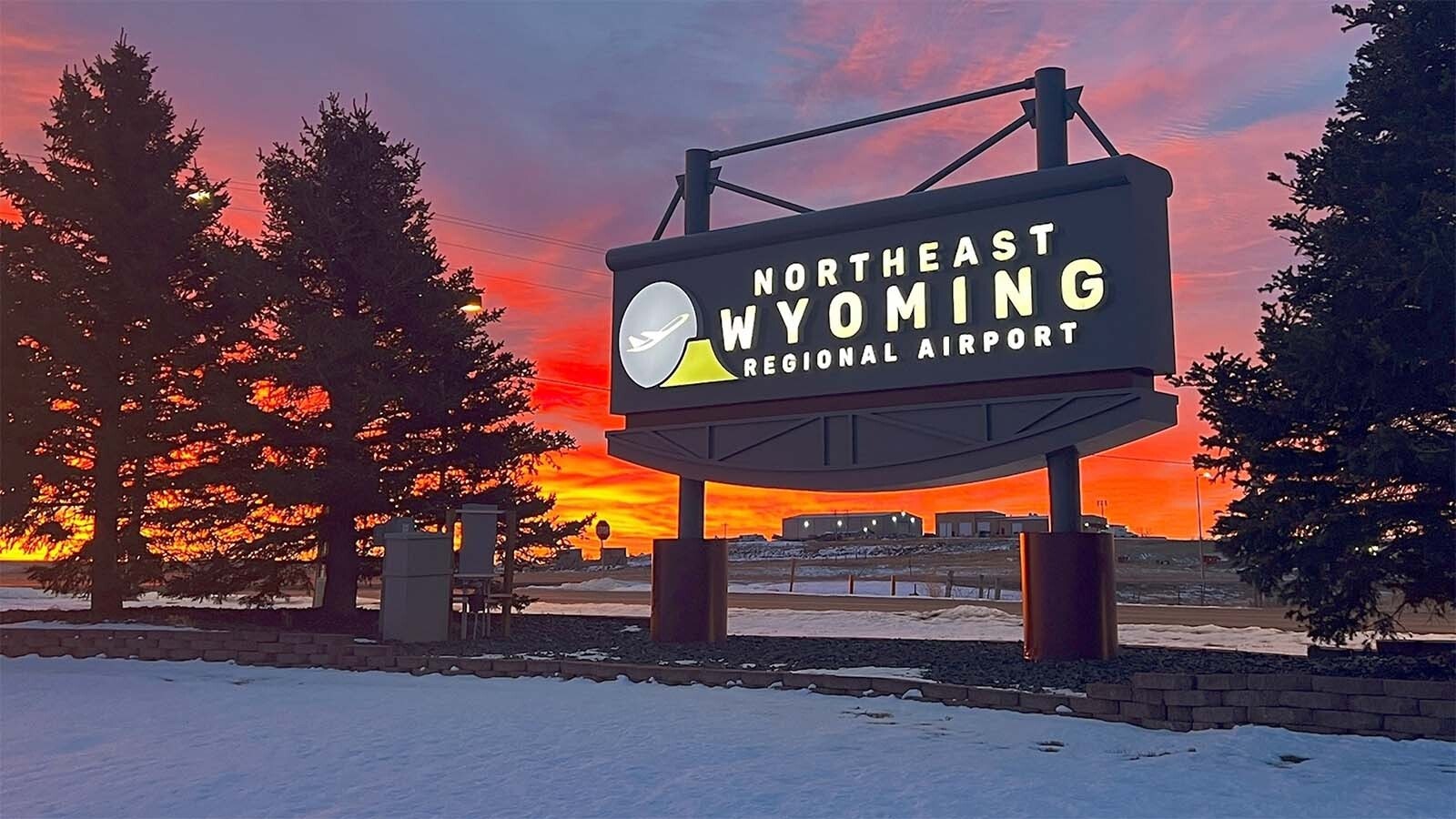
More planes and flights are coming to Gillette, now that United Airlines has decided it no longer needs a guaranteed minimum purchase agreement to fly in and out of the northeastern Wyoming community.
That’s a great success story for Gillette and Northeast Wyoming Regional Airport, but it’s also pointing the way for the other airports in Wyoming that remain in the minimum purchase capacity program. It shows that they, too, may one day enjoy more flights and more services for their own communities.
“When we developed that program, the whole plan and goal was for communities and markets to mature and find their way to self-sustainability, which Gillette has done,” Southwest Wyoming Regional Airport Director Devon Brubaker told Cowboy State Daily. “This proves that the CPA program has been successful and will continue to be successful as other communities work toward the same thing Gillette has achieved.”
Airports are a vital part of the economic fabric of even smaller communities, Brubaker added.
“They’re obviously very critical to tourism,” he said. “The amount of visitors that our commercial air service in Wyoming supports is a significant number, and I don’t know that there’s a much better synergy out there than between the tourism industry and air travel.”
It’s not just tourism, though, that benefits. It’s also local businesses, quality of life and health care access, too.
Communities that lose their airports can lose existing businesses. That’s something that Riverton economic developer Kevin Kershisnik discovered firsthand.
Kershisnik, who is with IDEA Inc., lost out on a million-dollar contract prior to the state implementing the minimum purchase agreement in 2018, thanks to unreliable airport service. He missed an important meeting with investors. That was in spite of booking his flight earlier than needed, in an effort to ensure wiggle room to make sure he made his meeting.
Later, a manufacturer in the area also told him pointblank that it would be leaving Riverton because of the situation.
The minimum purchase agreement helped to eventually bring that manufacturer back to town and has since pumped an estimated $21 million back into the community’s economy per year.
Want Better Flights? Don’t Stick With The Cheap Seats
Part of what helped drive Gillette’s success, which included more flights in and out of their airport, wasn’t just getting “butts in seats.” Part of it was driven by a large portion of people who didn’t go for the cheap seats.
“Gillette was wildly successful because they put a lot of butts in seats, butts that paid, on average, a higher fare than in the other markets in the state,” Brubaker said. “And a lot of that is driven by premium seats. There’s a lot of folks in the Gillette and Campbell County region that pay for premium seats, which drives more revenue, which then helps make a market more self-sustainable.”
Those “premium” seats Brubaker referenced include first-class or business-class tickets. While those aren’t necessarily available on smaller planes at smaller airports, it still makes a difference to the smaller airport when customers spring for them in their overall flight plans.
“Our customers are connecting beyond Denver,” Brubaker said. “And so, when they’re buying that first-class seat, or that economy-plus seat, or that business-class seat, or whatever it is beyond Denver, that revenue is credited in United’s eyes to the originating market.”
Brubaker learned that after asking United what it could do to repeat Gillette’s success in Rock Springs, and it’s something he has been relaying to leaders in his community, to help everyone understand what the community can do if it wants to attract more flights and better services.
“We all love cheap fares,” Brubaker said. “But long-term, affordable air fares don’t necessarily get you viable, successful air service. So, it’s balancing having the right fare for the market that gives you as much revenue as possible.”
Cheyenne Could Be Next
Cheyenne probably stands the next best chance of repeating Gillette’s success, Brubaker said, with Riverton and Rock Springs not far behind.
Cheyenne faces a special challenge though, with its proximity to Denver International Airport.
“Denver is very close to us, it’s just 100 miles away,” Cheyenne Airport Director Tim Bradshaw told Cowboy State Daily. “So that’s very difficult for us, being that close to the hub, but we do have two flights a day there. And Denver is one of the largest airports in the world.”
Passenger leakage studies show that Cheyenne, right now, is attracting just 3% of available air passengers. The rest, 97%, choose to drive to Denver instead.
“There are a lot of reasons why,” Bradshaw said. “There are more choices. There are international flights. That’s one of the challenges of being so close to Denver is that we lose a lot of our people who drive to that airport.”
Despite that, however, Cheyenne has been successful at getting people into seats.
“Right around 80% of our flights are full,” Bradshaw said. “So, we’re doing very well with our flights.”
Bradshaw does some outreach on social media and with speaking engagements at local clubs, to promote flying out of Cheyenne.
“People do like the service,” Bradshaw said. “They do use it. I get compliments about it all the time, because it’s very convenient. When you get home, you’re only five or 10 minutes from your house.”
Inflation Has Had An Impact
Expenses have been rising, and that has an impact on the future of the statewide capacity purchase agreement.
“That’s not a blank check scenario for airlines,” Bradshaw said. “What it boils down to is pilots are now making three to four times what they were making in 2020. The mechanics are making more. The flight attendants are making more.”
The costs for parts, maintenance and fuel have all increased, as has almost everything else associated with airline travel.
“It’s no different than anything else in life,” Brubaker said. “The just, inflationary costs. But the real big increase in cost has been pilot wages.”
One thing that Brubaker particularly likes about how the capacity purchase agreement is structured is that it’s not a straight subsidy.
“The Essential Air Service Program is a straight subsidy program where the government, the federal government cuts a check and then the airline also gets to keep all of the revenue,” he said. “For us, the airline gets to keep all the revenue, but then whatever the difference is between the revenue and the costs is what we end up paying. If revenue outpaces expenses, then we don’t pay anything.”
That incentivizes local airports to do all that they can to mitigate the costs of flying into their communities.
“When you look at the Commercial Service Improvement Plan that was adopted in 2018, that plan specifically called out how the entire goal was for communities to basically mature off of the support from the state and the local community,” Brubaker said. “This isn’t just a handout from the state. The goal is for each of us to mature.”
Legislative Hurdles Ahead
Wyoming covers 60% of the statewide capacity purchase agreement that once covered Gillette and still covers Rock Springs, Cheyenne, Sheridan and Riverton. That fund was initially capitalized in 2018 with $27 million, a portion of which was federal funding granted in the wake of the COVID-19 pandemic.
The fund will run out of money this summer, which has put an $18.41 million request on the table for the upcoming budget session for the state’s 60% share.
Gillette’s success will be front and center, Brubaker acknowledged, as the legislature begins to deliberate where it will spend money and where it will cut.
The first round has already begun. On Monday, the Joint Appropriations committee heard presentations on WYDOT’s budget, which calls for providing $1 million of the overall $18.41 million needed for Wyoming’s capacity purchase agreement.
“That went well,” Brubaker said. “They had some really great questions. Obviously, we won’t know until they do markup next week, but I think there were some great questions from the committee, and WYDOT did a good job I think of addressing some of those questions.”
Those questions did include the air service program and how it works, Brubaker said.
“That’s the first questions they asked about,” he added. “They had some tough questions, but they were legitimate and worthy questions, and I would hope that it’s a favorable approach, but we won’t know for sure until next week.”
Brubaker plans to be highly visible and accessible to lawmakers throughout the process, to ensure he is available to answer any questions.
Not Afraid Of Freedom Caucus
In November, the Wyoming Freedom Caucus did call for more cuts to state expenditures, with an eye to returning to pre-COVID spending levels. While there were few specifics on what would be targeted, that suggests any large expenditures are going to face additional scrutiny.
Brubaker said he hopes to make a clear case for the value of the program to Wyoming.
“Any elected official is having to make tough decisions and prioritize what’s important to the state or their community,” he said. “It’s our job as airports and users of airports across the state to communicate with the elected officials, whether they’re legislators or local elected (leaders), why we think the value exists for air service, and how that air service supports the state. And then it’s ultimately up to them to decide, is it high enough priority to fund? And does it outweigh other priorities that might exist in their budgets?”
Making the case will take a full court press, Brubaker acknowledged.
“What we care about is that we have relationships with the legislators,” he said. “We will communicate with them about the facts of our air service, how important our air service is , the fact that our air service supports significant economic impact to the state of Wyoming.
“It’s just a matter of communicating with the legislators, no matter what color jacket they might wear or what letter is behind their name,” Brubaker continued. “It’s about communicating and sharing the data, sharing the facts. And, ultimately, the people elect those folks to make the decisions that they make. We’re obviously hopeful that they see the value of air service, and we will do what we can to share that value.”
Renée Jean can be reached at renee@cowboystatedaily.com.