In October, Wyoming ranchers joined a national outcry when President Trump proposed importing more beef from Argentina to lower grocery store prices.
Crook County rancher Tyler Lindholm said whoever advised Trump on the plan "did a really piss-poor job,” as ranchers argued cheaper foreign imports hurt Wyoming producers.
Now three months later, Wyoming's oil industry wonders if it’s facing a similar threat.
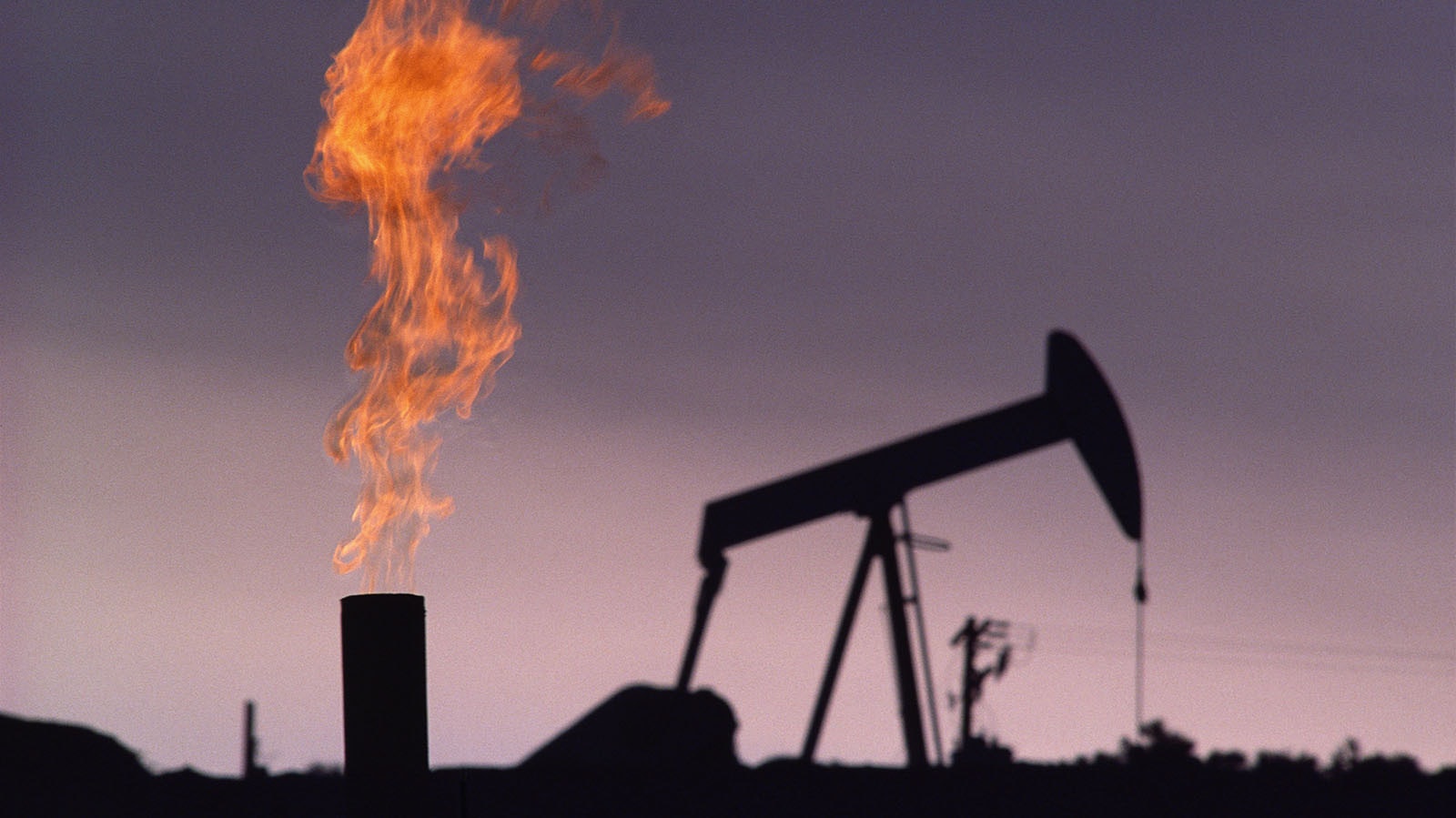
Trump's military capture and removal of Venezuelan President Nicolás Maduro on Jan. 3 came with a promise to rebuild that country's oil infrastructure using American companies — a move that energy analysts say could eventually add millions of barrels per day to global supply and potentially push prices below the roughly $60 per barrel that Wyoming producers need to stay profitable.
The question facing Wyoming's oil patch: Is Venezuelan oil the new Argentinian beef?
Last year, Trump told reporters aboard Air Force One that Argentine beef imports would bring down the cost of burgers and steaks for everyday Americans. Wyoming ranchers didn't bite, arguing the real solution was regulatory reform at home.
Watching
Now the Petroleum Association of Wyoming (PAW) is watching the Venezuela situation closely and doesn’t anticipate much of an impact anytime soon.
"Oil is a global commodity and, as such, any shock to the system will impact prices," said Ryan McConnaughey, PAW’s vice president and director of communications. "Venezuela is a member of OPEC+ and ranks 18th in global oil production, producing just 8% of the U.S. total.”
That’s partly because corruption and mismanagement have resulted in oil infrastructure that cannot fully produce Venezuela's vast reserves, McConnaughey told Cowboy State Daily.
“It will likely take more than $100 billion in investment and 10 years of stability before we see much in increased oil exports from the South American country,” he said.
Looking ahead, any additional supply entering the market creates challenges for Wyoming producers already facing price pressures, said Steve Degenfelder, a landman for Kirkwood Oil and Gas in Casper.
"Anytime more oil comes into the U.S. market, which is currently at $58 NYMEX today, it can have a negative effect for oil producers considering drilling new wells or working-over old ones," Degenfelder said, referring to the industry benchmark provided by the New York Mercantile Exchange.
"That is made worse by the fact that Wyoming sweet oil gets $5-7 below NYMEX and central Wyoming gets $12-15 below NYMEX,” Degenfelder explained. “Covering your costs and showing a profit is what it's all about. If the price does not allow that, producers will stop activities until the price improves enough to cover your costs and make a profit.”
And that could, according to Degenfelder, “Result in less oil produced and at a lower price which will affect Wyoming since severance taxes and federal mineral royalties are based on prices received.”
However, Degenfelder said several unknowns make the situation difficult to assess.
When it comes to comparing Venezuelan oil to Argentinian beef, Degenfelder said, “Your question is hard to answer right away because it's unclear how much of that oil will make it onto the market and in what timeframe.”
"I think this is quite a bit different than the concept of importing more beef into the country from Argentina to address sky-high beef prices consumers are seeing," he said.
Dominance Question
Energy experts trying to size up the Venezuela situation wonder if making the country’s oil industry great again could undermine the Trump administration's stated goal of U.S. energy dominance.
Daniel Sternoff, a senior fellow and head of corporate partnership strategy at Columbia University's Center on Global Energy Policy, wrote in a Q&A published Sunday that increased Venezuelan production could hurt American producers.
"All of that said, a realistic path to higher medium-term Venezuelan oil production could keep pressure on the back end of the crude curve, which, in turn, could have a dampening effect on investment and production in higher-cost U.S. shale," Sternoff wrote. "Ironically, successful U.S. action to significantly rehabilitate Venezuelan oil production could impede Trump's U.S. energy dominance goals."
In a follow-up interview with Cowboy State Daily on Monday, Sternoff said significant obstacles remain before any production increase materializes.
"A lot has to happen for there to be a significant increase, starting with basic political stability," Sternoff said. "It's too early to tell if oil companies are going to make significant investments."
But if that investment does come, Sternoff said, Wyoming could feel it.
"If they were to add a couple million barrels a day of Venezuelan production, then that would put downward pressure on the oil price," he said. "We're already at a place where we're seeing production fall in the U.S., basically a flatlining of onshore Lower 48 production.”
The timing isn’t great for domestic producers, Sternoff added.
"The rig counts in the Lower 48 were falling all of last year and we're now starting to see that show up in the form of backing out of production," he said. "Unless we're seeing supply limitation elsewhere. If you're talking about global commodity markets and you're talking about dramatically increasing supply, the oil markets are currently oversupplied."
Wyoming Connections
The major U.S. oil companies with potential interests in Venezuelan development have varying stakes in Wyoming.
Chevron is the only major U.S. oil company still operating in Venezuela, now accounting for 25% of Venezuelan oil production and importing about 120,000 barrels per day of crude to the U.S. in December, according to CBS News and Argus Media.
However, Chevron exited Wyoming in 2016, selling about 100,000 net acres across the state as part of a broader divestment strategy, according to Hart Energy. The company maintains only legacy assets in the state, including remediation of the old Texaco refinery in Casper and a wind farm, but no active production.
ExxonMobil, by contrast, has significant Wyoming operations with 20 currently producing wells as of October 2025 at their Shute Creek facility near LaBarge, according to Drilling Edge. The facility has captured more carbon dioxide than any other facility in the world, according to ExxonMobil.
Looking back, ExxonMobil refused the harsh terms imposed by former President Hugo Chavez, had its assets nationalized and exited Venezuela in 2007, according to Euronews. An international tribunal awarded ExxonMobil $1.6 billion that Venezuela hasn't fully paid, according to the Sandstone Group.
ConocoPhillips was also kicked out of Venezuela in 2007 and is owed $8.7 billion to compensate for the expropriation. In Wyoming, ConocoPhillips sold its natural gas assets in the Wind River Basin to Contango for $67 million in 2021, according to Hart Energy.
If Trump follows through on his stated intention to rebuild Venezuela's oil infrastructure with American companies, ExxonMobil could return to Venezuela while maintaining Wyoming operations — creating a dynamic where the company would have skin in the game in both markets.
McConnaughey said the Petroleum Association of Wyoming's position remains clear regardless of what happens in Venezuela.
"We at PAW believe that the best case for national security, environmental responsibility and economic prosperity is to continue development of natural resources right here at home regardless of external factors," McConnaughey said.
David Madison can be reached at david@cowboystatedaily.com.