With a nearly week-long power outage prompting a state of emergency in Manitoba, Canada, and a massive Wyoming outage still a fresh memory, some Wyomingites say off-grid power systems are a must.
The Pimicikamak Cree Nation in Manitoba declared a state of emergency last week following a widespread power outage.
It took days for the power to come back online.
That came on the heels of a massive power outage in November that cut electricity for more than 100,000 customers in Wyoming, Montana, and South Dakota.
That outage was set off by two high-voltage lines that tripped near Medicine Bow.
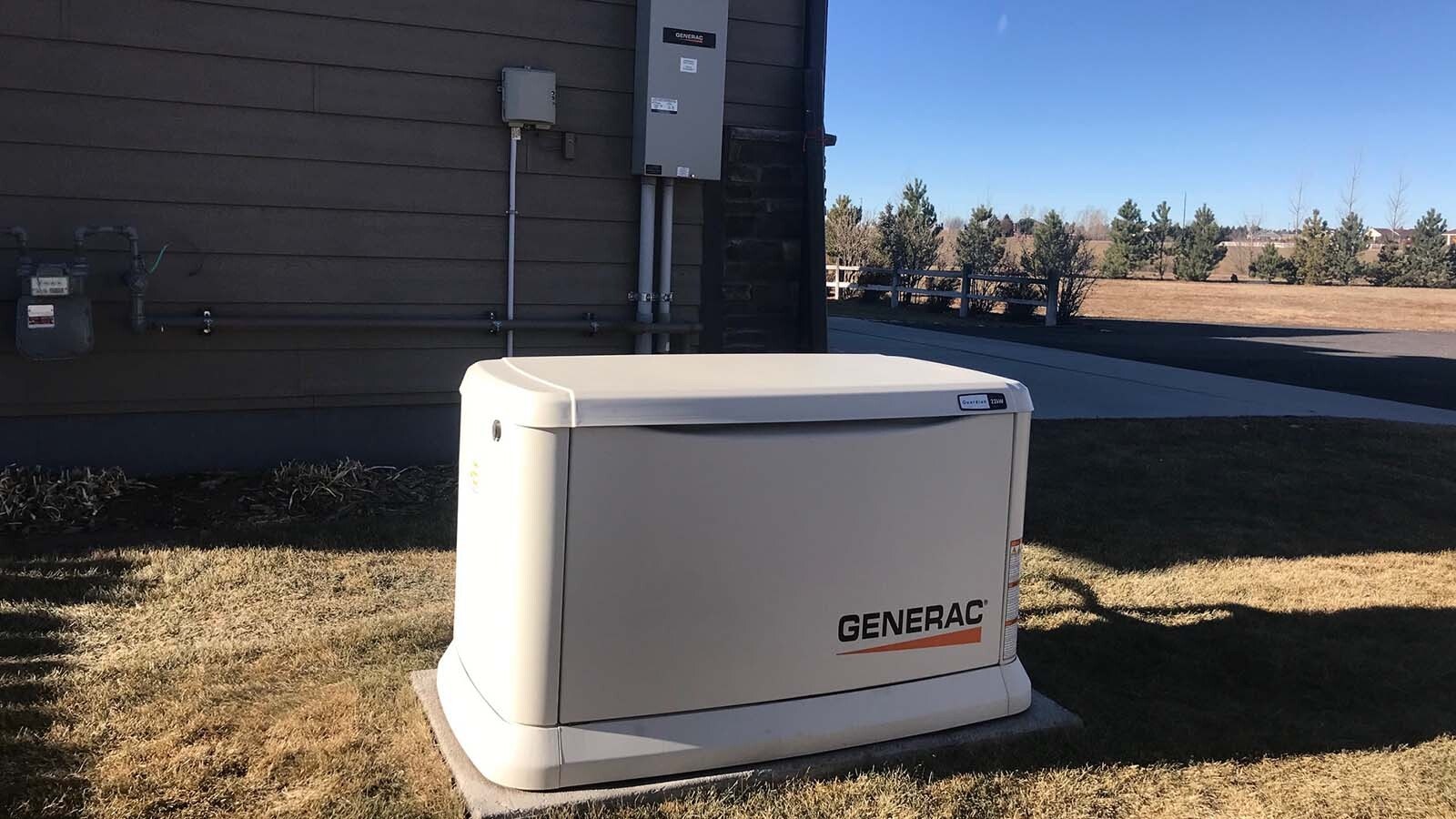
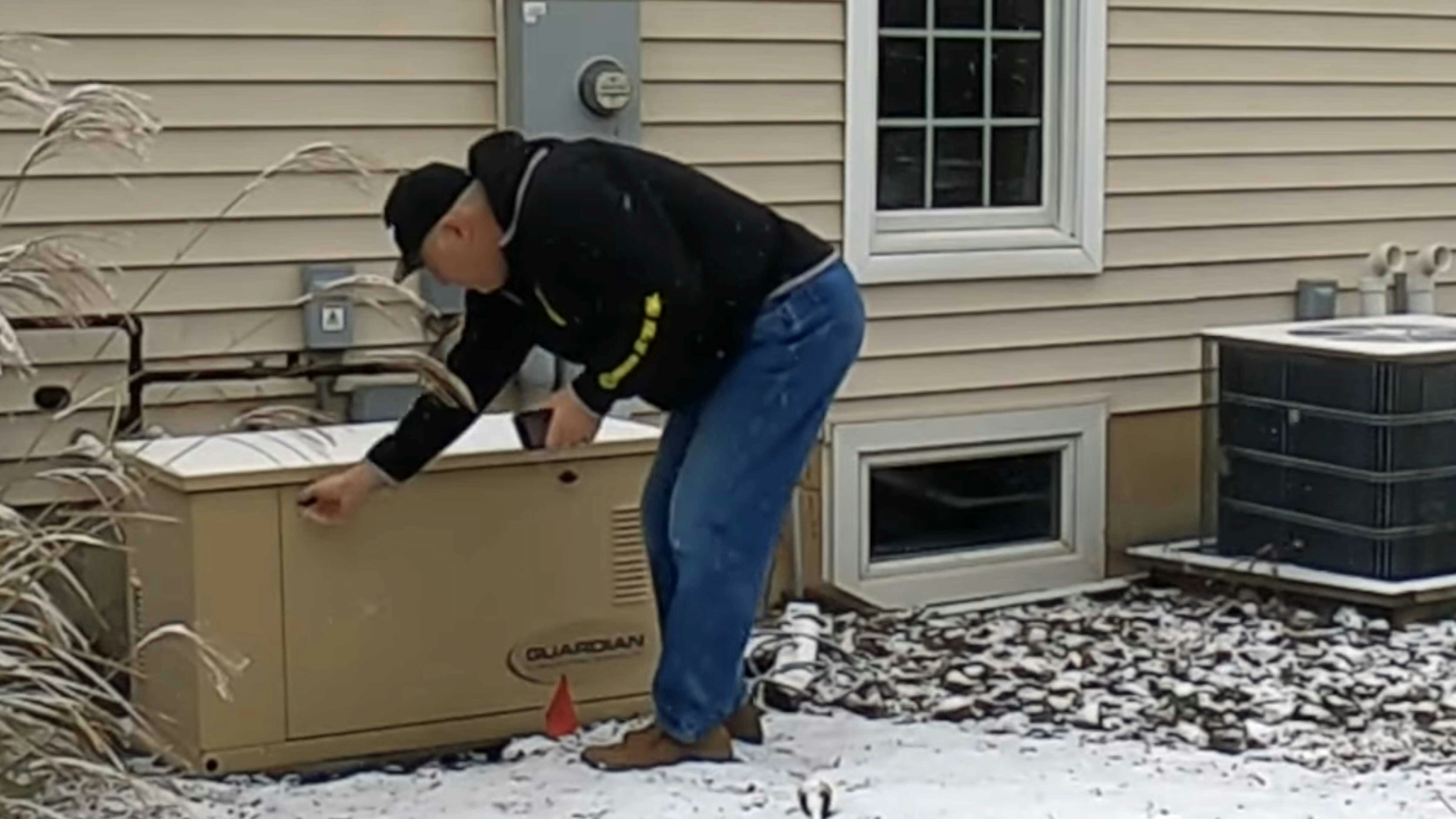
Cheyenne-area resident Dave Simpson paid roughly $11,000 to have this whole-house backup generator installed. It automatically kicks on when there’s an outage. (Courtesy Dave Simpson) 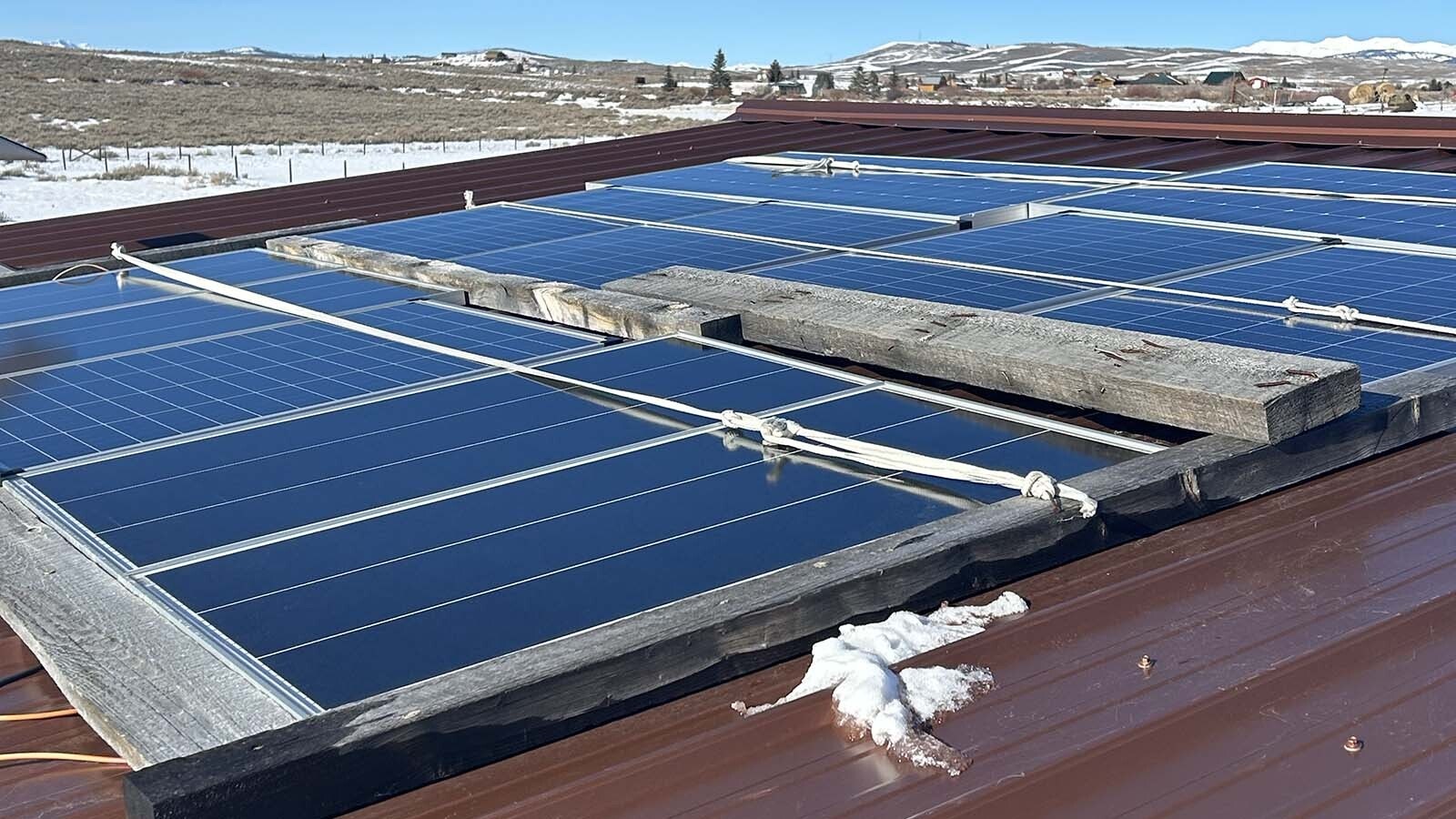
Sublette County resident John Thompson powers his home through rooftop solar panels. (Courtesy John Thompson) 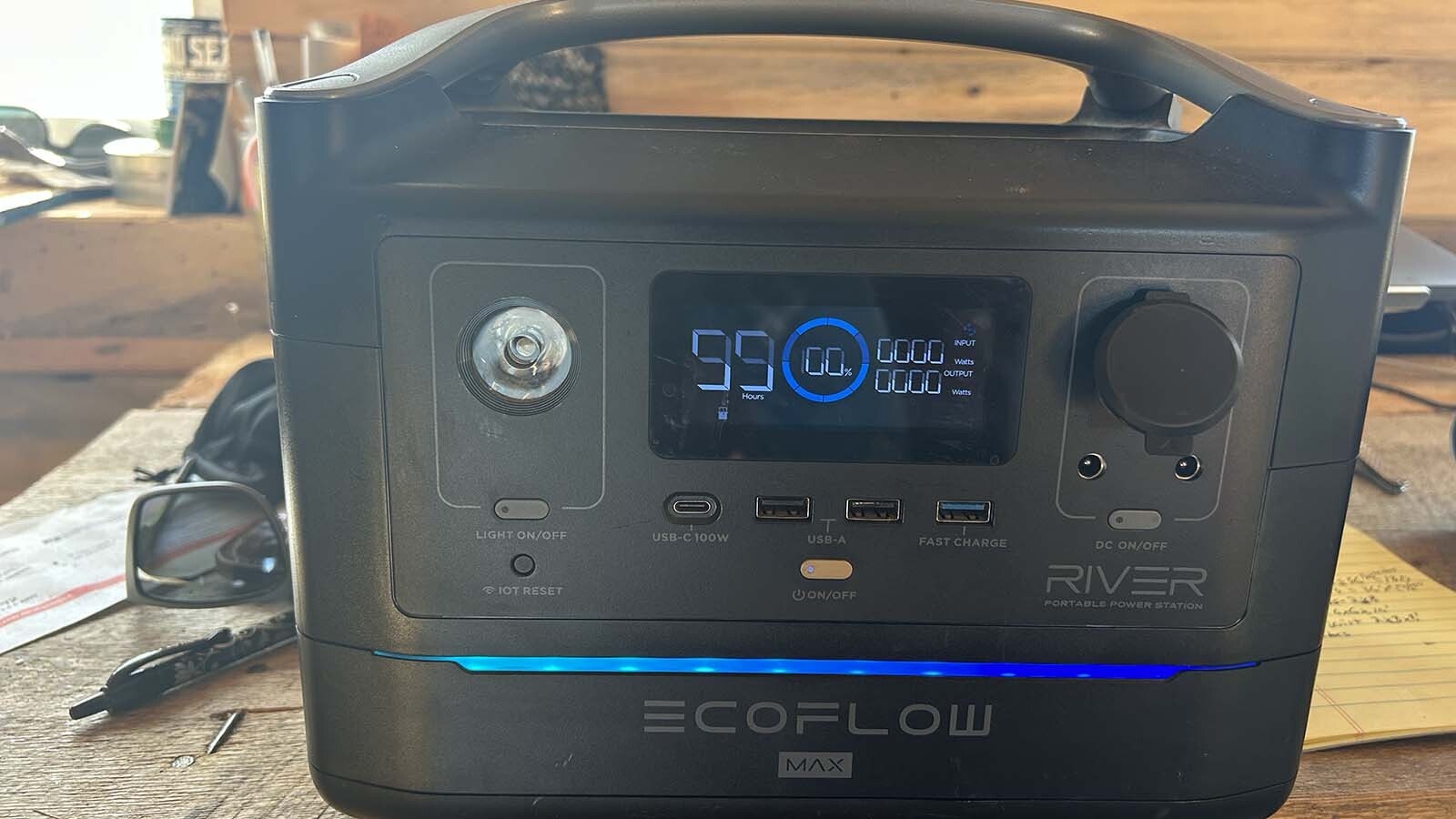
This lithium power bank is part of the DIY solar-powered system that Sublette County resident John Thompson built to supply electricity to his home. (Courtesy John Thompson) 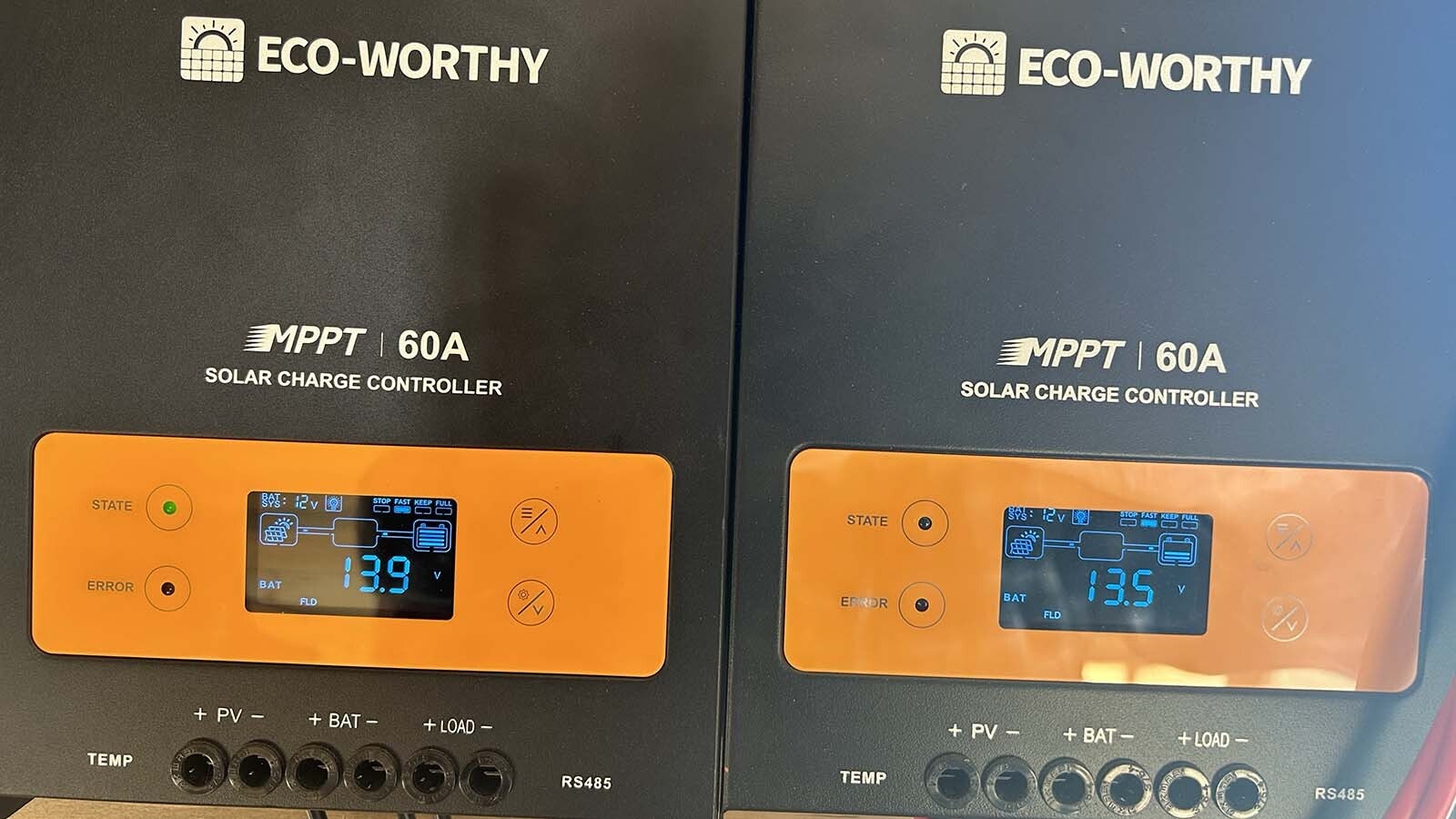
These charge controllers are part of the DIY solar-powered system that Sublette County resident John Thompson built to supply electricity to his home. (Courtesy John Thompson)
Commercial And DIY Options
The peace of mind that comes with knowing their homes’ electricity will stay on during such outages is partly what prompted Wyomingites Dave Simpson and John Thompson to install off-grid systems.
Dave Simpson, who lives near Cheyenne, took the commercial approach.
Simpson, a Cowboy State Daily columnist, bought a “whole-house” backup generator that automatically kicks on whenever there’s an outage.
Including the cost of installation on a concrete pad behind his house, it cost roughly $11,000.
Thompson took the do-it-yourself approach to take his small home in Sublette County off-grid. He installed a solar-powered electrical system, with a gasoline-powered backup generator.
He figures it set him back roughly $4,500.
“My system has easily paid for itself,” Thompson said.
Worried About Oxygen Supply
Simpson’s generator is hooked into his home’s natural gas lines.
He said it’s kicked on about a half-dozen times because of power outages since it was installed in 2020.
Simpson said he decided to buy the generator during the COVID-19 pandemic when his mother-in-law was living with him and his wife.
She’s on oxygen, and Simpson said that “it occurred to us that we could have a real problem if we didn’t have any power at all.”
The generator requires yearly maintenance, which costs about $225, he said.
Other than that, the generator sits dormant, ready to roll in case of an emergency.
When there’s an outage, “we don’t have to do anything” and it takes only a few seconds for power to switch over to the generator, he said.
“The only difference for us is, the lights come back on in about five seconds, and then the generator comes on and we have full power,” Simpson said. “And we’re the only house in the neighborhood with lights."
Although the generator has enough juice to power the house, Simpson said that he and his wife are prudent when it’s running.
They refrain from running their clothes dryer, electric space heaters or other devices that gobble lots of power.
Disdain For Power Companies
Power outages are a “concern,” said Thompson.
He recalled that when he lived in Idaho years ago, a Valentine’s Day storm knocked power out for five days, and he doesn’t want to go through something like that again.
That said, his primary motive for going off-grid is his dislike for power companies.
“I have a really strong disdain for these big power companies,” Thompson said, noting that Rocky Mountain Power has hiked rates in Wyoming.
“They just pass their costs along to the customers. They are never not profitable,” he said.
He also likes the sense of independence that comes with having his own power supply.
“It’s nice to be self-sufficient. I like that too,” he said.
If there’s a downside, it’s that “you are your own power company,” Thompson said. "If something goes wrong, you can’t call anybody."
He’s sometimes had to fall back on the knowledge of his brother and a friend, who are electricians.
And there’s work that comes with being off-grid, he added.
“I’ve got to climb up there (on the roof) every morning when we get fresh snow and clean the solar panels off,” he said.
Wyoming frequently has clear skies, which makes solar a good option here, Thompson said.
“It’s practical for me, because I’m just a single guy,” he said. "I don’t have a big electricity demand."
However, he noted that the low angle of the sun and the shortness of days during most of December can make the availability of power sketchy.
“During the first three weeks of December is when I usually run my gas-powered generator the most,” he said.
Mark Heinz can be reached at mark@cowboystatedaily.com.