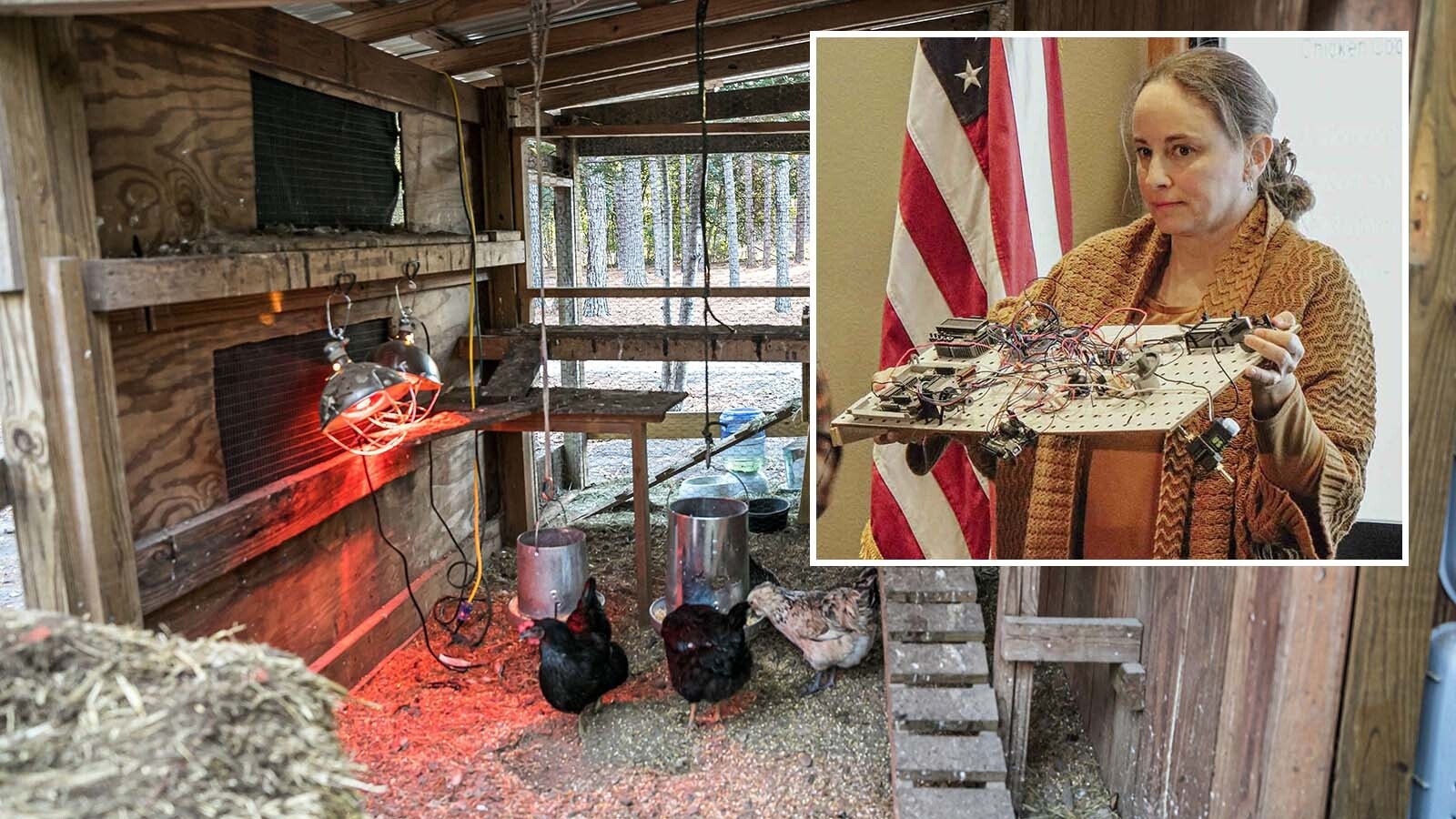
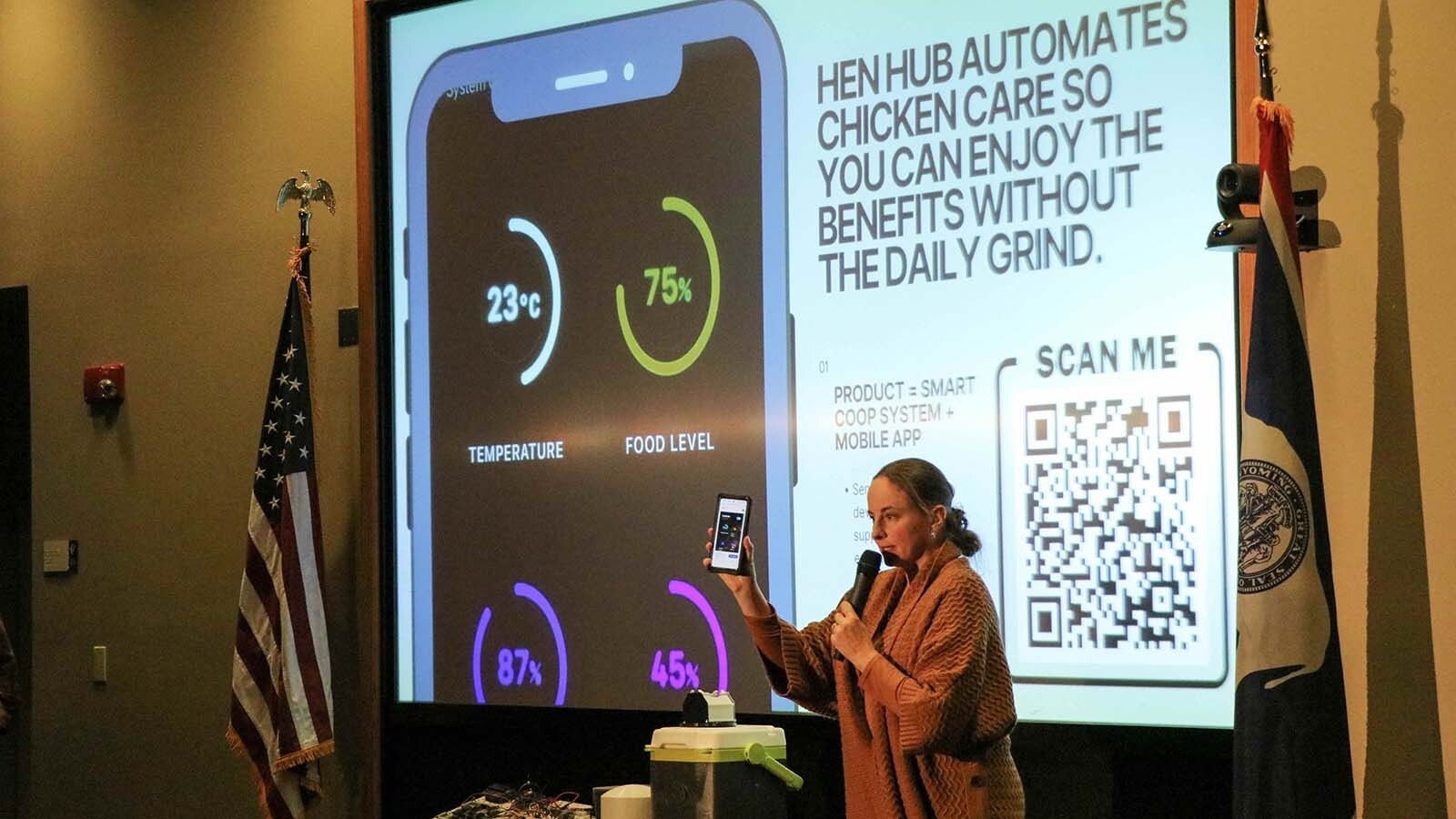
Dan and Jenny Berens stood before a room full of judges at Gillette College’s Old Main Presentation Hall, defending an invention born from a simple frustration: The daily demands of backyard chickens.
The Sheridan couple had eight minutes to make their case for the Hen Hub, a smart-home system that automates chicken coop care. Then came the questions.
“It was a little bit intimidating,” said Dan Berens, recalling the event back in November. “People … they didn’t hold back as far as criticisms and wanting to answer hard questions about how it would work or who would buy it.”
One judge pressed him on durability. How would this electronic system survive the harsh environment inside a chicken coop?
Berens had an answer. The Hen Hub’s core is a microcontroller designed for greenhouse and agricultural use, built to handle temperature extremes and high humidity.
“It’s a really neat system and its low energy use, so you could get to a battery that would last for years,” he said.
By the end of the night, the Berenses had won the 2025 Energy Capital Start-Up Challenge and its $50,000 prize.
Weather Inspiration
The idea emerged from something already in the Berens’ backyard: a weather station.
“I thought, ‘Well, why can’t you have something like that for my chicken coop so I could see what the temperature was like in there?’” Dan said.
From there, the concept expanded.
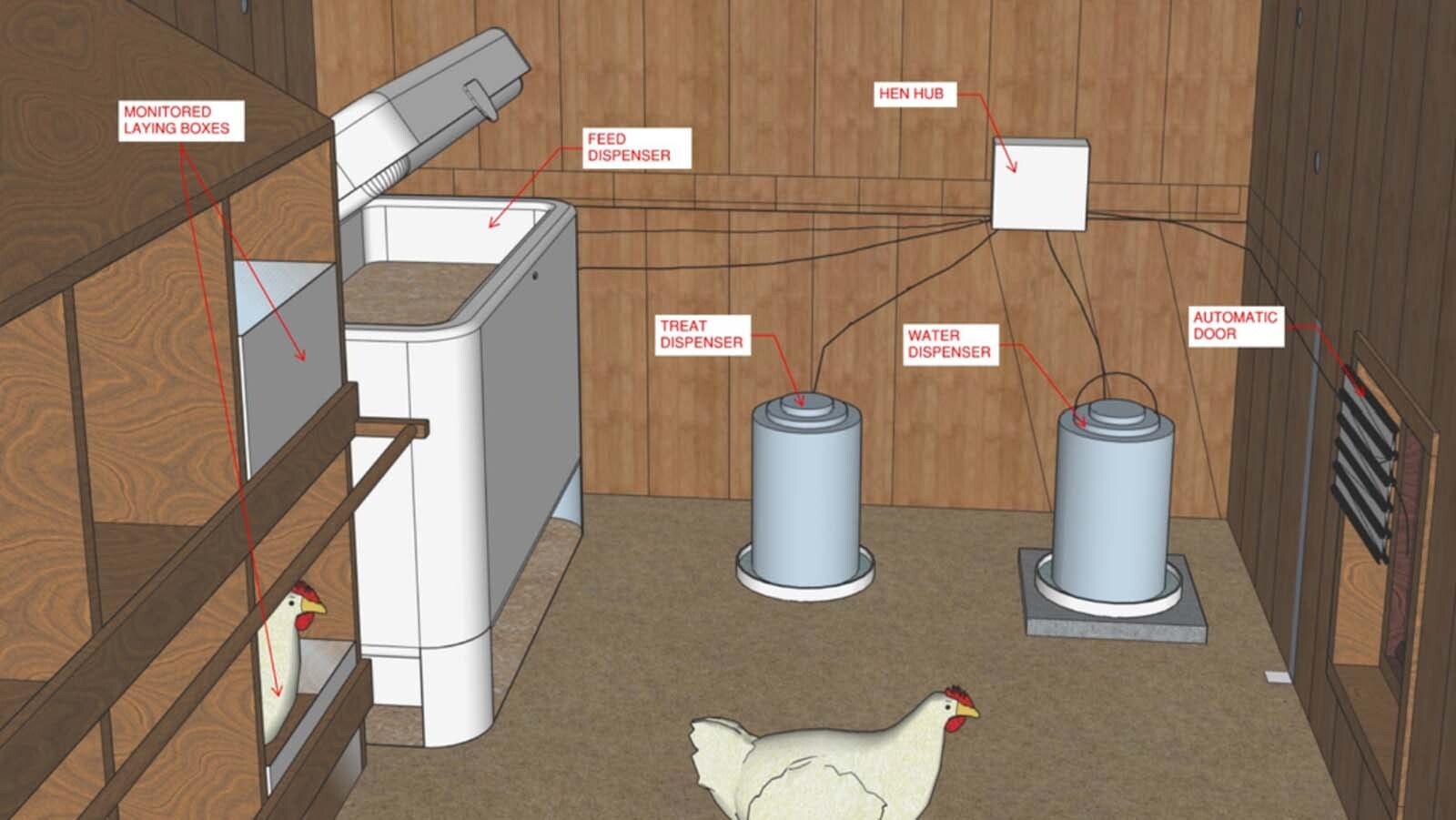
What if they could monitor whether eggs were in the laying box? Track food and water levels? Dispense treats and supplements? Control the coop door automatically?
The Hen Hub connects all these functions through Wi-Fi to a smartphone dashboard, letting owners check on their flock at a glance.
“I was looking for ways to make it easier and also so that I could maybe just do these chores kind of more on the weekends or when I had time, spare time, not demanding so much daily attention,” Dan said.
The system appeals to busy families, travelers and older chicken keepers who might not make it to the coop every day.
Design Background
Dan Berens has been a licensed architect in Wyoming since 2010, working primarily on commercial projects across the state. His portfolio includes work on the Brinton Museum in Big Horn, a renowned institution showcasing Western and American Indian art in the foothills of the Bighorn Mountains.
Both Dan and Jenny have a design background, which they applied to create the Hen Hub’s physical components. The technical side required self-education.
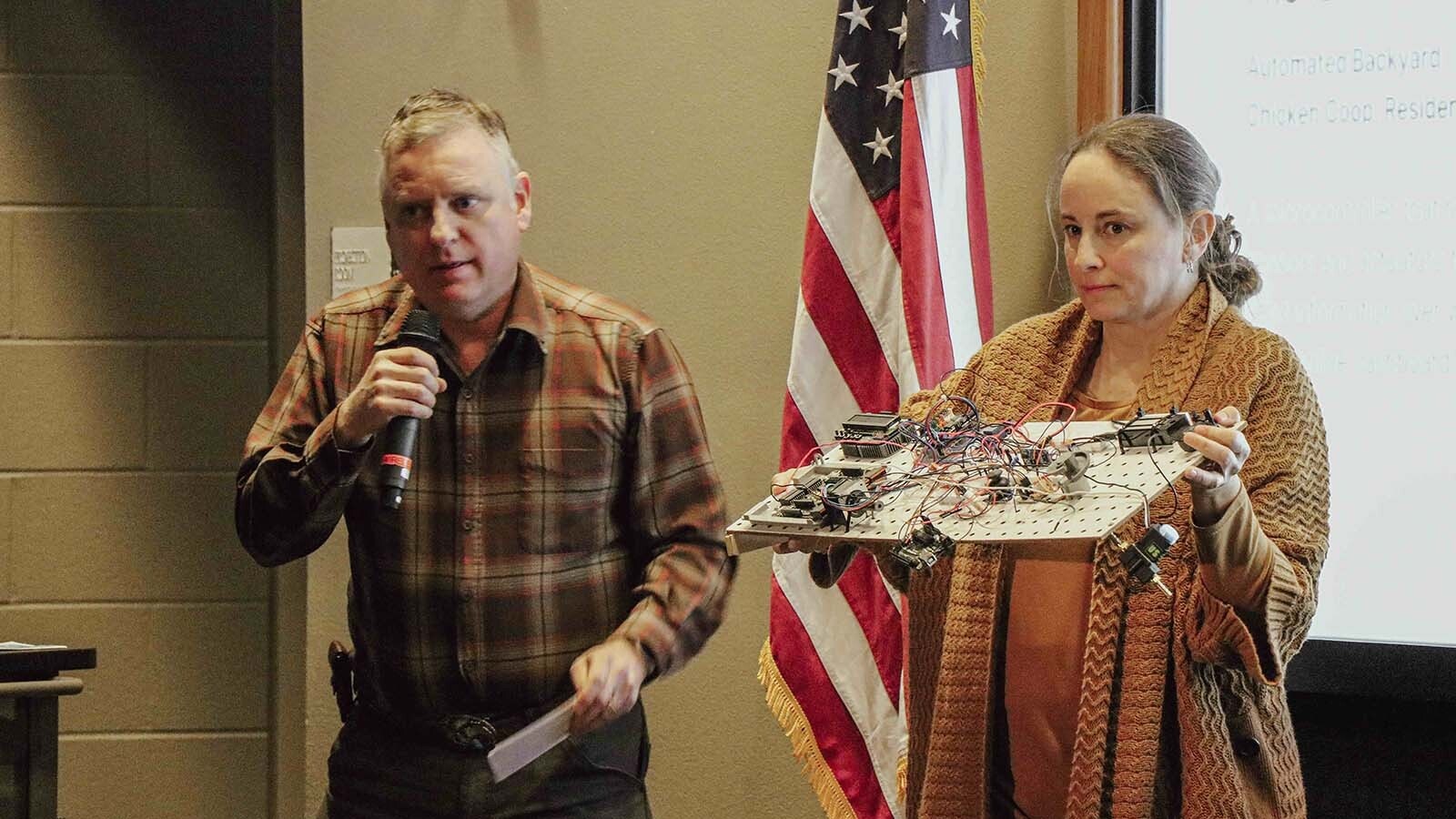
They joined Sheridan’s community maker space, where Dan taught himself Arduino microcontrollers and 3D printing through YouTube tutorials. He built a board with all the sensors and actuators working, then 3D-printed models of the components.
In October, the couple secured a patent on the invention.
Chicken Benefits
Dan grew up with chickens on his family’s Oregon ranch. The couple brought them back into their lives around 2020 as backyard pets in Sheridan, where city ordinances allow them.
They started with six hens, now down to two. Their daughter sells the excess eggs.
Beyond the fresh eggs, the Berenses see broader value in backyard flocks. They hunt insects, improve garden soil, and produce compost. Surplus eggs can feed neighbors or food banks.
“To have a pet that kind of gives back by having eggs is really cool,” Dan said. “Food banks really rely on that because they don’t typically get a lot of perishable items.”
Front Door
Dana Miller, program director for the Energy Capital Start-Up Challenge, said the Berenses represented exactly what the competition seeks.
“Fantastic, actually,” Miller said of their presentation. “He and his wife both had parts and they presented. They had an idea and were solving a problem. They started using their local maker space.”
Miller has run the challenge for three years through Energy Capital Economic Development. The program began in 2023 as a partnership with the Wyoming Business Council’s Impact 307 initiative.
When the state pulled that program back to focus on Laramie, said Miller, the city of Gillette, Gillette College and Energy Capital Economic Development joined forces to continue it.
This year drew 40 applicants competing for slots among five finalists.
The challenge operates under a federal planning grant addressing economic diversification as coal declines in Campbell County. Miller said entrepreneurship is central to that transition. “People who live here, love it here, want to stay here, and fix problems here,” she said. “We know small businesses are the core of our economy.”
The annual competition serves as a “front door” to Wyoming’s broader entrepreneurial support network, connecting inventors and business owners with resources from the Small Business Development Center, Gillette College and economic development organizations.
“It gets people motivated,” Miller said. “It gets people into the ecosystem, meeting other people, meeting other entrepreneurs.”
Next Steps
The $50,000 will fund the Berens’ transition from models to working prototypes. Their own coop will serve as the first test bed, with plans to build four or five units for friends in Sheridan who also keep backyard chickens.
The Hen Hub website at henhub.net currently shows only a “coming soon” message, but the couple expects that to change as development progresses.
For entrepreneurs with their own ideas, the next Energy Capital Start-Up Challenge will open applications in late summer 2026, with pitch night following in November.
David Madison can be reached at david@cowboystatedaily.com.