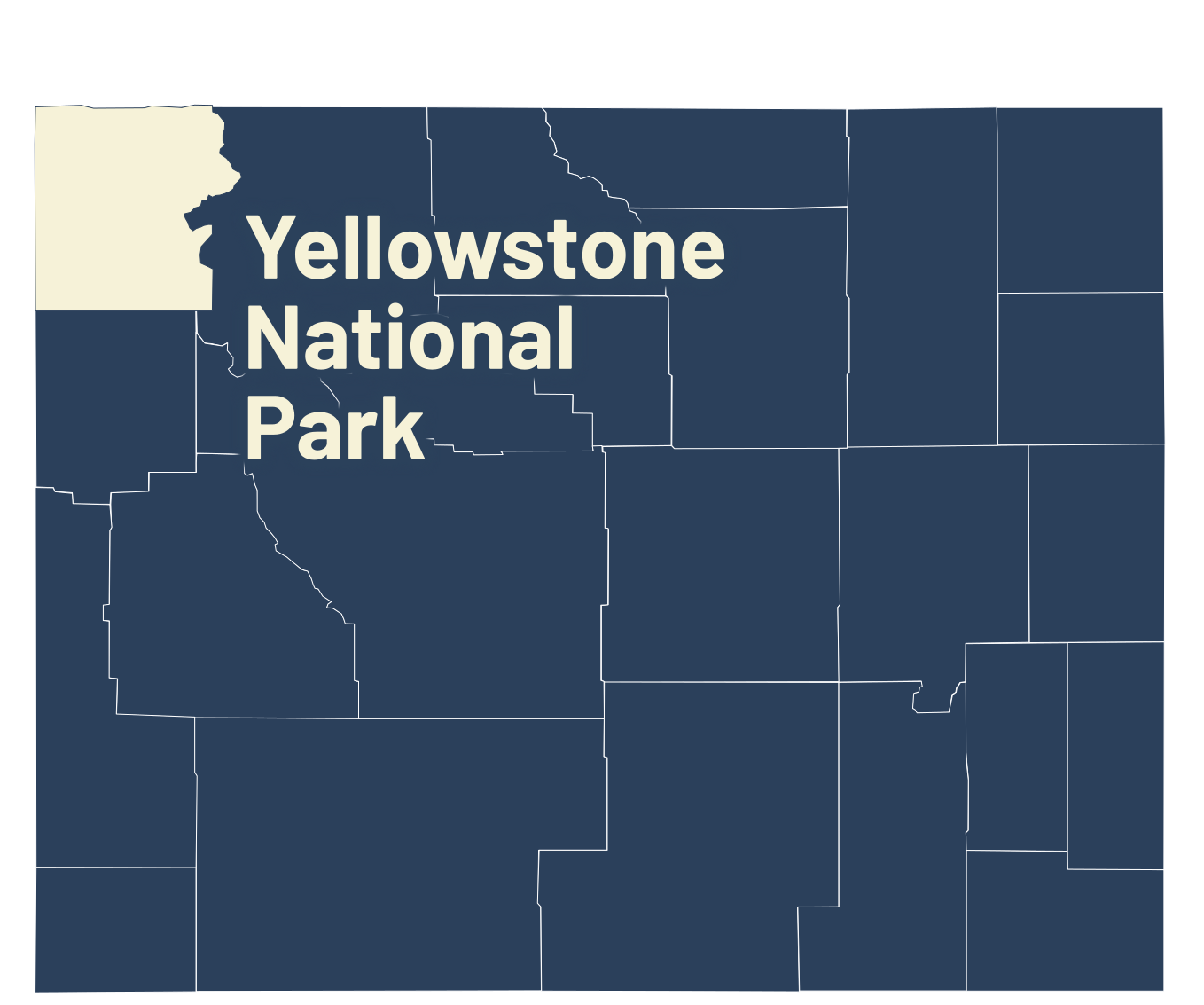
In August 1978, Yellowstone National Park briefly became planet Vulcan.
Eric Ostensen, an unassuming Yellowstone shirt-wearing 20-year-old stationed behind the desk of the Mammoth Hot Springs Hotel, got the job of chauffeuring Mr. Spock himself to the surface of his home planet.
When the “Star Trek” television series got the green light for a full-length motion picture, creator Gene Roddenberry and the production team wanted to make a big impression with an on-location shoot.
No place on Earth seems like it should be on another planet than Yellowstone.
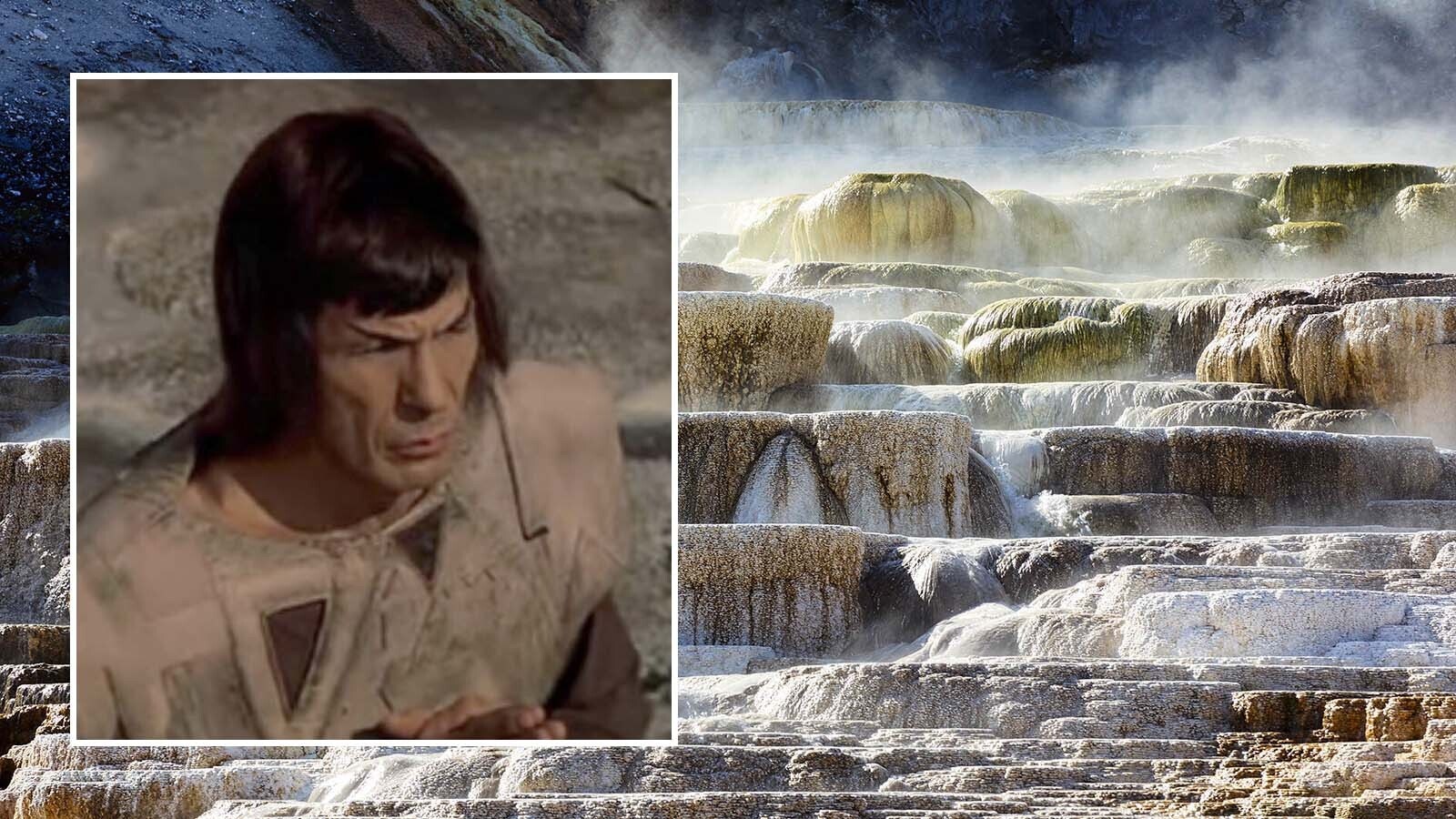
They flew a production crew, a partial set, and Leonard Nimoy to Yellowstone for a scene set on Vulcan, Mr. Spock's home planet.
Ostensen didn’t have a major role in the short shoot at Mammoth Hot Springs, but he remembers it vividly. It was one of the most memorable experiences of his short time in Yellowstone.
“They had one day to do it, so everything was ready for a surgical strike,” he told Cowboy State Daily. “Paramount Pictures paid us $50 a day to lug equipment and shuttle people back and forth.
"It was weird but a lot of fun and I got to drive Mr. Spock to work on Vulcan!"
Boldly Going
“Star Trek” remains one of the most popular and influential science fiction franchises in history, but it wasn’t all that popular during its original run from 1966 to 1969.
“The original ‘Star Trek’ series had been considered a failure by some,” “Star Trek” expert Larry Nemecek told Cowboy State Daily in January 2024. “They were fighting budgets, fighting time, and fighting all the people that didn't get sci-fi until NBC finally got rid of it.”
That all changed with the 1977 release of “Star Wars.” Seeing the astronomical success of space sagas at the box office, and the new information on audience demographics, Paramount immediately gave Roddenberry and director Robert Wise a $40 million budget to bring “Star Trek” to the silver screen.
Ostensen didn’t know about any of this Hollywood treatment when he started working at the front desk of the Mammoth Hot Springs Hotel. A buddy working at Old Faithful hooked him up for the summer.
“I had just moved to Boise, Idaho, from the suburbs of Chicago,” he said. “As soon as we got out here, I was just looking for something to do, so I drove over to Mammoth Hot Springs, and they got me a job.”
It wasn’t glamorous work. Ostensen recalled lugging around a lot of baggage, greeting tour buses, and all the manual labor required to book and keep track of hotel and cabin reservations.
That’s how he noticed a reservation for 10 cabins, placed by Paramount Pictures, in August 1978. He remembered how much a significant reservation “snuck up” on him, especially since he had no information about it.
“Nobody knew anything,” he said. “We asked our location manager, and he either didn’t know or didn't say anything. I think the whole production of the movie was very hush-hush at that point, and they never said what they were doing.”
It didn’t take much to find out what they were doing. Why else would Mr. Spock be on the boardwalk at Mammoth?
An Alien World
In his 1980 book “The Making of Star Trek: The Motion Picture,” Roddenberry said the Yellowstone shot was “one of the most complex shots of the movie.” An 11-person crew arrived at Mammoth on Aug. 8, 1978, the second day of production for the first “Star Trek” movie.
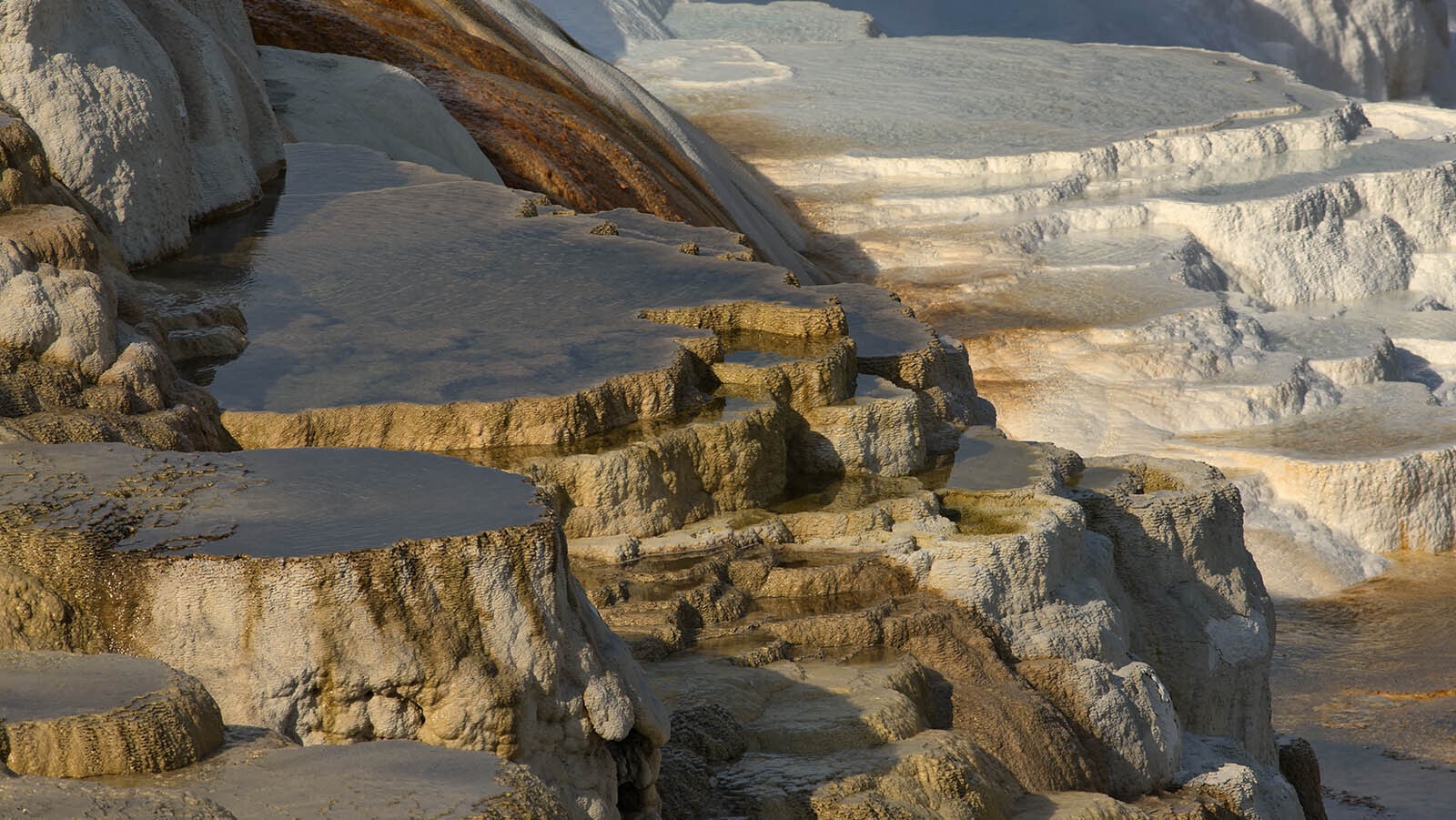
Mammoth Hot Springs, specifically Minerva Terrace, was selected to be the backdrop for a scene where Spock consults with the Vulcan Elders on his home planet, Vulcan. Nemecek said the production team wanted an environment with a personality, not just the aesthetic of an alien world.
“They always said Vulcan was ‘a hot planet,’” he said. “They wanted the alien aspects of Minerva Terrace: the liquid, the bubbling, the steam, the rock formations, the geology.”
After securing permission from the National Park Service, which Roddenberry described as “no easy feat in a national park at the height of tourist season,” the crew arrived with a custom-built platform to be placed adjacent to the boardwalk.
Matt Yuricich, a legendary special effects artist, was with the production crew so he could see the thermal landscape and artistically match it to the matte painting he would create for the sky of Vulcan. That would be added in post-production, along with shots filmed on a set built in a water tank on the Paramount lot in Los Angeles, California.
“They wanted Minerva Terrace, but it still had to be Vulcan,” Nemecek said. They didn’t want “someone saying, ‘Oh look, it's Minerva Terrace from Yellowstone.’ They still wanted it to blend into an alien look.”
Ostensen didn’t meet these Hollywood icons, or at least he didn’t recall it. His job was to help transport people and equipment from the hotel to Minerva Terrace, while the production team worked to get the shots as quickly and efficiently as possible.
It was an out-of-the-ordinary but unexceptional few days for Ostensen, until one morning when he got an opportunity that many die-hard Trekkies would have died for.
Shuttling Mr. Spock
One morning, Ostensen and some fellow Mammoth employees were driving to the cabins rented by the Paramount personnel when he noticed one person who immediately stood out. Leonard Nimoy, in full costume, had arrived in Yellowstone and was on location for the film.
“They told me to grab a car, and he just happened to pop into the rental car I was in,” he said. “It was a ‘holy shit’ moment.”
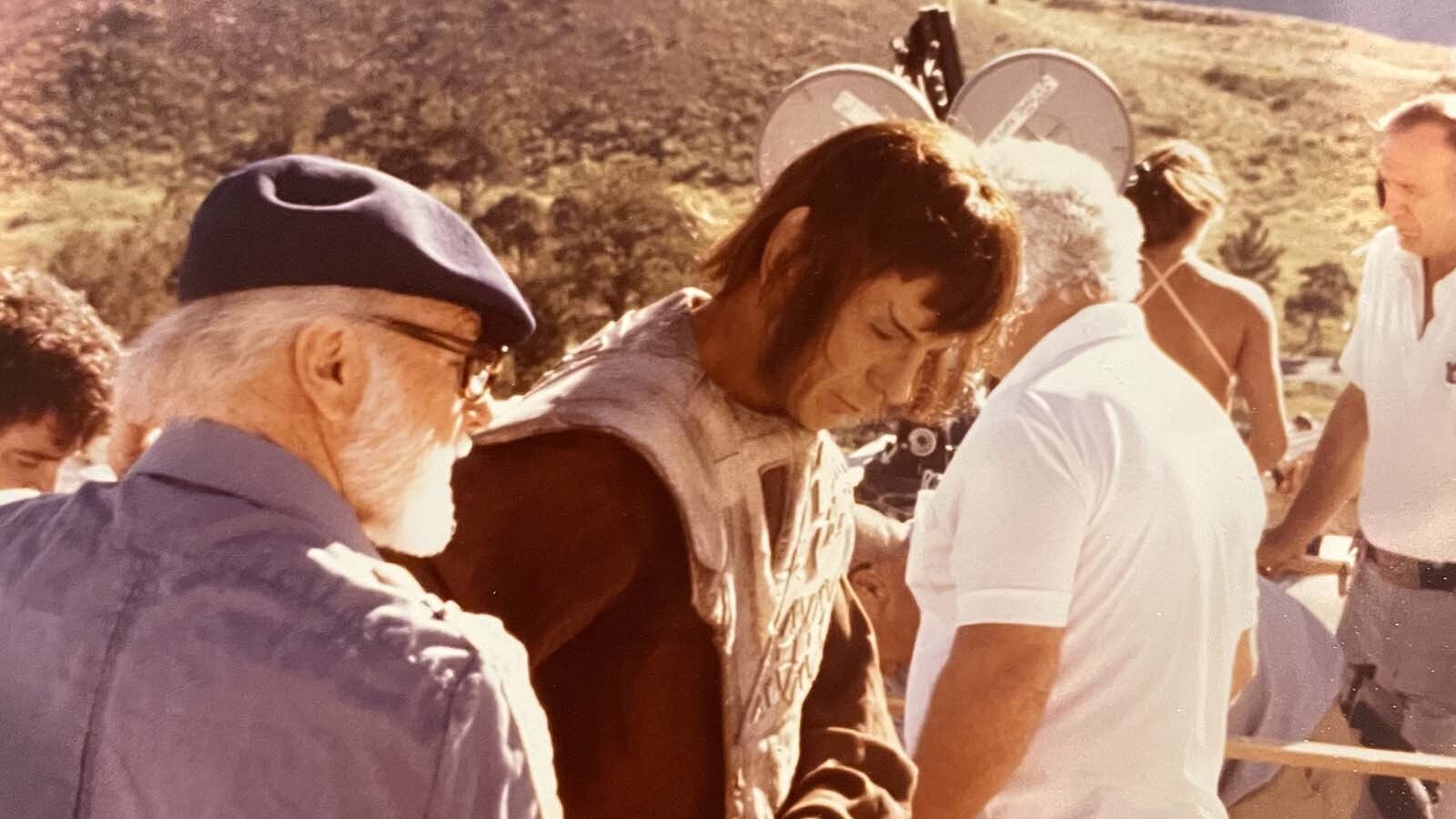
Ostensen was one of the first people outside of Paramount to see Nimoy as Spock in nearly a decade. The Yellowstone shoot was the first scene he shot for the film, making it the first time he physically embodied the iconic role since “Star Trek” was canceled.
Not many people can say they shuttled Nimoy as Spock. Ostensen kept his enthrallment to himself, even as he noticed the evident “movie magic” used to transform Nimoy into Spock.
“You could see the little pieces of tape holding his hair in places, and stuff when you're up close,” he said.
And what wisdom did Mr. Spock have for his young Yellowstone chauffeur? Did he quote the now iconic line, “Live long and prosper,” while giving the Vulcan salute?
“It was just, 'Good morning,’ and small talk about what we were doing at Mammoth,” Ostensen said. “There was nothing very interesting or reportable that I remember, and I can see why. We were mostly college kids.”
One would think spotting Mr. Spock in Yellowstone would have been a huge local story, but the moment came and went without much fanfare. Neither Roddenberry nor Nemecek had any record of disturbances caused by fans or tourists, but Roddenberry did note an amusing moment of spontaneous solidarity.
“Even the kids working for the summer in the hotel cafeteria were enthralled with the idea of having a movie company staying at their hotel,” he wrote. “They raided the kitchen for aluminum foil, from which they manufactured their own version of pointed ears and wore them all day in Mr. Spock’s honor while serving curious, unaware vacationers.”
Ostensen could confirm or deny Roddenberry’s account. He didn’t see any pointed silver ears, but he believes the cafeteria staff that summer were ridiculous enough to do it.
That’s Show Business
The “Star Trek” shoot lasted three days. With that, the Paramount production unit returned to Los Angeles for the rest of the film.
Ostensen didn’t see Nimoy after dropping him off at “Vulcan,” but he remembered the production team having enough time to enjoy some of Yellowstone and go whitewater rafting before they left. There’s no record of Spock being first mate on the raft.
I don't know how much of (that shoot) was hard work, but they had to get everything ready for the one day with Nimoy,” he said. “With the permission they got from the National Park Service, it had to be as a surgical strike.”
Ostensen didn’t get any autographs or a credit for his work. What he did get was enough money to buy a wedding ring for his girlfriend, whom he married later that summer in Scottsbluff, Nebraska.
Did they live long and prosper, as Spock would encourage them to do?
“It lasted about two and a half years,” he said. “We were young and dumb, and decided to get married young and foolishly. It was a practice marriage, and Paramount paid for her wedding band.”
“Star Trek: The Motion Picture” premiered on Dec. 7, 1979. It earned $139 million, but Paramount, critics, and Trekkies were expecting more from the franchise’s first movie, with some calling it “the Motion Sickness” and “the Motionless Picture.”
“A lot of people who love the original series love the original movie,” Nemecek said. “Of all the Star Trek movies after this, some have been better, some much better, some have been not good at all. A lot of people say that the original motion picture was the most ‘science fiction.’ It wasn't just about the Star Trek characters, Klingons, spaceships, and Federation aliens. It really was out there.”
Ostensen didn’t share Nemecek’s generous appraisal.
“I don’t want to say how disappointed I was in the movie,” he said. “We drove 100 miles in the snow to Idaho Falls to see it, and remember thinking, ‘This is long and dull.’”
A Final Frontier
Ostensen worked another summer in Yellowstone before moving on to bigger and better things. He went on to work as an emergency room nurse for 25 years before retiring to a fifth-wheel trailer with his second wife in McCall, Idaho.
Looking back on that summer, Ostensen remembered it as the end of an era in Yellowstone, at least for its seasonal staff. He believes the just-out-of-college kid who simply showed up and got a job wouldn’t have been hired even a year or two later.
“They started hiring a lot more folks who would do double shifts and weren't up there to party and that kind of stuff,” he said. “Not as much, at least.”
In summer 1978, the Mammoth Hot Springs Hotel was operated by the General Post Company, a food company based in New York. Their contract was terminated by the National Park Service in 1979 due to “poor service” and inadequate maintenance.
The Yellowstone Park Transportation Company took over hotel operations. Ostensen said they favored foreign labor over college kids so there’d be more professionalism and less liability, something he can understand given the antic he was privy to during his time.
“It was a different world back then,” he said. “A lot of people died up there from various things. My first roommate was a wild-drinking West Virginia kid, and he and a buddy took the keys to my truck while I was at work and bent the rim by hitting a guardrail up on Dunraven Pass.”
That same summer, the same roommate showed up in a 1969 GTO Ostensen said was "borrowed from a friend in Jackson,” and he proceeded to drive past Mammoth Hot Springs at 100 mph. He was fired later in the summer for failing to show up for work.
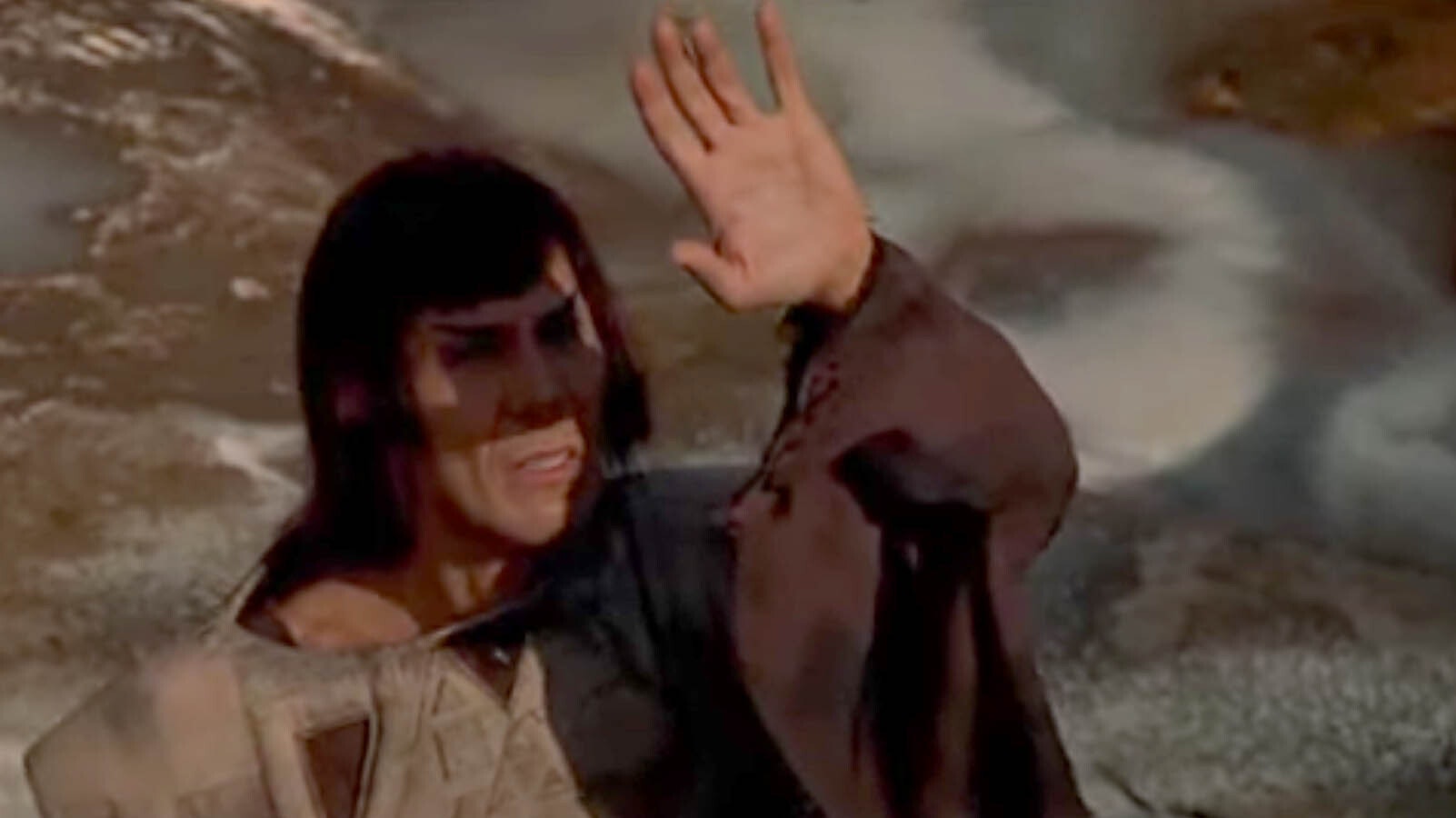
Nevertheless, Ostensen remembers his time working at Yellowstone very fondly. His work with the “Star Trek” shoot was one of many unique adventures, and he did manage to get one memento of his experience: a photo of Leonard Nimoy, dressed as Spock, at Minerva Terrace.
“It was a great time in my life,” he said.
Andrew Rossi can be reached at arossi@cowboystatedaily.com.