
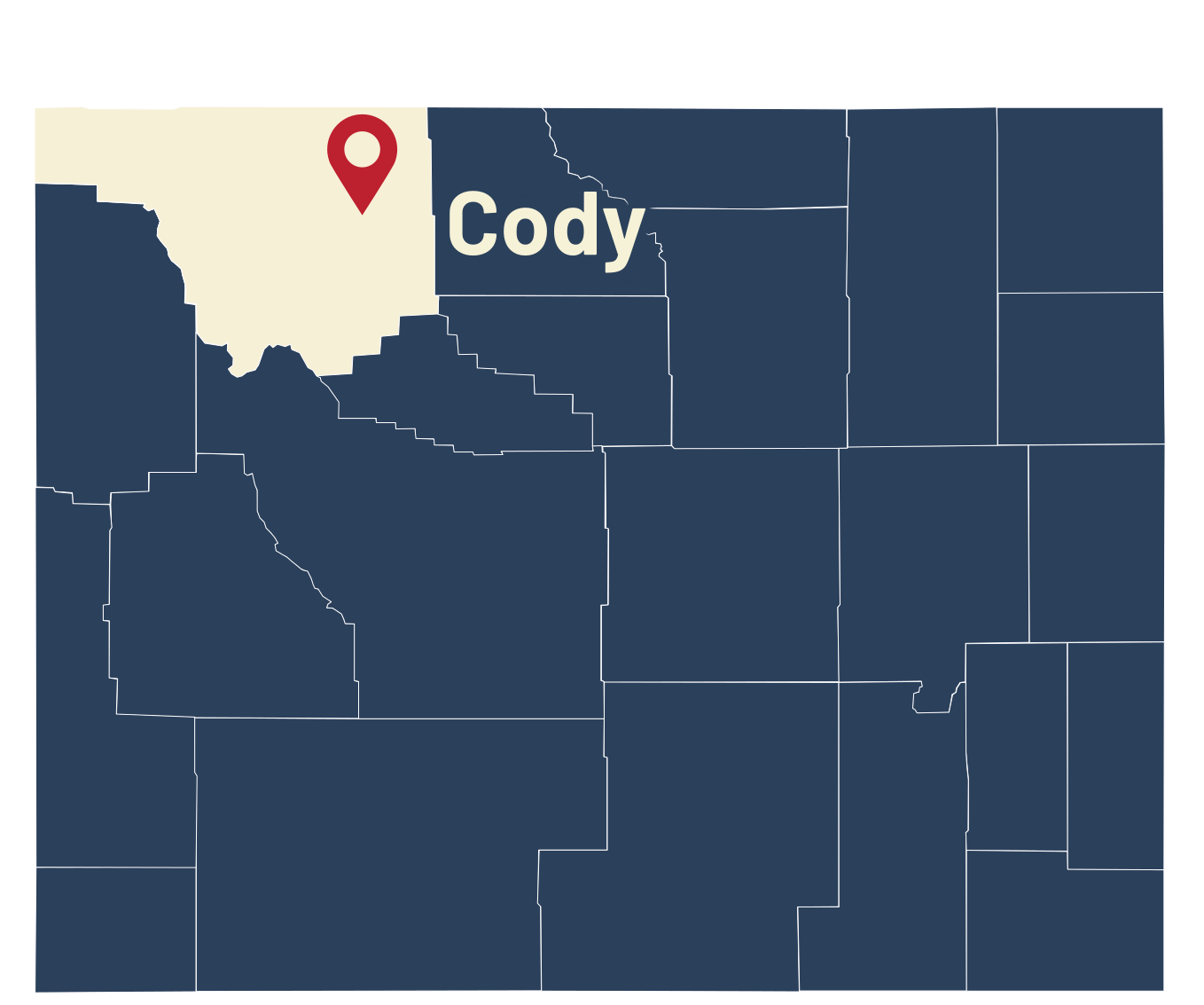
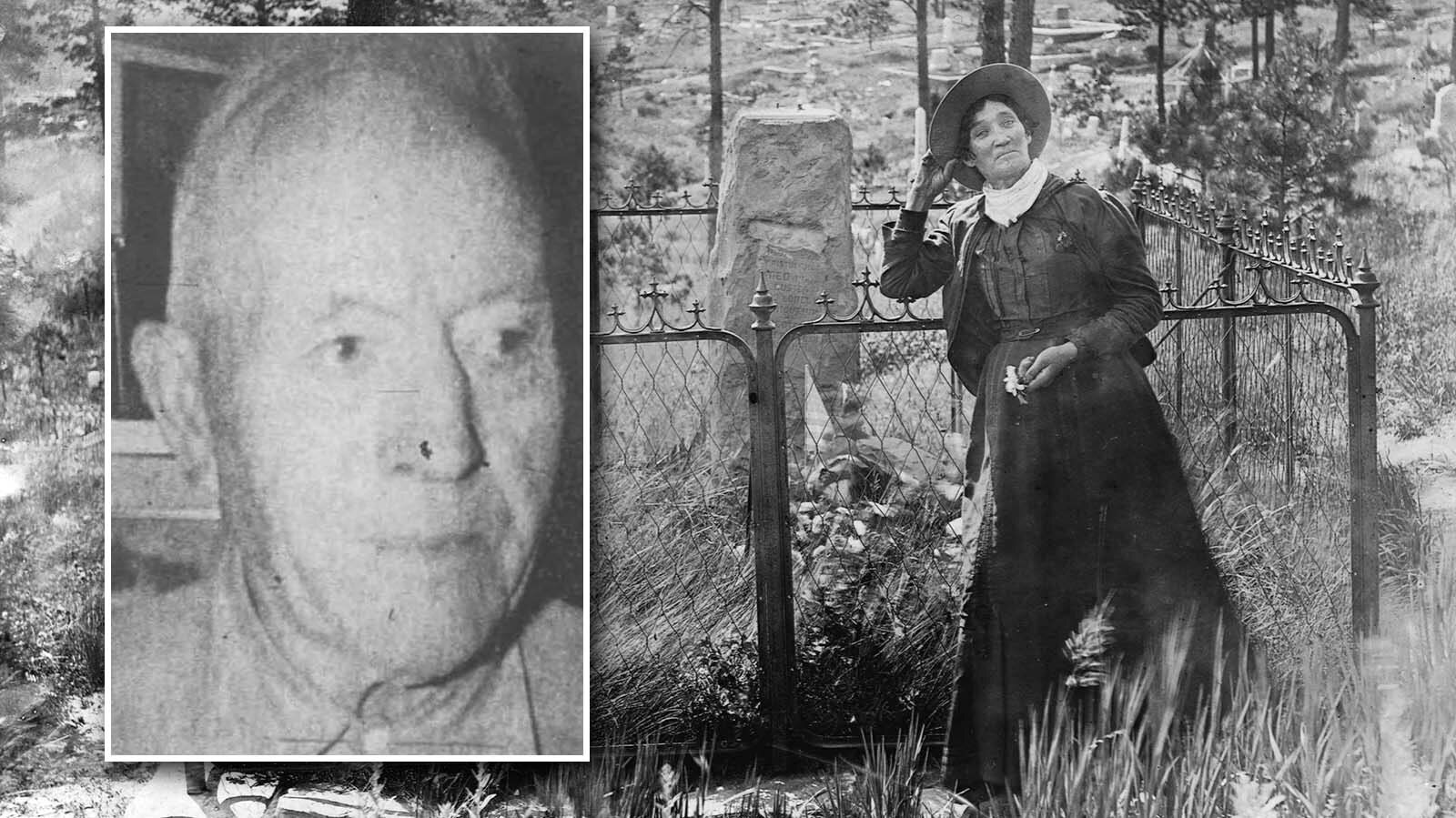
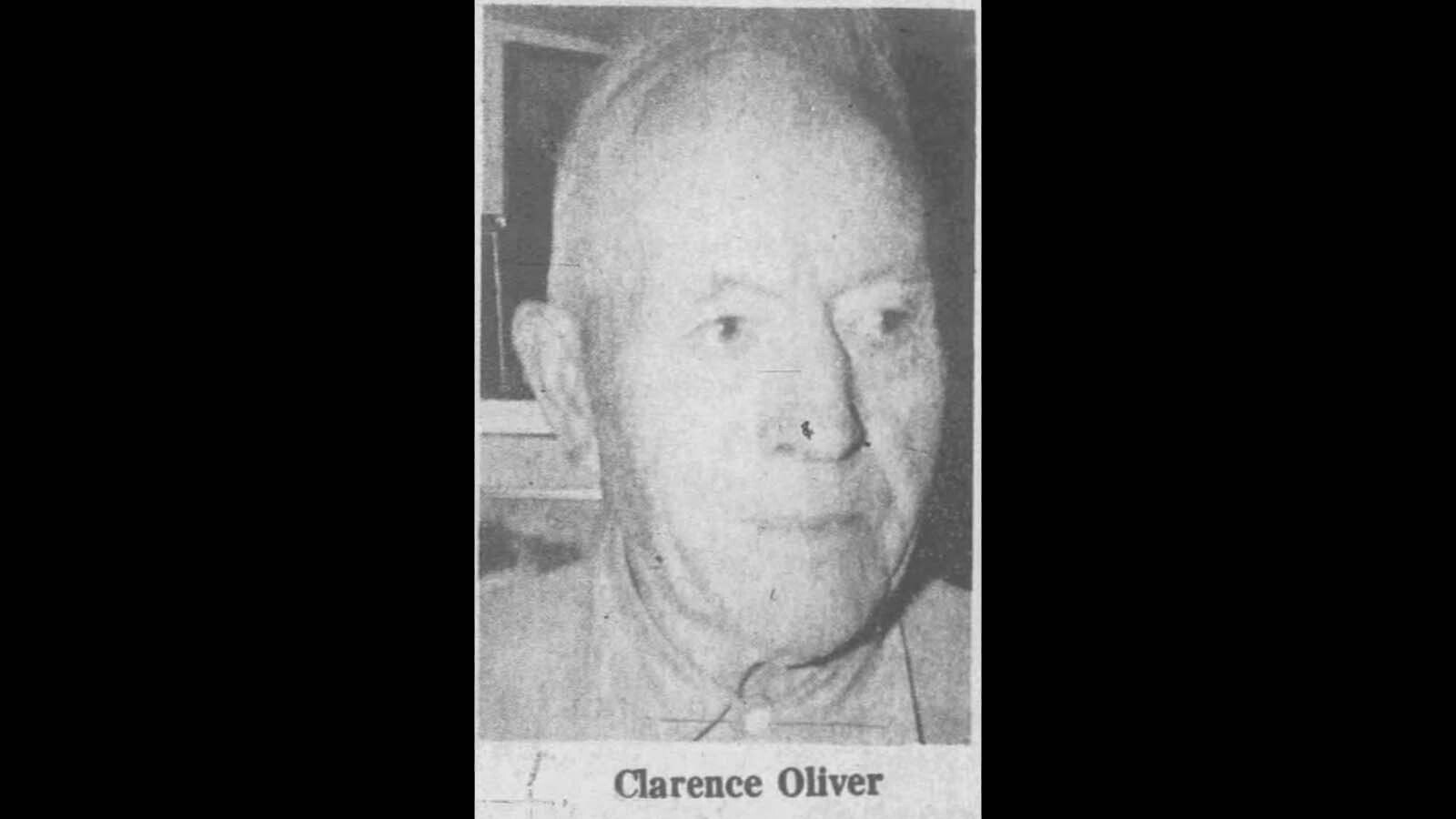
Nearing the end of his life in 1973, Clarence L. Oliver wrote a letter to the editor of the Bozeman Chronicle about a Wyoming story he wanted to set straight.
The paper had published something about the Old West folk heroine Calamity Jane, and Oliver needed to add his two cents.
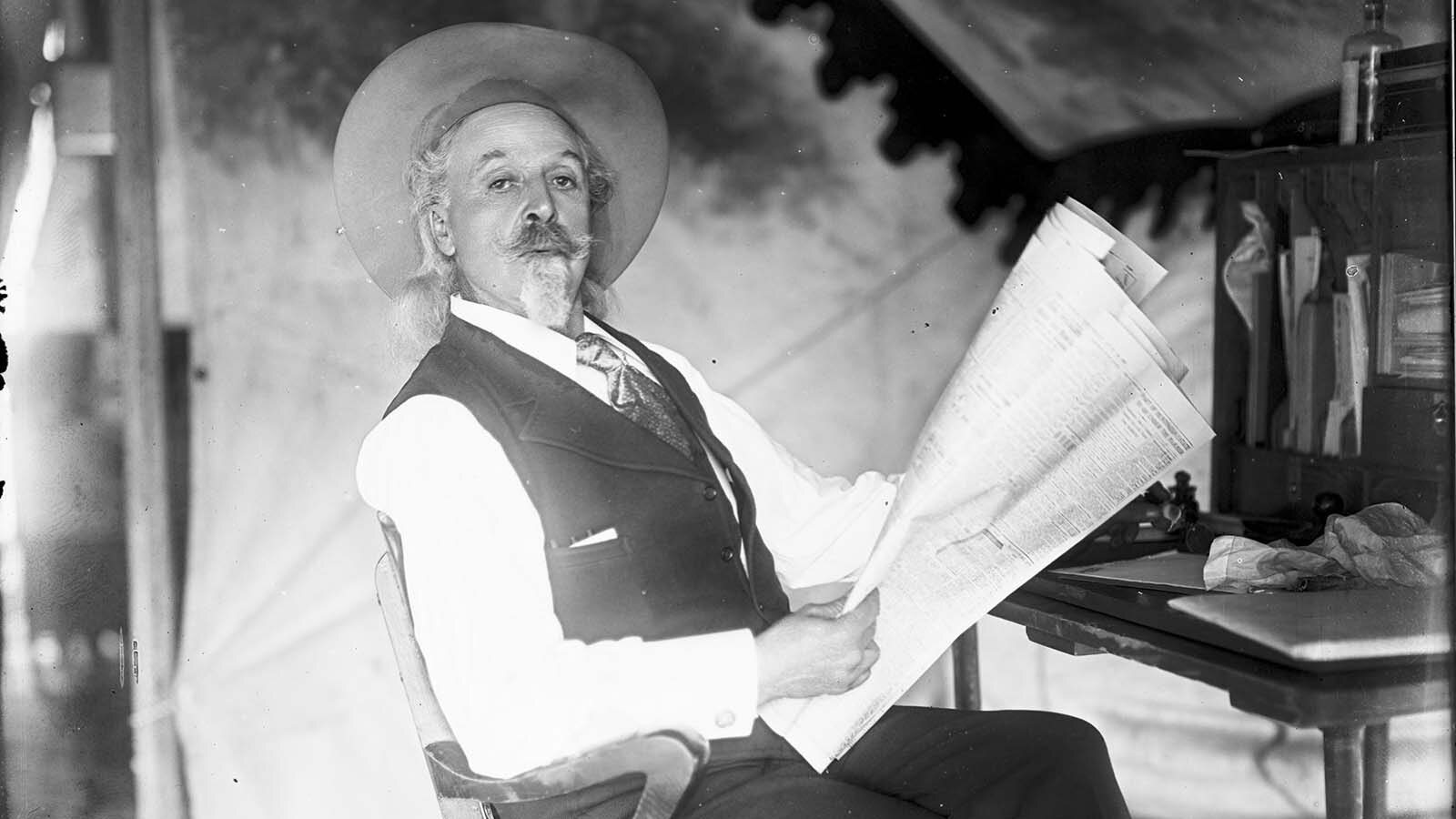
“Somebody thought she was a scout for General Custer. Well, I don’t think she was. She was a scout for Buffalo Bill Cody. And I think I am the only living person that knew both of them,” Oliver told readers.
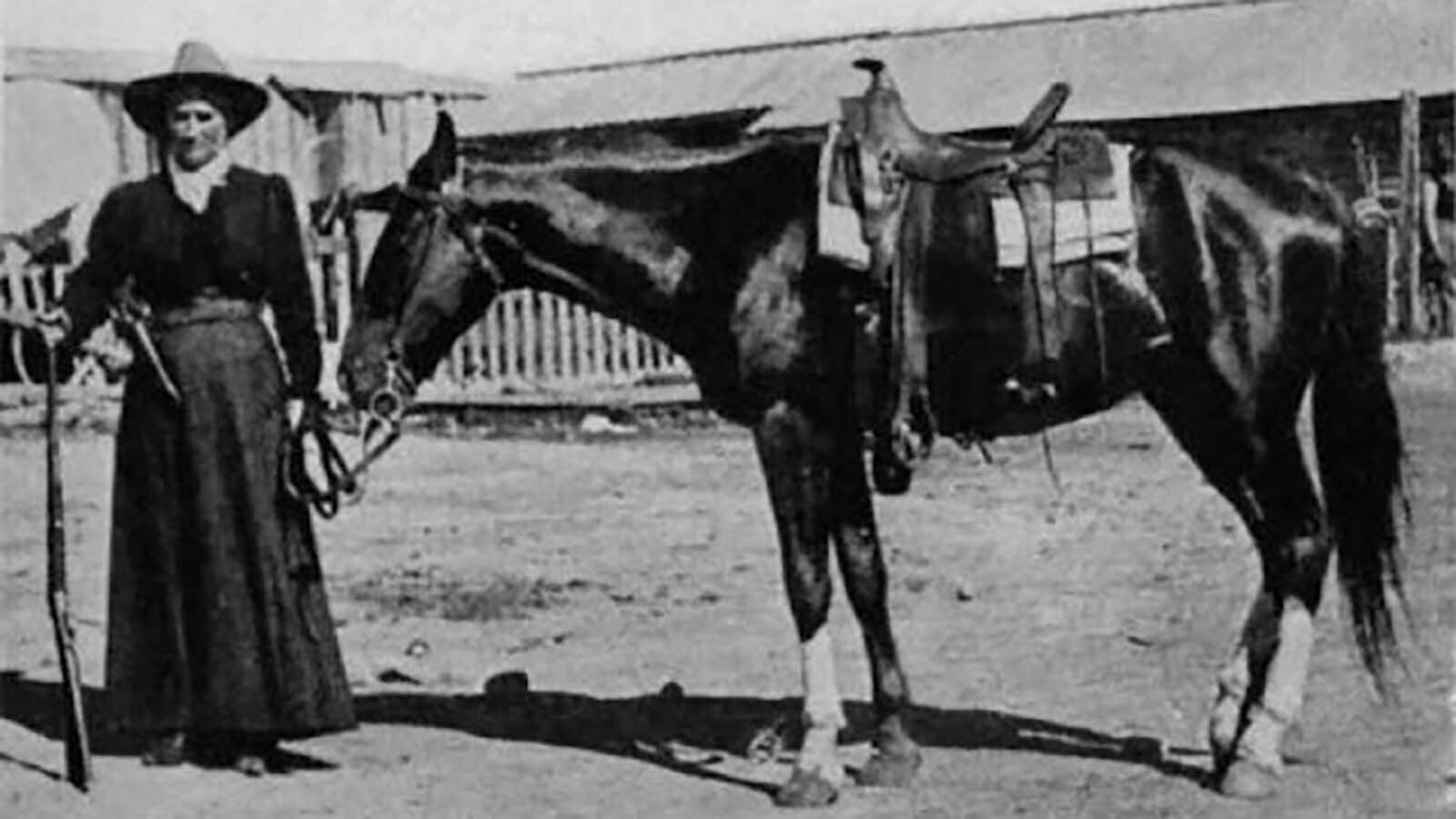
“I broke horses for Cody at his ranch, 17 miles from Cody, which was a small town,” wrote Oliver, explaining how in 1901, Calamity Jane was living in a tent in back of a saloon in Cody.
“She was a pretty good nurse, and glad to help anybody whenever she could, but she liked her drinks, and when she got way too many, she was wild,” noted Oliver.
Born in Missouri and reared in Virginia City, Montana, Martha Jane Canary was apparently in the grips of alcoholism when Oliver met her.
“I was standing in front of the saloon, talking to the bartender when we heard a scream from the tent, and out came Calamity without anything on and went down the street hollering,” wrote Oliver.
The bartender bet Oliver a round of drinks if he could catch Calamity.
“I says, ‘You got a bet,’” he remembered. “So I run up behind her and throw up my arms around her, and I was having a hard time holding her.
"She was hollering and kicking, and I think about half of the town was there hollering and laughing at the fun I was having.”
The bartender and Oliver led Calamity Jane back to her tent and tucked her in.
The story made the rounds in Cody, earning Oliver a new nickname: “They called me the Calamity Kid for a long time after that.”
Working For Buffalo Bill
Oliver spent the winter of 1901 posted up in a cabin in Red Lodge. That spring, he made his way down to Cody and went to work for the man who gave that town its name: Buffalo Bill Cody.
In his treasure chest of stories, tales about Oliver’s adventures in Wyoming are the crown jewels. It was in Wyoming, in September 1901, that Oliver hired on as a cowboy.
“I helped round up a bunch of those Texas longhorns down near Cody,” Oliver recalled for a story in The Montana Standard. “They had horns three feet long and were wilder than anything.”
The strategy was simple, if exhausting. Riders would climb to the hilltops and fire their guns to get the cattle moving.
“They never stopped for fences or rivers or nothin’,” Oliver said. “We rode for about 10 days and rounded up all we could find of them.”
After the grueling roundup, the crew penned about a thousand head in a corral, planning to get a good night’s sleep before the final trail drive to the railroad.
“We went down the next morning to the corral, and they’d panicked during the night,” Oliver said, seeing evidence of a stampede that scattered the herd badly. “There were broken horns for about a quarter of a mile.”
Many of the recovered cattle were injured.
“We rounded up what we could find of them," he said. "A lot of them we did find was gored up so bad we couldn’t take them. So in place of 1,000 head we had to take to the railroad, we had less than 600.”
The Outlaw Mare
By the time they reached the railroad loading pens, Oliver was exhausted, but he still had something to prove.
“I got up there and I had an old outlaw mare I’d bought from Buffalo Bill Cody I was breaking,” Oliver said. “The boss said, ‘Some of the boys want to see you ride that old outlaw.’”
Oliver not only rode the mare — he rode her straight down the main street while the train crew held up the departure to watch.
“Bucked all over the streets two or three times,” he said, boasting the townsfolk even took up a collection for him. “I got $15 for riding her.”
That day was Sept. 5, 1901, remembered Oliver, the same day President William McKinley was assassinated.
Montana Origins
The Calamity Kid would eventually return to his native Montana, where he would spend his later years documenting and cataloging a variety of wintertime calamities and preserving the memory of bygone frontier days.
Oliver was born in Ennis, Montana, in 1881, delivered along with his twin sister by “Old Mrs. William Ennis” and went on to live a colorful life.
“My father used to have a saloon and a livery stable at Ennis. There was a big family of us, six boys and six girls,” Oliver told a reporter in 1971 after he turned 90. He was living in Meadow Creek, not far from Ennis, at the time, where he tended a garden and composed entertaining letters to the editor.
It seemed Oliver had a knack for taking care of himself. In 1892, when he was just 11 years old, Oliver claims to have set a record for fastest round-trip to Bozeman on horseback: 13.5 hours.
A piece of farm equipment broke, and the hardware store in Bozeman was the only place that had the right part to fix it.
Oliver recalled starting the roughly 60-mile journey at around 5 p.m. He arrived around midnight and decided to show up at the home of the man who ran the hardware store, “And wake him up.”
When he arrived back at the family ranch at 6:30 a.m. the following morning, “I think I was just about as tired as the horse.”
Harsh winters were a favorite topic for C.L. Oliver, who lived through deep snow years in the 1930s when tracks had to be cleared so Madison County, Montana, remained connected to the outside world. (Thomas Brook) 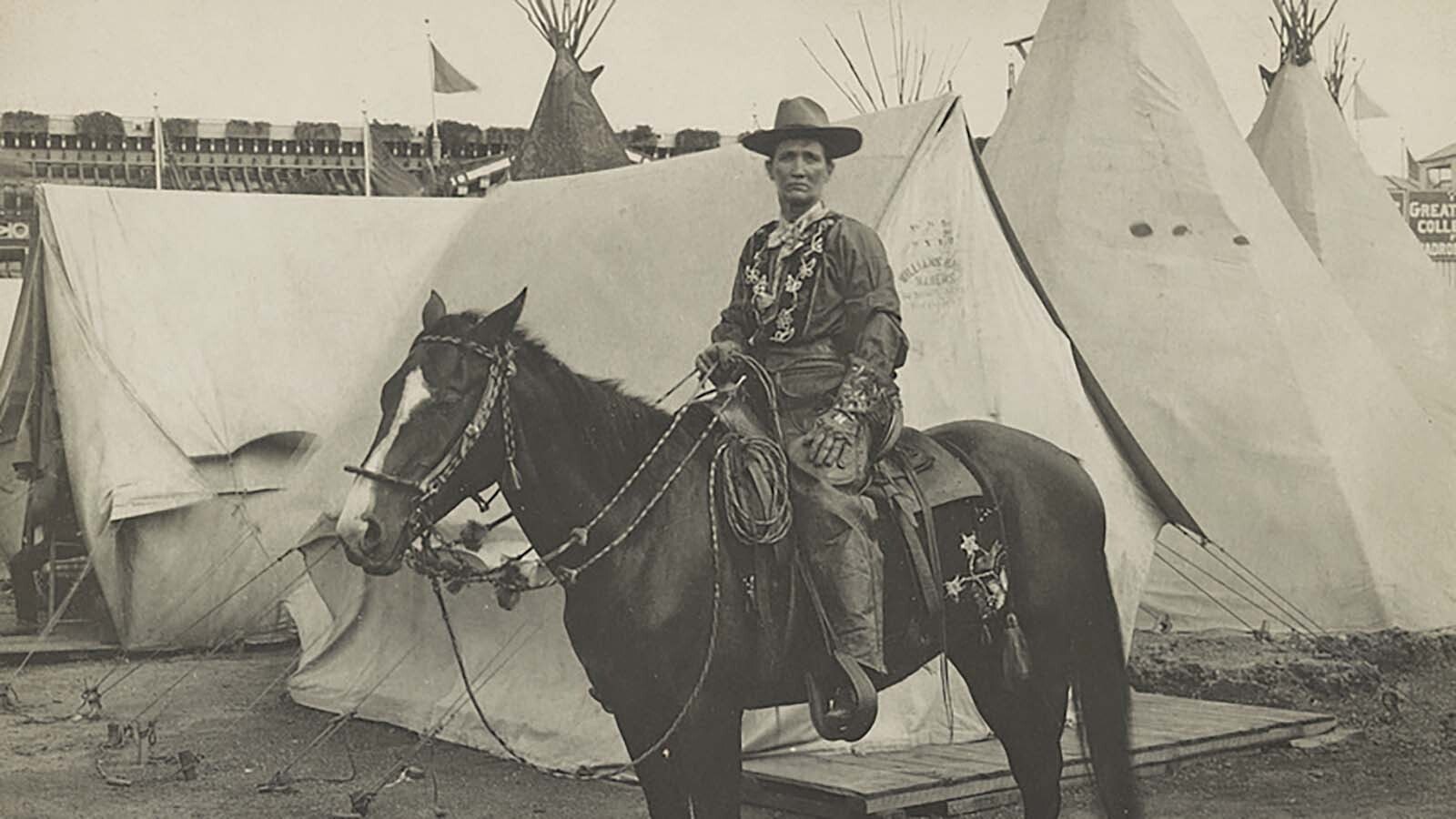
C.L. Oliver loved to recall his time in Cody, Wyoming, working for Buffalo Bill Cody and crossing paths with Calamity Jane. (Library of Congress) 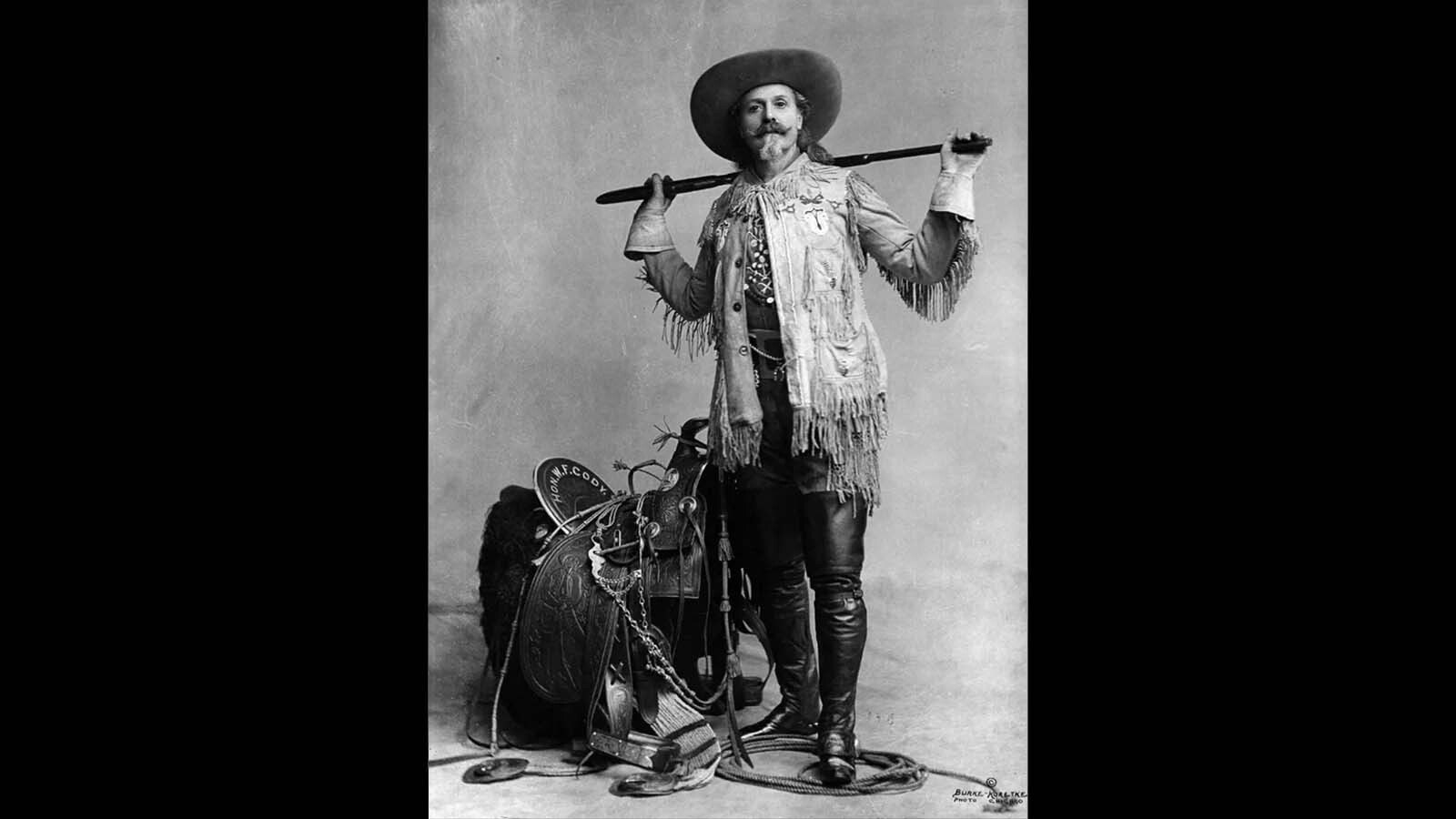
C.L. Oliver loved to recall his time in Cody, Wyoming, working for Buffalo Bill Cody and crossing paths with Calamity Jane. (Library of Congress) 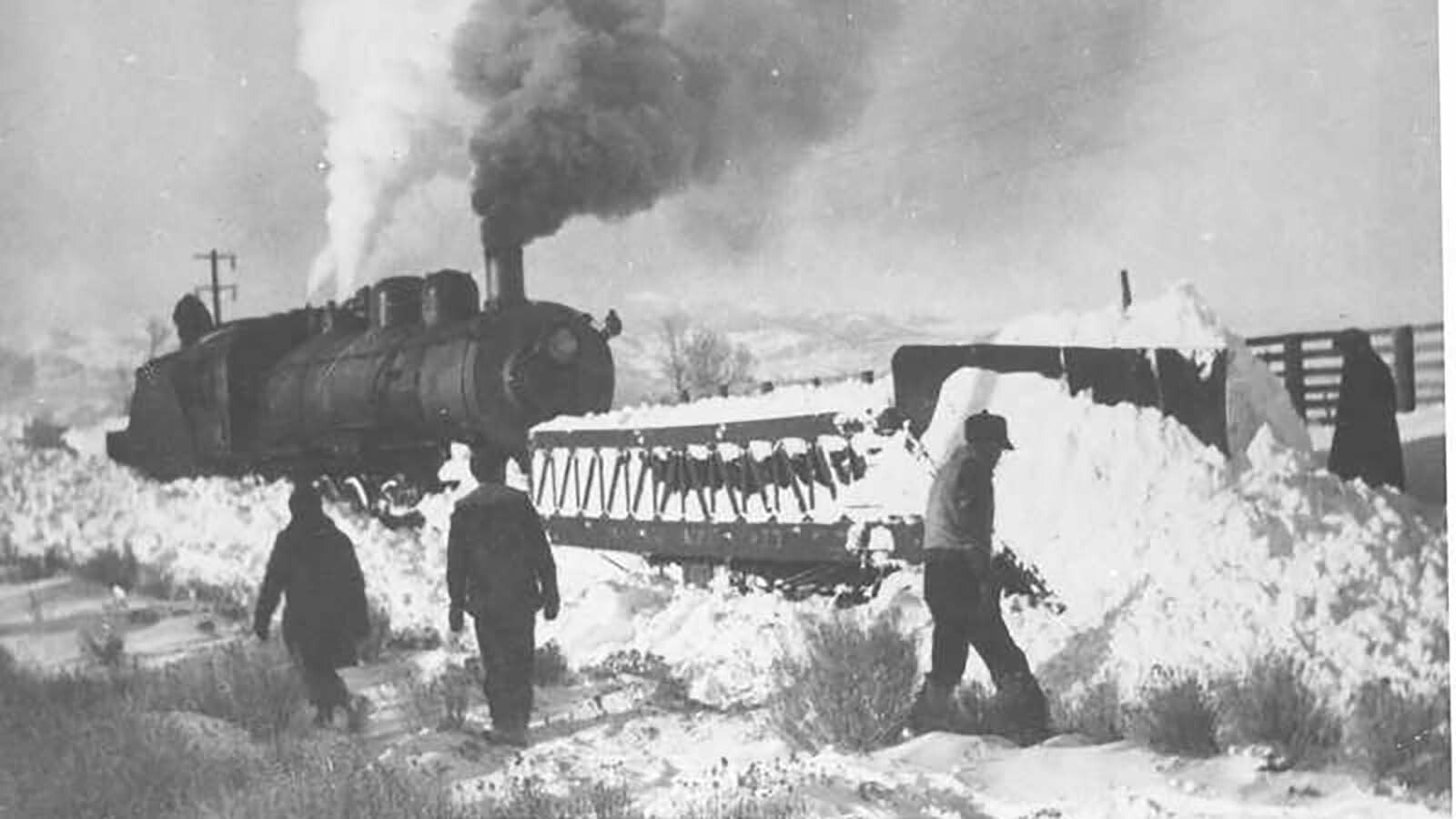
Harsh winters were a favorite topic for C.L. Oliver, who lived through deep snow years in the 1930s when tracks had to be cleared so Madison County, Montana, remained connected to the outside world. (Thomas Brook)
Chronicling Calamities
A small stack of Oliver’s writing is among the special historical collections about Madison County housed at the Montana State University Library. There are newspaper clippings, hand-written stories and typed out essays and poems.
Winter comes up here and there, with Oliver remembering, “The Bad Winter of 1919,” when unforgiving blizzards claimed whole herds of cattle and flocks of sheep.
“That about broke a lot of stockmen,” Oliver wrote, who went on to explain how harsh winters shaped the community of McAllister.
“Alec McAllister run a store and took over the Post Office and changed the name from Meadow Creek to McAllister after his name,” recalled Oliver. “Prospectors got into the habit of drifting in for the winter near his homestead cabin. One of them bought enough land off him on which to build a cabin of his own. Then another, and another, and so gradually, steadily, the town grew.”
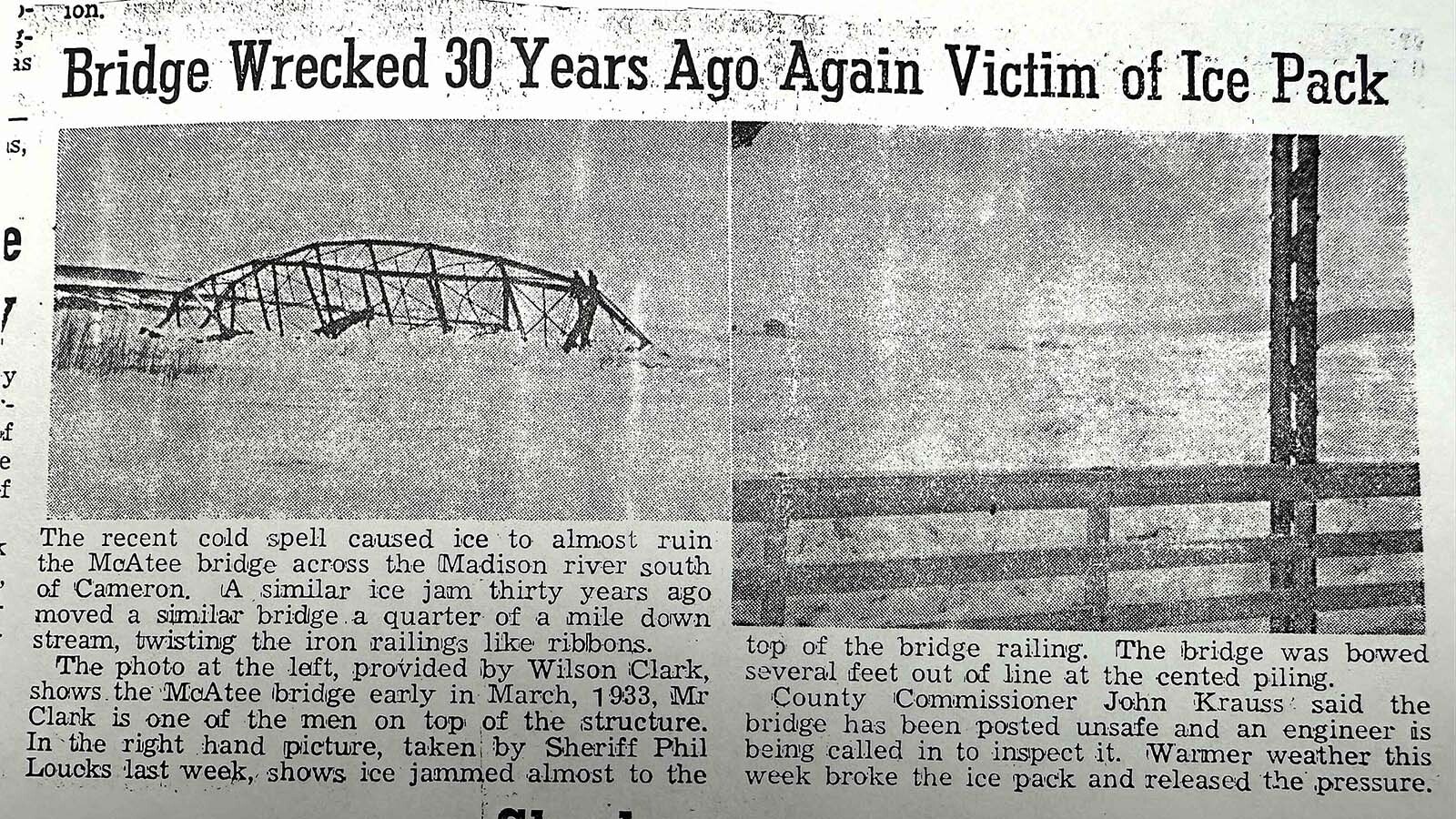
The McAtee Bridge across the Madison River was at one time the most expensive bridge in Madison County. Valued at $7,785 in 1933, the county was hard pressed to make repairs when an ice jam in January of that year pushed the bridge a quarter mile down river.
This was front page news during the winter of 1933, running next to a story about the stockyards and train tracks in Norris being snowbound.
The deep snows cut off part of Madison County from the rest of the world for 11 days.
Gleeful Witness To History
Oliver lived most of his life around Ennis and McAllister, doing farm and ranch work. He had no shortage of stories to tell.
Like one about the time a jack rabbit saved his life.
Oliver was hunting way up Alder Gulch when he let his horse get away from him. He had a dog, who liked to chase anything that moved. A jack rabbit appeared, and the dog took off after it. Just then, Oliver spotted, “Three big brown wolves.”
Keeping out of sight, he hiked out, stopping by, “The cabin where three old placer miners lived. They said if the dog had seen them or if they had seen me, that I would have never gotten back.”
The handwritten letters, news clippings and typed pages held in the archived collection at MSU fit in a single folder.
Included in the folder is a news clipping from around 1963, when the Madison River again iced up and the ice floe again crashed into the McAtee Bridge. It’s not clear why Oliver included the clipping in his collection.
Perhaps it wound up in the stack as further evidence that Oliver was a gleeful witness to history. He’d seen the McAtee Bridge get hit twice by an ice jam and wanted to make a note of this double calamity.
The newspaper clipping recalled how the first ice floe in 1933 “twisted the iron railings like ribbons.”
It was the kind of story he enjoyed telling, and Oliver maintained a self-awareness about his love for the long yarn.
“I could go on and on about old timers and fill a big book if necessary,” Oliver wrote at the end of one of his essays. “But guess this will do for now.”
David Madison can be reached at david@cowboystatedaily.com.


