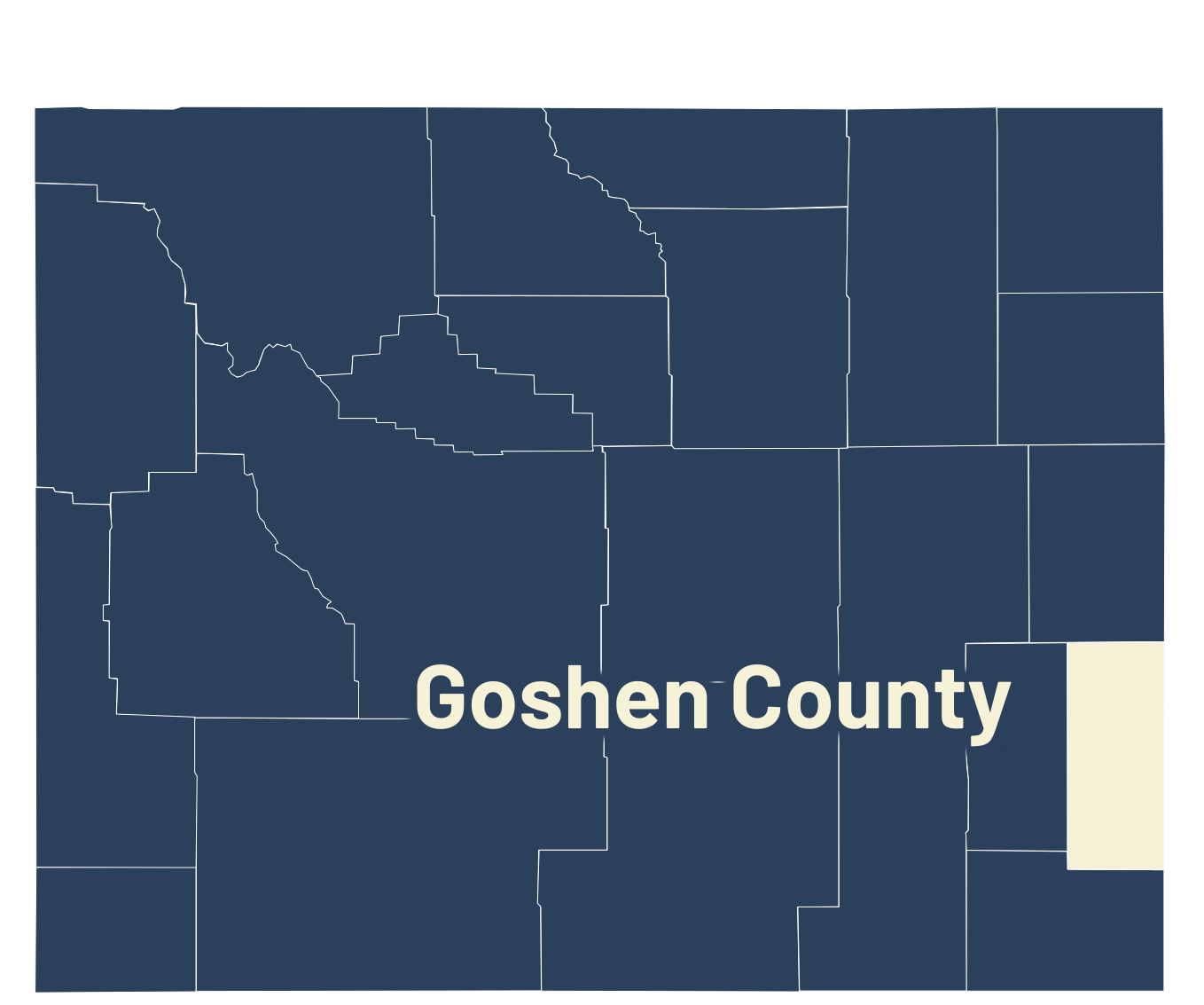
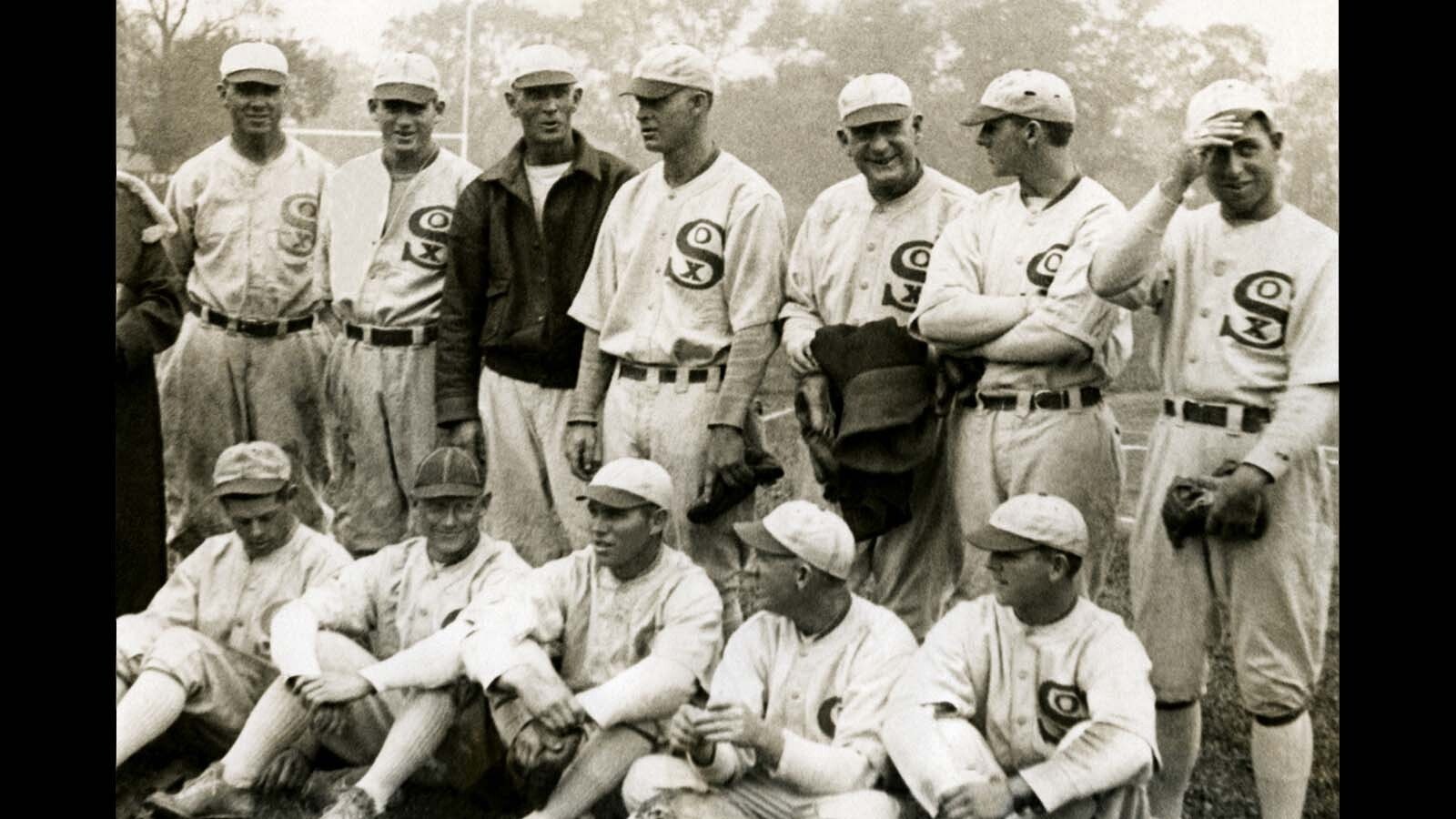
When the call went out to “play ball” on a Goshen County ranch a century ago, the 18-member family could field nine boys to make up its own team.
They were so good, people would follow them into Nebraska on special Union Pacific trains to watch the semi-pro Yoder team comprised mainly of the sons of Henry Marlatt and a couple of his grandsons take on all-comers.
In 1924, the boys won an all-brothers baseball team three-game championship defeating a Nebraska family team, and in 1929 were challenged by a Polish team of brothers out of Waukegan, Illinois, to prove they were the best brother baseballers in the nation.
“Two All-Brother Nines Start Own Baseball Title Play Today,” The New York Times reported on Sept. 21, 1929.
In the year Babe Ruth hit his 500th home run, the tiny hamlet of Hawk Springs, Wyoming, found its way into the datelines of newspapers around the nation because of the Marlatts.
The siblings, ranging in age from 45 to 18, became flash-in-the-pan celebrities beyond the border of Goshen County for the all-brothers World Series.
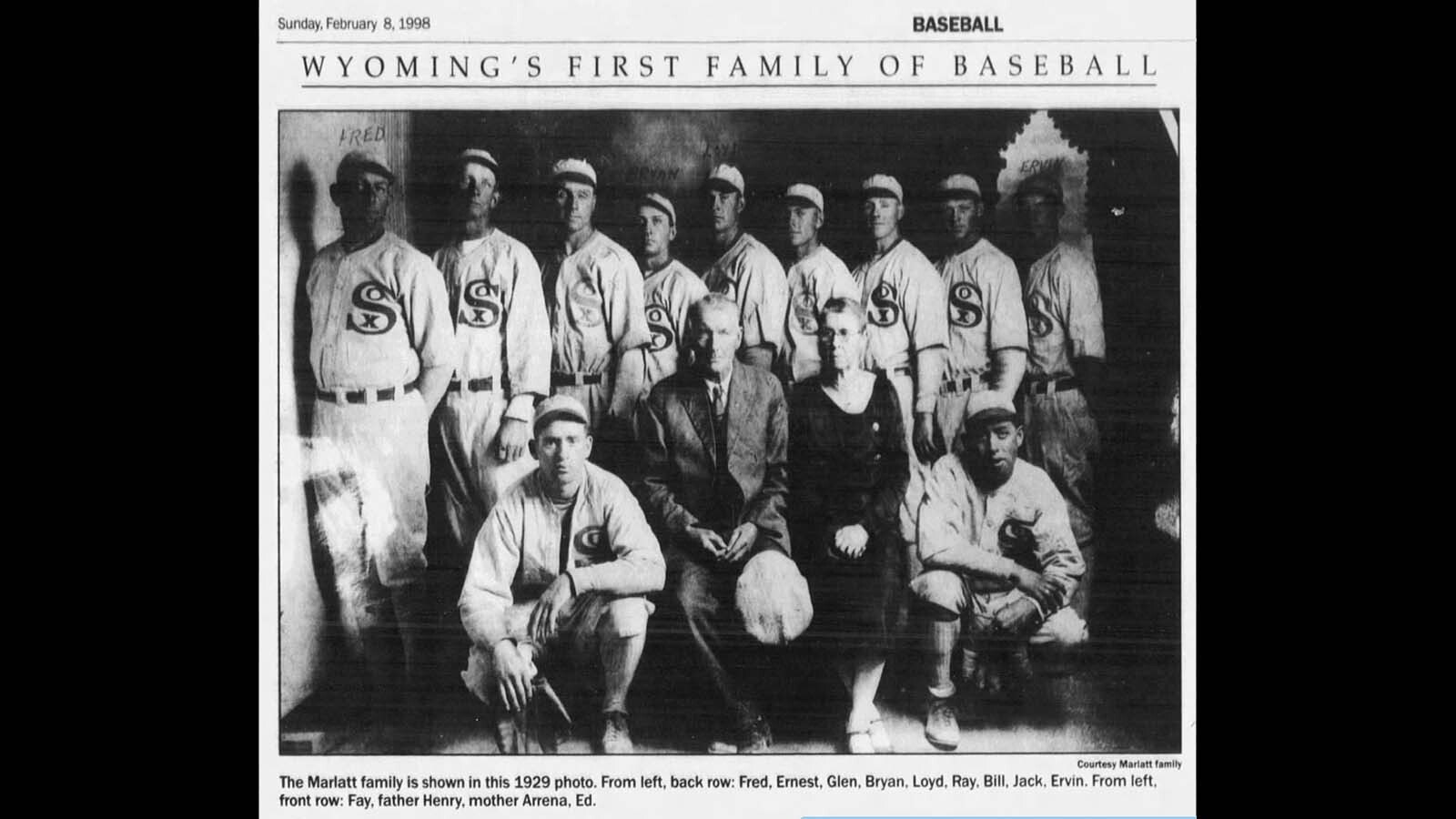
The Marlatt family of Hawk Springs, Wyoming, were labeled the ‘First Family of Baseball’ by Casper Star-Tribune in 1998. (Courtesy Newspapers.com) 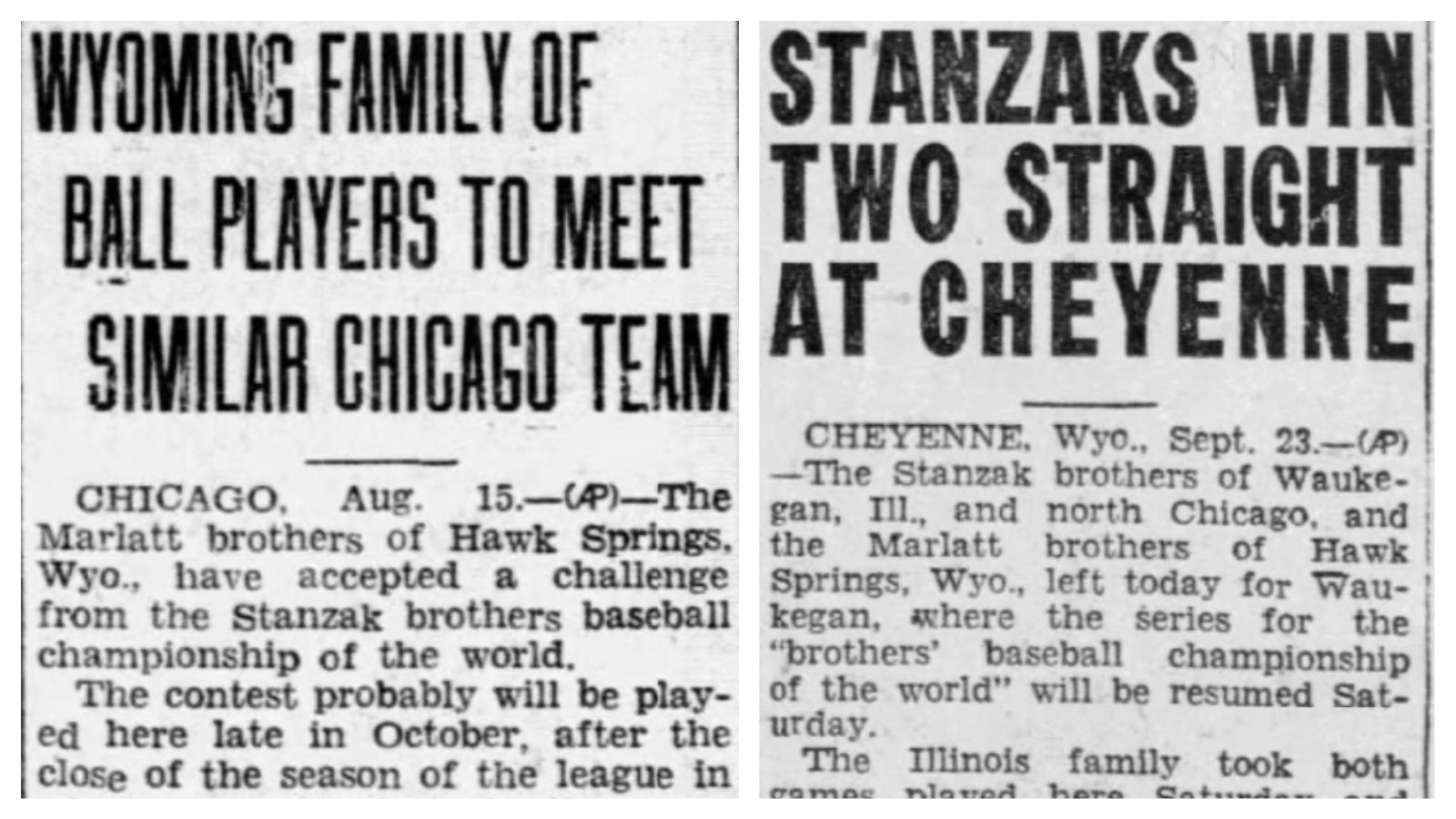
The Casper Daily Tribune on Aug. 15, 1929, left, ran a story about the all-brothers world series. Right, the Daily Tribune told its readers that the all-brothers series was headed to Chicago on Sept. 23, 1929, and the state team had not won yet. (Courtesy Newspapers.com) 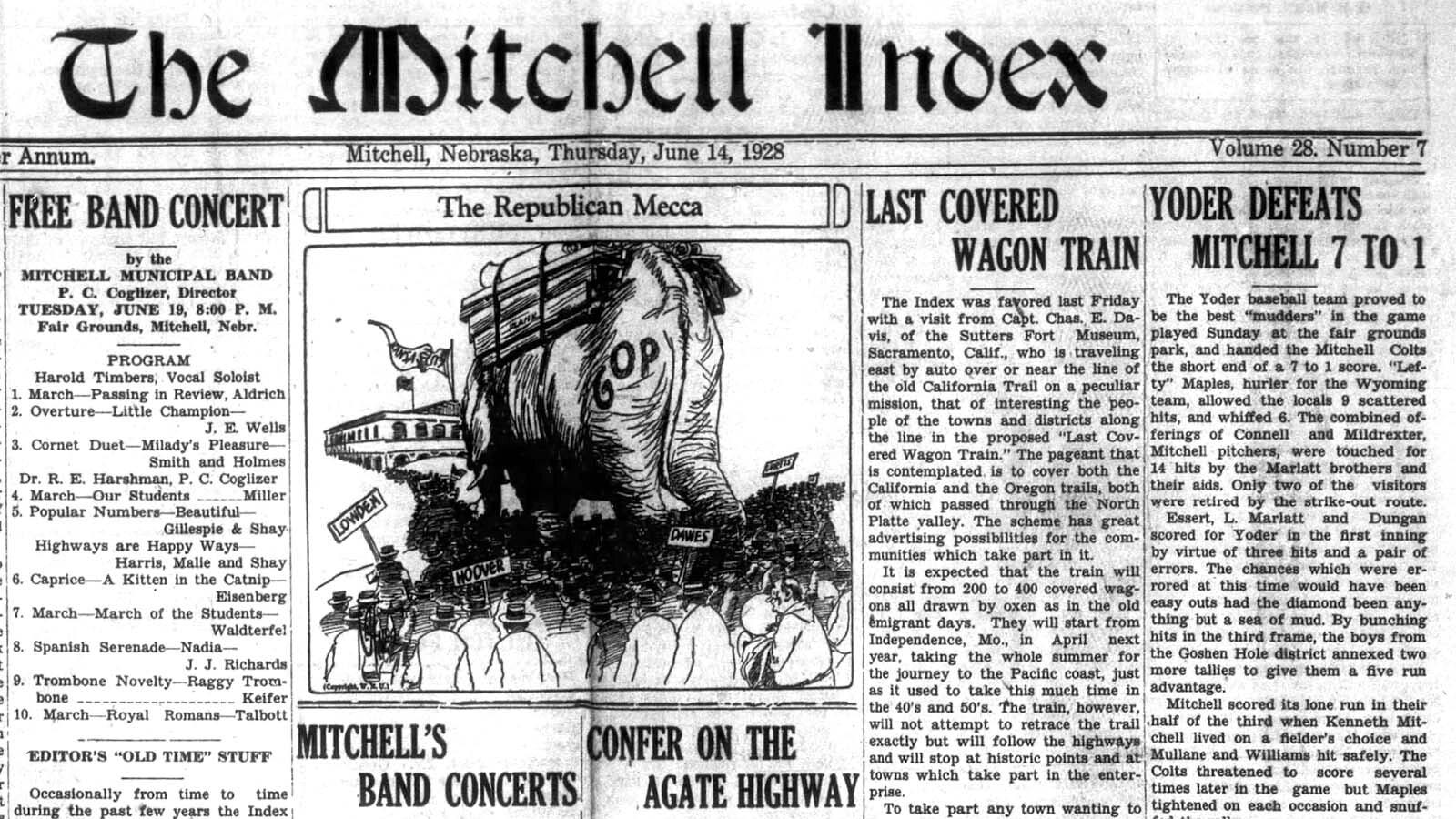
A story in the Mitchell, Nebraska Index reports the Marlatt brothers tallied 14 hits in their rout of Mitchell. (Courtesy Newspapers.com)
Building A Team
It all originated with Thomas “Henry” Marlatt, who moved from Nebraska into Hawk Springs to raise cattle around 1917.
He married Luella Headly Marlatt in 1882 and she died in 1889. They had four children, two sons and two daughters, during that time, including the oldest, Frederick, born in 1883, and another son Ernest, born in 1886.
In 1892, Henry Marlatt remarried Theressa “Arrena” Campbell Marlatt, and they would have 12 children, including Glen in 1893; Jennings “Bryan” in 1896; Loyd Emery “Short” in 1903; Ray in 1904; Harley “Bill” in 1907; Rollo “Jack” in 1909; and Ervin in 1910.
There were also five girls who were part of their marriage, making seven girls in all.
A feature story on the North Platte Valley Baseball League by an Alliance Times Herald sportswriter in Alliance, Nebraska, on June 21, 1929, reported that the brothers had been taught the game by their father as “soon as each had emerged from the cradle.”
Henry Marlatt had reportedly played baseball with his sons up until he was 65 years old, and pitched his last game and won, according to The Lake County Register on Sept. 21, 1929.
The brothers team that year also included Fred Marlatt’s two sons, Ed and Fay.
Sport And Recreation
“The Marlatt Brothers play baseball purely for sport and recreation,” the Alliance Times Herald reported. "They were born and reared on a farm near Kearny, Nebraska, and 14 years ago the father sought a new locality and chose a fertile ranch 25 miles south of Torrington."
The reporter wrote that previous to 1929, the brothers played as part of the Yoder team, which still consisted of mainly the Marlatts, with a few exceptions.
Goshen County and Nebraska newspapers in the 1920s carried stories weekly about the Yoder team led by a number of Marlatt brothers, beating back the opposition.
One exception was a loss to the Cheyenne Indian team in June 1928 where the Yoder team with five Marlatt brothers playing lost 6-0.
The brothers team success in 1929 led to the Stanzak team based out of Waukegan, Illinois, to challenge them to a championship game to see which brother squad was the best.
In an era when more people had large families, brother teams resonated with the public.
The Waukegon News-Sun on Sept. 16, 1929, informed its Chicago-area readers about the games.
“The first two games will be played at Cheyenne, Wyo., Sept. 21 and 22, with Governor Frank Emerson of Wyoming tossing the first ball,” the paper reported.
“Preceding the ball game there will be a parade through the streets of Cheyenne headed by city and state officials, ‘Ma’ and ‘Pa’ Marlatt, the nine sons, seven daughters and two nephews, followed by ‘Ma’ and ‘Pa’ Stanzak, the 10 sons and one daughter,” the report continues. "The 30-piece capital band of Cheyenne, Wyoming, will lead the procession.”
The Marlatt brothers in 1929 were considerably older than the Stanzak siblings.
Fred Marlatt was 45, and Ernest, a World War I veteran, had run for sheriff on the Democratic ticket and lost the previous year. He was 42.
Others over 30 included Glenn 36, and Bryan 33. The oldest Stanzak brother, John, was 33.
The Series
The Stanzaks handled the Wyoming team in Cheyenne, winning the first game 11-5 in a contest that featured four double plays by the Stanzaks. The second game was captured 8-5 by the easterners.
After the series moved to the Chicago area, there was another parade with officials in Waukegon and North Chicago, followed by two more losses.
In the third Chicago game, the Marlatts led 5-0 into the sixth inning before the Stanzak boys came from behind. They won the game 6-5. The last contest was 3-1.
The Waukegon News-Sun sports reporter was impressed with the Marlatts’ play despite their losses.
“Lloyd, Ray, Ervin, and Ed Marlatt showed themselves to be the smoothest working infield seen in Waukegan this season,” he wrote. “Their bullet heaves cutting down many a runner.”
The organizer of the Waukegon games also was impressed with the Marlatt family overall, commending their “clean, highest calibre sportsmanship.”
“The Marlatts — 19 in the party — from way off Hawk Springs, Wyoming, while intensely desirous of winning, were true sportsman all. … I have never met fairer, squarer competitors,” Frank T. Fowler wrote to the Waukegon News-Sun, published Oct. 1, 1929.
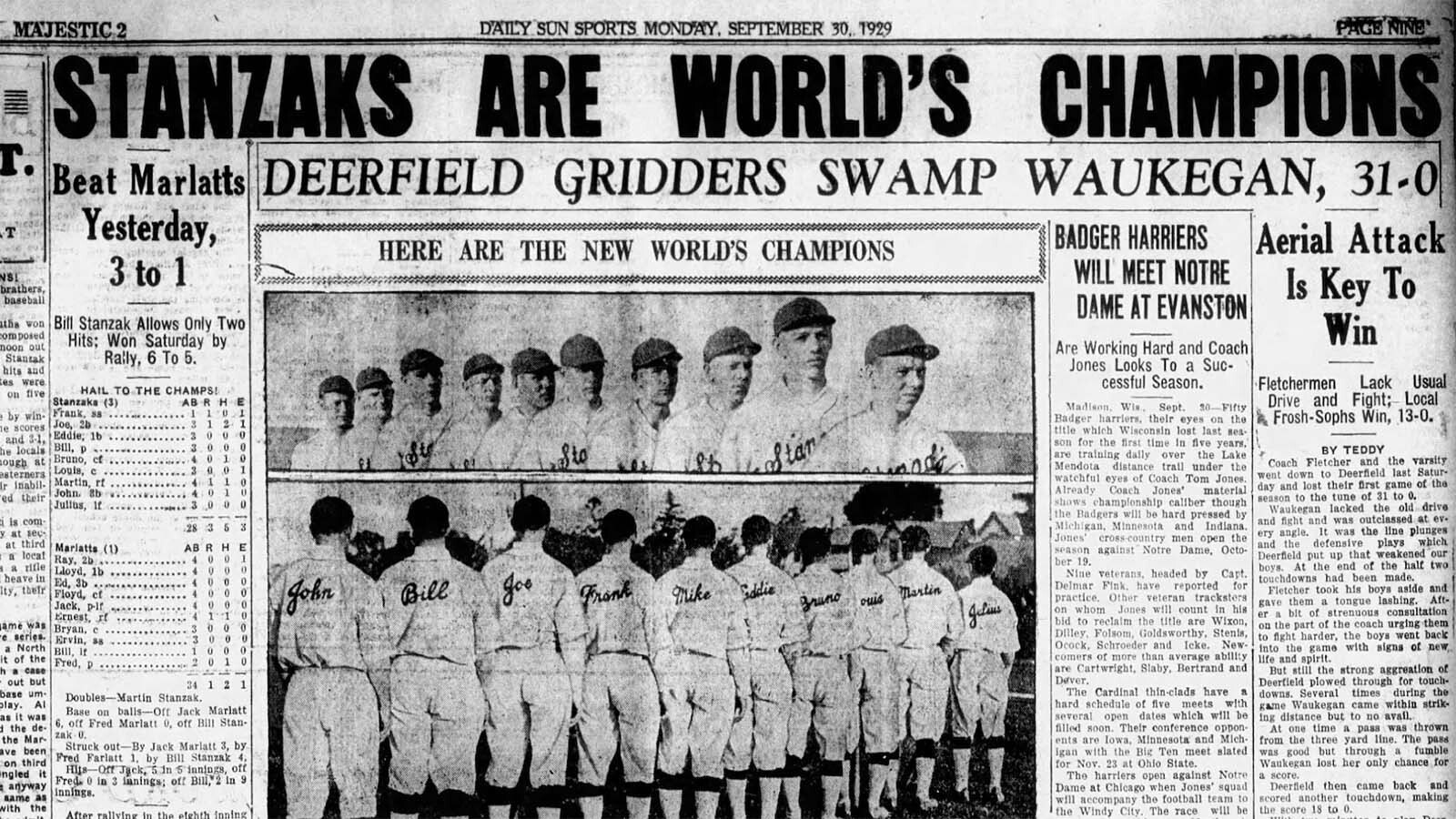
A story in the Waukegan, Ill., News-Sun proclaims its team the world champs. (Courtesy Newspapers.com) 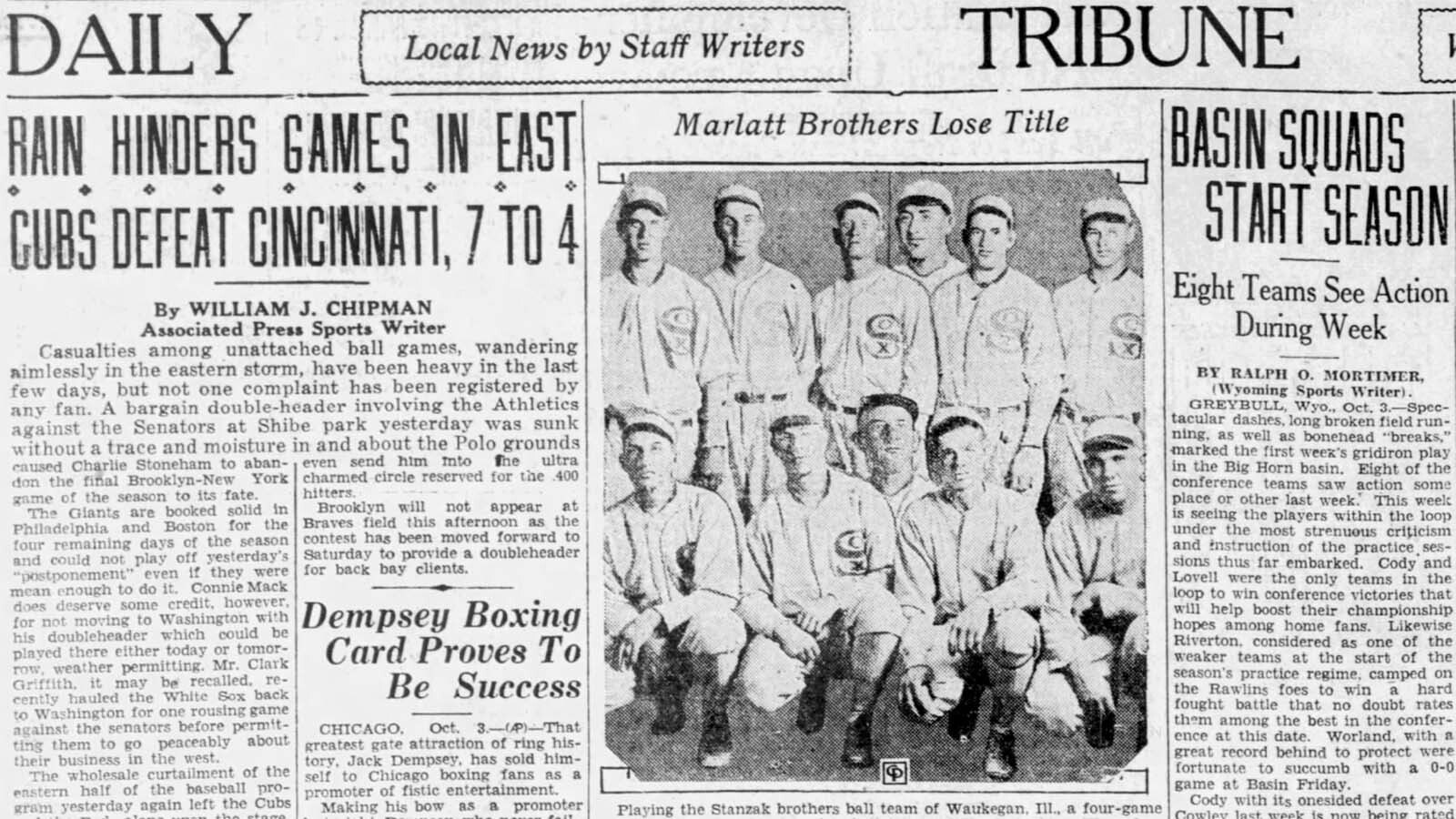
The Casper Daily Tribune covered the defeat of the Marlers in its Oct. 3, 1929 edition. (Courtesy Newspapers.com) 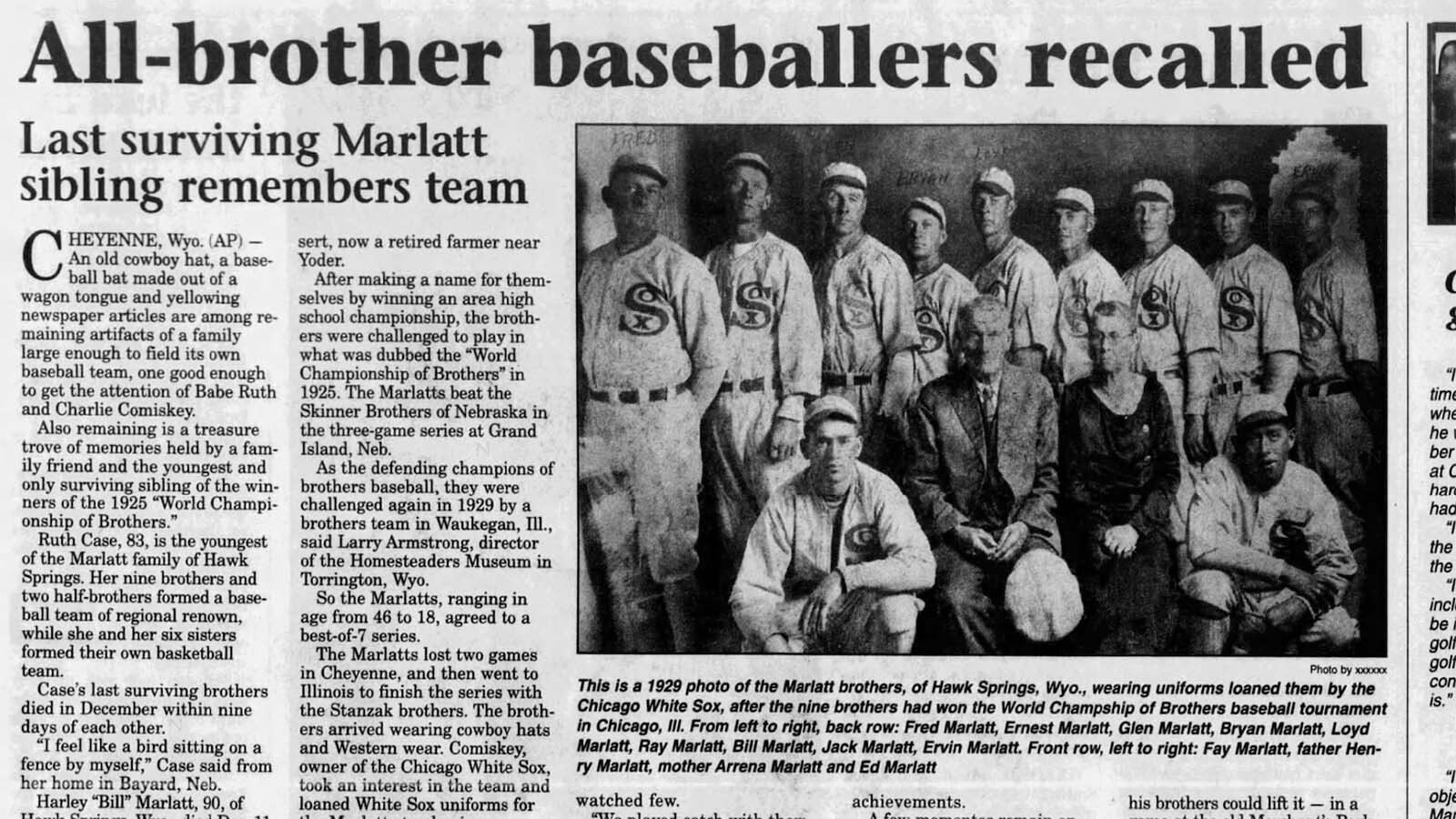
The Scottsbluff Star Herald looked back at the Marlatt family baseball team in 1998. The last surviving sibling was interviewed for the story. (Courtesy Newspapers.com)
Turned Down The Dodgers
By 1935, the brothers played their last games together.
Henry Marlatt had died on Sept. 9, 1934.
The two sons of Fred Marlatt, Ed and Fay, went on to serve in World War II.
A newspaper clipping on the the Find a Grave website states that Ed was wounded in Luzon in the Philippines and in the hospital, while Fay was killed in action in the same arena.
Ervin Marlatt, who moved to San Diego, was offered the opportunity to play professional baseball with the Brooklyn Dodgers and turned it down.
An article in the Scottsbluff Star-Herald in 1998 looked back on the brothers’ team with an interview of the last surviving sibling, Ruth Case, then 83, and the son of the Hawk Springs baseball coach, William Essert, who played on the Yoder team with the Marlatts.
It was William Essert who talked Henry Marlatt into sending his younger sons to his high school to play.
Case said that the girls played catch with their brothers but rarely had an opportunity to attend their games.
“Us girls had to stay home and milk the cows,” she said.
Wagon Tongue Bat
Doug Essert said he recalled a time when Glenn Marlatt hit a home run with a bat made out of a wagon tongue during a game at Merchant’s Park in Denver.
It was so heavy that only a few of his brothers could wield it.
“I think only two guys did that and the other one’s name was Ruth,” Essert said. “Eventually, the powers that be disqualified that homer because it was not a regulation bat.”
In a 1956 story on the brothers in the Scottsbluff Star-Herald, a reporter spoke with four of the brothers — Glenn, Lloyd, Ray, and Bryan.
At 60, Bryan’s arm was strong enough to throw a rock across a road through the glass window at the gas station he operated in his hometown.
According to the quartet, their oldest brother Fred, who died in 1955, and youngest brother Ervin were the best pitchers, and the brothers thought Jack or Fred were the hardest hitters.
The brothers said baseball in the 1950s did not measure up to their decade and that none of them emulated the pros like Ruth in their day when it came to training habits.
“Breweries would be in bad shape if they ever depended on us to drink their beer,” they said.
Dale Killingbeck can be reached at dale@cowboystatedaily.com.