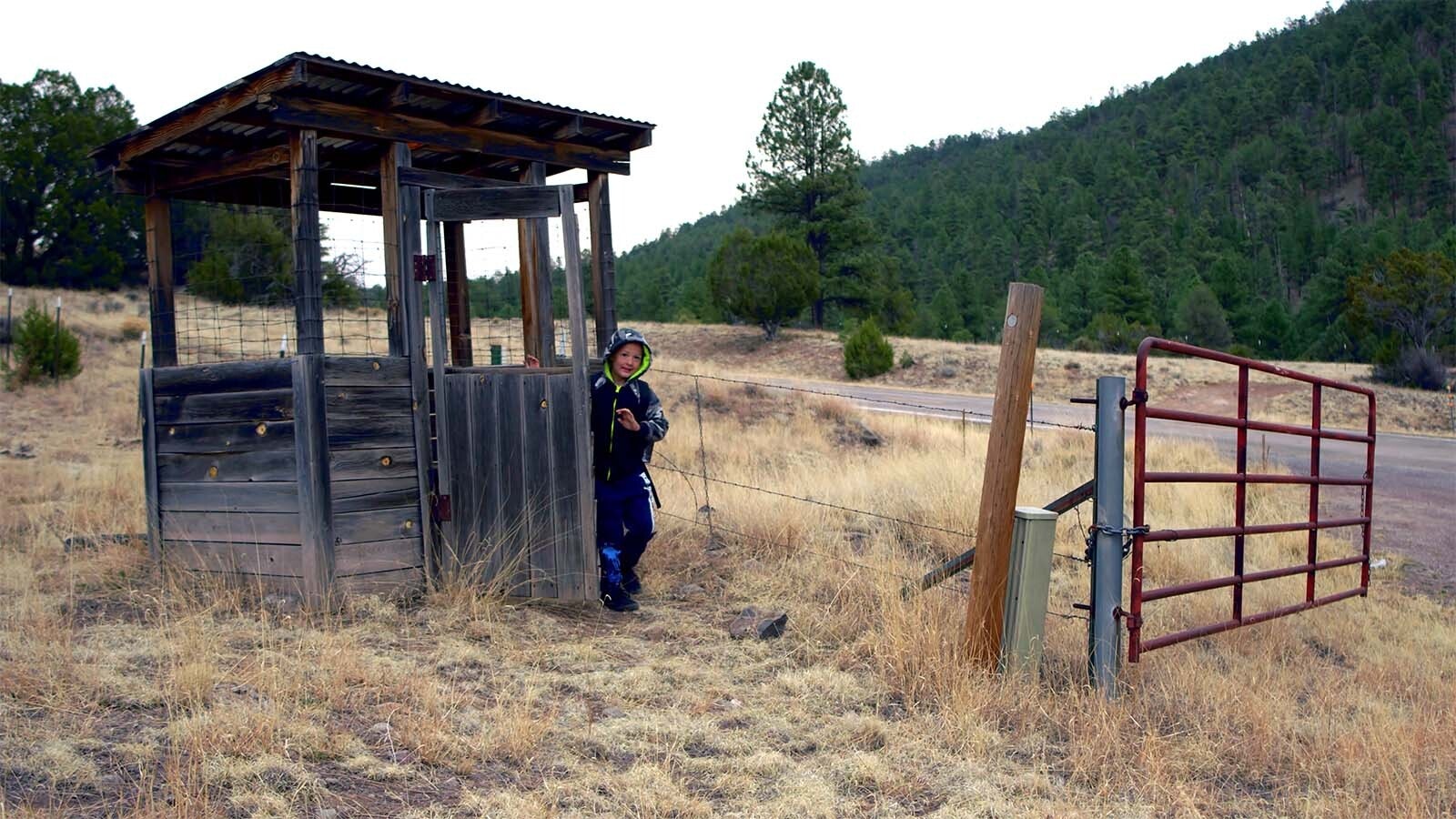
In rural Catron County, New Mexico, children wait for school buses in cage-like structures called “wolf houses” because their parents and local officials worry wolves might attack the kids.
That’s similar to protective measures taken at the Wapiti Elementary School west of Cody.
That school has a bear-proof fence around the schoolyard and runs regular “grizzly drills” in case a bear shows up.
Catron County started installing the wolf houses at remote school bus stops in 2007 and has gotten some flack for it over the years, including some critics saying it’s an overreaction.
Local rancher Tom Paterson said he doesn’t see it that way.
Since the Mexican wolf recovery program started about 25 years ago, county residents there have worried about public safety, their livestock and other wildlife, he told Cowboy State Daily.
Children and parents hate the roadside cages, but “what choice do we have?” he said.
He said in one instance, wolves killed one of his steers near the kitchen deck of the house where his grandson plays.
“This is personal for me,” said Paterson, who is president of the New Mexico Cattle Growers’ Association.

A rural county in New Mexico makes children sit inside cage-like roadside shelters called “wolf houses" while waiting for school buses. That’s because their parents worry that wolves in the area might attack the children. (Courtesy wolvesamongus.org) 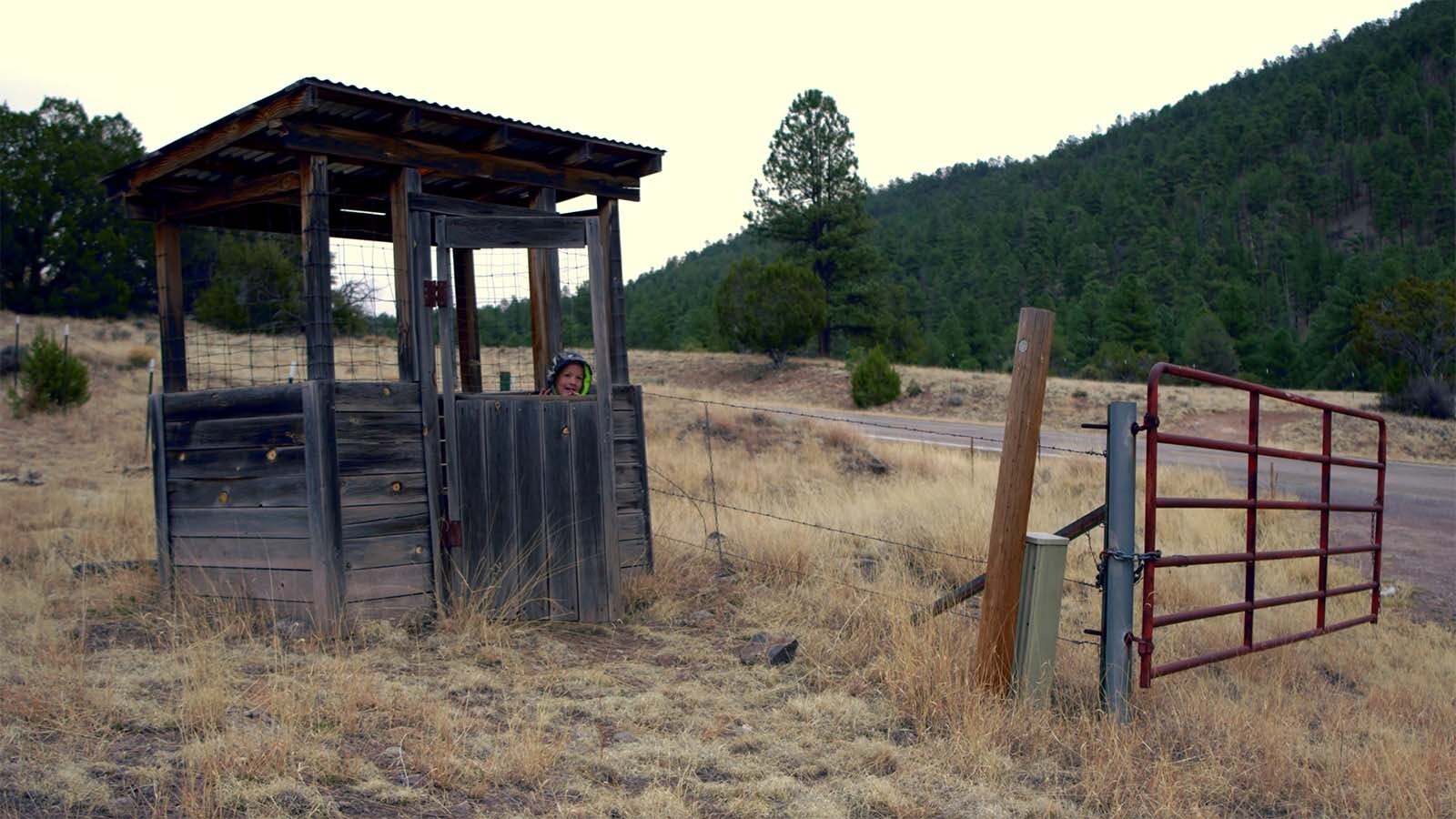
A rural county in New Mexico makes children sit inside cage-like roadside shelters called “wolf houses" while waiting for school buses. That’s because their parents worry that wolves in the area might attack the children. (Courtesy wolvesamongus.org) 
A rural county in New Mexico makes children sit inside cage-like roadside shelters called “wolf houses" while waiting for school buses. That’s because their parents worry that wolves in the area might attack the children. (Courtesy wolvesamongus.org) 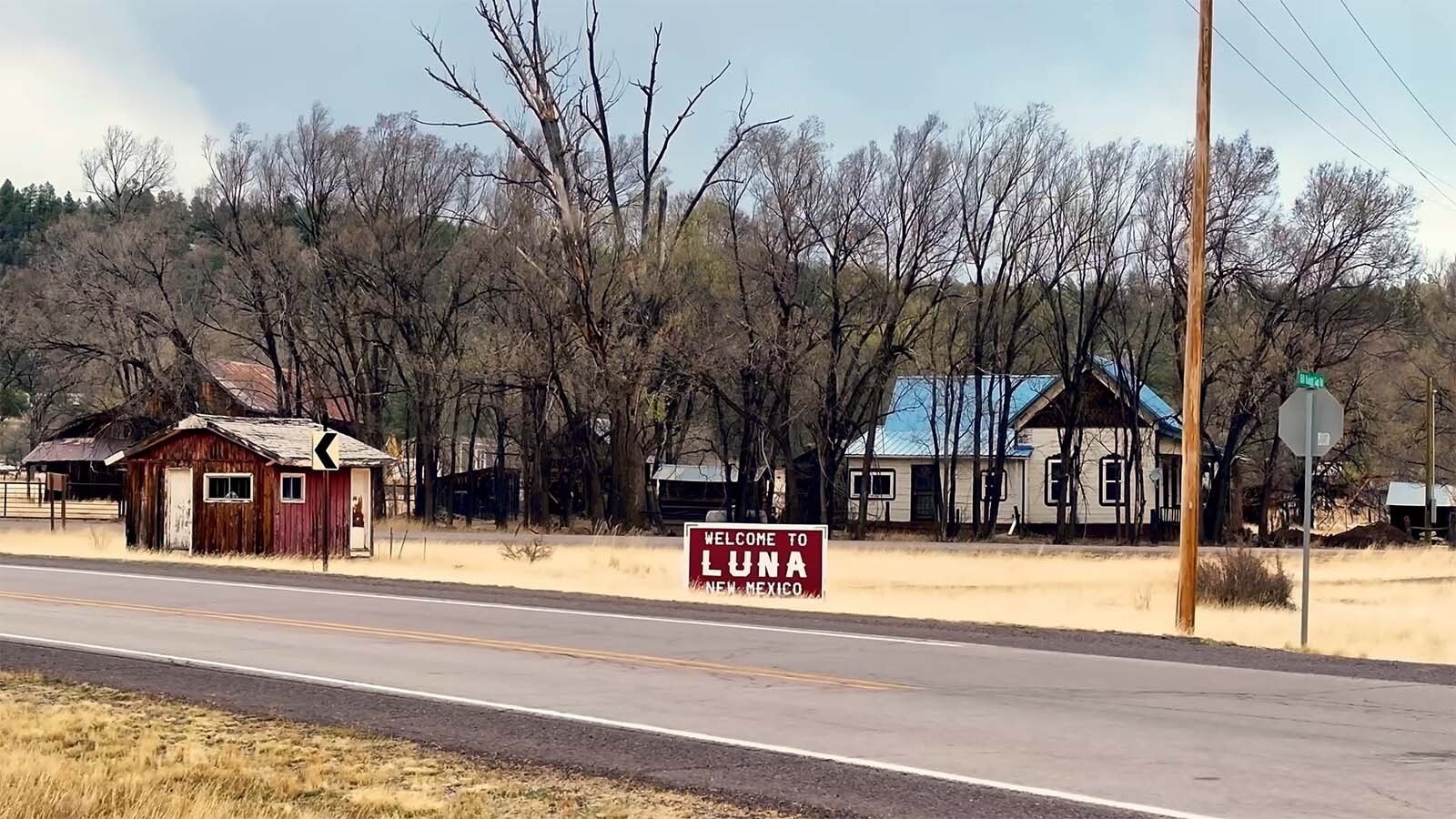
A rural county in New Mexico makes children sit inside cage-like roadside shelters called “wolf houses" while waiting for school buses. That’s because their parents worry that wolves in the area might attack the children. (Courtesy wolvesamongus.org) 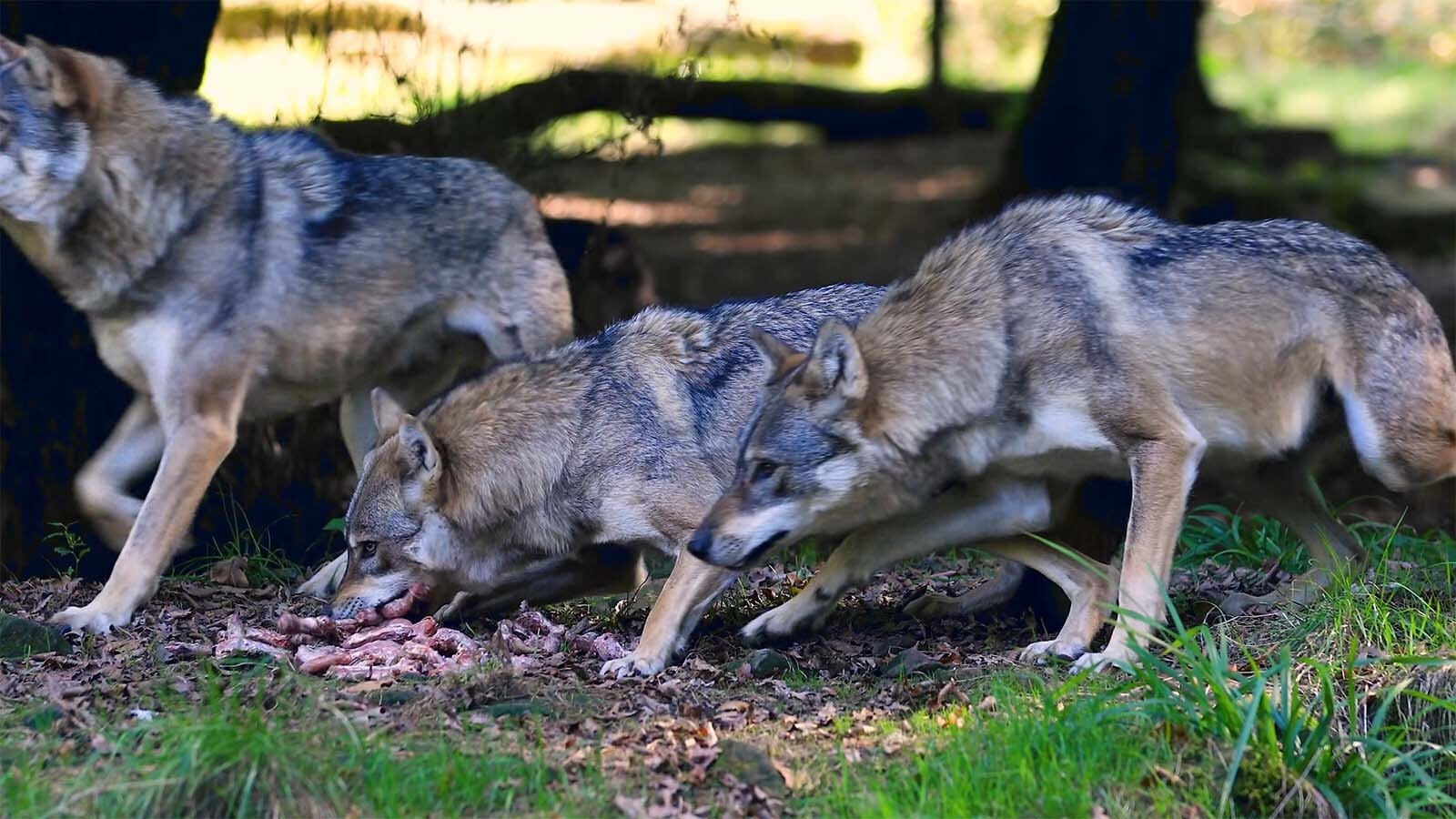
A rural county in New Mexico makes children sit inside cage-like roadside shelters called “wolf houses" while waiting for school buses. That’s because their parents worry that wolves in the area might attack the children. (Courtesy wolvesamongus.org)
A Smaller Subspecies
Mexican wolves are recognized as a subspecies and are smaller than the grey wolves that live in Wyoming, said Wayne Pacelle, president of Animal Wellness Action and the Center for a Humane Economy.
Mexican wolves might hit 80 pounds, whereas grey wolves can hit 130 pounds, he told Cowboy State Daily.
Mexican wolves were driven almost to extinction and were placed under federal endangered species protection in the 1970s.
With recovery efforts underway on both sides of the U.S.-Mexico border, their population has grown to several hundred wolves in the wild.
As of January, there were an estimated 264 wolves in New Mexico and Arizona, Pacelle said.
Paterson said that’s probably an underestimation and that there are probably closer to 317 Mexican wolves in the wild.
That’s right on the cusp of the 320 wolves supposedly needed for full recovery, he said.
As far as he and many others are concerned, it’s long past time to remove federal protection for Mexican wolves and hand management over to state wildlife agencies in New Mexico and Arizona.
“Provided that the states have the wherewithal and the commitment to manage these animals,” he said.
“This is a huge issue, and we’ve got to get it right, to protect our people, our livestock and our other species of wildlife,” Paterson added.
Wolves Stalking Children?
While some might think that the wolf-proof kid shelters at rural bus stops are an overreaction, Paterson said they are necessary.
There have been instances of wolves following children who were doing ranch chores and “we’ve had wolves stalking children in school yards,” he said.
Wolves have also snatched pets off people’s front porches and “killed them right on the front lawn,” he said.
Ranchers can occasionally get “kill permits” to shoot wolves that have attacked their livestock, but that program isn’t aggressive enough, Paterson said.
The wolves in New Mexico are “habituated” and have no real fear of people, he said.
In the nearby town of Luna, New Mexico, wolves have been seen wandering the streets within town limits.
Other wildlife is a major concern, he added.
New Mexico is legendary for producing some of the largest trophy bull elk on record, which attracts hunters from all over the country.
Hunters also come from far and wide to pursue Coues deer, a smaller subspecies of white-tailed deer that is unique to the Southwest.
“Our motels, our cafes, our gas stations — they all depend on those out-of-state hunters,” Paterson said.
Ranchers build many of the irrigation systems that provide water for deer and elk herds, so they resent having to deal with wolves attacking their cattle, he said.
Although the U.S. House of Representatives recently passed a bill to end federal protection for grey wolves across the Lower 48, it could take a separate bill to delist Mexican wolves, he said.
Wolves are already delisted from federal protection in Wyoming, Montana and Idaho, and may be hunted and trapped in all three states.
Wolves From The North
Since Colorado started reintroducing grey wolves in late 2023, there’s been concern about those wolves pushing south into New Mexico, Paterson said.
Not only would that create more wolf trouble for ranchers, hunters and others, it could result in the cross-breeding of grey wolves and Mexican wolves, he said.
That could seemingly defeat the entire purpose of protecting Mexican wolves, he said.
"What in the world authorizes the people of Colorado to release wolves that are going to impact New Mexico?” he said.
Pacelle said he doesn’t think possible cross-breeding between grey wolves and Mexican wolves should be a major concern.
Historically, the subspecies shared overlapping range, and there was always interbreeding in some places.
“If they interbreed, that’s just nature,” he said. “I certainly do not think that we should interrupt their movements, either to the south by grey wolves, or to the north by Mexican wolves."
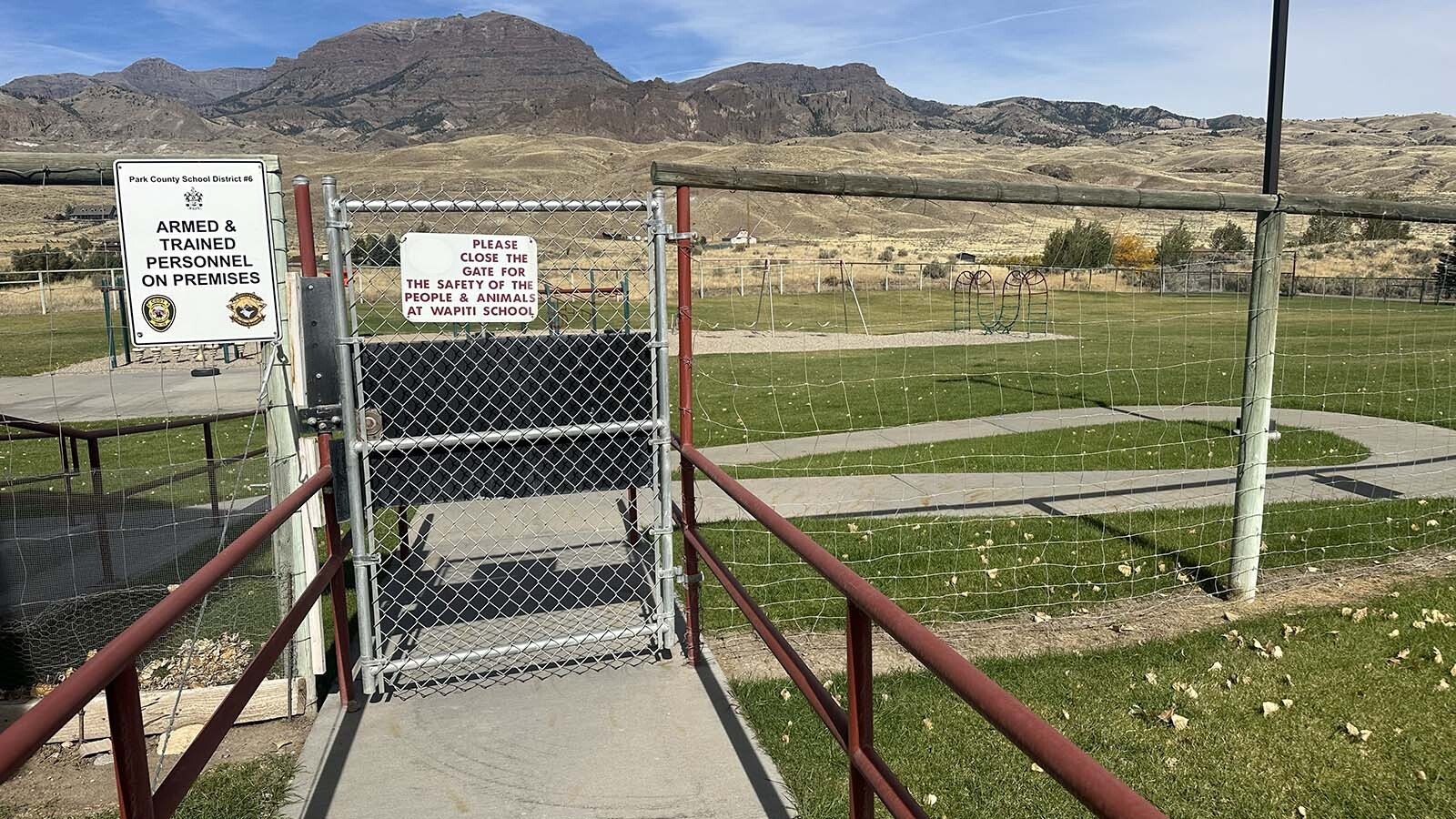
A bear-resistant fence around the Wapiti Elementary School west of Cody keeps bears from climbing into the schoolyard. (Courtesy Elise Cole) 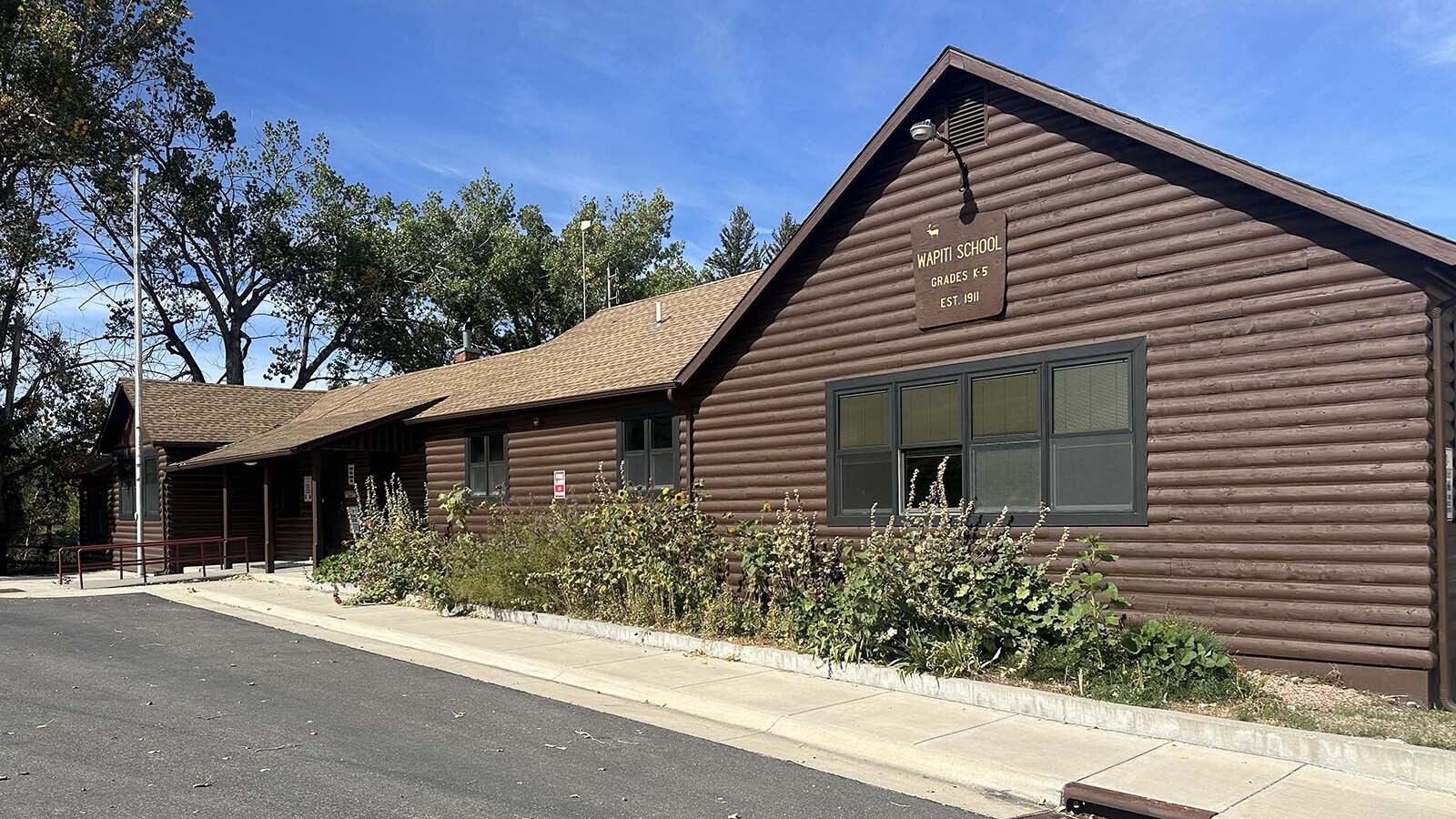
The Wapiti Elementary School is a two-room schoolhouse in grizzly county west of Cody. (Courtesy Elise Cole) 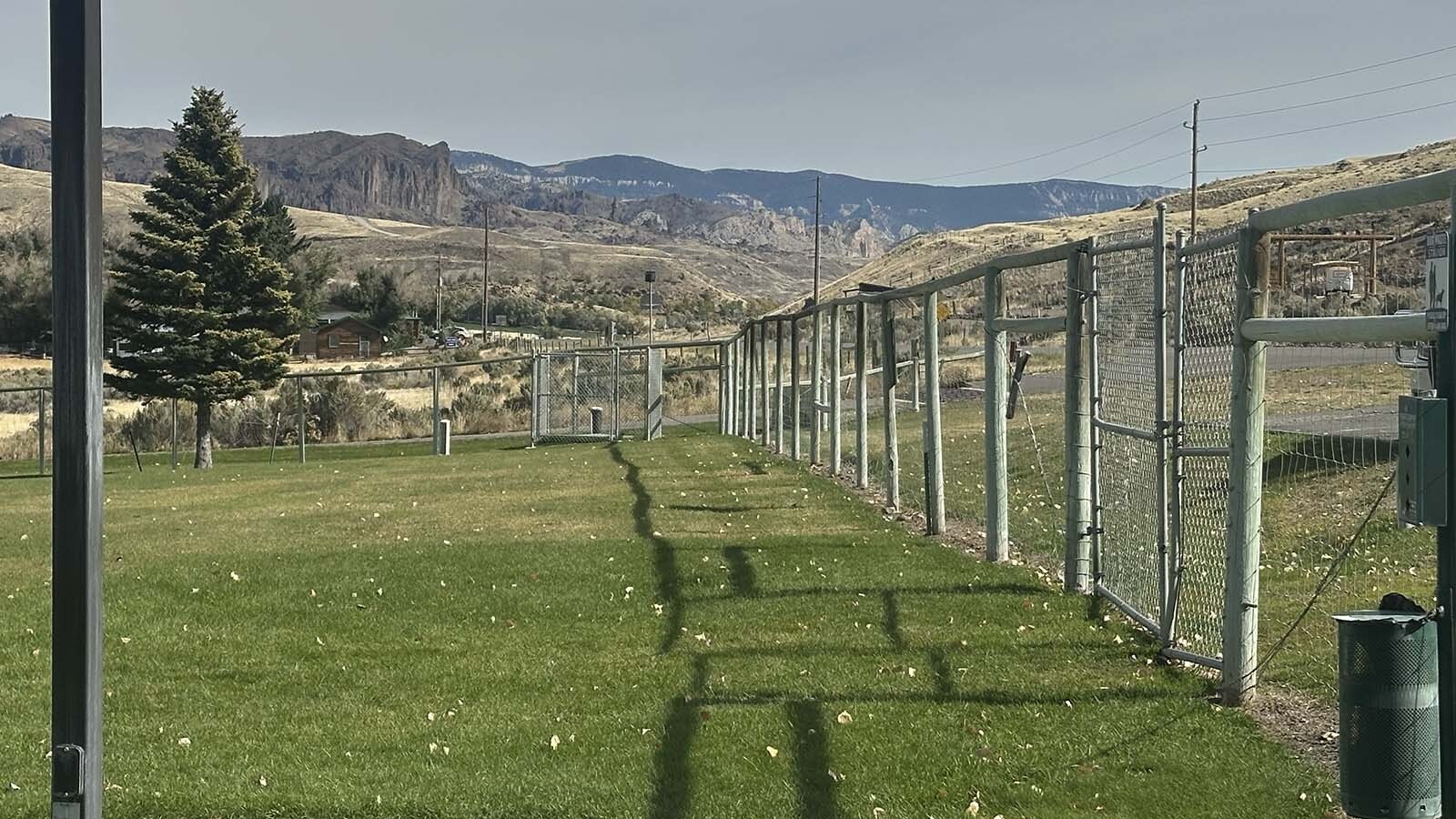
A bear-resistant fence around the Wapiti Elementary School west of Cody keeps bears from climbing into the schoolyard. (Courtesy Elise Cole) 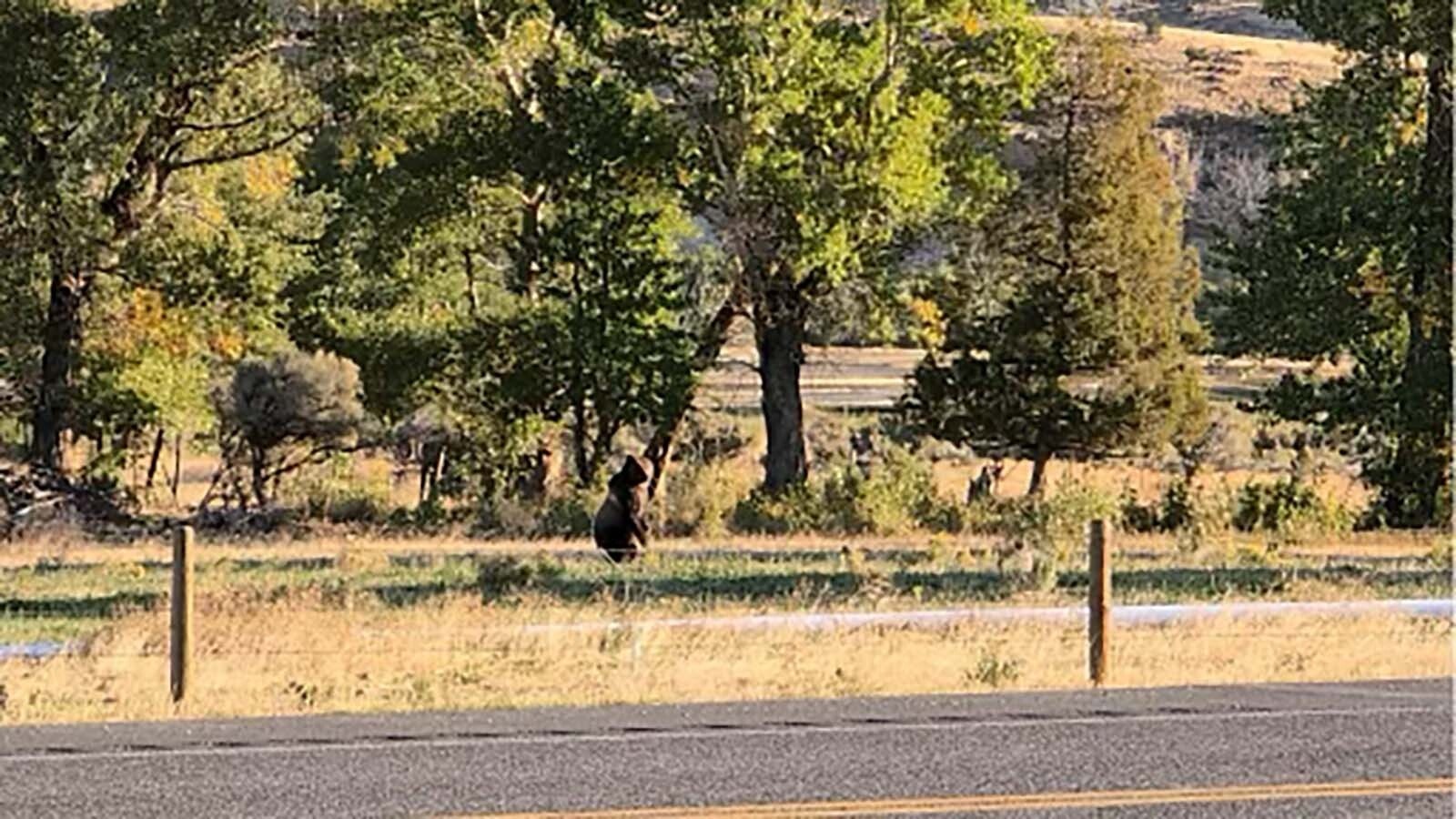
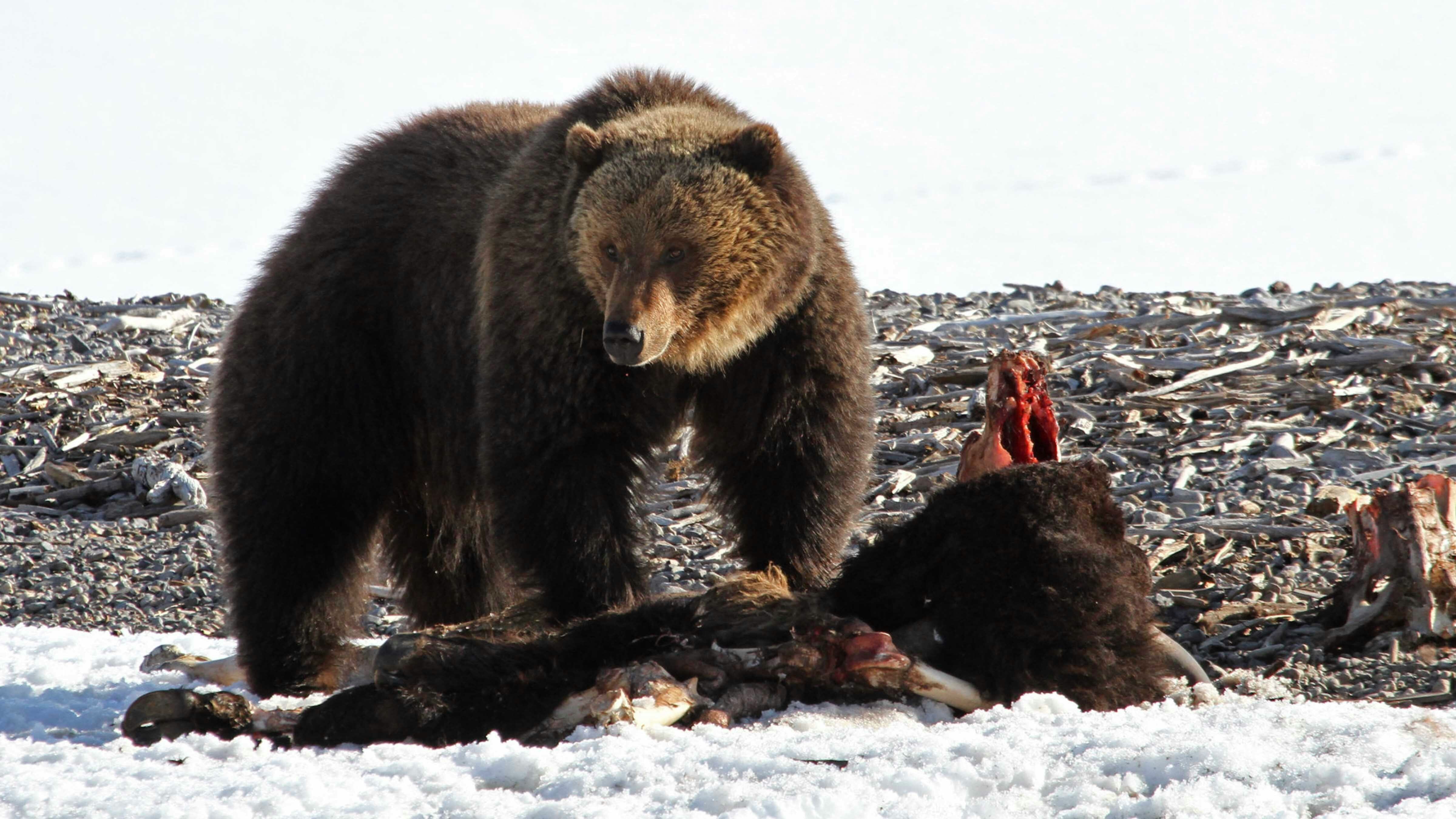
A grizzly bear was drawn to a roadkill deer carcass right across Highway 14-16-20 from the Red Barn country store west of Cody. The store is about two miles away from the Wapiti Elementary School. (Courtesy Manda and Fred Siebert)
Will Mexico Get Onboard?
Paterson said that even if grey wolves are delisted, Mexican wolves might remain protected.
That’s because there’s a rule in place that there must be recovery on both sides of the U.S.-Mexican border, and Mexico apparently isn’t doing enough to boost its wolf population.
That rule needs to be rescinded, he said.
Paterson added that since the re-election of President Donald Trump, things have improved, and the Trump administration seems to be committed to “sustainable management” of Mexican wolves.
Irrational Fears?
Pacelle said that, as he sees it, making kids sit in shelters at bus stops reflects an irrational fear of wolves.
There hasn’t been a documented incident of a healthy wolf attacking a human in the Lower 48 in about a century, he said.
Wolves’ effect on livestock is also exaggerated, he said.
The data shows that most livestock deaths are from weather or disease. And among predator deaths, most are caused by coyotes, not wolves, he said.
Wolves can help protect ranches from coyotes, he added.
“Wolves won’t tolerate coyotes. They either kill them or drive them off,” he said.
Pacelle argues that wolves also can benefit big game herds.
Chronic wasting disease infections in deer and elk herds are a growing concern, he said. It’s spread through malformed proteins called prions, which can linger in the environment indefinitely.
Wolves can detect and target infected animals, Pacelle said, adding that the predators’ digestive systems can neutralize the disease-spreading prions, he added.
Mark Heinz can be reached at mark@cowboystatedaily.com.