Should people be afraid of artificial intelligence and its potential to take over our daily lives, or embrace it as the next technological evolution that can be as transformative to society as the internet was in the 1990s?
The answer is both, said Doug Kelly, CEO of the American Edge Project, a privately funded tech industry coalition that promotes the U.S. as being the global leader in technological innovation, especially AI.
That’s because the United States is in a digital arms race with China, he said Wednesday on the Cowboy State Daily Show with Jake Nichols.
“Right now, we’re in a race with China to see who’s going to become the global AI leader,” Kelly said. “It matters who wins the AI race, because what’s at stake is a national security advantage, economic competitiveness advantage.”
Like the decades-long Cold War standoff between the U.S. and Russia, the stakes are high for all the corners of the planet when it comes to who wins the AI race, Kelly said.
“And at the end of the day, which country’s values are going to be underpinning the global technology infrastructure?” he said. “Do we want China’s, which are built on censorship, control, and surveillance?
“Do we want America’s values undergridding that technology, which are freedom, opportunity, and transparency? It’s a simple choice, but if we don’t win this race, that’s what’s going to happen. We’re going to lose those advantages.”
Many Benefits
There’s a lot about artificial intelligence to be afraid of, he said, but equally as much to be excited about.
Its potential is exponentially greater than being a way to make zebras bounce off a diving board into a swimming pool for funny social media posts.
Fear is generally a product of ignorance about what AI can and is doing, Kelly said.
“Most people when they hear ‘AI,’ it’s an in-the-clouds debate and they’re not quite sure about it,” he said. “It’s faster diagnoses, better cures for tough things, customized education — people need to hear that, because that’s lost in the current debate.”
For small businesses, it means increased productivity and job growth — not the job loss many fear because AI will take over human work, Kelly said.
“It gives them a whole new set of tools that will increase their productivity — not because they can lay off a bunch of people,” he said. “If AI tools help take off doing inventory or writing marketing content that sometimes business owners aren’t great at, all of a sudden that frees up other employees to do more things.”
In the end, if AI tools help businesses grow, that leads to hiring more people, not reducing workforces, he said.
“In Wyoming, that’s especially important, because you have 77,000 small business owners out there,” Kelly said. “They employ 65% of the state. This is a big deal.”
'America Must Lead’
Wyoming Republican U.S. Sen. John Barrasso has lobbied in Congress for fast-tracking artificial intelligence policies and the need to win that race with China.
That “goes beyond technology or trade,” Barrasso said from the Senate floor this past summer. “This is about the future of freedom.
“While America invests in innovation, China is pursuing censorship, surveillance, and state control,” he continued. “China (has) released plans for a so-called ‘World AI Cooperation Organization.’ Let’s be honest: China’s vision for AI is not about cooperation, it’s about control.”
He went on to sound the same alarm Kelly did Wednesday, saying that China’s AI policy “is built on oppression. Ours is built on freedom, privacy, and innovation.
“America must lead the AI revolution.”
Wyoming state Sen. Chris Rothfuss, D-Laramie, agrees that America needs to be out in front of with AI, but he doesn’t trust the federal government to lead that parade, advocating that states know best how to set policy for themselves when it comes to artificial intelligence.
“How do we want to govern it so that it’s implemented in a way that is broadly beneficial and we minimize the potential downside?” Rothfuss said. “We want to make sure that we as states have the capacity to govern innovatively and look for solutions that benefit our constituents.”
That’s not likely to happen at the federal level, he said.
“We’re very concerned with the idea of preemption from the federal level, since I think we can all probably agree the federal government doesn’t do a great job of passing legislation. It’s not something they’re famous for.
“Candidly, our government right now is not high functioning at any level, and we need it to be high functioning to contend with the disruptive nature of artificial intelligence.”
State Rep. Daniel Singh, R-Cheyenne, also said it’s critical for Wyoming to pave its own way with AI and not be pigeonholed by potentially overreaching federal regulations.
“I believe each state should be able to implement their own laws on how to restrain AI appropriately,” he told Cowboy State Daily. “I do think that responsibility falls upon the states.”
Rothfuss and Singh are co-chairs of the Wyoming Legislature's Select Committee on Blockchain, Financial Technology and Digital Innovation Technology.

Are We Building To ‘Skynet?’
One of the most common concerns about artificial intelligence is that, left unchecked, it could lead to a dystopian “Skynet” future for humanity.
That’s a reference to the 1984 science fiction movie “The Terminator,” where in the future, an artificial intelligence network named Skynet took over the world and executed a mission to exterminate humans.
“The Skynet scenario is something that we really need to take seriously,” said Rothfuss, who teaches technology and artificial intelligence at the University of Wyoming. “You have to ensure that a human is always in charge, that at the end of the day, there’s a backstop, a kill switch.”
While a little melodramatic, fears of a robot or computer uprising are also valid, Singh said.
“We do need to be concerned about that. The future of warfare is going to be different than in the past,” he said. “It’s already changed, especially with the advancement of the Ukraine War.
“If you can have a drone swarm go into an area instead of soldiers, and be more precise, these (scenarios) can be scary, but they’re not insurmountable. We have the smartest people here (in the U.S.).”
Playing the role of Skynet now is China, Singh said.
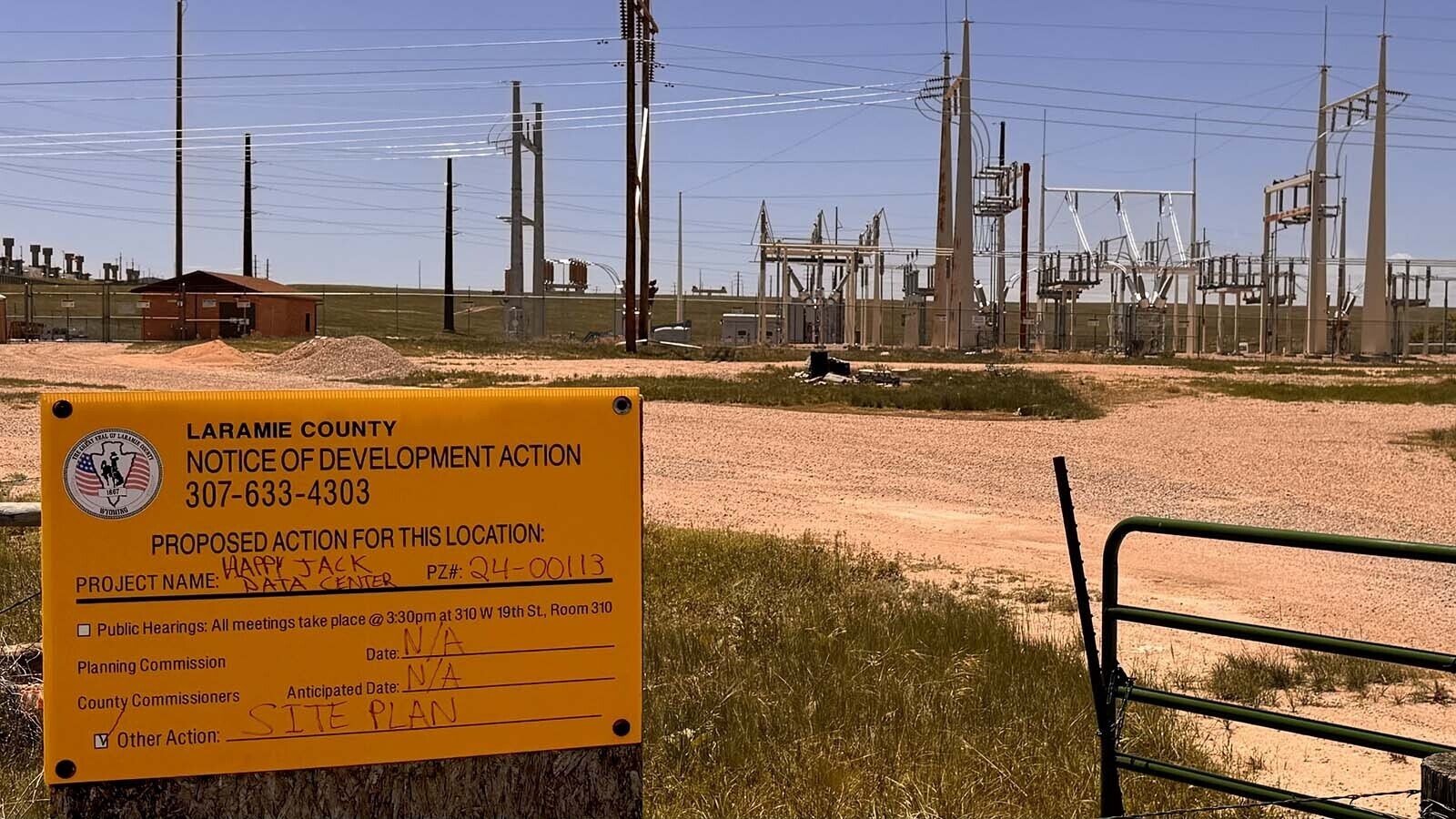
“It’s so important for the data in the United States to remain in the U.S., and especially to be hosted in the U.S.,” he said. “People ask why there are so many data centers being built? For the first time in history, billions of people can access the internet.”
America also has a responsibility to the rest of the world, he said.
“When it comes to AI, the capacity for us to build these things relies upon the ingenuity of the people in the United States,” Singh said. “If we say we don’t want to work on AI anymore, then we can reliably trust that our adversaries, who don’t hold the same ethical constraints we have here, they’ll do anything with AI.”
There’s been a lot of talk about beating China in the AI race, but so far America is losing, Kelly said.
“We’re in the Super Bowl of AI right now with China,” he said. “And to win that, a country has to have energy, it has to adopt the technology, it has to have the right talent levels, and it has to have an advantage in chips.
“Right now, we are losing to China in three of those four areas. They produce twice as much energy as we do, we don’t have enough talent in terms of skilled trades to build the data centers, … and we’re really slow to adopt this technology. A lot of people are afraid of it.”
The bottom line is AI is here and it’s only going to advance, no matter who’s behind that progress, he said.
“It ain’t going away,” Kelly said, adding that there’s only one important decision to be made now. “Do we want (the rest of the world) working off of our platforms, or working off of China’s?”
Greg Johnson can be reached at greg@cowboystatedaily.com.