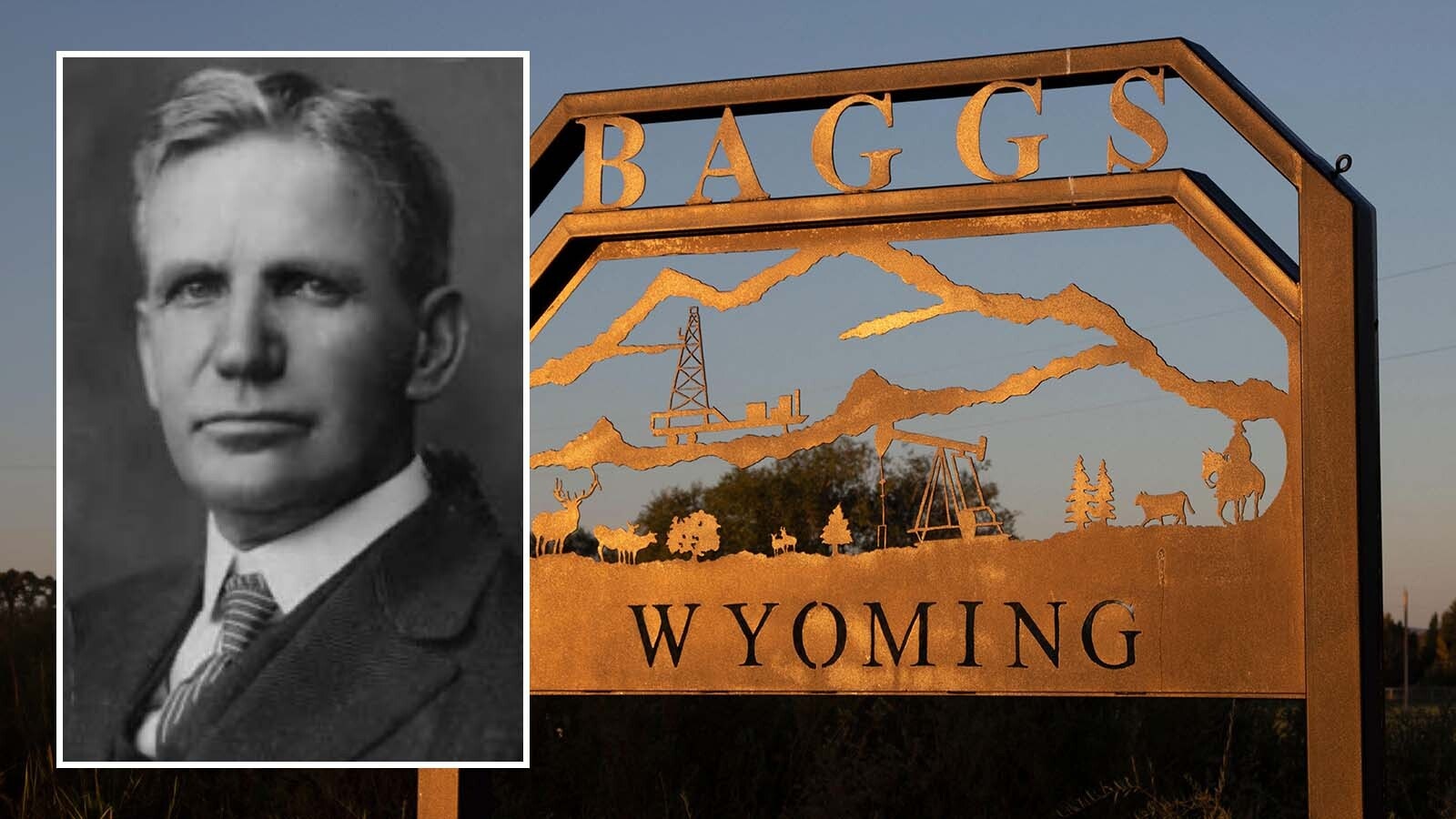
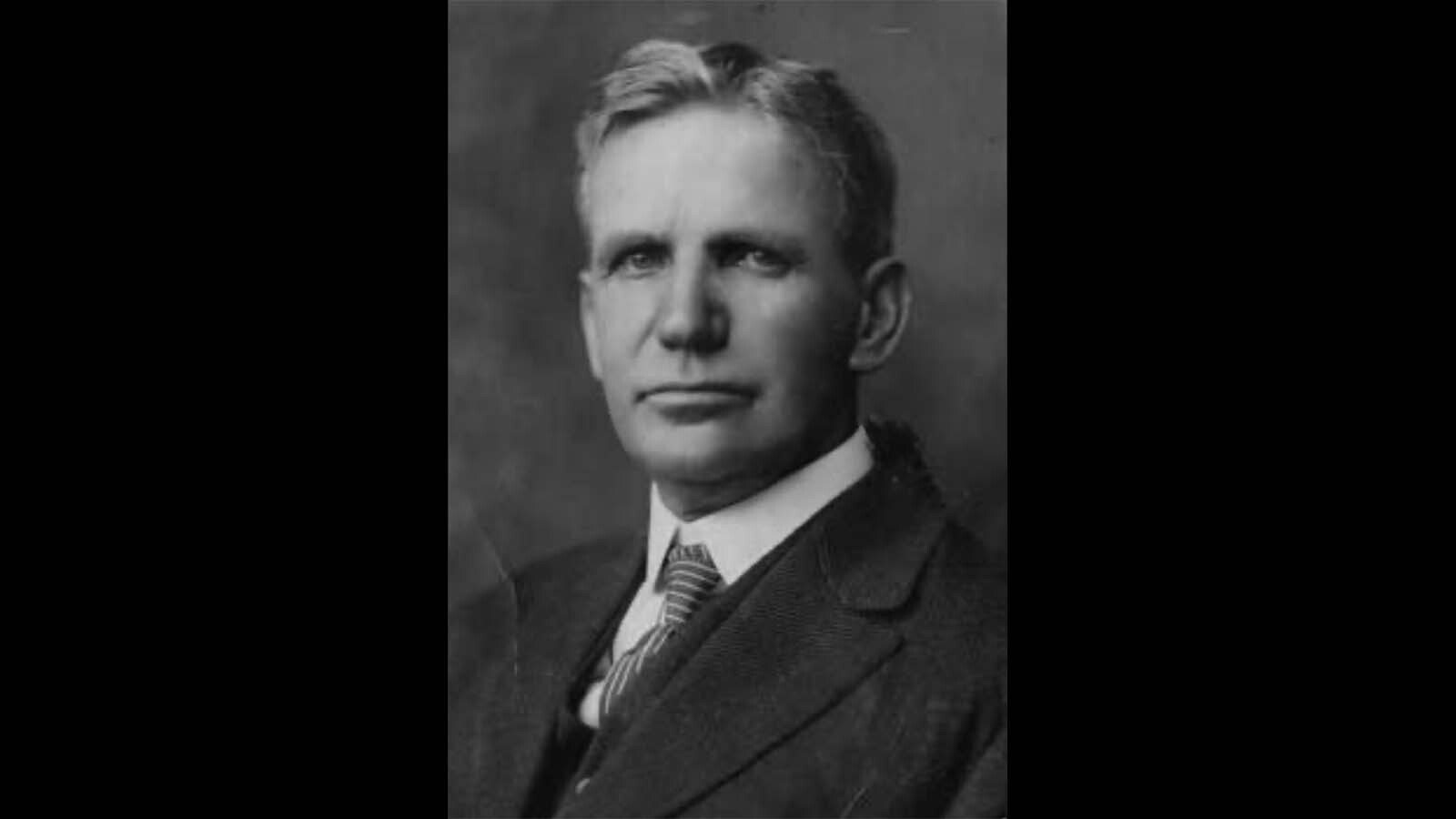
Robert “Bob” Meldrum gained the reputation as being "Wyoming’s mysterious badman” for his skill with a rifle — and eagerness to use it.
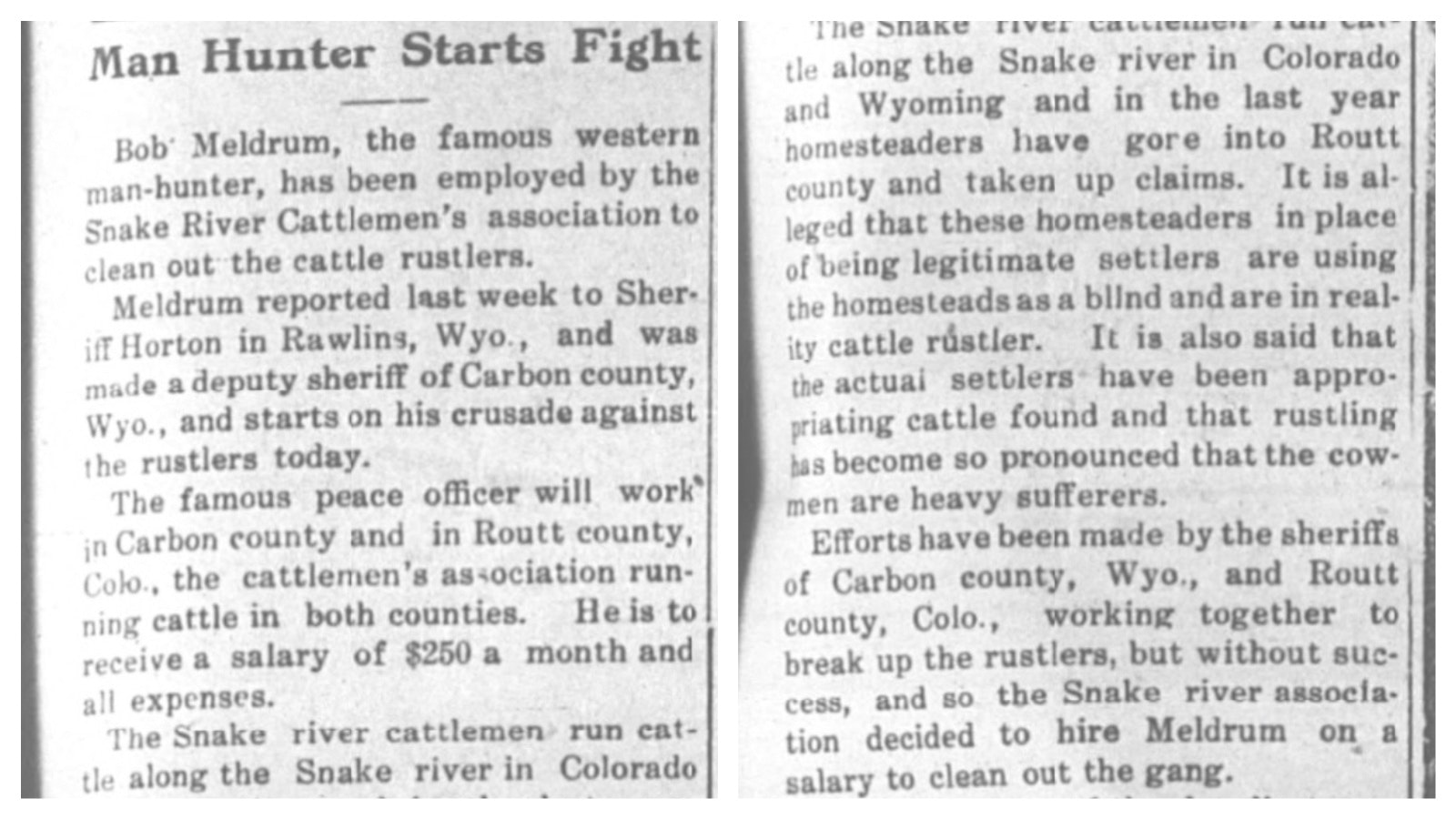
Leading up to the infamous Johnson County War, Meldrum was hired as an assassin by the Wyoming Stockgrowers Association, and it was well reported in the press of the time that Meldrum was headed out on a killing spree.
Meldrum was given a deputy sheriff’s commission and called a "man-hunter” by the press.
“He went up into the country a traveling arsenal and when he starts out to round up the rustlers, you can expect to hear of some killings,” a Wyoming man told The Wind River Mountaineer in November 1908.
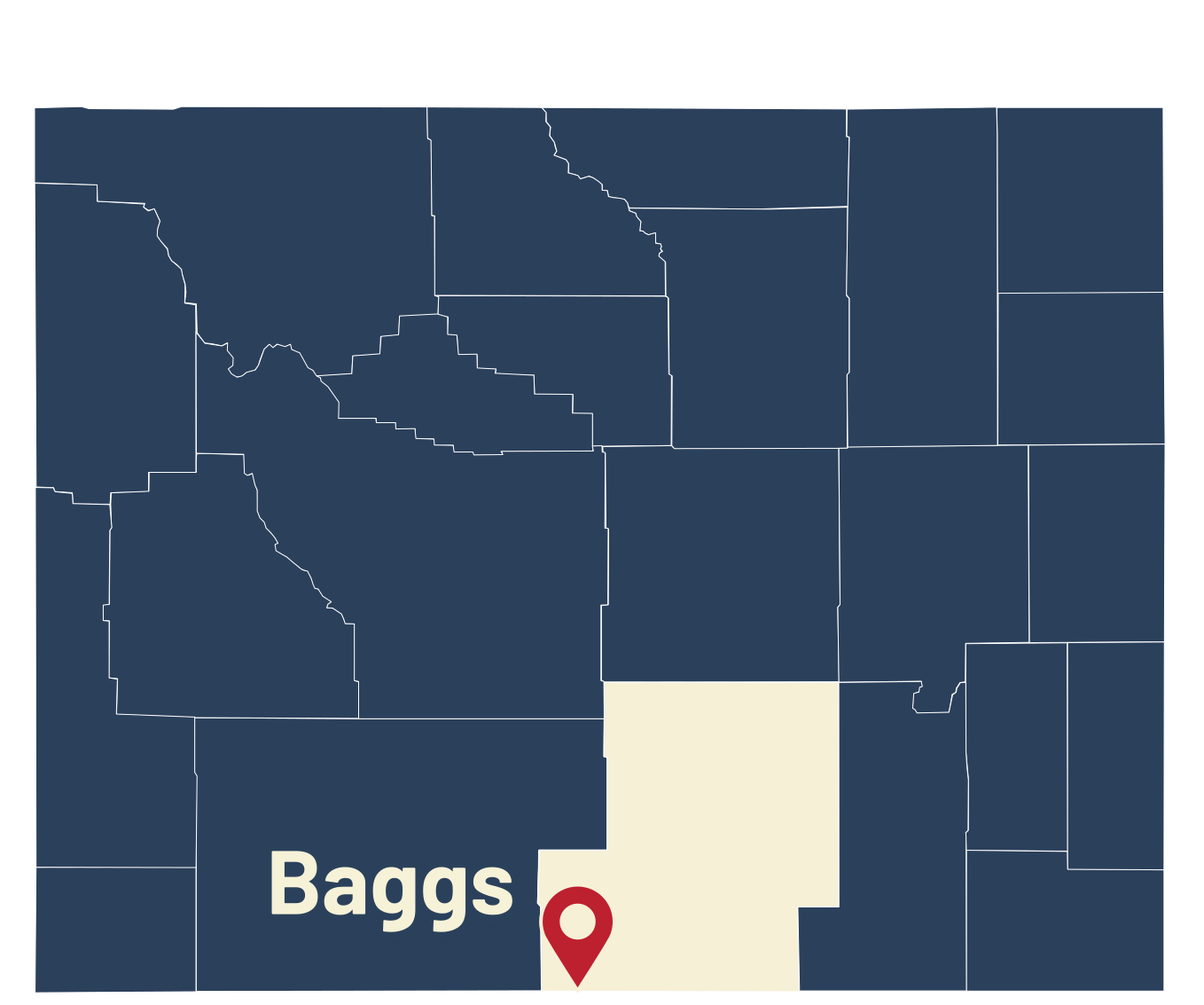
This reputation continued to follow Meldrum when he arrived in Baggs as a U.S. Marshall four years later.
He was soon hired by Mayor Billy Penland as the city marshal because of his ability to keep the peace in one of Wyoming’s rowdiest towns.
In 1961, John Carson told Frontier Times magazine that he had grown up in Baggs listening to stories from those who knew Meldrum personally.
These men were there the day Meldrum killed the wrong man and was sent to the state prison to save him from a mob intent on hanging the disgraced lawman.
“Meldrum would kill for nothing, apparently just to satisfy a lust for blood,” Carson said.
The ‘Sinister' Deputy
According to Paul Knowles of the Museum of Northwest Colorado, Meldrum was one of the fastest gunmen the American West ever produced.
“His extraordinary abilities with a revolver gave him a swagger that dared — if not begged — any man to cross him,” Knowles wrote. “It also left several men, perhaps needlessly, dead.”
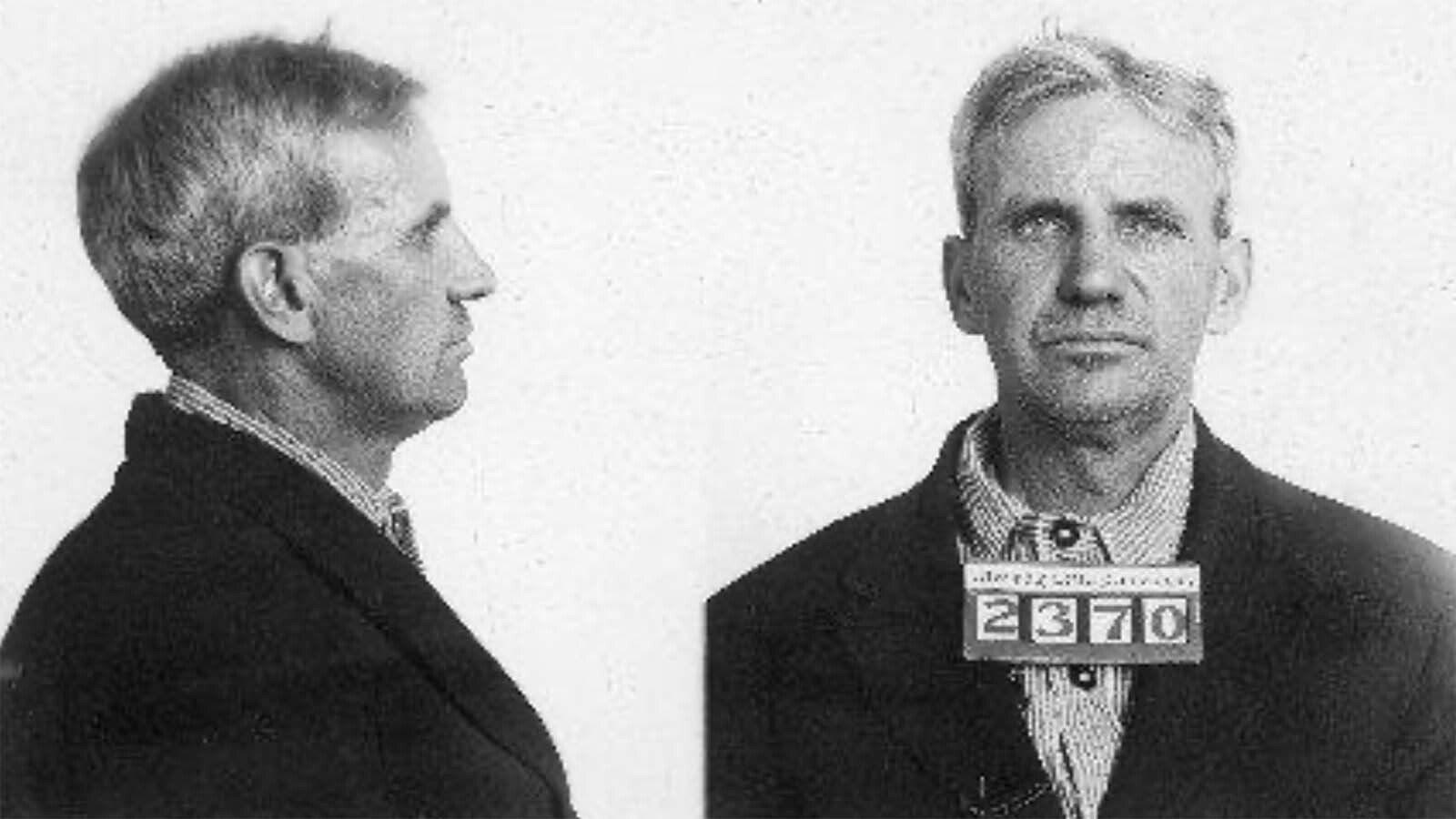
Meldrum was born in England in 1866 to Scottish parents and first showed up in America records in a Montana jail, where he served time from 1894-1896 for stealing horses.
In 1899, Meldrum arrived in Dixon, Wyoming, where he worked in Charley Perkins’ saddle shop and was a deputy sheriff.
As the deputy sheriff of Carbon County, he had attempted to arrest Noah Wilkerson who Meldrum had recognized from a wanted poster.
After a scuffle, he shot Wilkerson dead as he attempted to flee. Meldrum then collected the $200 reward. It was his first of many kills.
“He was a different breed altogether, and it is believed he was the errant son of a British Army officer,” Carson told the Frontier Times. “Like his good friend Tom Horn, killing men was his specialty.”
The first story Carson said he ever heard about Meldrum was that he was thought by many to be a deputy U.S. marshal.
So many men were deputy U. S. marshals in those days that Carson said it was probably safe to assume that Meldrum was too.
“He was a sinister, mysterious man who claimed to be hard of hearing, but took note of the faintest of sounds,” Carson said. “I have heard it said that the jingling of a spur on the boardwalk outside would make Meldrum spin around from the bar in a noisy saloon.”
Meldrum had been the city marshal for Baggs, but had only recently resigned and was planning to leave the country.
Mayor Billy Penland tried to keep him because Meldrum could keep the peace. Meldrum, however, was ready to move on.
Carson said that left the only law in town a deputy sheriff named Jim Davis, who was also the local saloon keeper. Nobody ever crossed Davis, who was a popular and efficient lawman.
Good-Natured Victim
Carson told Frontier Times that he was told that Chick Bowen was an Oklahoman, part Indian, and very popular with the townspeople.
“He was a big, strong man, bordering on fat,” Carson said. “He was good-natured, and the town kids looked forward to his visits because he always had a pocket full of rock candy to pass out.”
Bowen was working at the Lower Figure Four Ranch west of Baggs down the river, and had come to town with two other cowboys, Slats Humphreys and George Salisbury.
They had a few drinks and were seen walking arm-in-arm down the dusty street with Bowen in the middle.
They would sporadically burst out with a lusty cowboy yell that would shatter the stillness, but the locals said that these boys were just happy and doing no harm.
Bowen, it was noted by these spectators, was a little more exuberant than his more cautious companions.
None of the men were armed since they had come to town for a good time and were not looking for trouble.
Destroying The Peace
Although Meldrum was no longer city marshal, he was called in to quiet the cowboys.
“Bob didn't like Chick for personal reasons, and when he accosted the three men in the street, he demanded to know who was making all the noise,” Carson said. “Bowen, with his big hat tipped back and a disarming smile on his face, allowed as how he guessed he was the guilty party, whereupon Meldrum placed him under arrest.”
It was rather unusual to arrest a cowboy for merely yelling in the street, so Bowen refused to be arrested.
According to Carson, the other two cowboys also argued that it wasn't a valid reason to arrest anyone.
Eyewitnesses later reported that an angry Meldrum drew a small-caliber revolver and said, “You'll come along with me if I have to blow your legs out from under you!”
That was the only warning Meldrum gave.
He immediately fired, the first shot hitting the big cowboy in the leg. Meldrum was about 3 feet from him, and his second shot was plumb center.
Bowen, however, grabbed the ex-marshal around the middle, pinning his gun arm at his side. After Meldrum had been disarmed by the cowboys, Bowen collapsed and was taken into the drugstore.
As Bowen gasped his last breath, Meldrum entered and cursed him, saying, “You SOB, I told you I would get you!”
Bowen died, and his death almost brought on another Wyoming lynching.
A mob gathered to hear the evidence against the despised lawman. Meldrum was charged with first-degree murder of the well-liked cowboy and was bound over to the district court.
To Prison, Then Disappeared
Carson said that Sheriff Jim Campbell from Rawlins and the saloon keeper Davis guarded the prisoner.
Campbell was wearing two six-shooters, Davis one.
Only the great respect the people had for the popular Davis kept them from taking Meldrum out and hanging him, according to those who had been part of the mob.
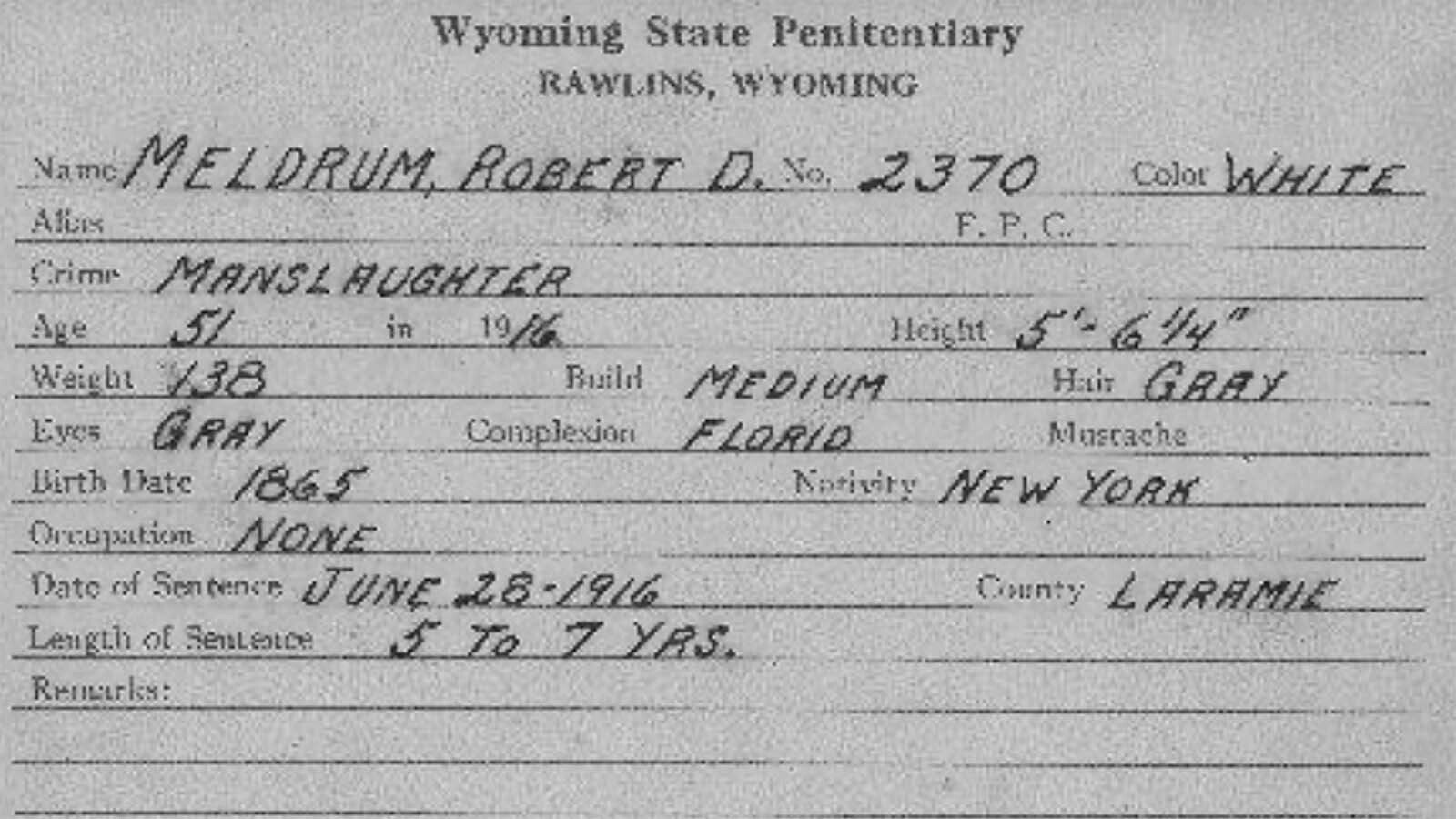
Muldrum was tried three times due to appeals, and finally found guilty of manslaughter in 1916, four years after he shot down Bowen.
Muldrum was sentenced to five-to-seven years in the Wyoming State Penitentiary but only served roughly 18 months.
“It is doubtful if he was ever locked up, though, remaining a trusty all the time he was in prison,” Carson said. “When he got out, he opened a small harness and saddle shop in Baggs, but business was slow and he had to give it up.”
Where Meldrum went after that is pure guesswork, according to Carson, as Muldrum apparently rode off into the sunset and was never seen again.
“Some say Bob went to New York City to look for his lost relatives, dying in that city a few years later,” Carson said. “Others say he went north to Montana and died there.
“Wherever his death occurred, it is safe to assume that the ghosts who moved over to make room for him, were careful not to turn their backs.”
Jackie Dorothy can be reached at jackie@cowboystatedaily.com.