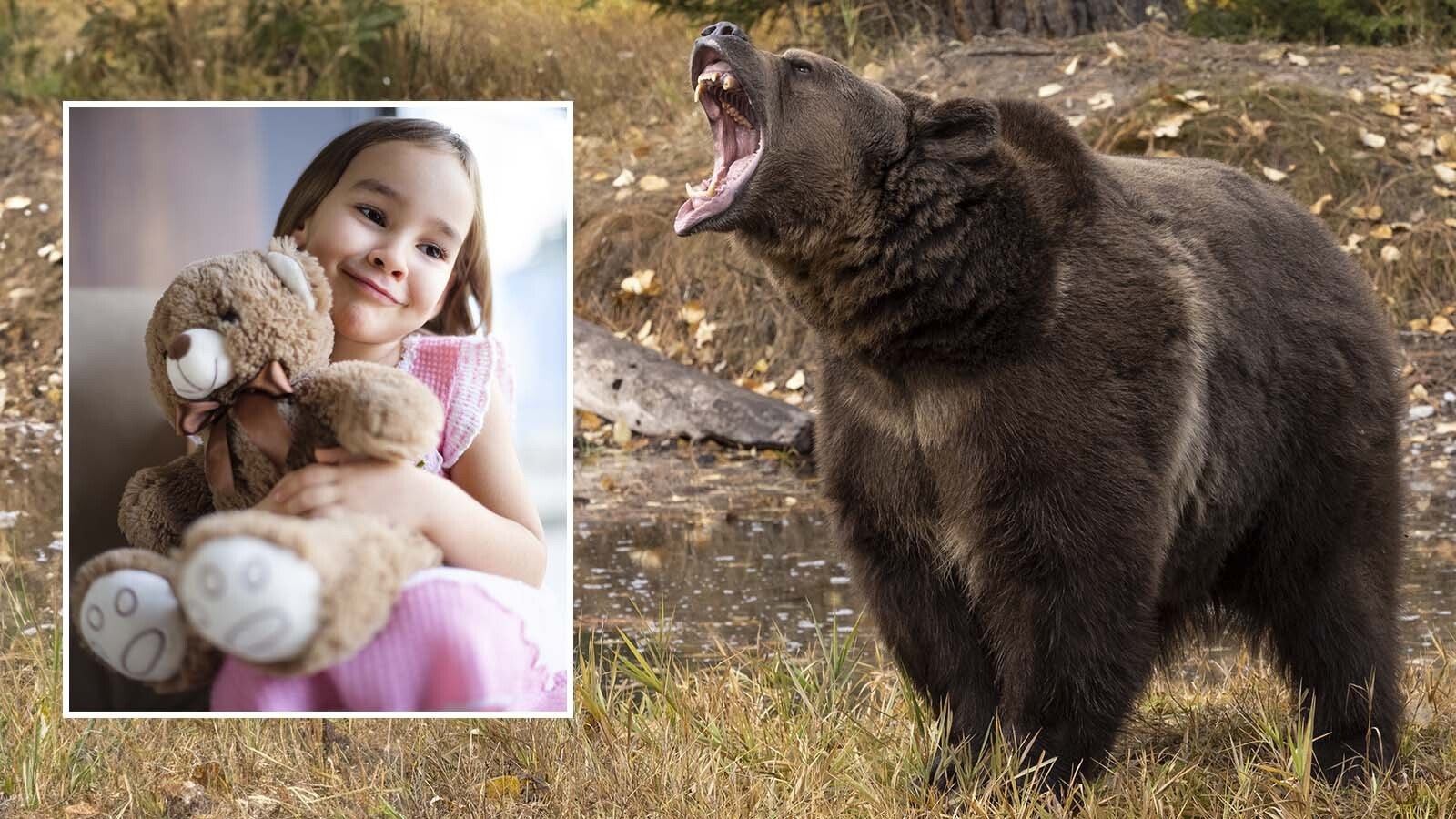
A team of French researchers claims that teddy bears are “too cute” and give kids the wrong impression about the harsh reality of encountering bears in the wild.
Bear experts told Cowboy State Daily that sounds like a stretch, and that if people are idiots around grizzlies in the wild, it’s probably not because they had teddy bears growing up.
“It’s about parenting, that’s the bottom line,” grizzly advocate Randy Rannow of Boise, Idaho, told Cowboy State Daily.f
Children that have teddy bears can grow into adults who respect bears and nature, if they’re taught the right lessons early on, said Rannow, a member of International Association for Bear Research and Management.
“Teach them that this (the teddy bear) is a cuddly toy you play with,” he said. "But when you go out into the wild, these bears are wild things, and here’s what you need to know to stay out of trouble."
People who ignore the rule of staying at least 100 yards away from grizzlies in Yellowstone and Grand Teton national parks “do so because they were never told differently,” he said, “and not because they had teddy bears."
‘Too Cute’
If children are exposed only to adorable characters — like teddy bears, Paddington Bear and Winnie the Pooh — it will distort their perception of nature, a team of French scientists claims.
Their paper, “Too Cute to be Wild: What teddy Bears Reveal About Our Disconnection From Nature,” was recently published in the journal BioScience.
That can affect humans’ relationship with nature, the paper claims.
“If we are to rebuild our collective relationship with nature, not just cognitively but emotionally, we must attend to the sensory pathways through which this relationship first takes shape,” according to the paper’s abstract. "And sometimes, what hides in plain sight can be the most instructive: Our first nature-based solution might just be a teddy bear."
One of the authors, Dr. Nicolas Mouquet, an ecologist at the French National Centre for Scientific Research, told The Telegraph newspaper that there is a place for lovable characters.
They must be balanced out with realistic depictions of bears, The Telegraph reported.
“But if a child’s only exposure to bears is through characters with very exaggerated, human-like traits, they may grow up with a limited or skewed understanding of real wildlife,” Mouquet told The Telegraph.
Give 'Em Teeth And Claws?
The researchers suggest that children’s plush toys be made to look more like the real thing.
Retired federal ecologist Chuck Neal of Cody told Cowboy State Daily that he doesn’t think that would change anything.
“I’m not sure it would make much difference, because it (the plush bear) would still be a toy, even with teeth and claws,” he said.
Rannow agreed that exposing children to more realistic-looking bear toys or images would work, if the kids aren’t also instilled with lessons about respecting nature and the sheer power of real bears.
“A realistic plush polar bear, or a virtual digital twin of a polar bear, is not going to make more people respectful of a bear,” he said.
Don’t Instill ‘Phobias’
Canadian bear safety expert Kim Titchener told Cowboy State Daily that teaching children realistic lessons about bears is important, but giving them cute teddy bears for Christmas doesn’t hurt anything.
“I had a ton of teddy bears growing up,” she said.
When educating children about respecting bears and staying safe around them, it’s important to catch them at the right age, she said.
She’s found the “around grade four or five” is the ideal time to teach children about bear safety.
Children of that age can understand the need for rules and grasp that bears are wild animals, best left alone.
“We can teach them that if we see bears in the wild, we can’t just walk up to them and try to touch them,” she said.
Trying to teach children younger than that about how dangerous bears can be could “create fears or phobias” in them, she added.
While she’s not worried about teddy bears sending kids the wrong message, Titchener said she wonders how images generated by artificial intelligence (AI) might warp the views of some adults.
“Have you seen some of the AI lately? It’s incredible. I’ve seen some videos that seem to show something like 20 black bears walking with a group of hikers,” she said.
Named After Teddy Roosevelt
Teddy bears have “been around for a good century,” so they can’t be blamed for recent bad behavior toward nature and bears, Neal said.
“A teddy bear "could possibly give the impression that bears are a harmless creature, which they are not, but it’s nothing new,” he said.
The teddy bear’s namesake is President Theodore “Teddy” Roosevelt, inspired by an incident in 1902.
Roosevelt was hunting bears in Mississippi, but wasn’t having any luck.
“Roosevelt's assistants cornered and tied a black bear to a willow tree,” according to the National Park Service. "They summoned Roosevelt and suggested that he shoot it.
"Viewing this as extremely unsportsmanlike, Roosevelt refused to shoot the bear."
Roosevelt’s mercy toward the bear in that moment inspired the creation of plush children’s toys called teddy bears, the agency says.
Mark Heinz can be reached at mark@cowboystatedaily.com.