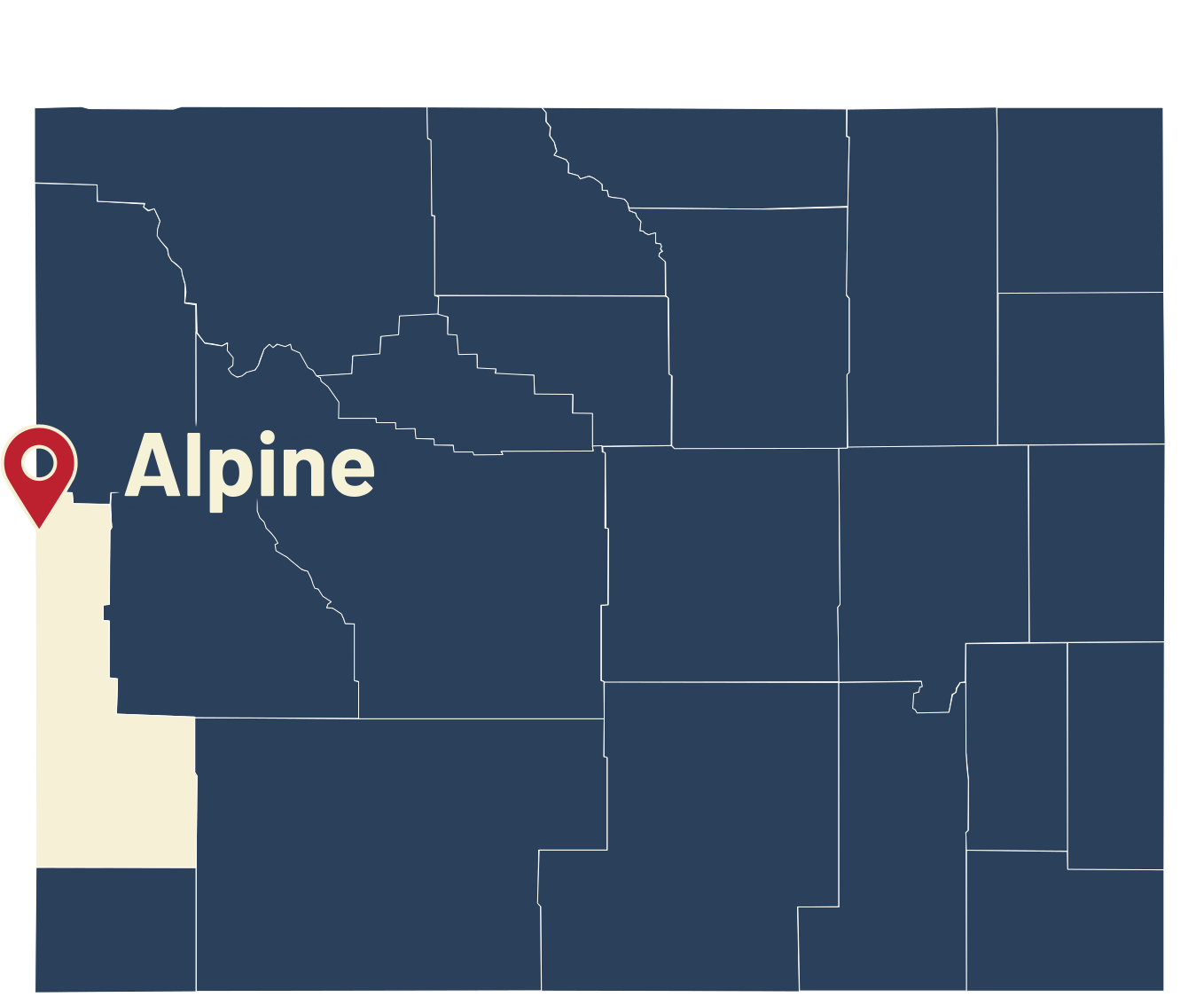
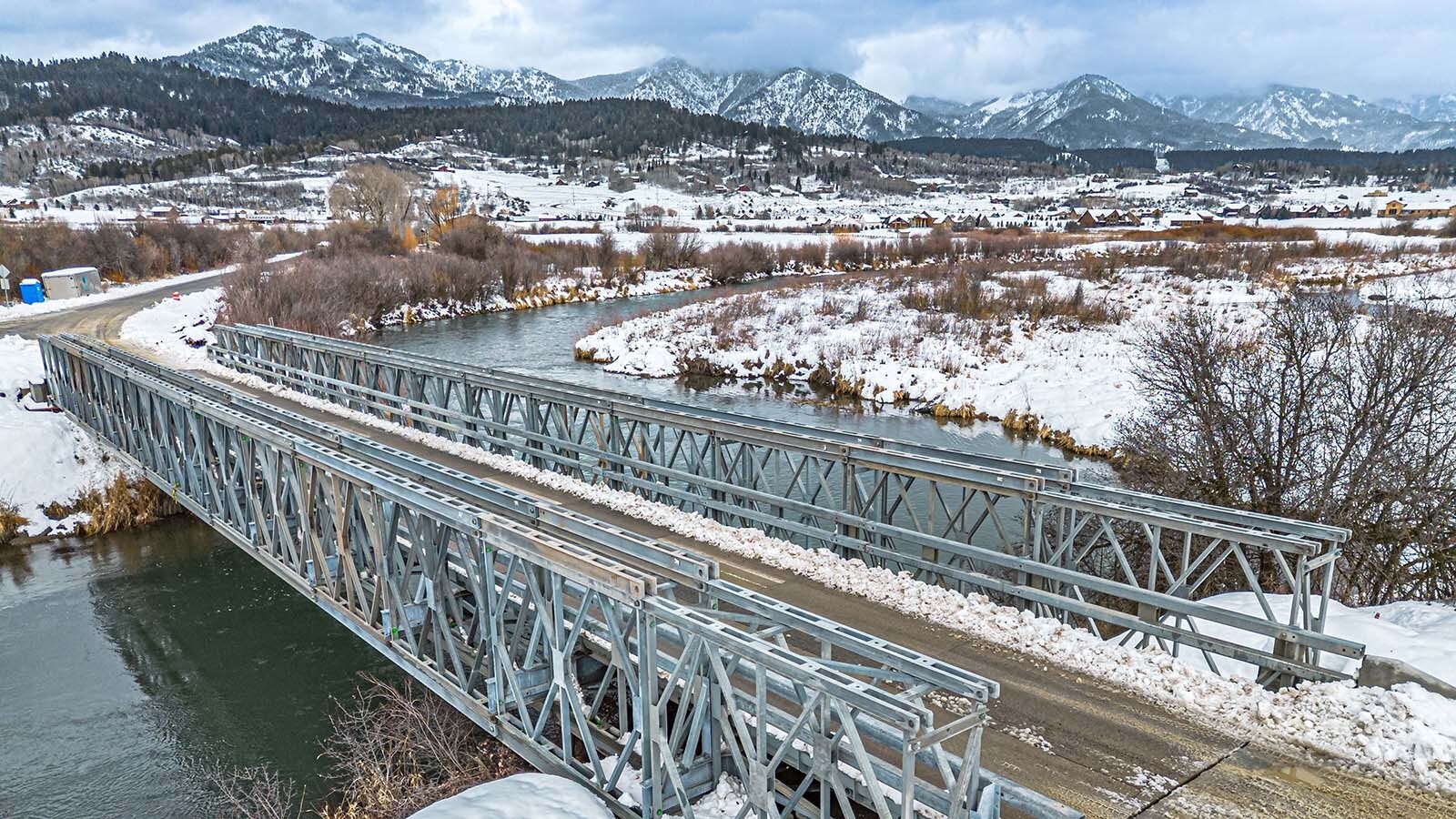
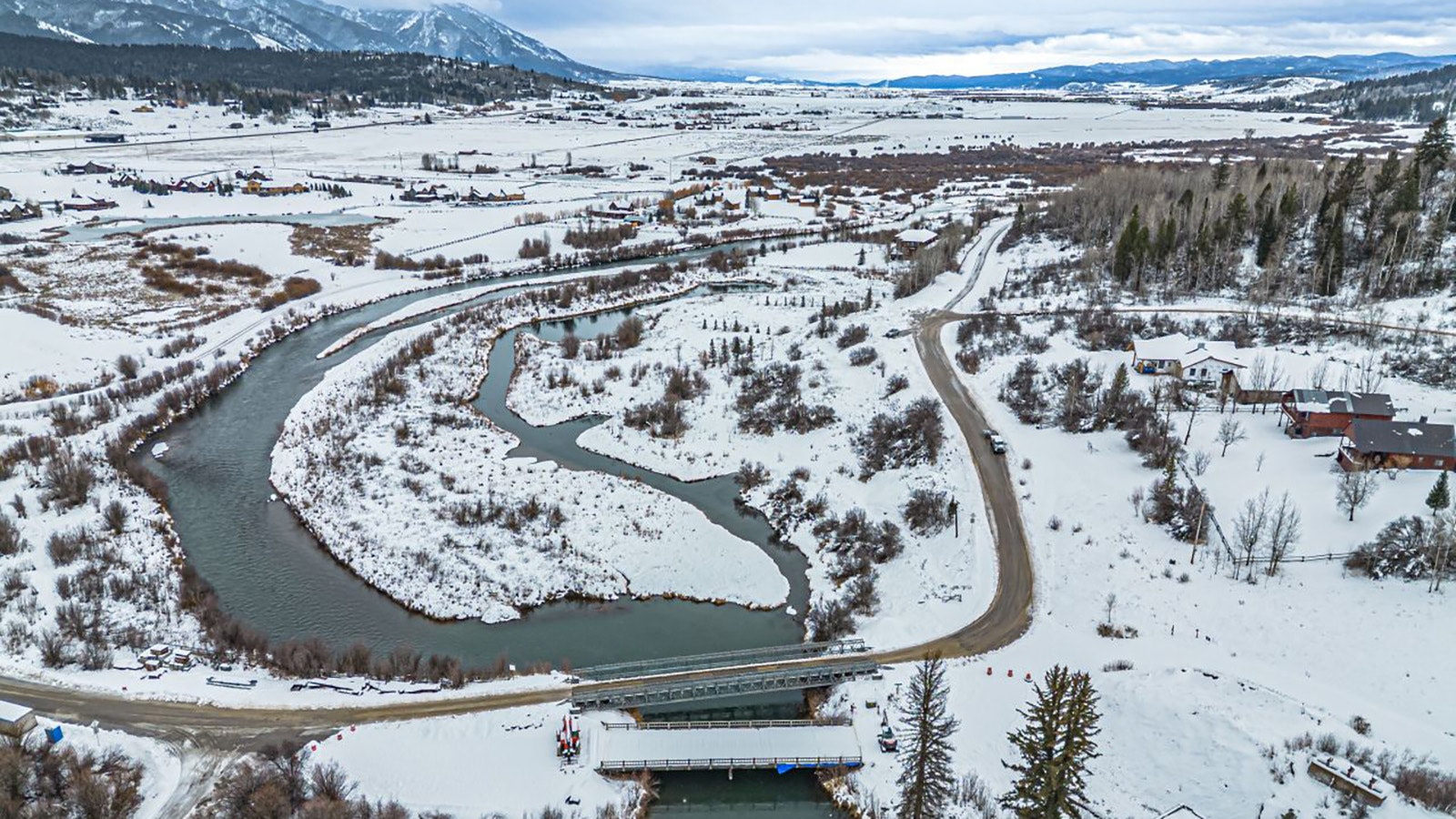
The bridge carrying traffic over the Salt River on County Road 104 near Alpine, Wyoming, doesn't look like something born of battlefield necessity.
It's a single-lane, 130-foot span of galvanized steel, functional and utilitarian, the kind of structure motorists cross without a second thought.
But according to Eugene Sobecki, director of national sales and military business development for Acrow — the New Jersey-based company that designed and supplied it — this modular bridge that was recently put up is a direct descendant of one of World War II's most consequential engineering innovations: the Bailey Bridge.
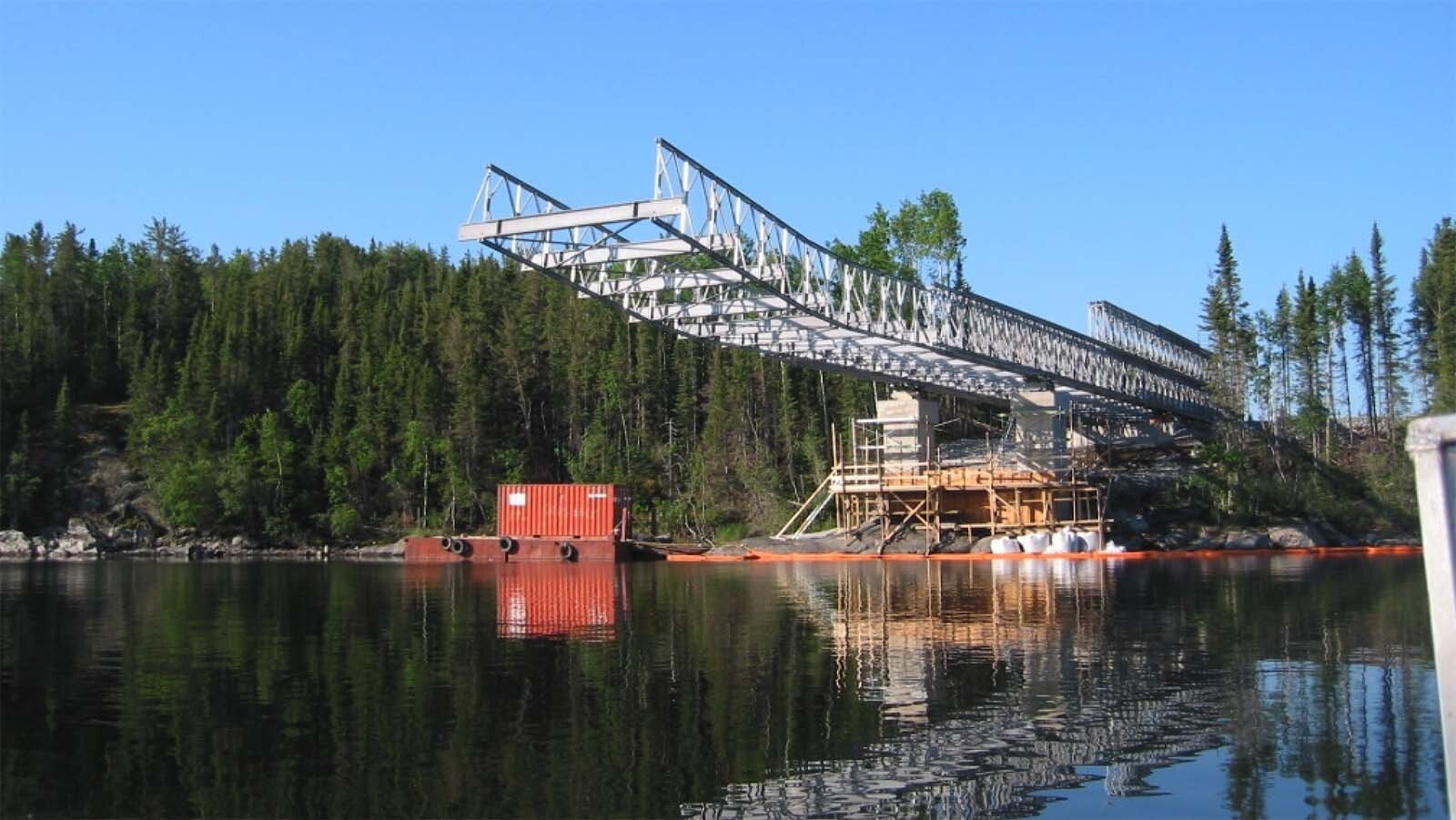
"Like an Erector Set, it comes totally broken down to the site, and then it's assembled at the site by the contractors,” Sobecki told Cowboy State Daily. “The whole thing is built on the premise (that) it’s pre-fabricated, made in the shop. Then the pieces ship out and you just bolt it and pin it together at the job site and launch it.
“You don't need heavy cranes. You don't need welders out there. It's designed to be built with a minimum amount of equipment."
Helped Win The War
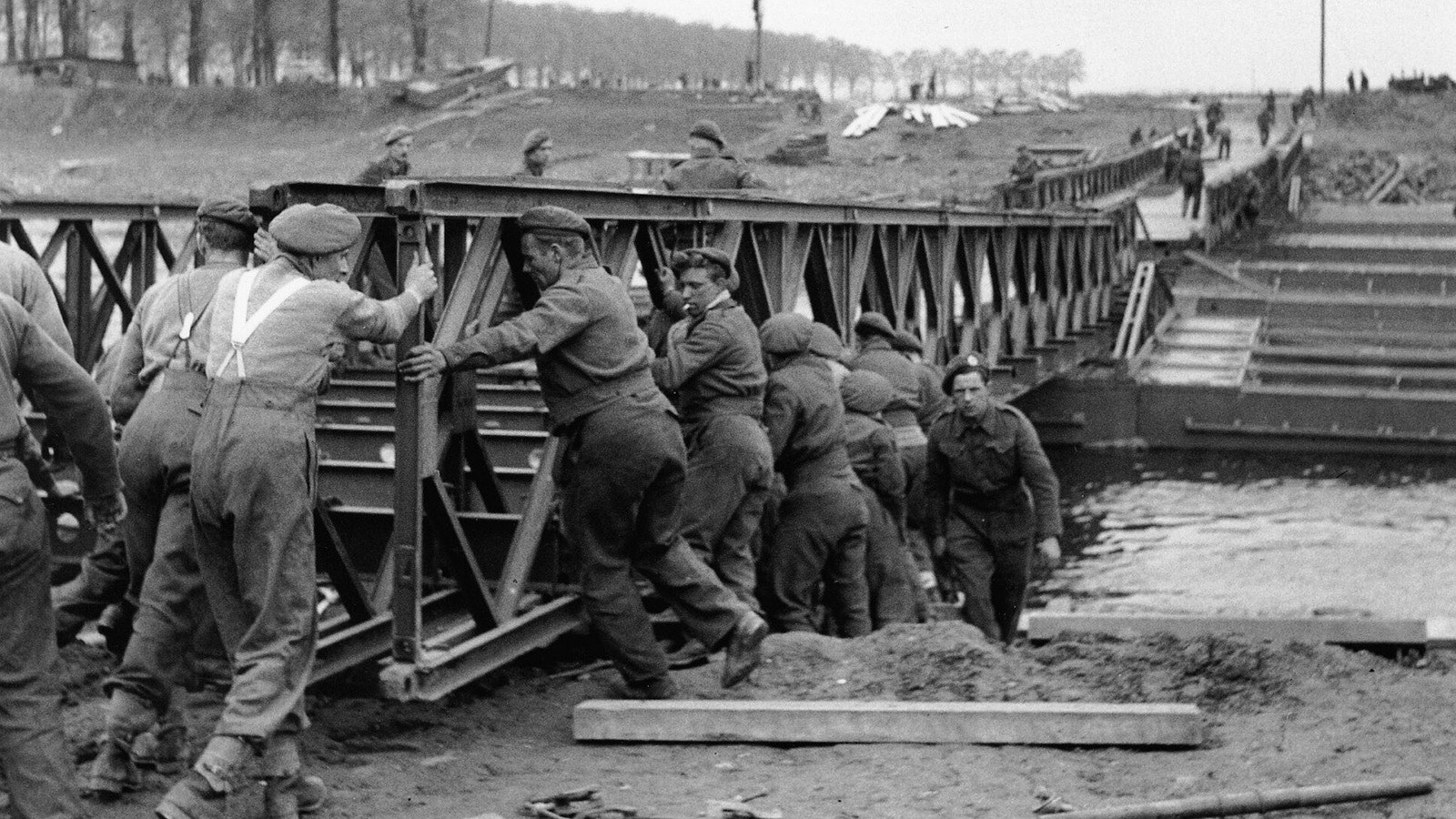
That design philosophy originated in 1940-1941 with British civil engineer Donald Bailey, who sketched his initial concept on an envelope.
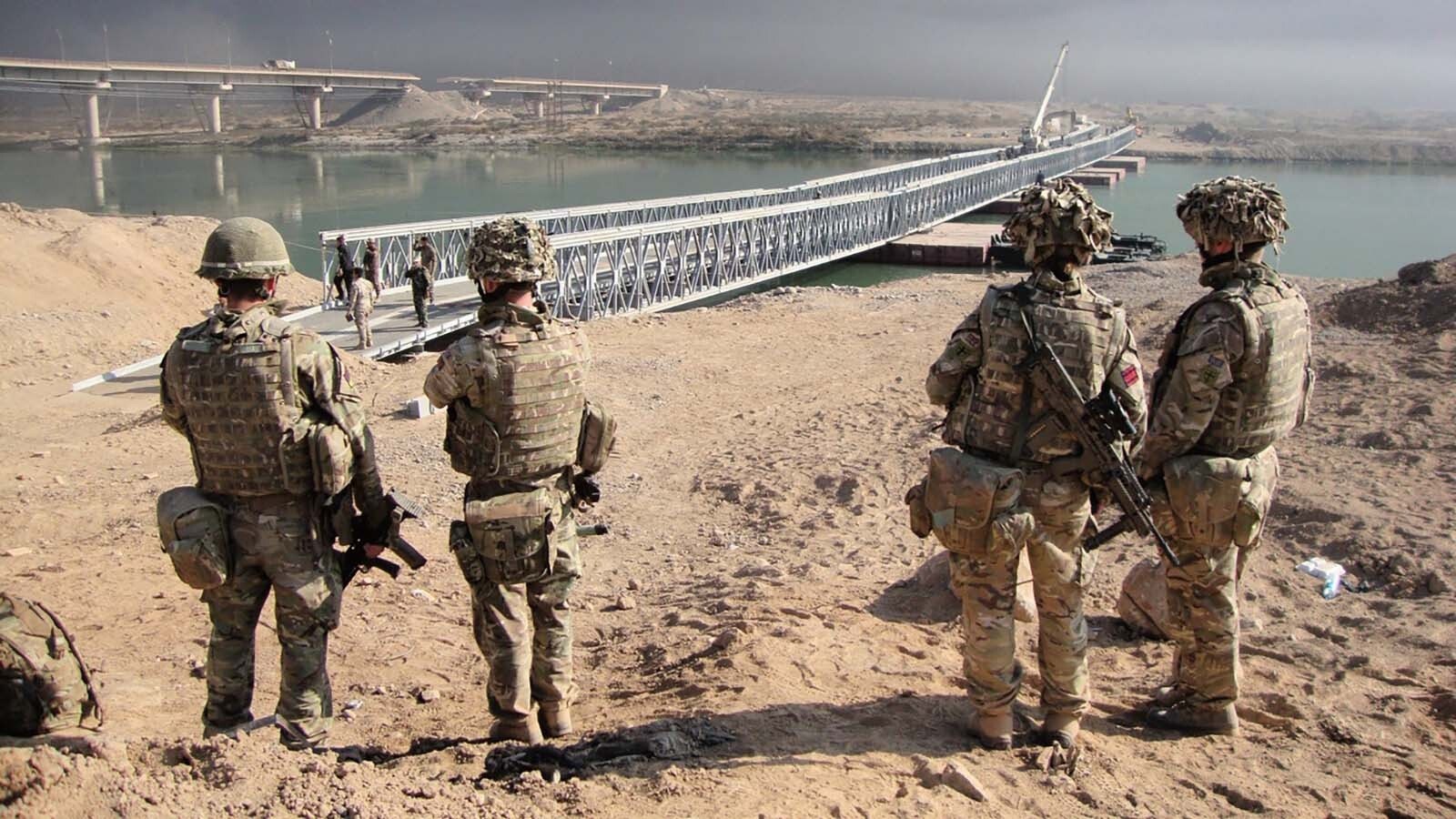
The resulting portable truss bridge could be rapidly assembled by soldiers without heavy equipment as Allied forces advanced across destroyed crossings in Europe.
The German practice of destroying or mining bridges and roads in Sicily and Italy was so thorough that the U.S. Fifth and British Eighth armies built more than 3,000 Baileys with a combined length of nearly 55 miles at an average length of 100 feet, according to the Warfare History Network.
“It was one man's innovation that came up with this whole design and way to build bridges,” said Sobecki. “We were just able to take it and redefine it and make it available for commercial use.
Perfect For Rural Wyoming
The Alpine installation demonstrates how a more than 80-year-old concept continues to serve modern needs.
When the Wyoming Department of Transportation inspected the County Road 104 bridge over the Salt River in early August, inspectors found corrosion, perforations, and cracking in the bridge deck severe enough to warrant mandating an immediate 3-ton weight limit.
CR 104 runs off U.S. Route 89, a scenic corridor extending from Canada to Mexico through national parks. Alpine and surrounding areas, including Jackson Hole less than 40 miles to the north, draw year-round traffic.
A scheduled deck replacement would take months, but residents and a local guest ranch needed the access the bridge provides, and emergency vehicles couldn't afford the longer detour route the weight restriction would require, according to Acrow.
The components for the bridge ship on 45-foot flatbeds, broken down completely, then contractors assemble them on-site with guidance from company field representatives — many of them retired U.S. military bridge specialists.
"It's like a washing machine," Sobecki said. "You had washing machines 30 years ago, but your washing machine is a hell of a lot different today. It still does the same thing.
"We fine-tuned it using more up-to-date, high-strength steels and refined the design so we can get a lot longer spans and a lot wider spans than was originally designed for."
Bikers And Bridges
WYDOT turned to Acrow in 2015 when a bridge on U.S. Highway 85 over railroad tracks in Lusk failed at the start of the busy summer season.
U.S. 85 serves as a main route for motorcyclists heading to the Sturgis Motorcycle Rally in South Dakota.
"The emergency was they didn't want a bunch of aggravated bikers having to do a detour," Sobecki recalled with a laugh.
Acrow worked with WYDOT, using mostly state-owned materials supplemented with additional components to erect a 200-foot, two-lane bridge in less than two weeks.
"Everybody was happy," Sobecki said.
Wyoming's Challenge
The Alpine bridge offers a glimpse of challenges facing Wyoming's broader infrastructure.
According to the American Road and Transportation Builders Association's (ARTBA) analysis of federal data, 204 of Wyoming’s 3,136 bridges — 6.5% — are classified as structurally deficient, meaning at least one key element is in poor condition.
The American Society of Civil Engineers' 2025 Infrastructure Report Card paints a more concerning picture of aging infrastructure. Nearly half of Wyoming's bridges are more than 50 years old, approaching or exceeding their intended design life and potentially requiring greater maintenance.
The state received an overall infrastructure grade of "C."
State transportation officials have identified 1,180 bridges needing repairs. The structurally deficient count has improved from 218 bridges in 2020 to 204 now, but the aging inventory means more structures will require attention in coming years, according to the ARTBA Bridge Report.
Regional Comparison
Wyoming's bridge challenges mirror those across the Rocky Mountain and Northern Plains region, though conditions vary significantly by state.
South Dakota faces the steepest climb.
The ARTBA reports that 945 of that state's 5,883 bridges — 16.1% — are structurally deficient, one of the highest rates in the nation and more than double Wyoming's percentage.
South Dakota has improved from 1,018 deficient bridges in 2021, but the challenge remains substantial.
Nebraska struggles with sheer volume. With 15,398 bridges — nearly five times Wyoming's inventory — the state has 1,217 structurally deficient structures, or 7.9%.
That's down from 1,302 in 2020, but the state consistently ranks among those with the most bridges needing work.
Montana mirrors Wyoming's aging infrastructure concerns.
Of the state's 5,235 bridges, 388 — or 7.4% — are structurally deficient, actually up from 365 in 2021.
The ASCE gave Montana bridges a "C-" grade in its 2025 report, noting that 15% require immediate repairs and the number of load-posted or closed bridges has grown to 600, increasing 10% to 20% annually.
Idaho performs somewhat better, with 226 of 4,616 bridges — 4.9% — rated structurally deficient, down from 286 in 2020. The state has committed more than 90% of its available federal bridge formula funds to improvement projects.
Utah shows the lowest deficiency rate in the region at 3.5%, with 109 of 3,144 bridges rated structurally deficient.
That count nearly doubled from 63 bridges in 2021, and bridges rated in good condition plummeted from 38% in 2020 to just 22% in 2024. The ASCE attributed the deterioration to a funding shortfall compounded by rapid increases in construction costs.
About 35% of Utah's bridges have passed the 50-year mark, and at current replacement rates, the state would need more than a century to replace its existing inventory.
That math puts Utah and its neighbors squarely in the market for faster solutions — the kind Acrow has delivered thanks to Donald Bailey and the first bridge he sketched on an envelope.
Extreme Factors
Beyond planned replacements and surprise failures, Sobecki said increasingly extreme weather is driving demand for emergency bridging solutions.
"Whether you believe in climate change or not, there is a bigger propensity of flooding and hurricanes and all that stuff, and it does drive our business," he said.
Acrow supplied nearly a mile of bridging after Hurricane Katrina devastated crossings over Lake Pontchartrain in 2005. The company helped rebuild bridges in North Carolina after Hurricane Helene in September 2024, including work on Interstate 40 that continues.
This month, as atmospheric rivers hammered the Pacific Northwest, Acrow representatives were meeting with Montana contractors and emergency management teams about solutions, including a 120-foot bridge needed as quickly as possible in Lincoln County, Montana.
"Montana, they wanted to know how quickly they can get the bridge," Sobecki said. "My response is: The trucks are circling the yard. We can probably get it to them quicker than they can put the paperwork together."
In Hawaii, rising sea levels are prompting replacement of bridges along island shorelines. Several bridges were built in Oahu over the past two years as officials determined existing structures sat too close to encroaching waters.
The company maintains inventory at yards in New Jersey, Tennessee, and Washington, keeping standardized components ready to configure for specific needs.
Because everything breaks down into shipping containers, Acrow delivers bridges worldwide — including a current contract to supply 187 bridges to the African nation of Angola.
When asked about the most exotic deployment, Sobecki mentioned an emergency bridge in the Himalayas where a washed-out crossing blocked a religious pilgrimage route.
David Madison can be reached at david@cowboystatedaily.com.